
Senior Staff Accountant Job Description


Electric Heating Pad

Smart Doorbell Camera

Memory Foam Seat Cushion
The senior staff accountant job description covers essential responsibilities like financial reporting, month-end close, and audit support. This role blends technical expertise with leadership, making it a critical step toward senior finance positions.
Key Takeaways
- Core Responsibilities: Senior staff accountants manage financial statements, journal entries, reconciliations, and month-end close processes with high accuracy.
- Required Skills: Strong knowledge of GAAP, Excel proficiency, attention to detail, and experience with ERP systems like NetSuite or SAP are essential.
- Education & Certification: A bachelor’s degree in accounting is required; CPA certification is highly preferred and often mandatory for advancement.
- Career Path: This role typically leads to positions like Accounting Manager, Controller, or CFO, especially with 5–7 years of experience.
- Work Environment: Most senior staff accountants work in corporate offices, though remote and hybrid options are increasingly common.
- Salary Range: The average salary ranges from $70,000 to $95,000 annually, depending on location, industry, and experience.
- Growth Outlook: Demand for skilled accountants remains steady, with opportunities in healthcare, tech, and nonprofit sectors.
📑 Table of Contents
What Is a Senior Staff Accountant?
If you’ve ever wondered what it takes to move beyond entry-level accounting roles, the senior staff accountant position might be your next big step. This role sits comfortably between junior accountants and management-level finance professionals. Think of it as the “go-to” person on the accounting team—someone who handles complex tasks, mentors newer staff, and ensures financial records are accurate and compliant.
Unlike junior accountants who focus on data entry and basic reconciliations, senior staff accountants take ownership of entire processes. They’re responsible for preparing financial statements, managing month-end and year-end close activities, and often serve as the main point of contact during audits. This role requires not only technical know-how but also strong organizational and communication skills. You’re not just crunching numbers—you’re interpreting them, spotting trends, and helping leadership make informed decisions.
The senior staff accountant job description varies slightly depending on the company size and industry, but the core responsibilities remain consistent. In smaller organizations, one senior staff accountant might wear multiple hats, handling everything from payroll to tax prep. In larger corporations, they may specialize in areas like revenue recognition, fixed assets, or intercompany accounting. Either way, this role is a critical bridge between day-to-day operations and strategic financial planning.
Core Responsibilities of a Senior Staff Accountant
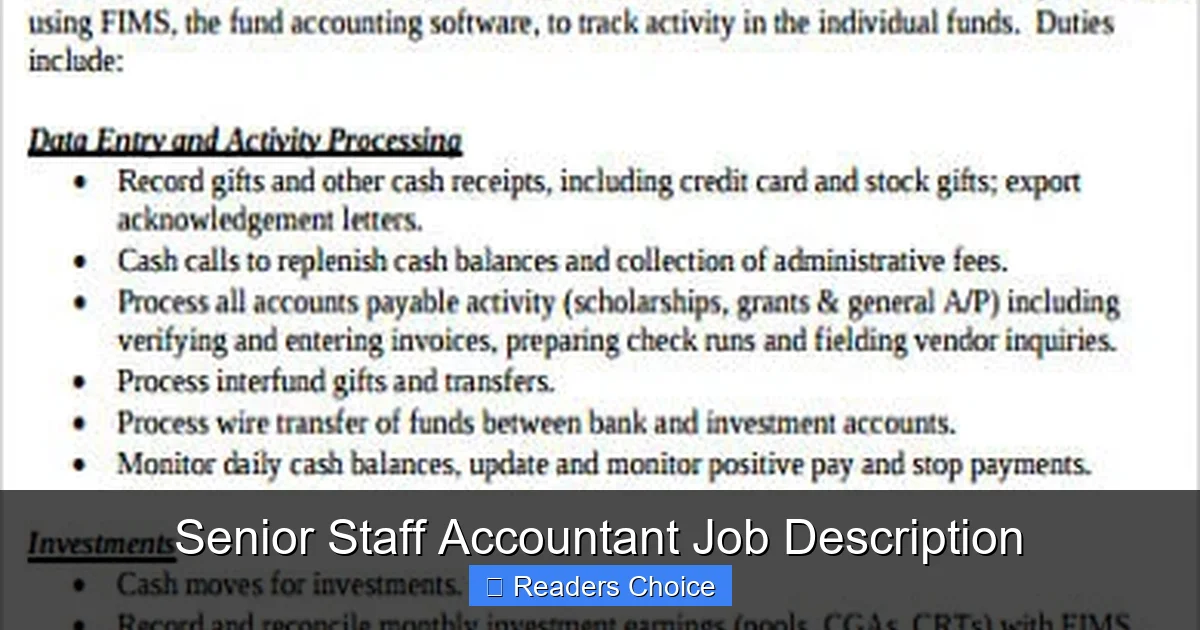
So, what exactly does a senior staff accountant do on a daily basis? Let’s break it down into the most common responsibilities you’ll find in nearly every job posting.
Visual guide about Senior Staff Accountant Job Description
Image source: images.sampletemplates.com
Financial Reporting and Statement Preparation
One of the primary duties is preparing accurate and timely financial statements—think income statements, balance sheets, and cash flow statements. These reports are the backbone of any business’s financial health and are used by executives, investors, and regulators. Senior staff accountants ensure these documents comply with Generally Accepted Accounting Principles (GAAP) and reflect the company’s true financial position.
For example, imagine a mid-sized tech company preparing its quarterly earnings report. The senior staff accountant would gather data from various departments, verify revenue recognition practices, and consolidate results into a final report. They might also create supporting schedules and footnotes to explain unusual fluctuations or one-time expenses.
Month-End and Year-End Close
The month-end close process is where senior staff accountants truly shine. This involves reconciling accounts, posting adjusting journal entries, and ensuring all transactions are recorded correctly before financial statements are finalized. It’s a high-pressure period that requires precision and efficiency.
During the year-end close, the workload increases significantly. The accountant must prepare for audits, coordinate with external auditors, and ensure all tax-related documentation is in order. They might also assist in drafting footnotes for annual reports or 10-K filings if the company is publicly traded.
Account Reconciliations and General Ledger Maintenance
Reconciling bank statements, credit card accounts, and intercompany balances is a routine but vital task. Senior staff accountants don’t just match numbers—they investigate discrepancies, identify root causes, and implement controls to prevent future errors.
For instance, if a bank reconciliation shows a $10,000 difference, the accountant must trace it back to a missing deposit, a duplicate payment, or a timing difference. They’ll document their findings and work with other departments to resolve the issue. This level of scrutiny helps maintain the integrity of the general ledger, which is the central repository for all financial data.
Audit Support and Compliance
Whether it’s an internal audit or an external review by a CPA firm, senior staff accountants play a key role in providing documentation and answering questions. They prepare audit schedules, gather supporting invoices, and explain accounting policies to auditors.
Compliance is another big piece of the puzzle. Accountants must stay up to date with changing tax laws, regulatory requirements, and industry-specific standards. For example, a healthcare organization must follow HIPAA guidelines, while a nonprofit must adhere to IRS rules for tax-exempt entities. The senior staff accountant ensures the company remains compliant to avoid penalties or reputational damage.
Process Improvement and Internal Controls
Beyond routine tasks, senior staff accountants are often tasked with improving accounting processes. They might identify inefficiencies in the close process, recommend automation tools, or design new workflows to reduce errors.
For example, if the team spends hours manually entering data from spreadsheets into the ERP system, the accountant might propose implementing a data integration tool. Or, if there’s a recurring issue with late vendor invoices, they could work with procurement to establish earlier submission deadlines. These improvements not only save time but also reduce the risk of fraud and misstatements.
Required Skills and Qualifications
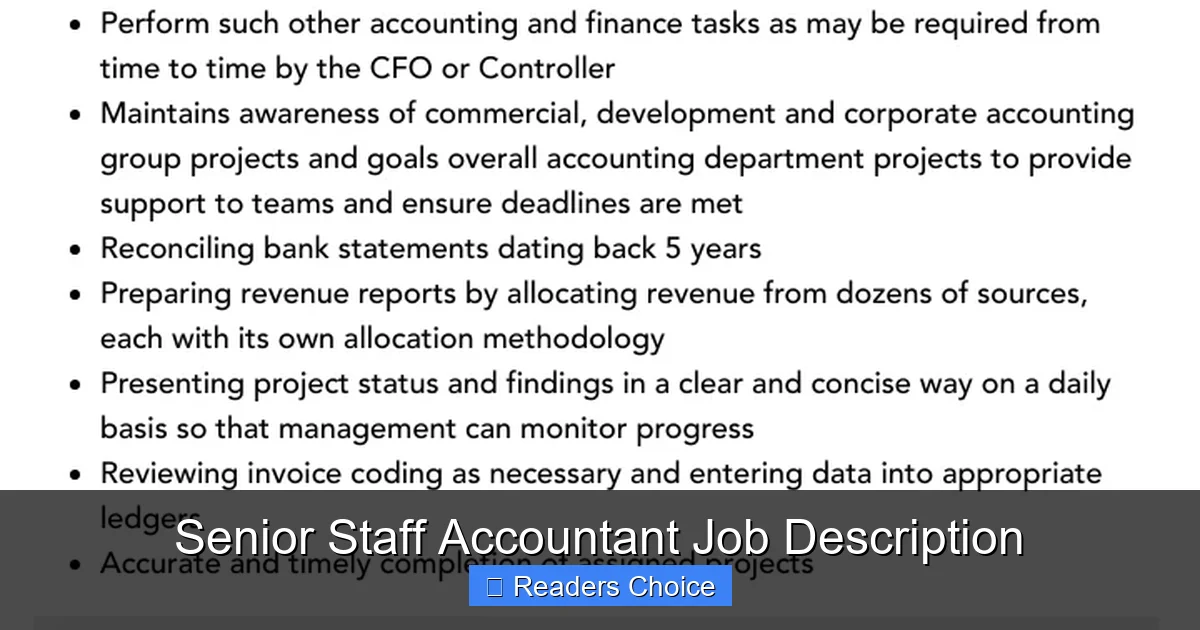
To succeed as a senior staff accountant, you need a mix of technical expertise, soft skills, and professional credentials. Let’s look at what employers typically expect.
Visual guide about Senior Staff Accountant Job Description
Image source: asset.velvetjobs.com
Technical Skills
First and foremost, you need a solid understanding of accounting principles—especially GAAP. This includes knowing how to handle revenue recognition, depreciation, accruals, and deferrals. Experience with ERP systems like NetSuite, SAP, Oracle, or QuickBooks is also essential. These platforms are used to manage everything from accounts payable to financial reporting.
Excel proficiency is non-negotiable. You should be comfortable using functions like VLOOKUP, pivot tables, and macros. Many accountants spend a significant portion of their day in spreadsheets, so being fast and accurate is a major advantage.
Additionally, familiarity with financial analysis tools and data visualization software (like Power BI or Tableau) can set you apart. These skills help you turn raw data into actionable insights, which is increasingly valued in modern finance teams.
Soft Skills
While technical skills get you in the door, soft skills keep you there. Senior staff accountants often work with people across departments—finance, operations, HR, and even external auditors. Strong communication skills are crucial for explaining complex financial concepts in simple terms.
Attention to detail is another must-have. A small error in a journal entry can lead to big problems down the line, like misstated earnings or audit findings. The ability to stay organized under pressure—especially during month-end close—is also vital.
Leadership and mentoring skills come into play as well. You may be asked to train junior staff, review their work, or lead small projects. Being patient, approachable, and supportive helps build a strong team culture.
Education and Certifications
Most employers require a bachelor’s degree in accounting, finance, or a related field. Some may accept equivalent experience, but a degree is still the standard. Coursework typically includes financial accounting, cost accounting, taxation, and auditing.
While not always mandatory, a Certified Public Accountant (CPA) license is highly preferred—and often required for advancement. Earning your CPA demonstrates a high level of expertise and commitment to the profession. It also opens doors to higher-paying roles and greater responsibilities.
Other certifications, like the Certified Management Accountant (CMA) or Certified Internal Auditor (CIA), can also be beneficial, especially if you’re interested in management or audit-focused careers.
Work Environment and Typical Day
So, what’s it like to work as a senior staff accountant? The environment can vary widely depending on the company, but most roles are based in office settings—though remote and hybrid work options are becoming more common, especially post-pandemic.
Visual guide about Senior Staff Accountant Job Description
Image source: images.sampletemplates.com
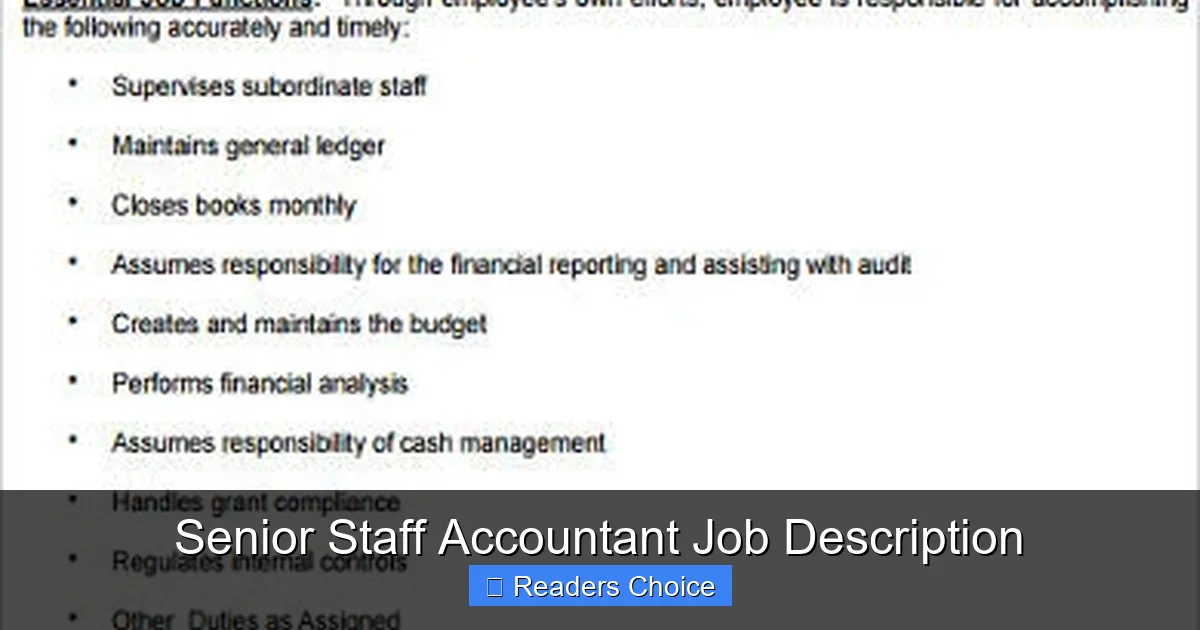
On a typical day, you might start by reviewing emails and checking for urgent tasks. Then, you’d dive into reconciliations, journal entries, or financial reports. Mid-month is usually quieter, but as the end of the month approaches, the pace picks up significantly. During close week, you might work late or come in early to meet deadlines.
Meetings are also part of the routine. You could attend weekly finance team check-ins, monthly budget reviews, or audit planning sessions. These meetings help you stay aligned with company goals and give you a chance to share insights or raise concerns.
The culture in accounting departments tends to be professional and structured, but it’s not all spreadsheets and silence. Many teams foster a collaborative atmosphere where people support each other during busy periods. Some companies even offer flexible hours or compressed workweeks to help with work-life balance.
One thing to keep in mind: the role can be stressful during peak times. Month-end close, tax season, and audit periods often require extra hours and intense focus. But for those who enjoy problem-solving and seeing the direct impact of their work, it’s incredibly rewarding.
Salary and Career Growth Opportunities
Let’s talk money. The average salary for a senior staff accountant in the U.S. ranges from $70,000 to $95,000 per year, according to data from Glassdoor, Payscale, and the Bureau of Labor Statistics. This can vary based on location, industry, company size, and experience level.
For example, accountants in major cities like New York, San Francisco, or Chicago tend to earn more due to the higher cost of living. Similarly, roles in finance, technology, or healthcare often pay above-average salaries compared to nonprofits or government agencies.
Bonuses and benefits can also boost total compensation. Many companies offer performance-based bonuses, retirement plans, health insurance, and professional development stipends. Some even reimburse CPA exam fees or provide paid study time.
But salary isn’t the only factor to consider. The senior staff accountant role is a springboard to higher-level positions. With 5–7 years of experience, you could move into roles like Accounting Manager, Assistant Controller, or even Controller. These positions come with greater responsibility, higher pay, and more strategic influence.
Some professionals use this role as a stepping stone to become a CFO, especially if they gain experience in budgeting, forecasting, and financial planning. Others transition into consulting, tax advisory, or forensic accounting, where their deep knowledge of financial systems is highly valued.
To maximize your career growth, focus on building a strong track record, pursuing certifications, and developing leadership skills. Networking with peers, attending industry events, and seeking mentorship can also open new doors.
Tips for Landing a Senior Staff Accountant Job
Ready to apply? Here are some practical tips to help you stand out in a competitive job market.
Tailor Your Resume
Your resume should highlight relevant experience, technical skills, and accomplishments. Use action verbs like “prepared,” “reconciled,” “streamlined,” and “led” to describe your responsibilities. Quantify your impact whenever possible—for example, “Reduced month-end close time by 20% through process automation.”
Include keywords from the job description, especially terms like “GAAP,” “financial reporting,” “ERP systems,” and “audit support.” Many companies use applicant tracking systems (ATS) to screen resumes, so matching keywords increases your chances of getting noticed.
Prepare for the Interview
Expect a mix of behavioral and technical questions. Be ready to discuss your experience with month-end close, reconciliations, and financial statements. You might also be asked to solve a sample problem or walk through a journal entry.
Practice answering questions like, “Tell me about a time you found an error in the financial statements,” or “How do you handle tight deadlines?” Use the STAR method (Situation, Task, Action, Result) to structure your responses.
Showcase Your Certifications
If you’re a CPA or working toward one, make sure it’s front and center on your resume and LinkedIn profile. Employers value this credential highly, and it can give you a competitive edge over other candidates.
Even if you’re not certified yet, mention any progress you’ve made—like passing one or more CPA exam sections. It shows initiative and commitment to professional growth.
Network Strategically
Don’t underestimate the power of networking. Reach out to former colleagues, attend accounting conferences, or join professional organizations like the AICPA or state CPA societies. Many jobs are filled through referrals, so building relationships can lead to hidden opportunities.
You can also connect with recruiters who specialize in finance roles. They often have access to exclusive job postings and can provide valuable feedback on your application.
Conclusion
The senior staff accountant job description outlines a role that’s both challenging and rewarding. It’s a position that demands technical expertise, attention to detail, and the ability to work under pressure—but it also offers opportunities for growth, leadership, and impact.
Whether you’re just starting your accounting career or looking to take the next step, this role provides a solid foundation for long-term success. With the right skills, mindset, and credentials, you can become a trusted financial expert and pave the way for future leadership roles.
So if you enjoy working with numbers, solving complex problems, and contributing to a company’s financial health, the senior staff accountant path might be the perfect fit. Start building your experience, sharpen your skills, and take that next step toward a fulfilling career in accounting.
Frequently Asked Questions
What is the difference between a staff accountant and a senior staff accountant?
A staff accountant typically handles routine tasks like data entry and basic reconciliations, while a senior staff accountant takes on more complex responsibilities such as financial reporting, audit support, and process improvement. The senior role also often includes mentoring junior staff and leading key accounting projects.
Do you need a CPA to be a senior staff accountant?
While not always required, a CPA license is highly preferred and often expected for senior staff accountant roles. It demonstrates advanced knowledge of accounting principles and can significantly improve your job prospects and earning potential.
What software do senior staff accountants use?
Common tools include ERP systems like NetSuite, SAP, or Oracle, as well as QuickBooks for smaller companies. Excel is essential for data analysis and reporting, and many accountants also use Power BI or Tableau for data visualization.
How long does it take to become a senior staff accountant?
Most professionals reach this level after 3–5 years of experience as a staff or junior accountant. Advancing also depends on gaining relevant skills, earning certifications like the CPA, and demonstrating leadership potential.
Can a senior staff accountant work remotely?
Yes, many companies now offer remote or hybrid work options for accounting roles. While some tasks may require access to secure systems, much of the work—like reconciliations and financial reporting—can be done from home with the right tools and protocols.
What industries hire senior staff accountants?
Senior staff accountants are in demand across nearly all industries, including healthcare, technology, manufacturing, nonprofits, and financial services. Any organization that manages financial records and prepares reports needs skilled accounting professionals.