
Palm Grip Cane Explained: Benefits, Fit & Safety

Electric Mobility Scooter

Bed Exit Alarm Sensor

Bathtub Transfer Bench
Quick Answer
A palm grip cane is a walking cane with a contoured handle designed to fit the shape of the hand. Its broad, shaped surface can make gripping more comfortable and help distribute pressure across the palm. It may suit people who find a narrow or traditional cane handle uncomfortable, but the correct shape, side, height, and level of support depend on the individual.
What Is a Palm Grip Cane?

A palm grip cane is a walking aid with a handle shaped to accommodate the palm rather than relying entirely on a narrow, rounded or curved grip. The handle typically has a contoured surface intended to follow the hand’s natural shape and provide a comfortable place to rest the palm while holding the cane.
Some designs are shaped specifically for the right or left hand. Others have a more general ergonomic shape. The exact design varies by manufacturer, so the term does not describe one universal handle shape or a single standardized specification.
The purpose is to improve the contact between the hand and the handle. If a conventional cane grip concentrates pressure in a small area, a suitably shaped palm grip may make that pressure feel more evenly distributed. This can be useful during routine walking, when the hand repeatedly supports and guides the cane.
A palm grip is a handle design, not a different category of mobility support. The cane may still have a single rubber tip or another base design. Its handle shape alone does not determine how much weight the cane can safely support or how much balance assistance it provides.
How Does a Palm Grip Handle Work?
A palm grip changes the way the hand contacts the cane. Instead of wrapping the fingers around a relatively narrow handle alone, the user rests the palm against a shaped surface while the fingers and thumb help maintain control.
This design can make the grip feel more natural for some people, especially when a traditional handle creates uncomfortable pressure. A well-matched shape may also reduce the urge to squeeze the handle excessively to keep the cane secure.
However, comfort depends on the relationship between the handle and the individual hand. A grip that fits one person’s palm may press awkwardly against another person’s thumb, fingers or wrist. A contoured handle is not automatically more comfortable or safer for everyone.
Why handle shape matters
- Contact area: A broader surface may spread contact across more of the palm rather than concentrating it at one point.
- Hand position: A suitable contour can help the hand settle into a comfortable position without excessive twisting.
- Grip effort: Some users may find a shaped handle easier to hold without squeezing tightly.
- Control: The handle must still allow the user to guide the cane securely during steps and turns.
These are potential benefits, not guaranteed clinical outcomes. The handle’s dimensions, surface, orientation and the user’s hand function all affect the result.
Who May Benefit From a Palm Grip Cane?
A palm grip cane may be worth considering when the main difficulty is discomfort with a conventional cane handle. It is particularly relevant when someone needs walking support but finds that the shape of the handle makes holding the cane unpleasant.
- People with hand discomfort: A different contact surface may feel more comfortable when a narrow handle creates pressure in the palm.
- People who struggle with finger grasp: A suitable contoured or broader grip may be easier to manage than a small handle, depending on hand strength and dexterity.
- Older adults seeking a more comfortable grip: A palm-shaped design may be worth trying when using a cane for routine mobility.
- People who dislike traditional curved handles: The different hand position may feel more natural, provided the handle fits correctly.
People with arthritis, reduced grip strength, hand weakness or limited finger movement should consider the entire handle design rather than relying on the name alone. A grip that is too large, too small or poorly oriented can still be difficult to hold.
If hand pain, tingling, numbness or weakness is persistent, changing the handle should not replace assessment of the underlying problem. A physical or occupational therapist can help determine whether the handle, cane height, walking technique or another factor needs attention.
What Are the Main Advantages and Limitations?
The main potential advantage of a palm grip cane is comfort. Its limitations arise when the shape does not match the user’s hand or when a cane is not the right level of mobility support.
Potential advantages
- A more comfortable contact surface: The contour may suit people who find narrow handles uncomfortable.
- Less concentrated pressure: A broader contact area may reduce pressure at particular points on the palm.
- A more natural hand position: Some shapes may help users hold the cane without an uncomfortable wrist angle.
- An alternative to conventional grips: Users can compare different handle styles rather than assuming every cane must have the same shape.
Limitations to consider
- Hand fit varies: A shape designed for one hand may not fit another hand comfortably.
- Side compatibility matters: Some handles are handed and may be uncomfortable or unsuitable when used on the opposite side.
- Comfort does not guarantee stability: A comfortable handle cannot compensate for poor cane height, an unstable base or inadequate walking support.
- Severe weakness may require another solution: A palm grip does not automatically make a cane suitable for someone who cannot hold it securely.
The practical test is whether the handle allows a relaxed, secure grip and controlled walking without creating new pressure or discomfort. If it does not, a different handle style or mobility aid may be more appropriate.
How Does a Palm Grip Compare With Other Cane Handles?
Handle styles differ in shape, hand position and ease of grasping. The best comparison focuses on the user’s hand function and the task the cane needs to support, not on which design sounds most advanced.
| Handle type | Typical design | What to consider |
|---|---|---|
| Palm grip | Contoured surface shaped to accommodate the palm | Palm fit, handedness and pressure distribution |
| Derby | Curved handle that the fingers wrap around | Finger grasp, comfort and ease of holding |
| Offset | Handle positioned to align the hand more closely over the shaft | Balance, load alignment and individual comfort |
| Foam or padded grip | Soft covering around a conventional handle shape | Softness, grip security and handle thickness |
These categories can overlap: a handle may combine contouring with padding or an offset shape. Product descriptions are not always consistent, so examine the actual handle design rather than relying on the label alone.
A palm grip may be a sensible option when a conventional handle creates pressure in the palm. A Derby handle may suit someone who prefers a familiar curved grasp, while a padded grip may help when the main complaint is a hard surface. None is universally best.
How Should a Palm Grip Cane Fit?
The handle should feel secure without forcing the fingers, thumb or wrist into an uncomfortable position. The cane must also be the correct height. A comfortable handle on a cane that is too tall or too short can still encourage poor posture and interfere with walking.
- Stand in your usual walking shoes. Keep your posture as upright as is comfortable and let your arms hang naturally at your sides.
- Check the handle height. The top of the handle should generally align with the crease of your wrist when the cane stands beside you.
- Hold the grip naturally. Your elbow should remain slightly bent rather than locked straight or bent excessively.
- Check the hand position. Your palm should sit comfortably on the contour, without the handle digging into the hand or forcing your wrist sideways.
- Check control while standing. Make sure you can grasp and release the handle as needed without losing control of the cane.
- Ask for a professional fit check if uncertain. A therapist or trained mobility-aid provider can assess the handle, height and your walking pattern together.
Height-adjustable canes should be secured according to the manufacturer’s instructions after adjustment. Do not use a cane with a loose locking mechanism or an improvised handle modification.
For additional guidance, see the Cleveland Clinic guide to choosing and fitting a cane, which explains handle selection and basic height checks.
How Do You Use a Palm Grip Cane Safely?
A palm grip does not change the basic principles of cane walking. Correct positioning, suitable footwear, a secure tip and a controlled walking pattern remain essential.
- Hold the cane on the appropriate side. For many people with one weaker or painful leg, the cane is held on the opposite, stronger side. A therapist may recommend a different arrangement for a particular condition.
- Move the cane with the affected leg. When following the usual single-cane walking pattern, advance the cane and weaker leg together, then step through with the stronger leg.
- Take controlled steps. Keep the cane close enough to provide useful support without placing it where your feet may catch it.
- Inspect the rubber tip. Replace a worn, split or loose tip. Check that the tip contacts the floor securely.
- Use extra care on stairs and uneven surfaces. Follow the technique taught for your condition and use a handrail where available.
Do not lean heavily on a cane that was not prescribed or rated for that degree of support. If you need substantial weight-bearing assistance, frequently lose your balance or cannot coordinate the cane and your steps, you may need a different mobility aid or supervised training.
Warning
Stop and reassess the fit if the handle causes new pain, numbness or tingling, or if the cane feels unstable. A more ergonomic handle cannot correct an unsuitable cane or an unsafe walking technique.
The MedlinePlus instructions for using a cane provide additional guidance on fitting, walking, turning and negotiating steps.
What Should You Check Before Choosing One?
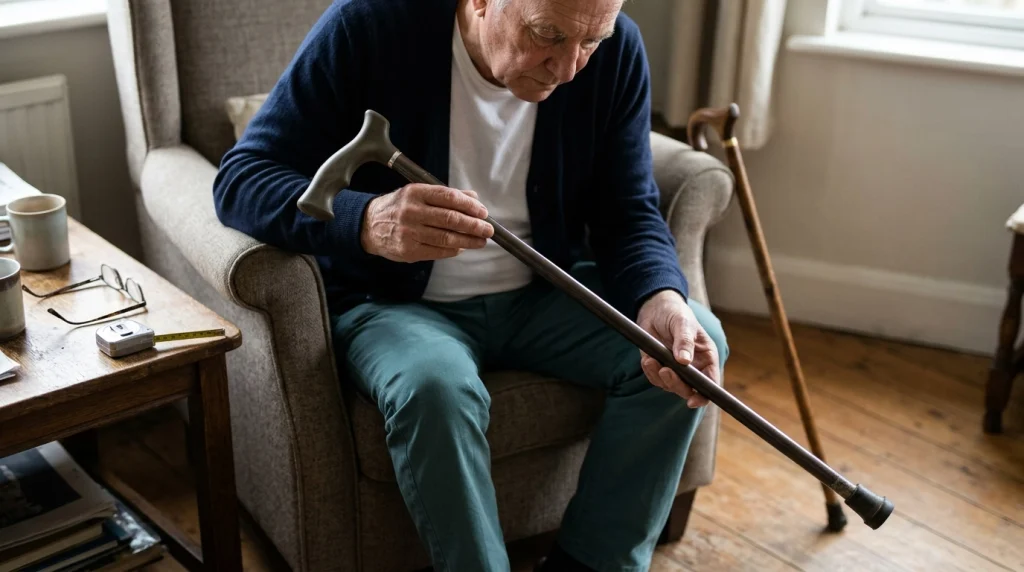
Focus on practical fit and safe use instead of assuming that a palm-shaped handle is automatically the right choice.
- Handedness: Confirm whether the handle is intended for the right hand, left hand or either hand.
- Grip security: Make sure you can maintain control without squeezing painfully or relying on a weak pinch grip.
- Wrist comfort: The handle should not force an awkward angle or press sharply against the palm.
- Overall cane height: Check the fit with the shoes you normally wear.
- Base and tip: Choose a cane base appropriate for your needs and inspect the rubber tip regularly.
- Weight-bearing requirements: Verify that the complete cane is suitable for your intended use and the manufacturer’s stated limits.
- Return or trial arrangements: If possible, try the grip before committing to it, particularly if hand discomfort or limited dexterity is a concern.
For people with substantial balance problems, repeated falls or difficulty using one hand, the decision should extend beyond handle style. A physical therapist or occupational therapist can assess whether a single-point cane, a broader-base cane or a different mobility aid is appropriate.
Frequently Asked Questions
Is a palm grip cane better than a regular cane?
Not for everyone. A palm grip may feel more comfortable when a traditional handle creates pressure or an awkward hand position, but the best choice depends on hand fit, walking ability and the level of support needed.
Can a palm grip cane help with arthritis in the hands?
It may be more comfortable for some people with hand arthritis, particularly if the shape reduces uncomfortable pressure. However, a contoured handle can still aggravate symptoms if it does not fit properly. A therapist can help assess suitable options.
Are palm grip cane handles available for both hands?
Some are designed specifically for the right or left hand, while other models may accommodate either hand. Check the manufacturer’s description and confirm that the handle orientation matches the hand you intend to use.
Does a palm grip cane improve balance automatically?
No. A palm grip changes the handle interface, not the cane’s basic support characteristics. Balance also depends on correct height, suitable cane design, walking technique and the user’s mobility needs.
How do I know if my cane is the wrong height?
When standing upright with your arms relaxed, the handle should generally align with your wrist crease. Your elbow should bend slightly when holding it. Persistent leaning, shoulder elevation or discomfort warrants a fit check.
When should I consider a different mobility aid?
Consider a professional assessment if you cannot grip the cane securely, regularly lose balance, fall repeatedly or need more support than a single cane provides. A therapist can help identify an appropriate alternative and teach safe use.
Conclusion
A palm grip cane has a contoured handle designed to make holding a walking cane more comfortable for some users. Its potential value lies in the fit between the palm and the handle, not in a promise of better balance or greater weight-bearing support.
Before choosing one, check the handle’s orientation, your wrist position, the cane’s height and the security of its tip. If hand discomfort continues or you need more support than the cane provides, seek an assessment from a qualified mobility professional. The right combination of handle comfort, proper fit and safe walking technique matters more than the handle label alone.