
National Association for Senior Move Managers


Easy Grip Kitchen Utensils

Electric Food Chopper

Orthopedic Pillow
The National Association for Senior Move Managers (NASMM) is the premier professional organization dedicated to supporting specialists who assist older adults with the emotional and logistical challenges of moving. These certified managers provide tailored services from downsizing to full relocation, ensuring dignity and peace of mind. Choosing a NASMM-certified professional guarantees you’re working with a vetted expert in senior transition management.
Let’s have a real talk about a topic many of us will face, yet few of us are truly prepared for: helping an aging parent—or ourselves—navigate a major life transition. I’m not just talking about packing boxes. I’m talking about the heart-wrenching decision to leave a home filled with decades of memories. The overwhelming task of sorting a lifetime of possessions. The logistical maze of selling a house, finding a new apartment, and actually getting there. For years, families often just gritted their teeth and muddled through, sometimes causing lasting stress and rifts. But there’s a quiet hero in this space, a professional whose entire career is built on making these transitions smoother, kinder, and more manageable. That hero is a Senior Move Manager, and their guiding body is the National Association for Senior Move Managers, or NASMM.
Think of NASMM not as a moving company, but as a professional guild and resource hub for a very specific, compassionate niche. It’s the place where the best in the business go to learn, network, and uphold a standard of care that treats the move as a significant emotional life event, not a physical one. In this guide, we’re going to unpack exactly what the National Association for Senior Move Managers is, why its certification is so important, what you can realistically expect from its members, and how to find the right person to help your family. Whether you’re a senior considering a downsize, an adult child planning ahead, or a professional in a related field, this is your comprehensive look at the organization that’s changing how we handle later-life moves.
Key Takeaways
- NASMM is the Gold Standard: It’s the only national organization focused solely on the senior moving industry, setting ethics and practice standards.
- Managers Handle More Than Boxes: They address emotional attachment, downsizing decisions, logistics, and coordination with realtors and senior communities.
- Certification Matters: The Certified Senior Move Manager (CSMM) designation requires training, experience, and adherence to a strict code of ethics.
- Services Are Highly Customizable: From a single room sort to a complete cross-country move, managers create plans fit for each client’s unique needs and budget.
- It’s an Investment in Well-being: Hiring a professional reduces stress for seniors and families, prevents conflict, and can even save money through efficient downsizing and donation strategies.
- You Can Find a Manager Easily: NASMM’s online directory is a free, searchable tool to locate certified professionals in your area.
- It’s About Transition, Not Just Moving: The core philosophy is helping seniors transition to a new chapter of life with purpose and positivity, not just changing addresses.
📑 Table of Contents
- What Exactly is the National Association for Senior Move Managers (NASMM)?
- The Heart of the Matter: The Certified Senior Move Manager (CSMM) Designation
- Why Would a Senior or Family Hire a NASMM Professional? The Tangible Benefits
- How to Find and Choose the Right Senior Move Manager
- The Cost of Compassion: Understanding Fees and Value
- Looking Ahead: The Future of the Profession and NASMM’s Role
- Conclusion: More Than a Move, a Managed Transition
What Exactly is the National Association for Senior Move Managers (NASMM)?
At its heart, NASMM is a non-profit trade association founded in 2009 by a group of pioneering move managers who saw a glaring gap in the market. They recognized that traditional movers and real estate agents lacked the training and sensitivity to handle the profound emotional and practical complexities involved in a senior’s transition. Their mission was to create a community of practice, establish professional standards, and educate both the public and other industries about this vital service.
NASMM vs. A Traditional Moving Company: A Crucial Distinction
This is the most important first concept to grasp. A traditional moving company’s expertise is in logistics: wrapping furniture, loading trucks, and unloading at a new address. Their goal is efficiency and the safe transport of goods. A NASMM member, often called a Senior Move Manager or Transition Manager, starts long before the truck arrives and stays long after it leaves. Their scope includes:
- Emotional Support & Decision Coaching: Helping clients sort through items laden with memories, facilitating family discussions, and providing objective guidance on what to keep, donate, sell, or discard.
- Downsizing & Space Planning: Creating a detailed floor plan for the new, often smaller, residence to determine exactly what will fit and where. This prevents the costly mistake of moving things that won’t have a home.
- Project Management: Acting as the central coordinator. They hire and supervise the movers, arrange for cleaners, junk removal, estate sale companies, home repair contractors, and work closely with real estate agents and senior community staff.
- Logistics & Execution: They manage the entire move day timeline, often packing boxes, labeling with meticulous detail (e.g., “Master Bedroom – Nightstand – Top Drawer”), and ensuring everything is placed correctly in the new home.
- Post-Move Support: Unpacking, setting up the new home to feel familiar, connecting clients with local services, and ensuring a comfortable settlement. This phase is critical for reducing “post-move blues.”
In essence, a NASMM manager is a concierge, therapist, project manager, and logistics expert rolled into one. They are paid for their time, expertise, and network, not for the physical labor of moving boxes (though they often pitch in).
The Heart of the Matter: The Certified Senior Move Manager (CSMM) Designation
Not anyone can call themselves a Senior Move Manager and claim NASMM affiliation. The association’s credibility rests entirely on its rigorous certification process. The Certified Senior Move Manager (CSMM) credential is the industry’s highest mark of professionalism.

Visual guide about National Association for Senior Move Managers
Image source: journeyseniormovemanagers.com
Path to Certification: More Than Just a Test
Earning the CSMM designation is a multi-step process designed to ensure competence and character:
- Experience Requirement: Candidates must have at least one year of full-time, hands-on experience working directly with seniors on move-related projects. They must submit detailed case studies proving their practical knowledge.
- Comprehensive Training: They must complete NASMM’s core curriculum, which covers ethics, psychology of aging and loss, project management, space planning, marketing, and legal considerations (like working with powers of attorney).
- Background Check: All certified members must pass a criminal background check, a non-negotiable for working in clients’ private homes.
- Examination: A proctored exam tests their knowledge across all domains of practice.
- Code of Ethics: They must sign and adhere to NASMM’s stringent Code of Ethics, which prioritizes client welfare, confidentiality, and transparency in pricing.
- Continuing Education: To maintain certification, members must complete ongoing CEUs to stay current on best practices, safety protocols, and industry trends.
This process filters for individuals who are not only skilled project managers but also possess empathy, patience, and strong ethical boundaries. When you hire a CSMM, you are hiring someone who has been vetted and trained specifically for this sensitive work.
Why Would a Senior or Family Hire a NASMM Professional? The Tangible Benefits
The decision to hire a Senior Move Manager is often an emotional one, but the benefits are concrete and far-reaching.

Visual guide about National Association for Senior Move Managers
Image source: pngitem.com
Reducing Family Conflict and Emotional Burden
Perhaps the most significant value is in preserving family harmony. Sorting a parent’s belongings can unearth old sibling rivalries and differing opinions on what’s “valuable.” A neutral, professional third party can facilitate these conversations with objectivity and tact, using proven strategies to help everyone reach consensus. They remove the “you’re being insensitive” or “you’re being a hoarder” accusations from family dynamics. For the senior, having an expert guide them through the process validates their feelings and reduces the sense of loss. They often confide in the manager in ways they wouldn’t with their children.
Maximizing Value and Minimizing Waste
A good manager is a financial asset. They know exactly where and how to sell valuable items—from antique furniture to collectibles—through estate sales, auctions, or online platforms. They have relationships with reputable donation centers (like Goodwill or Salvation Army) that offer free pickup, ensuring usable items go to charity and providing tax receipts for the family. They also know certified appraisal resources. This expertise can turn what might be a garage sale of $50 items into a significant financial return, often offsetting a large portion of the manager’s fee. They also prevent the costly error of moving and storing things that will ultimately be discarded.
Navigating Complex Logistics with a Single Point of Contact
Coordinating a move to a senior living community is like conducting a symphony with dozens of musicians. The community has specific move-in dates, paperwork, and orientation schedules. The realtor needs the home staged and listed. The mover needs precise instructions. The utility companies need shut-off dates. A family member trying to manage this alone is on the phone constantly. The Senior Move Manager is the conductor. They speak the language of each vendor, ensure deadlines are met, and absorb the stress of coordination. For families living in different cities, this single point of contact is indispensable.
Ensuring a Safe and Successful Move Day
Move day is chaotic. Seniors, especially those with mobility or cognitive issues, can be overwhelmed and at risk. A CSMM is on-site to manage the flow, ensure the movers handle items with care (they often hire and vet the moving crew themselves), and keep the senior in a calm, safe space away from the hustle. They supervise the placement of every item in the new home according to the pre-planned layout, so the senior doesn’t return to a house of boxes but to a functional, familiar environment. This level of oversight is something a traditional mover simply does not provide.
How to Find and Choose the Right Senior Move Manager
So you’re convinced this is a wise investment. Now, how do you find the right person? NASMM’s primary public tool is its “Find a Senior Move Manager” directory on its website. This searchable database lists all active, certified members by location. But finding a name is just step one.
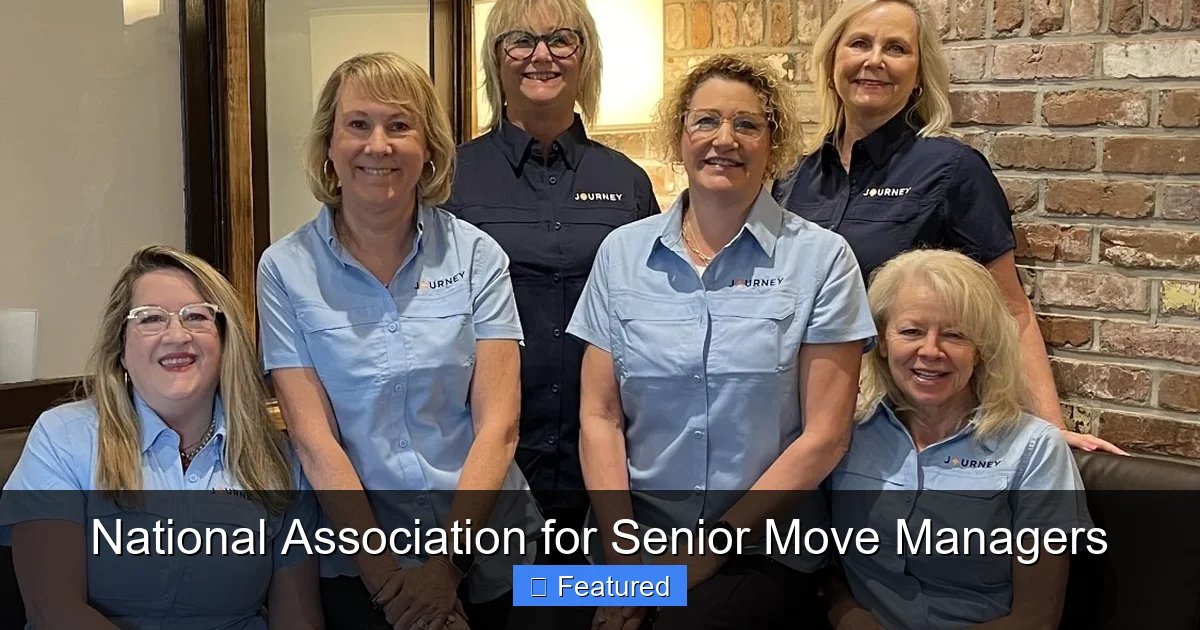
Visual guide about National Association for Senior Move Managers
Image source: journeyseniormovemanagers.com
The Essential Interview Questions
Once you have 2-3 candidates, you must interview them. This is a personal service, and chemistry matters. Ask:
- “Are you CSMM certified, and can I verify your status?” Always confirm their active certification on the NASMM site.
- “What is your exact process from start to finish?” Listen for a structured plan that includes initial consult, space planning, sorting sessions, vendor management, move day protocol, and post-move follow-up.
- “How do you handle family dynamics and disagreements?” Their answer will reveal their conflict-resolution style and emotional intelligence.
- “Can you provide references from past clients with situations similar to ours?” Speaking to a family that has already been through the process is invaluable.
- “What is your fee structure? Is it hourly, by the project, or a retainer?” Get this in writing. Most charge an hourly rate for planning and consulting, with project fees for full-service moves. Be wary of anyone who gives a firm quote over the phone without a home assessment.
- “What is your relationship with local senior communities, realtors, and moving companies?” A strong local network is a sign of experience and trust.
Red Flags to Watch For
Beware of managers who:
- Pressure you to use their “preferred” vendors without transparency on any kickbacks.
- Dismiss the emotional aspect of the process or rush the sorting phase.
- Are not insured and bonded (they should carry general liability and workers’ comp).
- Have no clear contract outlining services, fees, and cancellation policies.
- Are not active NASMM members in good standing.
Taking the time to vet a professional thoroughly will pay dividends in a smooth, respectful process. This is especially important if the senior has specific needs, such as those related to qualifying for low-income senior housing, where a manager’s knowledge of local resources and application processes can be a critical advantage.
The Cost of Compassion: Understanding Fees and Value
Let’s talk money. Senior Move Management is a fee-for-service industry, typically not covered by insurance or Medicare. Costs vary widely based on geography, the manager’s experience, and the scope of services. A single consultation might cost $150-$300. Full-service management for a large home can range from $3,000 to $10,000+.
What You’re Paying For
It’s helpful to break down the cost. You are not buying “moving labor.” You are investing in:
- Expertise: Years of experience in space planning, downsizing psychology, and vendor management.
- Time: Managers often work 50-100+ hours on a major transition, from initial meetings to the final unpacking.
- Network: Access to vetted, reliable movers, cleaners, and donation partners who understand senior moves.
- Peace of Mind: The intangible but priceless value of reduced stress, preserved family relationships, and a senior who feels empowered, not victimized, by their move.
Many families find that the financial return from expertly sold items and the avoidance of storage fees, duplicate purchases, or rushed real estate decisions more than covers the manager’s fee. It’s an expense, yes, but one that delivers a high return on investment in terms of emotional and practical outcomes. For those on a tighter budget, discussing a phased approach—hiring the manager for planning and sorting only, then handling move day with a standard mover—can be a viable compromise. Exploring options for affordable senior apartments is also part of the value proposition a good manager can assist with.
Looking Ahead: The Future of the Profession and NASMM’s Role
The senior population is growing exponentially. The demand for compassionate, professional transition services is not a trend; it’s a demographic certainty. NASMM is at the forefront of professionalizing this field. It continues to develop advanced certifications, advocate for the profession with government and industry partners, and expand public awareness.
Beyond the Physical Move: “Aging in Place” and “Right-Sizing”
The role of a Senior Move Manager is evolving. It’s not just about leaving a home. Many managers now offer “Aging in Place” consultations, helping seniors modify their current homes for safety and accessibility (installing grab bars, reorganizing kitchens) so they can stay longer. The concept of “Right-Sizing”—thoughtfully reducing space and possessions to match current lifestyle needs—is becoming a proactive service for healthy, active seniors wanting to simplify before a crisis hits. NASMM training now encompasses these broader aspects of senior living transitions.
Conclusion: More Than a Move, a Managed Transition
The National Association for Senior Move Managers represents a profound shift in how we view later-life transitions. It acknowledges that moving for a senior is a complex intersection of logistics, emotion, finance, and health. By establishing a gold standard for certification and ethics, NASMM provides families with a trusted pathway to find professionals who treat these transitions with the dignity, expertise, and compassion they deserve.
Hiring a NASMM-certified Senior Move Manager is not an admission of failure or an unnecessary luxury. It is a proactive, strategic decision to protect a loved one’s well-being, preserve family harmony, and ensure a successful start to a new chapter. It transforms a potentially traumatic event into a managed, positive transition. If you are facing this journey, take the first step. Visit the NASMM website, use their directory, and start a conversation. The right manager won’t just move your belongings; they’ll help move a life forward with care and confidence. For those also navigating financial planning for this new chapter, resources on affordable life insurance for seniors can be a complementary piece of the puzzle, ensuring financial security complements the physical transition.
Frequently Asked Questions
What is the difference between a NASMM Senior Move Manager and a regular moving company?
A NASMM Senior Move Manager provides comprehensive transition planning, emotional support, downsizing guidance, and vendor coordination, focusing on the person’s entire life change. A regular moving company solely handles the physical packing, transport, and unpacking of boxes for a fee based on labor and materials.
How much does it cost to hire a Certified Senior Move Manager?
Costs vary widely based on services and location. Initial consultations may cost $150-$300. Full-service management for a large home can range from $3,000 to over $10,000. Many managers offer tiered packages, from planning-only to full-service, to fit different budgets.
Is the Certified Senior Move Manager (CSMM) credential important?
Yes, absolutely. The CSMM designation, awarded by NASMM, requires verified experience, comprehensive training, a background check, and adherence to a strict code of ethics. It guarantees you are hiring a professional who has been specifically trained for the emotional and logistical challenges of senior moves.
What exactly does a Senior Move Manager do on move day?
On move day, the manager oversees the entire process. They ensure the senior is comfortable and safe, direct the movers on what to load and where to place items in the new home according to the pre-established plan, handle last-minute issues, and manage the flow of activity to minimize stress and confusion for the client.
Can a Senior Move Manager help with selling my home or finding a new one?
While most Senior Move Managers are not licensed real estate agents themselves, they have extensive networks of trusted realtors who specialize in senior transitions. They can provide referrals and work seamlessly with your chosen agent. Their expertise is in preparing the home for sale (decluttering, staging advice) and planning for the new space.
How do I find a reputable Senior Move Manager in my area?
The best resource is the official NASMM website. Use their “Find a Senior Move Manager” directory, which lists all active, certified members by geographic area. Always verify a manager’s certification status and check references before making a final decision.