
Motion Sensor vs Door Alarm for Senior Home Safety


Bathtub Grab Bar
Spill-Proof Adult Cup
Medication Reminder Alarm
Motion Sensor vs Door Alarm is mainly a choice between watching movement in an area and watching a specific door or entry point. Both can help families monitor a home, but they work in different ways.
A motion sensor can detect movement across a room or hallway. A door alarm usually detects when a door opens. For seniors, the right option depends on what you want to monitor and how specific the alert needs to be.
Quick Comparison
A door alarm is often better when the main concern is a specific door, such as an exterior door, bedroom door, or exit that needs monitoring. It gives a direct alert when that door opens.
A motion sensor is more useful when you want broader room or hallway coverage. It can detect movement without requiring someone to pass through a particular doorway.
For targeted monitoring, a door alarm is simpler. For wider-area movement detection, a motion sensor can be more useful.
Motion Sensor vs Door Alarm At a Glance
The two devices solve different monitoring problems, so the best choice depends on the area you want to watch.
| Feature | Motion Sensor | Door Alarm |
|---|---|---|
| Main purpose | Detect movement | Detect door opening |
| Coverage | Room or detection area | Specific door |
| Alert trigger | Movement | Door opens |
| Setup | Wall or corner placement | Door and frame placement |
| Best use | Room or hallway monitoring | Entry or exit monitoring |
| False-alert factors | Pets, sunlight, heat, placement | Sensor alignment, door movement |
| Senior-friendly use | Good for wider coverage | Very simple for targeted monitoring |
| Caregiver use | Broad movement awareness | Specific door alerts |
Motion Sensor Review for Senior Safety
Motion sensors are designed to detect movement within a defined area. This makes them useful when the goal is to know that someone has entered or moved through a room.
They can be especially helpful in hallways, living areas, or other locations where movement matters more than the opening of one particular door.
Ease of Use
A motion sensor normally works automatically after installation. There is no need for a senior to press a button every time movement occurs.
However, placement matters. Direct sunlight, heating vents, pets, and other environmental factors can cause unwanted alerts on some motion sensors.
For a senior who wants a system that works in the background, this can be convenient.
Key Strengths
- Covers an area instead of one door
- Can detect movement without contact with the device
- Useful in rooms and hallways
- Can provide broader monitoring
- May work well with connected alarm systems
Potential Drawbacks
- Placement can affect performance
- Pets may trigger some sensors
- Sunlight and heating sources can cause false alerts
- A motion sensor does not tell you which door was opened
- Larger coverage can mean less specific alerts
A motion sensor answers, “Did something move here?” rather than “Did this door open?”
Door Alarm Review for Senior Safety
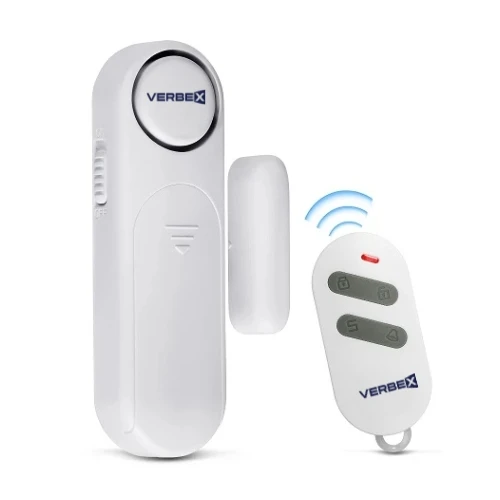
A door alarm focuses on one opening. Many door sensors use two pieces that separate when the door opens, allowing the system to generate an alert.
This focused design can be useful for families who need to know when a particular door is opened.
Ease of Use
Door alarms can be simple because the senior usually does not need to operate the sensor. Once installed, the door itself activates the alert.
For example, a door sensor can be placed on an exterior door and used to alert a caregiver when that door opens. Some systems can send alerts to a mobile app.
The main installation concern is alignment. If the sensor and magnet are not positioned correctly, the system may produce incorrect status information or false alerts.
Key Strengths
- Focuses on one specific door
- Simple everyday operation
- Useful for entry and exit monitoring
- Can provide targeted alerts
- Often requires little interaction from the senior
Potential Drawbacks
- Only monitors the doors where sensors are installed
- Does not detect movement elsewhere in the room
- Multiple doors may require multiple sensors
- Sensor alignment can affect reliability
Which Is Easier for Seniors to Use?
Both can be easy to use because neither normally requires complicated daily operation.
The difference is what happens after installation.
A door alarm is usually more straightforward when the monitoring goal is specific. If a family member wants an alert whenever one particular door opens, there is little ambiguity about what triggered it.
A motion sensor provides broader coverage, but that can also make setup more important. The sensor must be positioned so normal movement is detected without creating too many unwanted alerts.
For seniors who prefer simple, targeted monitoring, a door alarm may feel more intuitive.
For families who want movement awareness across a room or hallway, a motion sensor may offer more useful coverage.
Performance Comparison
Performance depends heavily on the monitoring goal.
A motion sensor can cover an area rather than a single opening. That makes it useful for detecting movement through a hallway or room.
A door alarm has a narrower job. It detects the opening of the door where it is installed.
| Performance Area | Motion Sensor | Door Alarm |
|---|---|---|
| Room movement | Strong fit | Not designed for this |
| Hallway movement | Strong fit | Limited |
| Specific door monitoring | Indirect | Strong fit |
| Exit monitoring | Depends on placement | Strong fit |
| Targeted alerts | Less specific | More specific |
| Wide-area detection | Better suited | Not applicable |
Motion sensors can also be more vulnerable to environmental triggers. Manufacturer guidance notes that sunlight, heating vents, curtains, pets, and similar factors can contribute to false alarms.
Door sensors can have their own issue: incorrect alignment between the sensor components can produce false alerts.
Comfort, Accessibility, and Senior-Friendly Design
Neither product normally requires a senior to carry, hold, or operate the device during normal use.
That is a useful advantage for people who want passive home monitoring.
A door alarm has an especially simple concept. The senior opens a door normally, and the sensor responds. A motion sensor is also passive, but its wider detection area means that placement and sensitivity deserve more attention during setup.
For caregivers, the most senior-friendly system is often the one that requires the least daily interaction.
Features Comparison
The useful features vary widely between models, so the comparison should focus on the functions that directly support the monitoring goal.
| Feature | Motion Sensor | Door Alarm |
|---|---|---|
| Movement detection | Yes | No |
| Door-open detection | Indirect | Yes |
| Mobile alerts | Available on some systems | Available on some systems |
| Area coverage | Yes | No |
| Specific entry monitoring | Limited | Yes |
| Event history | System-dependent | Available on some systems |
| Remote notifications | System-dependent | Available on some systems |
Some connected door sensors can show open/closed status, battery information, connection status, and event history through an app.
Price, Maintenance, and Long-Term Value
There is no single price winner because both categories include basic standalone devices and more advanced connected systems.
A simple door alarm can be inexpensive because it performs one focused task. A connected system may cost more but can add app notifications and remote monitoring features.
Motion sensors can also range from simple standalone alarms to components of larger home security systems.
| Cost Factor | Motion Sensor | Door Alarm |
|---|---|---|
| Basic setup | Usually simple | Usually simple |
| Multiple locations | May require multiple sensors | Each monitored door needs a sensor |
| Battery replacement | Model-dependent | Model-dependent |
| App features | System-dependent | System-dependent |
| Long-term value | Good for area coverage | Good for targeted monitoring |
The better value depends on whether you need coverage or specificity.
Buying several motion sensors when only one door needs monitoring may add unnecessary cost. Likewise, installing door sensors on many openings may be less practical than using motion detection for broader coverage.
Who Should Choose a Motion Sensor?
Choose a motion sensor if:
- You want to monitor movement in a room.
- You need hallway coverage.
- You want broader detection rather than one specific door.
- You want a passive monitoring device.
- You are comfortable spending time on correct sensor placement.
- You want movement detection as part of a larger security system.
Who Should Choose a Door Alarm?
Choose a door alarm if:
- You mainly want to monitor one specific door.
- You want a clear door-open alert.
- You want targeted monitoring for an entry or exit.
- You prefer a simple sensor concept.
- A caregiver needs to know when a particular door opens.
- Broad room movement detection is unnecessary.
Motion Sensor vs Door Alarm — Final Verdict
Best for broad movement monitoring: Motion Sensor
Best for a specific door: Door Alarm
Best for targeted entry alerts: Door Alarm
Best for room or hallway coverage: Motion Sensor
Best for simple door-focused monitoring: Door Alarm
Neither device replaces the other. A motion sensor watches an area, while a door alarm watches an opening.
Scoring Summary
These scores are category-level comparisons rather than laboratory test scores. Actual performance depends on the specific model, installation, and home environment.
| Category | Motion Sensor | Door Alarm |
|---|---|---|
| Ease of Use | 8/10 | 9/10 |
| Senior-Friendly Design | 8/10 | 9/10 |
| Coverage | 9/10 | 6/10 |
| Targeted Monitoring | 7/10 | 10/10 |
| Setup Simplicity | 8/10 | 9/10 |
The scores mainly reflect the different purposes of the two product types.
How We Evaluate Products
For this comparison, the key factors are ease of use, coverage, targeted alerts, setup, maintenance, accessibility, and practical value.
We also consider whether the product can perform its intended job without creating unnecessary complexity for seniors or caregivers.
No hands-on testing or laboratory testing is claimed here.
Senior-Specific Buying Considerations
Before choosing either device, think about the actual monitoring problem.
Physical Effort
Both products are normally passive after installation. The main physical effort is usually during setup.
Controls
Check whether the system uses simple controls or requires a smartphone app. A caregiver may prefer remote controls if the senior does not want to manage settings.
Maintenance
Check battery replacement requirements and whether the device gives a low-battery warning.
Setup
For motion sensors, placement is important. For door alarms, make sure the two sensor pieces remain correctly aligned when the door is closed.
Safety
If the goal is to monitor a senior who may leave home unexpectedly, a door alarm can provide a useful alert for a specific exit. But it should not be treated as a complete safety system.
A monitoring device also should not be used as a substitute for appropriate supervision or professional guidance when significant safety concerns are involved.
Common Buying Mistakes
Avoid these mistakes when choosing between the two:
- Buying a motion sensor when only one door needs monitoring
- Buying a door alarm when broad room coverage is needed
- Ignoring sensor placement
- Forgetting about battery maintenance
- Choosing a complicated app when simple alerts are enough
- Assuming one sensor can cover every area of the home
Safety
The main safety issue is reliability.
A sensor should not be treated as a guarantee that a senior will always be detected or protected. Test the system after installation and check that alerts reach the intended person.
For motion sensors, avoid installation locations that are known to create unwanted triggers, such as areas affected by direct sunlight or heating vents.
For door alarms, check that the sensor components remain properly aligned and that the alert works when the door opens.
If the device is being used because of a serious wandering or fall risk, discuss the broader safety plan with an appropriate healthcare professional or caregiver team.
Conclusion
Motion Sensor vs Door Alarm comes down to area monitoring versus door monitoring. A motion sensor is more useful when you want to detect movement across a room or hallway. A door alarm is more useful when one particular door needs attention.
For seniors and caregivers, the best choice is the one that matches the actual safety concern. If the important question is “Did someone move through this area?” choose a motion sensor. If the question is “Did this door open?” a door alarm is the more direct solution.