
Low Income Senior Housing Myrtle Beach South Carolina


Page Magnifier Sheet

Portable Radio with Large Buttons

Smart Plug with Alexa
Myrtle Beach offers several affordable senior living options for those with limited incomes, including HUD-subsidized apartments and Section 8 choices. Eligibility is primarily based on age (62+) and income, typically not exceeding 50% of the area’s median income. The application process can be competitive with long waitlists, so starting early and preparing documentation is crucial for success.
Dreaming of a peaceful retirement by the South Carolina coast? Myrtle Beach, with its warm weather, beautiful beaches, and vibrant community, is a top destination for many seniors. But for those on a fixed or limited income, finding a comfortable, affordable place to live can feel like navigating a maze. The good news is that Myrtle Beach does offer a selection of low-income senior housing options, designed to help older adults enjoy their golden years without the crushing weight of high rent. This guide will walk you through everything you need to know—from understanding the programs and eligibility to practical tips for applying and settling into your new coastal community.
Let’s be clear: “low-income” senior housing isn’t one single thing. It’s a term that covers several different types of properties and government-subsidized programs. The goal is always the same: to ensure that rent and utilities take up no more than a manageable portion of a senior’s income, usually around 30%. In Myrtle Beach, this is achieved primarily through federal programs administered by the U.S. Department of Housing and Urban Development (HUD) and local housing authorities. Navigating this system requires patience and knowledge, but the reward—a secure, affordable home in a wonderful location—is absolutely worth the effort.
This article is your friendly, comprehensive roadmap. We’ll break down the complex world of subsidized housing into simple, actionable steps. You’ll learn about the specific types of housing available in the Myrtle Beach area, exactly who qualifies, how to find open waitlists, and what to expect during the application process. We’ll also touch on the lifestyle, community resources, and additional support services that can make your life easier. Whether you’re a senior yourself or helping a parent or loved one, this guide will equip you with the confidence and information to take the next step.
Key Takeaways
- Income Limits Apply: You must meet strict income thresholds, usually at or below 50-80% of Horry County’s median income, to qualify for most low-income senior housing.
- Age Requirement is Standard: Communities are designed for seniors, typically requiring residents to be 62 years of age or older, with some allowing younger disabled individuals.
- Subsidized Programs are Key: The primary affordable options are HUD’s Section 202 Supportive Housing for the Elderly and project-based Section 8 apartments, which cap rent at 30% of adjusted income.
- Waitlists are Long: Due to high demand, wait times for subsidized units in Myrtle Beach can extend several years, making early application essential.
- Location Varies: Affordable senior housing is scattered throughout the Myrtle Beach area, from near the ocean to more inland, quieter neighborhoods, each with different amenities.
- Documentation is Critical: Having all financial, age, and identification documents ready streamlines the application process for any program or property.
- Explore All Resources: Beyond HUD programs, check with local agencies on aging and non-profits for additional rental assistance or utility support programs.
📑 Table of Contents
- Understanding the Landscape of Affordable Senior Housing in Myrtle Beach
- Who Qualifies? Demystifying Income and Age Requirements
- Navigating the Application Process: Patience and Preparation
- The Myrtle Beach Senior Housing Scene: What to Expect
- Beyond Rent: Additional Support and Resources in Myrtle Beach
- Actionable Tips and Final Advice for Your Search
Understanding the Landscape of Affordable Senior Housing in Myrtle Beach
Before you start filling out applications, it’s helpful to understand the ecosystem of affordable senior housing. It’s not just about “cheap apartments.” These are professionally managed communities that provide safe, accessible living environments tailored to older adults. The affordability comes from direct government subsidies to the property owner or direct rental assistance to the tenant. In Myrtle Beach and Horry County, you’ll primarily encounter two federal models.
HUD’s Section 202 Supportive Housing for the Elderly
This is the most common type of dedicated low-income senior housing you’ll find. Section 202 properties are apartment buildings or complexes where the federal government provided a capital advance to the developer to build or rehabilitate the property. In return, the owner agrees to keep the units affordable for very low-income seniors (those with incomes at or below 50% of the area median) for at least 40 years. Rent is calculated as 30% of the resident’s adjusted gross income. These communities often, but not always, come with supportive services like transportation, meal programs, or social activities, funded through separate grants. They are specifically for seniors, with the standard age requirement being 62 or older.
Project-Based Section 8 Housing
Another major source is properties with “project-based” Section 8 subsidies. In this model, the apartment unit itself is tied to a rental assistance contract with HUD. The landlord agrees to keep rents affordable, and the government pays the difference between the tenant’s portion (also 30% of their income) and the total contract rent. These properties are not exclusively for seniors; they are open to families and individuals who meet income limits. However, many of them have a percentage of units designated for households headed by someone 62 or older, or they may be located in buildings that naturally attract an older demographic due to their layout or location. You must apply directly through the property management for these specific subsidized units.
Housing Choice Voucher Program (Section 8) for Seniors
This is different from project-based Section 8. The Housing Choice Voucher is a portable subsidy that a participant can use to rent *any* privately-owned apartment that meets the program’s requirements and has a landlord willing to accept the voucher. The Myrtle Beach Housing Authority administers these vouchers locally. A senior receiving a voucher pays 30% of their income in rent, and the voucher covers the rest, up to a local payment standard. This offers maximum flexibility in choosing a neighborhood and specific apartment, but the waiting list for a voucher in Horry County is famously long, often closed to new applicants for years at a time.
It’s also worth noting that some non-profit organizations and faith-based groups develop and manage affordable senior housing in the area. These properties may use Low-Income Housing Tax Credits (LIHTC) to keep rents low, targeting households earning 60% or less of the area median income. While not always as deeply subsidized as Section 202, they offer rents below market rate. Understanding these distinctions is the first step in targeting your search effectively.
Who Qualifies? Demystifying Income and Age Requirements
This is the most common question, and the answer has two main parts: age and income. Let’s break them down simply.
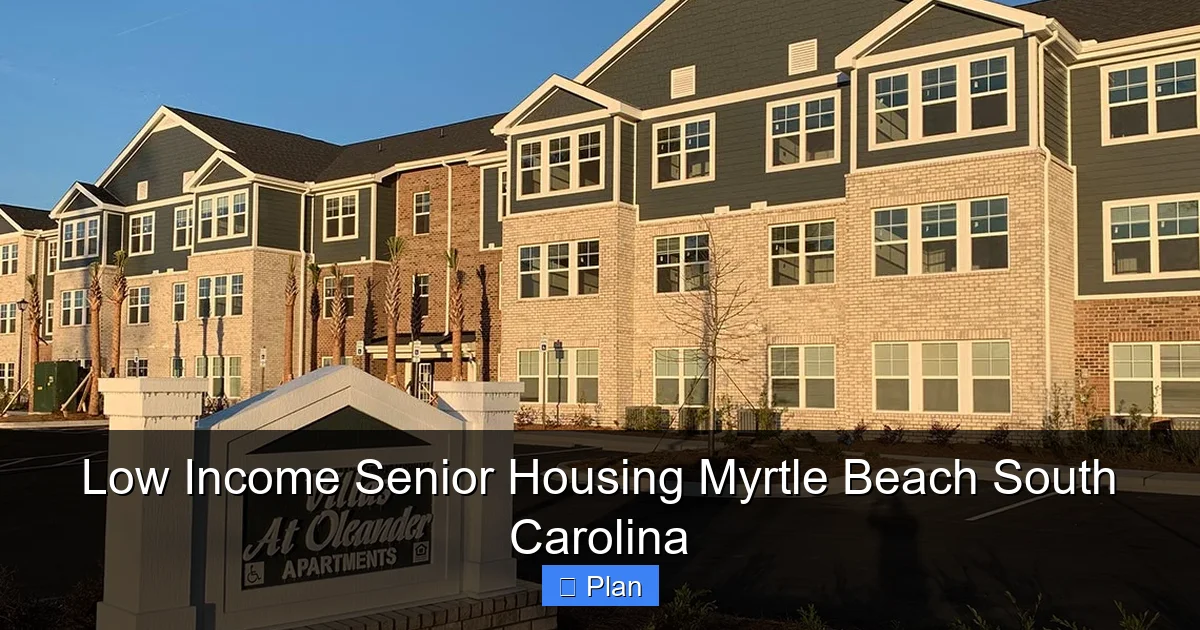
Visual guide about Low Income Senior Housing Myrtle Beach South Carolina
Image source: s3.amazonaws.com
The Age Requirement: Are You “Senior” Enough?
For HUD-funded senior housing, the standard definition is 62 years of age or older. The property’s lease will state this requirement clearly. There is an exception: if you are under 62 but have a disability that qualifies you for Social Security Disability Insurance (SSDI) or Supplemental Security Income (SSI), you may be eligible to live in senior housing, but this is not guaranteed and is at the discretion of the specific property’s management and its governing rules. Most dedicated senior communities will strictly enforce the 62+ rule to maintain their community’s character and comply with their funding agreements. So, if you are 60 or 61, your primary focus should be on general affordable housing, not senior-specific housing.
Decoding “Low-Income”: What Do the Numbers Mean?
“Low-income” is not a vague term; it’s a precise calculation based on the Area Median Income (AMI) for the Myrtle Beach metropolitan area (Horry County). HUD publishes these income limits annually. For a one-person household in Horry County for 2024, the very low-income limit (50% AMI) is approximately $36,300. The low-income limit (80% AMI) is about $58,050. Most Section 202 housing prioritizes “very low-income” seniors (≤50% AMI), but some units may be available to those up to 80% AMI.
Your “income” for these programs is your Adjusted Gross Income (AGI). This is not your total Social Security or pension. It’s your total income minus certain allowable deductions. The most important one for seniors is the standard deduction. For 2024, the standard deduction for an individual is $15,000. So, if your total Social Security benefit is $20,000 per year, your AGI for housing applications would be $5,000 ($20,000 – $15,000). Your rent will then be 30% of that $5,000, or $150/month. This calculation is why many seniors on Social Security alone qualify for very low rents. Always use your AGI, not your gross income, when estimating eligibility.
To give you a concrete example, let’s look at a hypothetical Myrtle Beach Section 202 property. If the total contract rent for a one-bedroom unit is $900 per month, and your AGI is $400/month, your tenant portion would be $120 (30% of $400). The HUD subsidy would pay the remaining $780 to the landlord. This is the powerful mechanism that makes these units affordable.
For a deeper understanding of how these income calculations work and what documentation you’ll need, the article on how to qualify for low-income senior housing is an excellent resource that covers national standards applicable to Myrtle Beach.
Navigating the Application Process: Patience and Preparation
Finding an available unit and getting through the application is a marathon, not a sprint. The demand for affordable senior housing in a desirable tourist area like Myrtle Beach far exceeds the supply. Here is a realistic, step-by-step guide to managing this process.
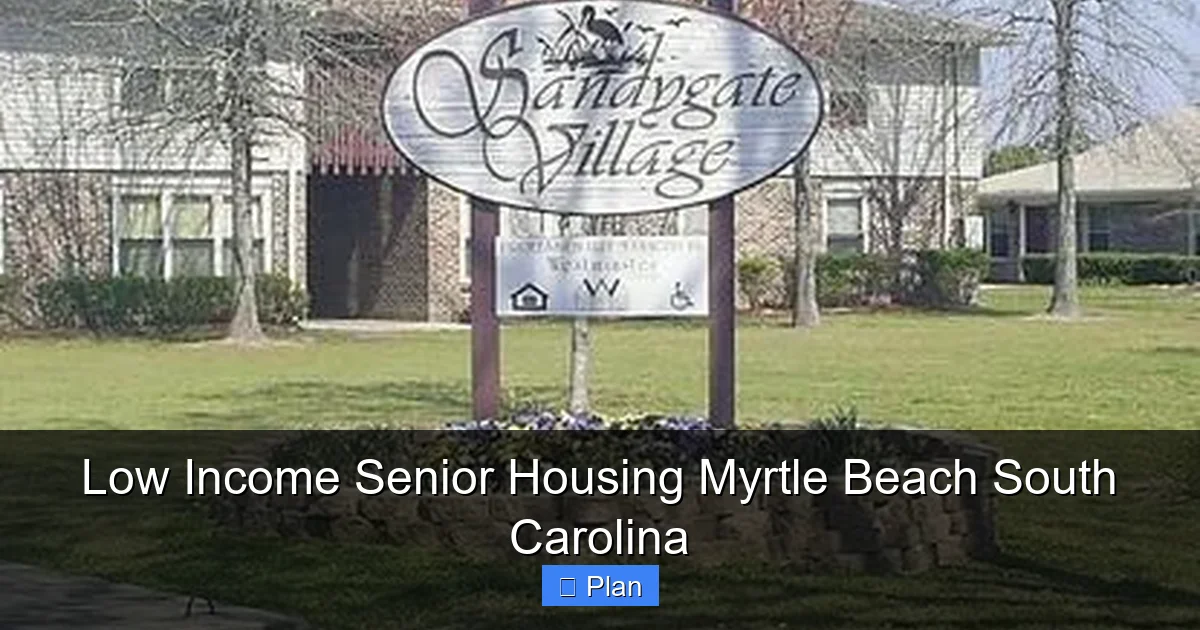
Visual guide about Low Income Senior Housing Myrtle Beach South Carolina
Image source: s3.amazonaws.com
Step 1: Find Properties and Check Waitlist Status
You cannot apply to a program in general; you must apply to specific properties that have an open waiting list. Your primary tools are:
- The HUD Resource Center: Use HUD’s online apartment search (HUDUser.gov) and filter for “Elderly” and “Myrtle Beach, SC.” This will list Section 202 and other subsidized properties.
- Myrtle Beach Housing Authority (MBHA): Check their website or call for information on project-based Section 8 properties for seniors and the status of the Housing Choice Voucher waiting list.
- Direct Contact: Once you have a list of properties (e.g., Sea Pines Senior Residence, Carolina Forest Senior Village, etc.—names change, so always search current), call each one. Ask: “Do you have an open waiting list for low-income senior apartments?” If yes, ask how to get an application packet. If the list is closed, ask if they anticipate opening it and if you can be placed on a notification list.
Be prepared to call dozens of properties. Many will have waitlists that are closed indefinitely. This is the most frustrating but crucial part of the search.
Step 2: Gather Your Documentation
When you find a property with an open list, you will need to submit a formal application with extensive documentation. Do not wait until you find an open list to gather these. Start now. You will need:
- Proof of Age: Driver’s license or birth certificate.
- Proof of Income: Recent award letters from Social Security, pension statements, bank statements showing deposits.
- Proof of Assets: Bank statements, statements from any investments. (Some programs count assets).
- Identification: Social Security card for all household members.
- Birth certificates for any other household members.
- Current rental history and landlord references.
- Citizenship/Immigration status documentation for all household members.
Having organized, complete packets ready to mail or drop off gives you an advantage. Some properties may have online applications, but you’ll still need to provide physical copies of documents later.
Step 3: Submit and Wait
Submit your application according to the property’s instructions (mail, in-person, online). Get a confirmation of receipt. Then, the waiting begins. Waitlists are often measured in years. A 3-5 year wait is not uncommon for the most desirable properties. During this time, keep your contact information updated with the property manager. If your income or household composition changes, you may need to update your file. Do not remove yourself from lists because you think the wait is too long—stay on them. You can apply to multiple properties simultaneously to increase your chances.
For a more detailed walkthrough of the qualification process that applies nationwide, including tips on documenting your income and assets, you can review this guide on how to qualify for low-income senior housing.
The Myrtle Beach Senior Housing Scene: What to Expect
Myrtle Beach isn’t a single town; it’s a 60-mile stretch of coastline with numerous communities. Affordable senior housing is spread throughout this region, each with its own feel.
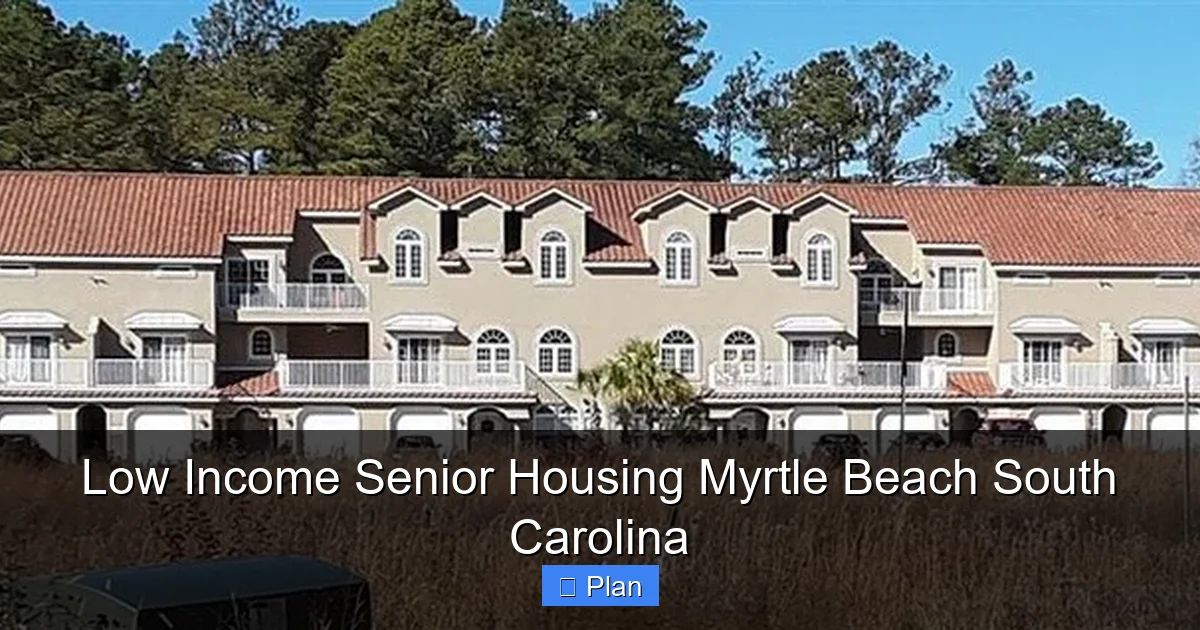
Visual guide about Low Income Senior Housing Myrtle Beach South Carolina
Image source: s3.amazonaws.com
Locations: From Oceanfront to Inland
You will find subsidized senior apartments in several key areas:
- Central Myrtle Beach: Offers the classic beach town vibe with easy access to the ocean, Broadway at the Beach, and medical facilities. Rents here may be slightly higher even with subsidies, and waitlists are often the longest due to prime location.
- North Myrtle Beach: Slightly more relaxed, with beautiful beaches and family-friendly attractions. Some affordable options exist here, particularly in areas like Cherry Grove.
- Surfside Beach: A quieter, more residential beach town south of Myrtle Beach. It has a more permanent resident feel and may have different availability.
- Carolina Forest: This massive inland master-planned community is a major hub for retirees. It offers a suburban feel with golf courses, shopping, and newer apartment complexes. Many affordable senior properties are located here due to available land.
- Conway: The inland county seat, about 15 miles from the beach. It offers a small-town atmosphere, lower costs of living, and is home to Coastal Carolina University. This is often where you’ll find some of the shortest waitlists and most modern affordable senior buildings.
Consider your priorities. Do you need to be walking distance to the ocean, or is easy access to shopping and medical offices more important? Are you looking for a bustling community or a quieter spot? Your answer will help you target your property search.
Typical Amenities and Community Life
Don’t expect luxury, but do expect clean, safe, and functional living. Most Section 202 and affordable senior apartments include:
- One and two-bedroom units, often with full kitchens (stove, refrigerator, sink).
- Accessibility features: grab bars in bathrooms, no steps, wider doorways.
- Community spaces: a common room for social activities, a laundry facility (often coin-operated), and sometimes a small library or computer room.
- Grounds maintenance: The property manager handles lawn care and exterior maintenance, which is a huge benefit.
- Controlled access or security.
What they usually do NOT include: utilities (you pay electric, water/sewer, cable/internet), garbage collection (sometimes included), or luxury finishes. The community social calendar varies widely. Some properties have very active staff organizing games, trips, and meals, while others are more hands-off. During your application process or interview, ask about the social director and typical activities. A strong community can dramatically improve quality of life and combat isolation.
Pet Policies
Pet policies are a big concern for many. Most affordable senior communities have restrictions. They often allow small pets (cats, small dogs under 25 lbs) with a pet deposit and possibly a small monthly pet rent. Some have weight or breed restrictions. Service animals are always allowed by law. Always get the pet policy in writing before applying if you have an animal. If pets are essential, you may need to look at market-rate senior apartments with more flexible policies, though those will be less affordable.
Beyond Rent: Additional Support and Resources in Myrtle Beach
Securing an affordable apartment is a huge win, but living on a fixed income requires managing all expenses. Myrtle Beach and Horry County have a network of resources to support low-income seniors.
Utility Assistance
Rent is only part of the bill. The Low-Income Home Energy Assistance Program (LIHEAP) provides federal funds to help with heating and cooling costs. The local administer in Horry County is the Horry County Council on Aging. They can also help with weatherization programs to make your home more energy-efficient. Applying for LIHEAP annually can save hundreds on electric bills, which is critical in Myrtle Beach’s hot summers.
Food Assistance
The Supplemental Nutrition Assistance Program (SNAP, formerly food stamps) is a vital resource. Many seniors incorrectly think they don’t qualify or that the benefit is too small. It’s worth applying. The SC Department of Social Services handles applications. Additionally, there are numerous congregate meal sites (senior centers) and Meals on Wheels programs in Horry County that provide nutritious, often free or low-cost, meals. The Horry County Council on Aging is the best starting point to find these local meal programs.
Healthcare and Transportation
Myrtle Beach has several major medical centers, including Grand Strand Medical Center. For seniors without a car, transportation is a lifeline. The Horry County Ride is a public transit system, but it may not meet all needs. Many senior living communities, even affordable ones, offer or coordinate shuttle services to grocery stores, medical appointments, and the mall. Always ask about this when you tour a property. Additionally, non-emergency medical transportation (NEMT) is often covered by Medicaid for eligible individuals.
For a broader look at assistance programs available to seniors with limited means, including those not directly tied to housing, the article on help for low-income seniors provides a national overview of benefits you should investigate, from property tax relief to prescription drug assistance.
Actionable Tips and Final Advice for Your Search
After all this information, what are the concrete next steps you can take today?
Start Now, Not When You’re Ready to Move
This is the single most important piece of advice. Get on every single waiting list you possibly can, even if your timeline for moving is 3-5 years away. The clock starts ticking the day you apply. Do not think, “I’m not ready yet.” You are ready to get on the list.
Cast a Wide Net
Apply to properties in all the areas mentioned: Conway, Carolina Forest, North Myrtle Beach, etc. The more applications you have out, the higher your chances of getting an offer. Keep a spreadsheet with property names, contact info, application dates, and waitlist numbers or positions.
Be a Proactive Communicator
Every 6-12 months, call the properties where you are on the waitlist. Politely confirm your information is current and ask if there has been any movement on the list. This keeps you on their radar and shows you are serious. Update them immediately if your phone number or address changes.
Consider “Age-Restricted” Market-Rate Apartments
While not subsidized, many apartment complexes in Myrtle Beach are “55+ communities” or “active adult” communities. They often rent for slightly below the general market rate because they cater to a smaller demographic. They may not be “low-income” by HUD standards, but their rents can sometimes be within reach for a senior with a modest fixed income, especially if they have no mortgage. These communities usually have nicer amenities (pools, clubhouses, fitness centers) than subsidized housing. It’s a good secondary option to explore. You can find listings of these types of communities by searching for “senior apartments Myrtle Beach” or “55+ communities Myrtle Beach.”
Prepare for the Interview
When your name nears the top of a waitlist, you will have an eligibility interview. Be prepared to explain your income sources clearly. Bring all your original documents and copies. Dress neatly. Be honest and thorough. This is your final hurdle before unit acceptance.
Remember, the journey to secure low-income senior housing in Myrtle Beach is a test of perseverance. It requires you to be organized, patient, and persistent. But the destination—a secure, affordable home in a beautiful, welcoming community—is a dream worth fighting for. Start your search today, get on those lists, and take it one step at a time.
Frequently Asked Questions
What is the maximum income to qualify for low-income senior housing in Myrtle Beach?
Income limits are based on Horry County’s Area Median Income (AMI) and household size. For one person, the very low-income limit (50% AMI) is roughly $36,300, and the low-income limit (80% AMI) is about $58,050 for 2024. Most Section 202 housing serves those at or below 50% AMI. Your Adjusted Gross Income (AGI), after deductions like the standard deduction, is what’s used for calculation, not your gross income.
How long is the waitlist for subsidized senior apartments in Myrtle Beach?
Wait times are typically very long, often ranging from 2 to 5 years, depending on the specific property and its popularity. The most centrally located properties near the ocean usually have the longest waits. This is why applying to multiple properties as soon as possible is critical.
Can I have a pet in low-income senior housing?
Most subsidized senior apartments have pet policies. They commonly allow small cats and dogs (often under 25 lbs) with a refundable pet deposit and sometimes a small monthly pet rent. Breed and weight restrictions are common. Service animals are always permitted. Always get the specific property’s pet policy in writing before applying.
Are utilities included in the rent for these affordable units?
Almost never. In Section 202 and project-based Section 8 housing, the tenant is responsible for paying their own electricity, water/sewer, cable, and internet bills directly to the providers. The subsidized rent calculation only covers the base rent. You should budget for these additional monthly costs.
What if I’m under 62 but have a disability?
While senior housing is primarily for those 62+, some properties may consider younger individuals with a qualifying disability (as defined by Social Security) on a case-by-case basis. However, this is not guaranteed, and many properties strictly adhere to the 62+ rule. Your primary option would be to apply for general affordable housing (not age-restricted) or Housing Choice Vouchers.
Is there public transportation near these senior communities?
Public transit via Horry County Ride exists but may be limited, especially to more suburban or inland areas like Carolina Forest or Conway. Many senior-focused apartment complexes, both subsidized and market-rate, offer their own shuttle services for residents to key destinations like grocery stores, medical centers, and shopping malls. Always ask a property manager about scheduled transportation during your inquiry or tour.
