
How to Become a Senior Project Manager


Memory Foam Seat Cushion

Rollator Walker with Seat

Spill-Proof Travel Mug
Becoming a senior project manager requires more than just technical know-how—it demands leadership, strategic thinking, and deep industry experience. This guide walks you through the essential steps, from gaining hands-on project management experience to earning advanced certifications and building strong stakeholder relationships. Whether you’re aiming for a promotion or transitioning into a senior role, this roadmap will help you stand out and succeed in high-stakes environments.
Key Takeaways
- Gain hands-on project management experience: Start as a project coordinator or junior project manager to build foundational skills and demonstrate reliability.
- Earn recognized certifications: Obtain PMP (Project Management Professional) or PRINCE2 credentials to validate your expertise and boost credibility.
- Develop leadership and communication skills: Senior project managers must lead teams, resolve conflicts, and communicate clearly with stakeholders at all levels.
- Build a strong professional network: Connect with mentors, attend industry events, and join professional organizations like PMI to access opportunities and insights.
- Master strategic planning and risk management: Senior roles require foresight, budget oversight, and the ability to anticipate and mitigate risks.
- Showcase results and impact: Document successful projects, deliverables, and ROI to prove your value during promotions or interviews.
- Stay updated on industry trends: Continuous learning through courses, webinars, and new tools ensures you remain competitive and innovative.
Key Takeaways
- Understanding how to become a senior project manager: Provides essential knowledge
📑 Table of Contents
- Introduction: Why Become a Senior Project Manager?
- Understanding the Role of a Senior Project Manager
- Step 1: Build a Strong Foundation in Project Management
- Step 2: Earn Relevant Certifications
- Step 3: Develop Leadership and Strategic Thinking Skills
- Step 4: Seek Mentorship and Build Your Network
- Step 5: Deliver Consistent Results and Track Your Impact
- Step 6: Prepare for the Interview Process
- Conclusion: Your Path to Senior Project Management Success
Introduction: Why Become a Senior Project Manager?
Have you ever looked at a complex project—like launching a new product, managing a major construction initiative, or coordinating a global software rollout—and wondered who makes it all happen? That person is often a senior project manager. They’re not just organizing tasks; they’re guiding teams, managing budgets, solving problems under pressure, and ensuring that deadlines are met without breaking the bank.
Becoming a senior project manager isn’t just about climbing the corporate ladder—it’s about making a real difference. You’ll be the person other team members turn to when things get tough, the one who translates business goals into actionable plans, and the leader who inspires confidence across departments.
But here’s the honest truth: it doesn’t happen overnight. It takes time, dedication, and a clear strategy. In this article, we’ll walk you through every step of the journey, from building your early-career foundation to earning the respect of executives and peers alike. Whether you’re already managing small projects or dreaming big, this guide will give you the roadmap you need to reach that senior-level milestone.
Understanding the Role of a Senior Project Manager
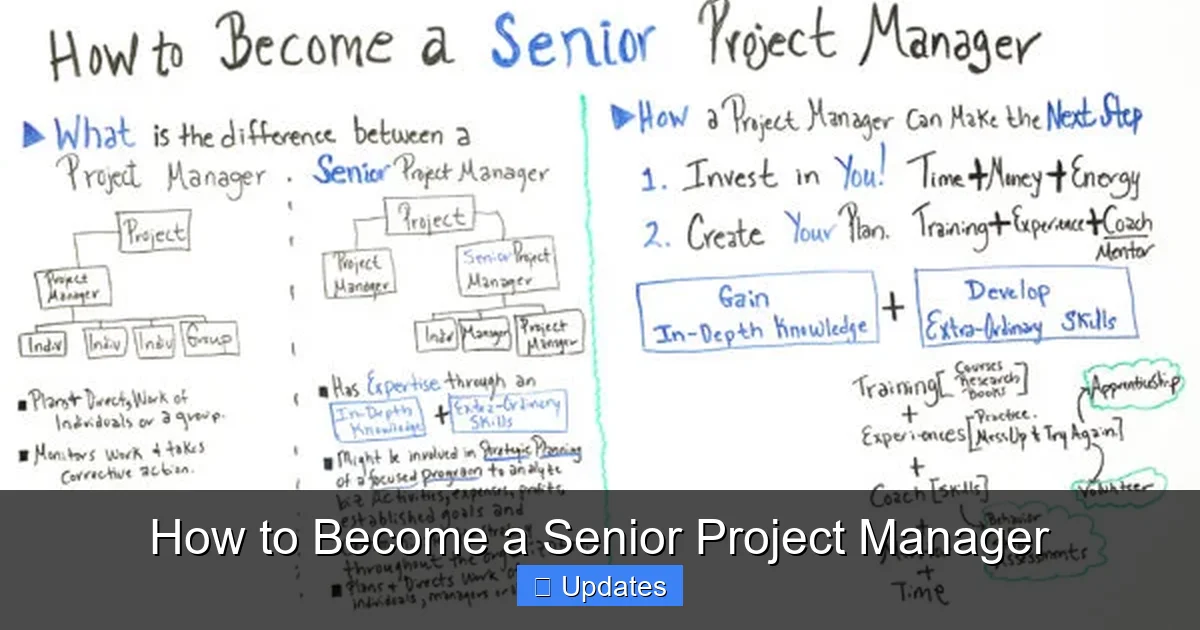
Before diving into the “how,” let’s clarify the “what.” A senior project manager is more than just a project lead—they’re a strategic partner within an organization. While a regular project manager might focus on executing day-to-day tasks, a senior project manager operates at a higher level of influence and accountability.
Core Responsibilities
Senior project managers oversee large-scale initiatives that often span multiple teams, departments, or even countries. Their responsibilities include:
- Defining project scope, goals, and success criteria
- Managing cross-functional teams and external vendors
- Overseeing budgets, timelines, and resource allocation
- Identifying risks and developing mitigation strategies
- Reporting progress to executive leadership
- Ensuring compliance with industry standards and regulations
For example, imagine a company launching a new customer-facing app. The senior project manager would coordinate developers, UX designers, marketing, legal, and IT security teams. They’d create a master timeline, track milestones, manage stakeholder expectations, and ensure the launch happens smoothly—even if unexpected delays arise.
Skills Beyond the Basics
While technical project management knowledge is important, what truly separates a senior project manager from their peers is soft power. Think emotional intelligence, negotiation skills, and the ability to inspire trust. You’ll also need to think like a business leader—understanding how your project contributes to company revenue, customer satisfaction, and long-term strategy.
For instance, if two teams disagree on priorities, a senior PM won’t just assign tasks—they’ll facilitate a discussion, align both sides with the overall goal, and find a solution that keeps momentum going.
Step 1: Build a Strong Foundation in Project Management
Visual guide about How to Become a Senior Project Manager
Image source: nishinippon.co.jp
You can’t become a senior project manager without first mastering the basics. Most organizations expect candidates to have several years of hands-on experience before considering them for a senior role.
Start in Entry-Level Roles
Your journey typically begins with positions like project coordinator, assistant project manager, or business analyst. These roles allow you to:
- Learn project management frameworks (like Agile, Scrum, or Waterfall)
- Use tools such as Microsoft Project, Jira, or Asana
- Assist in planning, scheduling, and tracking tasks
- Support senior managers in documentation and reporting
For example, as a project coordinator, you might draft meeting agendas, maintain project dashboards, and follow up on action items. Over time, you’ll gain insight into how decisions are made and why certain approaches work better than others.
Gain Industry-Specific Knowledge
Different industries have unique challenges. If you’re aiming for tech, healthcare, finance, or construction, try to specialize early. Understanding regulatory requirements, common pain points, and typical project lifecycles in your field will make you more valuable.
Say you want to work in healthcare IT. Familiarize yourself with HIPAA compliance, electronic health record (EHR) systems, and patient data security protocols. This niche expertise will set you apart when applying for senior roles later.
Step 2: Earn Relevant Certifications
Visual guide about How to Become a Senior Project Manager
Image source: projectmanager.com
Certifications aren’t always required—but they’re almost always helpful. They signal to employers that you’ve invested in your craft and understand best practices.
PMP Certification (Project Management Professional)
Administered by the Project Management Institute (PMI), the PMP is one of the most respected credentials in the field. To qualify, you generally need:
- A four-year degree and 36 months of leading projects
- OR a high school diploma and 60 months of experience plus 35 hours of formal training
The exam covers areas like scope management, cost estimation, quality control, and stakeholder engagement. Passing it proves you can apply theory to real-world scenarios.
Other Valuable Credentials
Depending on your industry and preferences, consider these alternatives:
- PRINCE2: Popular in government and European markets, PRINCE2 emphasizes structured processes and defined roles.
- CAPM (Certified Associate in Project Management): A good stepping stone for those still building experience.
- Agile Certifications (e.g., CSM, PMI-ACP): Essential if you work in fast-moving, iterative environments like software development.
Tip: Many companies cover certification costs as part of professional development programs. Don’t hesitate to ask!
Step 3: Develop Leadership and Strategic Thinking Skills
A senior project manager isn’t just organized—they’re a leader. That means influencing people without authority, thinking ahead, and aligning projects with business objectives.
Practice Leading Without Authority
In many cases, you’ll need to guide team members who report to different managers. How do you do that effectively?
- Set clear expectations from the start
- Lead by example—be reliable, transparent, and accountable
- Encourage collaboration and open communication
- Recognize contributions publicly when possible
For instance, during a sprint review in an Agile environment, instead of dictating next steps, ask the team: “What do you think we should prioritize based on our last retrospective?” This fosters ownership and innovation.
Cultivate Strategic Mindset
Senior PMs don’t just manage projects—they protect the organization’s bottom line. That means understanding ROI, trade-offs, and long-term implications.
Ask yourself:
How does this project support our quarterly goals?
What’s the worst-case scenario, and how would we respond?
If resources were unlimited, what would change?
These questions help you move beyond task execution toward strategic contribution.
Step 4: Seek Mentorship and Build Your Network
No one becomes a senior professional in isolation. Mentors, peers, and industry contacts can accelerate your growth in ways self-study never can.
Find a Mentor
Look for someone who’s already in a senior project management role—ideally within your organization or industry. Schedule regular check-ins to discuss challenges, share experiences, and get feedback.
A mentor might say, “When I faced resistance from a department head, I scheduled a one-on-one to listen first, then offered data-driven solutions.” That kind of wisdom is priceless.
Join Professional Organizations
Groups like PMI offer networking events, webinars, job boards, and local chapters. Being active shows initiative and keeps you plugged into trends.
Attending a PMI conference could introduce you to speakers discussing AI in project management or new risk assessment models—insights you can apply immediately.
Step 5: Deliver Consistent Results and Track Your Impact
Employers don’t promote based on potential alone—they promote based on proven performance. Keep detailed records of your achievements.
Document Key Projects
Create a portfolio that includes:
- Project summaries (objectives, scope, outcomes)
- Budgets vs. actuals
- Timeline adherence metrics
- Stakeholder satisfaction surveys
- Lessons learned reports
During performance reviews, reference this data confidently. Instead of saying, “I managed a website redesign,” say, “I led a $200K redesign project that increased user engagement by 35% and was delivered two weeks early.”
Quantify Your Success
Numbers speak louder than words. If you saved the company money, improved efficiency, or prevented a major setback, highlight it.
Example: “By renegotiating vendor contracts mid-project, I reduced costs by 18% without impacting quality.”
This kind of specificity builds credibility and makes you indispensable.
Step 6: Prepare for the Interview Process
Even with experience and certifications, landing a senior role requires nailing the interview. Employers will test your leadership, problem-solving, and cultural fit.
Practice Common Questions
Expect scenarios like:
- “Tell me about a time you had to manage a difficult stakeholder.”
- “How would you handle a project falling behind schedule?”
- “Describe your approach to risk management.”
Use the STAR method: Situation, Task, Action, Result. For example:
S: A key supplier suddenly went bankrupt during our manufacturing rollout.
T: I had to keep production on track with minimal delay.
A: I identified alternative suppliers within 48 hours, negotiated expedited shipping, and reallocated internal resources.
R: We completed the project on time and avoided a $500K penalty clause.
Research the Company and Role
Understand their mission, recent news, and current challenges. Ask thoughtful questions like:
- “What are the biggest project risks you’re currently facing?”
- “How does this team measure success?”
- “What does career growth look like for someone in this role?”
This shows genuine interest and strategic thinking.
For more interview prep, check out our guide: Interview Questions For A Senior Project Manager.
Conclusion: Your Path to Senior Project Management Success
Becoming a senior project manager is a journey that blends hard skills with soft power, experience with ambition, and execution with vision. It’s not easy—but it’s deeply rewarding. You’ll have the chance to shape how organizations operate, solve real-world problems, and leave a lasting impact.
Remember: progress happens one project at a time. Stay curious, keep learning, and don’t be afraid to take calculated risks. With persistence and the right strategy, you’ll not only reach the senior level—you’ll thrive there.
And when you finally land that dream role, you’ll look back and realize it wasn’t luck. It was preparation, effort, and a clear plan—all built step by step, just like this one.
Frequently Asked Questions
How long does it take to become a senior project manager?
Typically, it takes 7–10 years of progressive experience, starting from entry-level project roles. Along the way, earning certifications like PMP and developing leadership skills are crucial. Some professionals accelerate this path through specialized training or mentorship.
Do I need a degree to become a senior project manager?
While not always mandatory, most senior roles prefer candidates with a bachelor’s degree in business, engineering, or a related field. Degrees provide foundational knowledge and are often required for certifications like PMP. However, extensive experience and proven results can sometimes compensate.
What skills are most important for a senior project manager?
Beyond technical project management knowledge, leadership, communication, strategic thinking, and emotional intelligence are vital. Senior PMs must also excel at stakeholder management, risk assessment, and decision-making under pressure.
Can I become a senior project manager without a PMP certification?
Yes, but it may limit your opportunities, especially in larger organizations or regulated industries. Many employers view PMP as a benchmark for competency. That said, some companies prioritize experience and performance over credentials.
What industries hire senior project managers?
Senior project managers are in demand across nearly every sector, including technology, construction, healthcare, finance, government, and consulting. Niche expertise in these fields—such as IT infrastructure or pharmaceuticals—can enhance your appeal.
How much does a senior project manager earn?
Salaries vary by location, industry, and company size. In the U.S., senior project managers typically earn between $90,000 and $140,000 annually. Those with PMP certification and in high-demand sectors like tech or energy may earn significantly more.