
How Can Seniors Find a New Hobby? A Simple Step-by-Step Guide


Automatic Pill Dispenser

Easy Grip Kitchen Utensils

Mattress Topper Memory Foam
Quick Answer
Seniors can find a new hobby by starting with activities they already enjoy, choosing options that match their energy and abilities, and trying one activity before making a big commitment. The National Institute on Aging also encourages older adults to stay involved in enjoyable, meaningful activities.
A simple way to find the right hobby
- List your interests: Think about subjects, places, or activities that naturally hold your attention.
- Match your abilities: Consider mobility, vision, hearing, hand comfort, stamina, and transportation.
- Choose your goal: Decide whether you want creativity, movement, relaxation, learning, or social connection.
- Start small: Try the hobby for 20 to 30 minutes before buying expensive supplies.
- Test it twice: Give a promising activity more than one attempt before deciding it isn’t for you.
- Keep it enjoyable: A good hobby should add interest to your week rather than become another obligation.
Finding a new hobby later in life shouldn’t feel like choosing another job. I prefer to think of it as experimenting until you discover something that makes an ordinary afternoon more interesting.
As of 2026, seniors can choose from hobbies at home, outdoors, online, or in community groups. This guide shows you how to narrow those choices without wasting money or forcing yourself into an activity you don’t enjoy.
In This Guide
- Why should seniors consider starting a new hobby?
- How can seniors identify hobbies they may enjoy?
- What type of hobby should a senior choose?
- Where can seniors find new hobbies and activities?
- How should seniors start a new hobby safely?
- How can seniors find hobbies with limited mobility?
- How can you make a new hobby stick?
- Frequently asked questions
- Final takeaway
Why Should Seniors Consider Starting a New Hobby?
A new hobby can bring enjoyment, structure, learning, movement, or social contact into everyday life. The activity does not need to be productive to be worthwhile.
A hobby is a leisure activity you choose because you enjoy doing it. It can be creative, physical, intellectual, social, practical, or simply relaxing.
Hobbies can give your week more structure
Retirement often removes schedules that were once built around work. A weekly class, gardening routine, or Tuesday card game can create gentle structure without recreating workplace pressure.
The activity also gives you something specific to anticipate. That can matter when one day has started feeling too similar to the next.
- Creative hobbies give you something to make or improve.
- Learning hobbies introduce new subjects and skills.
- Active hobbies make movement part of recreation.
- Social hobbies create regular opportunities to see people.
- Quiet hobbies offer relaxation without demanding a busy schedule.
Meaningful activities can support healthy aging
The National Institute on Aging says enjoyable social and productive activities may support well-being and independence as people age. Activities can include hobbies, volunteering, learning, and spending time with others.
This doesn’t mean a particular hobby can prevent illness. The useful goal is simpler: find enjoyable ways to remain engaged with everyday life.
How Can Seniors Identify Hobbies They May Enjoy?
Start with curiosity rather than a long list of popular senior hobbies. The right hobby usually connects with something you already like, miss, or want to understand.
Look backward before looking forward
Think about activities you enjoyed before work and family responsibilities took over. Childhood and young-adult interests can provide surprisingly useful clues.
- Did you enjoy drawing or making things?
- Did you spend weekends outdoors?
- Were you interested in cars, history, cooking, music, or photography?
- Did you like team activities or prefer working alone?
- Was there something you always planned to learn “someday”?
You don’t have to restart the exact same activity. Someone who once enjoyed camping might now enjoy birdwatching or nature photography.
Notice what attracts your attention now
Pay attention to books, videos, conversations, and places that make you curious. Curiosity is often a better starting signal than asking yourself to identify a lifelong passion.
I like the question, “What would I enjoy knowing more about six months from now?” It makes the choice feel less permanent.
Use the five-minute interest test
Write five headings on a piece of paper: create, learn, move, connect, and relax. Under each heading, write two activities that sound appealing.
Then circle the three you would genuinely consider trying this month. Those are your starting options.
What Type of Hobby Should a Senior Choose?
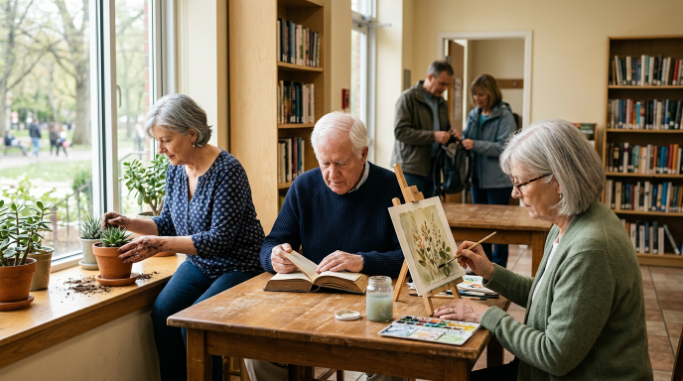
Choose the hobby type that matches what you want more of in your life. One person may want exercise, while another wants company or a peaceful activity at home.
| Goal | Hobby examples | Typical starter cost | Social level |
|---|---|---|---|
| Creativity | Drawing, watercolor, knitting, photography, writing | Low to moderate | Solo or group |
| Learning | Languages, genealogy, history, music, classes | Free to moderate | Solo or group |
| Movement | Walking, gardening, dancing, swimming, tai chi | Low to moderate | Solo or group |
| Connection | Book clubs, volunteering, cards, choir, community groups | Usually low | High |
| Relaxation | Reading, puzzles, birdwatching, journaling, gardening | Low | Usually low |
Creative hobbies
Try watercolor painting, drawing, knitting, crochet, woodworking, photography, journaling, or writing family stories. Beginners can start with a project that fits into one short session.
Active hobbies
Walking, gardening, swimming, dancing, and gentle cycling combine recreation with movement. Choose an intensity that fits your present abilities rather than your younger self.
The CDC’s physical activity guidance for adults 65 and older recommends a weekly combination of aerobic, muscle-strengthening, and balance activities. A recreational hobby can contribute to that movement.
Vet note: For this human-health topic, speak with your doctor or another qualified healthcare professional before starting demanding exercise if you have medical, balance, or mobility concerns.
Social and service hobbies
A book club, choir, walking group, community garden, card group, or volunteer role may suit someone who wants more regular interaction. The shared activity also removes pressure to make conversation from nothing.
People aged 55 and older can explore volunteer options through AmeriCorps Seniors Pathfinder.
Where Can Seniors Find New Hobbies and Activities?
You don’t need to discover every hobby alone. Libraries, community organizations, senior centers, parks, colleges, and online communities can make experimenting easier.
Start locally
Look at organizations you can reach without turning every hobby session into a transportation project. Convenience makes an activity much easier to continue.
- Public libraries
- Senior and community centers
- Parks and recreation departments
- Community colleges
- Museums and historical organizations
- Faith communities
- Garden clubs
- Walking or recreational sports groups
- Volunteer organizations
Ask about beginner sessions, trial classes, equipment loans, and senior discounts before registering. A free introductory class can tell you more than hours of online research.
Use the internet for discovery, not just screen time
Online videos and classes can help you sample painting, languages, genealogy, music, photography, cooking, or crafts at home. They are especially helpful when transportation is limited.
You can also use local social-media groups or community websites to discover nearby clubs. Verify meeting locations and costs before attending.
Ask someone to join the first time
Walking into an unfamiliar class can feel uncomfortable at any age. Bringing a friend or relative to the first meeting can lower that barrier.
Afterward, decide whether you liked the activity itself. Don’t judge a hobby only by one awkward first introduction.
How Should Seniors Start a New Hobby Safely?
Start smaller than you think you need to. A short, comfortable first experience makes it easier to judge whether the hobby deserves a second attempt.
Use a two-week trial
- Choose one hobby. Avoid starting several new routines simultaneously.
- Borrow or buy only basic supplies. Don’t invest heavily before you know you enjoy it.
- Try a 20- to 30-minute session. Stop earlier if fatigue or discomfort develops.
- Repeat the activity two or three times. First attempts are often awkward.
- Review the experience. Ask whether you enjoyed the activity enough to do it again.
Check the practical barriers
A hobby can sound wonderful yet fail because the setup is inconvenient. Think about transportation, stairs, lighting, noise, cost, storage, and equipment before committing.
For active hobbies, pay attention to balance, heat, hydration, walking surfaces, and footwear. Adapt the activity rather than assuming you must perform it one particular way.
The National Institute on Aging provides practical tips for getting and staying active as you age, including ways to work around common barriers.
Know when to stop
Pain, dizziness, chest discomfort, unusual shortness of breath, or unsafe balance are reasons to stop an active hobby. Seek appropriate medical advice before returning if symptoms concern you.
Vet note: Your own healthcare professional can give guidance based on your medical history, medications, balance, and current fitness.
How Can Seniors Find Hobbies With Limited Mobility?
Limited mobility changes how you approach a hobby, not whether you deserve one. Many enjoyable activities can be seated, shortened, moved indoors, or adapted with different tools.
Consider seated or home-based hobbies
- Audiobooks and reading
- Large-piece puzzles
- Genealogy research
- Journaling or memoir writing
- Painting and drawing
- Photography from home or nearby locations
- Container gardening
- Music appreciation
- Online classes
- Card and board games
- Cooking simple recipes
- Birdwatching from a window, porch, or accessible park
Adapt the equipment
Large-print books, brighter task lights, tablet stands, easy-grip tools, magnifiers, captions, and voice-to-text software can remove barriers. The goal is participation, not proving you can use standard equipment.
A person with hand discomfort might switch from handwriting to voice dictation. Someone who once maintained a large garden may enjoy two raised containers instead.
Include social connection when you want it
Home-based hobbies don’t have to be solitary. Virtual book clubs, phone-based discussion groups, online classes, and shared projects with relatives can add interaction.
The National Institute on Aging’s guidance on staying socially connected suggests enjoyable activities and classes as ways older adults can maintain contact with others.
How Can You Make a New Hobby Stick?

The best hobby is not the most impressive one. It is the activity you enjoy enough to repeat.
Schedule a small amount of time
Don’t begin with an ambitious daily routine. Try one or two planned sessions each week.
A 30-minute hobby you repeat can become part of your life. A three-hour plan that feels exhausting usually disappears quickly.
Measure enjoyment instead of performance
Beginners often quit because they compare their results with experienced people. Your first painting, garden, dance lesson, or guitar chord doesn’t need to be impressive.
Ask a simpler question: “Do I want to do this again?” If the answer is yes, the hobby is working.
Make progress visible
Small milestones can keep an activity interesting. Choose progress markers that fit the hobby rather than turning recreation into competition.
- Finish one book each month.
- Learn three songs on an instrument.
- Grow one successful herb container.
- Walk a new local route.
- Complete five watercolor paintings.
- Attend four club meetings.
- Research one branch of your family tree.
Give yourself permission to quit
Not every hobby needs to become permanent. Trying something and deciding it isn’t enjoyable still gives you useful information.
If one activity doesn’t fit, return to your original interest list. Choose another low-cost experiment and begin again.
Section Takeaway: A hobby becomes sustainable when it fits your real life. Keep the setup simple, notice what you enjoy, and repeat what makes you want to return.
Frequently Asked Questions
What are some easy hobbies for seniors to start?
Reading, walking, container gardening, puzzles, journaling, photography, birdwatching, card games, and simple crafts are easy starting points. They require relatively little equipment and can be tried in short sessions before making a larger commitment.
How do I find a hobby after retirement?
Think about interests you previously enjoyed, then decide whether you want more creativity, learning, movement, relaxation, or social contact. Choose two or three possible hobbies and test the most convenient option for two weeks.
What hobbies are good for a 70-year-old?
Age alone doesn’t determine the best hobby. A 70-year-old might enjoy gardening, swimming, woodworking, painting, volunteering, dancing, reading, photography, music, travel, or classes depending on health, interests, mobility, budget, and preferred level of social activity.
What are inexpensive hobbies for older adults?
Walking, library reading, journaling, drawing, birdwatching, volunteering, free online classes, puzzles, and gardening from seeds or cuttings can cost little. Libraries and community centers may also provide free programs, clubs, or shared equipment.
How can seniors meet people through hobbies?
Choose activities with repeated group contact, such as book clubs, walking groups, choirs, volunteer programs, community classes, gardening clubs, or card groups. Regular meetings make it easier for acquaintances to gradually become familiar friends.
Is it too late to start a hobby at 70, 80, or older?
No fixed age is too late to explore an appropriate new interest. The best approach is to match the hobby to current abilities, use comfortable equipment, learn at your own pace, and focus on enjoyment instead of comparing yourself with younger or more experienced participants.
What if I can’t find a hobby I enjoy?
Stop searching for one perfect passion. Try small experiments instead: attend one class, borrow one book, take one photo walk, plant one container, or join one meeting. Several ordinary interests can be just as satisfying as a single lifelong hobby.
Final Takeaway
Seniors can find a new hobby by combining curiosity with practical experimentation. Start with what interests you, match the activity to your abilities and lifestyle, and try the simplest version first.
You don’t need to become an expert. Pick one idea you would enjoy trying, give it two or three sessions, and see whether you look forward to doing it again.
That small feeling of anticipation is often the best sign you’ve found a hobby worth keeping.