
What Hobbies Can Help Reduce Stress in Seniors?


Automatic Pill Dispenser

Kindle E-Reader

Smart Digital Photo Frame
Quick Answer
Hobbies that can help reduce stress in seniors include gardening, walking, reading, painting, music, birdwatching, journaling, tai chi, crafts, volunteering, and social games. The best choice is an enjoyable activity that feels calming rather than demanding, and the National Institute on Aging encourages meaningful activities as part of healthy aging.
Good stress-relieving hobbies to try
- Gardening: Provides quiet focus, gentle movement, and time around plants.
- Walking: Adds comfortable physical activity and can include fresh air or companionship.
- Creative hobbies: Painting, knitting, music, and crafts give the mind one pleasant task to focus on.
- Reading: Creates a simple mental break from daily worries and routines.
- Social hobbies: Clubs, games, and volunteering can combine enjoyment with supportive human contact.
- Tai chi: Combines gentle movement, breathing, concentration, and relaxation.
A simple way to begin
- Choose one hobby and try it for 15–30 minutes several times during the week. Keep it if you usually feel calmer, brighter, or pleasantly absorbed afterward.
Stress does not disappear just because someone reaches retirement age. Health worries, caregiving, money, loneliness, changing routines, and loss can still make an ordinary week feel heavy.
I think hobbies work best when they give your attention somewhere pleasant to go. This guide looks at practical options for different energy levels, personalities, mobility needs, and social preferences.
In This Guide
- How can hobbies help seniors manage stress?
- What are the best calming hobbies for seniors?
- Which active hobbies can relieve stress?
- Why are creative hobbies relaxing?
- Can social hobbies help with stress?
- What hobbies work with limited mobility?
- How do you choose a stress-relieving hobby?
- When is a hobby not enough for stress?
- Frequently asked questions
- Final takeaway
How Can Hobbies Help Seniors Manage Stress?
Hobbies can give older adults enjoyable periods of focus, movement, creativity, purpose, or social connection. They are not medical treatments, but they can become useful parts of a healthy stress-management routine.
A stress-reducing hobby is an enjoyable activity that helps shift attention away from worry while creating calm, interest, connection, or a sense of accomplishment.
They give the mind something manageable to focus on
Stress often makes thoughts circle around the same problem. A puzzle, garden bed, painting, recipe, or book gives your attention a smaller and more pleasant task.
- Reading directs attention toward a story or subject.
- Gardening creates simple jobs with visible results.
- Crafts encourage attention to the next small step.
- Music can provide a familiar emotional change of pace.
- Games replace passive worrying with decisions and conversation.
They can restore structure and purpose
Retirement and other life changes can remove routines that once shaped the week. A hobby can create a gentle reason to get started without recreating a work schedule.
The National Institute on Aging notes that meaningful activities can support well-being as people age. Its broader healthy aging guidance also includes physical activity, enjoyable activities, journaling, and social support among practical ways to manage stress.
What Are the Best Calming Hobbies for Seniors?
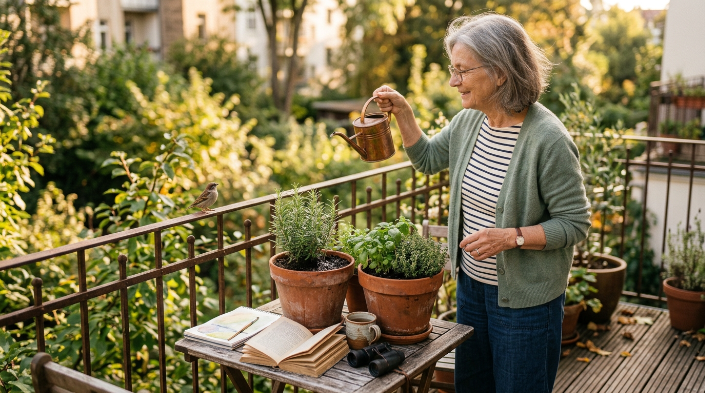
The most calming hobbies are usually simple, repeatable, and enjoyable without pressure to perform. Reading, gardening, birdwatching, music, journaling, crafts, and gentle movement are good places to start.
| Hobby | Good For | Physical Demand | Social Level | Easy First Session |
|---|---|---|---|---|
| Reading | Quiet mental escape | Low | Low | 15–30 minutes |
| Container gardening | Nature and routine | Low to moderate | Low | 15–20 minutes |
| Watercolor painting | Creative focus | Low | Low to medium | 20–30 minutes |
| Walking | Movement and fresh air | Low to moderate | Low to high | 10–20 minutes |
| Birdwatching | Quiet observation | Low | Low | 15 minutes |
| Card or board games | Fun and connection | Low | High | 30–60 minutes |
Gardening
Gardening gives you something concrete to care for. Watering herbs, trimming flowers, or checking a tomato plant can turn a restless morning into a simple routine.
A large yard is unnecessary. One pot near a sunny window can be enough.
Reading and audiobooks
Reading works well because it requires little preparation. A mystery, biography, magazine, or audiobook can give your mind a break from repetitive worries.
Birdwatching
Birdwatching slows the pace down. You can do it from a window, porch, garden, park bench, or accessible walking trail.
I like hobbies like this because there is almost nothing to “win.” You simply notice what appears.
Journaling
A journal can provide somewhere to put thoughts that otherwise keep circling. It does not need to become a long daily diary.
- Write three things that went well today.
- Record one concern and one action you can take.
- Describe a favorite memory.
- List something you are looking forward to.
- Write for five minutes without editing yourself.
Section Takeaway: A calming hobby should lower pressure, not create another standard you must meet. Simple activities you enjoy enough to repeat are usually the strongest choices.
Which Active Hobbies Can Relieve Stress?
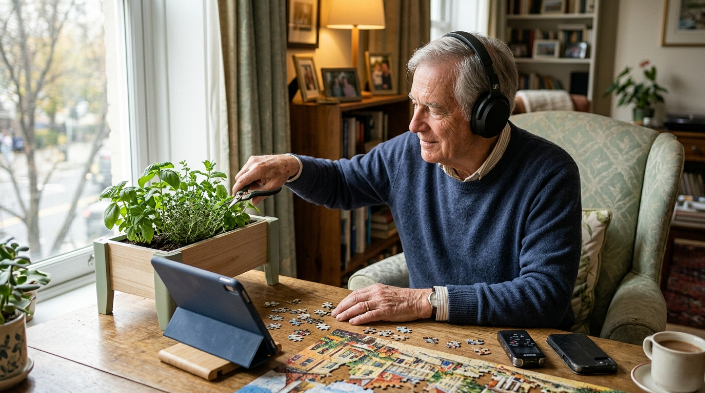
Walking, tai chi, gardening, gentle dancing, swimming, and similar activities can combine recreation with movement. The right intensity depends on health, balance, mobility, and current fitness.
Walking
A walk can be a hobby rather than a workout plan. You might explore a park, photograph interesting buildings, walk with a friend, or listen for birds along the way.
Tai chi
Tai chi combines slow movements, controlled breathing, and focused attention. The National Center for Complementary and Integrative Health notes that tai chi may also support balance in older adults.
Gardening and gentle dancing
Both activities can make movement feel less clinical. Digging, watering, dancing to favorite songs, or tending containers gives the activity another purpose besides exercise.
Vet note: For this senior-health topic, treat this as a health-professional note: anyone with significant heart, balance, joint, mobility, or breathing concerns should ask their own healthcare professional what activity level is suitable.
Why Are Creative Hobbies Relaxing for Older Adults?
Creative hobbies provide a task that can absorb attention without needing a perfect result. Painting, knitting, photography, music, writing, woodworking, and simple crafts all offer this kind of focus.
Choose process over performance
A common mistake is turning a relaxing activity into another test. The painting does not need to look professional, and the scarf does not need perfect stitches.
- Painting: Start with simple shapes, flowers, or color patterns.
- Photography: Take one interesting photograph each day.
- Knitting: Practice one stitch before attempting a large project.
- Music: Learn part of a favorite song instead of following a strict course.
- Writing: Record family stories, memories, recipes, or short observations.
As of 2026, I still prefer low-cost experiments before buying a room full of supplies. A basic starter set tells you whether the hobby feels good before money becomes part of the pressure.
Can Social Hobbies Help Seniors Feel Less Stressed?
Yes, social hobbies can provide both recreation and regular human contact. That combination may be especially useful for older adults whose daily social circle became smaller after retirement, relocation, or other life changes.
The CDC’s social connection guidance notes that supportive relationships can help people cope with stressful life challenges.
Good social hobbies do not require being outgoing
A shared activity gives people something to talk about. You do not have to walk into a room and invent conversation from nothing.
- Book clubs
- Walking groups
- Card or board-game groups
- Choirs
- Community gardening
- Volunteer programs
- Art or cooking classes
- Photography groups
Volunteering can add purpose
Some people relax better when they feel useful rather than idle. A small volunteer commitment can provide structure, purpose, and repeated contact with familiar people.
Keep the schedule reasonable. A helpful activity stops being restorative when every free hour becomes another obligation.
What Stress-Reducing Hobbies Work With Limited Mobility?
Limited mobility still leaves many enjoyable hobby choices. The practical goal is to remove barriers involving standing, reaching, transportation, hand strength, vision, or fatigue.
- Audiobooks: Useful when reading print is tiring.
- Music: Build playlists, sing, or learn simple rhythm exercises.
- Large-piece puzzles: Easier to handle than small pieces.
- Genealogy: Research family history from a table or computer.
- Container gardening: Place plants at a comfortable working height.
- Photography: Photograph birds, weather, food, flowers, or family from home.
- Voice journaling: Record memories when handwriting is uncomfortable.
- Online classes: Learn without needing regular transportation.
Adapt the hobby instead of abandoning it
A person who once loved gardening may prefer raised containers now. Someone who enjoyed novels may switch between large print and audiobooks.
Short sessions count too. Ten pleasant minutes are more useful than an exhausting hour you dread repeating.
How Do You Choose a Hobby That Actually Reduces Stress?
Choose an activity by looking at what makes you feel calmer, not what sounds impressive on a hobby list. The strongest choice fits your personality, health, budget, environment, and desired amount of company.
Use the 20-minute test
I use a simple test when comparing hobbies: try an easy version for about 20 minutes. Then notice your mood instead of judging your performance.
- Did your shoulders or breathing feel more relaxed?
- Did you think about your worries less?
- Did the time pass pleasantly?
- Would you willingly do it again?
- Was the setup easier than the enjoyment it produced?
Match the hobby to the kind of stress you feel
| What You Need | Hobbies to Consider |
|---|---|
| More quiet | Reading, birdwatching, painting, journaling |
| More movement | Walking, gardening, tai chi, gentle dancing |
| More company | Games, clubs, volunteering, group classes |
| More purpose | Volunteering, gardening, teaching, family-history projects |
| A mental reset | Crafts, music, puzzles, cooking, photography |
Do not force yourself to keep a hobby because you bought supplies. A failed experiment is useful if it helps you discover what you enjoy.
When Is a Hobby Not Enough for Senior Stress?
Hobbies can support well-being, but persistent or overwhelming stress deserves more than distraction. They should complement appropriate healthcare and social support rather than replace them.
The NCCIH explains that relaxation techniques can help produce a relaxation response, while also warning against using them as replacements for conventional medical care.
Pay attention when stress starts changing daily life
- Sleep remains badly disrupted.
- You stop enjoying activities you normally like.
- Worry interferes with meals, appointments, or daily tasks.
- You feel persistently hopeless, panicked, or unable to cope.
- Physical symptoms are new, severe, or concerning.
Vet note: In this article’s human-health context, this means a healthcare note. Persistent anxiety, low mood, sleep problems, or concerning physical symptoms should be discussed with a qualified healthcare professional.
A hobby can still be part of the plan. It simply should not carry a job it cannot safely do.
Frequently Asked Questions
What is the most relaxing hobby for seniors?
There is no single most relaxing hobby for everyone. Reading, gardening, birdwatching, music, painting, gentle walking, and crafts are strong options because they can be done at a comfortable pace with little pressure.
Can gardening help seniors with stress?
Gardening can provide gentle movement, routine, time around plants, and a clear task to focus on. Seniors can adapt it with raised beds, lightweight tools, containers, or indoor plants when bending, lifting, or outdoor access is difficult.
Are puzzles good for stress relief in older adults?
Puzzles can provide a pleasant mental focus and temporary break from everyday worries. Choose a difficulty that feels absorbing rather than frustrating, since a hobby intended for relaxation should not become another source of pressure.
What social hobbies are good for stressed seniors?
Book clubs, card groups, walking groups, community classes, choirs, volunteering, gardening clubs, and board games combine recreation with regular social contact. A smaller group may feel more comfortable for someone who finds large gatherings tiring.
What hobbies can an older adult do alone at home?
Reading, audiobooks, journaling, music, painting, knitting, puzzles, genealogy, indoor gardening, photography, cooking, and online learning can all work at home. Many can also become social later through online groups or occasional classes.
How long should a senior spend on a relaxing hobby?
There is no required session length. Starting with 15–30 minutes is practical because it is long enough to settle into an activity without turning relaxation into a demanding appointment.
Can tai chi be a relaxing hobby for seniors?
Yes. Tai chi combines slow movement, breathing, concentration, and relaxation, and it can be adapted for different abilities. Older adults with significant medical or mobility concerns should discuss suitable physical activity with their healthcare professional.
Final Takeaway
The hobbies most likely to help reduce stress in seniors are not necessarily expensive or complicated. They are activities that create enjoyable focus, comfortable movement, creativity, connection, or quiet.
Start with one small experiment this week. Read for 20 minutes, tend a plant, take a gentle walk, paint something simple, call a friend for cards, or put on music and see how you feel afterward.
If you naturally want to return to it, you may have found the right hobby. That is a much better test than choosing something simply because it appears on a list.