
What Hobbies Can Help Keep the Brain Sharp?


Reading Light for Bed

Kindle E-Reader

Jar Opener for Weak Hands
Quick Answer
Hobbies that challenge you to learn, remember, plan, move, create, or interact with other people can help keep your mind engaged as you age. Good choices include puzzles, reading, learning an instrument, dancing, gardening, crafts, language learning, strategy games, and volunteering, which fit well with the National Institute on Aging’s advice on staying active and engaged.
Brain-Friendly Hobbies to Try
- Puzzles and games: Crosswords, Sudoku, chess, and card games exercise memory, attention, and problem-solving.
- Learning skills: Languages, music, photography, and new crafts make your brain work with unfamiliar information.
- Creative hobbies: Painting, writing, knitting, and woodworking combine planning with imagination.
- Active hobbies: Walking, gardening, swimming, dancing, and tai chi add physical movement to mental engagement.
- Social activities: Book clubs, game nights, choirs, classes, and group hobbies add conversation and connection.
- Purposeful activities: Volunteering or teaching a skill challenges the mind while giving your time a clear purpose.
A Simple Rule
- Choose something you enjoy, but keep adding enough novelty that your brain cannot run completely on autopilot.
Keeping the brain sharp doesn’t require spending hours with complicated memory exercises. I prefer hobbies that feel enjoyable first and mentally demanding almost by accident.
As of 2026, healthy-aging guidance still points toward a mix of mental stimulation, physical activity, and social involvement. The best routine is usually one you’ll enjoy enough to keep doing.
In This Guide
- How Do Hobbies Help Keep the Brain Sharp?
- What Are the Best Hobbies for Keeping Your Mind Active?
- Are Puzzles Enough to Keep Your Brain Sharp?
- Which Physical Hobbies Are Good for Brain Health?
- Why Do Social Hobbies Matter?
- How Do You Choose a Brain-Healthy Hobby?
- How Often Should You Do Brain-Stimulating Hobbies?
- Can Hobbies Prevent Dementia?
- Frequently Asked Questions
How Do Hobbies Help Keep the Brain Sharp?
Hobbies can keep your brain active by asking it to solve problems, remember information, coordinate movements, or learn something unfamiliar. Some hobbies also add exercise and regular contact with other people.
A brain-sharpening hobby is an enjoyable activity that regularly makes you learn, remember, plan, create, solve, move, or communicate. It doesn’t need to look like a formal brain exercise.
Novelty makes a difference
An activity becomes less demanding once you’ve repeated it enough. Your brain learns the pattern, and the task starts to feel automatic.
That doesn’t make an old hobby useless. It means you can keep stretching it with small changes.
- Try a harder crossword instead of repeating the same level.
- Learn a new knitting pattern.
- Cook a cuisine you’ve never prepared.
- Photograph unfamiliar subjects.
- Learn new songs on an instrument.
- Play a different opponent at chess or cards.
Variety may be better than relying on one activity
The National Institute on Aging notes that mentally stimulating and physically active pursuits may support memory, with research suggesting that variety can be useful. That gives me a simple way to think about hobbies: don’t make one activity carry the entire load.
A crossword at breakfast is fine. Pairing it with a walk, a class, gardening, or a weekly game with friends creates a broader mix.
You can explore more general information about cognitive aging through the National Institute on Aging’s brain health resources.
Section Takeaway: A useful hobby challenges more than one part of everyday thinking. Variety, novelty, movement, and social contact can make a hobby routine more rounded.
What Are the Best Hobbies for Keeping Your Mind Active?
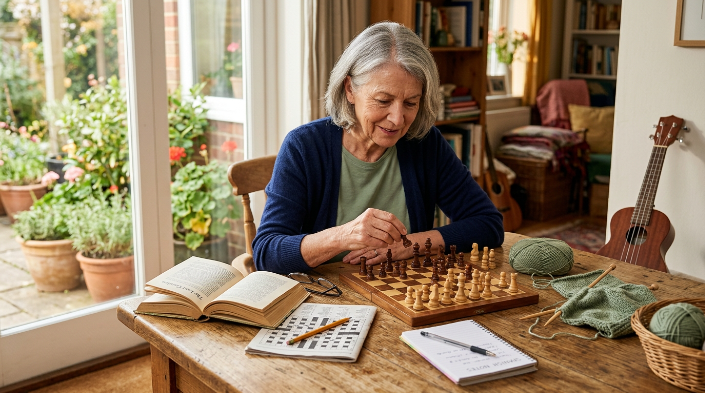
The strongest choices are hobbies you can stick with while continuing to learn. You don’t need every hobby on this list.
I would start with two or three that challenge you in different ways.
1. Reading
Reading asks you to follow ideas, remember earlier details, build mental images, and learn new information. Fiction and nonfiction both work.
Make it more active by discussing what you read. A book club adds recall, conversation, and social connection.
2. Crosswords, Sudoku, and word games
Puzzles are easy to start because they need little equipment. They can challenge vocabulary, attention, logic, number skills, and memory.
Mix the type of puzzles you solve. Switching between word, number, and visual puzzles prevents the routine from becoming too predictable.
3. Chess, cards, and strategy games
Strategy games make you plan ahead and respond to changing situations. Games with other people also bring conversation into the activity.
Bridge, chess, checkers, Scrabble, dominoes, and many card games can work. Pick one that makes you think without making you dread playing.
4. Learning a musical instrument
Music can combine listening, memory, timing, hand coordination, and reading symbols. Even returning to an instrument you played decades ago can give you new material to learn.
Keep sessions manageable at first. Fifteen or twenty focused minutes can feel more rewarding than struggling for an hour.
5. Learning a language
A new language gives the brain a steady supply of unfamiliar words and patterns. You also practice retrieval each time you try to recall a word without looking.
Use the language outside lessons when possible. Speak with another learner, label household objects, or listen to a short program in that language.
6. Painting, drawing, and crafts
Creative hobbies require decisions. You choose colors, shapes, materials, order, and technique.
Knitting, quilting, model building, woodworking, pottery, and drawing also use fine motor skills. Following a new pattern adds another mental challenge.
7. Gardening
Gardening is more mentally involved than it first appears. You plan space, remember watering needs, identify plants, solve problems, and adjust to weather.
It also gets you moving. Container gardening can offer a smaller starting point if a full garden feels like too much work.
8. Cooking new recipes
Cooking uses attention, sequencing, measurement, timing, and coordination. Trying unfamiliar recipes adds learning instead of repeating a meal you can make without thinking.
A simple challenge is enough. Choose one new dish each week and make notes about what you’d change next time.
9. Photography
Photography trains you to notice details that you might otherwise pass by. Learning composition, lighting, editing, or camera settings adds technical problem-solving.
A phone camera is enough to begin. Give yourself small projects, such as photographing one color, neighborhood architecture, or seasonal changes.
10. Dancing
Dancing combines movement with memory and rhythm. Learning steps adds a mental task that ordinary walking may not provide.
Partner and group dancing add social interaction too. Choose a style that matches your mobility and confidence.
11. Volunteering
Volunteering can involve planning, conversation, adapting to new situations, and remembering responsibilities. It can also add a sense of purpose to the week.
Libraries, schools, museums, community organizations, food programs, and animal shelters may offer different types of roles.
12. Teaching something you know
Teaching forces you to organize knowledge and explain it clearly. That can make an old skill mentally active again.
You might teach cooking, sewing, gardening, photography, woodworking, computer basics, or a favorite game to a younger family member.
| Hobby | Main Mental Challenge | Social Element | Easy Starter Session |
|---|---|---|---|
| Crosswords | Recall and vocabulary | Low | 15–20 minutes |
| Chess or cards | Planning and strategy | High | 20–30 minutes |
| Instrument | Memory and coordination | Low to high | 15–20 minutes |
| Language learning | Learning and recall | Medium to high | 15–30 minutes |
| Gardening | Planning and problem-solving | Low to medium | 20–30 minutes |
| Dancing | Sequence and coordination | High | 15–30 minutes |
The session lengths above are practical starting points, not medical prescriptions or proven minimum doses.
Section Takeaway: Don’t search for one perfect brain hobby. Build a small mix that includes learning, movement, creativity, or connection.
Are Puzzles Enough to Keep Your Brain Sharp?
Puzzles can be part of a brain-friendly routine, but I wouldn’t rely on puzzles alone. A varied routine asks the brain to handle more types of challenges.
If you’ve completed the same crossword style for years, you’re still using useful skills. You may not be learning as much as you would with a new activity.
Make familiar puzzles harder in useful ways
- Alternate crosswords with Sudoku or logic puzzles.
- Try a more difficult level once a week.
- Learn chess if you normally play word games.
- Play cards with someone instead of always solving alone.
- Discuss puzzle strategies with a friend.
- Try jigsaws that use unfamiliar subjects or more pieces.
The goal isn’t constant frustration. You want enough challenge to make yourself stop and think.
Which Physical Hobbies Are Good for Brain Health?
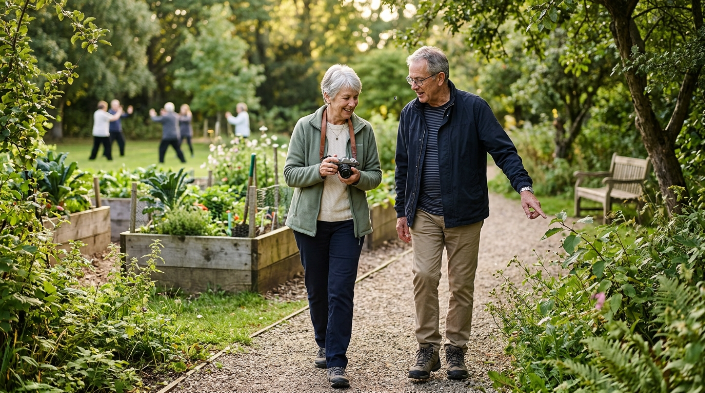
Physical hobbies deserve a place in the conversation because brain health and physical health are connected. Walking, swimming, gardening, dancing, cycling, and similar activities can combine enjoyment with movement.
The CDC’s guidance for adults 65 and older recommends at least 150 minutes of moderate aerobic activity each week, or an equivalent amount of vigorous activity. It also recommends muscle-strengthening and balance activities.
Try hobbies that make movement enjoyable
- Walking groups: Add conversation and a regular reason to leave home.
- Dancing: Combines movement, rhythm, memory, and coordination.
- Gardening: Mixes movement with planning and observation.
- Tai chi: Requires attention to controlled sequences and balance.
- Swimming: Provides an active hobby for people who enjoy water.
- Nature walks: Add birdwatching or photography for another mental task.
CDC guidance notes that regular physical activity supports brain health and can help maintain thinking, learning, and judgment skills. Any amount of activity can provide some benefit.
Health note: If you have a chronic condition, balance problem, pain, or a long period of inactivity, ask your healthcare professional what level of activity suits you.
Why Do Social Hobbies Matter?
A good hobby doesn’t have to be solitary. Social activities give you another mental challenge because conversations are unpredictable.
You listen, remember names and details, respond, tell stories, make decisions, and adjust to other people. That’s quite a workout compared with sitting silently in front of a familiar television show.
Good social hobbies for older adults
- Book or film clubs
- Card and board-game groups
- Choirs and music groups
- Walking clubs
- Community gardening
- Dance classes
- Volunteer groups
- Cooking classes
- Craft circles
- Local history groups
The National Institute on Aging encourages meaningful social and productive activities as part of healthy aging. Its guidance includes hobbies, classes, volunteering, music, games, gardening, and time with family and friends.
That doesn’t mean every hobby needs a crowd. One or two social activities each week can complement the things you enjoy doing alone.
How Do You Choose a Brain-Healthy Hobby?
Start with enjoyment, then look for challenge. A hobby you abandon after four days cannot become much of a routine.
I use four simple questions when comparing activities.
- Do I enjoy it? Interest makes repetition easier.
- Can I improve at it? Look for levels, new skills, or changing challenges.
- Does it fit my abilities? A hobby should be challenging without being unsafe.
- Does it add something missing? If you read alone all week, a social or physical hobby may bring more variety.
Don’t worry about being talented
You don’t need to become a pianist, painter, chess champion, or fluent French speaker. Learning itself is part of the point.
Being a beginner can even be useful because beginners must pay attention. You cannot rely on habit yet.
Keep the cost low at first
Don’t spend hundreds of dollars before knowing whether you like something. Libraries, community centers, senior centers, online lessons, inexpensive supplies, and borrowed equipment can make experimenting easier.
Give a hobby several sessions before judging it. The first attempt often feels awkward because everything is new.
How Often Should You Do Brain-Stimulating Hobbies?
There is no official medical number of hobby minutes that guarantees a sharper brain. Consistency matters more than chasing a perfect schedule.
A practical start is 15 to 30 minutes at a time on most days. That is a manageable routine, not a clinical prescription.
A simple weekly mix
- Monday: 20 minutes of language practice.
- Tuesday: Walk with a friend.
- Wednesday: Crossword or strategy game.
- Thursday: Try a new recipe.
- Friday: Practice an instrument or craft.
- Weekend: Garden, volunteer, dance, or join a group activity.
Notice that the example changes the type of challenge. You get memory work, movement, planning, creativity, and social contact without turning your week into a training program.
For physical activity, use health guidance rather than the hobby schedule above. The CDC’s 150-minute weekly target applies to moderate aerobic activity for older adults, not to crosswords, reading, music, or other seated hobbies.
Can Hobbies Prevent Dementia?
No hobby can guarantee that someone will avoid dementia. Be cautious with any product, game, supplement, or program that makes that promise.
Research does support staying physically, mentally, and socially active as part of healthy aging. The NIA also recommends learning new skills, staying involved in activities, volunteering, exercising, and spending time with other people.
You can read the NIA’s guidance on memory problems, forgetfulness, and aging for more context.
Know when a hobby isn’t the answer
A new hobby should not be used to explain away concerning memory or thinking changes. Some changes deserve medical evaluation.
If memory problems interfere with everyday tasks, seem to be getting worse, or worry you or your family, discuss them with a healthcare professional. The NIA advises talking with a doctor when you’re concerned about changes in thinking or memory.
Health note: Hobbies can support an active lifestyle, but they aren’t a diagnosis, treatment, or substitute for professional medical care.
Frequently Asked Questions
What is the best hobby for improving memory?
There isn’t one proven best hobby for everyone. Activities that require learning and recall, such as language study, music, reading, strategy games, and learning new skills, can make memory work part of your routine.
Is reading good for keeping the brain active?
Yes, reading involves attention, language, comprehension, and memory. You can make it more active by discussing books, taking notes, switching subjects, or reading material that teaches you something unfamiliar.
Are crosswords and Sudoku good for seniors?
Crosswords and Sudoku can be enjoyable ways to practice vocabulary, recall, numbers, attention, and logic. They work best as part of a varied routine rather than as your only mentally stimulating activity.
Is learning something new better than repeating an old hobby?
New activities usually require more focused attention because you haven’t automated the skill yet. You don’t need to abandon old hobbies, though; adding harder patterns, unfamiliar techniques, new opponents, or fresh projects can restore challenge.
What hobbies combine mental and physical activity?
Dancing, gardening, tai chi, nature photography, walking groups, swimming, and some sports combine movement with planning or attention. Dancing is especially interesting because learning steps also involves sequence, rhythm, and coordination.
What hobbies are good for seniors who spend a lot of time at home?
Reading, puzzles, painting, knitting, model building, cooking, music, online language classes, photography, writing, and indoor gardening all work at home. Video-based clubs or classes can add social contact when getting out is difficult.
What is the easiest brain-healthy hobby to start today?
Choose something requiring almost no setup, such as reading a new topic, starting a crossword, learning five words in another language, trying a new recipe, or taking a walk while identifying plants or birds. Keep the first session short enough that you’ll want another one.
What Should You Start With?
If you want to keep your brain engaged, don’t turn the process into another chore. Pick one hobby you already enjoy and one activity that’s new enough to make you think.
A puzzle, a walk, a new recipe, music practice, gardening, dancing, or conversation with a group can all have a place. The important part is continuing to learn, move, connect, and stay curious.
Start small this week. Twenty enjoyable minutes is a much better beginning than an ambitious plan you never repeat.