
What Hobbies Can Grandparents Enjoy With Grandchildren?


Upright Walker

Toilet Safety Rails

Large Display Clock with Date
Quick Answer
Grandparents and grandchildren can enjoy hobbies such as gardening, cooking, crafts, board games, photography, walking, birdwatching, puzzles, reading, and family-history projects. The best choices are simple activities that both generations enjoy and can adapt to different ages and abilities. The National Institute on Aging recommends meaningful activities with family and friends as one way older adults can stay socially engaged.
Good hobbies to try together
- Gardening: Plant flowers, herbs, or vegetables and watch the garden change together.
- Cooking: Make simple family recipes while sharing stories about where they came from.
- Arts and crafts: Draw, paint, scrapbook, knit, or build small projects together.
- Games and puzzles: Try cards, board games, chess, jigsaw puzzles, or word games.
- Outdoor activities: Walk, watch birds, take photographs, or explore a nearby park.
- Storytelling: Record family memories, organize old photographs, or create a family-history book.
Finding hobbies grandparents can enjoy with grandchildren doesn’t require expensive equipment or a packed schedule. The strongest activities usually give both generations something to contribute.
In this guide, I’ll cover creative, active, educational, indoor, and outdoor hobbies. I’ll also explain how to choose activities for different ages, energy levels, and interests.
In This Guide
- What are the best hobbies for grandparents and grandchildren?
- Which creative hobbies can grandparents do with grandchildren?
- What active and outdoor hobbies work well together?
- What hobbies help grandparents and grandchildren learn together?
- What are good quiet and indoor hobbies?
- How do you choose a hobby for different ages and abilities?
- How long should grandparents and grandchildren spend on a hobby?
- How can a shared hobby become a family tradition?
- Frequently Asked Questions
- Final Takeaway
What Are the Best Hobbies for Grandparents and Grandchildren?
The best shared hobbies are enjoyable, flexible, and easy for both generations to participate in. Nobody should feel that they are simply watching the other person have fun.
A shared intergenerational hobby is an activity in which younger and older family members participate together. Each person can contribute at their own skill and energy level.
Start with activities that encourage conversation
Some hobbies naturally create opportunities to talk. Gardening, cooking, fishing, crafting, and walking are good examples.
The activity removes pressure to keep a conversation going every second. Stories often emerge naturally while everyone’s hands are busy.
- Gardening: Grow herbs, flowers, tomatoes, or strawberries.
- Baking: Make cookies, bread, cupcakes, or family recipes.
- Photography: Photograph pets, plants, buildings, or family events.
- Card games: Play simple games or teach a favorite game from childhood.
- Music: Listen to songs from different generations and compare favorites.
- Collecting: Build collections of coins, stamps, leaves, postcards, or rocks.
Let both generations teach something
Grandparents don’t always have to be the teachers. Grandchildren can introduce games, technology, music, photography apps, or new craft ideas.
I like the idea of alternating who chooses the activity. It changes the relationship from teacher-and-student into two people exploring something together.
The National Institute on Aging notes that social and meaningful activities can help older adults stay engaged as they age. Shared hobbies provide an easy way to combine meaningful activity with family time.
Section Takeaway: Choose hobbies where both people can participate, talk, teach, and learn. The shared experience matters more than mastering the activity.
Which Creative Hobbies Can Grandparents Do With Grandchildren?
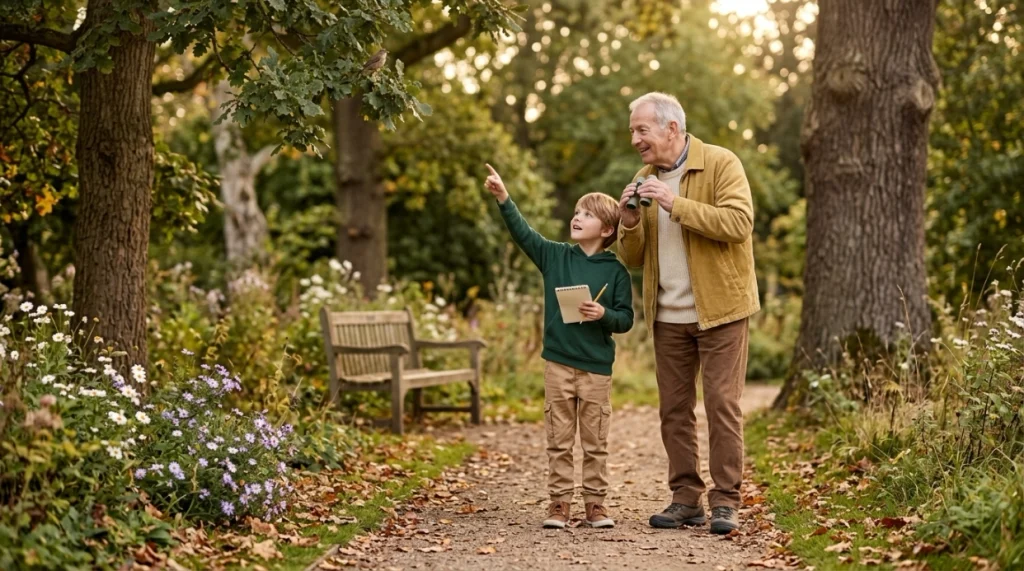
Creative hobbies work especially well because there is rarely one correct result. A six-year-old and a 70-year-old can work on the same project differently.
Painting and drawing
Start with pencils, washable paints, markers, or inexpensive watercolor sets. Choose a simple subject such as a pet, flower, house, or favorite place.
You could also draw portraits of each other. The results often become memorable keepsakes, even when nobody is an experienced artist.
Scrapbooking and family photo projects
Old photographs offer both a craft project and a conversation starter. Grandchildren can help organize pictures while grandparents explain who appears in them.
- Make a scrapbook for each decade.
- Create pages for family holidays.
- Label relatives in older photographs.
- Write short memories beside important pictures.
- Scan favorite photographs for digital backups.
Knitting, sewing, and simple crafts
Traditional skills can become rewarding intergenerational hobbies. A grandchild might start with basic stitching, friendship bracelets, or a small knitting project.
Paper crafts are another low-cost option. Try greeting cards, paper flowers, seasonal decorations, or handmade bookmarks.
Building and model projects
Some grandchildren prefer making things rather than drawing them. Model kits, wooden birdhouses, building blocks, or simple repair projects can work well.
Choose projects with clear stages. Completing one small section during each visit gives everyone a reason to continue next time.
Section Takeaway: Creative hobbies work best when the project is simple enough to enjoy but meaningful enough to keep or display afterward.
What Active and Outdoor Hobbies Work Well Together?
Walking, gardening, nature watching, swimming, and easy outdoor games can turn family time into active time. The pace should match the grandparent’s mobility and the child’s age.
The CDC’s guidance for adults age 65 and older recommends regular aerobic, muscle-strengthening, and balance activities based on individual abilities.
Walking and nature exploration
A simple walk becomes more interesting when it has a purpose. Look for birds, unusual leaves, flowers, insects, interesting buildings, or photo opportunities.
Short walks can work just as well as long outings. The goal is shared attention, not covering a certain distance.
Gardening
Gardening offers tasks for many ability levels. One person can dig or carry soil while another plants seeds, labels pots, or waters plants.
- Grow herbs in small containers.
- Plant flowers that attract butterflies.
- Create a small vegetable patch.
- Grow one plant from seed and measure it weekly.
- Decorate pots before planting.
Birdwatching
Birdwatching can happen from a trail, garden, porch, or window. A basic identification book or app adds a learning element.
Keep a notebook with the date and species spotted. Children often enjoy trying to beat their previous count.
Low-pressure outdoor games
Try activities where competition stays secondary. Gentle catch, miniature golf, bocce, beanbag toss, or kite flying can suit mixed generations.
Health note: Older adults with mobility limitations, heart conditions, balance concerns, or other medical conditions should choose activities that fit their abilities and follow advice from their own healthcare professional.
Section Takeaway: Outdoor hobbies don’t need to be strenuous. Choose activities that combine movement, curiosity, and enough flexibility to stop or rest when needed.
What Hobbies Help Grandparents and Grandchildren Learn Together?
Learning together removes the pressure of one generation needing to know everything. It also gives grandparents and grandchildren a shared goal.
Cooking family recipes
Cooking teaches measurement, timing, organization, and basic kitchen skills. It can also preserve family traditions that might otherwise disappear.
Start with one recipe that has a story behind it. Write down both the instructions and the memory connected with the dish.
Family history and genealogy
Create a simple family tree together. Add names, photographs, birthplaces, occupations, and memorable family stories.
Grandchildren can handle digital research or scanning. Grandparents can provide names, relationships, and firsthand memories.
Learning technology together
Technology can reverse traditional teaching roles. A grandchild may enjoy showing a grandparent how to edit photos, make a video call, or organize digital pictures.
The grandparent can then use that new skill for another shared project. For example, both can create a digital album after a family outing.
Reading the same book
Choose a book that suits the child’s reading level and interests. Read it separately or aloud, then talk about a chapter during each visit.
Older grandchildren may enjoy biographies, mysteries, history, travel writing, or classic novels. Younger children often prefer illustrated stories and short chapter books.
What Are Good Quiet and Indoor Hobbies?
Indoor hobbies are useful during bad weather, illness, limited mobility, or shorter visits. Many require little preparation and can be stopped whenever needed.
| Hobby | Typical Session | Energy Level | Good For |
|---|---|---|---|
| Jigsaw puzzles | 20–60 minutes | Low | Conversation and teamwork |
| Card games | 15–45 minutes | Low | Small groups and repeat play |
| Baking | 45–90 minutes | Low to moderate | Hands-on learning |
| Scrapbooking | 30–60 minutes | Low | Family stories and creativity |
| Reading | 15–30 minutes | Low | Quiet visits and bedtime |
| Craft projects | 30–60 minutes | Low | Creativity and keepsakes |
Puzzles and board games
Choose games that match attention span and skill level. Cooperative games can be helpful when large differences in age or experience make competition frustrating.
Movie or documentary nights
Take turns choosing what to watch. Follow the movie with a short conversation about a favorite scene, character, place, or idea.
Music listening
Create playlists from different decades. Grandparents can introduce older songs while grandchildren choose current favorites.
The National Institute on Aging’s healthy aging resources also encourage older adults to stay engaged through meaningful activities, learning, and social connection.
How Do You Choose a Hobby for Different Ages and Abilities?
Choose the hobby around the people involved rather than forcing people to fit the hobby. Age matters, but interests, mobility, attention span, and confidence often matter more.
For preschool-age grandchildren
Keep activities short and hands-on. Children at this age usually respond better to movement, colors, simple choices, and immediate results.
- Finger painting
- Watering plants
- Simple baking
- Building blocks
- Picture books
- Nature collecting
For elementary-age grandchildren
This age often works well for projects with clear goals. Try beginner gardening, crafts, puzzles, card games, photography, or simple woodworking with close supervision.
For teenagers
Teenagers may respond better when they can contribute genuine expertise. Photography, cooking, fishing, family history, technology, fitness, music, and travel planning can work well.
Avoid making every hobby feel like a lesson. Shared enjoyment should remain the main purpose.
When a grandparent has limited mobility
Bring the activity to a comfortable table, chair, porch, or living room. Many hobbies require little standing or walking.
- Cards and board games
- Photo organization
- Reading aloud
- Family-history interviews
- Painting and drawing
- Container gardening
- Music appreciation
- Cooking preparation while seated
The National Institute on Aging also provides resources for grandfamilies and older adults caring for younger relatives, recognizing that relationships between older adults and children can take many forms.
How Long Should Grandparents and Grandchildren Spend on a Hobby?
There is no ideal session length for every family. A successful 20-minute activity is better than a two-hour activity that leaves everyone tired or frustrated.
For younger children, shorter sessions often work best. Older children and teenagers may stay engaged longer when the activity matches their interests.
Use the “finish while it’s still fun” rule
I prefer ending shared activities while people still want a little more. That makes returning to the hobby feel exciting instead of obligatory.
A practical starting point is:
- Ages 3–5: about 15–30 minutes.
- Ages 6–9: about 20–45 minutes.
- Ages 10–12: about 30–60 minutes.
- Teenagers: about 45–90 minutes when genuinely interested.
These are flexible planning ranges, not developmental rules. Stop earlier whenever either person becomes tired, uncomfortable, or bored.
How Can a Shared Hobby Become a Family Tradition?
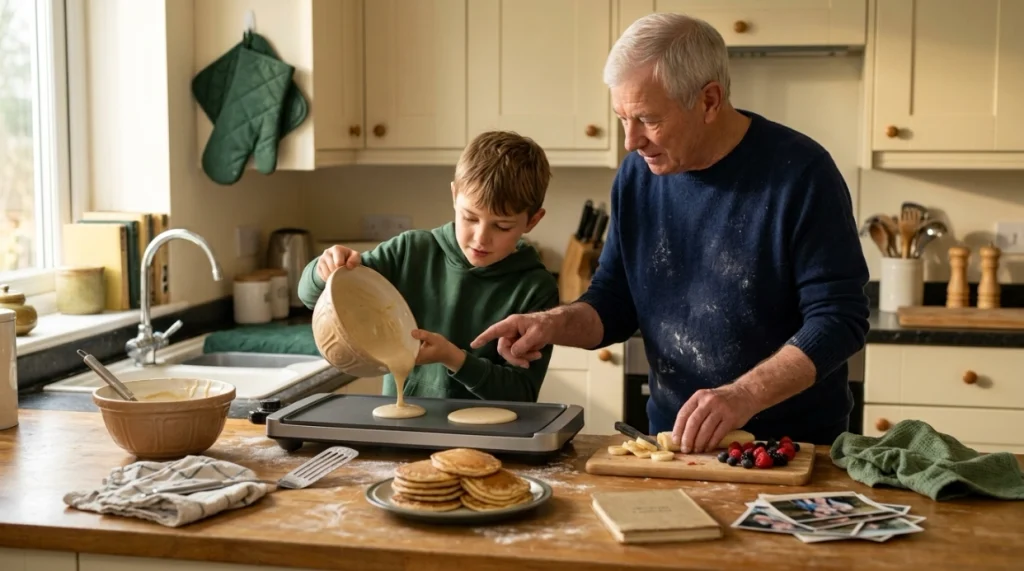
Consistency turns an ordinary activity into something grandchildren remember. The activity doesn’t need to happen every day or even every week.
Create a simple ritual
Choose something recognizable that happens each time. It might be Saturday pancakes, a monthly puzzle, spring planting, or an annual photo walk.
Children often value predictability. Knowing that a certain activity belongs to time with a grandparent can make it feel special.
Keep a record of what you do
A small notebook can transform a hobby into a family archive. Record recipes, garden harvests, birds spotted, books read, games played, or places visited.
Photographs work too. Take one picture after each project and add the date.
Let the hobby change as the grandchild grows
A five-year-old who helps stir pancake batter may later cook an entire breakfast. A child who waters tomato plants may eventually design the whole vegetable garden.
That evolution is part of what makes long-term intergenerational hobbies valuable. The activity grows with the relationship.
Section Takeaway: Repetition, shared ownership, and a simple record can turn an ordinary hobby into a tradition that lasts for years.
Frequently Asked Questions
What is an easy hobby for grandparents and young grandchildren?
Simple crafts, gardening, baking, picture books, nature walks, and building blocks are good starting points. Choose an activity with few rules and let the child participate without needing perfect coordination or a long attention span.
What can grandparents do with grandchildren at home?
Grandparents can cook, bake, play cards, complete puzzles, read, paint, scrapbook, organize family photos, watch movies, listen to music, or start an indoor garden. Most of these activities require inexpensive supplies and work in a small space.
What hobbies can grandparents and teenage grandchildren share?
Photography, cooking, fishing, hiking, genealogy, music, technology projects, fitness activities, volunteering, travel planning, and gardening can work well with teenagers. Giving the teenager some control over the activity usually makes participation feel more natural.
What hobbies are suitable for grandparents with limited mobility?
Card games, puzzles, crafts, reading, music, family-history projects, photo organization, container gardening, and seated cooking tasks require little movement. Adapt the workspace so supplies are easy to reach and breaks are available whenever needed.
Can grandparents and grandchildren share hobbies long-distance?
Yes. They can read the same book, play online games, exchange photographs, work on family-history research, share recipes, compare gardening progress, or complete identical craft projects during video calls.
Are outdoor hobbies better than indoor hobbies?
Neither type is automatically better. Outdoor hobbies offer movement and nature, while indoor activities can be easier during poor weather or when mobility is limited. Many families benefit from keeping a few options from both categories.
How can I get a grandchild interested in an old-fashioned hobby?
Avoid presenting the hobby as something they should appreciate. Let them handle materials, make decisions, change parts of the activity, and combine traditional skills with their own interests or technology.
Final Takeaway
The best hobbies grandparents can enjoy with grandchildren are the ones both generations genuinely look forward to doing. Gardening, cooking, crafts, games, walking, photography, reading, and family-history projects all offer easy starting points.
Don’t worry about finding the perfect activity immediately. Pick one simple hobby, try it together, and notice which parts create the most conversation and laughter.
When an activity works, repeat it. Over time, an ordinary hobby can become one of the family traditions grandchildren remember most.