
What Hobbies Are Good for Brain Health?


Reading Light for Bed

Puzzle Book for Seniors

Smart Plug with Alexa
Quick Answer
Good hobbies for brain health include reading, learning a language, playing music, dancing, gardening, puzzles, crafts, photography, card games, volunteering, and other activities that keep you learning, moving, or connecting with people. The National Institute on Aging also encourages older adults to stay involved in enjoyable and meaningful activities.
Brain-friendly hobbies to consider
- Learn something new: Try a language, musical instrument, class, or unfamiliar skill.
- Read and write: Books, journaling, and creative writing keep you mentally engaged.
- Move your body: Walking, dancing, swimming, tai chi, and gardening combine activity with attention.
- Use strategy: Chess, cards, word games, and puzzles can challenge reasoning and concentration.
- Stay social: Clubs, volunteering, choirs, classes, and group games add conversation and connection.
- Create things: Painting, photography, knitting, woodworking, and crafts require planning and problem-solving.
A simple way to start
- Pick one enjoyable hobby and practice it regularly instead of forcing yourself through a so-called “brain exercise” you dislike.
When people ask me which hobby is best for the brain, I don’t start with crossword puzzles. I start with one simpler question: what will you enjoy enough to keep doing?
That matters because brain health involves more than memory games. As of 2026, health guidance increasingly emphasizes a mix of mental stimulation, physical activity, social contact, and healthy everyday habits.
In This Guide
- What makes a hobby good for brain health?
- Which hobbies are best for keeping your brain active?
- Are learning-based hobbies good for the brain?
- Do physical hobbies help brain health?
- Why are social hobbies important for the brain?
- Are puzzles and brain games enough?
- How do you choose the right brain-healthy hobby?
- Frequently asked questions
- Final takeaway
What Makes a Hobby Good for Brain Health?
A brain-friendly hobby gives your mind something meaningful to do. The strongest choices often combine learning, attention, movement, creativity, or social connection.
Definition: A brain-healthy hobby is an enjoyable activity that regularly challenges mental, physical, creative, or social skills without creating excessive stress.
You don’t need an activity labeled as “brain training.” Gardening can require planning, memory, observation, movement, and problem-solving all at once.
Look for hobbies that make you participate
Passive entertainment can be enjoyable, but active participation usually asks more of you. Compare watching a cooking show with learning a new recipe yourself.
- Learning: You practice something unfamiliar.
- Attention: You need to notice details or follow a sequence.
- Problem-solving: You make choices and correct mistakes.
- Movement: The hobby gets you physically active.
- Connection: You talk, cooperate, teach, or learn with other people.
- Creativity: You make decisions instead of following one fixed answer.
The National Institute on Aging notes that mentally stimulating and meaningful activities may support cognitive health. It also cautions that researchers are still studying how strong and lasting these effects are.
That distinction is important. A hobby can support a healthy lifestyle without being a guaranteed way to prevent memory loss or dementia.
Vet note: If you notice new or worsening problems with memory, thinking, language, judgment, or daily tasks, speak with your healthcare professional rather than relying on hobbies alone.
Which Hobbies Are Best for Keeping Your Brain Active?
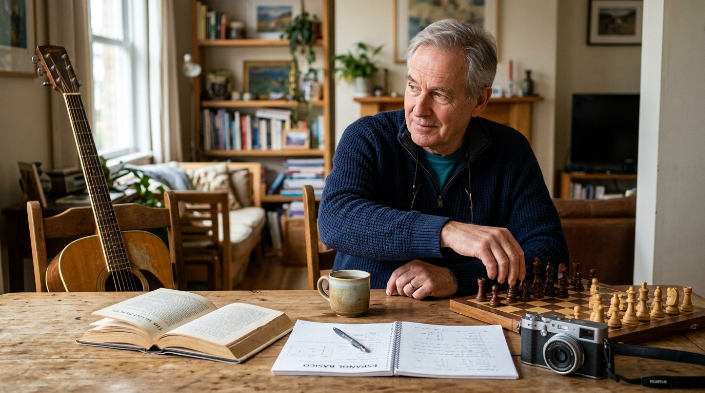
The best options make you think while giving you a reason to return tomorrow. Variety can also help because different hobbies use different skills.
| Hobby | Main challenge | Social potential | Physical activity | Easy starting session |
|---|---|---|---|---|
| Reading | Attention and comprehension | Medium with a book club | Low | 20 minutes |
| Language learning | Memory and recall | Medium to high | Low | 10–15 minutes |
| Playing music | Coordination and learning | Medium | Low | 15 minutes |
| Dancing | Sequence and coordination | High | High | 10–20 minutes |
| Gardening | Planning and observation | Low to medium | Medium | 15–30 minutes |
| Chess or cards | Strategy and attention | High | Low | 20–30 minutes |
| Photography | Observation and creativity | Medium | Low to medium | 20 minutes |
Reading and writing
Reading asks you to follow ideas, remember details, and connect information. Writing adds another layer because you must organize your own thoughts.
Try novels, biographies, history, journaling, poetry, or family memoir writing. The subject matters less than your interest in it.
Music
Learning an instrument combines listening, memory, timing, and hand coordination. Singing can add breathing, language, and social interaction.
You don’t need to become a skilled musician. Learning three chords or joining a beginner choir still gives you something new to practice.
Creative hobbies
Painting, drawing, sewing, woodworking, photography, and crafts require repeated decisions. You choose shapes, materials, colors, methods, or compositions.
- Watercolor painting
- Drawing
- Knitting or crochet
- Quilting
- Woodworking
- Photography
- Pottery
- Creative writing
I like these hobbies because there isn’t always one correct answer. That uncertainty makes you observe, adapt, and solve small problems as you work.
Section Takeaway: A useful brain-health hobby makes you an active participant. Choose activities that involve learning, creating, remembering, moving, or interacting rather than chasing one supposedly perfect brain exercise.
Are Learning-Based Hobbies Good for the Brain?
Learning something unfamiliar can challenge memory, attention, reasoning, and problem-solving. The key is choosing a skill difficult enough to be interesting without making every session frustrating.
The National Institute on Aging’s cognitive health guidance discusses mentally stimulating activities and learning new skills while noting that research into long-term cognitive effects is still developing.
Good skills to learn after 60 or 70
- A new language
- A musical instrument
- Digital photography
- Computer or smartphone skills
- Cooking techniques
- Painting or drawing
- Genealogy research
- Local history
- Bird identification
- Beginner dance steps
Don’t worry if you learn more slowly than you once did. A hobby isn’t an exam.
Ten focused minutes can be useful. Regular practice is much easier to sustain than an exhausting two-hour session once a month.
Make the hobby gradually harder
A hobby becomes less challenging when every part feels automatic. Give yourself small new goals as your skill improves.
- Start with one simple skill.
- Practice until it feels comfortable.
- Add one new technique or level.
- Review older skills occasionally.
- Use the skill in a real project.
A language learner might move from vocabulary cards to short conversations. A photographer might progress from automatic settings to learning exposure and composition.
Do Physical Hobbies Help Brain Health?
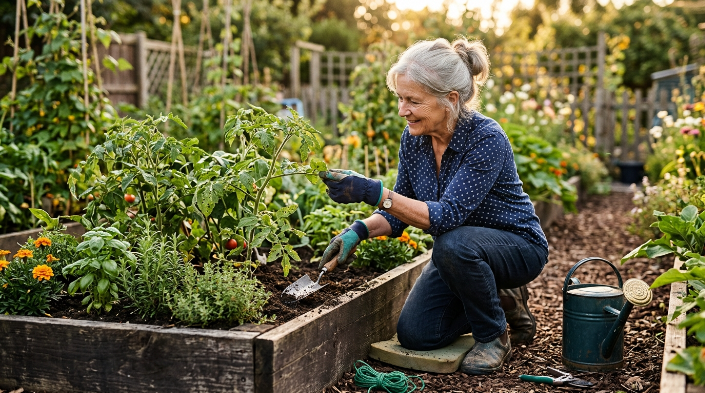
Yes, physical hobbies can support overall health while keeping your mind engaged. Walking, dancing, swimming, cycling, gardening, and tai chi are common examples.
The World Health Organization’s 2026 dementia risk-reduction guidelines include physical activity among the lifestyle approaches used to reduce modifiable risk.
Choose movement you enjoy
Exercise doesn’t have to happen in a gym. Many hobbies naturally involve movement while giving you another reason to participate.
- Gardening: Combines movement, planning, and observation.
- Dancing: Combines movement with rhythm and remembered sequences.
- Walking groups: Add conversation to physical activity.
- Tai chi: Uses controlled movement, attention, and balance.
- Swimming: Provides recreation along with whole-body movement.
The broader goal is regular activity that suits your current health and ability. Starting gently is better than choosing a demanding hobby you abandon after one week.
Vet note: Talk with your healthcare professional before starting strenuous exercise if you have heart problems, significant balance issues, severe joint pain, or another condition affecting safe activity.
Why Are Social Hobbies Important for the Brain?
A social hobby combines an activity with conversation and connection. That makes clubs, volunteering, classes, group games, choirs, and walking groups especially appealing.
Social isolation is also recognized as a health concern as people age. A regular hobby can create natural contact without making socializing feel forced.
Try activities with built-in conversation
- Book clubs
- Card or board-game groups
- Community gardening
- Volunteer programs
- Choirs
- Art classes
- Walking groups
- Dance classes
- Local history groups
A weekly group has another advantage: it gives your calendar some structure. You know that Tuesday morning means cards or Thursday afternoon means choir practice.
The CDC’s healthy aging guidance describes healthy aging as involving physical, mental, and social well-being. A good hobby can touch all three areas at once.
Volunteering deserves a special mention
Volunteering may involve planning, conversation, learning, movement, and a sense of purpose. It can also make your skills useful to somebody else.
Libraries, schools, museums, gardens, community groups, animal organizations, and food programs may offer different roles. Choose one that matches your energy and interests.
Are Puzzles and Brain Games Enough?
Puzzles can be a useful part of an active lifestyle, but I wouldn’t make them your entire brain-health plan. A crossword mainly practices a narrower range of skills than a varied week of learning, movement, creativity, and social activity.
This doesn’t make puzzles bad. It just means they’re one tool.
Use different types of games
- Crosswords: Vocabulary and recall
- Sudoku: Logic and pattern recognition
- Jigsaw puzzles: Visual-spatial reasoning
- Chess: Strategy and planning
- Card games: Attention, rules, and social interaction
- Trivia: Recall and conversation
If you always complete the same easy puzzle, consider adding something unfamiliar. Learning a new card game may provide more novelty than repeating a familiar one for years.
Be cautious with products claiming that one app or game will prevent dementia. Current evidence doesn’t justify that kind of guarantee.
How Do You Choose the Right Brain-Healthy Hobby?
Choose a hobby you can safely enjoy and repeat. Consistency usually matters more than finding the most impressive activity on a list.
I use five simple questions when comparing hobbies.
- Does it interest me? Curiosity makes practice easier.
- Does it challenge me? Look for some learning, planning, movement, or creativity.
- Can I do it safely? Consider eyesight, hearing, balance, dexterity, and stamina.
- Can I afford it? Start with basic supplies before buying expensive equipment.
- Will I repeat it? A simple weekly hobby beats an ambitious activity you never do.
Try a balanced hobby mix
You don’t need ten hobbies. Two or three can provide plenty of variety.
| Goal | Example hobby | Simple weekly routine |
|---|---|---|
| Mental challenge | Language learning | 15 minutes, 4 days |
| Movement | Walking or gardening | 20–30 minutes, 3 days |
| Connection | Book club or cards | Once weekly |
The exact schedule isn’t important. Adjust it around your energy, health, family life, and other commitments.
Don’t turn hobbies into homework
A hobby should add interest to your day. If you dread every session because somebody told you it is “good for your brain,” choose something else.
Enjoyment is useful because it makes repetition easier. You’re far more likely to keep gardening, painting, dancing, or learning when you look forward to it.
Section Takeaway: Pick hobbies you can enjoy consistently, then create variety across mental challenge, movement, creativity, and social contact. You do not need to optimize every minute of your free time.
Frequently Asked Questions
What is the best hobby to keep your brain active?
There is no single best hobby for everyone. Learning a language, playing music, reading, dancing, gardening, crafts, strategy games, and social activities are strong choices because they can involve learning, attention, problem-solving, movement, or interaction.
What hobbies improve memory?
Activities involving learning and recall may exercise memory skills. Examples include language learning, music, reading, card games, dance routines, and studying a new subject, although no hobby can guarantee that age-related memory problems will be prevented.
Are crosswords good for an aging brain?
Crosswords can challenge vocabulary, recall, and attention. They can be part of a brain-friendly routine, but a varied lifestyle that also includes movement, learning, creative activity, and social contact offers a broader range of challenges.
Is learning a new skill good for seniors?
Yes. Learning something unfamiliar requires attention, practice, memory, and problem-solving, making it a useful form of mental engagement for many older adults. Start with short sessions and increase the challenge gradually.
What are good brain hobbies for seniors with limited mobility?
Reading, audiobooks, journaling, painting, knitting, card games, chess, language learning, music, genealogy, photography editing, and online classes can all work from a seated position. Choose adaptations that suit vision, hearing, and hand comfort.
How often should I do a hobby for brain health?
There is no proven hobby schedule that guarantees better cognitive health. A practical approach is to choose activities you can enjoy regularly, even if some sessions last only 10 to 30 minutes.
Can hobbies prevent dementia?
No hobby can guarantee dementia prevention. Physical activity, cognitive stimulation, social engagement, and other healthy lifestyle factors are associated with brain health, but dementia risk depends on many factors and should not be reduced to one pastime.
Final Takeaway
The best hobbies for brain health are the ones that keep you curious, active, creative, or connected. Reading, music, gardening, dancing, learning, crafts, games, volunteering, and social groups can all play a role.
You don’t need to overhaul your life. Pick one hobby that sounds enjoyable, give it a few weeks, and notice whether it makes you want to keep learning or participating.
If it does, keep going. A hobby that becomes part of your real life is far more useful than a “perfect” brain activity that sits untouched on your to-do list.
