
What Are Good Hobbies for Seniors and Their Grandchildren?


Easy Grip Kitchen Utensils

LED Magnifying Glass

Robot Vacuum Cleaner
Quick Answer
Good hobbies for seniors and their grandchildren include gardening, cooking, crafts, puzzles, photography, reading, family-history projects, birdwatching, walking, card games, music, and simple DIY projects. The best shared hobby is enjoyable for both generations, easy to adapt, and comfortable enough to repeat regularly; the National Institute on Aging also encourages meaningful activities and time with family and friends.
Good places to start
- For creativity: Try watercolor painting, photography, scrapbooking, knitting, or simple crafts.
- For movement: Walk, garden, birdwatch, dance, or play gentle outdoor games together.
- For learning: Explore family history, read together, build puzzles, or learn a new skill.
- For food lovers: Bake cookies, make pizza, grow herbs, or create a family recipe book.
- For quiet days: Play cards, listen to music, make photo albums, or work on a jigsaw puzzle.
- For lasting memories: Choose projects that produce photos, stories, recipes, plants, or keepsakes you can revisit.
The easiest way to begin
- Choose one activity both generations find interesting and try it for 30 to 60 minutes before buying lots of supplies.
Some of my favorite family memories come from doing ordinary things together. The activity rarely needs to be expensive or impressive to become something a grandchild remembers years later.
As of 2026, grandparents and grandchildren have an enormous range of hobbies they can share at home, outdoors, or even through video calls. This guide will help you find one that fits both generations.
In This Guide
- What Makes a Good Hobby for Grandparents and Grandchildren?
- What Are the Best Hobbies to Do Together?
- Which Creative Hobbies Work Well Across Generations?
- What Outdoor Hobbies Can Seniors Enjoy With Grandchildren?
- What Hobbies Let Grandparents and Grandchildren Learn Together?
- What Can Grandparents and Grandchildren Make Together?
- How Do You Adapt a Hobby for Different Ages and Abilities?
- How Can a Shared Hobby Become a Family Tradition?
- Frequently Asked Questions
What Makes a Good Hobby for Grandparents and Grandchildren?
A good intergenerational hobby gives both people a meaningful role. It shouldn’t feel like the grandparent is only supervising or the child is simply being entertained.
A shared intergenerational hobby is a leisure activity that two generations regularly enjoy, learn, create, or explore together.
Look for activities with adjustable difficulty
The strongest hobbies work at several skill levels. A grandchild might plant seeds while a grandparent plans the garden, for example.
Both contribute. Neither person needs identical abilities.
- Easy to modify: Tasks can become simpler or harder without changing the whole activity.
- Interesting to both: Neither person should feel forced to participate.
- Conversation-friendly: The activity leaves room to talk naturally.
- Repeatable: You can return to it without planning a major outing.
- Affordable: You don’t need expensive equipment before discovering whether you enjoy it.
- Comfortable: The setup matches the senior’s mobility, vision, hearing, hand strength, and energy.
Don’t underestimate simple activities
A hobby doesn’t need an ambitious goal. Watering a windowsill herb garden every Saturday can become as meaningful as a complicated project.
I prefer activities that give families something to continue next time. A half-finished puzzle, growing tomato plant, or photo project creates an easy reason to get together again.
What Are the Best Hobbies to Do Together?
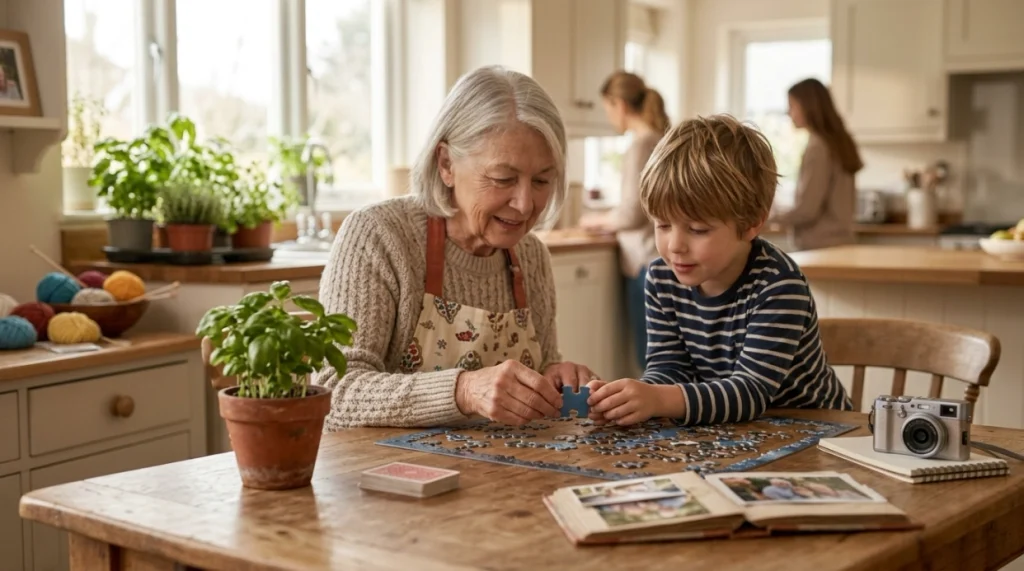
The best hobbies combine enjoyment with an easy starting point. Gardening, cooking, crafts, photography, games, nature activities, reading, and family-history projects work especially well because each person can participate differently.
| Hobby | Basic Setup | Physical Demand | Good First Session | Best For |
|---|---|---|---|---|
| Container gardening | Pot, soil, plant | Low to moderate | 20–30 minutes | Nature and responsibility |
| Baking | Basic ingredients | Low | 45–60 minutes | Hands-on teamwork |
| Photography | Phone or camera | Low | 20–40 minutes | Creativity |
| Jigsaw puzzles | Puzzle and table | Low | 30 minutes | Quiet conversation |
| Walking or birdwatching | Safe route, optional binoculars | Adjustable | 15–30 minutes | Outdoor time |
| Family history | Photos and notebook | Low | 30–45 minutes | Stories and connection |
| Cards or board games | One game | Low | 20–45 minutes | Fun and friendly competition |
| Crafting | Paper, glue, basic supplies | Low | 30–60 minutes | Making keepsakes |
Age matters less than shared interest. A 7-year-old and a 70-year-old may both become absorbed in photographing birds or decorating cupcakes.
Start small. One successful afternoon is more useful than buying supplies for six hobbies that nobody continues.
Section Takeaway: Choose an activity both generations can contribute to, then keep the first session simple and enjoyable.
Which Creative Hobbies Work Well Across Generations?
Painting, photography, crafts, scrapbooking, music, and storytelling are excellent shared creative hobbies. They allow different skill levels without requiring anyone to compete.
Painting and drawing
Put paper, pencils, markers, or watercolor paints on a table and choose one simple subject. Flowers, pets, houses, trees, and family portraits work well.
Don’t compare results. Seeing how differently two generations interpret the same subject is part of the fun.
Photography challenges
A smartphone makes photography one of the easiest hobbies to begin. Give yourselves a theme and take five photos each.
- Something red
- An interesting shadow
- A favorite object
- An unusual texture
- Something that reminds you of family
Compare the photographs afterward. Grandchildren may enjoy teaching phone features, while grandparents can share stories about the people or places being photographed.
Scrapbooking and memory albums
This hobby naturally gives each generation something to contribute. The senior provides memories while the grandchild can help organize, decorate, scan, or caption photographs.
Try completing one page per visit. That keeps the project manageable.
What Outdoor Hobbies Can Seniors Enjoy With Grandchildren?
Walking, gardening, birdwatching, nature photography, fishing, and simple lawn games can all become shared outdoor hobbies. Choose the activity according to comfort, weather, terrain, and mobility.
Gardening together
Gardening is particularly flexible because you don’t need a large yard. Herbs, flowers, strawberries, or cherry tomatoes can grow in containers.
Give the grandchild responsibility for something specific. Watering one pot or checking for new leaves makes the project feel like theirs too.
Walking with a purpose
A plain walk can feel more interesting when you add a small mission. Count birds, photograph flowers, identify interesting buildings, or collect fallen leaves.
For outdoor activities, choose safe surfaces and suitable weather. The National Institute on Aging’s outdoor activity safety guidance also recommends planning routes carefully and considering conditions such as heat and uneven ground.
Simple outdoor games
- Bocce: Easy to modify by shortening throwing distance.
- Beanbag toss: Works while standing or sitting.
- Mini golf: Adds friendly competition without requiring speed.
- Nature scavenger hunts: Turn a park visit into an observation game.
- Fishing: Offers quiet conversation and can suit different activity levels.
Older adults don’t need to turn every outdoor hobby into formal exercise. Still, the CDC’s physical activity guidance for older adults is useful when deciding how active hobbies fit into a wider weekly routine.
What Hobbies Let Grandparents and Grandchildren Learn Together?
The best learning hobbies put both generations in beginner mode. Languages, puzzles, music, history, nature identification, chess, and simple technology projects can all work.
Learn something neither person already knows
This changes the relationship in a positive way. Instead of one person always teaching, both become students.
- Learn ten words in another language.
- Identify five local birds.
- Practice three guitar or keyboard chords.
- Learn a beginner card game.
- Build a simple model.
- Solve an age-appropriate puzzle together.
Keep the sessions short enough that curiosity remains. Twenty enjoyable minutes can be better than an exhausting two-hour lesson.
Use family history as a hobby
Family-history projects give grandparents something unique to offer. Start with names, photographs, recipes, childhood memories, occupations, holidays, or stories about older relatives.
A grandchild can record audio or type the stories. The result becomes both a hobby and a family archive.
Swap teacher roles
I like this approach because it makes the hobby more balanced. A grandparent might teach chess one week, while the grandchild demonstrates a phone photography trick the next.
The goal isn’t proving who knows more. It’s creating reasons to stay curious about each other.
What Can Grandparents and Grandchildren Make Together?
Cooking, baking, woodworking, gardening, sewing, crafts, model building, and homemade gifts all produce something tangible. That finished result gives the activity an extra sense of purpose.
Cook a family recipe
Choose a dish with a story behind it. A grandparent can explain where the recipe came from while the grandchild measures, mixes, decorates, or writes down the instructions.
Eventually, those recipes can become a small family cookbook. Add photographs and a sentence about the memory behind each dish.
Build small projects
Large projects can become tiring or complicated. Small projects create faster wins.
- Paint a birdhouse.
- Plant an herb container.
- Make greeting cards.
- Decorate picture frames.
- Create friendship bracelets.
- Assemble a beginner model kit.
- Make seasonal decorations.
A child doesn’t have to master the adult’s skill. Give them one safe, useful job and expand their role as confidence grows.
Create gifts for other people
Making something for a third person can give the project extra meaning. Homemade birthday cards, cookies, photo books, ornaments, or planted pots are manageable choices.
The hobby then becomes about collaboration rather than keeping score.
How Do You Adapt a Hobby for Different Ages and Abilities?
Keep the activity the same but change each person’s role, pace, equipment, or difficulty. Successful shared hobbies don’t require grandparents and grandchildren to perform identical tasks.
Change the role instead of abandoning the hobby
A senior who finds kneeling uncomfortable can garden at a raised container. A grandchild can handle lower beds or carry light tools.
If long walks are tiring, use a shorter accessible route and spend more time photographing or birdwatching from a bench.
- Limited hand strength: Choose larger game pieces, lightweight tools, or easy-grip craft supplies.
- Reduced vision: Use bright lighting, large-print cards, strong contrast, or audiobooks.
- Lower stamina: Break hobbies into 15- to 30-minute sessions.
- Young grandchildren: Simplify rules and focus on participation instead of perfect results.
- Teen grandchildren: Give them ownership of planning, technology, photography, or research.
Comfort should come before finishing the project. There’s nothing wrong with continuing next weekend.
The broader National Institute on Aging healthy-aging resources can also help families think about activities in the context of an older adult’s abilities and overall well-being.
Health note: A senior with significant mobility limitations, balance concerns, or medical restrictions should follow advice from their own healthcare professional when choosing physically demanding activities.
How Can a Shared Hobby Become a Family Tradition?
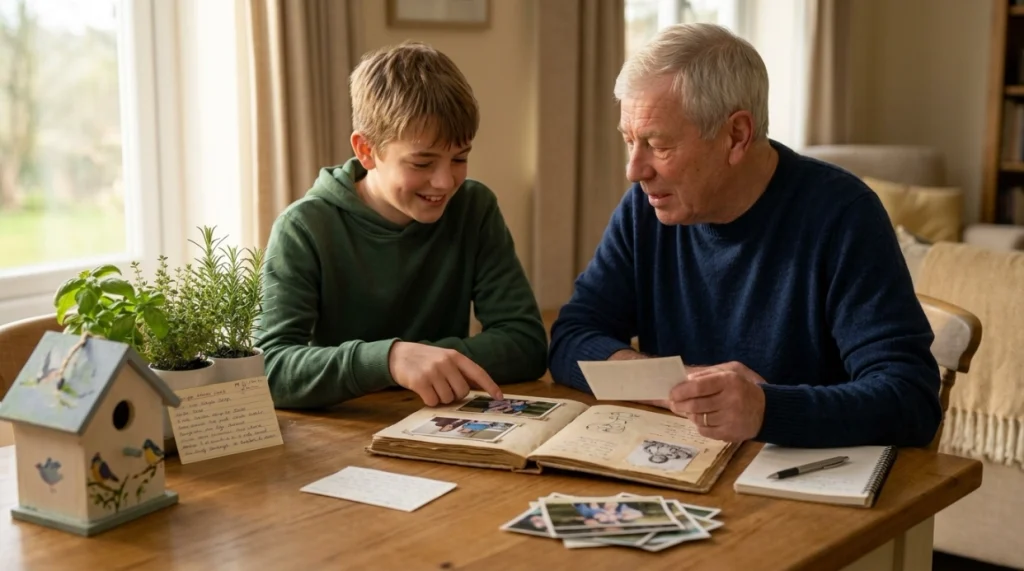
Consistency turns an occasional activity into a tradition. Pick a simple rhythm that fits real family life rather than creating another obligation.
Give the hobby a regular time
You might cook together on the first Sunday each month. Another family might garden every Saturday morning during summer.
Don’t make attendance rigid. The habit should create anticipation, not pressure.
Keep evidence of your progress
Photos, notebooks, finished crafts, recipe cards, garden measurements, and score sheets create a visible history. Looking back often becomes as enjoyable as the hobby itself.
One grandfather I knew kept a simple notebook of projects completed with his grandchildren. He recorded the date, what they made, and one funny thing that happened.
That kind of record costs almost nothing. Years later, it can become surprisingly valuable to the family.
Let the hobby evolve
A five-year-old who helps decorate cookies may eventually become interested in learning full recipes. A child who waters flowers might later design an entire vegetable bed.
Shared hobbies can grow with both people. You don’t need to preserve the first version forever.
- Start with one manageable activity.
- Repeat it if both people enjoy it.
- Let each person suggest changes.
- Take occasional photos or notes.
- Add new challenges gradually.
- Drop the hobby if it stops being fun.
The National Institute on Aging notes that meaningful activities and social connections can be valuable parts of later life. Shared hobbies are one practical way to build that connection without making every visit revolve around conversation alone.
Section Takeaway: The best tradition isn’t necessarily the most elaborate one. It’s the activity both generations genuinely want to do again.
Frequently Asked Questions
What is the easiest hobby for grandparents and grandchildren to start?
Card games, puzzles, baking, photography, and container gardening are easy starting points because they need limited equipment. Choose something you can try in one short session before investing in more supplies.
What are good hobbies for grandparents and young grandchildren?
Good choices include simple crafts, picture books, baking, planting seeds, coloring, nature walks, music, matching games, and easy puzzles. Keep instructions short and give the child a clear hands-on role.
What hobbies work well with teenage grandchildren?
Photography, cooking, fishing, genealogy, video projects, gardening, woodworking, music, hiking, and learning technology can work well. Teenagers often participate more enthusiastically when they can help choose or lead the activity.
What can grandparents and grandchildren do together indoors?
Try jigsaw puzzles, card games, cooking, baking, scrapbooking, painting, family-history interviews, reading, music, model building, or learning a new skill online. Indoor hobbies are especially useful when weather or mobility limits outdoor activities.
What are inexpensive hobbies for grandparents and grandchildren?
Walking, reading library books, drawing, card games, storytelling, phone photography, journaling, birdwatching, and family-history projects can cost little or nothing. Starting with materials you already own keeps experimentation inexpensive.
Can long-distance grandparents share hobbies with grandchildren?
Yes. Read the same book, solve puzzles, cook the same recipe, play suitable online games, share photographs, research family history, or work on matching craft projects during video calls.
How often should grandparents and grandchildren do a hobby together?
There is no required schedule. Weekly or monthly sessions can both work well. Choose a frequency that feels enjoyable and realistic, because a sustainable routine matters more than doing the activity often.
What Is the Best Hobby to Try First?
Start with the activity that makes both people curious. Gardening, cooking, photography, puzzles, crafts, and family-history projects are strong choices because they’re flexible and easy to personalize.
Keep your first attempt simple. If both grandparent and grandchild finish the day saying, “We should do that again,” you’ve probably found the right hobby.
