
Emergency Generator Repair for Senior Living


Voice Assistant Smart Speaker

Digital Thermometer

Page Magnifier Sheet
Emergency generator repair is critical for senior living facilities to ensure power continuity during outages. A reliable backup system protects residents, supports medical equipment, and maintains safety protocols. Timely repairs and preventative maintenance are essential to avoid life-threatening situations in vulnerable populations.
Key Takeaways
- Power reliability is non-negotiable: In senior living communities, uninterrupted electricity ensures access to medical devices, lighting, heating, and communication systems during blackouts.
- Preventative maintenance saves lives: Regular inspections and servicing of emergency generators reduce failure risks and extend equipment lifespan.
- Compliance is essential: Facilities must meet local, state, and federal regulations regarding backup power systems, including NFPA 110 standards.
- Fast response teams are vital: Partnering with experienced technicians who specialize in senior housing ensures quick diagnosis and repair during crises.
- Cost-effective solutions exist: Many communities qualify for grants or subsidies for emergency preparedness upgrades through government programs.
- Staff training complements hardware: Educating facility staff on generator operation and emergency procedures enhances overall safety.
- Technology integration improves monitoring: Modern generators with remote diagnostics and automatic transfer switches offer real-time alerts and reduced downtime.
📑 Table of Contents
- Why Emergency Generator Repair Matters in Senior Living
- Understanding Emergency Generators in Senior Housing
- The Risks of Delayed Generator Repairs
- Choosing the Right Generator Repair Service
- Best Practices for Preventative Maintenance
- Integrating Technology for Smarter Monitoring
- Training Staff and Residents
- Case Study: How One Facility Avoided Disaster
- Conclusion: Power Protection Is Life Protection
Why Emergency Generator Repair Matters in Senior Living
Imagine waking up to a dark, cold building where oxygen concentrators have stopped working and elevators are stuck between floors. For seniors in assisted living or memory care units, this isn’t just inconvenient—it’s dangerous. That’s why emergency generator repair isn’t a luxury; it’s a lifeline.
Senior living communities operate under unique challenges. Residents often rely on electrically powered medical devices, require consistent temperature control, and depend on lighting for mobility and orientation. When the main power goes out due to storms, grid failures, or other emergencies, backup generators must kick in immediately. But what happens if the generator itself fails?
That’s where professional emergency generator repair comes into play. Whether you run a small independent living facility or a large continuing care retirement community (CCRC), having a responsive, knowledgeable repair team ensures that your backup systems remain functional when they’re needed most.
In this article, we’ll walk through everything you need to know about keeping your senior living facility powered—from understanding how generators work to choosing the right service provider and implementing best practices for long-term reliability.
Understanding Emergency Generators in Senior Housing
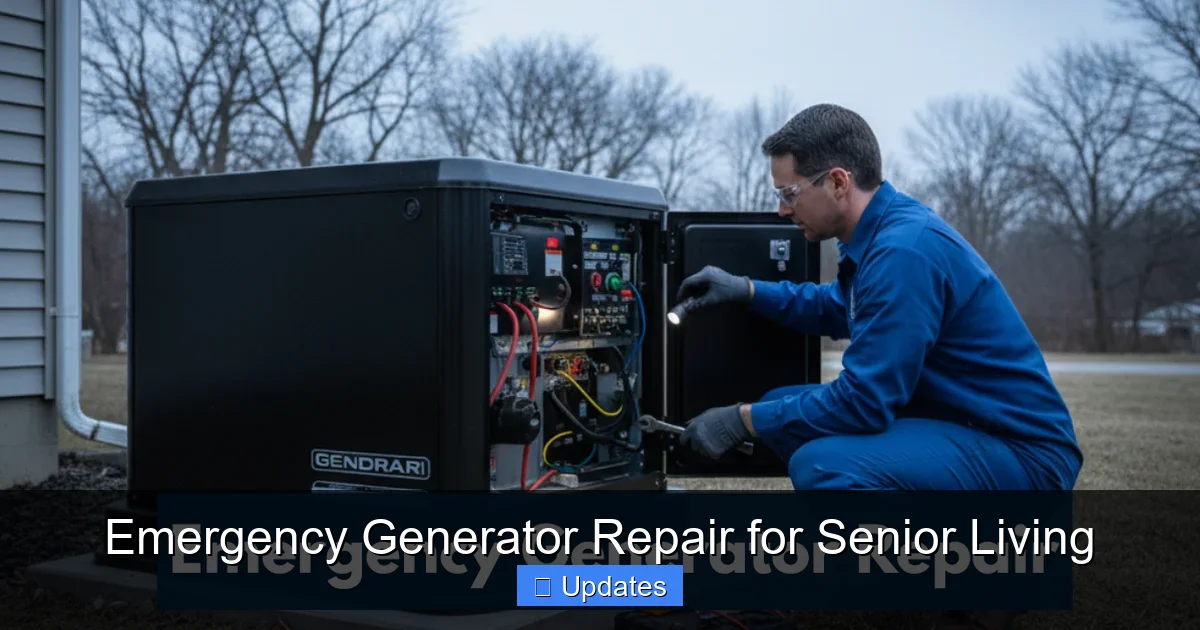
Visual guide about Emergency Generator Repair for Senior Living
Image source: callwhitney.com
How Backup Power Systems Work
Every senior living facility should have an emergency power system designed to activate automatically within seconds of a utility outage. These systems typically include:
– A diesel-, natural gas-, or propane-fueled generator
– An automatic transfer switch (ATS)
– Battery backup for control circuits
– Distribution panels feeding critical loads
When the main grid fails, the ATS detects the loss of power and signals the generator to start. Once operational, it powers essential circuits such as nursing stations, emergency lighting, fire alarms, refrigerated medications, and life-support equipment. The entire process usually takes less than 10 seconds—fast enough to prevent disruption but critical enough to save lives.
Critical Loads vs. Non-Critical Loads
Not all electrical circuits are created equal. In senior living, certain areas are classified as “critical loads” because their function directly impacts resident safety. Examples include:
– Medical equipment rooms
– Emergency lighting systems
– Fire alarm panels
– Elevator recall systems
– HVAC systems maintaining safe temperatures
– Refrigeration units for medications
During an outage, only critical loads should receive power from the generator. This prevents overloading the unit and ensures maximum efficiency. Proper load management requires regular testing and professional oversight—making emergency generator repair a continuous responsibility, not just a one-time fix.
Common Failure Points
Even well-maintained generators can fail unexpectedly. Common issues include:
– Fuel contamination or depletion
– Battery failure in starting systems
– Worn belts or loose connections
– Cooling system malfunctions
– Software glitches in modern electronic controls
Each of these problems can render your backup system useless during a crisis. That’s why routine inspection and prompt emergency generator repair by certified technicians is essential.
The Risks of Delayed Generator Repairs

Visual guide about Emergency Generator Repair for Senior Living
Image source: ruizib.com
Health and Safety Threats
For seniors, even short power interruptions can be hazardous. Consider these scenarios:
– **Oxygen-dependent residents** may suffer hypoxia without ventilators or concentrators running.
– **Residents with dementia** could become disoriented or agitated in darkness, increasing fall risks.
– **Medications stored in refrigerated units** may spoil if power isn’t restored quickly.
– **Elevators stuck mid-shaft** trap residents in confined spaces, especially problematic in multi-story buildings.
Delayed repairs mean delayed recovery. If a generator sits broken for days after a storm, those risks multiply exponentially.
Regulatory and Legal Consequences
Beyond human impact, there are serious compliance issues. Most states require licensed senior living facilities to pass unannounced inspections verifying generator functionality. Failure to maintain operational backup power can result in:
– Fines from health departments
– Loss of operating licenses
– Lawsuits from affected families
– Negative publicity damaging reputation
Reputation management for senior living becomes crucial when technical failures occur. Families expect transparency and accountability—and regulators demand proof of due diligence.
Financial Impact of Downtime
Power outages also cost money. Lost revenue from halted operations, spoiled inventory (like food or vaccines), and emergency response fees add up fast. According to industry studies, average downtime costs for senior housing range from $5,000 to $25,000 per hour depending on size and complexity.
Investing in reliable emergency generator repair upfront avoids these financial hits while protecting residents.
Choosing the Right Generator Repair Service
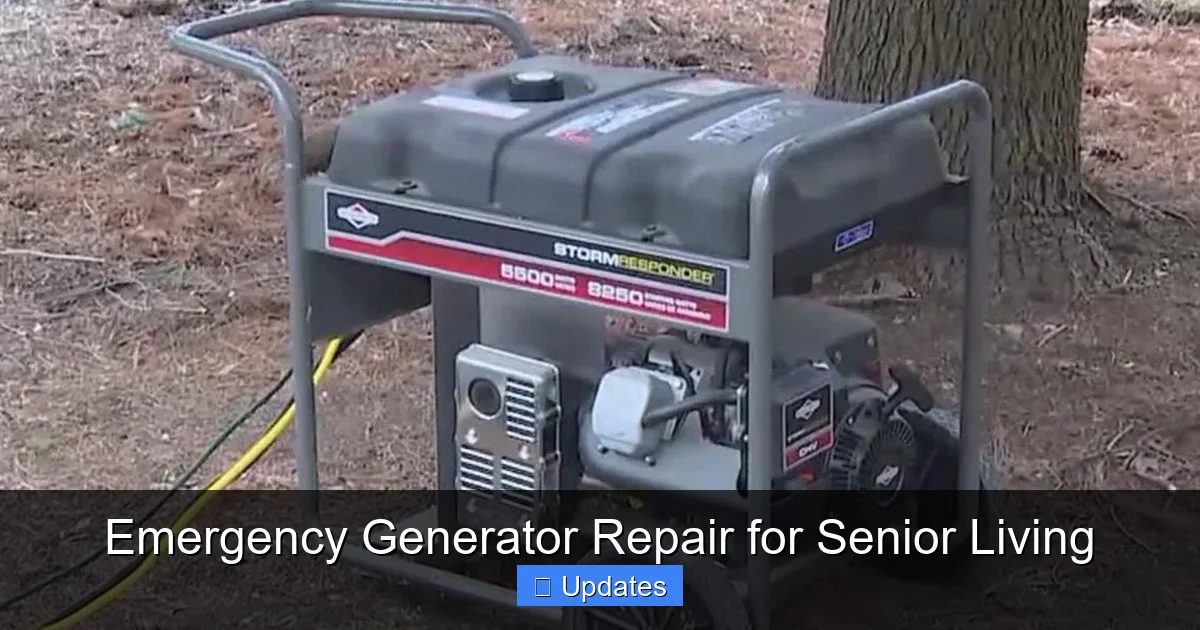
Visual guide about Emergency Generator Repair for Senior Living
Image source: media.kcentv.com
Look for Specialized Experience
Not all electricians handle generator work—and certainly not all understand the nuances of senior living environments. Seek providers who:
– Have experience serving healthcare or senior housing clients
– Are licensed and insured
– Offer 24/7 emergency response
– Use OEM parts for compatibility and warranty preservation
Ask for references from similar facilities. A technician familiar with Weinberg Community For Senior Living Deerfield, for example, likely understands the specific needs of aging populations and regulatory expectations.
Verify Certifications and Training
Technicians should hold certifications like those from the National Association of State Fire Marshals (NASFM) or Underwriters Laboratories (UL). These credentials confirm they follow standardized safety protocols and stay current on evolving codes.
Also check whether your chosen provider complies with NFPA 110, the standard for emergency and standby power systems. This document outlines requirements for installation, testing, and maintenance—including minimum run times during drills.
Evaluate Response Time and Availability
Time equals life in emergency situations. Choose a repair company that guarantees arrival within 60–90 minutes of dispatch during business hours and within 30 minutes off-hours. Confirm they have staff available weekends and holidays—storms don’t wait for Monday mornings.
Some providers offer service contracts with priority scheduling and discounted rates for routine maintenance—a smart move for high-risk environments.
Best Practices for Preventative Maintenance
Schedule Regular Testing
Monthly functional tests are mandatory for most jurisdictions. During each test, verify that:
– The generator starts automatically
– Critical loads receive power
– Runtime meets code requirements (usually 24+ hours)
– Alarms and notifications work correctly
Document every test in a logbook. Regulators often request this documentation during surprise audits.
Maintain Fuel Supplies
Fuel degradation is a hidden killer. Diesel loses quality after 18 months; gasoline degrades faster. Store fuel properly and rotate stock regularly. Keep at least 72 hours of fuel on-site—preferably more during hurricane or winter seasons.
Consider installing fuel polishing systems to remove water and sediment before use.
Inspect Components Quarterly
Conduct visual checks for:
– Corrosion on wiring and terminals
– Cracked hoses or leaking fluids
– Loose bolts or missing covers
– Signs of rodent damage
Replace worn belts, clean air filters, and lubricate moving parts according to manufacturer specs.
Update Documentation
Keep manuals, schematics, and warranty information easily accessible. Include contact details for both internal staff and external contractors. Train key personnel so someone can initiate repairs even if the primary technician isn’t available.
Integrating Technology for Smarter Monitoring
Modern generators come equipped with digital control panels offering real-time data. Features like:
– Remote monitoring via cellular or internet connection
– Automatic fault reporting
– Fuel level tracking
– Runtime history
These tools allow facilities to detect issues before they cause failures. For instance, if a sensor reports low oil pressure, maintenance can schedule a visit during daylight hours instead of waiting for a nighttime emergency.
Some systems integrate with building management platforms, giving supervisors instant visibility into power status across the entire campus.
While technology enhances reliability, it doesn’t replace hands-on expertise. Even the smartest generator still needs skilled professionals for installation, calibration, and repair.
Training Staff and Residents
Even the most robust generator won’t help if staff panic or residents don’t know evacuation routes during an outage. Conduct biannual drills simulating power loss scenarios. Practice turning off non-essential systems, guiding residents to safe zones, and communicating with families via landlines or battery-powered radios.
Include generator-related topics in orientation programs for new hires. Make sure everyone knows how to manually start a backup system (if applicable) and where emergency shut-off switches are located.
For memory-impaired residents, use visual cues and simplified instructions. Assign buddy systems so no one gets left behind during transitions.
Case Study: How One Facility Avoided Disaster
At Maple Grove Senior Living in suburban Ohio, a routine monthly generator test revealed a cracked fuel line. Thanks to their proactive maintenance schedule, staff caught the issue before winter storms hit. They replaced the line within 48 hours—well ahead of a predicted blizzard that knocked out power across the region.
When the storm arrived, Maple Grove’s backup system activated seamlessly. No residents were harmed, no medications spoiled, and the facility avoided costly fines. Their story underscores a simple truth: prevention beats panic every time.
This kind of preparedness starts with investing in qualified emergency generator repair and building a culture of vigilance around power reliability.
Conclusion: Power Protection Is Life Protection
In senior living, every second counts when the lights go out. Emergency generator repair isn’t just about fixing machines—it’s about safeguarding dignity, health, and peace of mind for the people who call your facility home.
By prioritizing preventative maintenance, partnering with trusted specialists, leveraging smart technology, and training your team, you create a resilient infrastructure that stands up to nature’s worst and human error alike. Remember, a generator that works when needed isn’t optional—it’s foundational to quality care.
Stay alert, stay prepared, and always choose excellence in power protection.
Frequently Asked Questions
How often should emergency generators be tested?
Most regulations require monthly functional tests lasting at least 30 minutes. Annual full-load tests (running 24+ hours) are also mandated. Consistent testing ensures reliability when it matters most.
What should I do if my generator fails during an outage?
Immediately contact your certified repair provider. While waiting, switch to battery-powered devices and use flashlights—never candles. Keep residents calm and informed until power resumes.
Can I perform generator repairs myself?
No. Generator systems involve high voltage, flammable fuels, and complex electronics. Only licensed professionals with proper certification should perform repairs or modifications.
Are there government incentives for upgrading backup power systems?
Yes. Some states offer grants or tax credits for emergency preparedness upgrades in senior facilities. Check with your local aging services office or energy department for available programs.
What’s the difference between standby and emergency generators?
Standby generators power essential systems during outages. Emergency generators specifically support life-safety functions like lighting, alarms, and medical equipment—exactly what senior living requires.
How long can a generator run continuously?
Most commercial-grade generators can run 24–72 hours on a full tank with proper ventilation. However, runtime varies by model, load, and fuel type. Always consult your manufacturer’s specifications.
