
What Should I Consider When Choosing a Hobby?

Orthopedic Pillow

Shower Chair for Elderly

Portable Wheelchair
Quick Answer
When choosing a hobby, look for something you genuinely enjoy, can comfortably do, can afford, and can fit into your normal week. For older adults, the National Institute on Aging also encourages meaningful activities that match personal interests and abilities.
Five things to consider
- Real interest: Pick something that makes you curious enough to return to it.
- Physical comfort: Match the activity to your energy, mobility, vision, hearing, and dexterity.
- Social fit: Decide whether you want quiet personal time, regular company, or both.
- Affordable start: Test the hobby before buying expensive equipment or memberships.
- Easy repetition: Choose an activity you can realistically enjoy every week.
A simple way to decide
- Try one promising hobby for two to four weeks before deciding whether it deserves a permanent place in your routine.
Choosing a hobby sounds simple until you face dozens of possibilities. Reading, gardening, photography, volunteering, music, games, crafts, exercise, and classes can all look appealing.
I prefer to narrow the choice by asking what the hobby needs to give you. That approach makes the decision more personal and keeps you from choosing something just because it is popular.
In This Guide
- What should I consider when choosing a hobby?
- What do you want a hobby to add to your life?
- How should your health and energy affect your choice?
- Should you choose a social or solo hobby?
- How much time and money should a hobby require?
- Which type of hobby fits you best?
- How can you test a hobby before committing?
- Frequently asked questions
- Final takeaway
What Should I Consider When Choosing a Hobby?
The most important factors are enjoyment, accessibility, purpose, cost, time, and repeatability. A good hobby should fit your real life instead of forcing your life to fit around it.
Definition: A hobby is a leisure activity you choose because it gives you enjoyment, interest, relaxation, challenge, connection, or a sense of purpose outside required daily tasks.
Start with curiosity, not popularity
A hobby that looks impressive may still bore you. Start by noticing what subjects, places, skills, or activities naturally hold your attention.
Think about things you enjoyed earlier in life too. An old interest in drawing, gardening, music, model building, cooking, fishing, or photography may be easier to restart than a completely unfamiliar activity.
- What do I read or watch for pleasure?
- What activity makes time pass quickly?
- What have I always wanted to learn?
- What did I enjoy before work or family responsibilities became busy?
- Do I want to create, learn, move, compete, relax, or help?
Choose something you can repeat
A hobby only becomes part of your life when you can return to it. Convenience matters more than many people expect.
A weekly library book club five miles away may be more sustainable than a fascinating class requiring a 45-minute drive. A small container garden may also fit better than maintaining a large vegetable plot.
As of 2026, hobbies can be surprisingly flexible. Many classes, clubs, games, museum programs, and learning opportunities now offer both online and in-person choices.
Section Takeaway: The right hobby is interesting enough to pull you back and practical enough to fit your ordinary week.
What Do You Want a Hobby to Add to Your Life?
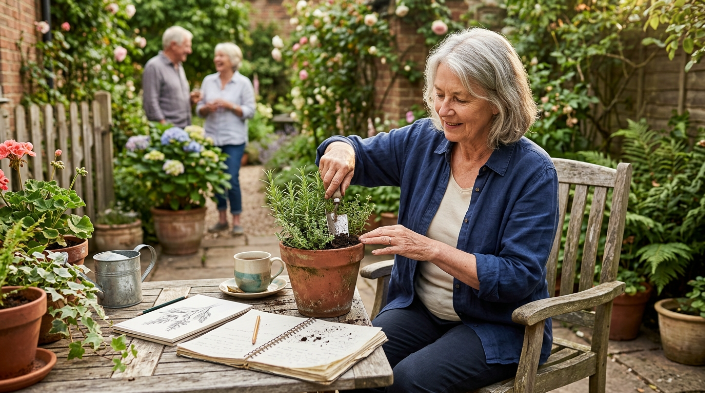
Choose according to the result you want. A person seeking more friendships needs a different hobby from someone seeking quiet relaxation.
I use six simple goals when comparing hobbies:
- Relaxation: Reading, birdwatching, knitting, puzzles, journaling, or gentle gardening.
- Creativity: Painting, photography, woodworking, quilting, music, cooking, or writing.
- Movement: Walking, dancing, swimming, gardening, cycling, tai chi, or recreational sports.
- Learning: Languages, history, genealogy, technology classes, musical instruments, or online courses.
- Connection: Book clubs, choirs, card groups, volunteering, community classes, or walking groups.
- Purpose: Mentoring, teaching, volunteering, growing food, making gifts, or helping community organizations.
One hobby can meet several needs
You do not need a separate activity for every goal. Gardening can combine movement, learning, creativity, and relaxation.
A choir combines music with regular social contact. Volunteering may provide connection while also creating a stronger sense of contribution.
The National Institute on Aging notes that meaningful social and productive activities can support well-being as people age. Its healthy aging guidance also discusses hobbies and leisure activities as part of an active lifestyle.
Do not turn leisure into another obligation
A hobby should give you something to anticipate. It should not make every free hour feel scheduled.
If an activity causes more pressure than pleasure, adjust it. Shorten the session, lower the difficulty, attend less often, or try a different version.
How Should Your Health and Energy Affect Your Choice?
Your hobby should match what feels comfortable today. You can always increase the challenge later if you enjoy it.
Consider mobility, balance, stamina, hand strength, eyesight, hearing, and how quickly you tire. These factors do not have to eliminate hobbies because many activities can be adapted.
Match the activity to your normal energy
Think about how you usually feel after 20, 30, or 60 minutes of activity. A hobby that regularly leaves you exhausted may become difficult to maintain.
- Lower-energy options: Reading, audiobooks, genealogy, puzzles, journaling, drawing, and seated crafts.
- Moderate options: Photography walks, container gardening, dancing, bowling, and easy cycling.
- More active options: Hiking, swimming, longer walks, pickleball, and recreational sports.
Adapt instead of automatically giving up
Small changes can make an activity much easier. Raised garden beds, large-print books, audiobooks, thicker paintbrush handles, seated classes, or better lighting may remove unnecessary barriers.
For physically active hobbies, start according to your current abilities. The CDC guidance for adults 65 and older recommends a weekly mix of aerobic, muscle-strengthening, and balance activities, while emphasizing that people should be as active as their abilities allow.
Health note: If a new hobby involves strenuous exercise, balance challenges, or activity that conflicts with a medical condition, ask your own health professional what is appropriate for you.
Section Takeaway: Choose an activity your body can comfortably repeat, then adapt or progress it instead of starting at the hardest level.
Should You Choose a Social or Solo Hobby?
Neither choice is automatically better. The right answer depends on whether you want more connection or more personal space.
Choose a social hobby when you want regular contact
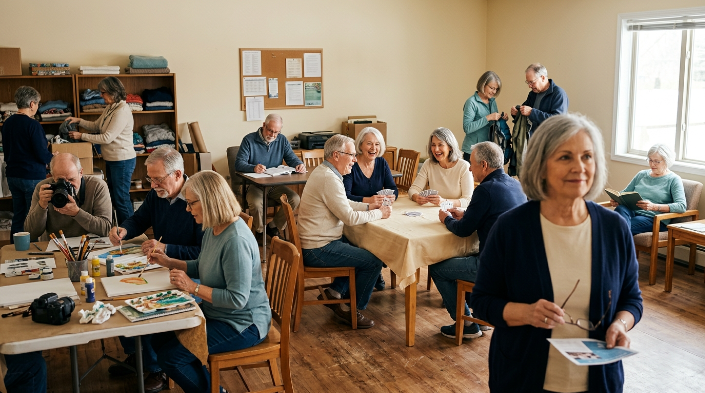
Group activities create a built-in reason to see other people. This can be useful after retirement, relocation, or other changes that reduce everyday social contact.
- Book or film clubs
- Card and board-game groups
- Choirs and music groups
- Walking clubs
- Community gardening
- Volunteering
- Art, cooking, or language classes
- Local history or genealogy groups
AARP research on activities and interests among older adults highlights the role that hobbies, clubs, exercise groups, and other interests can play in community connection.
Choose a solo hobby when you want flexibility
Solo hobbies let you choose your own schedule and pace. Reading, photography, painting, writing, gardening, woodworking, fishing, and crafts can all work well independently.
You can also mix the two styles. Photography can be a quiet personal hobby most days and a social activity during an occasional club meeting or photo walk.
Pay attention to your week as a whole
If you already spend most days around people, quiet hobbies may restore your energy. If you spend long periods alone, a weekly group activity may provide welcome structure.
Your preferred balance may change. A hobby does not have to stay in the same format forever.
How Much Time and Money Should a Hobby Require?
A hobby should fit your available resources without creating financial or scheduling stress. Start smaller than you think you need.
Calculate the full commitment
The true cost is not only the equipment. Travel, classes, memberships, replacement supplies, storage, maintenance, and event fees may matter too.
Time works the same way. A one-hour class may require another hour for travel, preparation, and cleanup.
- Low setup: Walking, reading, journaling, birdwatching, puzzles, and smartphone photography.
- Moderate setup: Painting, knitting, gardening, cooking projects, and musical lessons.
- Potentially higher setup: Golf, serious photography, woodworking, boating, collecting, and equipment-heavy sports.
Avoid buying the advanced setup first
Beginners often do not yet know which equipment features matter to them. Borrowing, renting, buying used equipment, or choosing a starter kit keeps the experiment inexpensive.
Give the hobby time before upgrading. Your preferences usually become clearer after several sessions.
Protect unscheduled time
A full hobby calendar can become another job. For many people, one or two regular hobbies are enough at first.
Leave room for spontaneous plans and rest. Enjoyment matters more than filling every open hour.
Which Type of Hobby Fits You Best?
The easiest way to compare hobbies is to look at the experience each one creates. Use this table as a starting point rather than a rigid ranking.
| Hobby type | Examples | Good first session | Social level | Best for |
|---|---|---|---|---|
| Creative | Painting, writing, photography | 20–30 minutes | Low to medium | Expression and visible progress |
| Learning | Language, history, music | 15–30 minutes | Low to high | Curiosity and mental challenge |
| Active | Walking, gardening, dancing | 10–30 minutes | Low to high | Movement and outdoor time |
| Social | Clubs, games, volunteering | 30–60 minutes | High | Connection and routine |
| Relaxing | Reading, puzzles, birdwatching | 15–30 minutes | Usually low | Quiet and flexible downtime |
| Purpose-driven | Volunteering, mentoring, teaching | 30–60 minutes | Medium to high | Contribution and meaning |
Notice that many hobbies cross categories. Gardening can be active, creative, relaxing, and social depending on how you do it.
I would choose the category first and the exact activity second. That makes a long list of hobby ideas much easier to manage.
How Can You Test a Hobby Before Committing?
Treat your first hobby choice as an experiment rather than a lifetime commitment. A short trial tells you more than hours of researching possibilities.
Use a two-to-four-week test
- Pick one activity. Choose the option that currently interests you most.
- Start with basic equipment. Borrow, rent, or use an inexpensive beginner setup when possible.
- Schedule three to six sessions. One attempt may not reveal whether you like the activity.
- Keep sessions manageable. Try 15 to 30 minutes for individual hobbies before extending them.
- Review the experience. Ask whether you looked forward to doing it again.
Judge the experience, not your skill
Being bad at something during the first week is normal. Beginner ability tells you little about whether a hobby will become rewarding.
Ask better questions instead:
- Was I curious while doing it?
- Did the activity improve my day?
- Would I willingly do it again next week?
- Was the setup manageable?
- Did the cost feel reasonable?
- Did I like doing it alone or with these people?
Know when to switch
You do not need to force yourself to love an activity. If several sessions leave you bored, stressed, uncomfortable, or reluctant to continue, try something else.
Sometimes the hobby is right but the format is wrong. You may dislike a crowded painting class but enjoy watercolor at home.
Interests can change with seasons, health, finances, and social needs. A hobby that fits you now does not need to remain your hobby forever.
Section Takeaway: Test hobbies cheaply, repeat them several times, and judge them by enjoyment and fit rather than beginner performance.
Frequently Asked Questions
How do I choose a hobby when nothing interests me?
Start with experiences rather than labels. Try one short activity connected to something you already enjoy, such as taking photos during a walk, cooking a new recipe, visiting a museum, or listening to an audiobook.
How many hobbies should I have?
There is no required number. Starting with one or two regular hobbies usually makes it easier to learn what fits your time, energy, and interests before adding more.
What is a good inexpensive hobby?
Walking, reading through a library, journaling, birdwatching, drawing, puzzles, free online learning, and smartphone photography can have low starting costs. Check local libraries and community centers for free or discounted activities too.
Should a hobby be productive?
No. A hobby can be worthwhile simply because you enjoy it, although some people prefer activities that create a finished object, build a skill, help someone else, or provide exercise.
What hobbies are good for meeting people?
Book clubs, card groups, walking clubs, choirs, volunteer programs, community gardens, classes, and recreational sports naturally create repeated contact. Regularly scheduled activities tend to make conversation and relationship-building easier.
What if I have limited mobility?
Consider audiobooks, genealogy, puzzles, painting, music, writing, seated crafts, online classes, tabletop gardening, or adapted group activities. Choose an activity that fits your comfort and ask a health professional about exercise limitations when necessary.
Am I too old to start a new hobby?
No fixed age determines whether you can learn something new. Choose a suitable difficulty level, start with short sessions, adapt equipment when needed, and let enjoyment rather than age guide the decision.
Final Takeaway
The best hobby is not the activity that sounds most impressive. It is the one you enjoy enough, can access easily enough, and can afford comfortably enough to keep doing.
Start with your goal, then consider your energy, mobility, social preference, budget, and available time. Pick one promising option and give it a fair two-to-four-week trial.
If it fits, keep going and let your skills grow naturally. If it does not, choosing something different is part of the process rather than a failure.
As you explore hobbies in 2026, keep the standard simple: your free time should feel richer because the activity is in it.
