
10 Best Window Alarms for Home: Top Security Options


Big Button Mobile Phone

Toilet Safety Rails

Smart Digital Photo Frame
Windows are common entry points, and a basic window alarm can add an extra layer of protection to your home. These devices usually use a contact sensor that sounds an alarm when the window opens. Some models also detect glass breakage, send alerts to your phone, or connect with a larger home security system.
The best window alarm for most homes should be easy to install, loud enough to hear, and reliable without frequent battery changes. We also look for secure adhesive or mounting hardware, simple controls, tamper alerts, and compatibility with your existing security setup. If you need remote alerts, check whether the alarm requires a hub, Wi-Fi, or a subscription.
We evaluated window alarms for sound, installation, sensor performance, battery life, and everyday ease of use to find the models that provide dependable protection.
Best Window Alarms for Home
We reviewed window alarms based on sound level, ease of installation, sensor range, and battery life. Our list features reliable options for improving home security without complex setup.
UltraPro Window and Door Alarm 6-Pack
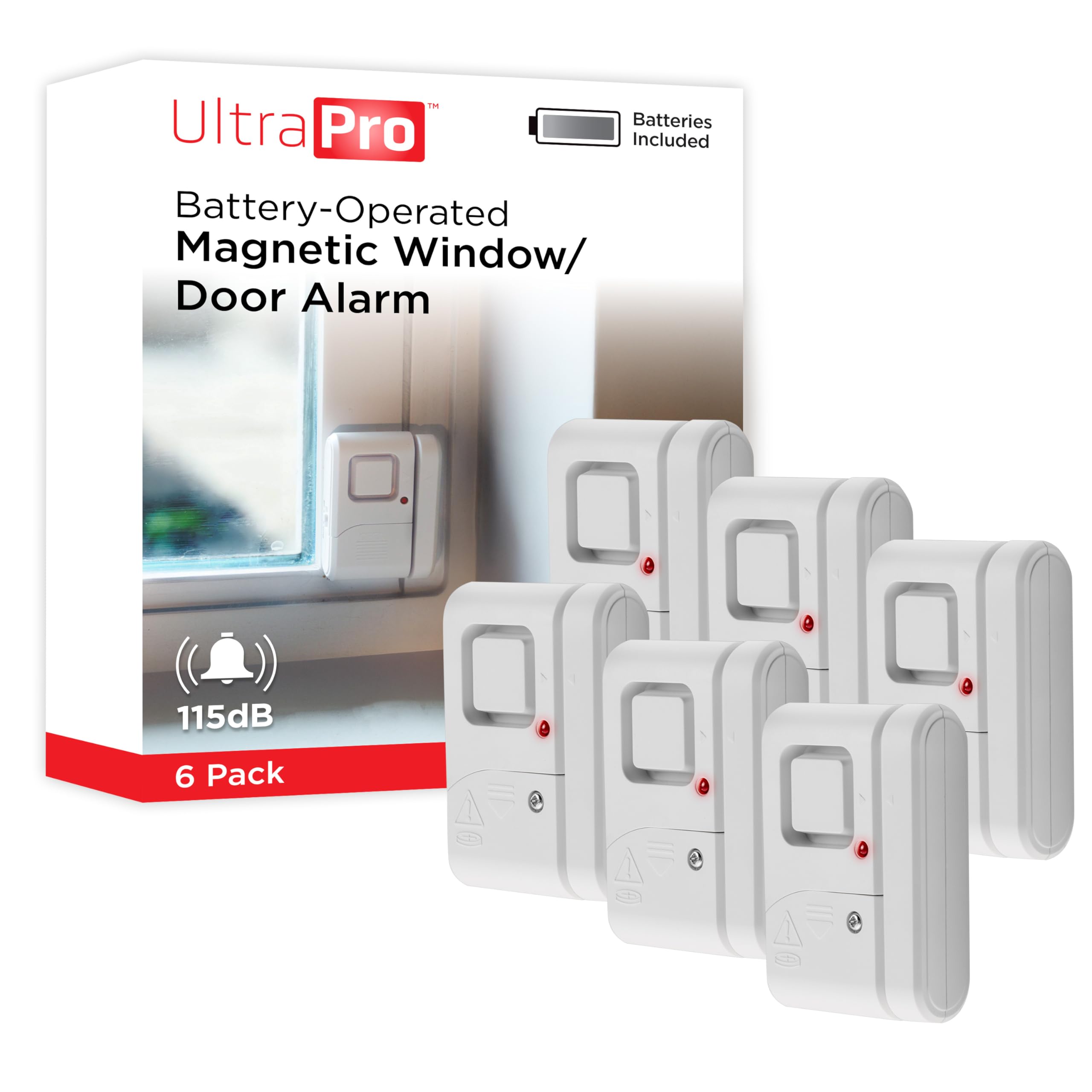
We recommend this set for simple, low-cost alerts on doors, windows, cabinets, and drawers.
Pros
- Loud siren with a useful chime setting
- Fast, tool-free installation
- Six alarms cover several entry points
Cons
- Double-sided tape may not suit every surface
- Battery access requires a small screwdriver
- Indoor use only
We found the setup quick: place the alarm and magnet on matching surfaces, then choose chime or alarm mode. The wireless design works well for apartments, dorms, offices, RVs, and homes where we do not want to run wires or use an app.
The chime provides a softer alert for everyday monitoring, while the siren sounds sharply when the door or window separates from the magnet. We could hear it clearly from another room, though the volume may feel excessive in small spaces.
The included batteries let us use the alarms right away, and the low-battery light helps with basic upkeep. We would keep a small Phillips screwdriver nearby for battery changes and clean the mounting surface before applying the tape.
With six units in the pack, we can cover several windows or add alerts to cabinets and interior doors. These alarms do not contact emergency services or replace a full security system, but they provide a practical extra warning without monthly fees.
Philips Window and Door Alarm 4-Pack
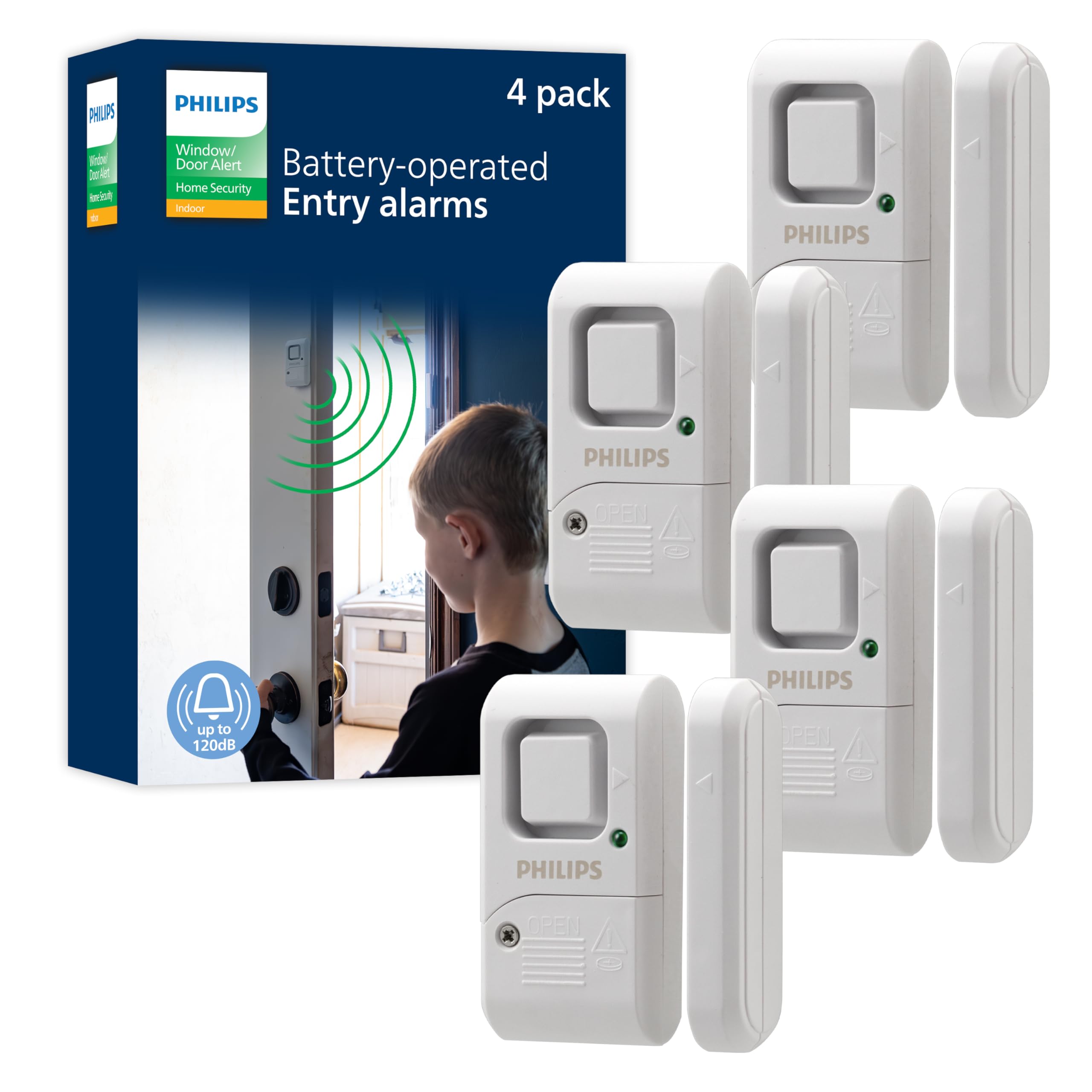
We recommend this set for shoppers who want an affordable, easy-to-install alert for several doors or windows.
Pros
- Loud alarm and useful chime mode
- Simple adhesive installation
- Four alarms provide broad coverage
Cons
- Adhesive may need extra support on some surfaces
- Button batteries require occasional replacement
- The alarm may sound too loud for small rooms
We installed these on doors and windows and found the setup quick. The included tape handled smooth, clean surfaces well, while rough or dusty areas may need stronger mounting material.
The switch lets us choose between off, chime, and alarm settings. Chime mode works well for monitoring an entry point, while the alarm mode gives a much stronger alert when the magnetic sensor separates.
The compact units add coverage without wires or a complicated control panel. We also liked the battery test button and low-battery light, though the LR44 batteries are smaller than those used in many other alarms.
The sound carries clearly through nearby rooms, but its volume can feel excessive in tight spaces. We recommend testing each unit after installation and placing it where the alarm will not cause unnecessary disturbance.
SanJie 5-Pack Window Alarms

We recommend these alarms for households that want simple, loud alerts without a full security system.
Pros
- Fast setup with included adhesive backing
- Three alert modes, including a chime
- Loud alarm suits doors, windows, and cabinets
Cons
- The sound may be too loud for some homes
- Adhesive placement can be difficult around thick trim
- Button batteries require periodic replacement
We installed the sensors on a few windows and doors, and the setup took only a few minutes. The magnetic pieces need careful alignment, but the adhesive held well on clean, flat surfaces.
The 125-decibel setting is hard to miss. We also liked having a quieter alarm and a two-tone chime for areas where a full siren would feel excessive. The alarm continues for about 31 seconds after separation unless the door or window closes.
These sensors work well for basic entry alerts, child safety, and pool-area doors. They do not connect to a broader security system, so we would use them as a standalone warning rather than a complete home security solution.
The battery life should last about a year with normal use. We would check the indicator light regularly, especially on less-used doors or windows.
UltraPro Window and Door Alarms
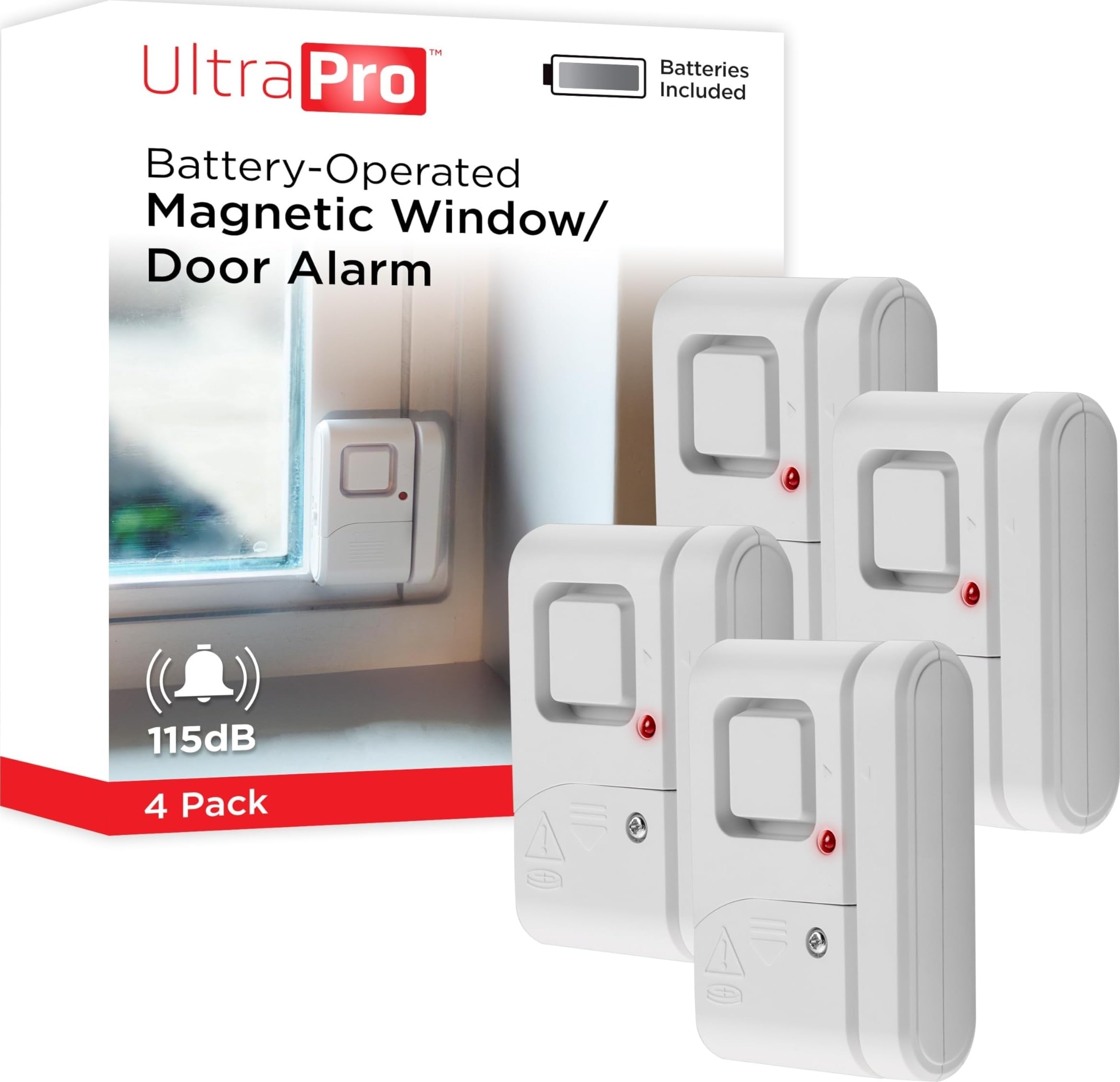
We recommend this four-pack for simple, low-cost alerts without wiring, apps, or monthly fees.
Pros
- Fast, tool-free setup
- Loud alarm with chime and alarm modes
- Useful for doors, windows, cabinets, and drawers
Cons
- Adhesive may need extra support on some surfaces
- The siren can be too loud for small rooms
- Batteries require periodic replacement
We installed these on common entry points and found the setup straightforward. The included tape made mounting quick, while the magnetic sensor activated the alarm as soon as the two pieces separated.
The alarm produces a strong sound that should carry through most homes. We liked the option to use a softer chime for everyday monitoring, then switch to the louder alarm when we wanted stronger protection.
These units work well for apartments, dorm rooms, garages, RVs, and other spaces where a full security system may not make sense. The low-battery light adds useful warning, though we would check the adhesive occasionally and replace the LR44 batteries as needed.
WimuPath Door and Window Alarms

We recommend this multipack for simple, low-cost alerts on windows and doors, especially in homes with children or older adults.
Pros
- Quick adhesive installation
- Loud alarm that is easy to notice
- Useful for covering many entry points
Cons
- Batteries are not included
- Adhesive may loosen on some doors
- Placement must be precise
We found these alarms simple to set up because each unit uses a magnetic contact. After placing the two parts together, we tested the alarm by opening the window, and it sounded immediately. The volume worked well for a nearby room, though it may not replace a connected security system.
The adhesive made installation fast and avoided drilling. We would clean and dry the surface first, then press each alarm firmly into place. Some users report that units can fall from doors, so windows and smooth surfaces may provide better results.
The pack gives us enough alarms to cover several windows and doors at once. We would keep spare AAA batteries available and test each unit after installation. The basic design lacks app alerts, but it offers a practical warning for homes, apartments, garages, and offices.
TECKNET Window and Door Alarm

We recommend this six-pack for basic window and door alerts because it installs quickly, offers useful sound settings, and works well in several rooms.
Pros
- Simple adhesive installation
- Chime and alarm modes
- Three volume levels
Cons
- Needs a flat mounting surface
- Adhesive placement requires care
- No smart-home connection
We found the compact white units easy to place on windows, doors, cabinets, and drawers. They blend into light-colored frames, while the included adhesive keeps setup quick when the surface is clean and smooth.
The chime mode works well when we want a simple alert, such as knowing when someone opens a door. For stronger warnings, the alarm mode continues sounding after the sensor separates. We could also adjust the volume to fit the room.
Placement matters because the two pieces must stay close together when the window or door remains closed. Molding or uneven surfaces can make installation difficult, so we would check the alignment before removing the adhesive backing.
These alarms suit homes, apartments, offices, garages, and travel use. They provide a basic local warning but do not send phone alerts or connect to a broader security system.
EVA LOGIK Ultra-Thin Window Alarm

We recommend this eight-pack for covering several windows with loud vibration alerts and simple, wire-free installation.
Pros
- Loud alarm that quickly grabs attention
- Adjustable sensitivity helps limit false alerts
- Easy to place on windows, doors, or glass panels
Cons
- Batteries are not included
- Some units may arrive defective
- Strong vibrations work better than light contact
We found these alarms easy to mount with the included adhesive. Their compact design kept them from taking up much space on the glass, making them practical for street-level windows, glass doors, offices, and dorm rooms.
The vibration sensor responded well to firm knocks and movement. We used the lower sensitivity setting where windows faced busy areas, while the higher setting worked better in quieter rooms. Light bumps generally did not trigger the alarm, but forceful contact produced a sharp, attention-grabbing sound.
A flashing red light makes the alarms easy to check from across the room. The indicator also helps us notice battery issues before relying on the unit. We would keep spare AAA batteries nearby because the package does not include them.
The adhesive setup saves time, but we would clean and dry each surface before mounting. Buyers should also test every alarm after installation, since some customer reports mention occasional defective units. Overall, this pack offers a simple way to add basic vibration alerts without installing a full security system.
UltraPro Window and Door Alarm 5-Pack
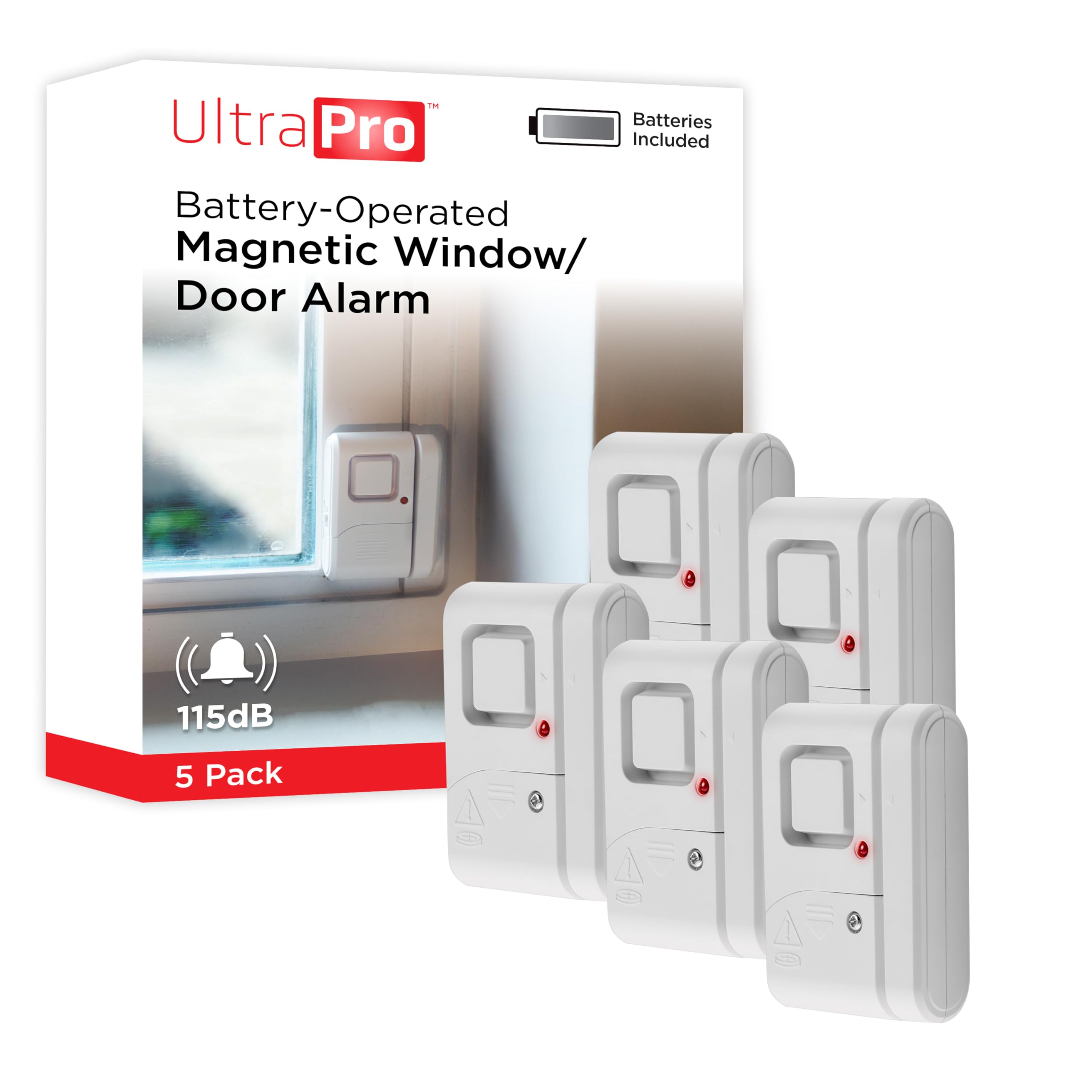
We recommend this set for simple, low-cost alerts on doors, windows, cabinets, and drawers.
Pros
- Very loud alarm and chime settings
- Peel-and-stick installation needs no tools
- Five alarms cover several entry points
Cons
- The chime can sound harsh in quiet rooms
- Adhesive may not suit every door or window frame
- Battery-powered units need periodic checks
We found the UltraPro alarms quick to install. We cleaned the mounting surfaces, applied the included tape, and lined up each alarm with its magnet. The wireless design worked well for adding coverage without running wires or setting up an app.
The alarm produces a sharp, loud sound when the magnet separates. We could also switch to chime mode for daily alerts, although the chime was louder than expected. The side switch made it easy to turn the unit off when needed.
These alarms fit best on common indoor entry points and storage areas. We would check the adhesive and battery indicator during routine home maintenance, especially in places with heat, moisture, or frequent use. For basic local alerts without monthly fees, this five-pack offers useful coverage.
METAK Window and Door Alarm 5-Pack
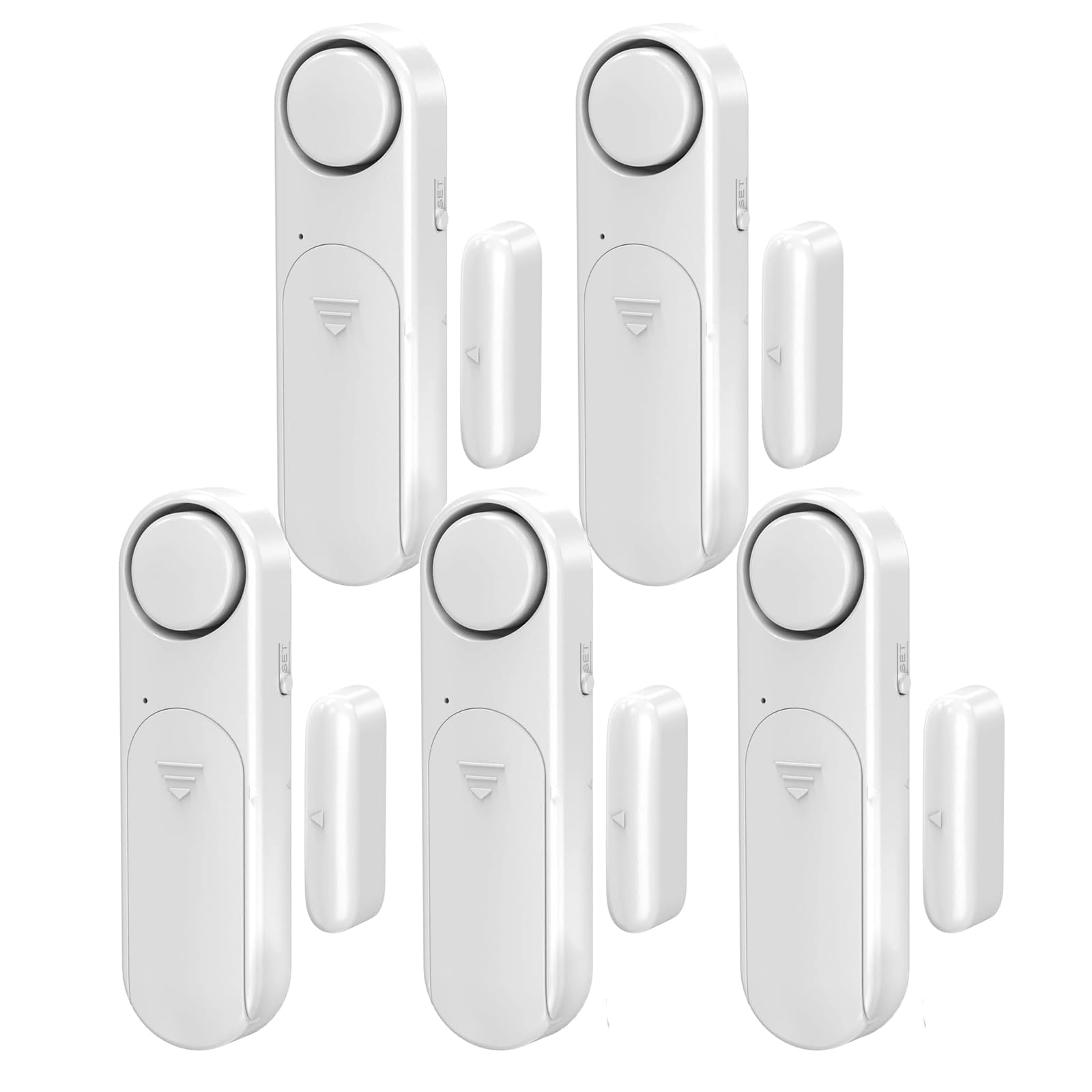
We recommend this five-pack for simple, low-cost alerts on windows, doors, cabinets, and other entry points.
Pros
- Loud alarm with adjustable 90dB and 120dB settings
- Quick adhesive installation without tools or wiring
- Five slim sensors cover several openings
Cons
- Requires two AAA batteries, which are not included
- No remote control support
- Loud alerts may be bothersome in busy homes
We found the alarms easy to place on doors and windows because the adhesive backing avoids drilling. Their slim shape also fits neatly along most frames without standing out too much.
When we tested the alert, the louder setting quickly drew attention from nearby rooms. The lower setting works better when we want a warning without as much noise. A switch handles basic power control, while the Set button manages arming and volume.
The five sensors suit homes with several windows or doors. We could also use them on cabinets, basements, or other areas that need monitoring. The flashing red light helps show when the alarm activates or when the batteries need attention.
These alarms run on batteries, so we need to check them regularly and keep replacements available. They do not connect to a remote control, but the simple controls make daily use straightforward.
EVA LOGIK Window Alarm 4-Pack

We recommend this set for homes, RVs, and offices that need simple, loud vibration alarms without a hub or app.
Pros
- Loud alarm can draw attention quickly
- Adjustable sensitivity helps limit false alerts
- Flashing light and warning stickers add visible deterrence
Cons
- AAA batteries are not included
- Sensitive windows may trigger the alarm by accident
- Adhesive may not hold well on every surface
We found these alarms easy to mount on glass doors and windows. The peel-and-stick setup required little effort, and the included warning stickers made the devices noticeable from outside.
The alarm is very loud during testing, and the high and low sensitivity settings helped us adjust it for different windows. However, pets, bumps, or nearby movement may still trigger it when the setting is too sensitive.
A red light flashes during normal use and signals when the batteries need replacement. We liked this reminder, but owners should keep spare AAA batteries available. Overall, this four-pack suits buyers who want basic, standalone window protection at a reasonable price.
Buying Guide
We should start by checking how the alarm attaches to the window. Adhesive sensors install quickly, while screw-mounted models may offer a more secure fit. We should confirm that the design works with the window’s frame, screen, and opening style.
| Feature | What to look for |
|---|---|
| Alarm volume | A loud sound that we can hear from nearby rooms |
| Power source | Common batteries with simple replacement |
| Sensor type | Contact sensors for opening, vibration sensors for impact |
| Controls | Easy-to-use buttons, remotes, or app settings |
| Alerts | Local siren, phone notifications, or both |
| Arm and disarm | Controls that prevent accidental activation |
We should choose a model with a tamper alert if someone could remove or damage the sensor. A low-battery warning also helps us maintain the system before the alarm stops working.
For connected alarms, we should check Wi-Fi requirements, app compatibility, and notification settings. We should also review privacy features and confirm whether the alarm continues to work if the internet connection fails.
Placement affects performance. We should select a sensor that fits securely on the moving part of the window and test its sound from the rooms where we spend time. If we need coverage for several windows, we should compare package contents and the cost of adding more sensors.
Editor’s Choice
We chose the GE Personal Security Window and Door Alarm as our editor’s pick for most homes. It uses a simple peel-and-stick design, produces a loud alarm when the window opens, and includes an on/off switch for easier control.
The alarm works without a hub or phone app, so we can install it in minutes and use it right away. Its compact size also keeps it less noticeable on most window frames.
| Feature | Details |
|---|---|
| Installation | Adhesive mounting |
| Smart hub needed | No |
| Main alert | Loud siren |
| Best for | Basic window protection |
We recommend placing the alarm on the frame and its magnetic sensor on the moving window section. The two pieces must stay close when the window remains closed and separate when it opens.
This model suits renters and homeowners who want a low-cost alert without monthly fees. We should note that it provides a local siren, not a phone notification, and users must replace its batteries when needed.
Conclusion
We should choose a window alarm based on our home’s layout, security needs, and budget. Simple contact alarms work well for basic entry alerts, while systems with smartphone notifications give us remote access and more control.
Before buying, we should check the alarm’s sensor range, battery life, installation method, and sound level. We should also confirm that it works with our existing security system or smart home platform.
Key points to remember:
- Choose alarms that fit each window type.
- Use loud sirens for local alerts.
- Select app alerts when remote monitoring matters.
- Test batteries and sensors regularly.
- Place alarms where children and visitors cannot easily disable them.
Using alarms on accessible windows can add another layer of protection to our home. We should combine them with locked windows, strong lighting, and other basic security measures.
FAQS
What is a window alarm?
A window alarm uses a sensor to detect when someone opens or breaks a window. Most models sound a siren, send a phone alert, or do both.
Are wireless window alarms reliable?
Wireless alarms work well when we install them within the manufacturer’s recommended range. We should test each sensor after installation and replace batteries when needed.
Where should we place window alarms?
We should place alarms on ground-floor windows, basement windows, and other windows that intruders could reach. Install the sensor and magnet close together, following the product instructions.
Do window alarms work with home security systems?
Some alarms work as standalone devices, while others connect to a security hub or smart-home platform. We should check compatibility before buying.
Can renters use window alarms?
Yes. Many battery-powered alarms use adhesive pads and do not require drilling. We should choose removable mounting strips if our lease limits permanent changes.
How loud should a window alarm be?
A louder alarm can alert people nearby, but sound levels vary by product. We should also consider models that send mobile alerts when we are away.
How do we prevent false alarms?
We should clean the mounting surface, align the sensor correctly, and keep batteries fresh. Avoid placing sensors where vibration, heat, or loose frames could trigger them.