
10 Best Window Alarms for Caregivers: Top Safety Options


Automatic Pill Dispenser

Anti-Slip Shower Stickers

Big Button Mobile Phone
Window alarms can help caregivers know when someone opens a window, whether for fresh air, an attempted exit, or a fall risk. Most models use a sensor and magnet that trigger a loud alarm when the window moves apart. Some also connect to a phone or security system for remote alerts.
The best window alarm for caregivers should provide a clear alert, install securely, and offer controls that fit the person’s needs without creating a new safety risk. We pay close attention to alarm volume, sensor placement, battery life, tamper resistance, and whether the device can send alerts beyond the room.
We evaluated the features that matter most in daily caregiving to identify the window alarms that offer dependable alerts and practical setup.
Best Window Alarms for Caregivers
We selected the best window alarms for caregivers based on sound level, ease of installation, reliability, and useful safety features. Our list includes options for homes, apartments, and different caregiving needs.
YisTech Caregiver Door Alarm

We recommend this set for caregivers who want multiple door or window alerts, adjustable sounds, and a visible light signal.
Pros
- Covers several entry points with three sensors and two receivers
- Offers many tones and five volume levels
- Installs quickly with plugs and adhesive strips
Cons
- The included tape may not hold well on every surface
- Changing the tone or volume can take some trial and error
- Receivers need nearby outlets
We found the setup simple: we plugged in each receiver, paired the sensors, and placed them on doors and windows. The wireless range worked well across multiple rooms, which helped us monitor entry points without running wires.
The alert gives us several ways to notice movement. We could choose from many melodies, raise the volume for another room, or use the flashing indicator when sound was less useful. Caregivers may find the light helpful when supporting someone with hearing loss.
This package works well for homes with more than one door or window to monitor. However, we would test the adhesive before relying on it, especially on textured, dusty, or damp surfaces. For better hold, we would consider mounting tape made for the surface.
UltraPro Window and Door Alarms
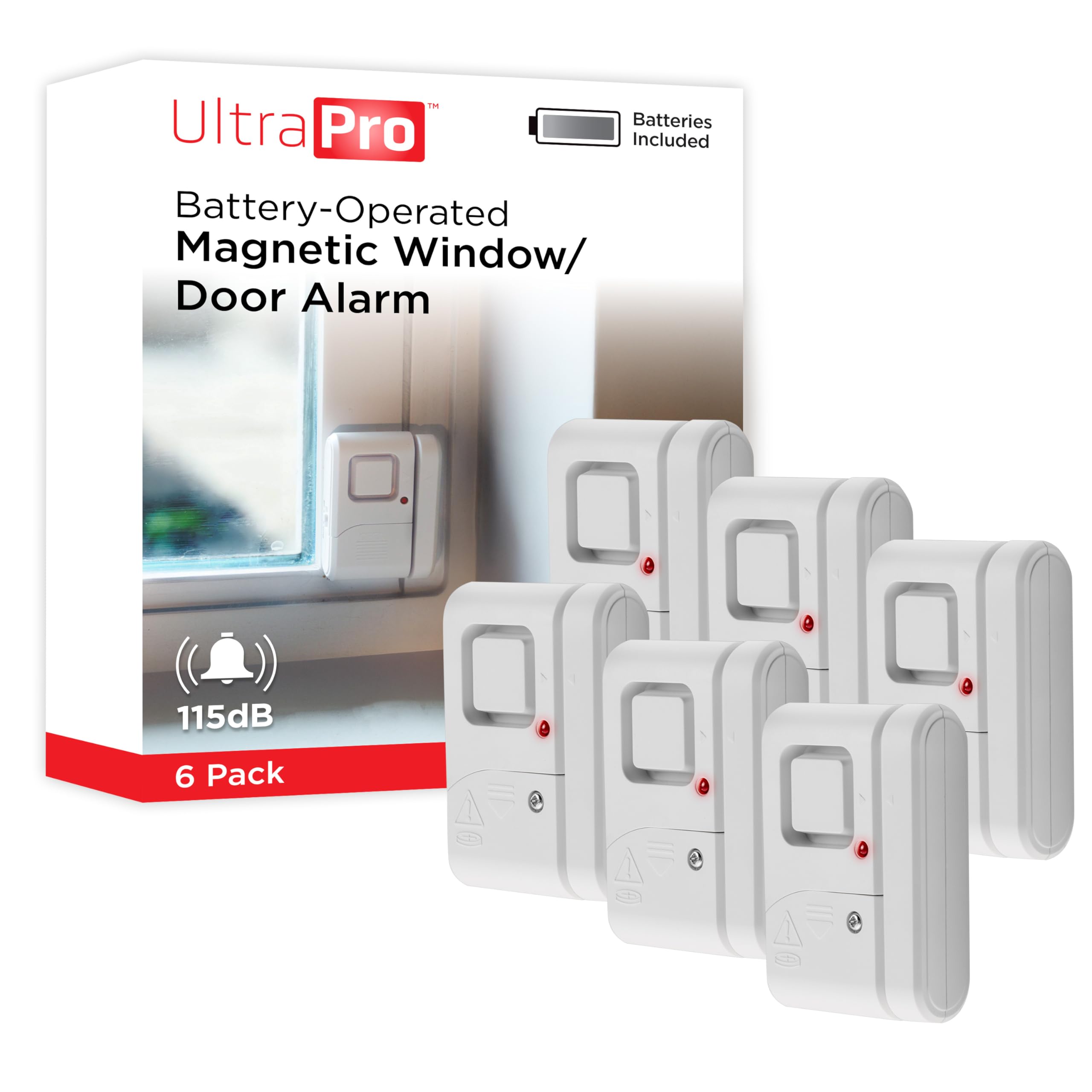
We recommend this six-pack for caregivers who need a simple, loud alert for doors, windows, drawers, or cabinets without monthly fees.
Pros
- Loud alarm and useful chime setting
- Quick, wireless installation
- Six units cover several entry points
Cons
- Tape may not hold well on every surface
- The alarm can be startlingly loud indoors
- We need a small screwdriver to access the batteries
We found the setup straightforward. We placed the alarm and magnet indoors with the included adhesive, aligned them on the moving and fixed surfaces, and switched the unit to chime or alarm mode. The wireless design helped us add alerts without running wires or changing the home.
The loud siren gave us a clear warning when a door or window opened. We also found the chime mode more practical for everyday monitoring, especially when we wanted an alert without using the full alarm.
For caregivers, these alarms can add awareness around wandering risks, nighttime movement, or restricted cabinets. The six-pack gives us enough units to cover several locations, but we would test the adhesive on each surface and check the low-battery indicator regularly.
Philips Window and Door Alarms, 4-Pack
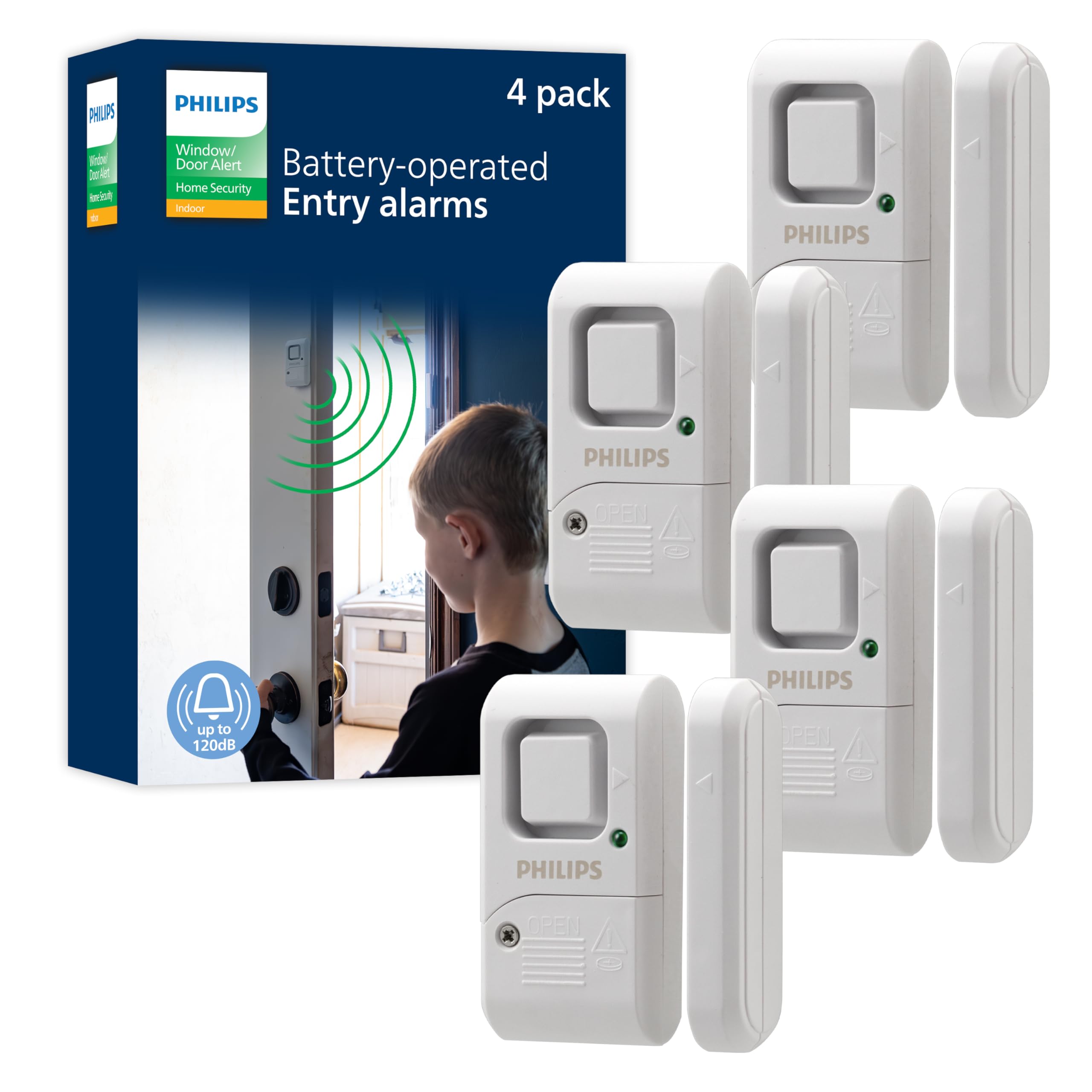
We recommend this affordable set for caregivers who need a simple alert when someone opens a monitored door or window.
Pros
- Loud alarm and useful chime mode
- Quick, wire-free adhesive installation
- Four units provide coverage in several areas
Cons
- The alarm may feel too loud in small rooms
- Adhesive may need extra surface preparation
- Button batteries require periodic replacement
We found the Philips alarms easy to set up on bedroom doors, exterior doors, and windows. The magnetic sensors align without wires, and the side switch makes it simple to choose off, chime, or alarm mode.
The alarm is very loud, which helps caregivers hear movement from another room. The chime mode offers a less urgent alert, though some users may still find it louder than expected.
The included tape works best on clean, dry surfaces. We would test each unit before relying on it and check the low-battery indicator during routine safety checks. The compact design and four-pack make this a practical choice for homes, apartments, and similar spaces.
SanJie 5-Pack Window Alarms

We recommend these alarms for caregivers who need a simple, loud alert when someone opens a door or window.
Pros
- Strong alarm with two volume levels and a chime setting
- Quick installation with included adhesive
- Useful for doors, windows, cabinets, and drawers
Cons
- The loudest setting may be too harsh for some homes
- Adhesive placement can be difficult around thick trim
- We need to switch the alarm off before opening the protected entry
We found the SanJie sensors easy to place on indoor doors and windows. The magnetic contact triggered quickly when we separated the two pieces, which gave us a reliable warning when someone opened an entry point.
The 100dB setting worked well for regular use, while the 125dB mode provided a stronger alert for larger homes. We also liked the chime option when we wanted notification without a full alarm.
The adhesive backing made installation fast, but careful alignment mattered. Thick trim or uneven surfaces can prevent the sensor and magnet from sitting close enough together.
For caregivers, these alarms can help monitor children, older adults, or family members who may wander. We would still test each unit after installation and check the batteries regularly, especially because the loud alert may startle some people.
Satisure WiFi Window Alarm

We recommend this alarm for caregivers who want loud local alerts and free phone notifications when a door or window opens.
Pros
- Sends quick alerts through the Tuya or Smart Life app
- Offers adjustable volume and different tones for each sensor
- Supports up to 20 sensors for wider home coverage
Cons
- The included adhesive may not hold well on every surface
- Some alert tones sound harsh
- The receiver needs a wall outlet
We found the setup simple: we plugged in the receiver, attached the sensors, and connected the system to the app. The wireless design worked well for covering several entry points without running cables.
The receiver produced a clear, strong chime that we could hear from another room. We could also assign different tones to sensors, which helped us identify the active door or window without checking the phone.
App alerts added useful support for caregivers who cannot stay near the receiver. Family members can share access, and the free push notifications avoid a monthly fee. The system also keeps its tone and volume settings after a power outage.
The main concern involves the adhesive pads. Some users reported that the sensors came loose, especially on difficult surfaces. We would clean and dry the mounting area first, then consider stronger mounting tape if the included pads do not hold.
TECKNET Window and Door Alarms

We recommend this six-pack for caregivers who want a simple alert when a child or dependent opens a window, door, cabinet, or drawer.
Pros
- Three volume levels and two alert modes
- Quick adhesive installation
- Compact design with a long warranty for registered users
Cons
- Needs a flat mounting surface
- Requires close sensor alignment
- The alarm may sound too loud in small rooms
We found the setup straightforward after cleaning the mounting area and lining up the alarm with its magnetic sensor. The adhesive backing made installation quick, but molding or uneven trim can prevent the two pieces from sitting close enough.
The chime mode works well when we want a gentle notification, while the continuous alarm provides a stronger warning for exits or areas that need closer supervision. We also liked being able to lower the volume in bedrooms and raise it in larger spaces.
The compact white units blend into many doors and windows, and the six-pack lets us cover several entry points at once. We would check the batteries and test each alarm regularly, especially after installation or when moving a sensor to a new location.
WimuPath Window and Door Alarms

We recommend this multipack for caregivers who need simple alerts on several windows or doors without Wi-Fi setup.
Pros
- Quick adhesive installation
- Loud alarm helps alert nearby adults
- Large pack suits multiple rooms
Cons
- Batteries are not included
- Adhesive may loosen on some surfaces
- No remote alerts or app control
We found these alarms straightforward to install. Each unit uses a magnetic contact, so the alarm sounds when the two pieces separate. That makes them useful for bedroom windows, exterior doors, and areas where a child or older adult should not exit alone.
The alarm is loud enough to hear from nearby rooms. We also liked the on/off switch, which lets us silence the unit before opening a protected door or window. Caregivers should test the placement before relying on it, since the two parts must line up correctly.
The adhesive worked well on clean, smooth surfaces, but some users report that units can fall from doors. We would clean and dry the mounting area first and check each alarm regularly. The pack offers good coverage, but it works as a local warning rather than a monitored safety system.
METAK 5-Pack Window and Door Alarms
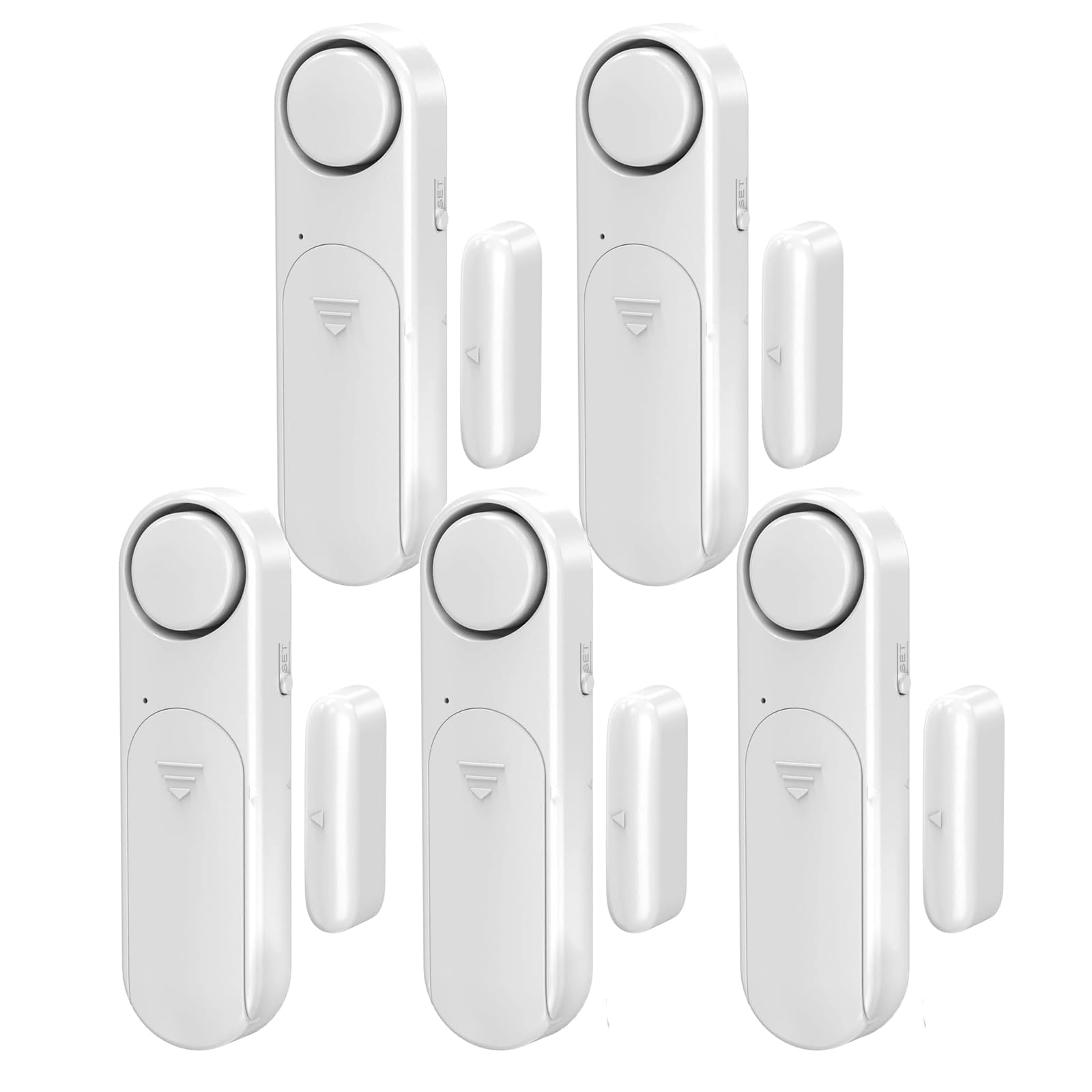
We recommend this five-pack for caregivers who need loud, simple alerts on several windows or doors without drilling or wiring.
Pros
- Strong alarm with adjustable 90dB or 120dB volume
- Fast adhesive installation
- Five sensors help cover multiple entry points
Cons
- Requires two AAA batteries per alarm, which are not included
- No remote control
- The loudest setting may be disruptive in small homes
We found the adhesive backing easy to use on doors and windows, and the slim design did not take up much space. The sensors suited common caregiving tasks, such as monitoring a bedroom door, basement entrance, or window near a pool.
The alarm produced a sharp sound that should reach nearby rooms when a protected opening moved. We also liked the option to lower the volume when a quieter alert worked better. The flashing red light provided a useful visual signal when the alarm activated or the battery needed attention.
The controls took a little practice because the Set button handles arming, disarming, and volume changes. Since the alarms do not support a remote, caregivers must adjust each unit directly. We would also keep spare AAA batteries available and test every sensor regularly.
PILSAMAS Caregiver Door and Window Alarm
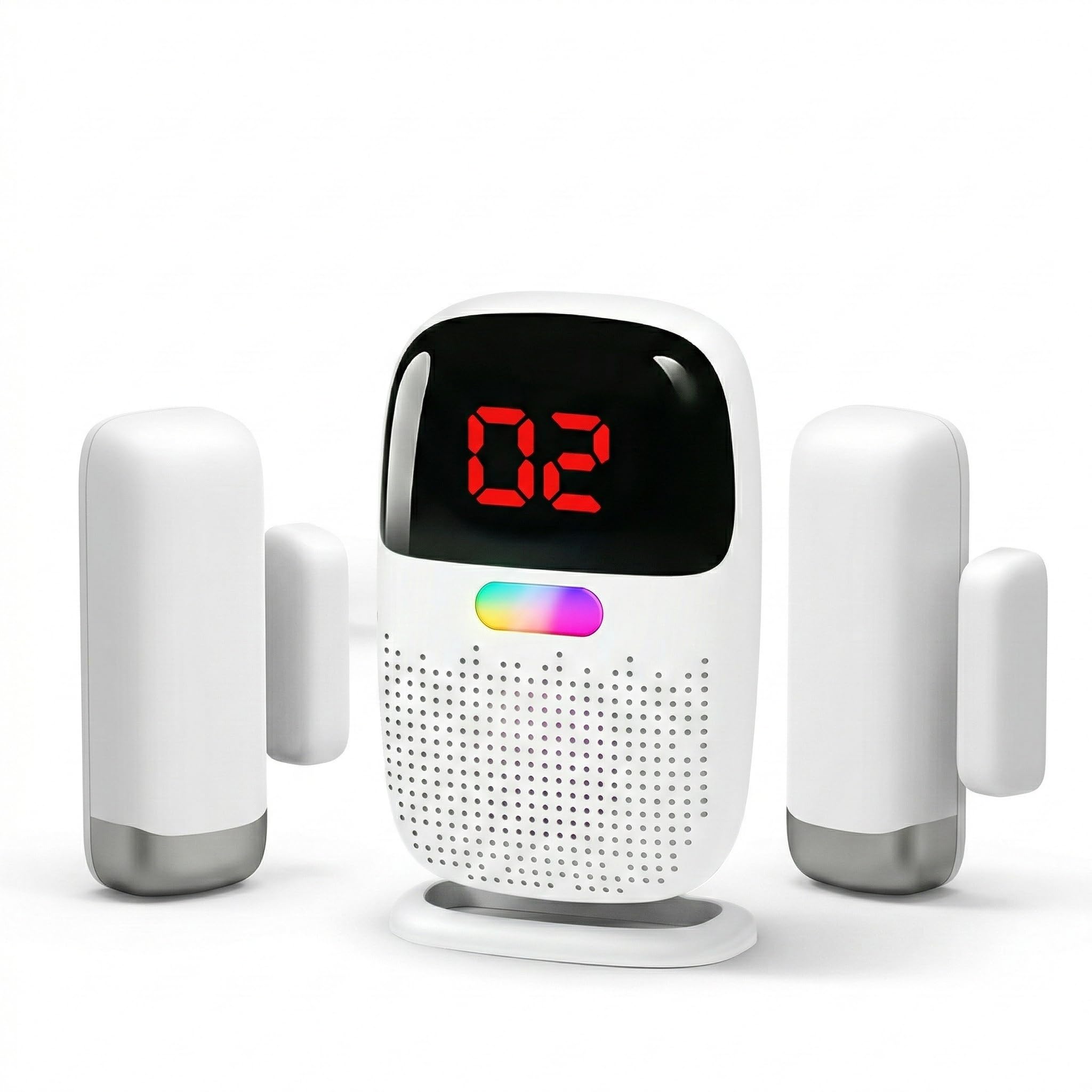
We recommend this system for caregivers who need portable alerts, multiple notification modes, and coverage for two doors or windows without a monthly fee.
Pros
- Rechargeable receiver and sensors reduce battery changes.
- Vibration, sound, and screen alerts support quiet or urgent notifications.
- The receiver shows which sensor triggered the alert.
Cons
- The advertised range can drop indoors because of walls and other obstacles.
- Pairing may take extra effort, and some users report connection problems.
- Two sensors may not cover homes with several exit points.
We found the receiver easy to carry with its belt clip, which helps caregivers stay informed while moving between rooms. The LED display identifies the sensor that opened, so we could check the likely exit without searching every door.
The alert choices make the system flexible. We could use a loud chime during the day or vibration at night. The system does not use cameras or microphones, which gives the person being monitored more privacy.
The sensors attach with adhesive pads, but unusual door frames may require careful placement. We would test each sensor from the rooms where we spend time because indoor signal strength can vary. The two-sensor setup suits a small home or the most important doors, but larger homes may need more coverage.
EVA LOGIK Vibration Window Alarm

We recommend this alarm for caregivers who want an affordable way to monitor several windows with a loud local alert.
Pros
- Very loud alarm draws attention quickly
- Adjustable sensitivity helps limit false alarms
- Simple wireless setup with visible warning light
Cons
- Batteries are not included
- Some units may arrive defective
- Vibration detection may miss light contact
We found the EVA LOGIK alarm easy to mount with its included adhesive backing. Its compact design fits on most window frames without taking up much space, which helps when we need to monitor several rooms.
The 120-decibel siren is hard to ignore. We could hear it clearly from nearby areas, making it useful for alerting caregivers when someone tries to open or disturb a window. The flashing red light also shows that the alarm remains active.
Sensitivity can be set higher or lower. We preferred the lower setting in busy areas because normal bumps caused fewer alerts, while the higher setting worked better on windows that needed closer monitoring.
The eight-pack suits homes with several accessible windows. However, the alarms use batteries that we must purchase separately, and some customer reports mention defective units. We would test every alarm soon after installation and keep replacement batteries available.
Buying Guide
We should choose a window alarm based on the person’s needs, the home’s layout, and the caregiver’s response plan. A useful alarm should be easy to install, simple to test, and loud enough for nearby caregivers to hear.
| Feature | What we should check |
|---|---|
| Sound level | Choose a volume that caregivers can hear from common rooms. |
| Alert options | Look for a local alarm, phone alert, or both, as needed. |
| Power source | Check battery type, battery life, and low-battery alerts. |
| Installation | Select adhesive or screw mounting based on the window and home. |
| Arming controls | Use simple controls that reduce accidental changes. |
| Tamper resistance | Consider covers or alerts if the user may disable the alarm. |
| Testing | Choose a model that lets us test the sensor and alert easily. |
We should confirm that the alarm works with the window type, including sliding, double-hung, or casement windows. The sensor and magnet must stay aligned when the window closes.
For homes with several windows, we should consider whether each alarm needs separate control or whether one system can manage multiple sensors. We should also check whether caregivers can receive alerts when they are in another room or away from home.
Before buying, we should review installation instructions, return terms, and maintenance needs. We should avoid relying on an alarm alone and pair it with supervision and a clear response plan.
Editor’s Choice
We choose the GE Personal Security Window and Door Alarm as our top pick for caregivers. It uses a loud 120-decibel siren, adhesive mounting, and a simple on/off switch. The alarm can alert nearby caregivers when someone opens a monitored window.
| Feature | Why it matters |
|---|---|
| Loud siren | Helps draw attention quickly |
| Adhesive installation | Avoids drilling and tools |
| Simple controls | Supports easy daily use |
| Compact design | Fits most common window frames |
We like this alarm for its low cost and straightforward setup. Caregivers can place it on bedroom windows, exit points, or other areas that need monitoring.
The alarm does not send phone alerts, track activity, or connect to a medical alert system. We recommend testing it often and replacing the batteries when the sound weakens. Caregivers should also check that the adhesive holds firmly on the window frame.
Conclusion
We should choose a window alarm based on the caregiver’s needs, the person’s abilities, and the home’s layout. A simple contact alarm may suit basic monitoring, while a connected model can send alerts to a phone or caregiver device.
Before buying, we should check the alarm’s volume, battery life, installation method, and alert range. We should also confirm that the device fits the window and works with the home’s internet or mobile connection, if needed.
Key factors to review:
- Reliable alerts with few false alarms
- Easy testing and battery replacement
- Secure mounting that does not damage the window
- A clear way to silence or reset the alarm
- Alerts that reach the right caregiver
Window alarms can support a broader safety plan, but they should not replace regular supervision or other safeguards. We should test each alarm often and update the plan as the person’s needs change.
FAQS
Are window alarms useful for caregivers?
Yes. Window alarms can alert us when someone opens a window or removes a screen. They work best as part of a wider safety plan and regular supervision.
What type of alarm should we choose?
We should look for a loud alarm, simple controls, and a low-battery warning. Some models also send alerts to a phone, which can help us monitor windows from another room.
Can we use alarms on different window types?
Many alarms work on sliding, double-hung, and casement windows. We should check the product instructions before buying, since sensor placement can vary by design.
Will a window alarm stop someone from leaving?
No. An alarm only provides a warning. We should also secure unsafe windows, keep keys and tools out of reach, and follow the person’s care plan.
How loud should the alarm be?
We should choose a model that we can hear from the areas where we spend time. A louder alarm may help in a large home, while a quieter chime may suit people who are sensitive to noise.
How often should we test the alarm?
We should test each alarm at least once a month and after changing the battery. We should also check that the sensor stays firmly attached and the window still closes safely.
