
10 Best Walkers for Small Spaces in 2026


Smart Plug with Alexa

Talking Clock
Spill-Proof Adult Cup
A narrow hallway, a tight bathroom doorway, or a cramped apartment can turn a standard walker into a daily obstacle rather than a help. Width matters as much as height when choosing mobility equipment for small homes, since many standard rollators measure wider than a typical interior doorway. The right walker for small spaces balances a narrow frame with enough wheel contact and stability to keep the user steady on hard floors, low-pile carpet, and thresholds.
Walkers for small spaces generally fall into a few categories: basic two-wheel folding walkers, three-wheel rollators, four-wheel rollators with seats, and petite or compact travel models. Each design trades off differently between maneuverability and stability. A three-wheel rollator turns tightly but has a smaller base of support, while a four-wheel model with a seat offers rest stops but takes up more floor space when folded.
Beyond width, pay attention to folded dimensions, wheel size, weight capacity, and whether the user needs a seat for resting. A heavier frame with larger wheels rolls more smoothly over transitions between rooms, but it can be harder to lift into a car trunk. The best walker for a small home is the one that fits through the narrowest doorway the user regularly needs to pass while still offering a stable, comfortable base.
Best for dual push-button folding: Drive Medical Two-Button Folding Walker
Best for ultra-narrow doorways: Vive Mobility Lightweight Folding Walker
Best for tight turns and storage bag: Vive Mobility 3 Wheel Rollator
Best for all-terrain seating comfort: VOCIC Z21 Rollator Walker with Seat
Best budget two-button walker: Medline Lightweight Two Button Folding Walker
Best for petite adults and travel: Stander Space Saver Walker Short
Best for indoor storage needs: KMINA Narrow Walker with Tray and Basket
Best steel-frame rollator with seat: Vive Mobility Steel Rollator Walker
Best for adjustable width needs: Medical King Aluminum Folding Walker
Best for bariatric and heavy-duty use: Agrish Narrow Upright Walker with Armrests
Drive Medical Two-Button Folding Walker
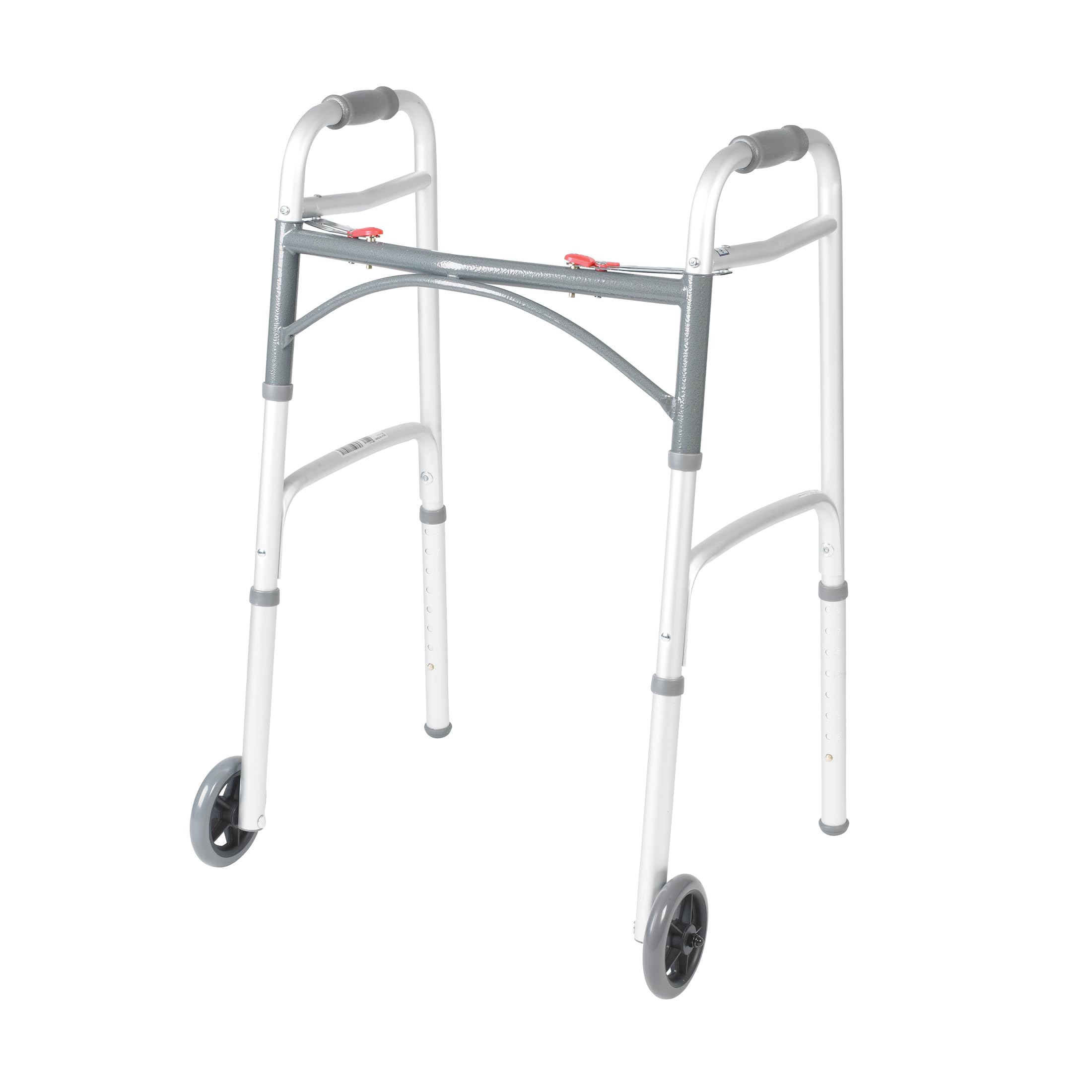
This walker suits shoppers who want a dependable, no-frills two-wheel design with an easy fold for daily use around the house.
Pros
- Dual push-button release works for users with limited grip strength
- 5-inch front wheels roll smoothly over carpet and tile
- High weight capacity for a standard two-wheel walker
Cons
- Hard plastic wheels can be noisy on hardwood floors
- No seat for resting during longer outings
- Frame width is wider than dedicated narrow models
The two-button fold makes this walker approachable for people with arthritis or reduced hand strength, since the release can be triggered with a palm or the side of the hand. Rear glide caps let the back legs slide rather than catch on carpet edges, which helps in homes with mixed flooring. Some reviewers note the front wheels bounce slightly on textured surfaces, and adding tennis balls or wheel replacements quiets that down. For basic mobility support through doorways and hallways, this model holds up well and adjusts to fit a range of heights.
Vive Mobility Lightweight Folding Walker
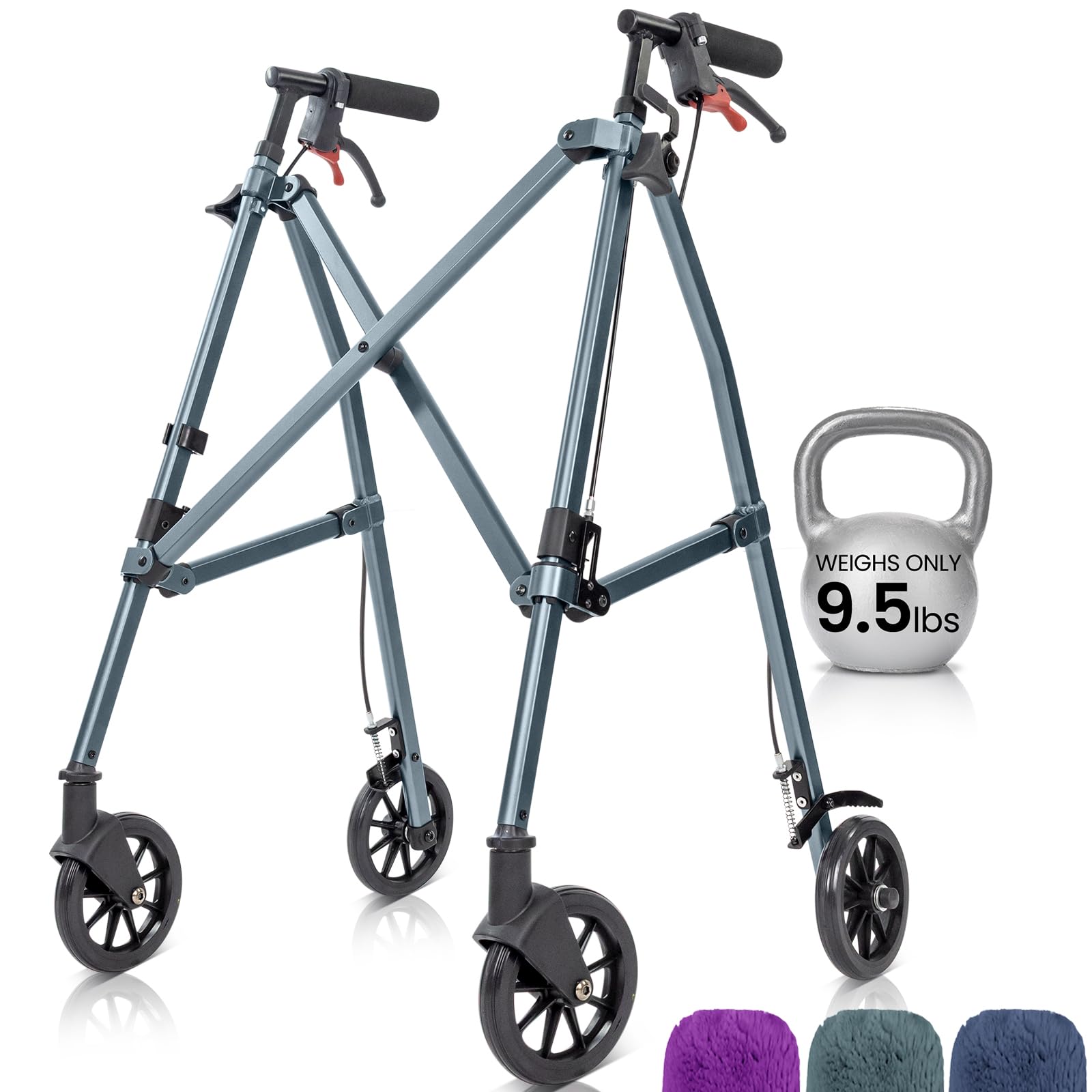
This is a strong pick for anyone whose main obstacle is a narrow doorway or hallway, thanks to its open-frame design and low weight.
Pros
- Open-frame design removes rear bars that can restrict natural stride
- Weighs under 10 pounds for easy lifting and folding
- Hand brakes add control on smooth or sloped indoor surfaces
Cons
- Lower weight capacity than heavier-duty walkers
- Frame feels less rigid than bulkier standard walkers
- Height range may not suit very tall users
The narrow frame and absent rear bar mean users can walk with a more natural gait instead of adjusting their stride to clear a crossbar. That design choice pairs well with small apartments, doctor’s offices, and stores with tight aisles. The one-step folding lock keeps it compact for closet storage or car trunks. Reviewers describe it as sturdy enough for local walks and errands, though it isn’t intended to replace a heavier-duty walker for users needing maximum stability.
Vive Mobility 3 Wheel Rollator

Three wheels give this rollator a tighter turning radius than four-wheel models, making it a good match for homes with sharp corners or narrow hallway junctions.
Pros
- Wide rear-wheel stance improves stability during standing pauses
- Height-adjustable handles accommodate different user heights
- Included storage bag adds convenience without adding bulk
Cons
- Lower weight capacity than four-wheel rollators with seats
- No seat for resting on longer walks
- Slightly less stable than four-wheel designs on uneven ground
Three-wheel rollators trade some stability for maneuverability, and this model manages that trade-off with a cross-brace frame that keeps the base from feeling too tippy. It folds into a slim profile for car trunks, which several reviewers mention as the deciding factor over bulkier four-wheel rollators. For users who prioritize tight turns over a resting seat, this is a sensible middle ground between a basic walker and a full rollator.
VOCIC Z21 Rollator Walker with Seat

This rollator works well for users who need a seat for resting and plan to roll over uneven surfaces like sidewalks, ramps, or textured flooring.
Pros
- 8-inch wheels handle bumps and thresholds better than smaller wheels
- Padded, contoured seat provides a comfortable resting spot
- Three-mode braking system adds control on slopes
Cons
- Heavier than dedicated narrow indoor models
- Wider footprint than three-wheel or petite walkers
- Folded size is larger, which matters for tight closets or small cars
The bigger wheels and textured tread set this rollator apart from typical indoor-only designs, letting it move confidently between indoor floors and outdoor pavement. The dual-level seat and handle adjustments help users of different heights find a comfortable fit without bending awkwardly. It won’t squeeze through the narrowest doorways as easily as a slimmer walker, but for households that need a seat and outdoor capability in one unit, it delivers real versatility.
Medline Lightweight Two Button Folding Walker

This walker is a solid budget-friendly option for straightforward indoor mobility support after surgery or injury.
Pros
- Independent side folding helps navigate narrow spaces
- Lightweight aluminum frame is easy to lift and carry
- Comfortable hand grip width supports a natural walking pace
Cons
- Lower weight capacity than heavy-duty models
- Basic design lacks a seat or storage
- Height range may not suit very tall or very short users
The two-button release and independent folding sides make this walker easy to angle through doorways at a slight diagonal, which some reviewers specifically mention when describing narrow home layouts. It assembles quickly and adjusts to fit a range of adult heights. For temporary recovery needs, such as after knee or hip surgery, it offers dependable support without unnecessary bulk or features that add cost.
Stander Space Saver Walker Short
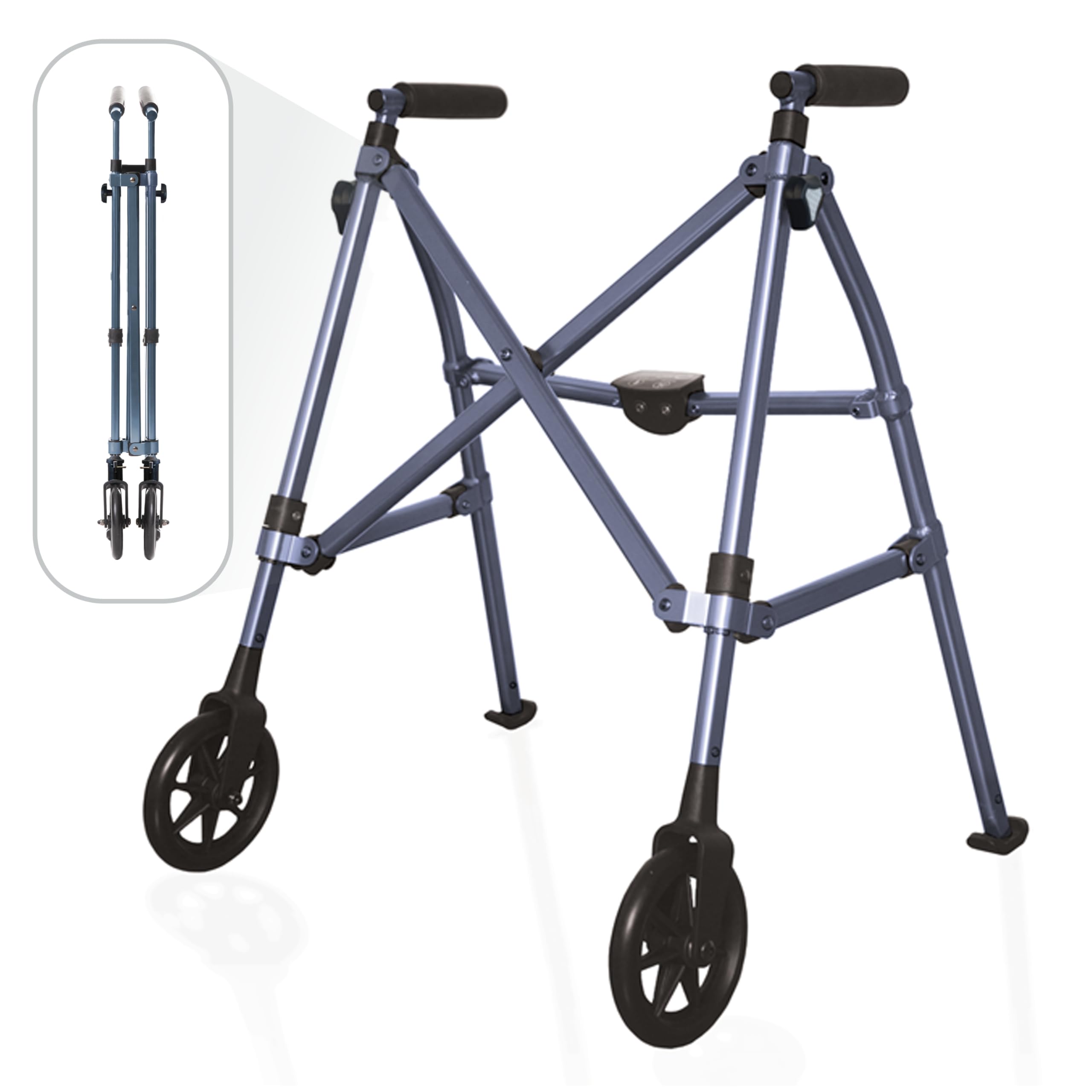
This is the most compact walker in this roundup, built specifically for petite adults and travel situations where storage space is limited.
Pros
- Folds to a footprint small enough for airplane overhead bins or car back seats
- Pre-assembled and ready to use out of the box
- Stands upright on its own when folded
Cons
- Lower height range fits petite or shorter users only
- Fixed front wheels offer less turning ease than swivel wheels
- Not designed for users needing maximum stability or a seat
The patented fold mechanism collapses this walker to a fraction of the size of standard models, which reviewers repeatedly highlight for cruises, air travel, and small bathroom stalls. It’s built for juniors and petite adults specifically, so taller users should look elsewhere. For a smaller-framed senior who needs occasional support and easy transport, this walker addresses both problems at once.
KMINA Narrow Walker with Tray and Basket

This narrow rollator suits indoor use in small homes, with a built-in tray and basket that adds convenience for carrying items room to room.
Pros
- 22-inch width fits through most standard interior doors
- Included tray and basket support daily independence
- 360-degree front wheel steering aids tight turns
Cons
- Lower weight capacity than most other rollators here
- Best suited for indoor, flat surfaces
- Single-axis handlebar takes some adjustment for new users
The tray and basket combination stands out among narrow rollators, letting users carry a cup, mail, or medication without a second trip. The 220-pound weight limit is lower than most rollators in this list, so it fits medium-low dependency users rather than those needing heavy-duty support. For a senior living in a smaller home who wants help carrying items indoors, this model addresses a need that plain walkers don’t.
Vive Mobility Steel Rollator Walker
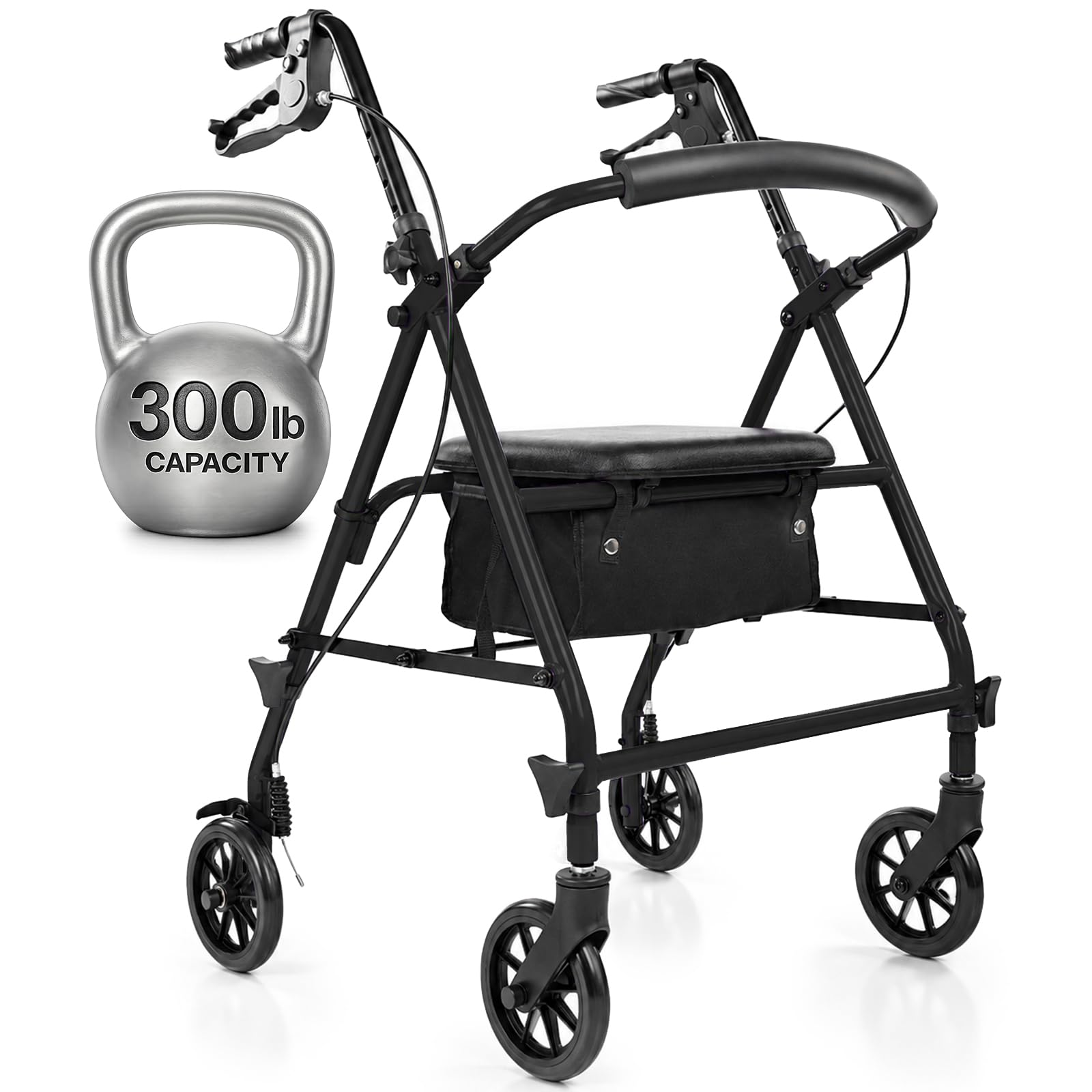
This rollator balances a narrow 23.5-inch frame with a padded seat, making it a practical choice for users who need occasional rest stops without sacrificing doorway clearance.
Pros
- Narrow width navigates tight hallways and doorways
- Steel frame supports up to 300 pounds
- Underseat storage bag adds carrying capacity
Cons
- Heavier than aluminum-frame alternatives at 19 pounds
- Hand brakes can be difficult for users with weak grip
- Seat height range may not suit very tall users
Steel construction gives this rollator a sturdier feel than lighter aluminum models, at the cost of some extra weight when lifting it into a car. The narrow frame and tool-free assembly make it approachable for first-time rollator users. Reviewers mention the brake mechanism requires a firmer push than expected, so caregivers should test it with the user before relying on it for slopes or ramps.
Medical King Aluminum Folding Walker

This walker offers adjustable width in addition to height, a feature that helps when a household needs one walker to pass through both standard and narrower doorways.
Pros
- Adjustable width accommodates varying doorway sizes
- High weight capacity for the price point
- Folds quickly for storage between uses
Cons
- Some units arrive with misaligned assembly holes
- Height range skews toward shorter to average users
- Build quality feels less refined than premium brands
Width adjustment sets this walker apart from most standard models, since it can narrow down for a bathroom doorway and widen again for hallway use. Assembly quality varies by unit according to reviewer feedback, with a portion reporting spring-button alignment issues. For budget-conscious buyers who need flexible sizing and are willing to troubleshoot minor assembly hiccups, it delivers solid value.
Agrish Narrow Upright Walker with Armrests
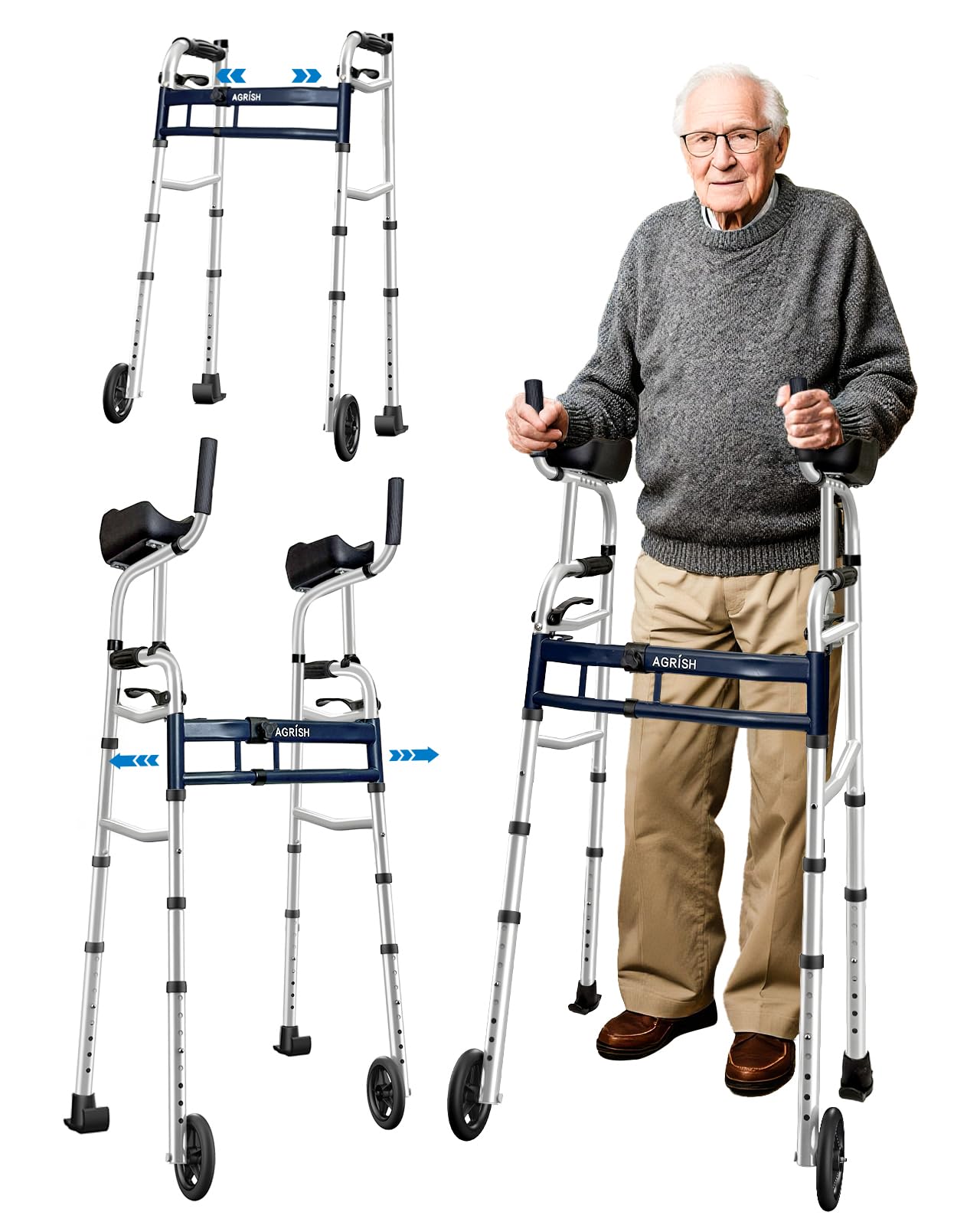
This heavy-duty upright walker supports users needing a higher weight capacity while still narrowing down to fit through tight doorways.
Pros
- 450-pound weight capacity suits bariatric users
- Width adjusts from 18 to 22 inches for narrow passages
- Padded armrests reduce wrist and shoulder strain
Cons
- Heavier and bulkier than standard folding walkers
- Hard wheels can bounce on textured flooring
- Higher height range unsuitable for shorter users
The armrest design shifts weight-bearing from the wrists to the forearms, which helps users with arthritis or limited hand strength maintain a longer walking session. Width adjustment down to 18 inches makes this one of the few heavy-duty options that still clears narrow bathroom doors. Reviewers with pre-ADA homes specifically call out the narrow-width setting as the reason they chose it over standard bariatric walkers.
Buying Guide
Measure Every Doorway First
Measure the narrowest doorway or hallway the walker needs to pass through before comparing product widths. Advertised width often reflects the frame at its narrowest setting, not the width during normal use with hands on the grips.
| Space to Measure | Why It Matters |
|---|---|
| Bathroom doorway | Often the narrowest point in a home |
| Hallway width | Determines whether the user can turn mid-walk |
| Bedroom doorway | May be wider than bathroom but still tight |
| Space beside furniture | Affects real-world maneuvering room |
Wheel Configuration and Stability
Two-wheel walkers require lifting the back legs with each step, which adds stability but slows movement. Three-wheel rollators turn tightly in small spaces but offer a narrower base of support. Four-wheel rollators roll continuously and often include a seat, at the cost of a larger folded footprint.
Folded Size and Storage
A walker that fits through doorways but won’t fold small enough for a closet or car trunk creates a different daily problem. Check folded dimensions, not just walking width, especially for apartment living or frequent travel.
Weight Capacity and Frame Material
Aluminum frames keep overall weight low, which helps users who lift the walker into a car or up stairs. Steel frames add durability and higher weight capacity but increase the walker’s total weight.
Seat and Brake Features
A seat adds rest stops during errands or longer indoor walks but increases the folded size. Hand brakes need to match the user’s grip strength; a stiff brake lever can be a safety issue for someone with reduced hand strength.
Matching Design to the User
| User Need | Suggested Design |
|---|---|
| Petite or shorter adult | Compact travel walker with lower height range |
| Frequent car travel | Lightweight folding model with small folded footprint |
| Needs rest stops | Four-wheel rollator with seat |
| Higher body weight | Heavy-duty frame with reinforced weight capacity |
| Very narrow bathroom doorway | Adjustable-width narrow walker |
| Uneven or outdoor terrain | Larger wheels with textured tread |
Editor’s Choice
The Vive Mobility Lightweight Folding Walker stands out as the strongest overall pick for small-space living, thanks to its open-frame design, low weight, and genuinely narrow profile that clears tight doorways without sacrificing a natural walking stride.
For users who need a seat and don’t mind a slightly wider footprint, the VOCIC Z21 Rollator Walker offers a comfortable resting spot and confident handling on mixed indoor and outdoor surfaces. Petite adults and frequent travelers get the best fit from the Stander Space Saver Walker, which folds smaller than any other model in this lineup.
Conclusion
Choosing a walker for a small home comes down to measuring the tightest doorway or hallway first, then matching wheel configuration and folded size to daily routines. A two-wheel walker suits straightforward indoor support, a three-wheel rollator handles sharp turns, and a four-wheel rollator with a seat serves users who need rest stops along the way.
Weight capacity and frame material affect both durability and how easily a caregiver or user can lift and store the walker. Testing the fold, the brakes, and the turning radius in the actual home, rather than relying on listed measurements alone, gives the clearest sense of whether a walker will work in daily use.
FAQS
What width should a walker be for a narrow doorway?
Most standard interior doorways measure between 28 and 32 inches wide. A walker with a frame width under 24 inches clears most doorways with room to maneuver, though hand position while walking can add a few inches of effective width.
Are three-wheel rollators less stable than four-wheel models?
Three-wheel rollators have a smaller base of support, which can make them feel less stable during a full stop compared to four-wheel designs. They turn more tightly in exchange, which helps in homes with sharp corners or narrow junctions.
Do narrow walkers sacrifice stability for compactness?
A narrower frame reduces the base of support somewhat, but well-designed narrow walkers use cross-bracing and wider rear wheel stances to maintain stability. Testing the walker on the user’s actual flooring gives a clearer picture than width measurements alone.
Can one walker work for both a narrow bathroom and a wider hallway?
Adjustable-width walkers narrow down for tight bathroom doorways and widen again for hallway use, which avoids needing two separate devices. Fixed-width narrow walkers work for households where every doorway is similarly tight.
Is a seat necessary on a walker for small spaces?
A seat adds convenience for rest stops but increases the folded footprint and overall weight. Users who mainly need support for short indoor distances often do fine without one, while those walking longer distances benefit from the option to sit.