
10 Best Walkers for Bathroom Trips in 2026


Puzzle Book for Seniors

Rollator Walker with Seat

Tablet for Seniors
Bathroom trips are where falls happen most often for older adults, and the reason usually comes down to tight turns, wet tile, and a walker that was never designed for the job. A standard hallway walker can feel bulky beside a toilet or vanity, forcing awkward pivots that put weight on one leg longer than feels safe. The right mobility aid changes that equation by fitting the actual footprint of a home bathroom.
Not every walker on the market is built with this space in mind. Some rolling walkers and rollators are wider than a typical bathroom doorway, while others lack the low, secondary handles that make sitting down or standing up from a toilet manageable. Grip texture, wheel size, and how a frame locks in place all affect whether a device helps or gets in the way during a transfer.
Weight capacity, frame width, and the presence of a locking brake or stable base matter more in a bathroom than almost anywhere else in the house, since tile and vinyl floors offer less traction than carpet. We looked at folding walkers, narrow-frame designs, hemi walkers, rollators, and dedicated toilet safety rails to sort out which ones actually hold up near a toilet or shower.
Best for narrow doorways: Delog Narrow Walker
Best for toilet transfers: Lumex 3-in-1 UpRise
Best for one-handed support: Vive Hemi Walker
Best dedicated toilet rail: Vaunn Toilet Safety Frame
Best for longer indoor walks with seating: VOCIC Z21 Rollator
Drive Medical Two-Button Folding Walker
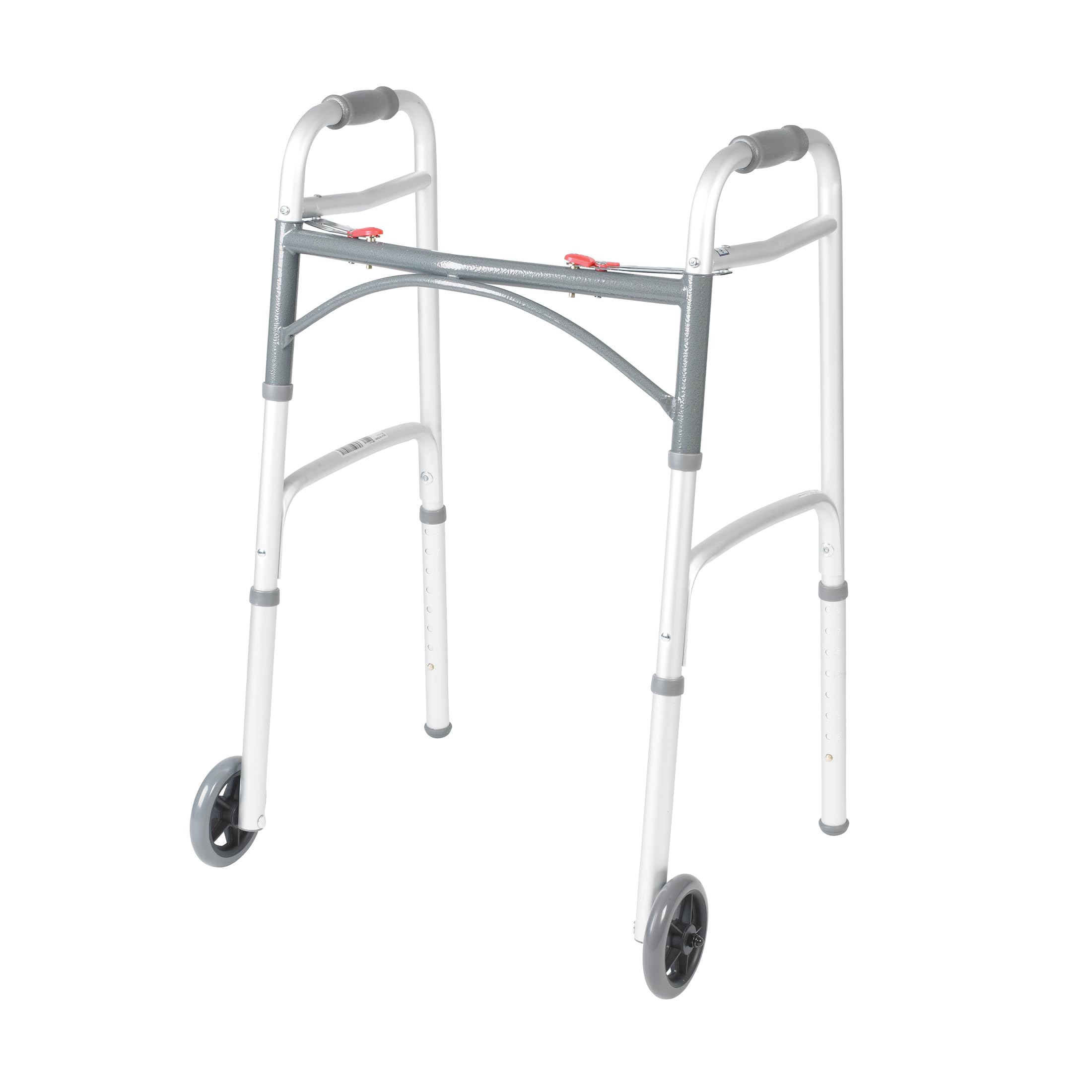
This is a solid everyday choice for anyone who needs a stable, easy-fold walker for trips between the bedroom and bathroom.
Pros
- Dual push-button release works with limited grip strength
- Front wheels roll smoothly on tile without dragging
- Supports up to 350 lb
Cons
- No seat for resting along the way
- Plastic wheels can be noisy on hard floors
- Rear glides need occasional replacement
The 5-inch front wheels help this walker glide across bathroom tile without catching, and the rear glide caps keep the back legs from marking flooring. Folding it one-handed is straightforward, which matters when a caregiver needs to store it quickly beside a vanity. It lacks a seat, so it works best for shorter distances rather than resting stops.
Drive Medical Rollator Walker with Seat
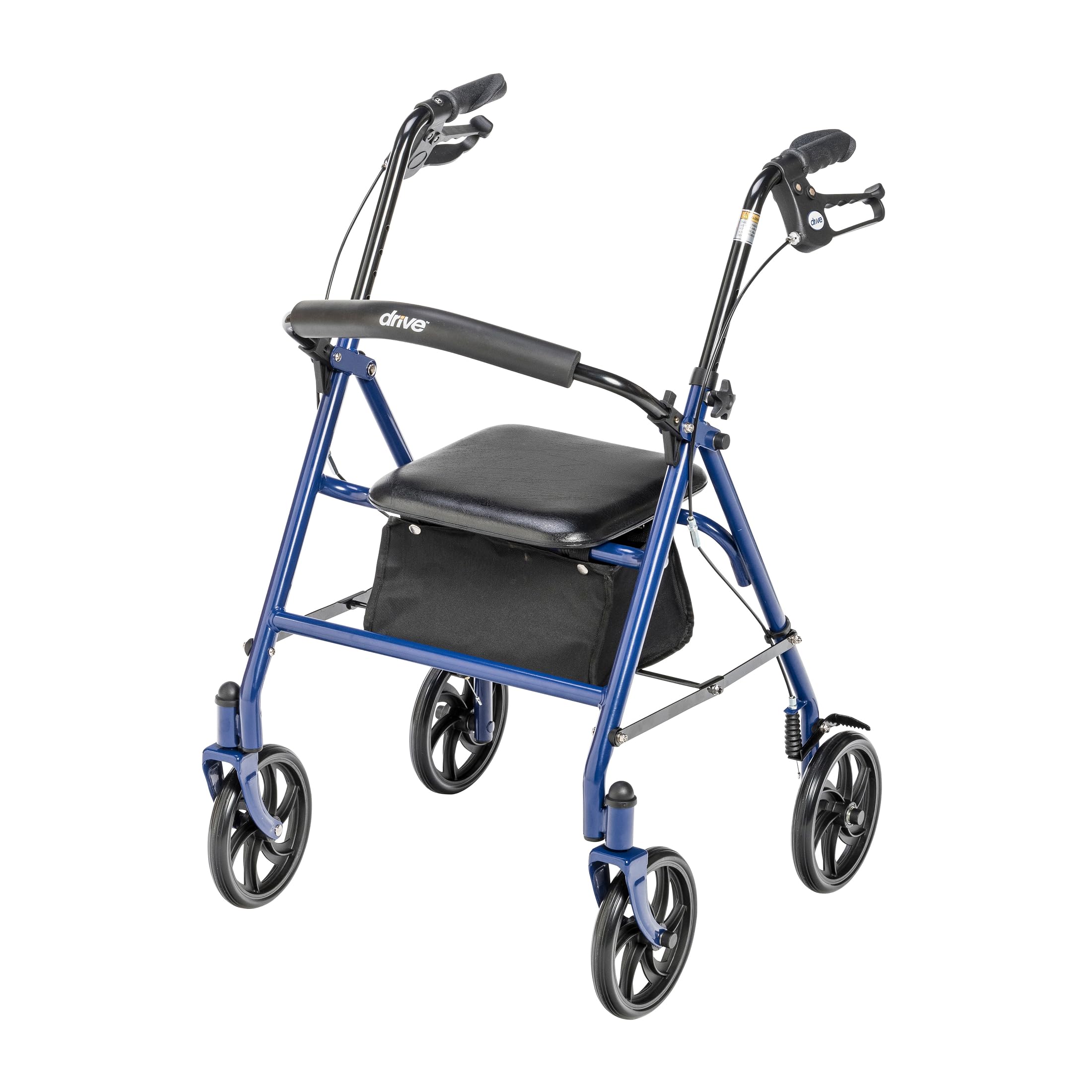
This rollator suits users who need to rest partway through longer hallway walks to the bathroom, though its width makes it less ideal for tight doorways.
Pros
- Padded seat allows rest stops before reaching the bathroom
- Locking hand brakes hold the frame steady during transfers
- Steel frame supports up to 350 lb
Cons
- Wider footprint than standard walkers
- Not meant to roll directly onto wet bathroom floors
- Heavier at 20 lb, harder to lift into a car
The locking brakes give real confidence when pausing near a toilet or doorway, since the wheels stay put instead of rolling away underfoot. Its width can be a problem in smaller bathrooms, so it works better as a hallway companion that gets parked just outside the door. Skip rolling it directly onto wet tile, since the caster wheels aren’t designed for slick surfaces.
Medline Two Button Folding Walker

This walker fits users who want a lighter frame with independent-folding sides for narrow bathroom entries.
Pros
- Each side folds independently for tight spaces
- Lightweight at 8 lb, easy to reposition near a toilet
- 5-inch wheels move smoothly on tile
Cons
- Lower 300 lb weight capacity
- Narrower grip width may not suit taller users
- No seat included
The independent folding sides let this walker angle slightly to clear a vanity corner, which is a small but genuinely useful feature in cramped bathrooms. It weighs less than many rolling walkers, so shifting it out of the way between uses feels manageable for smaller caregivers. The 300 lb capacity is worth checking against the user’s needs before buying.
Lumex 3-in-1 UpRise

This is the most purpose-built option here for toilet transfers, combining a walker, stand-up aid, and safety rail in one frame.
Pros
- Low secondary handles assist with sitting and standing
- Doubles as a toilet safety rail, no separate purchase needed
- Supports up to 400 lb
Cons
- Assembly involves sorting multiple leg pieces
- Instructions are minimal out of the box
- Bulkier footprint than a standard walker
The dual-height handles are the standout feature, giving users something low to push against when lowering onto the toilet and something higher for walking support. Setup takes patience since the legs arrive in separate bags that need matching by size. Once assembled, it holds steady around a toilet bowl and works as a stand-alone rail if the walking function isn’t needed daily.
Medical King Aluminum Walker with Wheels

This walker works well for users who need adjustable width along with height, a helpful combination for narrower bathroom clearances.
Pros
- Adjustable width in addition to height
- Front wheels ease movement across tile and low-pile flooring
- Supports up to 350 lb
Cons
- Some units report misaligned assembly holes
- Shorter maximum height range than competitors
- Instructions could be clearer for first-time setup
Adjustable width is uncommon at this price, and it lets smaller users bring the frame in closer for better control near a toilet or sink. Assembly complaints appear in a portion of reviews, so checking that all pieces align before relying on it daily is a reasonable precaution. Once set up, it folds down for storage in a bathroom closet without much bulk.
Delog Narrow Walker

This is the walker to choose for homes with narrow bathroom doorways, since it adjusts down to 18 inches wide.
Pros
- Width adjusts from 18 to 22 inches for tight clearances
- Trigger release folds without letting go of the handles
- Independently operating sides ease turns near fixtures
Cons
- Narrower stance may feel less stable for larger users
- Height range tops out at 37 inches
- Wheels sit outside the frame unless repositioned
Clearing a 20-inch bathroom doorway is a common problem in older homes, and this frame handles it better than most standard walkers. The trigger release keeps hands on the grips during folding, a real benefit for users with arthritis. Reviewers with older homes single this one out for fitting spaces other walkers simply can’t.
Vive Hemi Walker

This one-handed walker suits users recovering from stroke or shoulder injury who need support from a single side near the toilet.
Pros
- Designed for one-handed operation
- Doubles as a grab bar beside a toilet or shower
- Weighs just 4 lb for easy repositioning
Cons
- Not intended for users needing two-handed support
- Lower height limit may not fit taller individuals
- Smaller footprint means less overall stability than a full walker
Placed beside a toilet, this frame functions as a fixed grab point rather than something to walk with, which is exactly what users recovering from one-sided weakness or limited arm mobility often need. Its narrow, compact shape tucks into small bathrooms without blocking the door. It isn’t a substitute for a full walker when both hands need support.
VOCIC Z21 Rollator
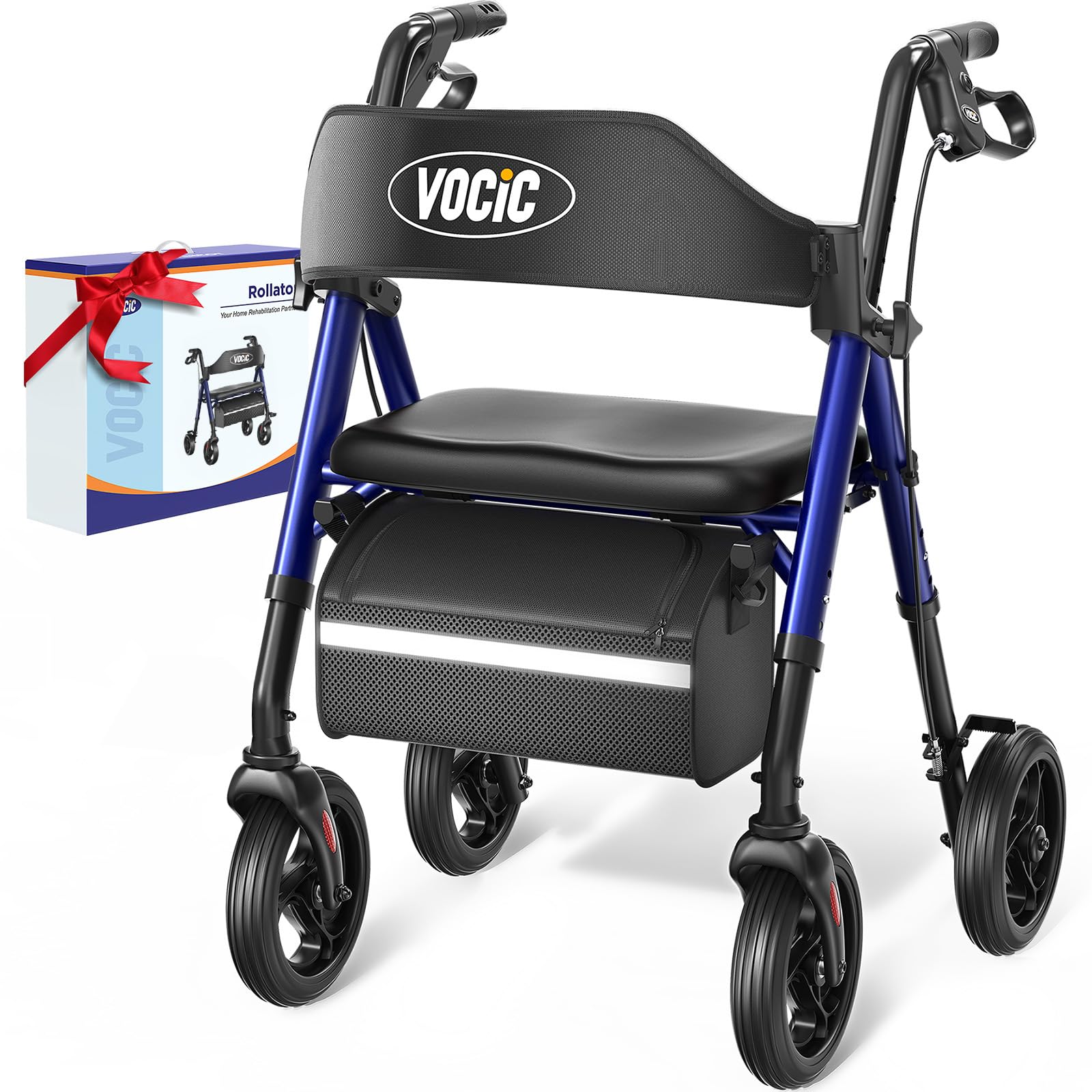
This rollator fits users who need a comfortable seat and reliable brakes for the walk to the bathroom, best used just outside rather than on wet flooring.
Pros
- Padded seat with backrest for resting along the route
- Three-mode braking system for controlled stops
- 8-inch wheels handle thresholds and uneven flooring well
Cons
- Bulkier than standard walkers, less suited to tight bathrooms
- Heavier at roughly 22 lb
- Not designed for use on wet tile or shower areas
The three-mode brakes stand out, letting a user slow gradually or lock fully before sitting down, which adds confidence on the way to the bathroom. The seat height adjusts across three levels, useful for shared households with different user heights. Its size makes it a hallway or bedroom companion rather than something to bring past the bathroom door.
Stander Space Saver Walker
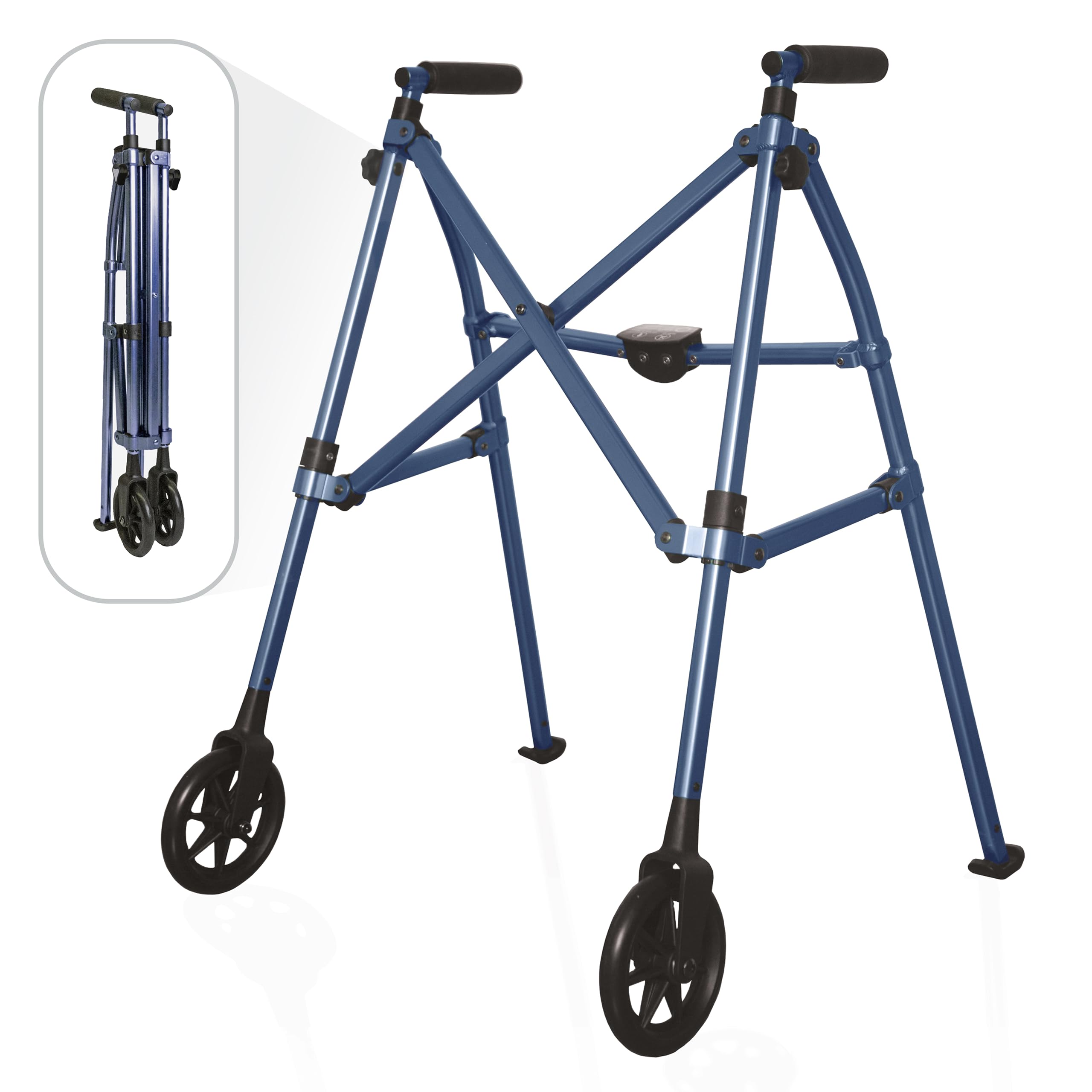
This compact walker suits users who need to fold and stash a walker quickly in a small bathroom or narrow hallway.
Pros
- Folds to a 5 x 7 inch footprint for storage
- Arrives pre-assembled, ready to use immediately
- Weighs just 8 lb
Cons
- Fixed front wheels, no swivel option
- Rear ski glides work better on smooth flooring than carpet
- Handle height range may not suit very tall users
Reviewers frequently mention using this walker to navigate narrow spaces like bathroom stalls and small home layouts, and the fold-to-store design backs that up. Setting it up requires no tools, so caregivers can hand it to a new user without a learning curve. The fixed front wheels mean less turning flexibility than swivel-wheel rollators, but the trade-off is a steadier, more predictable glide near a toilet.
Vaunn Toilet Safety Frame
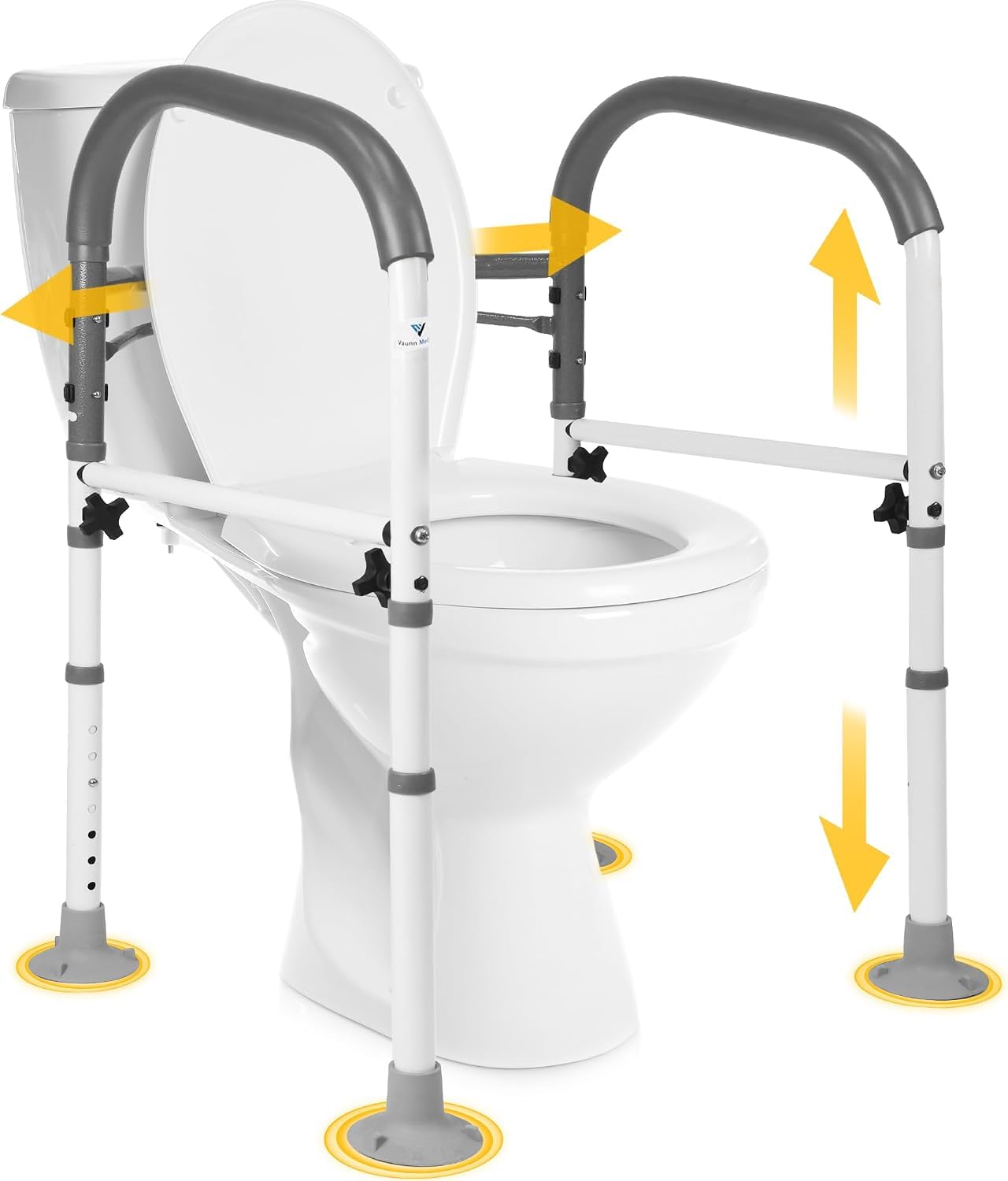
This dedicated toilet rail is the right pick for anyone who needs fixed, sturdy support specifically for sitting down and standing up, without the bulk of a full walker.
Pros
- Adjustable height and width fits most toilet styles
- No tools or installation required
- Padded grab bars provide a secure, non-slip grip
Cons
- Provides no support while walking to the bathroom
- Suction feet grip better on some flooring than others
- Frame needs to be centered carefully around the bowl
This frame sits directly around the toilet bowl, giving fixed support exactly where transfers happen. Reviewers recovering from hip and knee replacements describe it as easier to use than freestanding grab bars bolted to a wall. It offers no help getting to the bathroom, so it pairs well with a separate walker for the rest of the trip.
Buying Guide
Frame Width and Doorway Clearance
Measure the bathroom doorway before choosing a walker. Standard interior doors run 28 to 32 inches wide, but many older homes have doorways closer to 20 to 24 inches. A frame that adjusts down in width, or one built narrow from the start, prevents scraping against door frames and vanity edges.
Wheel Type and Flooring
Bathroom floors are usually tile, vinyl, or linoleum, all more slippery than carpet when wet. Front wheels with a textured tread grip better than smooth plastic casters. Rear glide caps or ski-style feet reduce drag without letting the frame slide unexpectedly.
| Flooring Type | Best Wheel/Foot Style |
|---|---|
| Dry tile or vinyl | 5 to 6 inch textured front wheels |
| Wet or recently mopped floors | Rubber-tipped feet, no wheels |
| Uneven thresholds | 7.5 to 8 inch caster wheels |
Seating and Braking
A seat helps on longer walks to the bathroom but adds bulk that makes tight turns harder. Locking hand brakes matter most for rollators, since an unlocked frame can roll away during a transfer. Walkers without wheels rely on the user lifting or sliding the frame instead.
Weight Capacity and Frame Material
Aluminum frames keep weight down for easier lifting and folding, typically supporting 300 to 350 lb. Steel frames and bariatric-rated models push capacity to 400 lb, trading some portability for extra strength.
One-Handed and Transfer-Specific Support
Users recovering from a stroke, shoulder surgery, or one-sided weakness benefit from hemi walkers or dedicated toilet frames over standard four-point walkers. These provide stability without requiring grip from both hands.
Editor’s Choice
For most bathroom situations, the Delog Narrow Walker earns the top recommendation because it solves the single biggest bathroom problem: doorway clearance. Its adjustable width down to 18 inches fits spaces that stop other rolling walkers cold, and the trigger release keeps both hands on the grips while folding.
For toilet transfers specifically, the Lumex 3-in-1 UpRise stands out for combining walking support, a stand-up aid, and a toilet safety rail in one purchase. Households managing a tighter budget or limited storage space benefit from not needing three separate products.
Caregivers assisting someone with one-sided weakness should look at the Vive Hemi Walker, since it’s built for exactly that transfer pattern near a toilet or shower.
Conclusion
Choosing a walker for bathroom use comes down to matching the frame to the actual space and the type of support needed. A narrow, foldable walker solves doorway problems that rollators can’t. A dedicated toilet rail or 3-in-1 stand-up aid addresses the transfer itself, which is often the riskiest part of a bathroom trip. Rollators with seats work well for longer walks through a home but need to stay off wet tile.
Checking doorway width, flooring type, and whether the user needs one-handed or two-handed support narrows the choice quickly. Pairing a compact walker for the walk with a fixed rail or stand-up aid for the transfer covers both parts of the trip without overcomplicating the setup.
FAQS
What width walker fits through a narrow bathroom door? Look for a frame that adjusts down to 18 to 20 inches wide, or measure the doorway first since many older homes have openings under 24 inches.
Are rollators safe to use on wet bathroom floors? Rollator wheels aren’t designed for wet tile. Park the rollator just outside the bathroom and use a walker, grab bar, or toilet safety frame for the final steps.
What’s the difference between a hemi walker and a standard walker? A hemi walker supports one-handed use for people with limited mobility on one side, while a standard walker requires grip and support from both hands.
Do toilet safety rails require permanent installation? Most freestanding models, including the Vaunn frame, need no tools or wall mounting. They fit around the existing toilet bowl and can be folded for storage or travel.
How much weight capacity should a bathroom walker have? Match the capacity to the user’s weight with some margin. Standard aluminum walkers support 300 to 350 lb, while bariatric-rated frames like the Lumex UpRise handle up to 400 lb.
