
10 Best Walkers for Arthritis in 2026: 11 Supportive Picks

Bed Rail for Seniors

Voice Assistant Smart Speaker

Long Handle Shoe Horn
Arthritis in the hands, knees, or hips changes how a person moves through the day, and a walker built without that in mind can add strain instead of relieving it. Grip pain makes hard plastic handles unpleasant to hold for long stretches. Stiff joints make heavy folding mechanisms frustrating rather than convenient. The right walker should reduce effort at every point of contact, from the handles down to the wheels.
Standard walkers, two-wheel walkers, rollators, and upright walkers each solve a different problem. A person with knee arthritis who mainly needs balance support around the house has different needs than someone with hip arthritis who wants to walk outdoors for exercise and needs a seat for rest breaks. Wheeled models reduce the lifting and re-planting motion that can aggravate wrist and shoulder joints, while non-wheeled walkers offer more resistance and control for those with balance concerns.
The most important features for arthritis sufferers are padded, wide-diameter grips, low-effort brakes, and a stable but not overly heavy frame that folds without requiring strong hand pressure. Weight capacity, wheel size, and seat height also affect comfort and safety over time. We looked at eleven walkers across several styles to find options that support different levels of grip strength, walking distance, and terrain.
Best for narrow hallways: Drive Medical Two-Button Folding Walker
Best for longer outdoor walks with rest stops: Drive Medical Rollator Walker with Seat
Best for style-conscious users who still need full rollator features: Drive Medical Nitro DLX Foldable Rollator Walker
Best for users who prefer a non-wheeled walker for extra control: Drive Medical 2-Button Standard Foldable Walker
Best budget-friendly two-wheel walker: Medline Lightweight Two Button Folding Walker
Best for rough outdoor terrain: Helavo All Terrain Walker
Best for users who need to stand fully upright: Helavo Upright Walker with Seat
Best for travel and compact storage: Stander Space Saver Rollator
Best for tight doorways and narrow homes: HOMLAND Foldable Walker with Seat
Best value adjustable-width walker: Medical King Aluminum Lightweight Walker
Best for users who need a walker and transport chair in one: Akoasm Rollator Wheelchair Combo
Drive Medical Two-Button Folding Walker with Wheels
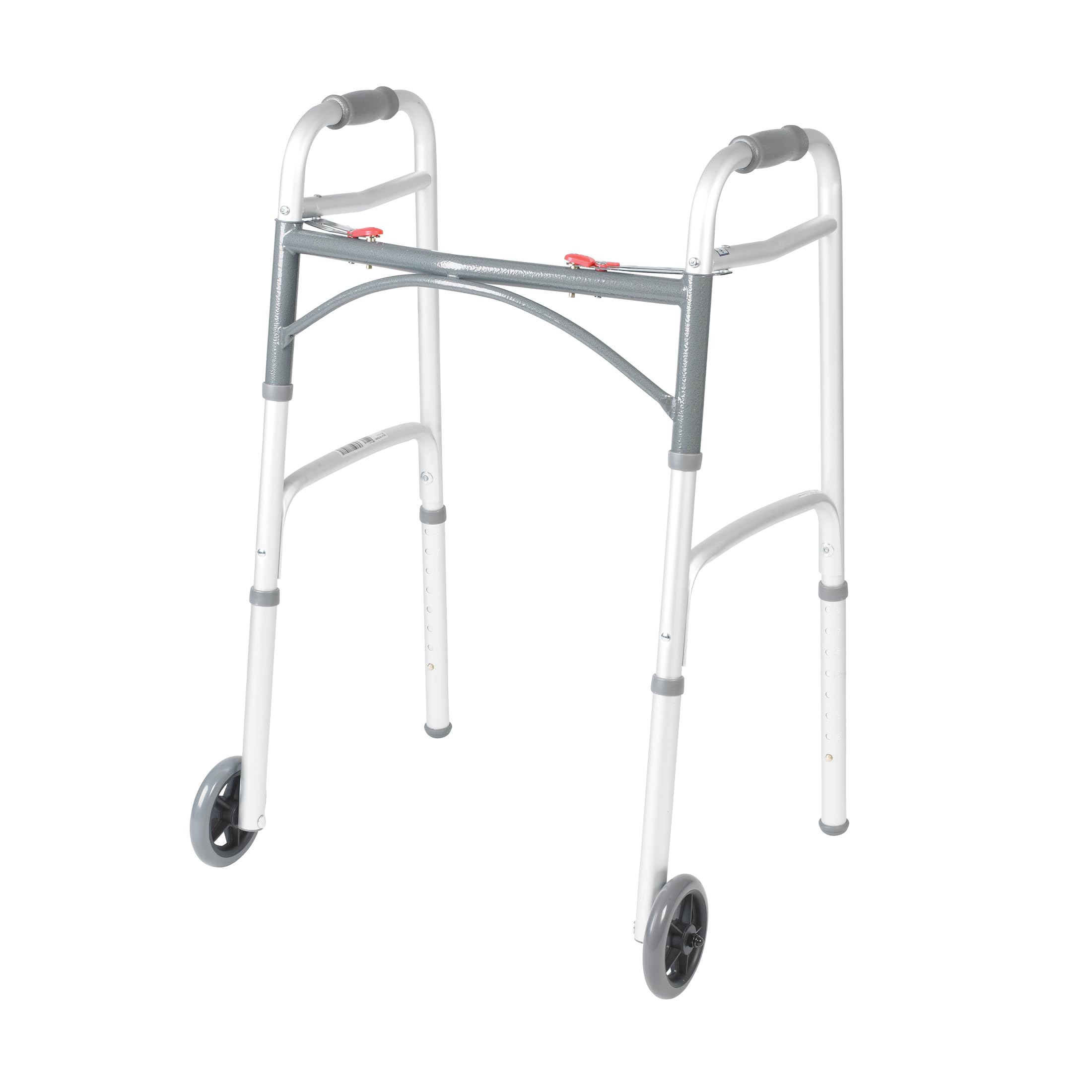
This walker suits anyone who wants front-wheel mobility without giving up the stability of a traditional frame, and its low-effort folding buttons make it especially friendly for sore hands.
Pros
- Push-buttons fold with fingers, palm, or side of hand
- Contoured vinyl grips reduce hand strain
- Supports up to 350 pounds
Cons
- Hard plastic wheels can be noisy on wood floors
- No seat for rest breaks
- Rear glide caps require occasional replacement
The dual push-button release stands out as the strongest arthritis-friendly feature here. Reviewers with limited grip strength note that folding it doesn’t require pinching or squeezing, which matters when finger joints are painful. The 5-inch front wheels roll smoothly over carpet and tile without dragging, though a few owners mention adding tennis balls to the rear legs to quiet the ride. At 7.5 pounds, it’s light enough to lift into a car trunk without help.
Drive Medical Rollator Walker with Seat

This rollator works well for people managing hip or knee arthritis who need to sit down periodically during errands or walks.
Pros
- Padded seat with fold-down backrest
- Locking hand brakes control speed with light effort
- Under-seat pouch for daily essentials
Cons
- Steel frame adds noticeable weight at 20 pounds
- Height range tops out at 37 inches, tight for taller users
- Folded size still bulky for small trunks
The 7.5-inch caster wheels roll steadily across sidewalks, grass, and indoor flooring, giving users with balance concerns a wide margin of stability. Hand brakes lock securely for seated rest, an important safety detail for anyone whose legs tire quickly. The seat width comfortably fits most adults, and one reviewer notes it holds groceries without tipping. The steel construction that makes it sturdy also makes it heavier to lift than aluminum alternatives.
Drive Medical Nitro DLX Foldable Rollator Walker

This rollator suits users who want a refined design alongside genuinely supportive features like adjustable handles and a firm foam seat.
Pros
- 10-inch front casters handle curbs and uneven pavement
- Push-button height adjustment for handles and backrest
- One-hand folding for easier storage
Cons
- No kick plate makes tight turns near steps trickier
- Heavier than basic two-wheel walkers at 22 pounds
- Weight capacity caps at 300 pounds
Owners with long-term walker experience describe this model as more comfortable than older units, particularly for the seat firmness and backrest support. The cross-brace folding design keeps the frame stable when leaned on, which helps users with weaker grip feel secure standing up from the seat. Larger wheels absorb bumps better than smaller casters, useful for anyone whose joints are sensitive to jarring movement.
Drive Medical 2-Button Standard Foldable Walker

This non-wheeled walker fits users who need maximum stability, particularly those recovering from surgery or managing significant balance issues alongside arthritis.
Pros
- Rubber-tipped legs grip firmly on smooth floors
- Cross-frame design lets users lean closer for support
- Weighs just 6 pounds
Cons
- No wheels means lifting and repositioning with each step
- Requires more shoulder and wrist effort than rollators
- Not ideal for long-distance walking
Without wheels, this walker demands a small lift-and-place motion that some arthritis sufferers find harder on the wrists, though others prefer the extra control it offers over rolling models. The U-shaped frame gives more legroom, easing the transition from sitting to standing. Reviewers frequently mention using it to steady themselves getting up from low chairs, a use case where non-wheeled stability is the priority.
Medline Lightweight Two Button Folding Walker

This walker offers dependable two-wheel support at a lower weight capacity, a solid pick for anyone prioritizing value without sacrificing build quality.
Pros
- Independent side folding for narrow spaces
- Ergonomic grips with 17-inch width for natural stride
- Weighs only 6 pounds
Cons
- 300-pound weight capacity, lower than some competitors
- Height range may not suit users over 6’4″
- Wheels limited to front only
Reviewers recovering from knee and joint replacement surgery describe this model as sturdy without feeling bulky. The independent folding sides make it easier to angle through doorways, a detail that matters in older homes with narrower frames. Grip width accommodates a natural walking pace rather than forcing arms too close together, which reduces shoulder strain over repeated use.
Helavo All Terrain Walker

This rollator suits anyone who wants to keep walking on grass, gravel, or uneven sidewalks without the jarring impact that aggravates joint pain.
Pros
- Pneumatic tires absorb shock on rough ground
- Large 12-inch front wheels handle dips and roots
- Folds down for car trunk storage
Cons
- Heavier to lift than standard rollators
- Tire pressure needs occasional maintenance
- Assembly takes longer than expected for some buyers
Air-filled tires make a measurable difference for users with wrist or shoulder arthritis, since they cushion vibration that hard wheels transmit straight up the arms. One reviewer walking daily on gravel paths reports smoother rolling than any rigid-wheeled walker they’d tried previously. The tradeoff is a bit more weight and the small chance a tire needs adjustment out of the box.
Helavo Upright Walker with Seat

This upright walker fits users whose back or shoulder arthritis makes hunching over a standard rollator painful.
Pros
- Padded armrests support upright posture
- Puncture-proof rubber tires need no maintenance
- Includes cup holder and cane holder
Cons
- Taller and heavier than standard rollators at 22.7 pounds
- Wider footprint may not suit narrow hallways
- Higher price point than basic models
Reviewers managing back and shoulder issues alongside arthritis describe standing fully upright as a relief compared to leaning forward on traditional handles. The armrests distribute weight through the forearms instead of the wrists, reducing strain for anyone with hand joint pain. This design demands more space to maneuver, so it fits better in open homes than cramped apartments.
Stander Space Saver Rollator

This compact rollator suits travelers and anyone with limited storage space who still wants a padded seat and locking brakes.
Pros
- Folds to a 10 x 11 inch footprint
- Weighs just 14.5 pounds
- Arrives pre-assembled
Cons
- Wheels can feel overly responsive for users with weaker grip
- Rear wheels may catch on furniture legs
- Seat capacity of 250 pounds, lower than most rollators
Its compact fold makes this model a favorite for shorter users and those who travel frequently, since it tucks into car trunks and airplane storage with ease. One tradeoff worth noting: the smaller wheels react quickly to pushes, which some reviewers with unsteady grip find less predictable than larger-wheeled rollators. For calm indoor use and travel, it performs well.
HOMLAND Foldable Walker with Seat
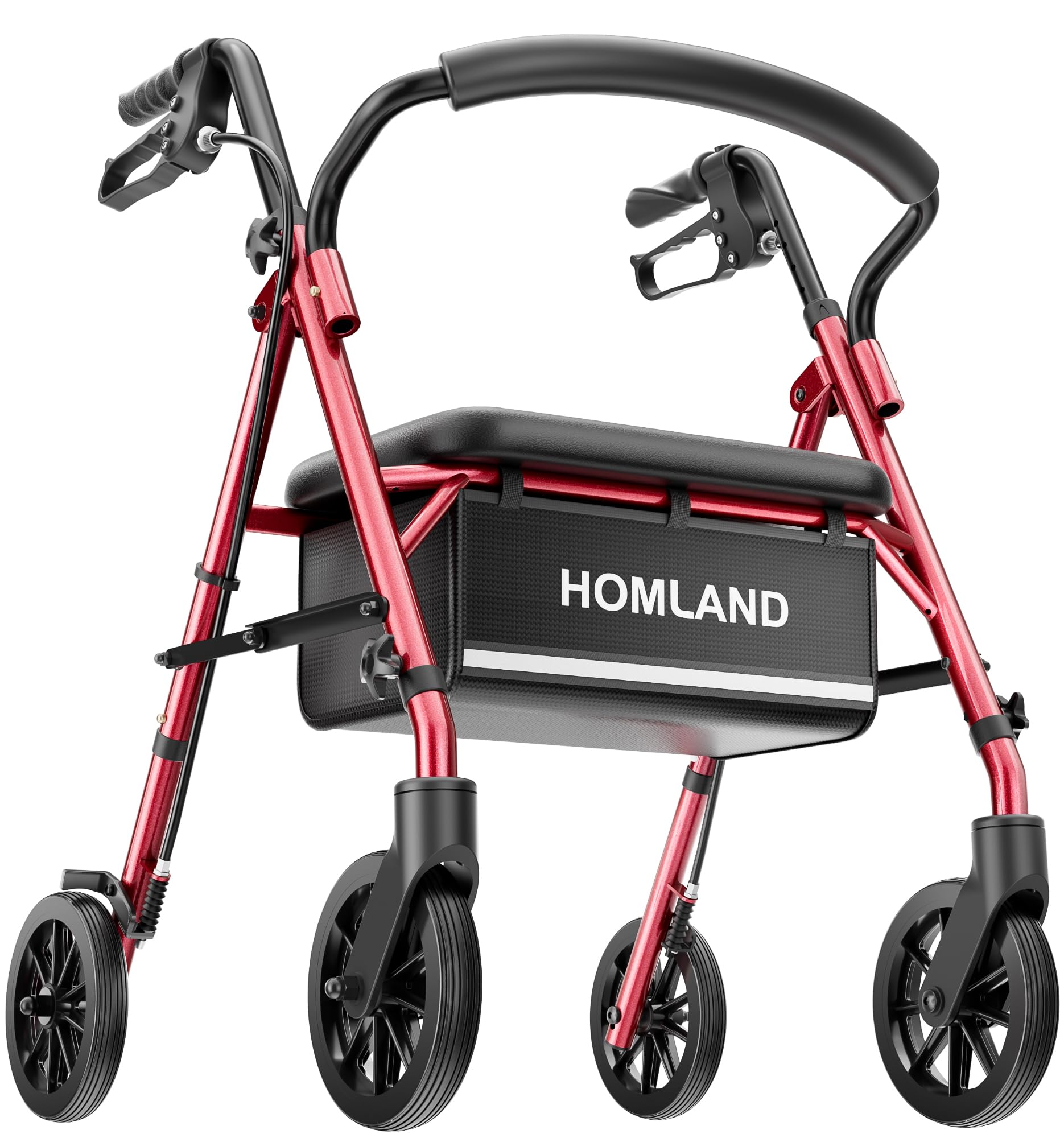
This rollator fits users in older homes with narrow doorways, thanks to a frame built specifically to minimize width.
Pros
- Maximum width of 21.9 inches between front wheels
- Weighs only 16 pounds
- Padded waterproof seat and backrest
Cons
- Wheels lock only when brakes are engaged
- Not rated for outdoor rough terrain
- Newer brand with a shorter track record
Reviewers moving between small rooms appreciate that this rollator clears doorframes without scraping or squeezing through at an angle. The five-level handle adjustment accommodates a range of heights, and the backrest folds flat for slimmer storage. A few owners wish the wheels locked independently of the hand brake for added security when stationary.
Medical King Aluminum Lightweight Walker

This two-wheel walker suits budget-conscious buyers who need adjustable width alongside standard height adjustment.
Pros
- Width adjusts in addition to height
- Supports up to 350 pounds
- Folds easily with one hand
Cons
- Some units arrive with misaligned push-button holes
- Shorter height range starting at 29 inches
- Assembly quality varies by unit
Shorter users, including those under 5’2″, frequently mention this as one of the few walkers that adjusts low enough for a proper fit. The width adjustment helps users who need a narrower or wider stance for hip comfort. A subset of reviewers report frustrating assembly issues with pieces that don’t align, worth checking upon arrival before relying on it daily.
Akoasm Rollator Wheelchair Combo
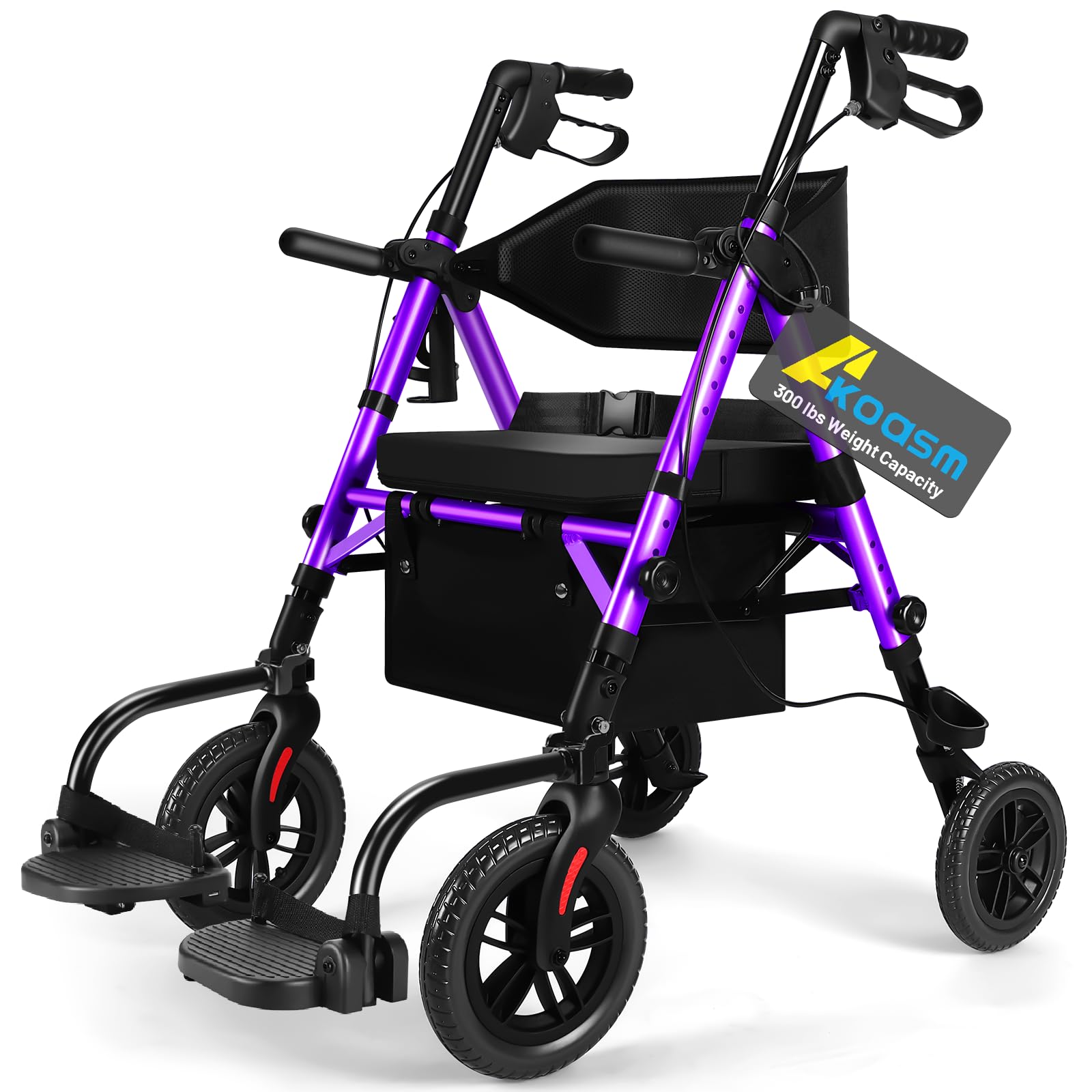
This 2-in-1 design suits users whose arthritis fluctuates between good and difficult days, offering walker support and transport-chair function in one frame.
Pros
- Switches between walker and transport chair use
- 3-mode braking system eases control for weak grip
- Padded, adjustable backrest reduces back pressure
Cons
- Heavier than single-purpose walkers at 25 pounds
- Not intended as a primary wheelchair for full-time use
- Less stable on grass than as a walker
Caregivers managing a parent’s changing mobility needs describe this hybrid as useful for days when walking becomes too tiring, letting the same device convert to a seated transport option. The three-mode brake system (free, slow, stop) offers finer control than a simple on-off lock, helpful for those with reduced hand strength. It performs best on pavement and indoor flooring rather than grass or uneven ground.
Buying Guide
Choosing a walker for arthritis means weighing joint-specific comfort against stability and portability. The right pick depends on grip strength, the surfaces walked most often, and whether sitting breaks are part of the daily routine.
Wheeled vs. Non-Wheeled Support
Wheeled walkers reduce the lift-and-place motion that strains wrists and shoulders, rolling forward with a light push instead. Non-wheeled walkers require picking the frame up with each step, which offers more control for balance-sensitive users but demands more grip and arm strength. Choose wheels if hand or wrist arthritis makes repeated lifting painful; choose a non-wheeled frame if stability during transfers matters more than ease of movement.
Grip Comfort and Brake Effort
Padded, wide-diameter handles distribute pressure across the palm rather than concentrating it on fingers. Rollators with hand brakes should require light pressure to engage and lock; a stiff brake lever can be difficult for someone with reduced grip strength to operate safely.
Weight and Portability
| Feature | Why It Matters for Arthritis |
|---|---|
| Frame weight (under 10 lbs) | Easier to lift into a car or up stairs |
| Folded footprint | Affects storage and portability for travel |
| One-hand folding | Reduces strain on painful joints during setup |
Weight Capacity and Stability
Most walkers in this category cap out around 300 to 350 pounds. Confirm the user’s weight fits comfortably within that limit, since a frame pushed near its maximum capacity loses some stability margin.
Seats, Wheels, and Terrain
A seat adds convenience for rest breaks but increases overall weight and folded size. Pneumatic tires smooth out gravel and grass for outdoor walkers, while smaller hard wheels suit indoor, flat-surface use. Match wheel size and material to where the walker will spend most of its time.
Editor’s Choice
The Drive Medical Rollator Walker with Seat stands out as the strongest all-around pick for arthritis sufferers who need both mobility support and rest breaks. Its locking hand brakes require light effort, the padded seat offers real relief during errands, and the wide wheelbase keeps it stable indoors and outdoors alike.
For those who need a lighter, non-wheeled option focused purely on stability, the Drive Medical 2-Button Standard Foldable Walker delivers dependable support at a fraction of the weight. Anyone managing shoulder or back pain alongside arthritis should look closely at the Helavo Upright Walker, since its posture-friendly design reduces strain that standard rollator handles can’t address.
Conclusion
Matching a walker to specific arthritis symptoms, rather than picking the most popular model, makes daily movement noticeably easier. Grip comfort, brake effort, and wheel type affect pain levels far more than most buyers expect going in. A rollator with a seat suits those who tire during errands, while a lightweight two-wheel walker fits anyone navigating narrow hallways at home.
Weight capacity and folded size deserve equal attention, particularly for caregivers who need to lift a walker into a car trunk regularly. Testing the brake pressure and grip width in person, when possible, helps confirm a walker fits well before committing to daily use.
FAQS
What type of walker is best for arthritis in the hands?
Two-wheel walkers and rollators with padded, wide grips and light brake pressure reduce strain on finger and wrist joints compared to non-wheeled walkers that require lifting.
Are rollators better than standard walkers for arthritis?
Rollators suit users who want reduced lifting effort and a seat for rest breaks. Standard walkers offer more control during transfers and suit those with balance concerns alongside arthritis.
Do pneumatic tires help with joint pain?
Air-filled tires absorb shock from uneven ground, reducing vibration transmitted to the wrists and shoulders compared to hard rubber or plastic wheels.
What weight capacity should I look for?
Most walkers in this category support 300 to 350 pounds. Choosing a model with a comfortable margin above the user’s weight helps maintain stability.
Can an upright walker help with back pain from arthritis?
Upright walkers with padded armrests let users stand straighter than standard rollators, which can ease strain for those managing back or shoulder discomfort alongside arthritis.
