
10 Best Toilet Safety Rails for Caregivers: Top Durable, Easy-Install Options and Buying Tips


Non-Slip Slippers

Kindle E-Reader

Compression Socks
Toileting is a daily need that can become risky for people with balance, strength, or mobility issues. Toilet safety rails give caregivers and users a stable, easy-to-grip support surface for sitting down and standing up. They range from simple clamp-on rails to freestanding frames and raised-seat systems, so you can match the rail to the bathroom layout and the user’s strength and size.
The main things to watch when choosing a rail are stability, adjustability, and how it mounts to the toilet or floor. A rail that wobbles or doesn’t fit the toilet can create more danger than it prevents, so pick one with a secure mounting system and weight rating that matches the user. We tested a variety of rails and models to find options that balance safety, comfort, and ease of use.
Best Toilet Safety Rails for Caregivers
Below is our full list of the best toilet safety rails for caregivers. We chose products that are sturdy, easy to install, and help reduce fall risk while making transfers safer and more comfortable for both caregivers and users.
Lianjindun Toilet Safety Rails

We recommend this rail when you need a sturdy, easy-to-adjust toilet aid that fits most toilets and folds for storage.
Pros
- Solid, stable feel that reassures both caregiver and user.
- Height and width adjust quickly to fit tight spaces.
- Lightweight aluminum frame but still holds a lot of weight.
Cons
- Toilet lid can bounce down against the frame and get annoying.
- Suction feet may need extra attention to keep a perfect grip.
- Padding shows wear after heavy daily use.
We put this rail behind several toilets while helping family recover from surgery and found it quick to assemble. The instructions were clear and the frame clicked together in minutes. It felt very stable as someone rose from the seat, which made us more confident during transfers.
Adjusting the height and width took seconds, so we moved it between a narrow powder room and a larger bathroom without fuss. The foam grips are comfortable for repeated use, though they can compress a bit after intense daily use. Folding it for storage was handy when guests stayed over.
One downside: the toilet seat lid hit the frame sometimes and slid down, which annoyed the user. Also, the rubber suction feet worked well most of the time but needed repositioning after cleaning. Still, for caregivers who need a portable, durable option that supports heavier users, this unit performs reliably.
PELEGON Toilet Safety Rails (Dark Blue)

We recommend this rail when you need a strong, easy-to-move support that fits most toilets.
Pros
- Sturdy feel and supports up to 350 lb.
- Tool-free assembly and quick height/width adjustments.
- Lightweight frame makes moving and cleaning simple.
Cons
- Back rail sits close to some toilet tanks.
- Foam grips can wear with heavy use.
- Fitment may conflict with certain bidet seats.
We installed this rail in a guest bathroom and used it daily for a week. The frame felt solid every time we leaned on it and gave clear confidence during transfers.
Adjusting the height and width took less than five minutes. The no-tool assembly is real — the pieces snapped together smoothly and the included instructions were easy to follow.
The lightweight aluminum made shifting the unit between bathrooms painless. We noticed the grab handles are comfortable, though the padding showed slight wear after repeated grabs.
One toilet had limited space behind the tank and the back rail nearly touched it, so check clearance before buying. The rail worked around a raised-height commode and fit tightly without wobble.
Overall, this is a practical pick for caregivers who need dependable support that’s simple to set up and move.
HOMLAND Toilet Safety Rails
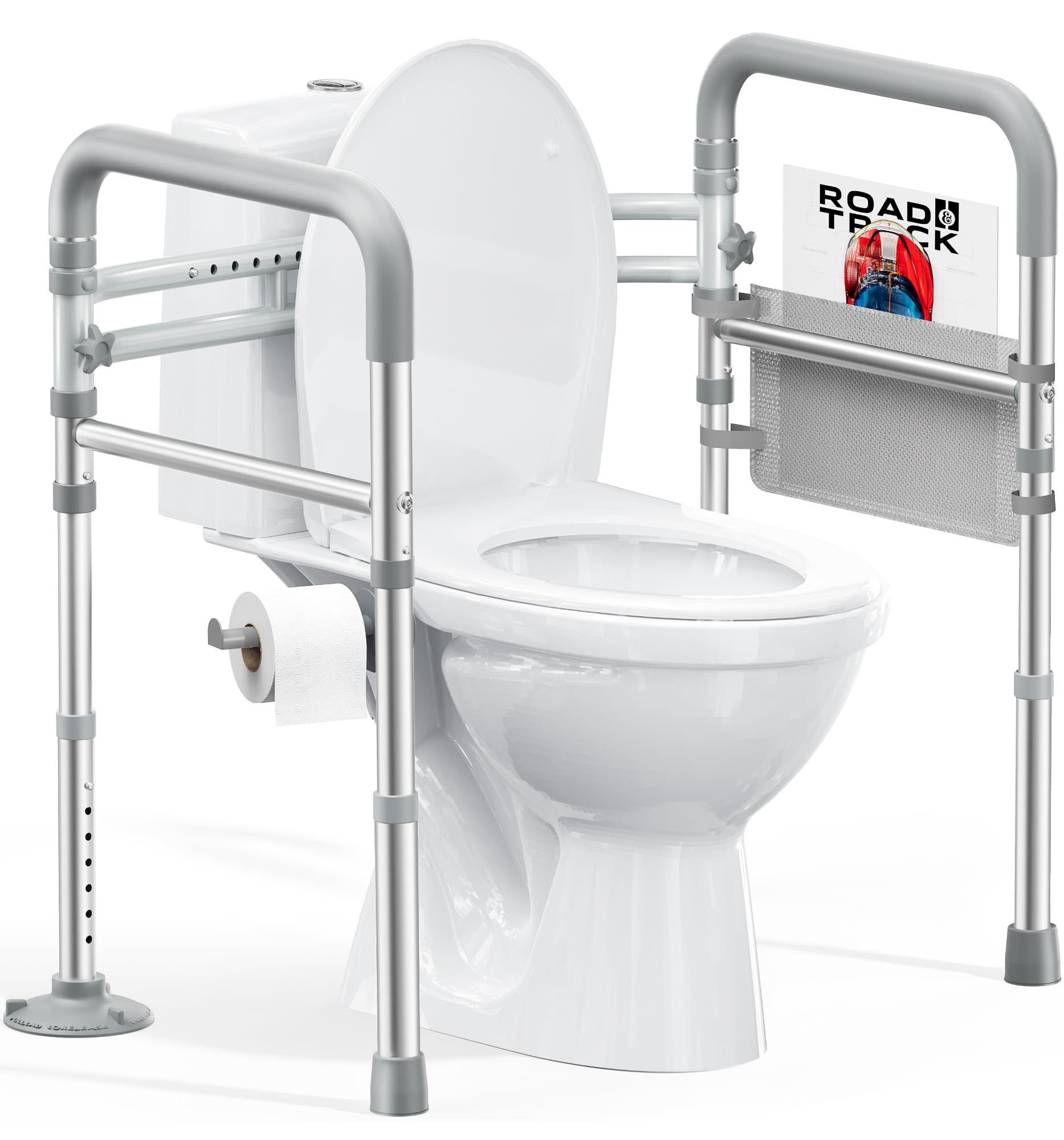
We recommend this rail when you need a sturdy, adjustable support that folds away and fits most toilets.
Pros
- Feels solid and stable once clamped in place.
- Soft foam armrests make standing and sitting easier.
- Folds flat for storage and travel.
Cons
- Suction cups only work on fully smooth, grout-free floors.
- Can feel a bit wobbly for people with very poor balance.
- Assembly takes a few minutes to get clamps and height right.
We installed this frame in our bathroom and used it for several weeks after a knee procedure. The aluminum build made it light but strong, and the extra C-clamps at the backrest pivot really tightened the unit up compared with plain models. Once we set the width and height, getting on and off the toilet felt much safer.
The foam grips are comfortable and give a non-slip hold. We liked that the legs have rubber feet, and the package included two extra suction cups if you want them on smooth tile. Note that the suction cups need a fully smooth surface—anything with grout or texture will reduce their hold.
Folding the rails down for storage worked well and took almost no space. People who need very steady support might still prefer a permanent grab bar, but for caregivers who need a portable, adjustable aid, this unit proved handy and reliable.
KMINA Toilet Safety Rails

We recommend this frame when you need a sturdy, adjustable rail that stays put and helps caregivers assist safely.
Pros
- Very stable with suction pads and rubber centering.
- Fast, tool-free setup and easy height adjustments.
- Strong feel that supports heavier users.
Cons
- Bulky for very small bathrooms.
- Suction pads need firm, clean toilet rim to work best.
- Pricier than basic models.
We installed this in our parent’s bathroom and used it daily for weeks. The steel frame felt solid when helping someone sit and stand, and the armrests stayed steady even during unbalanced moves.
Adjusting the height and width was simple. We set the arms to match her reach and tightened the lateral suction pads; it took only a few minutes without any tools.
The grip felt comfortable for both short and tall users. We liked the numbered height scale — it made both sides match so transfers felt safer.
In a tight bathroom the horizontal tube can feel large, so measure clearance before buying. Also, the suction cups work best on a clean, dry rim; they slip less after we wiped the surface.
Overall, we found this rail reliable for caregivers who need a robust, adjustable support that installs quickly and holds up under regular use.
Medical King Toilet Safety Rail
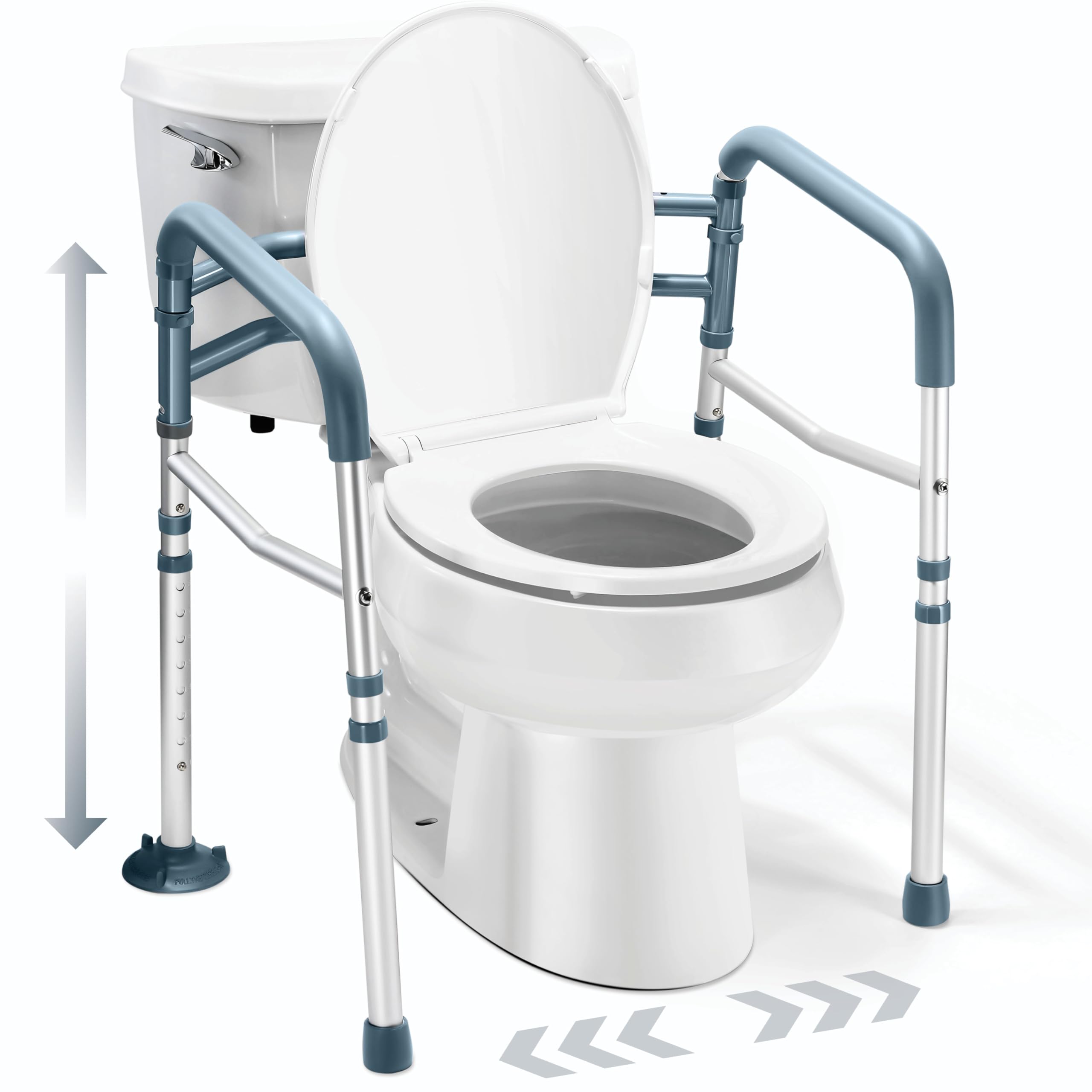
We recommend this rail when you need a sturdy, easy-to-move aid that helps people sit and stand more safely.
Pros
- Sturdy feel and solid support.
- Easy to fold and move between bathrooms.
- Soft, non-slip handle pads for better grip.
Cons
- Back suction cups can lose hold on some floors.
- Some users worry about side wobble if weight shifts.
- Not bolted, so it can shift if leaned on unevenly.
We put this rail in two bathrooms while helping a family member after surgery. It went together fast and felt stable the first time we used it. The aluminum frame gave us confidence getting up without straining knees.
Handles felt comfortable even after repeated use. The textured rubber grips cut down on slipping, and the height and width adjustments helped it fit different toilets in our house.
We noticed the rear suction cups sometimes failed on slick tile, so we didn’t rely on them alone. When caregivers stay nearby and the frame sits on a dry floor, it works very well.
Carex Toilet Safety Frame

We recommend this if you need a simple, sturdy toilet rail that helps someone sit and stand with more confidence.
Pros
- Solid feel and holds weight well.
- Cushioned grips are comfortable and wipe clean easily.
- Easy to install and fits most toilets.
Cons
- Looks basic and clinical.
- Takes some space around the toilet.
- Not padded across the seat area.
We used this frame for a week while helping a parent after hip surgery. The metal felt strong when we grabbed the handles and the grips stayed comfortable during repeated use. Setup was straightforward; it took under 20 minutes and the pieces clicked together without tools.
The adjustable width really mattered for our toilet. Sliding the side pieces to fit was quick, and once tightened the frame didn’t wobble when someone leaned on it. That steady support made transfers safer and cut down on how much we had to physically lift.
Cleaning proved easy because the grips and frame wipe down fast. The look is plain, so it won’t hide in a stylish bathroom, but the build and price make it a practical choice for caregivers who need reliable support without fuss.
HOMLAND Toilet Rail
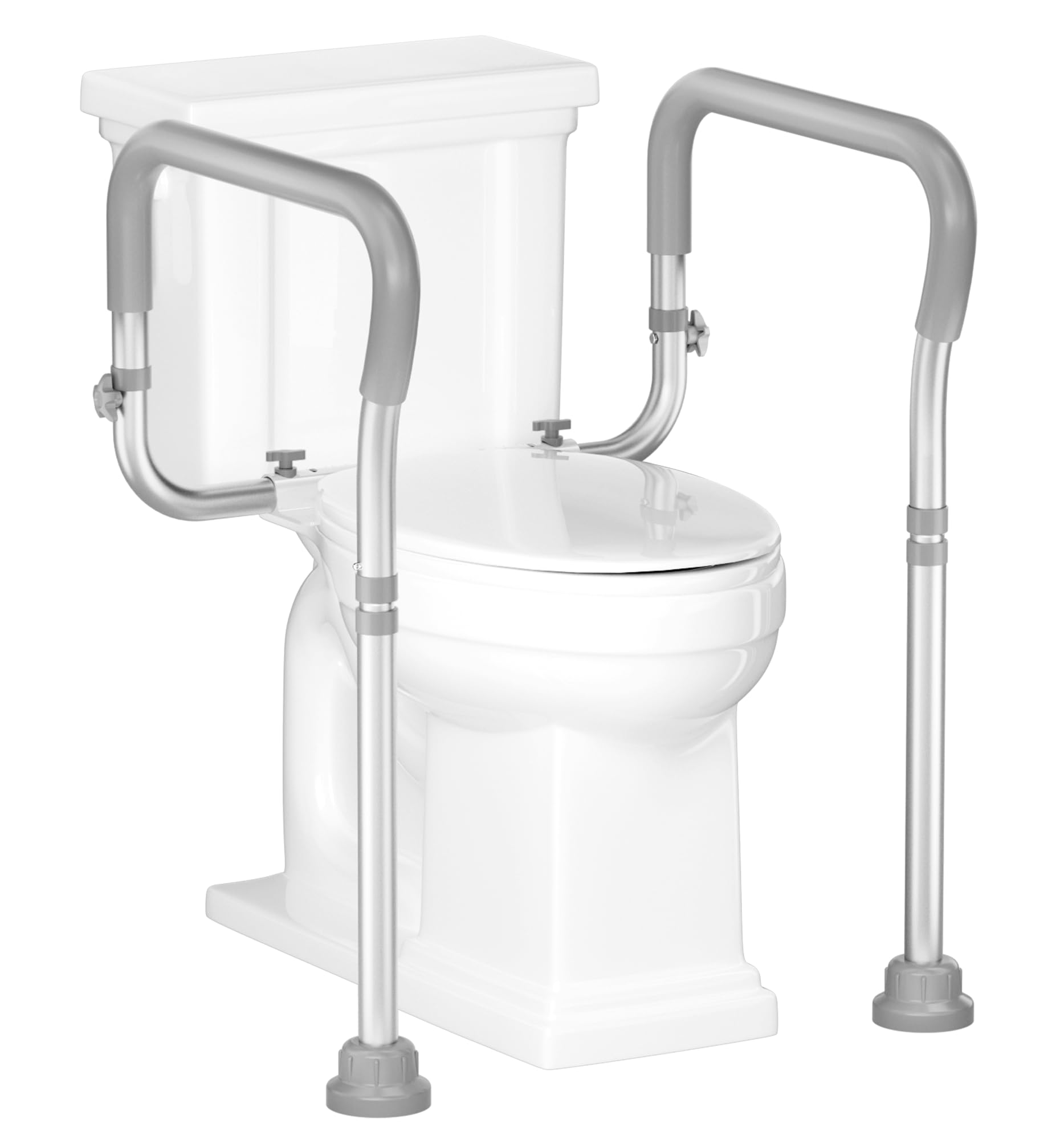
We recommend this rail for caregivers who need a simple, bolted-on support that feels stable for lighter users and installs fast.
Pros
- Easy, tool-free install for most toilets.
- Lightweight aluminum that resists rust and cleans easily.
- Soft padded grips and anti-slip feet add comfort and steadiness.
Cons
- Fits only two-hole toilets with 5.5″ bolt spacing.
- Not the sturdiest option for larger users.
- Instructions and small hardware details can be confusing.
We installed this rail on two different toilets and found the setup quick when the bolt pattern matched. The frame felt firm once tightened to the seat bolts, and the EVA padding made steadying someone much less awkward.
We used it for short-term recovery after surgery. The rail does a good job helping people sit and stand without gripping porcelain. Caregivers liked that it bolts to the seat rather than freestanding bars that knock the bowl.
We noticed the fit matters. One toilet needed extra attention because of the seat screw details, and we had to double-check the brass insert and washer steps. For heavier patients, we’d pick a heavier-duty rail, but for many seniors and post-op users this is a practical, affordable choice.
Srora Toilet Safety Rails

We recommend this rail when you want a solid, space-saving support that feels sturdy under real use.
Pros
- Very sturdy feel and solid metal parts.
- Folds up when not needed so it doesn’t block the bathroom.
- Easy one-person install when toilet fits the size range.
Cons
- Installation instructions can be confusing at first.
- Arms fold about 45–60°, not fully upright for some toilets.
- Needs specific toilet hole spacing and clearance to fit.
We used this rail for weeks with an older family member. The metal build felt reassuring every time we leaned on it. It stayed steady while someone pushed up from the seat and the powder-coat finish cleaned easily.
Getting it mounted took us more time than expected because the manual used odd terms. Once we figured which lock method matched our toilet, the fit was solid and the rail didn’t wobble. The fold-up motion is smooth but doesn’t lock fully vertical on our model.
This design saves floor space by using the toilet mounting area instead of extra legs. We liked that it looks modern and not like medical gear, and it reduced slips and effort when standing. Check the toilet measurements before buying so it fits your setup.
HWAEYEM Toilet Safety Rails (520 lbs)
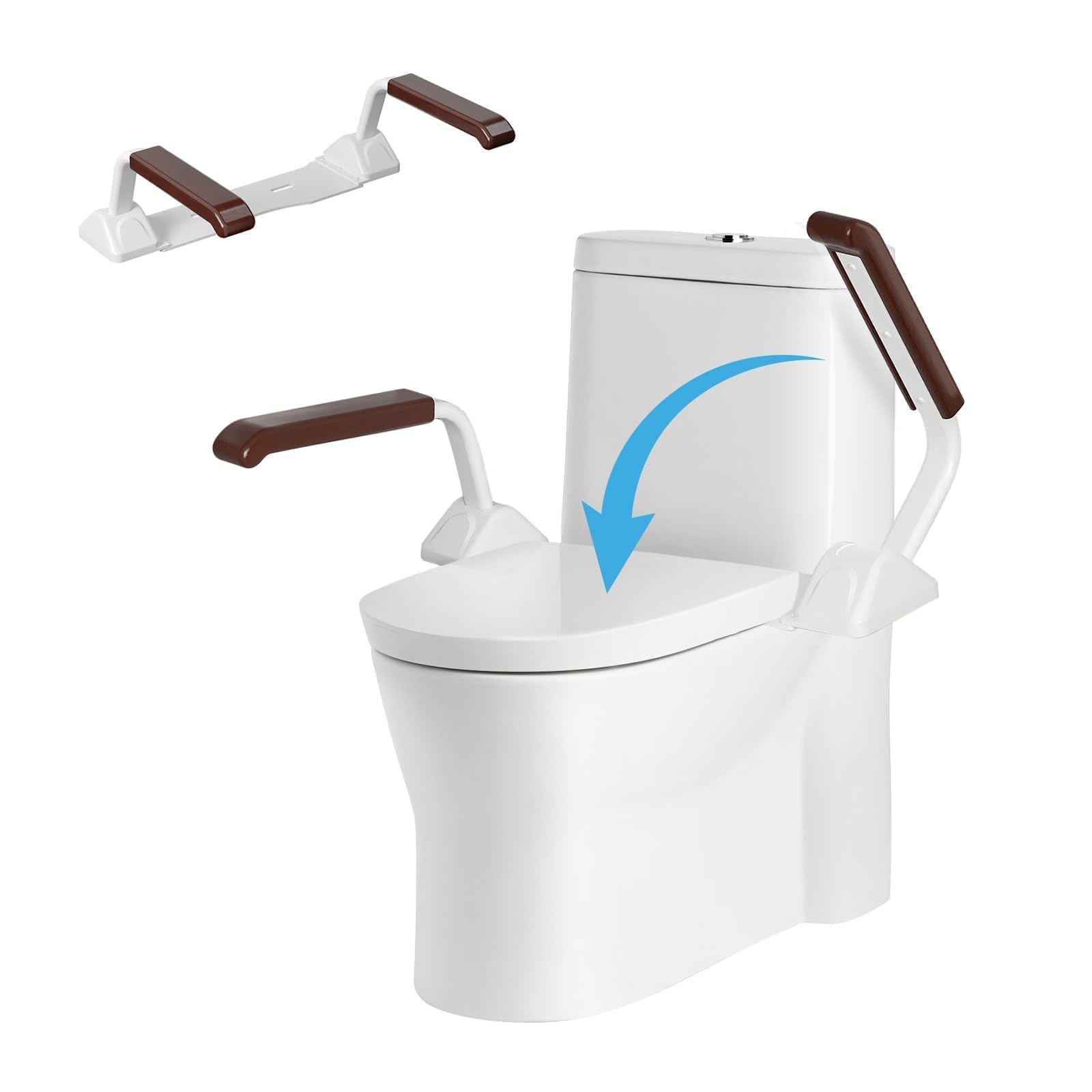
We recommend this rail if you need a solid, space-saving grab bar that folds up and gives real confidence for transfers.
Pros
- Very sturdy feel and high weight capacity.
- Fold-up arms save bathroom space and help with caregiver access.
- Clean look that fits most standard toilets.
Cons
- Takes two people for some installs and tight bolt holes can be fiddly.
- Not compatible with bidet-style smart toilets.
- Heavier unit makes repositioning awkward.
We used this rail on a standard home toilet and appreciated how stable it felt when someone stood up. The steel frame paired with wooden armrests looks nicer than hospital bars and keeps the bathroom less clinical.
The flip-up arms made caregiver duty easier. We could swing one arm up for side access, then fold both when not needed. That feature saved space and removed the constant trip hazard a freestanding frame can create.
Assembly was straightforward with the included hardware, though one bolt needed a small tap to line up. Once tightened, the unit held firm and gave a real sense of safety during transfers and recovery.
For heavier users the 520 lb combined rating reassured us, and the rails did not wobble under load. Keep in mind it won’t fit every smart/bidet toilet, and moving the 13 lb unit alone is awkward.
Lunderg No-Leg Toilet Safety Rails
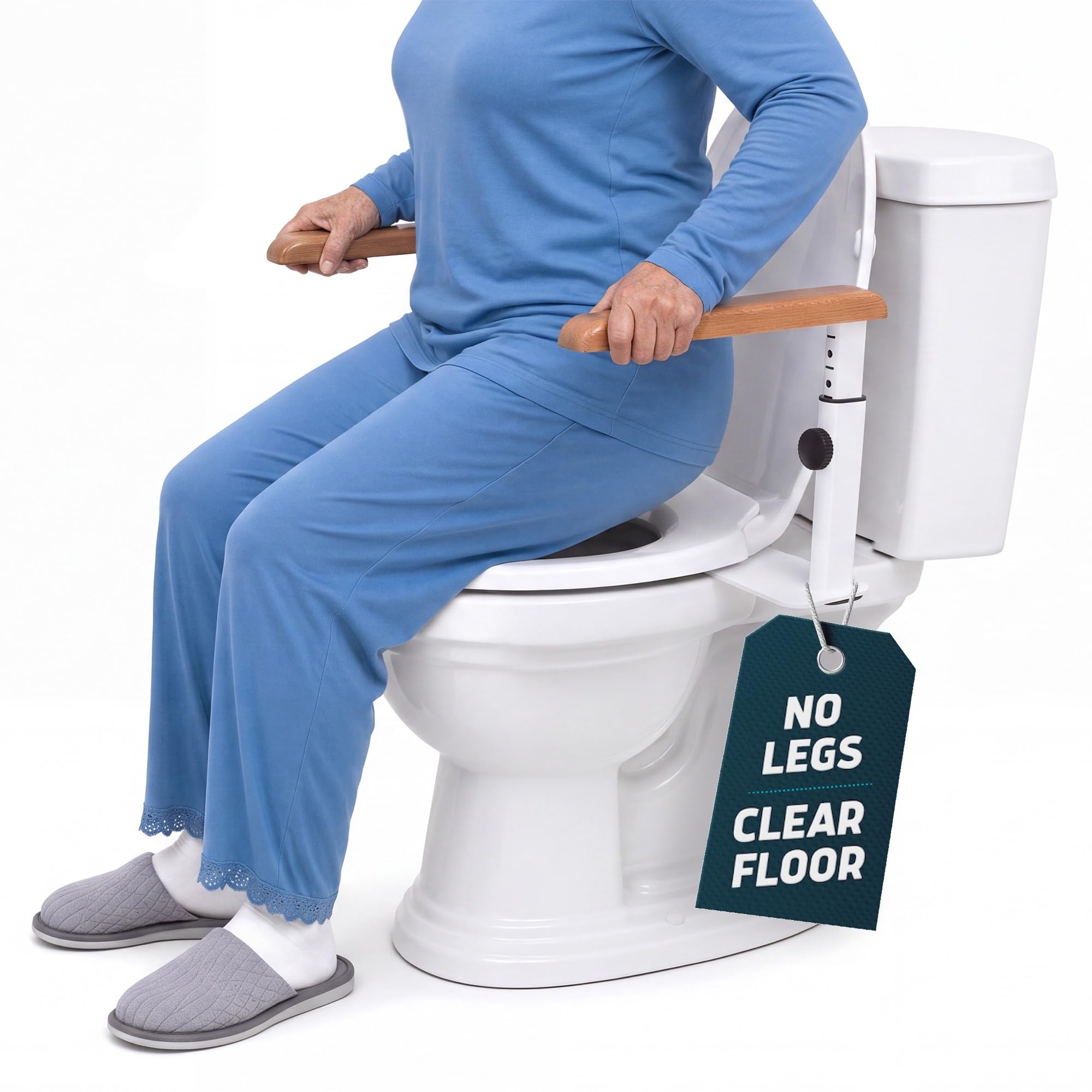
We recommend this if you want sturdy, easy-to-install rails that look like home rather than a hospital.
Pros
- Very stable — we felt confident leaning and standing using one hand.
- No floor legs — cleaning stayed simple and the bathroom felt less crowded.
- Warm wood-finish grips — they looked nicer than metal bars and felt comfortable.
Cons
- Not compatible with quick-release or skirted toilets, so it didn’t fit every bathroom we tried.
- Heavier and pricier than basic rails, which surprised us at first.
- Some toilets needed different seat hinges before installation.
We installed these rails ourselves and noticed the reinforced steel frame does not wobble. Getting up from the toilet felt safer right away. The wood-look handles gave a friendlier feel than clinical bars.
The setup took about 20 minutes for us with the included tools and photos. Tightening once in a few weeks was all that was needed. We liked that there were no legs to trip over and floor cleaning stayed quick.
On the downside, one of our bathrooms had a skirted base and it wouldn’t fit. Another toilet required swapping seat hinges, which added time and a small extra cost. Still, for bathrooms it fits, the Lunderg rails gave us reliable support and a better look.
Buying Guide
We focus on safety, comfort, and ease of use when choosing toilet safety rails. Think about who will use them and how often before picking a model.
We check stability first. Look for rails with wide bases, non-slip feet, or secure mounting options. A rail that shifts is unsafe.
We examine height and adjustability next. Adjustable height and width let us fit different users and toilets. Measure the toilet and space to make sure the rail will fit.
We consider weight capacity and materials. Strong metal frames hold more weight and last longer. Plastic parts should be sturdy and not crack under pressure.
We value comfort and grip. Padded or textured handles help users hold on without slipping. Smooth edges prevent discomfort or clothing snags.
We look for installation and maintenance features. Quick, tool-free set up helps caregivers save time. Removable parts or simple surfaces make cleaning easier.
We check compatibility and portability. Some rails clamp to the bowl, others bolt to the floor. Choose the type that matches our bathroom layout and whether we need to move the rail between rooms.
We also factor cost and warranty. Higher price can mean better durability, but we compare features for value. A clear warranty gives us confidence in the product.
Quick checklist
| Feature | Why it matters |
|---|---|
| Stability | Prevents falls |
| Adjustability | Fits users and toilets |
| Weight capacity | Supports safe use |
| Grip comfort | Easier, safer transfers |
| Installation | Saves caregiver time |
| Cleanability | Maintains hygiene |
| Portability | Moves between bathrooms |
Editor’s Choice
We picked the toilet safety rail that balances strength, ease of use, and comfort. It fits most toilets without tools and supports up to 300–400 pounds, giving caregivers a reliable option for daily transfers.
The rail has padded armrests that stay comfortable for long use. The grips are textured so hands don’t slip when someone sits down or stands up.
Installation takes about 10 minutes and needs only simple tightening bolts. Caregivers told us they could adjust the height and width quickly to match different users and toilets.
We like products with sturdy metal frames and rubber feet to prevent shifting. This pick also folds up when not in use, saving space in small bathrooms.
Key features at a glance:
- Weight capacity: 300–400 lb
- Adjustability: Height and width settings
- Material: Powder-coated steel with foam grips
- Installation time: ~10 minutes, minimal tools
We chose this rail because it reduces strain on caregivers while keeping users safe. It combines clear safety design with easy handling, which makes daily care tasks smoother for both of us.
Conclusion
We choose safety rails based on the user’s needs, bathroom layout, and caregiver tasks. Stability, ease of use, and proper fit matter most. We favor rails with secure mounting and simple adjustments.
We recommend testing a rail before long-term use. Short trials reveal comfort issues and fit problems quickly. Caregivers should watch for wobble, sharp edges, and hard-to-reach controls.
We prioritize rails that reduce fall risk and cut caregiver strain. Padded grips and ergonomic shapes help both users and caregivers. Fast, tool-free installation saves time and reduces frustration.
We keep maintenance simple and regular. Tighten fasteners, clean grips, and check for wear every month. Replace parts or the whole rail if it shows damage.
We balance cost with durability. Mid-range models often give the best value. If budget allows, choose higher-quality materials for heavy use.
We include these quick tips for buying and using rails:
- Measure toilet height and space before buying.
- Look for adjustable height and width.
- Prefer models with anti-slip feet or wall anchors.
We stay practical and focused so caregivers can pick a safe, reliable rail confidently.
FAQS
What types of toilet safety rails work best for caregivers?
We recommend rails that offer strong grip, easy installation, and adjustable height. Clamp-on and floor-mounted rails suit different needs; clamps work for temporary use, while floor-mounted rails give extra stability.
How do we choose the right rail size?
Measure toilet width and seat height before buying. Choose rails with adjustable width and height so we can fit different users and toilets.
Can caregivers install rails without tools?
Some models use quick-clamp systems that need little or no tools. Others require basic tools and floor anchors for extra stability. Check the product instructions before buying.
Are rails safe for all users?
Rails add support but don’t replace supervision for unsteady users. We should pair rails with caregiver assistance and good transfer techniques to reduce falls.
How do we clean and maintain rails?
Wipe rails weekly with mild soap and water, then dry them. Check bolts and clamps monthly and tighten if needed.
Do rails fit raised toilet seats?
Many rails work with raised seats, but compatibility varies. Verify the product specs or contact the manufacturer if we have a raised seat.
What weight capacity should we look for?
Pick rails that match or exceed the user’s weight by a safe margin. Most rails list maximum weight; we choose a model with higher capacity for extra safety.
Where can we find replacement parts?
Manufacturers or medical supply stores often sell replacement grips, bolts, and clamps. Keep model information handy when ordering parts.