
10 Best Smart Light Bulbs for Small Spaces: Compact Picks for Every Room


Non-Slip Slippers

Digital Blood Pressure Monitor

Compression Socks
Smart light bulbs let us control brightness, color, and schedules from a phone or voice assistant. They can make a small room more useful by adding task lighting, soft evening light, or automatic routines without taking up floor or table space.
For tight spaces, bulb size and brightness matter as much as smart features. We should look for compact bulbs with the right base, enough brightness for the room, reliable app or voice controls, and a connection that works well in a small home. We compared these factors to find the smart light bulbs that fit small spaces without adding unnecessary complexity.
Best Smart Light Bulbs for Small Spaces
We selected the best smart light bulbs for small spaces based on size, brightness, app features, voice control, and ease of setup. Our list includes options for lamps, bedrooms, offices, and other areas with limited room.
Amazon Basics Color-Changing Smart Bulb

We recommend this bulb for small spaces if our reader already uses Alexa and wants simple color control without a hub.
Pros
- Easy Alexa setup
- Adjustable brightness and color
- Useful schedules and room groups
Cons
- Works only with Alexa
- Requires a 2.4GHz Wi-Fi network
- Physical dimmer switches do not work with it
In our testing, the bulb fit well in a standard lamp and gave us enough light for a bedroom, hallway, or small office. Its compact A19 shape makes it practical for tight fixtures, while the app let us dim it without reaching for the switch.
Setup was quick through the Alexa app, with no separate hub or third-party app required. Voice commands worked well for basic tasks, such as turning the bulb off, changing colors, and setting a lower brightness before bed.
The color options suited accent lighting and movie nights, but we would not use them as the main light for detailed work. We also found the Alexa-only design limiting for homes that use Google Assistant, Apple Home, or SmartThings.
For a small room, scheduling and group controls add useful convenience. However, Wi-Fi connection problems may require resetting the bulb, so we would place it where the 2.4GHz signal remains reliable.
Govee Smart A19 Bulbs
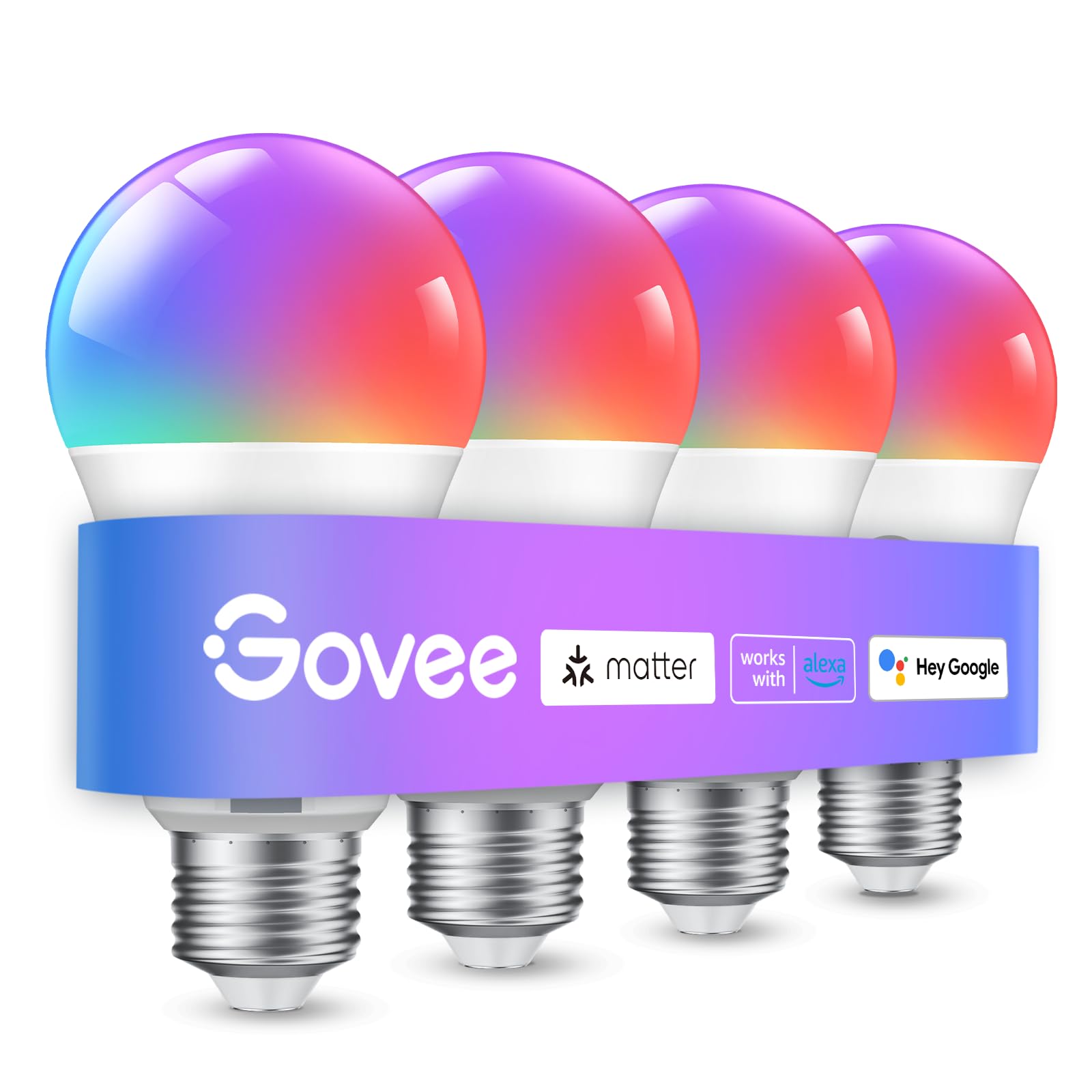
We recommend this four-pack for small spaces that need flexible color control, simple routines, and voice commands.
Pros
- Easy setup through the Govee app
- Bright colors and useful white-light settings
- Supports Alexa and Google Assistant
Cons
- Requires a 2.4GHz Wi-Fi network
- Does not work with smart switches
- The app can feel limited at times
We found the A19 shape a practical fit for lamps, bedroom fixtures, and compact office lights. The bulbs offer enough brightness for general use, while dimming helps create softer light in smaller rooms.
Setup was quick through the Govee app, and Bluetooth helped with the initial connection. Once connected to Wi-Fi, we could adjust color, brightness, schedules, and scenes from our phones. Voice control also worked well with compatible assistants.
The music-sync mode adds a fun option for gatherings, but it depends on the phone microphone and may not suit everyday lighting. We also needed a stable 2.4GHz network, so these bulbs may require extra setup on dual-band routers.
For small spaces, the four-pack makes it easy to match lighting across several fixtures. We would choose it for renters, bedrooms, desks, or accent lamps rather than setups that use wall-mounted smart switches.
Kasa Smart Dimmable A19 Bulbs

We recommend these bulbs for small spaces because they offer smooth dimming, simple app control, and reliable voice commands without a hub.
Pros
- Smooth brightness control for lamps and reading areas
- Easy setup with Alexa and Google Assistant
- Energy monitoring and scheduling in the Kasa app
Cons
- Requires a 2.4GHz Wi-Fi network
- The app may take some time to learn
- Soft white light does not change color
We found the 800-lumen output bright enough for a desk lamp, bedroom, or small living room. The soft white tone felt comfortable at lower settings, while full brightness worked well for reading and daily tasks.
Dimming down to a very low level helped us create softer light at night. Since the bulb uses standard E26 sockets and does not need a hub, it fit easily into common lamps and small fixtures.
The Kasa app guided us through setup, and the bulbs responded well to Alexa commands. Scheduling also helped us automate a lamp, although users with several fixtures may find the app less flexible than some competing systems.
Govee E12 Color-Changing Bulbs

We recommend these bulbs for small chandeliers and candelabra fixtures because they offer flexible color control without taking up much space.
Pros
- Compact E12 shape fits many small fixtures
- Bright, colorful lighting with useful white tones
- App, voice, Matter, timer, and group controls
Cons
- Requires a 2.4GHz Wi-Fi network
- Does not work with dimmer switches
- App setup may take some patience
We found the slim candle shape well suited to small rooms, dining areas, and tight ceiling fixtures. The bulbs add color without making a compact chandelier look crowded.
The Govee app gives us many preset scenes, timers, and group controls. We could also adjust the light from warm white for relaxing to cooler white for tasks. Voice commands through Alexa, Google Assistant, or Matter made daily use easier.
At 450 lumens per bulb, they provide useful light for a small space, though larger rooms may need several bulbs. The colors looked vivid, and music sync added a fun option for gatherings.
Setup worked smoothly overall, but connecting every bulb could require a few attempts. We also noticed that the bulbs need the right final twist in some fixtures, and their 2.4GHz-only connection may limit installation options.
Govee 1000LM RGBWW Smart Bulbs
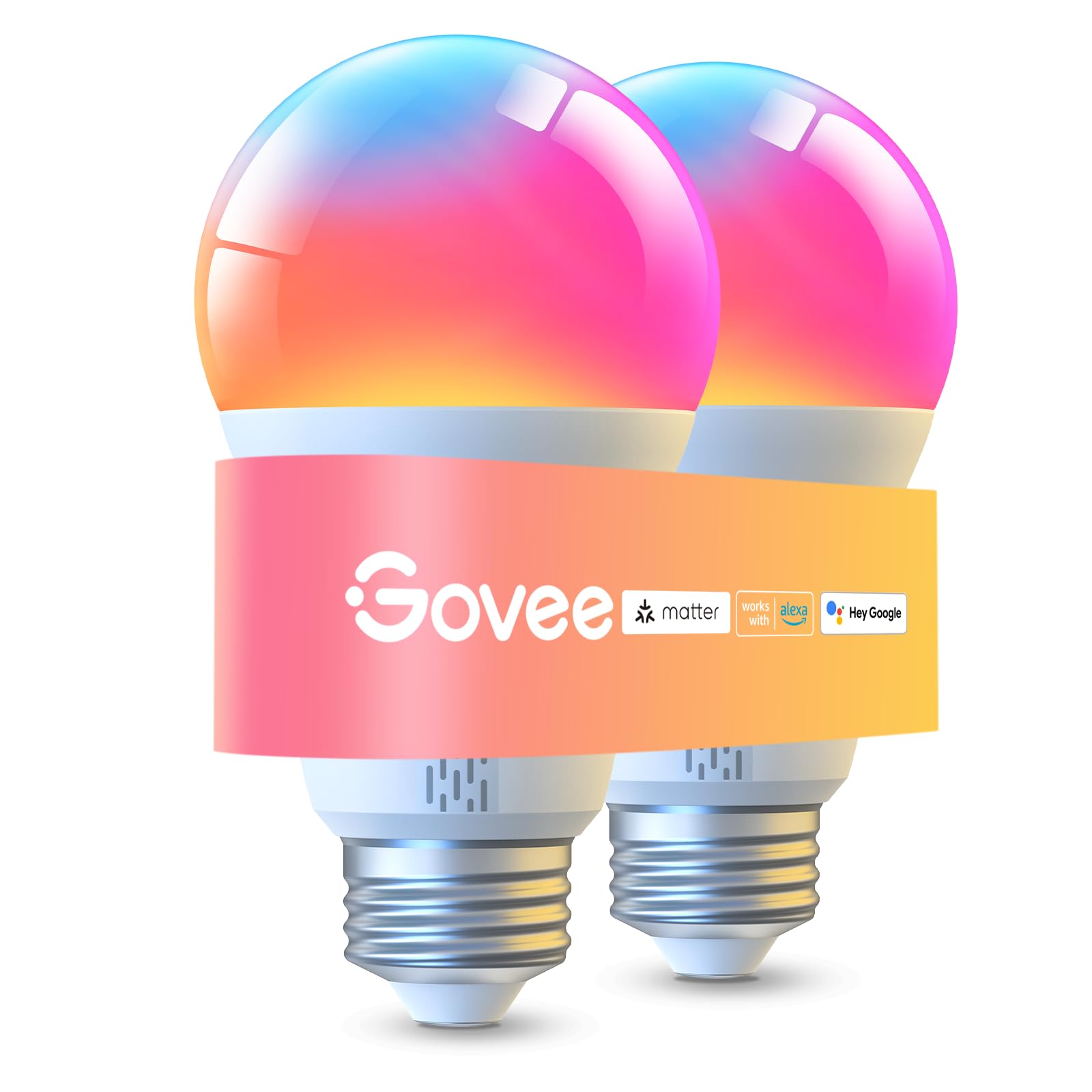
We recommend these bulbs for small spaces that need bright, adjustable lighting and simple app or voice control.
Pros
- Bright, colorful light with useful white tones
- Easy control through Wi-Fi, Bluetooth, Alexa, and Google Assistant
- Dimming, schedules, scenes, and group control
Cons
- Requires 2.4GHz Wi-Fi for full features
- Presets need Wi-Fi and Bluetooth turned off
- Some colors may look less saturated
We found the bulbs easy to install and quick to pair with the Govee app. Their bright output works well in a small bedroom, office, or living room, while dimming helps prevent the space from feeling harsh.
The color choices add flexibility for relaxing, reading, or adding accent lighting. White light settings cover warm and cool tones, and the app offers scene modes, timers, and sunrise and sunset schedules.
Voice control worked smoothly with Alexa and Google Assistant in our testing. We could also group multiple Govee bulbs, which made it easier to adjust several lights at once.
The bulbs need a 2.4GHz Wi-Fi network for some features, and they do not work with smart switches. We also noticed that green and yellow can appear less rich than other colors, so buyers who want highly accurate color effects should keep that limitation in mind.
Sengled S1 Warm White Smart Bulbs

We recommend these bulbs for small rooms because they offer simple Alexa control, warm light, and a compact A19 shape at a reasonable price.
Pros
- Quick Alexa pairing with supported Echo devices
- Smooth dimming for lamps and small rooms
- Local Bluetooth control without a required account
Cons
- Some bulbs may need resetting during setup
- Best suited to Alexa-based homes
- Occasional connection drops can occur
We found the setup easy when using the Alexa app. The bulbs paired quickly with compatible Echo devices, which made them useful in small bedrooms, offices, and lamps where reaching the switch is inconvenient.
The soft white light feels comfortable for evening use. We could also lower the brightness for reading or winding down without adding a separate dimmer.
These bulbs work best in standard fixtures with E26 sockets. We noticed that some users had trouble pairing individual bulbs or keeping a connection, so resetting may take extra time. They also may not work well with every smart lighting system outside Alexa.
For small spaces, the warm color and voice control make these a practical choice. We would select them for simple Alexa lighting rather than for advanced color effects or broad platform support.
Linkind Smart Light Bulbs

We recommend these bulbs for small spaces because they combine app, voice, color, and scheduling controls without needing a hub.
Pros
- Easy Alexa and Google Home control
- Bluetooth backup helps with local control
- Wide range of colors and preset scenes
Cons
- Setup requires a 2.4GHz Wi-Fi network
- Not suitable for traditional dimmer switches
- App connection may need occasional troubleshooting
We found the Linkind bulbs simple to set up in lamps and small rooms. The AiDot app handled brightness, color changes, schedules, and group control, while Alexa made basic commands convenient when our phone was out of reach.
The 800-lumen output worked well for bedside lamps, desks, and entryways. We could use warm light for relaxing, brighter white light for reading, and color scenes when we wanted a different mood without adding another lamp.
Bluetooth provides a useful backup for nearby control, but the bulbs still require 2.4GHz Wi-Fi during setup. We also avoided dimmer switches, since they can cause flickering or buzzing. For renters, bedrooms, and compact work areas, the four-pack offers flexible lighting without taking up extra space.
Kasa Smart Color Bulbs
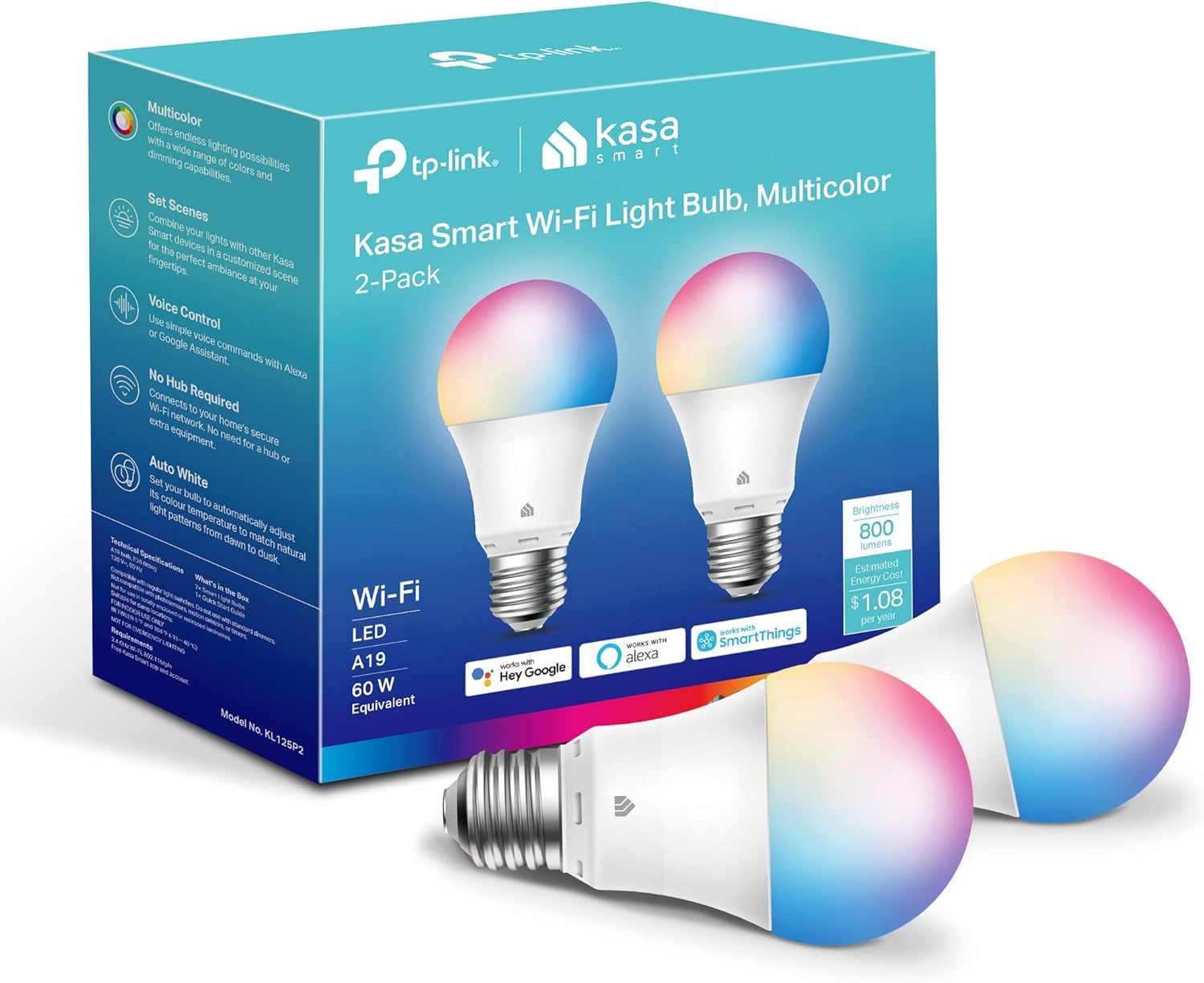
We recommend these bulbs for small spaces because they offer flexible color, simple app controls, and reliable scheduling without needing a hub.
Pros
- Bright, adjustable light with rich color choices
- Easy control through the Kasa app, Alexa, or Google Assistant
- Scheduling and energy monitoring help manage daily use
Cons
- Requires a 2.4GHz Wi-Fi network
- Setup may take extra time when resetting a bulb
- The app requires a Kasa account
We found the A19 shape easy to fit into common lamps and ceiling fixtures. The 800-lumen output gave our small room enough light for everyday tasks, while dimming helped create a softer setting at night.
Color changes worked well for accent lighting, but the adjustable white range proved more useful for daily use. We could choose a warm tone for relaxing and a cooler white for reading or desk work.
The Kasa app guided us through setup and let us control the bulbs away from home. Voice control worked with Alexa and Google Assistant, and schedules made it easy to turn the lights on before entering a dark room.
Because these bulbs use Wi-Fi instead of a hub, they keep the setup simple. We would still check that our network supports 2.4GHz, especially in a small apartment with a crowded wireless network.
Linkind Tunable White Smart Bulbs

We recommend these bulbs for small rooms because they offer flexible white tones, app control, and voice commands without needing a separate hub.
Pros
- Warm-to-cool white settings suit bedrooms, offices, and kitchens
- Compact A19 shape fits most standard E26 fixtures
- Bluetooth control can help when Wi-Fi coverage is weak
Cons
- Setup requires 2.4GHz Wi-Fi and the AiDot app
- Traditional wall dimmer switches may cause flicker
- Dimming may not feel fully smooth at every brightness level
We found the adjustable white range useful in small spaces. We could choose a soft, warm glow for relaxing and a cooler setting for reading or desk work. The high color rendering also helped furniture and decor look more natural.
The bulb worked with Alexa and Google Home after setup, so we could change brightness or turn it off without reaching for a phone. Schedules added practical value in bedrooms, hallways, and entry areas.
Setup was straightforward, but the bulb only supports 2.4GHz Wi-Fi. We also recommend leaving standard dimmer switches out of the circuit, since some users report flickering or buzzing when using them.
The four-pack makes it easy to match lighting across a small apartment or several nearby fixtures. For renters and anyone who wants simple smart controls, Linkind offers a useful balance of features and price.
Amazon Basics Smart Filament Bulb
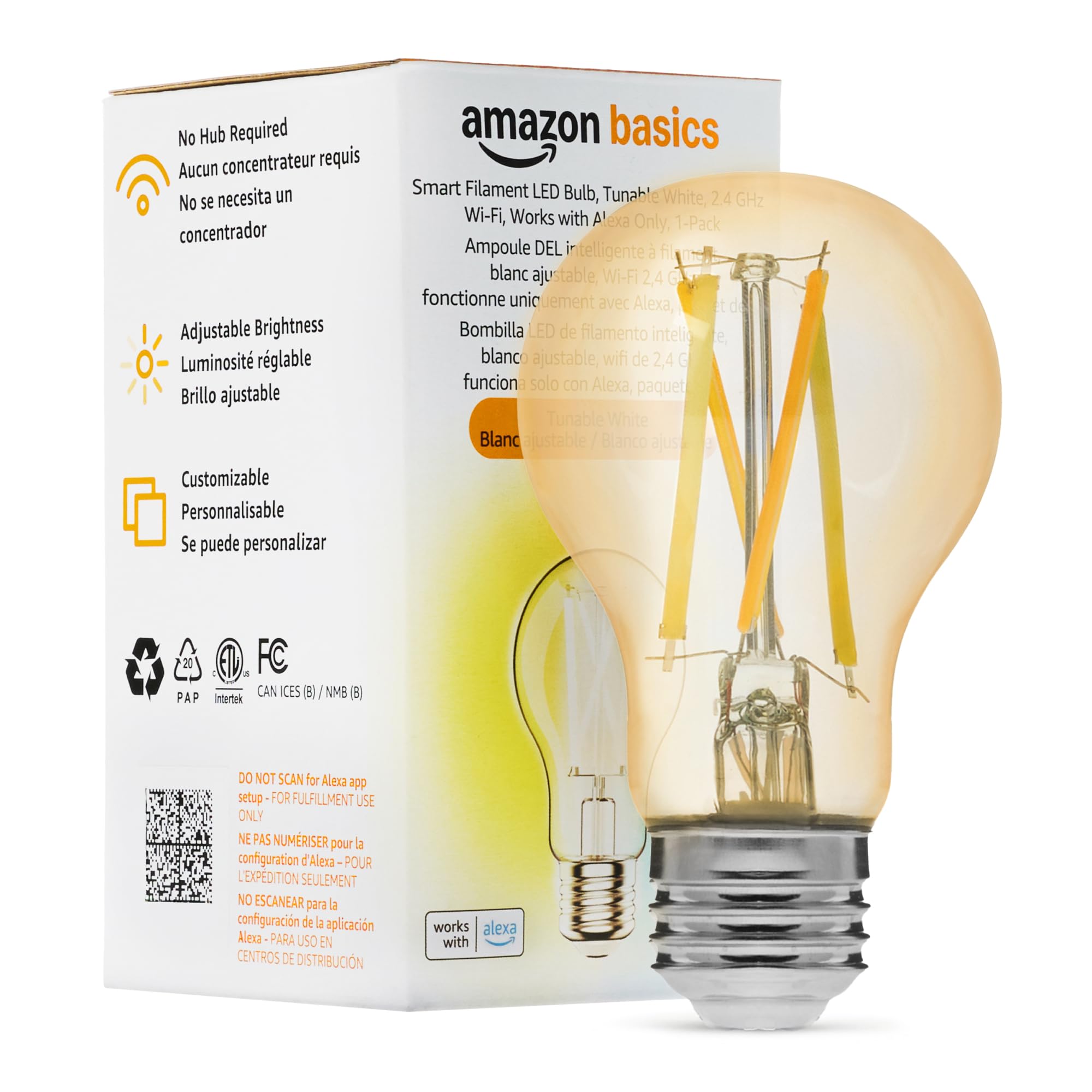
We recommend this bulb for small spaces if we already use Alexa and want easy voice control without a hub.
Pros
- Quick Alexa setup without a separate app
- Adjustable warm-to-cool white light
- Group controls and routines work well in compact rooms
Cons
- Works only with Alexa and 2.4GHz Wi-Fi
- Does not support physical dimmer switches
- One bulb may not provide enough light for larger rooms
We found the setup simple: we screwed in the bulb, opened the Alexa app, and connected it within minutes. That makes it a good choice for a desk lamp, bedside lamp, or small entryway where we want smart control without extra equipment.
The filament design gives the bulb a more traditional look than many standard smart bulbs. We could shift the light from a soft warm tone for relaxing to a cooler white for reading or cleaning, then lower the brightness through the app or a voice command.
Alexa routines also help in small spaces. We can schedule a lamp, group several bulbs by room, or turn the light on while away. However, buyers who use Google Assistant, Apple HomeKit, or SmartThings should choose another bulb.
Buying Guide
When we choose a smart bulb for a small space, we should check its size, brightness, color range, and connection method. A compact bulb fits better in small lamps, enclosed fixtures, and tight shades.
| Feature | What we should check |
|---|---|
| Bulb size | Match the bulb shape and base to the fixture |
| Brightness | Choose lumens that suit the room’s size and purpose |
| Color temperature | Look for warm light, cool light, or adjustable settings |
| Connection | Check Wi-Fi, Bluetooth, or hub requirements |
| Controls | Confirm support for an app, voice control, schedules, or dimming |
| Energy use | Compare wattage and stated energy efficiency |
We should measure the fixture before buying. A bulb that fits the socket may still be too wide or too tall for a narrow shade.
For bedrooms and living areas, adjustable white light can provide softer evening lighting and brighter task lighting. Color-changing bulbs offer more options, but they may cost more and use extra app features that we may not need.
We should also check whether the bulb works without a separate hub. Bluetooth bulbs can suit one nearby fixture, while Wi-Fi bulbs work well when we want remote access through a home network. A hub-based system may make sense when we plan to use several smart lights.
Finally, we should confirm the bulb’s dimming support and fixture compatibility. Some smart bulbs require the wall switch to stay on, and standard dimmer switches may cause flickering or other problems.
Editor’s Choice
We choose the Philips Hue White and Color Ambiance A19 for small spaces. Its standard shape fits most lamps, while adjustable brightness and color give us useful control in bedrooms, offices, and studio apartments.
The bulb works through Bluetooth for basic control or with a Hue Bridge for expanded features. We can set schedules, group lights, and control the bulb with voice assistants. Its higher price makes sense for users who want a reliable smart-lighting system.
| Feature | Details |
|---|---|
| Best for | Flexible room lighting |
| Size | Standard A19 shape |
| Control | App, voice, and optional Bridge |
| Light | White and millions of colors |
| Connection | Bluetooth and Zigbee |
We recommend checking the lamp’s size and socket before buying. The A19 shape fits many fixtures, but enclosed or narrow lamps may need a smaller bulb.
For a simpler setup, we can choose a Wi-Fi bulb such as the Kasa Smart Wi-Fi Light Bulb KL125. It does not require a hub and offers app and voice control, making it a practical choice for renters and compact rooms.
Conclusion
We can make small rooms smarter without adding clutter. Compact A19, BR30, or candle-style bulbs fit many lamps and fixtures, while app support lets us control brightness, color, and schedules from a phone.
For simple setups, we can choose bulbs with Bluetooth or a direct Wi-Fi connection. If we plan to add several smart devices, a bulb that supports Matter, Zigbee, or another shared smart-home standard may offer better long-term flexibility.
We should also match the bulb to the room and fixture:
- Bedrooms: Dimmable bulbs with warm white settings
- Kitchens: Brighter bulbs with adjustable white tones
- Desks: Bulbs with schedules and focused brightness control
- Small lamps: Compact bulbs that stay within the fixture’s size limits
Before buying, we need to check the bulb’s base type, wattage limit, brightness, and hub requirements. These details help us avoid poor fit, weak light, or unexpected setup steps.
The best choice depends on our room, budget, and preferred smart-home platform. A reliable bulb with useful controls and the right size can improve a small space without taking up any extra room.
FAQS
What bulb size works best in a small space?
We usually recommend standard A19 bulbs for lamps and ceiling fixtures. For tight shades or narrow fixtures, we can choose smaller A15 or candle-shaped bulbs if the fixture supports them.
How bright should a smart bulb be?
We can match brightness to the room. A bulb rated around 800 lumens suits most bedrooms, hallways, and small living areas, while lower output works better for bedside lamps.
Do smart bulbs need a hub?
Some bulbs connect directly through Wi-Fi, Bluetooth, or Matter. Others need a separate hub, which can improve reliability but uses more space and adds cost.
Which connection works best in a small home?
We can use Bluetooth for one nearby bulb and Wi-Fi for simple remote control. Matter bulbs offer broader device compatibility when our existing smart-home system supports Matter.
Can we use smart bulbs in enclosed fixtures?
We should check the package first. Many smart bulbs need airflow, and enclosed fixtures can cause heat buildup that may reduce performance or shorten the bulb’s life.
Do smart bulbs use power when turned off?
Yes. Smart bulbs draw a small amount of standby power so they can receive commands. We can turn off the wall switch when we want to cut power completely, but the bulb will then lose smart control.
