
10 Best Security Cameras for Arthritis: Easy-to-Use Options for Seniors


Big Button Mobile Phone

Adjustable Bed Wedge Pillow
Electric Heating Pad
Security cameras can help people monitor doors, rooms, and outdoor areas without needing to check them in person. For someone with arthritis, the camera’s controls and setup matter as much as its video quality. A well-chosen model can reduce the need to handle small buttons, tight mounts, or difficult-to-open battery covers.
The best security cameras for arthritis have simple app controls, hands-free viewing options, easy installation, and little routine maintenance. We also look for clear video, reliable motion alerts, useful two-way audio, and power options that reduce frequent handling. Voice assistant support can make it easier to check a live view or control the camera without reaching for a phone.
When comparing models, pay close attention to setup, mounting hardware, charging needs, and the size and placement of physical controls. We evaluated these details, along with image quality, privacy features, and daily ease of use, to find the security cameras that are most practical for people with arthritis.
Best Security Cameras for Arthritis
We selected security cameras with simple controls, clear video, and features that reduce the need for small or difficult movements. Our list includes options with voice control, mobile alerts, easy setup, and accessible design.
TP-Link Tapo C100 Indoor Camera
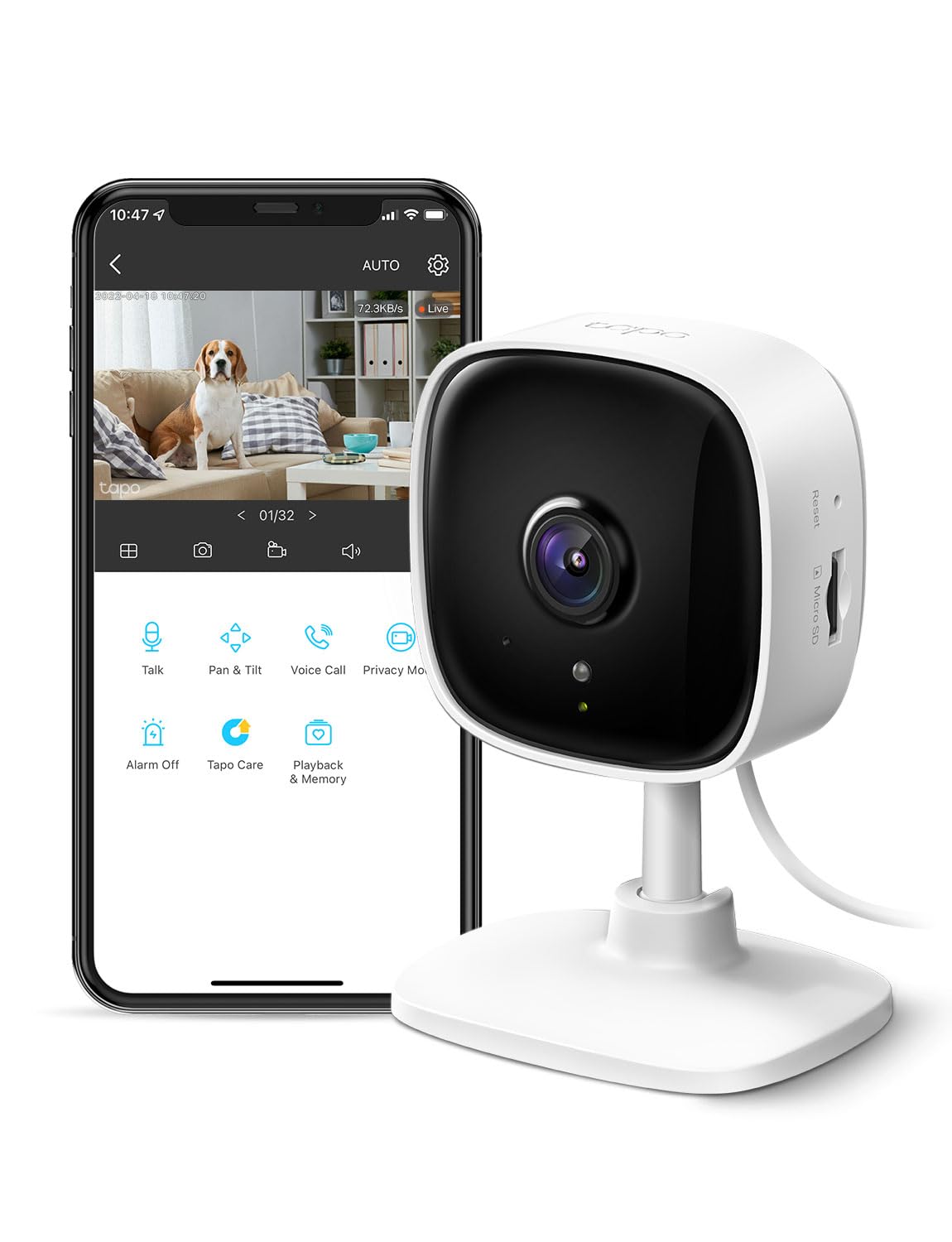
We recommend this camera for people with arthritis who want simple indoor monitoring, clear video, and voice control at a low price.
Pros
- Easy app and voice controls
- Clear day and night video
- Local storage without a required subscription
Cons
- Requires a power outlet
- Setup and controls may feel small on a phone
- Some features require a paid cloud plan
We found the Tapo C100 easy to place and use indoors. Its compact design works well on a shelf or wall, so we did not need to handle a bulky device. The app provides access to live video, alerts, and two-way audio without requiring frequent physical adjustments.
The motion and person alerts helped us check important activity without watching the feed constantly. Night vision also gave us a usable view in dark rooms. The built-in speaker and microphone let us speak through the camera, although the sound quality works best at close range.
Voice support with Alexa and Google Assistant can reduce the need to use small touchscreen controls, which may help when hand movement is painful. However, compatibility can depend on the connected smart-home system, and some users may need extra setup.
We could save recordings to a compatible microSD card or use Tapo Care cloud storage. The camera needs constant power and supports only indoor use, so it suits rooms, entry areas, pets, and caregivers checking on family members.
GALAYOU G2 Indoor Dome Cameras
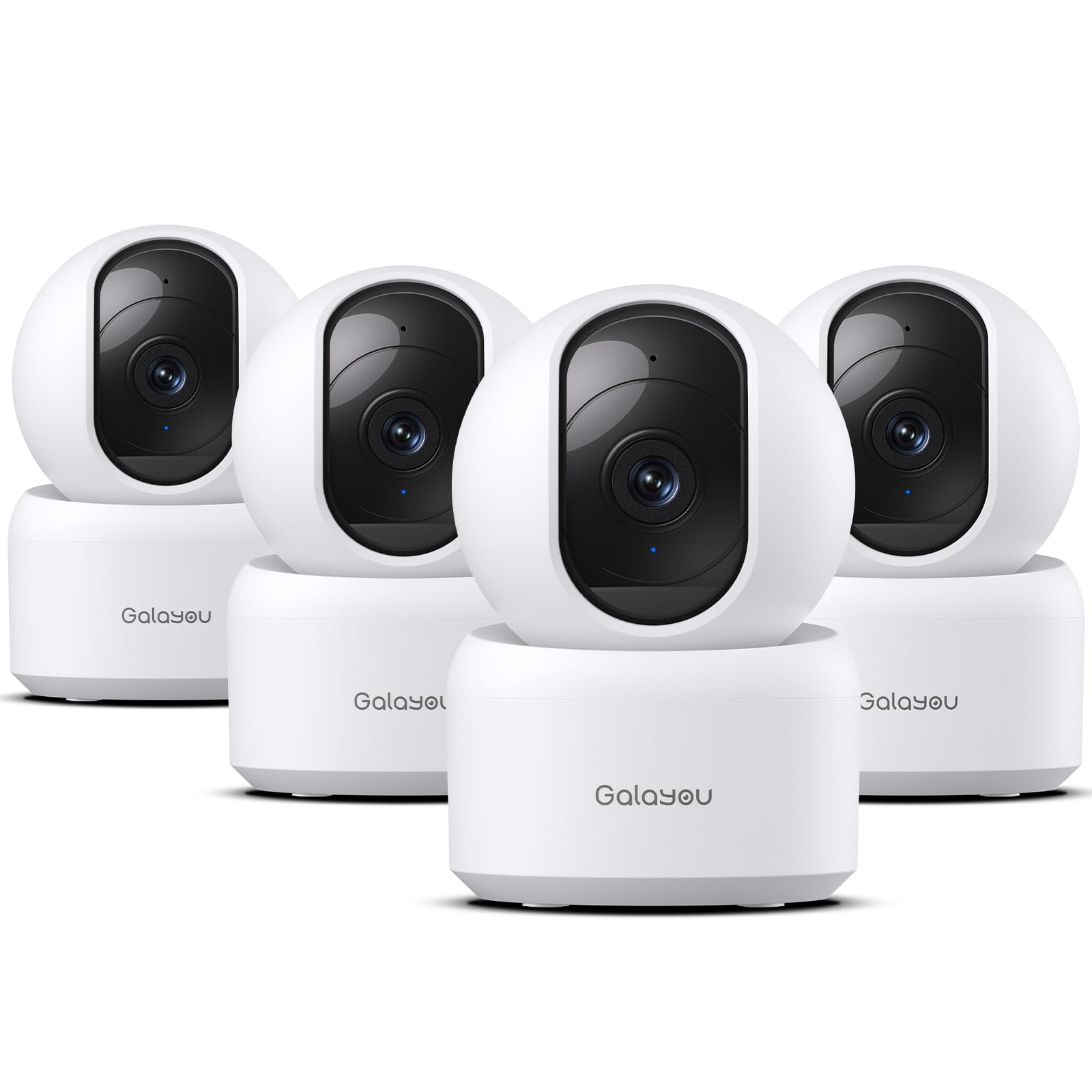
We recommend this four-camera set for indoor monitoring because its clear video, phone controls, and simple setup can reduce the need for frequent hands-on adjustments.
Pros
- Remote pan and tilt controls limit awkward reaching.
- Clear 2K video and useful night vision.
- Phone alerts, two-way audio, and local storage support.
Cons
- Requires a nearby power outlet.
- Works only with 2.4GHz Wi-Fi.
- Cloud storage may require a paid plan after the trial.
We found the cameras easy to position and control through the app. The remote movement feature helps us check different parts of a room without repeatedly bending, stretching, or handling the camera.
The image stays clear during the day, while night vision shows enough detail for checking a room after dark. Motion alerts arrive on the phone, and the built-in siren offers a quick way to respond to activity.
The cameras need wired power, so placement depends on outlet locations. We also had to use 2.4GHz Wi-Fi during setup. An SD card supports continuous local recording, while cloud storage provides another option but may add an ongoing cost.
Anona 4K Indoor Camera
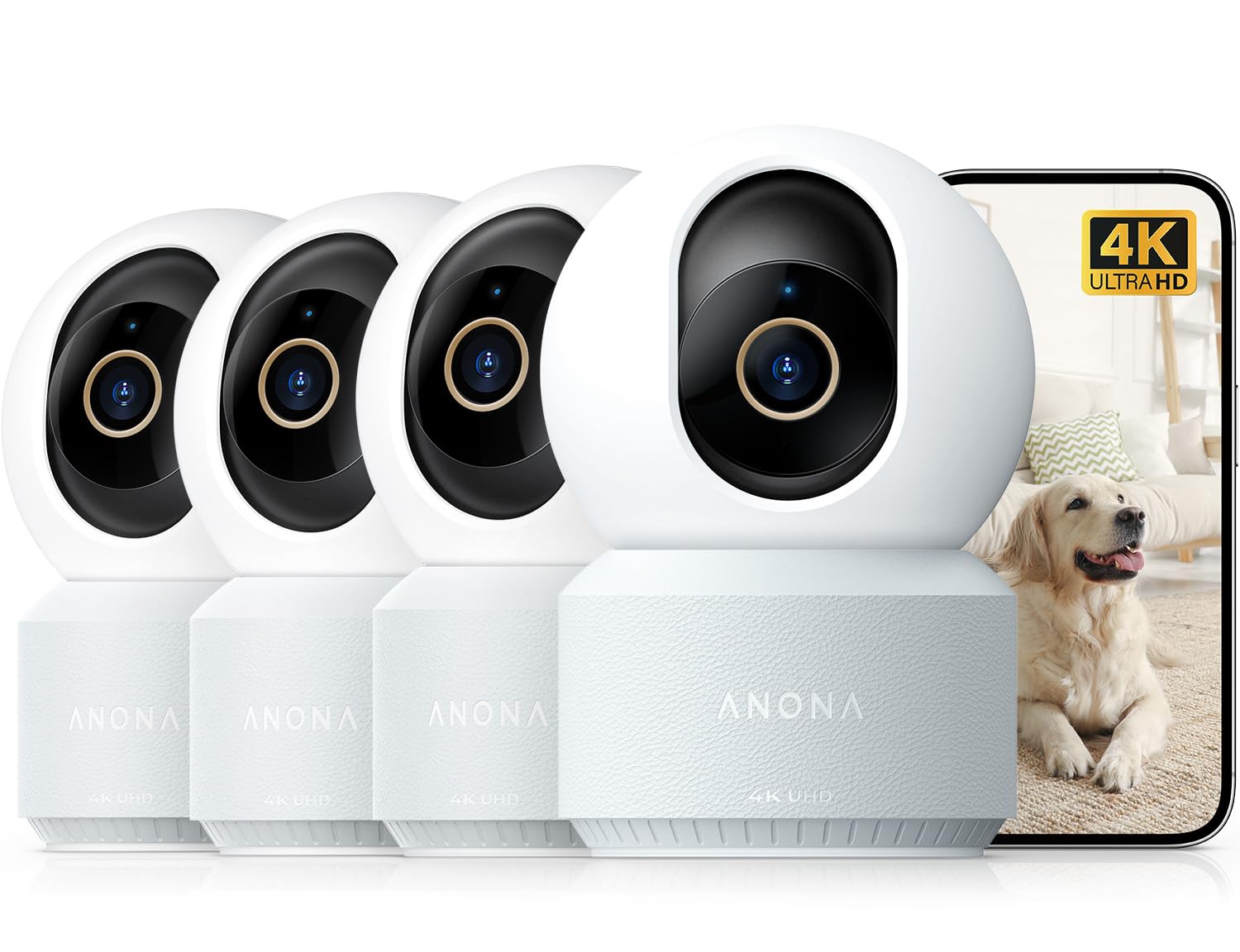
We recommend this camera for shoppers who want broad indoor coverage and app controls that require little hand strength.
Pros
- Clear 4K video with useful digital zoom
- Pan, tilt, and auto-tracking cover large areas
- App supports person, pet, and crying alerts
Cons
- Requires a power outlet and cable
- Local storage needs a separate microSD card
- App and cloud features may take time to learn
We found the Anona Pano easy to place on a table and simple to adjust through the phone app. That matters for people with arthritis because we can change the viewing angle without reaching for small buttons or turning the camera by hand.
The sharp image helped us check faces, pets, and room activity from a distance. Its wide movement range reduced the need to reposition the unit, while auto-tracking followed motion across the room. The camera also offers two-way audio, so we could speak through the app instead of walking across the house.
Setup was straightforward, although connecting the camera still required handling the power cable and following several app steps. We also needed to buy a microSD card for local recording, and users who prefer cloud storage should review any related costs.
The camera works indoors and supports 2.4GHz and 5GHz Wi-Fi. For arthritis-friendly use, its strongest benefit is remote control through the app, but its usefulness depends on keeping the phone charged and having a stable connection.
Tapo C216 2K Pan/Tilt Camera
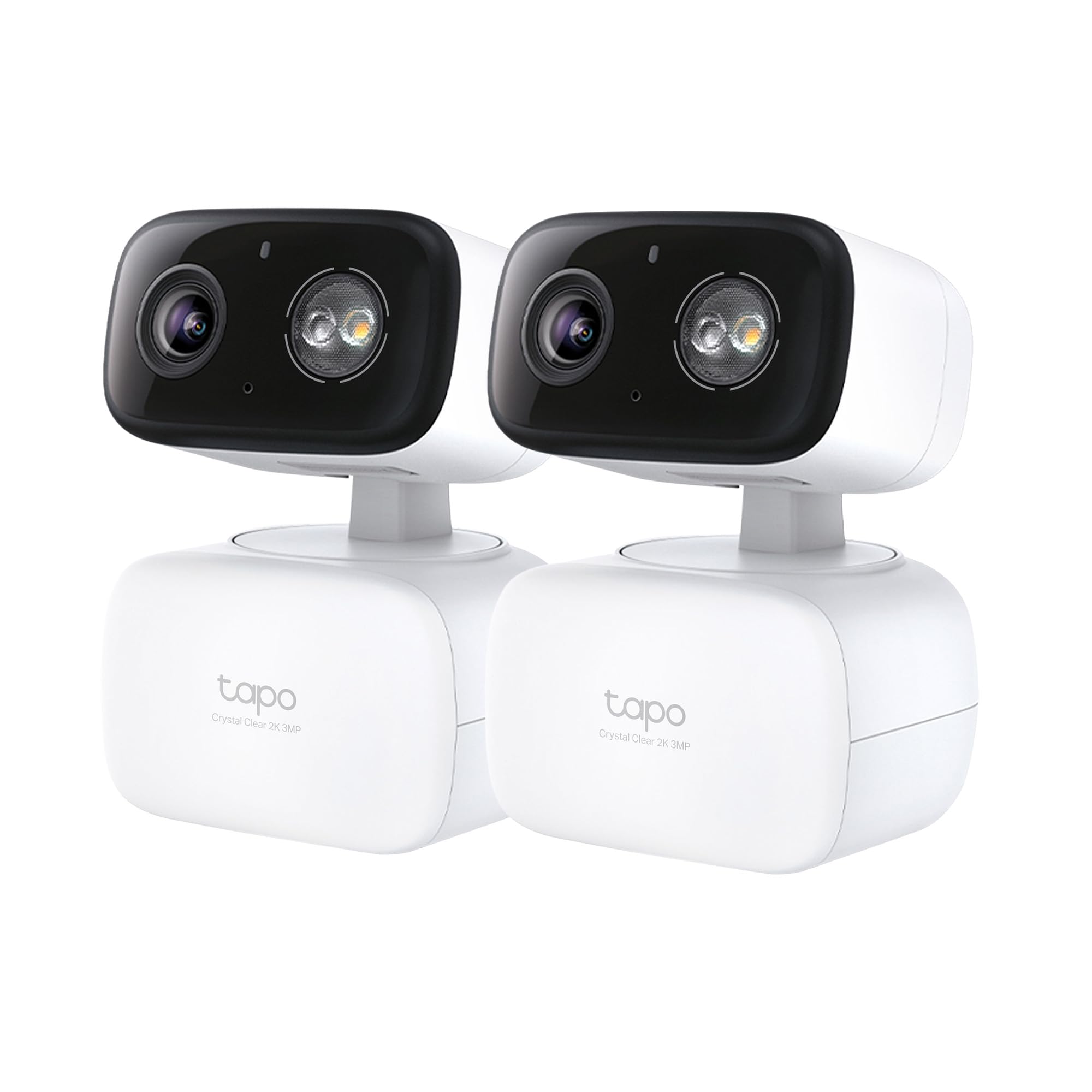
We recommend the Tapo C216 2-pack for people with arthritis who want wide coverage, simple app controls, and local storage without a required subscription.
Pros
- Pan and tilt reduce the need to move or adjust the camera by hand.
- The app supports privacy zones, activity zones, and multiple night-vision modes.
- Local microSD storage avoids a required monthly fee.
Cons
- The cameras need power outlets and use wired adapters.
- Setup may require small mounting screws and careful cable placement.
- The app and cameras require a 2.4GHz Wi-Fi network.
We found the pan-and-tilt movement useful because it let us change the viewing angle from the Tapo app instead of reaching for the camera. The two-camera set also helped us watch separate areas, such as an entryway and a living room.
The 2K video showed clear images during the day. At night, we could choose infrared viewing, color night vision with the built-in lights, or an automatic mode. Person detection helped reduce alerts, while baby-cry detection adds value for home monitoring.
Privacy controls made the camera easier to use in shared spaces. We could block selected areas from recording or activate Privacy Mode, which physically covers the lens. The IP65 weather-resistant design also supports sheltered outdoor placement.
We still needed to handle the power cords and use the app for most adjustments. For users with limited hand strength, the setup may be easier with help, especially when inserting a microSD card or mounting the cameras.
HITELLARCAM 2K Wireless Security Camera

We recommend this camera for people with arthritis who want wireless setup, clear video, and fewer charging tasks.
Pros
- Simple app setup and dual-band Wi-Fi
- Long battery life with motion alerts
- Clear two-way audio and color night vision
Cons
- Mounting still requires turning screws
- Free cloud storage saves video in lower quality
- Battery life depends on motion and weather
We found the wireless design helpful because it avoids running a power cable outdoors. The app setup was straightforward, and dual-band Wi-Fi gave us more connection options. Mounting may still be difficult for anyone with limited grip strength, so we would ask for help with the screws.
The 2K image looked clear during the day, while the built-in lights helped show color at night. Motion alerts worked well for basic activity, and two-way audio let us speak with visitors without walking to the door.
The rechargeable battery reduces how often we need to handle the camera. However, frequent motion alerts, cold weather, and regular live viewing can shorten battery life. The free cloud plan is useful, but it stores video at SD quality; local SD storage or a paid plan provides better detail.
Blink Mini 2K+
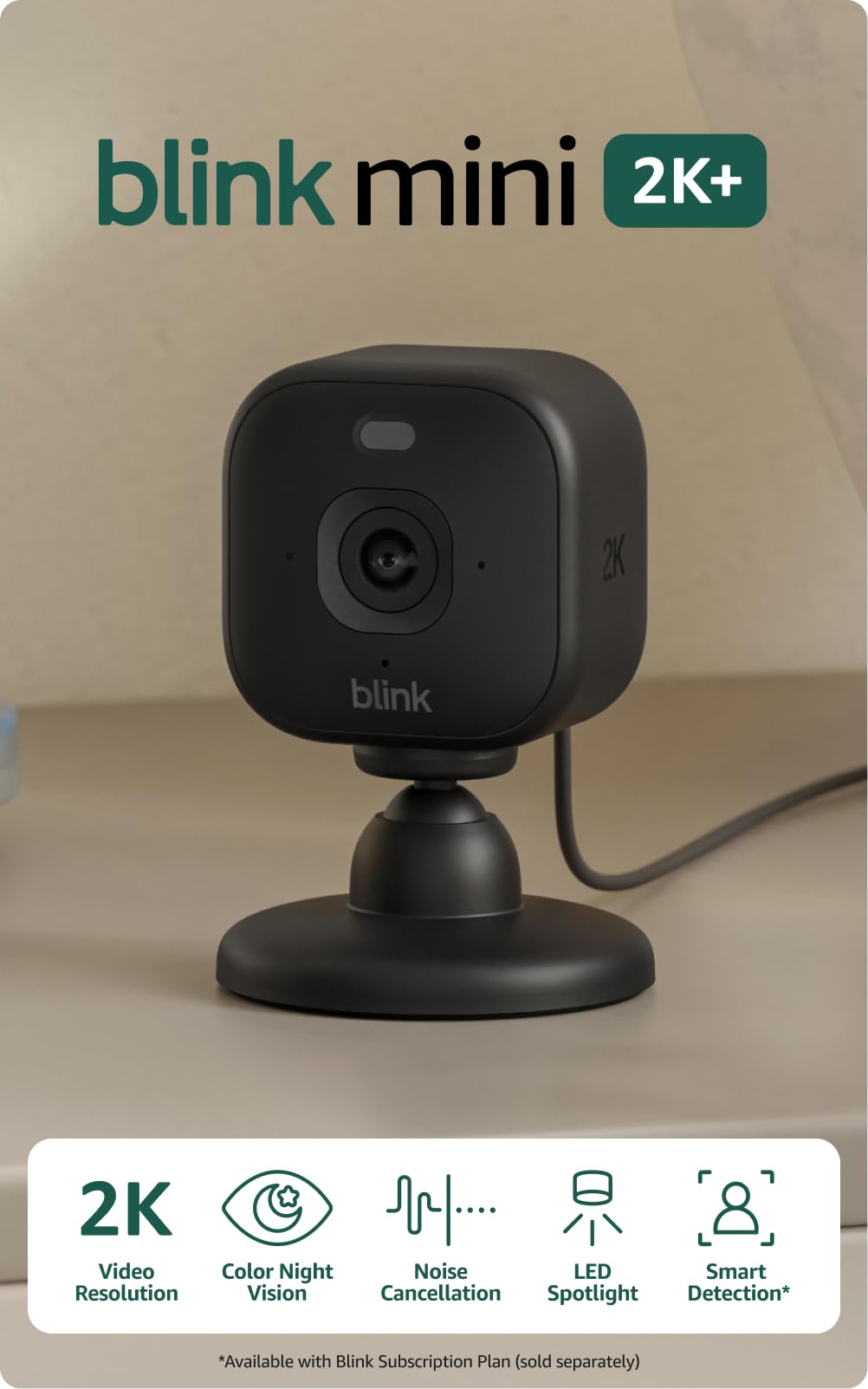
We recommend this pair for people with arthritis who want clear indoor video and simple, plug-in setup without handling batteries.
Pros
- Easy plug-in installation with included stands and cables
- Clear 2K video, wide coverage, and night vision
- Two-way talk with improved audio and noise cancellation
Cons
- Cloud storage requires a separate subscription after the trial
- Cameras cannot pan or tilt remotely
- App setup and alerts may still require small touch controls
We found the compact cameras easy to place on shelves or mount on a wall. Plugging them in avoids the need to open battery covers, which can help users with stiff or painful hands.
The 2K image gave us a clear view of rooms, pets, and entry areas. The wide viewing angle reduced the need to reposition the camera, although the fixed design meant we had to aim it carefully during setup.
Two-way talk worked well for short conversations. The improved audio helped us hear people more clearly, while the app allowed us to check the cameras without walking to each room.
Motion alerts can identify people and vehicles with a separate Blink subscription. We also had to plan for cloud storage costs, since keeping clips beyond the trial requires a paid plan or manual downloads.
LaView Indoor Security Camera 4-Pack

We recommend this set for people with arthritis who want several indoor cameras and a simple phone app at a low price.
Pros
- Simple app setup with QR-code pairing
- Clear 1080p video and useful night vision
- Two-way audio and motion alerts
Cons
- Requires a power cord for each camera
- Works only with 2.4GHz Wi-Fi
- App controls may feel dated
We found the setup manageable because the app guided us through each step. The small cameras fit well on shelves or tables, which reduced the need for repeated lifting or tight hand movements.
The app let us check several camera views from one account. That helps when we want to monitor pets, rooms, or entry points without moving around the home. Sharing access with family members also makes daily monitoring easier.
Video looked clear in normal indoor lighting, and infrared night vision helped us see in dark rooms. Motion alerts worked well for basic activity, though the camera may miss details when lighting is poor.
The wired design keeps the cameras running, but each unit needs a nearby outlet. We also had to adjust the cameras by hand, since they do not offer full remote swiveling. For arthritis concerns, the simple controls are helpful, but wall mounting may require assistance.
Cloud storage includes a trial period, while a microSD card offers another recording option. We would choose this set for affordable indoor coverage, but buyers who need weather protection, 5GHz Wi-Fi, or advanced camera movement should consider another model.
VISION WELL 2K Wireless Security Camera
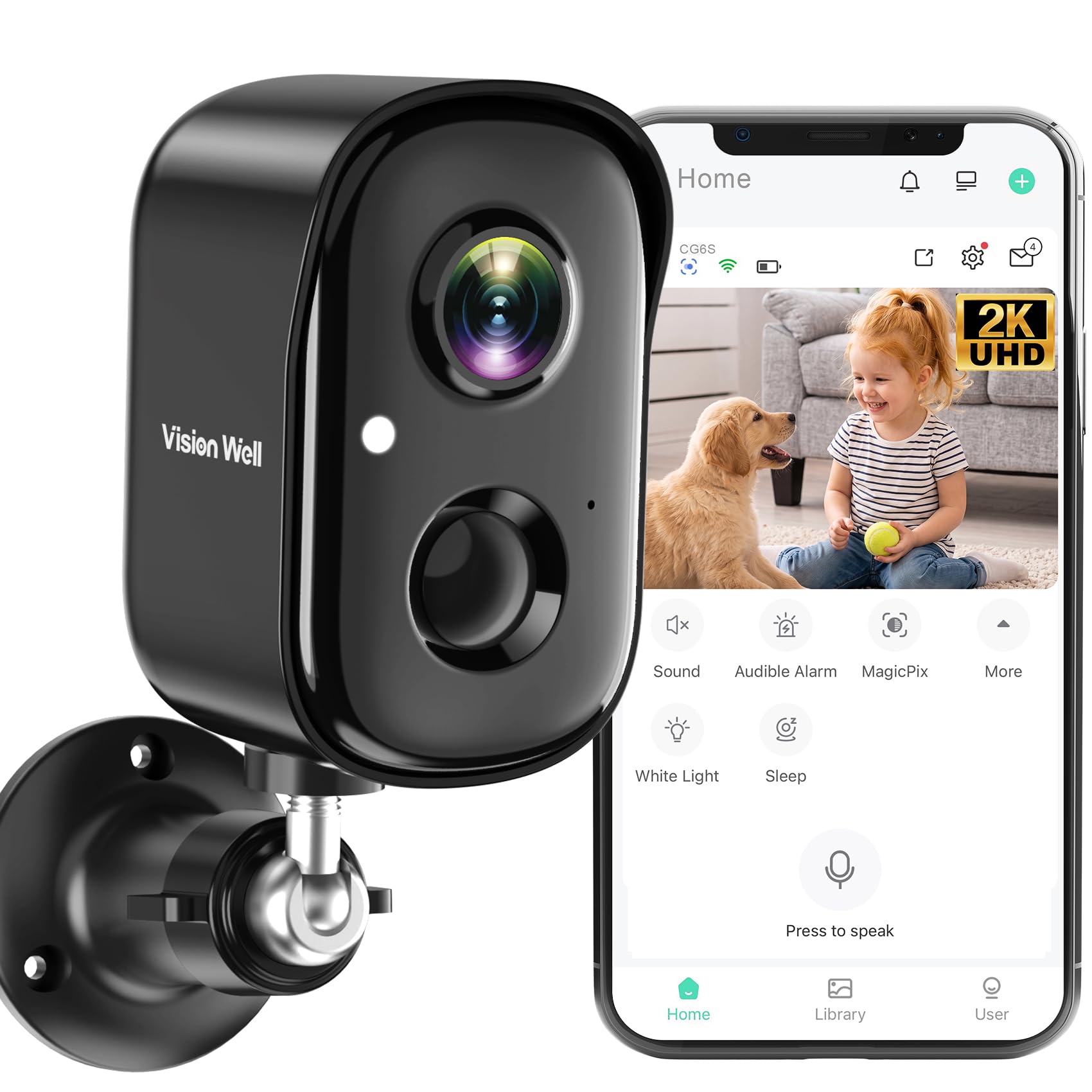
We recommend this camera for people with arthritis who want a wire-free setup, clear video, and app controls that reduce the need to handle small switches or cords.
Pros
- Wire-free design makes placement easier.
- Clear 2K video with color night vision.
- Motion alerts can identify people, pets, vehicles, and packages.
Cons
- The camera does not support 5GHz Wi-Fi.
- We must buy a microSD card separately for local storage.
- Battery life may vary with motion and weather.
We found the camera simple to mount because it needs no power cable. That can help users with stiff or painful hands, especially when placing it near a doorway, garage, or patio. The rechargeable battery also reduces daily handling.
The app lets us view live video, review recordings, speak through the camera, and adjust alerts from a phone. Motion detection can sort activity by people, pets, vehicles, and packages, which helps reduce unnecessary checks.
Video looked sharp during the day, while color night vision gave us more detail than basic black-and-white footage. The camera also includes a siren and flashing light, though frequent alerts may use more battery power.
Storage requires a choice between a separately purchased microSD card and a cloud plan. We also need a 2.4GHz Wi-Fi network, so this camera may not suit homes that use only 5GHz Wi-Fi.
Tapo C201 Indoor Pan/Tilt Camera

We recommend the Tapo C201 for arthritis users who want broad room coverage and a simple app at a low price.
Pros
- Pan and tilt reduce the need to move the camera by hand
- App controls, alerts, and two-way audio are easy to access
- Local storage works without a required subscription
Cons
- Setup can take extra effort when changing Wi-Fi networks
- Two-way audio may have a short delay
- A microSD card costs extra
We found the pan and tilt controls useful because we could check most of a room from the phone. That matters when adjusting a small camera by hand feels difficult. The app also made it easy to view live video, change the camera angle, and review alerts without reaching for the unit.
The 1080p picture looked clear in normal indoor light, while night vision helped us check darker areas. Motion, person, and baby-cry detection can send alerts, though settings may need adjustment to limit unwanted notifications.
We liked having local recording as an option, since basic use does not require a cloud plan. The camera uses a power cord and 2.4GHz Wi-Fi, so we needed to place it near an outlet and a suitable network. Two-way audio worked for quick conversations, but the delay made longer exchanges less natural.
Blink Outdoor 4 Two-Camera System

We recommend this system for people with arthritis who want wireless outdoor cameras with simple mounting and voice control.
Pros
- Wireless setup reduces handling of cables.
- Long battery life limits frequent battery changes.
- Alexa support allows hands-free control.
Cons
- The Sync Module Core does not include local storage.
- Cloud recording requires a paid plan after the trial.
- Phone setup may take patience.
We found the cameras easy to mount because they use small, simple brackets. Their light weight also made positioning less tiring than handling larger wired cameras. Once installed, the app provided clear daytime video, infrared night viewing, and two-way audio.
The two-camera package helped us watch more than one area without running new wires. Motion alerts worked well during testing, although frequent activity may reduce the stated battery life. The included lithium batteries should last a long time under normal settings, which can reduce the need for difficult replacements.
For arthritis, voice control adds useful convenience. We could use Alexa to view cameras or manage the system without reaching for a phone. However, the initial connection process may require extra effort, and users need a subscription to keep recordings in the cloud after the free trial.
Buying Guide
We should choose a security camera that reduces the need for small, repeated hand movements. Look for simple controls, clear setup instructions, and settings we can manage through a phone or voice assistant.
| Feature | What to look for |
|---|---|
| Setup | Tool-free mounting, simple pairing, and clear instructions |
| Controls | Large, easy-to-read buttons and accessible app menus |
| Power | Long battery life, USB charging, or easy-to-reach outlets |
| Video | At least 1080p resolution for clear daytime footage |
| Night view | Infrared night vision or another low-light mode |
| Alerts | Adjustable motion zones and notification settings |
| Audio | Two-way talk with clear sound and simple controls |
| Storage | Local storage or a subscription plan that fits our needs |
We should check the camera’s weight and mounting method before buying. A lightweight model with a secure mount may be easier to install, while a wired camera can reduce the need to remove and recharge batteries.
We should also consider privacy. Review how the camera stores footage, whether it supports account security features such as two-factor authentication, and whether we can disable the microphone or camera when needed.
If joint pain makes phone use difficult, we can prioritize voice control, automatic alerts, and cameras that require little daily adjustment. We should confirm compatibility with our phone and home network before purchasing.
Editor’s Choice
We choose the Google Nest Cam (Indoor, Wired) as our editor’s pick for people with arthritis. Its simple setup, clear mobile alerts, and reliable video help reduce the need for frequent hands-on adjustments.
The camera connects through the Google Home app and supports two-way talk. We can check the live feed, speak to someone nearby, and review activity without reaching for the camera itself.
| Feature | Why it helps |
|---|---|
| Wired power | Avoids repeated battery changes |
| Mobile alerts | Reduces the need to check the camera |
| Two-way talk | Supports remote communication |
| Activity zones | Limits unnecessary notifications |
We recommend placing the camera on a stable shelf at eye level. This position can reduce bending, reaching, and repeated repositioning. Use voice control through a compatible smart speaker if operating the app feels difficult.
Nest Aware adds longer event history and familiar-face alerts, but it requires a paid subscription. Without the subscription, the camera still provides live viewing, two-way talk, and basic motion alerts.
Conclusion
We should choose a security camera that reduces hand strain and keeps daily tasks simple. Voice controls, app access, large buttons, and flexible mounting can help us manage the system with less bending, twisting, or gripping.
A camera with clear video, reliable alerts, and simple setup may serve us better than a model with many complex features. We should also check whether the camera works with our phone, smart speaker, or other devices.
Before buying, we can compare these practical points:
- Easy installation: Minimal tools and simple mounting
- Accessible controls: Voice commands or large, clear buttons
- Useful alerts: Motion and person detection with adjustable settings
- Clear viewing: Good video in daylight and at night
- Reliable support: Helpful instructions and customer service
We should place cameras where they provide useful coverage without requiring frequent adjustments. A trusted family member or professional installer can help with setup if mounting or pairing the camera causes pain.
FAQS
What features help people with arthritis?
We look for cameras with voice control, simple mobile apps, large on-screen buttons, and easy-to-adjust settings. Pan-and-tilt models can reduce the need to reach, twist, or move the camera by hand.
Are wireless cameras easier to use?
They can be. Wireless models reduce cable handling, but we still need to charge batteries or replace them. Plug-in cameras may work better when we can place them near a power outlet.
Do we need a subscription?
Not always. Some cameras offer local storage through a memory card, while others require a cloud plan for recorded video. We should check storage costs before choosing a model.
| Feature | Why it helps |
|---|---|
| Voice control | Reduces physical handling |
| Large buttons | Easier to tap |
| Pan and tilt | Allows remote adjustment |
| Local storage | May avoid monthly fees |
Can we install a camera without help?
Some indoor cameras sit on a shelf and need little setup. Outdoor models may require drilling, climbing, or tight hand movements, so we may need assistance with installation.
What should we check before buying?
We should confirm that the app works with our phone, the camera supports our preferred voice assistant, and the controls feel easy to use. We should also review return policies in case the device proves difficult to operate.
