
Best Raised Toilet Seats for Caregivers: Top Picks and Practical Buying Guide


Heated Blanket

Bedside Commode Chair

Electric Recliner Lift Chair
Raised toilet seats lift the toilet bowl to make sitting down and standing up easier for people with limited mobility, weakness, or pain. Caregivers use them to reduce strain and increase safety during transfers, and they come in styles that attach to the bowl, clamp on, or sit on top like a padded ring. We focus on models that balance comfort, stability, and ease of cleaning so caregivers can provide safer, more efficient bathroom help.
The most important factors to check are fit to the toilet, seat height, stability, and how simple the seat is to clean and secure. A raised toilet seat that fits your toilet, stays firmly in place, and is easy to clean will reduce fall risk and make caregiving faster and safer. We tested a range of designs and materials to find options that meet different needs, and the next section shows the best picks and why they stood out.
Best Raised Toilet Seats for Caregivers
Below is our full list of the best raised toilet seats for caregivers. We chose options that are safe, easy to clean, and simple to install so caregivers can focus on comfort and dignity. Our picks cover different heights and features to fit common needs and budgets.
Kohler Hyten Elevated Seat (3″)
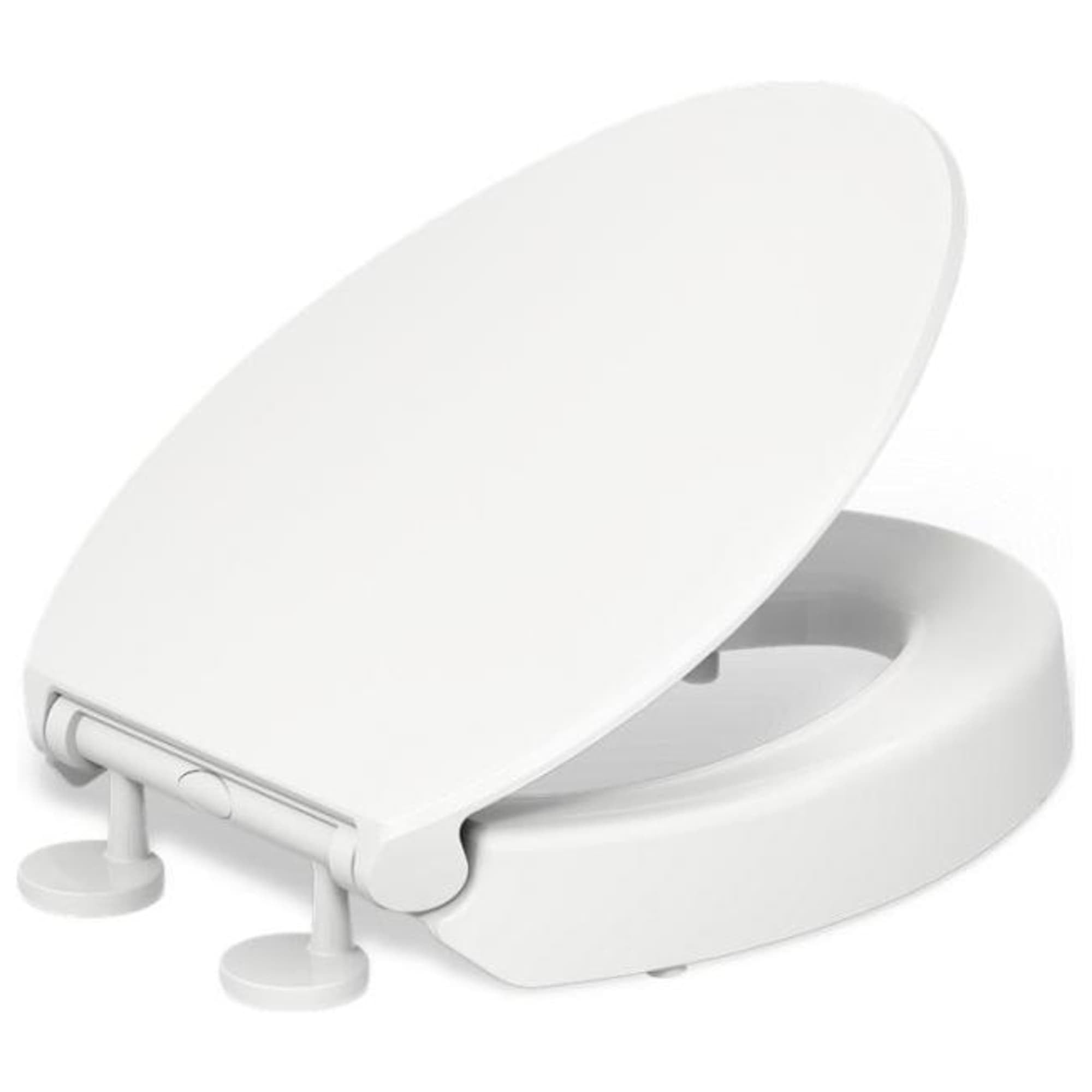
We recommend this seat when you need a stable, well-made 3″ lift that feels like a normal elongated seat and installs cleanly onto your existing toilet.
Pros
- Adds comfortable height without an ugly riser.
- Quiet-close lid and quick-release make upkeep simple.
- Grip-Tight fit stays secure even with frequent use.
Cons
- Pricier than basic raised seats.
- Only fits elongated bowls, not round ones.
- Kohler limits returns once opened.
We installed the Hyten for a family member after a hip procedure and noticed the difference right away. The three-inch boost made standing up easier, and the seat shape felt familiar to those used to elongated toilets.
We liked how the seat lowered silently and how the quick-release unlatches for cleaning. The Grip-Tight hardware held the seat firm; it didn’t shift when someone pushed up from the side.
We did hesitate at the cost, but the build quality felt worth it compared with cheaper plastic risers. Keep in mind you must have an elongated bowl and you can’t return the seat after opening, so double-check fit before you install.
Bemis Assurance 3″ Raised Seat with Handles

We recommend this seat when caregivers need a sturdy, easy-to-clean elevated toilet seat that adds real stability.
Pros
- Very solid build that did not wobble under weight.
- Handles give secure support when helping someone stand.
- Clean shield keeps mess off the ring and wipes down easily.
Cons
- Bulky; measure your toilet and bathroom space first.
- Higher price than basic risers.
- Aluminum arms add weight when moving the unit.
We installed this seat for a family member and found the Snap 2 Secure system quick and confidence-building. The seat felt locked in place and stayed steady when we helped someone stand.
The handles are ergonomic and placed where we naturally reach, which made transfers smoother. We noticed the self-sustaining hinge prevented noisy slams and made cleaning simpler since the whole ring lifts easily.
Cleaning proved faster than with other risers we tried. The smooth plastic and the shield under the ring cut down on mess and quick wipes did the job with mild cleaner.
Overall the seat worked well for day-to-day caregiving tasks. If you need extra stability and easy maintenance, this is a solid choice.
Bemis Rise 4.5″ Raised Toilet Seat

We recommend this if you need a very stable, bolt-on raised seat that helps with standing and sitting after surgery or for daily caregiving.
Pros
- Bolts to the bowl for solid, no-shift stability.
- Tall 4.5″ lift reduces knee and hip strain.
- Strong handles give reliable support when transferring.
Cons
- Underside has tight nooks that make deep cleaning harder.
- Seat is all-plastic and not cushioned for longer sits.
- Some users might find the handles unnecessary or prefer them removable.
We installed this in a guest bathroom and felt the difference immediately. The bolt-on feel gave us confidence; the seat did not move when someone shifted their weight. Getting up and down was noticeably easier for our parent after a recent knee procedure.
The handles held steady even when pressure was uneven. We tried leaning on them from different angles and they stayed firm, which helped during unsteady transfers. Removing the seat for cleaning is simple, but the underside traps water and needs extra attention.
The plastic surface wiped clean fast, though we missed a soft-close or padded option. Installation took minutes with the included hardware and tools, and the universal fit saved us from measuring. Overall, this felt like a practical, long-term upgrade for caregiving situations.
Drive Medical 2-in-1 Raised Toilet Seat

We recommend this seat if you need a sturdy, easy-to-install riser with helpful armrests for safer transfers.
Pros
- Very stable once locked in place.
- Padded, removable armrests give real support.
- Installs without tools and fits most toilets.
Cons
- Plastic surface can show stains and needs frequent cleaning.
- Some toilets may not get a perfect fit.
- Rings are bulky for smaller bathrooms.
We set this up in minutes and liked how solid it felt under weight. The locking mechanism made the riser feel safe when someone pushed off the armrests. That extra five inches really cut the effort of sitting and standing.
The padded arms helped a lot during transfers, and we removed them on one toilet with tight hips without trouble. The seat’s contour is comfortable for short- to medium-term use, but the plastic surface needs regular wiping after use.
A few toilets required extra care to get a snug lock; on one older bowl the fit was not perfect and we would not trust it without testing. Overall, this is a practical choice for caregivers who want quick installation, visible support, and a durable product.
Lunderg Solva Raised Toilet Seat
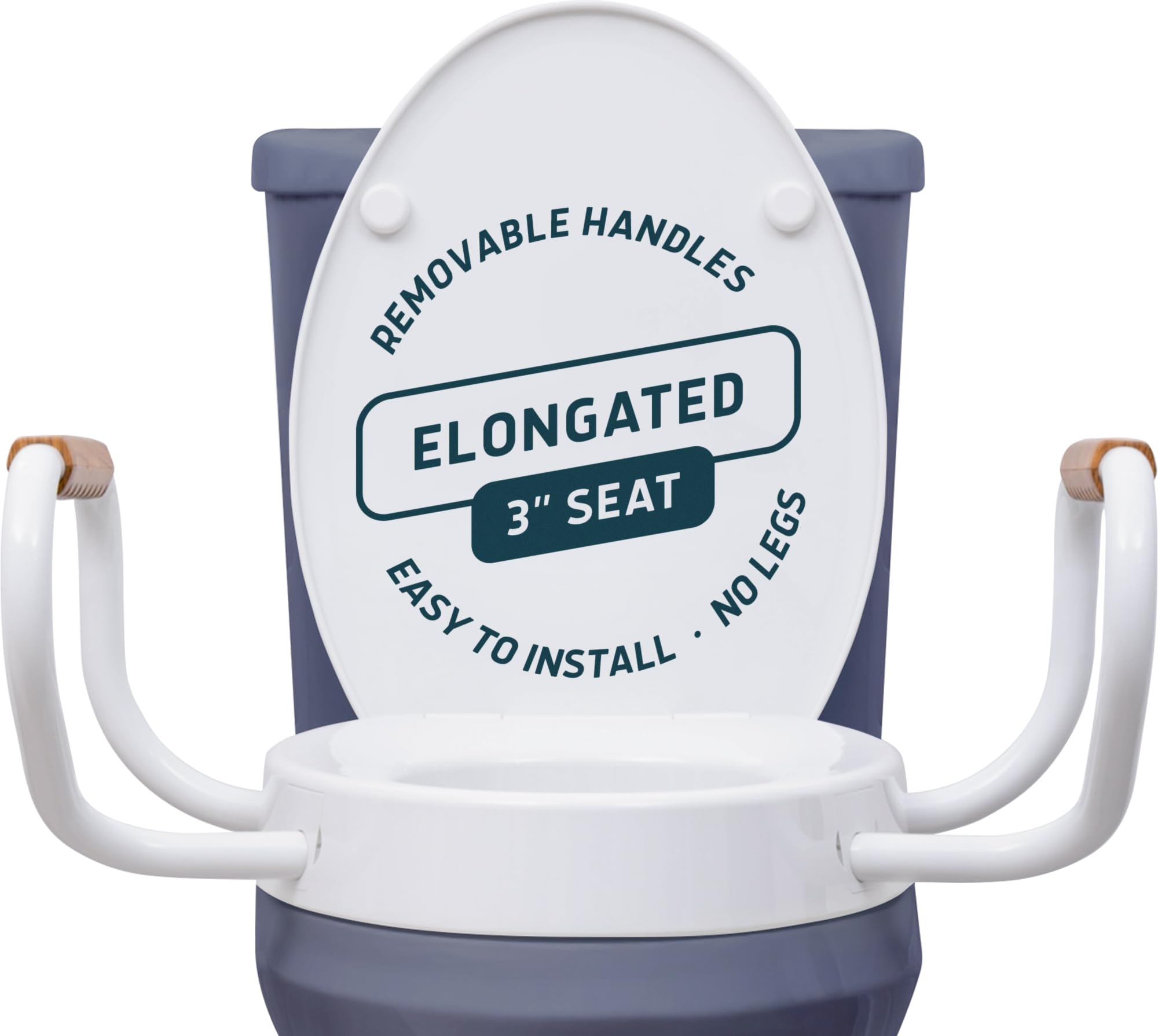
We recommend this if you want a stable, easy-to-clean raised seat that looks like a regular toilet and helps with transfers.
Pros
- Bolts to the bowl for rock-solid stability.
- Soft-close lid and quick-release hinge make cleaning simple.
- Clean, home-friendly design that hides the “medical” look.
Cons
- Fits elongated toilets only.
- Handles are low for some taller users.
- Only available in white.
We installed this seat for a family member after surgery and noticed the difference right away. It adds 3 inches, so standing and sitting felt safer and less effortful. The seat behaved like a normal one — no awkward gaps or wobble.
The bolt-on design gave us confidence during transfers; we even felt safe when weight shifted to one side. Removing the seat for deep cleaning was easy thanks to the quick-release hinge. The soft-close lid stopped noisy slams and felt more refined than other risers we’ve used.
The wood-finish handles add grip and a nicer look, and you can swap in the included covers when guests visit. Watch that it only fits elongated bowls and that taller caregivers might find the handles a bit low. Overall, it felt durable and well made during our use.
HOMLAND Raised Toilet Seat

We recommend this when you need a sturdy, adjustable toilet riser that makes transfers easier for caregivers and care recipients.
Pros
- Strong, welded aluminum frame feels very stable.
- Padded, larger seat eases pressure and is easy to clean.
- Arms and adjustable legs help safer sit-to-stand transfers.
Cons
- May be wide for compact toilets; measure first.
- Padding can feel firm to some users.
- Setup takes a few minutes to align and adjust.
We used this riser handing an older parent who struggled with low toilets. The rail grips and wide base made helping them sit and stand much less awkward. Adjusting height as their mobility changed felt straightforward.
The padded seat made long waits more comfortable, and water-resistant cover cleaned quickly after spills. The rubber feet held the riser in place on tile, so we didn’t worry about slipping during transfers.
Fitting the frame in a narrow bathroom required an extra minute of trial and error. Once set, though, the unit stayed put and supported up to heavier users without wobble. Overall, it felt like a reliable tool for everyday caregiving needs.
Soundfuse Riser
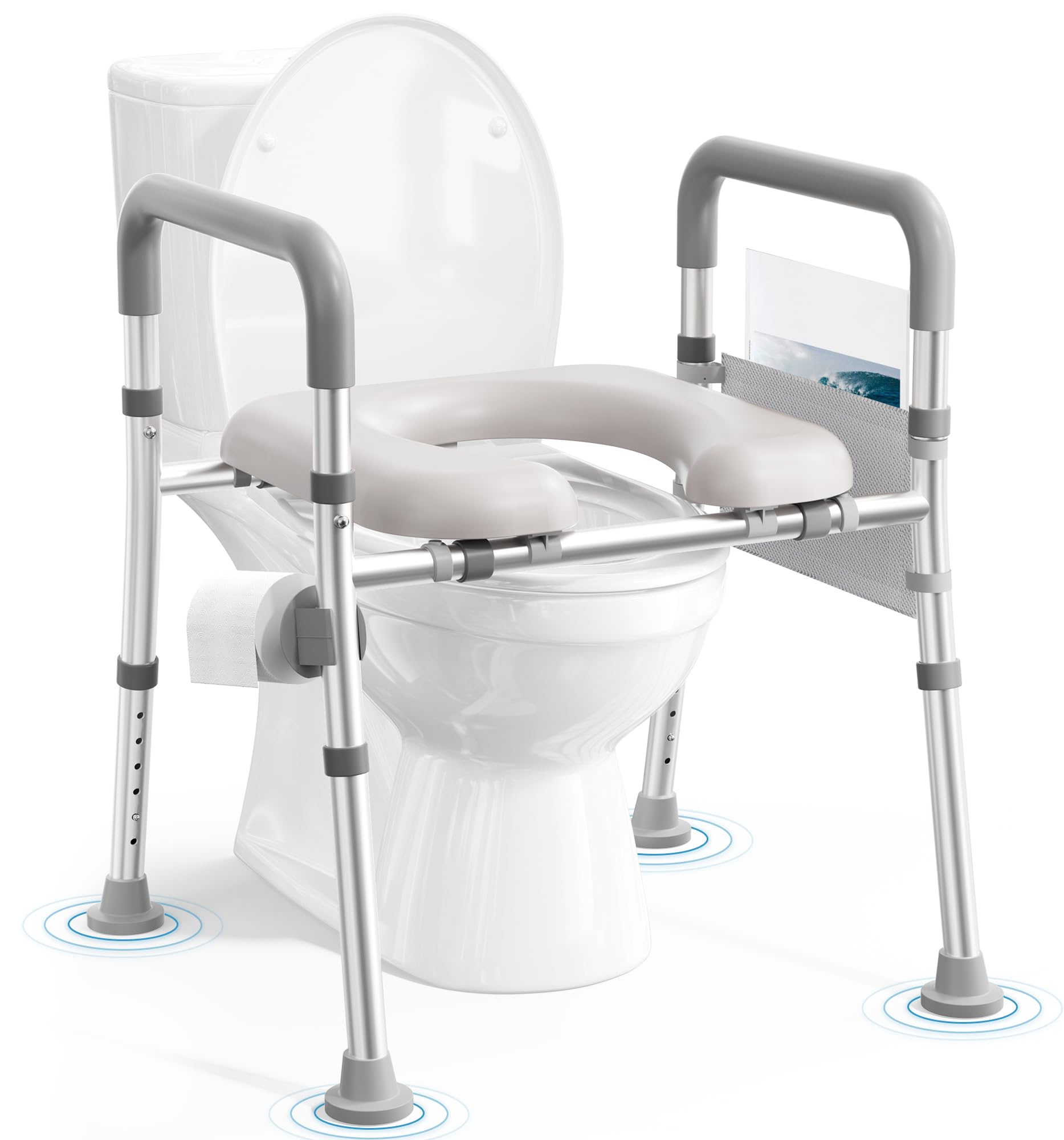
We recommend this if you need a sturdy, adjustable riser that helps someone sit and stand more safely.
Pros
- Very stable feel with a solid aluminum frame.
- Padded seat and armrests add real comfort.
- Height and width adjust to fit many toilets.
Cons
- Padding can arrive damaged for some units.
- Bulkier than simple plastic risers.
- Assembly needs careful attention to instructions.
We used the Soundfuse riser with my parent for several weeks and liked how steady it felt. The aluminum frame gave confidence when they pushed on the handles, and the rubber feet kept it from slipping on tile.
The padded seat made long bathroom trips less painful. The cushion is thick and easy to wipe clean, and it worked as a shower chair when needed. Handles helped my parent stand up without me leaning over to help.
Adjusting height and width was straightforward but required a few tools and patience. One unit had slightly damaged handle padding out of the box, and customer service replaced it after a wait. Overall, the riser made caregiving easier by reducing the strain of lifting and by improving safety.
Bemis Medic-Aid 2″ Lift Raised Seat

We recommend this seat when you need a modest lift that stays secure and cleans up easily.
Pros
- Very stable — stays tight and doesn’t wiggle.
- Easy to clean because of the simple plastic design.
- Modest 2″ lift fits many users recovering from surgery.
Cons
- No cover/lid included.
- Fit can be picky on some toilet rims.
- Plastic feel may seem basic to some users.
We installed this on an elongated toilet and found the 2-inch lift helpful for an older family member who needed a little extra height. The seat felt solid under weight and the STA-TITE fasteners snapped in quickly, so we didn’t worry about it loosening over time.
Cleaning was straightforward. The smooth commercial-grade plastic wipes down without traps for grime. That made daily care faster when we were helping someone with limited mobility.
We noticed one downside: there’s no lid, so it looks more clinical than some home seats. Also, on one toilet model the bumper tabs didn’t lock perfectly, so double-check fit before relying on it for a user with balance issues.
Overall, we’d choose this Bemis riser when we want a sturdy, low-profile lift that installs fast and stays put.
Vive Raised Toilet Seat Riser (with Handles)
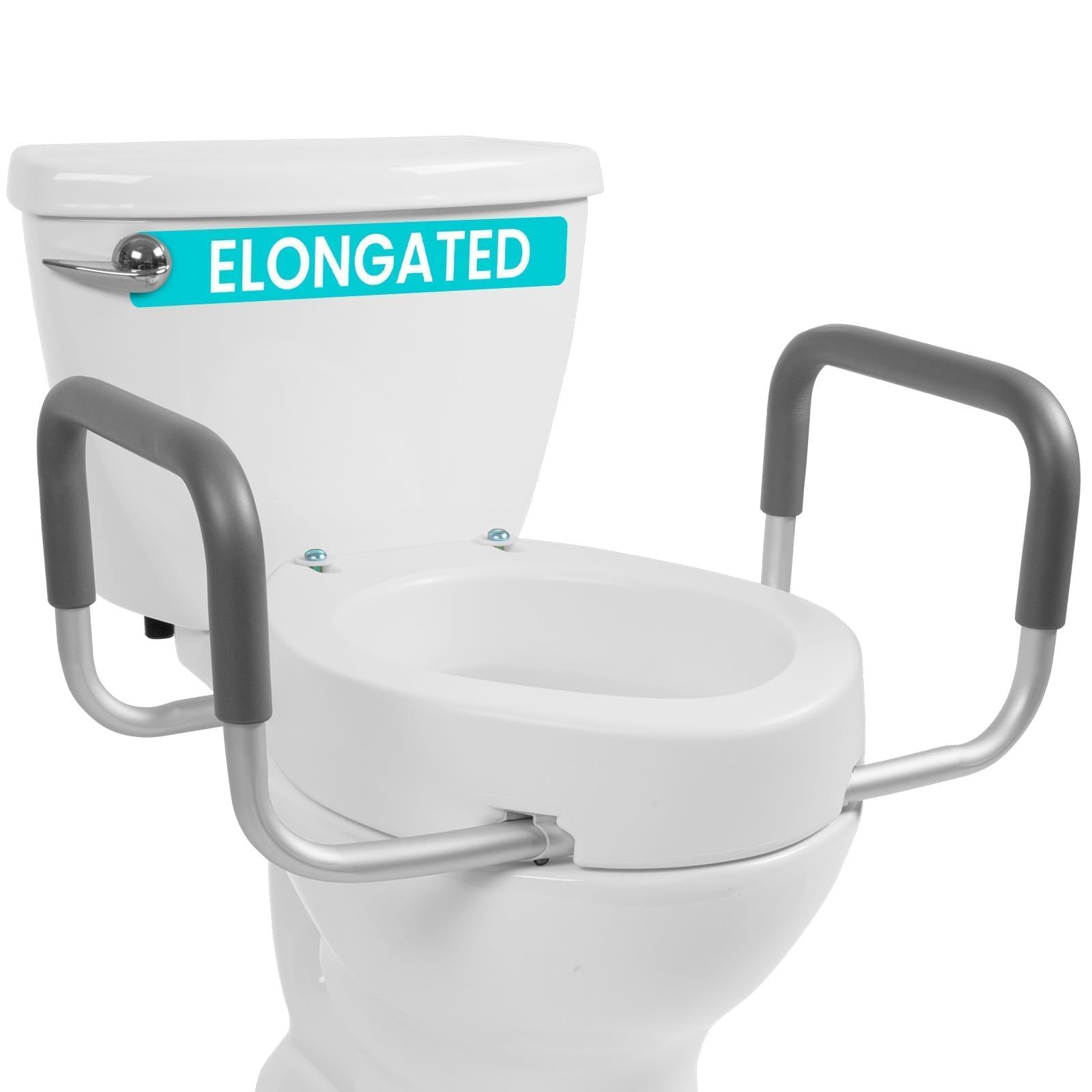
We recommend this if you need a sturdy, easy-to-install riser that helps caregivers assist someone getting on and off the toilet.
Pros
- Adds solid height without changing the existing seat
- Padded, removable handles give extra grip and confidence
- Tool-free fit and easy to wipe down
Cons
- Can be bulky to clean under without removing
- Not a great fit for very narrow toilets
- Some users may find the height too tall
We installed this riser for a family member after hip surgery and used it daily for weeks. The extra 3.5 inches made standing and sitting feel safer, and the foam handles gave a good, non-slip grip when we helped transfer.
The plastic felt rigid and supported up to heavier weights without flexing. We liked that it slips under the current seat so we kept the original lid for guests. Screws held it in place securely with no wobble during use.
Cleaning required us to unbolt it for a deep scrub, which was a minor hassle. The handles pop off easily, and that helped when we needed to sanitize everything quickly between uses.
Overall, we found this riser reliable for short- or long-term care situations where stability and a quick install matter.
Medical King Riser

We recommend this riser for caregivers who need a sturdy, comfortable seat that’s easy to move and secure for most patients.
Pros
- Very stable and supports heavier users.
- Padded seat stays comfortable for longer use.
- Folds and breaks down for storage or travel.
Cons
- Assembly can be tight and slow for some people.
- Aluminum frame makes it a bit heavy to lift.
- Foam arm grips may wear with heavy use.
We used this riser for a week while helping a family member recover from surgery. The seat felt solid and didn’t shift when they stood up. The extra-wide top made transfers easier than a standard raised seat.
Putting it together felt like work the first time. Some connectors were stiff and took patience, but once set up the height and width adjustments worked well and locked securely. We liked the non-slip feet on tile.
Moving it around was simple enough, though the aluminum frame adds weight. The foldable design and included pocket for toilet paper helped when we packed it into a small bathroom or a travel trailer. Overall, it made caregiving tasks smoother and safer.
Buying Guide
We focus on comfort, safety, and ease of use when choosing a raised toilet seat for caregivers. Start by measuring the toilet bowl width and height to ensure a proper fit. A wrong size makes transfers harder and can be unsafe.
We look for secure attachment systems. Clamp-style or lock mechanisms reduce wobble. Check materials; sturdy plastic or padded seats last longer and are easier to clean.
Consider seat height options. Higher seats reduce bending and strain for both caregiver and user. Adjustable heights offer flexibility for changing needs.
Assess safety features like armrests, nonslip surfaces, and weight capacity. Armrests help with steadying transfers. Nonslip finishes cut the risk of slips during movement.
Think about cleaning and maintenance. Removable seats and wipeable surfaces make daily care faster. Avoid heavy or complex parts that take time to disassemble.
Factor in portability and storage if we travel or move rooms often. Some seats are lightweight and stackable. Others are bulkier but more stable for long-term use.
We weigh comfort features like contoured seating and padding against cleaning needs. Soft pads feel nicer but may trap moisture. Hard surfaces clean more easily.
Budget matters, but safety should drive choices. Compare features rather than price alone. Keep a caregiver’s routine and the user’s mobility levels in mind when deciding.
Editor’s Choice
We picked the best raised toilet seat for most caregivers based on comfort, safety, and ease of use. Our top pick balances height, sturdy handles, and quick installation to help both caregiver and user.
We favored models with adjustable height and broad, padded seats. Those features reduce strain during transfers and offer more stability for users with limited mobility.
We also looked at handle design and cleaning. Removable, machine-washable covers and rust-resistant metal give longer life and easier maintenance.
Key specs we liked:
- Height range: 2–6 inches adjustable
- Handles: Wide, non-slip, tool-free attach/detach
- Material: High-density plastic with padded seat cover
- Weight capacity: At least 300 lbs
We tested fit and stability on round and elongated bowls. The best unit locked securely and did not shift during simulated transfers.
We recommend this pick for caregivers who need a reliable, low-maintenance solution. It speeds daily care and reduces the risk of strain while keeping the user comfortable and safe.
Conclusion
We chose raised toilet seats that balance safety, comfort, and ease of use for caregivers and users. Each option we highlighted offers clear benefits, whether stability, simple cleaning, or easy installation.
We recommend matching the seat to the user’s needs and the bathroom layout. Measure the toilet and consider weight capacity, armrests, and whether quick removal is important.
We suggest prioritizing models with non-slip bases and secure fastening. Those features reduce the need for hands-on adjustments and lower injury risk for both caregiver and user.
We encourage testing a seat briefly before committing, if possible. A short trial lets us check comfort and fit, and it helps us avoid returns or wasted expense.
We keep maintenance and durability in mind when choosing. Removable, wipeable surfaces and sturdy materials save time and money over months of care.
We stand by practical choices over fancy extras. Simple, reliable features often make caregiving safer and easier each day.
FAQS
What is a raised toilet seat and who needs one?
We explain that a raised toilet seat lifts the toilet bowl to reduce bending. Caregivers use them for people with knee, hip, or balance problems.
How high should the seat be?
We recommend measuring the user’s knee height while standing. Most raised seats add 2–6 inches; choose what lets the user sit and stand without straining.
Are raised seats safe to use?
We look for seats with non-slip bases and secure locking clamps. Arms or rails add stability and reduce fall risk.
Can we install one ourselves?
Yes. Many models fit standard toilets and snap or clamp on without tools. Portable or over-the-toilet frames can be assembled by two people.
How do we clean and care for them?
Use mild soap and water or disinfectant wipes. Remove the seat periodically to clean under it and check for wear.
Do raised seats fit all toilets?
Not always. Elongated and round bowls differ in shape. We check the product specs and measure the bowl to ensure fit.
Are there alternatives?
We mention commode chairs, toilet frames, and transfer benches as options. Each suits different mobility and home setups.
How much do they cost?
Prices range from budget foam cushions to padded, hinged, or bariatric models. We match features to needs and budget before buying.
