
10 Best Motion Sensor Lights for Small Spaces: Top Compact Picks


Easy Grip Knife Set
Orthopedic Pillow

Gardening Kneeler Bench
Motion sensor lights turn on when they detect movement, making it easier to navigate dark areas without reaching for a switch. They can improve safety and convenience in entryways, closets, hallways, bathrooms, stairwells, and other small spaces where a permanent light may not fit.
For compact areas, we look for lights that provide useful brightness without taking up much room. Battery-powered models offer simple installation, while rechargeable or plug-in options can reduce battery changes. The most important factors are the light’s size, sensor range, brightness, battery life, and how easily you can adjust its timing and mounting position.
We evaluated the features that matter most in small spaces to identify motion sensor lights that are practical, reliable, and easy to use.
Best Motion Sensor Lights for Small Spaces
We selected the best motion sensor lights for small spaces based on brightness, sensor range, battery life, and ease of installation. Our list includes compact options for closets, hallways, cabinets, stairways, and other areas with limited room.
Mlambert Motion Sensor Night Lights
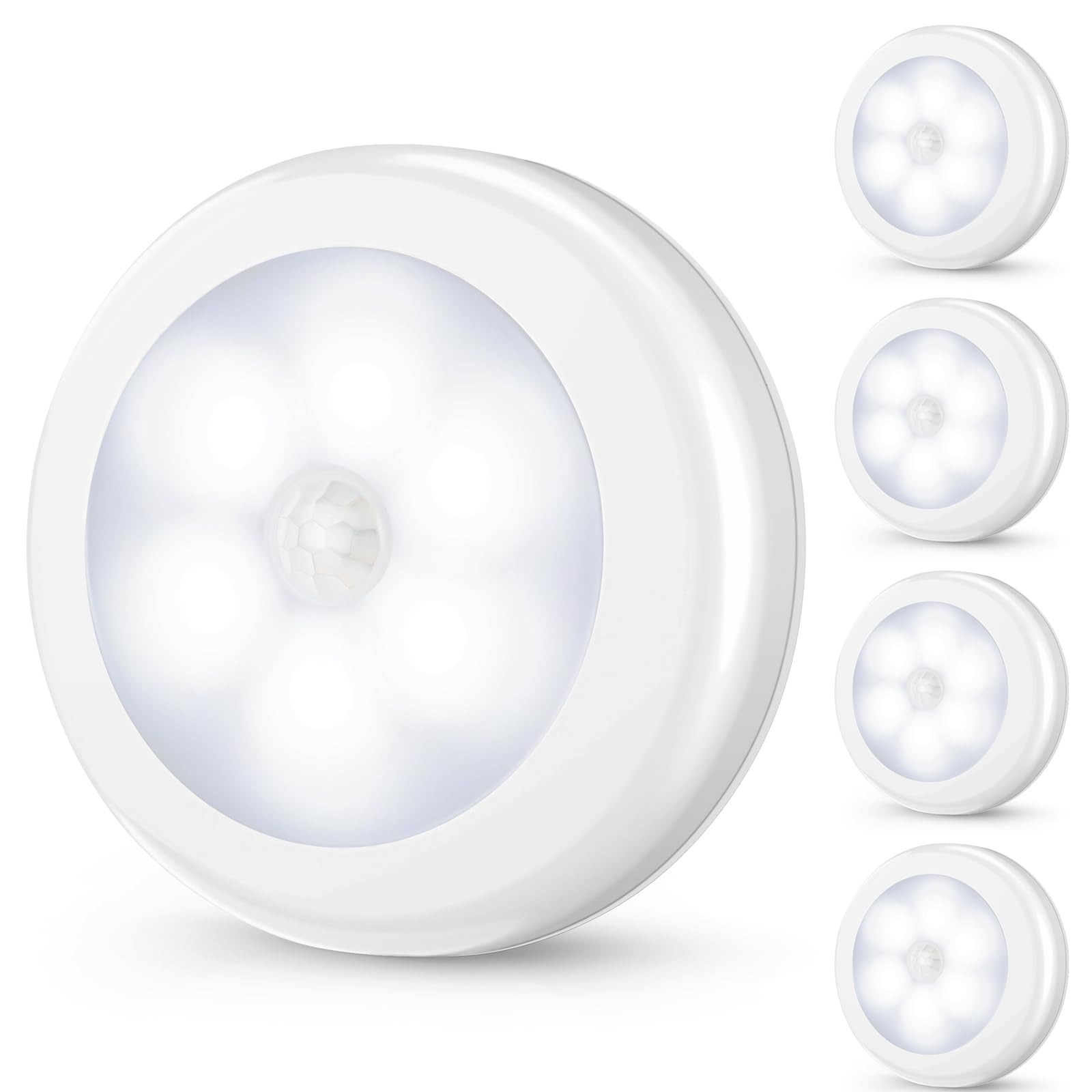
We recommend these lights for small indoor spaces because they install easily, respond quickly, and provide useful nighttime lighting without a power cord.
Pros
- Quick motion response in dark areas
- Magnetic, adhesive, and screw mounting options
- Compact design suits cabinets, stairs, and hallways
Cons
- Requires three AAA batteries per light
- Does not activate in bright rooms
- Adhesive may slip in dusty or warm areas
We found the round, low-profile design easy to place in narrow areas. The built-in magnet worked well on metal surfaces, while the included adhesive and screws gave us more mounting choices for cabinets and walls.
The sensor turned the light on quickly when we walked nearby, then shut it off after about 20 seconds without movement. That timing worked well for short trips through a hallway or bathroom and helped avoid wasting battery power.
The cool-white LEDs gave us enough light to see stairs, cabinet contents, and nearby floors without turning on a larger fixture. The output may feel limited if we want to light an entire room, but it suits small spaces well.
We should note that the light only activates when the area is dark. We also recommend using fresh AAA batteries and avoiding dusty or hot locations, since those conditions can weaken the adhesive mount.
STAR-SPANGLED Motion Sensor Lights

We recommend these lights for small, dark spaces because they install easily, provide useful brightness, and do not need wiring.
Pros
- Motion activation works well in dark areas
- Rotating light bar helps direct the beam
- Removable design makes battery changes easier
Cons
- Requires three AAA batteries per light
- Adhesive may not hold well on every surface
- The lights may feel larger than expected
We found the motion sensor useful in closets, stairways, and under cabinets. The light turns on when we move nearby, but it stays off in brighter areas. That helps avoid wasting batteries during the day.
The cool white LEDs provide enough brightness for finding items or walking safely at night. We also liked the soft cover, which reduces glare. The 90-degree swivel bar lets us aim the light where we need it most.
Installation takes little effort. We can stick each light to a clean surface, then slide it off the mount when the batteries need replacing. The adhesive held well on some surfaces, though buyers may need extra mounting tape for textured walls.
These lights use three AAA batteries each, which adds ongoing cost compared with rechargeable models. They also work indoors only and may not turn on unless the space is dark enough.
Lyridz Lumi Stick-On Night Light
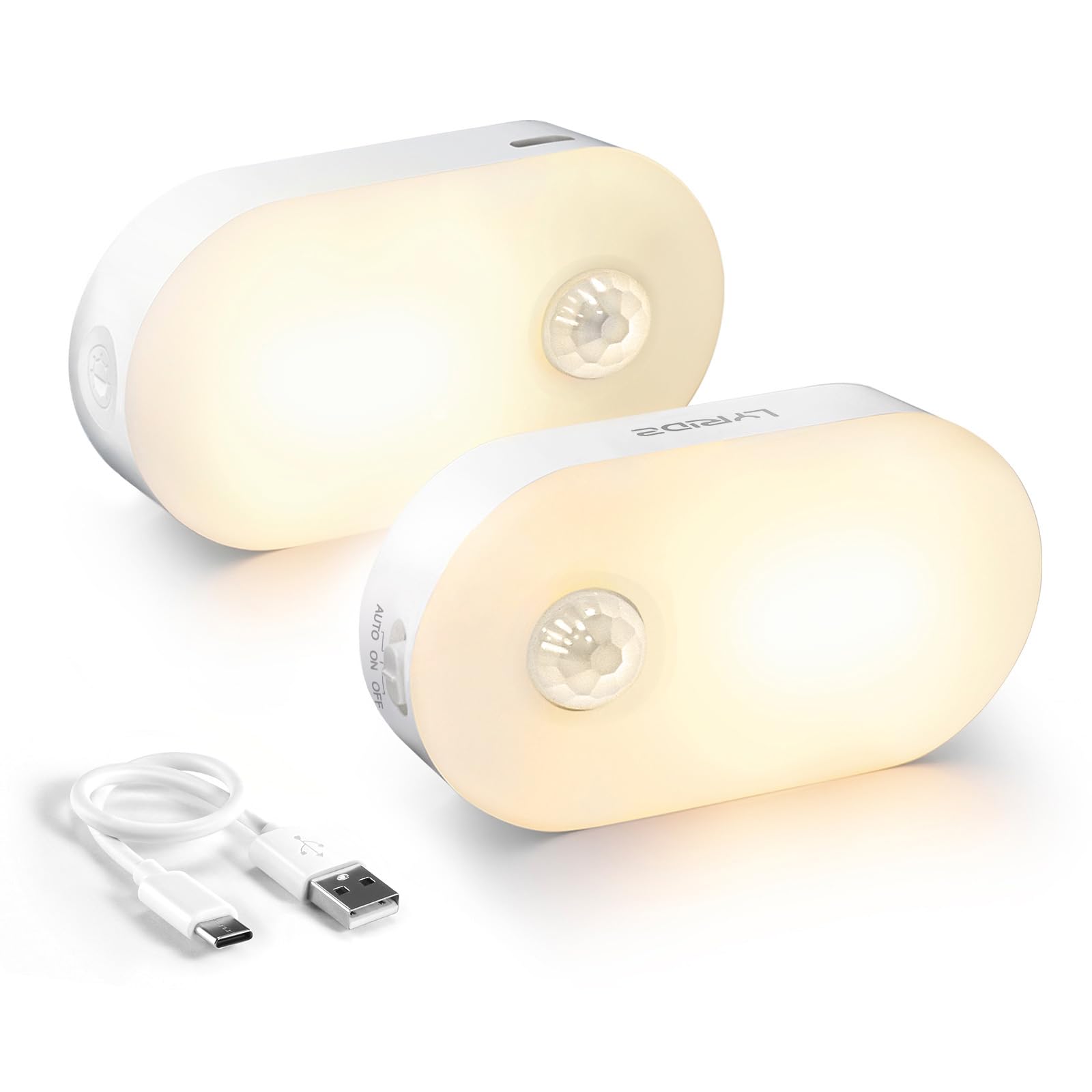
We recommend this compact two-pack for small spaces because it offers flexible mounting, warm adjustable light, and rechargeable power.
Pros
- Small design fits closets, cabinets, hallways, and bathrooms
- Adjustable brightness helps prevent harsh nighttime glare
- Magnetic mounting makes charging and repositioning simple
Cons
- Light output may feel limited for larger areas
- The adhesive mounts may not suit every wall surface
- It is not water resistant
We found the Lyridz light easy to place in tight areas. The built-in magnet holds it on metal, while the included adhesive plates let us mount it on cabinets or walls. We could also remove the light quickly when it needed charging.
Motion activation worked well in dark spaces, turning the light on as we approached. The 20-second shutoff suited short trips to the bathroom or closet and helped avoid wasting power.
The warm light felt comfortable at night, and the dimming control let us choose a soft glow or a brighter setting. Still, the small size limits how much area it can cover, so we would use it for nearby steps, shelves, or counters rather than room lighting.
USB-C charging adds convenience, and the two-pack lets us cover separate locations. We would avoid placing these lights where they may get splashed, since they lack water resistance.
STAR-SPANGLED Motion Sensor Puck Lights

We recommend this six-pack for small indoor areas that need simple, cordless lighting and quick motion response.
Pros
- Bright, clear light for stairs, cabinets, and closets
- Easy to mount and remove for battery changes
- Sensitive motion detection works well in dark spaces
Cons
- Adhesive mounts may damage or loosen during removal
- Plastic housing feels light and less durable
- Some users report early failures or lights that stay on
We found these lights useful in narrow areas where wiring would be difficult. Their small, round design fits well under cabinets, inside closets, along stairs, and near baseboards without taking up much space.
The motion sensor responds quickly when we walk nearby, and the light turns off after a short period without movement. The cool-white glow gives us enough visibility for stairs and dark corners, though it may feel too bright or cool for a bedroom.
Installation takes little effort because each light sticks to a surface with an adhesive pad. We like that the light twists off for battery replacement, but removing the base requires care. The thin plastic and strong adhesive can make repositioning risky.
These lights use three AAA batteries each, which we must purchase separately. Battery life should be reasonable in low-traffic areas, but frequent motion or a faulty sensor may drain them faster. They also work only indoors and are not water resistant.
MCGOR 10-Inch Motion Sensor Lights

We recommend these lights for small indoor spaces because they offer flexible brightness, easy mounting, and wireless charging.
Pros
- Quick motion response in dark areas
- Five brightness levels and a warm light
- Magnetic design makes charging simple
Cons
- USB wall adapter is not included
- Motion detection can feel overly sensitive
- Not suitable for damp areas
We found the slim 10-inch bars easy to place under cabinets, inside closets, and along short hallways. The magnets hold well on metal surfaces, while the included plates let us mount them on other materials without wiring or tools.
The motion mode worked well in dark areas and shut the lights off after movement stopped. We also liked the adjustable brightness. Lower settings worked as gentle nighttime lighting, while higher settings gave us enough light for kitchen tasks.
Removing each light for charging took only a moment. USB-C charging kept the setup tidy, and the battery lasted well during occasional motion use. In always-on mode, however, the charge ran down much faster.
The warm white light felt comfortable in a bedroom or pantry, but these lights are not weather-resistant. We also noticed that the sensor may activate when someone passes nearby, so placement matters in narrow spaces.
Guankai Motion Sensor Stair Lights

We recommend this eight-pack for small indoor areas that need gentle, automatic lighting without wiring.
Pros
- Compact design fits stairs, hallways, closets, and cabinets
- Soft warm light is comfortable at night
- Adhesive mounting makes setup quick
Cons
- Requires three AAA batteries per light
- No manual on/off switch
- Adhesive may not hold well on every surface
We found these lights easy to place in tight spaces. Their small rectangular bodies stay fairly discreet, while the warm light helps us see steps and floors without turning on a bright ceiling fixture.
The motion sensor responds when the area is dark and movement occurs within about 5 to 16 feet. We liked the automatic shutoff because it limits wasted battery power, though nearby movement can sometimes trigger the lights unexpectedly.
Each light uses three AAA batteries, which are not included. Battery life may vary with traffic and sensor activity, so busy hallways could require more frequent replacements than quieter closets.
The included adhesive pads simplify installation, but we would clean and dry the surface first. Since the lights are not water resistant, we would use them indoors and keep them away from damp bathroom areas.
DiDiSky Motion Sensor Lights

We recommend these lights for small closets, cabinets, and hallways because they provide flexible lighting without a power cord.
Pros
- Strong motion detection with a gradual light-up
- Detachable magnetic design makes charging simple
- Adjustable brightness and several lighting modes
Cons
- The sensor may trigger from nearby movement
- White light can feel too cool for some rooms
- Not designed for outdoor or wet areas
We found the 8-inch size easy to place under a cabinet or inside a narrow closet. The magnetic mounts held the lights securely, while the removable design let us take them down quickly for USB-C charging.
The motion sensor responded well in dark spaces and faded the light after about 20 seconds without movement. We liked the day and night settings because they gave us more control over when the sensor activated.
Brightness adjustment helped us use the lights for different tasks. The highest setting worked well for a small counter or closet, while a lower level created softer light at night. The cool white color looked clear but may not suit anyone seeking a warm, relaxed glow.
The rechargeable battery kept the lights useful between charges, especially in low-traffic areas. Busy kitchen spaces may require more frequent charging. We also noticed that the sensor can detect movement from nearby areas, so placement matters in small hallways.
EZVALO Motion Sensor Under-Cabinet Lights
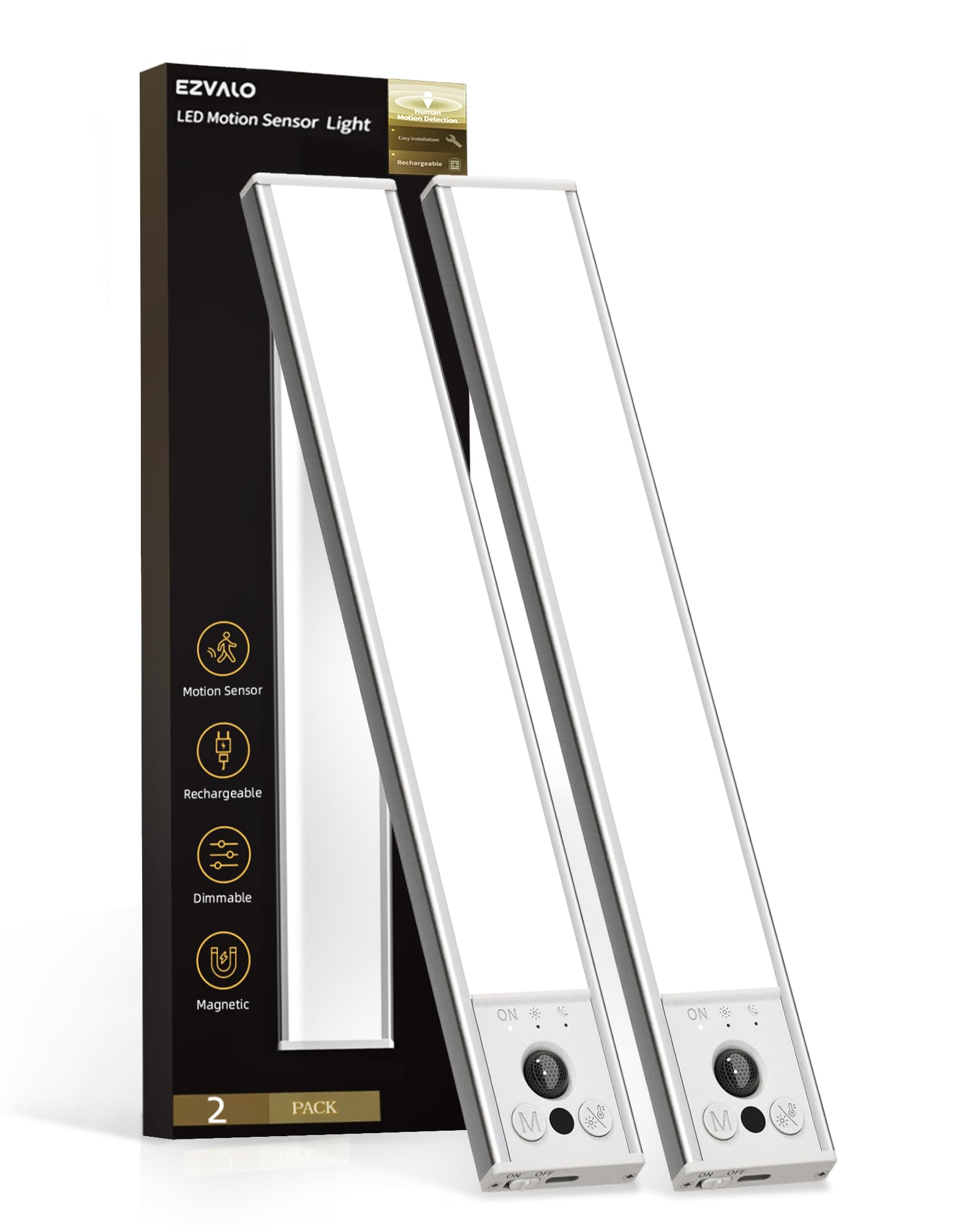
We recommend these lights for small indoor spaces because they offer simple installation, adjustable brightness, and reliable motion sensing.
Pros
- Easy magnetic installation and removal
- Rechargeable battery reduces battery changes
- Motion, night, and always-on modes
Cons
- Cool white light may feel harsh
- Adhesive plates need a clean, flat surface
- Not suitable for damp areas
We found these lights easy to place in a closet, pantry, or hallway. The magnetic design lets us remove each light for charging without taking down the mounting plate.
The motion sensor responded well as we walked past, and the light shut off after about 20 seconds without movement. Night Motion Mode worked well for late trips to a closet or stairway, while Always-On Mode helped when we needed steady light for organizing.
Brightness adjusts with the control button, but the cool white color can look sharp in a bedroom or living area. At full brightness, the light works best as task lighting rather than a replacement for a main fixture.
The rechargeable battery keeps the setup cordless, and USB-C charging makes maintenance simple. We would use these in dry indoor spaces where we want quick, temporary lighting without wiring.
GOODEA Mini Motion Sensor Lights

We recommend these lights for small indoor spaces because they are bright, compact, rechargeable, and easy to move.
Pros
- Simple magnetic installation
- Charging station holds three lights
- Adjustable brightness and automatic motion sensing
Cons
- Cold white light may feel harsh
- Some users report short battery life
- Not suitable for damp areas
We found these lights easy to place inside cabinets, closets, and pantries. Their slim shape fits narrow spaces without taking up useful storage room, while the magnetic mounts let us remove each light quickly for charging.
The motion sensor responds when we open a cabinet or walk into a dark area. We also liked the brightness controls, since a lower setting works well for nighttime use and a brighter setting helps with deeper shelves.
The charging station keeps the set organized and can charge three lights at once. Battery life varies with use, though, and some owners needed to recharge every few days. The cold white color also looks more practical than warm or decorative.
With six lights included, this set works well when we need coverage in several small spaces. We would choose it for dry indoor areas such as closets, cabinets, bookshelves, and stairways.
Gritin Motion Sensor Lights

We recommend these lights for small closets, cabinets, and hallways because they provide flexible lighting without wiring.
Pros
- Easy magnetic installation
- Adjustable color and brightness
- Reliable motion sensing
Cons
- Requires regular USB-C charging
- The 10.2-inch size may not fit very narrow spaces
- Adhesive plates may not suit every surface
We found the magnetic mounting system quick to use. The lights attached securely under a cabinet, and we could remove them easily when they needed charging. For nonmetal surfaces, the included adhesive plates provide another mounting option.
The motion sensor worked well in a closet and pantry. We could choose motion activation only in the dark or at any time, which helped prevent unnecessary lighting during the day. The lights shut off after a short period without movement.
Brightness and color controls gave us useful flexibility. The warm setting felt comfortable in a bedroom, while the cooler setting worked better for finding items in a pantry. The highest setting produced strong light for a small area, though larger spaces may need more than one unit.
The rechargeable battery kept the lights convenient, especially where outlets were unavailable. Frequent use at full brightness will require more charging, but sensor mode should extend the time between charges. With two lights included, we could cover separate areas or place both under one longer cabinet.
Buying Guide
When choosing motion sensor lights for small spaces, we should first measure the area and identify the power source. Compact lights work well in closets, hallways, cabinets, and stair areas where larger fixtures may block access.
We should compare these key features:
| Feature | What to look for |
|---|---|
| Size | A slim body that fits without crowding the space |
| Sensor range | Coverage that matches the room or entry area |
| Detection angle | A wide angle for open areas or a narrower angle for tight spaces |
| Power source | Battery, rechargeable, plug-in, or hardwired options |
| Light output | Enough brightness for safe movement without harsh glare |
| Shutoff timer | Adjustable timing to help reduce battery use |
| Mounting | Adhesive, magnetic, screw, or ceiling installation |
We should check whether the sensor responds to movement from the direction people usually approach. Some models also include a daylight sensor, which keeps the light off when the area already has enough natural light.
For battery-powered lights, we should consider battery life, charging time, and how easily we can replace or recharge the power source. Rechargeable models reduce disposable battery waste, while plug-in or hardwired lights avoid regular charging.
We should also review the installation requirements and the light’s resistance to moisture if we plan to use it near a sink, entrance, or other damp area. A simple mounting system helps us position the light correctly and remove it without damaging the surface.
Editor’s Choice
We choose the Mr. Beams MB360XT as our top pick for small spaces. Its compact design, wireless setup, and motion sensor make it useful for closets, stairways, entryways, and narrow outdoor paths.
The light runs on batteries, so we can install it without wiring. Its adjustable head helps us aim the beam where we need it, while the weather-resistant housing supports use in covered outdoor areas.
| Feature | Details |
|---|---|
| Power | Battery-operated |
| Sensor | Motion activated |
| Best for | Closets, hallways, steps, and entryways |
| Installation | Mounting hardware included |
| Design | Compact and adjustable |
We like this model because it keeps controls and installation simple. The motion sensor turns the light on when it detects movement and shuts it off after a short period, which helps conserve battery power.
For very small indoor spaces, we should consider a plug-in or rechargeable light instead. For renters or areas without nearby outlets, the MB360XT gives us a flexible option without permanent electrical work.
Conclusion
We should choose a motion sensor light based on the space, power source, and mounting options. Compact plug-in models work well in hallways and closets, while battery-powered lights suit areas without nearby outlets.
For reliable daily use, we should look for adjustable motion range, a suitable brightness level, and an automatic shutoff timer. A warm light can feel more comfortable in bedrooms, while a brighter neutral light may work better in entryways or work areas.
Before buying, we should check the light’s size and sensor coverage. The best option will fit the space without blocking doors, shelves, or walkways.
FAQs
Are motion sensor lights useful in small spaces?
Yes. We find them useful in entryways, closets, hallways, stair areas, and small outdoor spaces. They turn on when movement occurs, which helps reduce the need for wall switches.
What detection range should we choose?
For a small room, we usually recommend a range of 10 to 20 feet. A wider range may cause the light to turn on when someone passes nearby.
Should we choose battery-powered or wired lights?
Battery-powered models are easier to install and work well in closets or rental homes. Wired models suit fixed locations where we want steady power and do not want to replace batteries.
How bright should the light be?
We can often use 100 to 300 lumens for closets, hallways, and stair areas. Small outdoor spaces may need more light, especially near steps or doorways.
Can we adjust the sensor settings?
Many models let us adjust sensitivity, brightness, or how long the light stays on. These controls help prevent false activations and conserve battery power.
Where should we place the light?
We should mount it where the sensor has a clear view of the approach area. We should avoid placing it behind doors, near heat sources, or where furniture blocks movement.