
10 Best Motion Sensor Lights for Caregivers: Safer Home Navigation


Long Handle Shoe Horn

Portable Radio with Large Buttons

Automatic Jar Opener
Motion-sensor lights can help caregivers guide someone safely through a home at night without leaving bright lights on all evening. They turn on when they detect movement, making them useful in hallways, bedrooms, bathrooms, stairways, and near entry doors.
For caregivers, the best motion-sensor lights provide dependable detection, enough brightness, simple controls, and safe placement without creating glare or trip hazards. We also look for adjustable shut-off times, long battery life or easy charging, and a design that stays secure on the wall or floor. We tested and compared motion-sensor lights to find the options that offer the best balance of safety, convenience, and value for caregivers.
Best Motion Sensor Lights for Caregivers
We selected the best motion sensor lights for caregivers based on brightness, detection range, ease of installation, and reliability. Our list includes options for hallways, bedrooms, bathrooms, and other areas that need safer nighttime lighting.
L LOHAS LED Motion Sensor Night Light
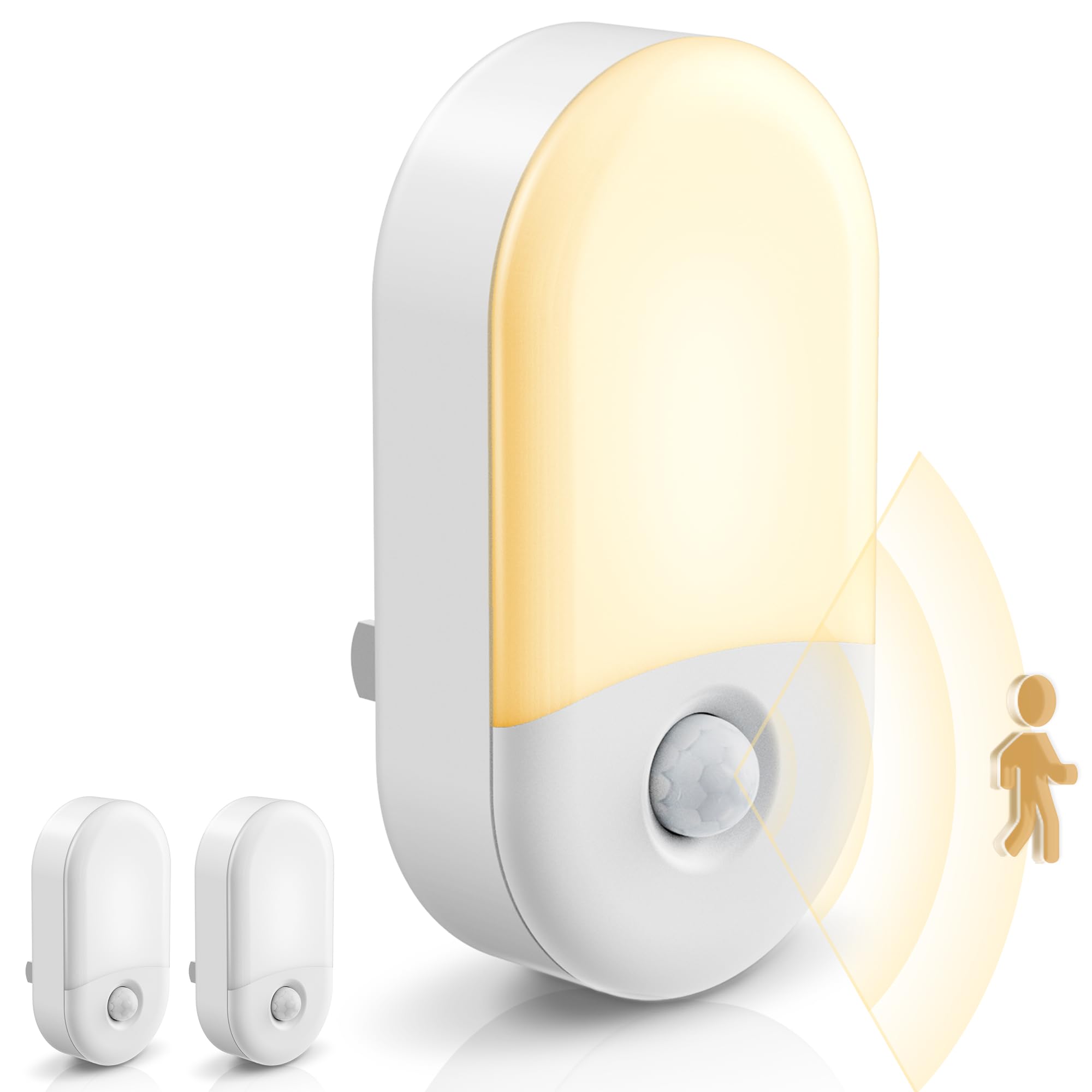
We recommend this two-pack for caregivers who need soft, adjustable light for nighttime trips through hallways, bedrooms, or bathrooms.
Pros
- Brightness adjusts for different nighttime needs
- Motion sensor responds without requiring a switch
- Plug-in design avoids charging and battery changes
Cons
- One reported unit had a sensor problem
- Motion activation may have a short delay
- The lights stay on for about 60 seconds after movement stops
We found the warm white glow bright enough to guide steps without feeling harsh. The lower setting works better near a bedroom, while the brighter setting provides more help in a hallway or stair area.
The automatic mode turns the light on when it detects movement in dark conditions. We also like having separate on and off settings, since caregivers may want steady light during care tasks or no light during the day.
Each light uses an outlet, but its compact shape leaves the other socket available. The plug-in setup also removes the need to remember charging, which helps when supporting someone who needs regular nighttime assistance.
The sensor covers a useful indoor area, though some users may notice a brief delay before activation. One unit may also arrive with a sensor issue, so testing both lights soon after delivery makes sense.
Lyridz Rechargeable Motion Sensor Night Lights
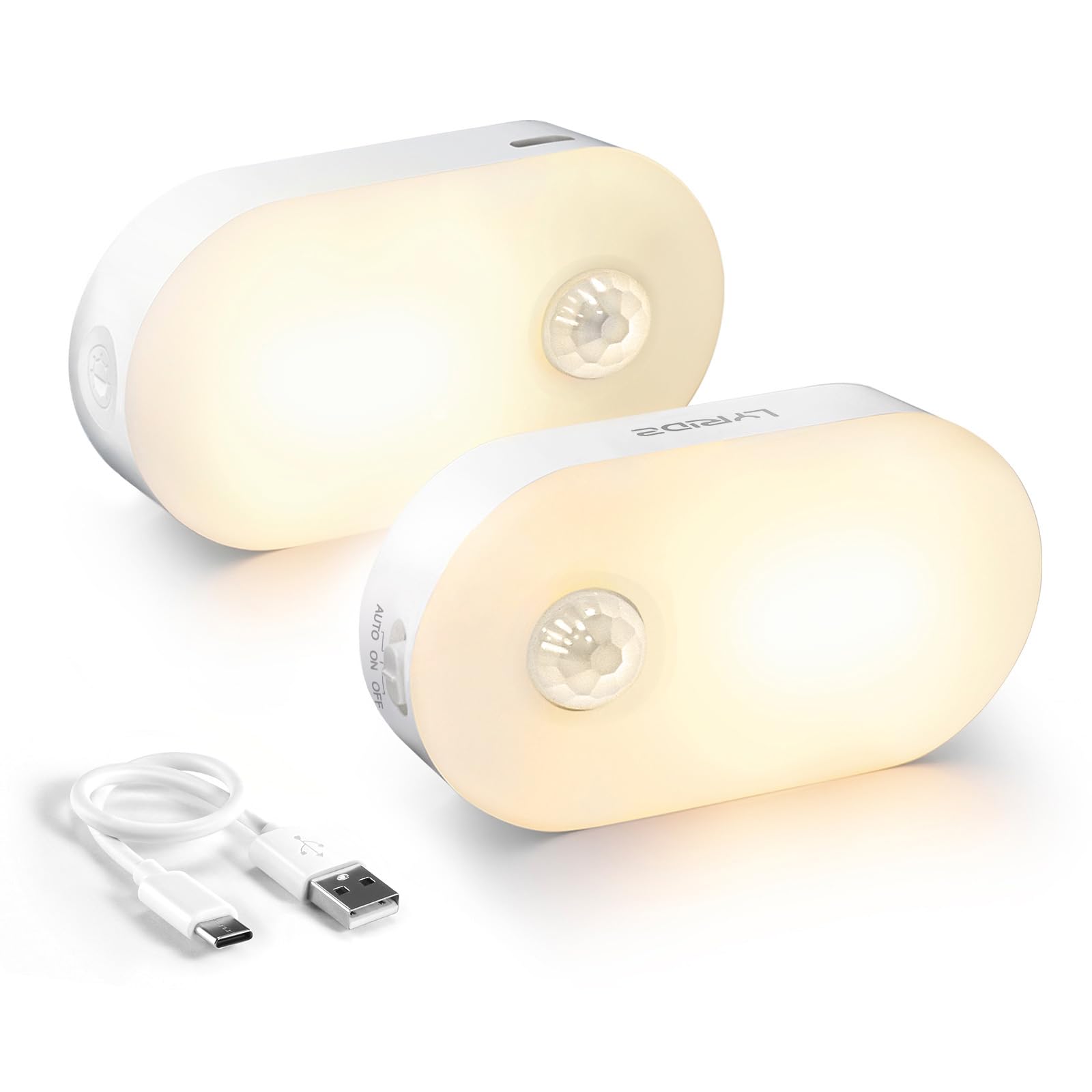
We recommend these compact lights for caregivers who need soft, hands-free lighting in bedrooms, bathrooms, hallways, or near stairs.
Pros
- Rechargeable by USB-C, so we avoid disposable batteries.
- Adjustable warm light helps limit glare at night.
- Magnetic mounting makes charging and repositioning simple.
Cons
- The small size limits overall brightness.
- The lights are not water resistant.
- Adhesive mounting may not suit every wall surface.
We found the motion sensor quick to respond when walking through a dark room. The warm light provided enough visibility for nighttime trips without feeling harsh or overly bright.
The dimming control gave us useful flexibility. We could choose a low setting for a bedroom or increase the brightness for a hallway and bathroom. The automatic shutoff also helped conserve power when no one remained nearby.
Mounting took little effort. The built-in magnet worked on metal surfaces, while the included adhesive plates helped place the lights on walls or cabinets. We also liked being able to remove each light for charging.
These lights work best as path lighting rather than full room lighting. Caregivers should also avoid placing them where moisture may reach them, since they are designed for indoor use and are not water resistant.
AUVON Backlit Motion Night Lights

We recommend this four-pack for caregivers who need soft, adjustable lighting in hallways, bedrooms, bathrooms, or near stairs.
Pros
- Diffuse backlighting feels gentler than a direct beam.
- Motion and dusk-to-dawn modes offer flexible control.
- Dimming lets us choose a low or brighter setting.
Cons
- The light stays on for only about 60 seconds after motion stops.
- The lowest setting may still feel bright for some sleepers.
- These lights are for indoor use only.
We found the warm light comfortable during nighttime checks. The backlit design sends light toward the wall, which reduces glare and helps us see without sharply lighting the room.
The motion sensor responded quickly when we walked past in a dark hallway. We could also use the dusk-to-dawn mode for steady nighttime lighting, which helped when someone needed to move around more often.
Brightness control worked well for different rooms. We used a lower setting near a bedroom and a brighter setting near stairs. The plug-in design leaves the second outlet open, but each light needs access to a wall socket.
The 60-second shutoff saves power, though it may feel short during slower movement or repeated trips. Overall, this set gives caregivers a simple way to add gentle nighttime guidance without batteries or complicated setup.
EZVALO Auto-Sync Stair Lights
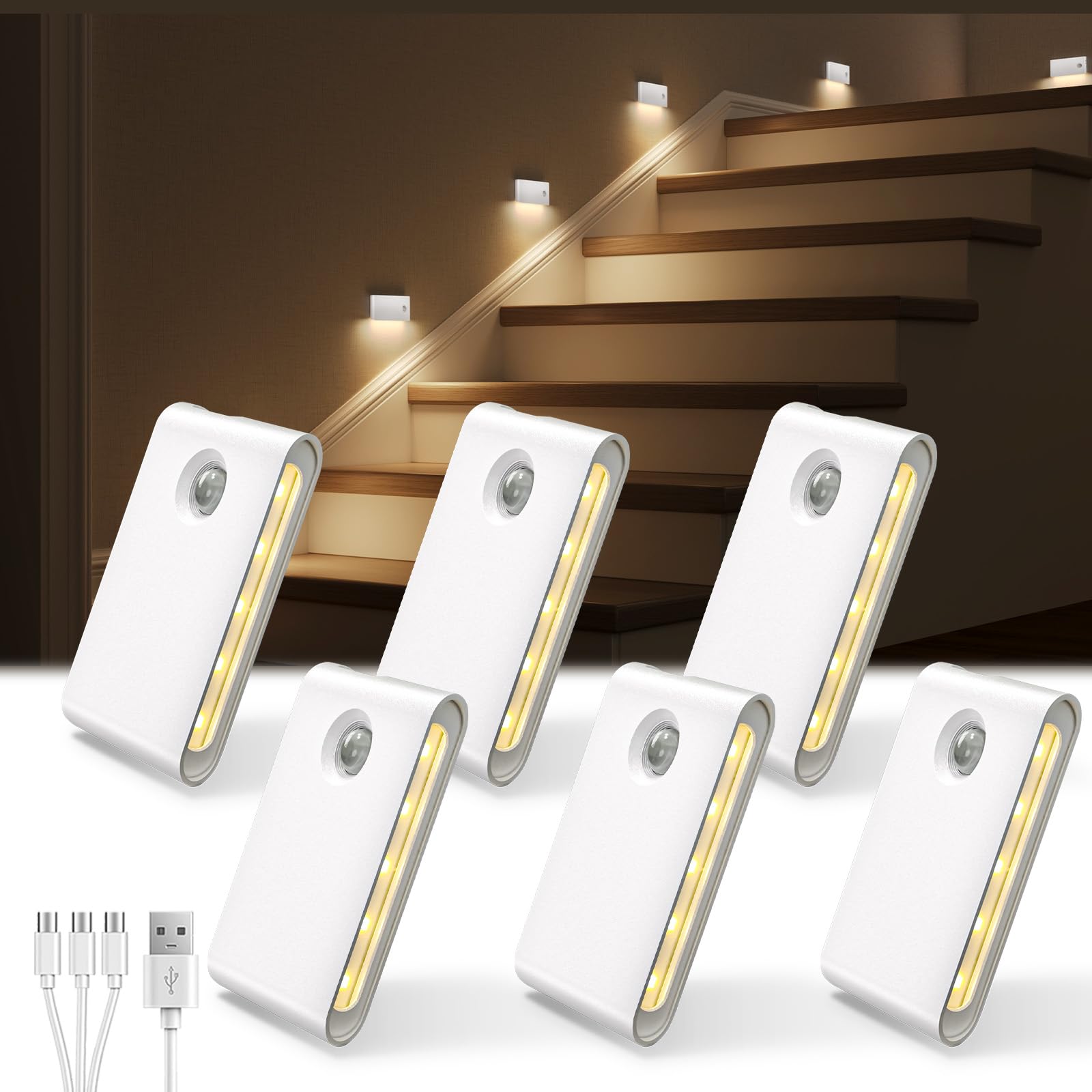
We recommend these lights for caregivers who need soft, automatic lighting across stairs, hallways, or bathroom paths without using wall outlets.
Pros
- All connected lights turn on together
- Warm, adjustable brightness is comfortable at night
- Magnetic mounts make removal and charging simple
Cons
- Motion sensors may trigger from nearby movement
- Indoor use only
- Frequent activity can shorten the time between charges
We found the full-path lighting helpful on stairs because it reduced dark spaces between steps. When one sensor detected movement, the connected lights came on together, giving us a clearer view for nighttime trips.
The 3000K warm light felt easier on the eyes than bright overhead lighting. We could also change the brightness from one light, and the others matched it automatically. This made setup easier in a hallway or bedroom.
Installation took little effort with the magnets and adhesive metal plates. We liked being able to remove the lights for USB-C charging without taking the plates off the wall. The rechargeable batteries lasted well with normal use, though heavy traffic may require more frequent charging.
The sensors worked best when we placed the lights away from areas with constant movement. For caregivers, these lights offer a practical way to guide older adults or children through indoor spaces while keeping the path gently lit.
Guankai Motion Sensor Stair Lights

We recommend these lights for caregivers who need simple, soft lighting along indoor stairs, hallways, or bedrooms without installing wiring.
Pros
- Soft warm light helps reduce glare at night
- Adhesive mounting makes setup quick
- Eight lights provide flexible placement options
Cons
- Batteries are not included and may need frequent replacement
- The motion sensor has no manual on/off switch
- Adhesive mounting may not hold securely on every surface
We found the lights easy to place near dark steps and walkways. Their warm light was bright enough to show the floor without feeling harsh when it turned on in a dark room.
The motion sensor responds when someone approaches in low light and shuts the light off after a short period. This worked well for brief trips, such as helping someone reach the bathroom or move through a hallway.
Each light uses three AAA batteries, so caregivers should keep spares available. Some users report shorter battery life than expected, especially with frequent movement. We also recommend checking the adhesive regularly because a detached light could create a tripping risk.
Torkase Motion Sensor Bulbs
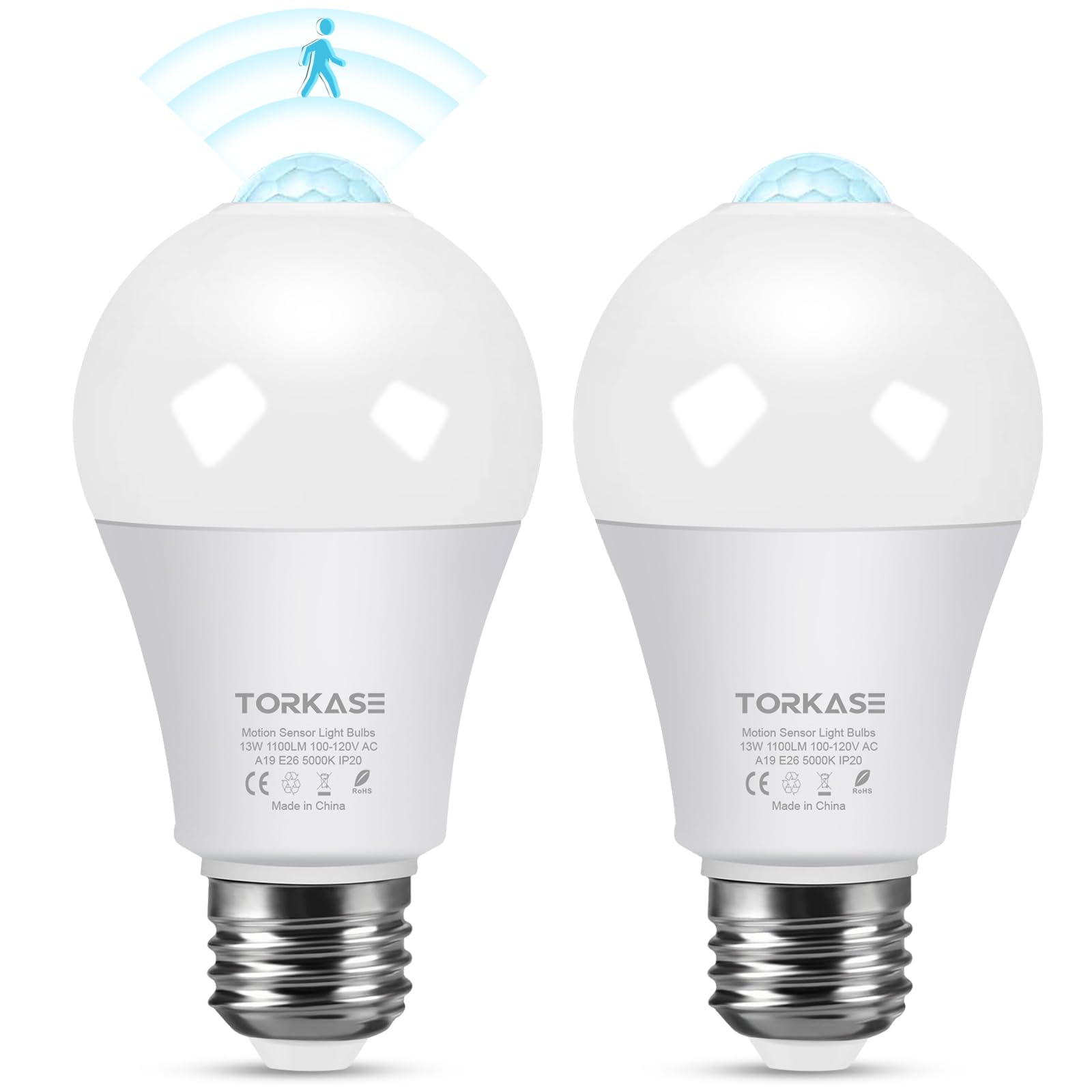
We recommend these bulbs for caregivers who want bright, automatic lighting in open porch, hallway, garage, or storage fixtures.
Pros
- Bright light helps us see steps, doors, and walkways clearly.
- Motion and low-light activation reduce the need to find a switch.
- The two-pack and long warranty offer useful value.
Cons
- The sensor must remain uncovered and face downward.
- The cool white light may feel harsh in bedrooms or living areas.
- The bulbs may not work well in enclosed or recessed fixtures.
We found the 1100-lumen output helpful when checking a dark entryway or walking through a garage at night. The light turns on when movement enters the sensor’s range and shuts off after a short period without activity.
For caregivers, automatic lighting can make routine checks easier, especially near stairs, bathrooms, and exterior doors. We also liked that the bulb stays off during daylight, so we did not need to remember a separate schedule.
Installation was simple with a standard E26 socket, but the fixture placement matters. We would avoid covered, enclosed, or upside-down fixtures because they can block the PIR sensor and prevent reliable detection.
The 5000K light looks bright and blue-white rather than warm. That works well for safety and visibility, but we would choose a softer bulb for spaces where a calmer atmosphere matters. Reviews also show generally positive performance, though some buyers reported failed bulbs, so the warranty provides useful backup.
Mlambert Motion Sensor Night Lights
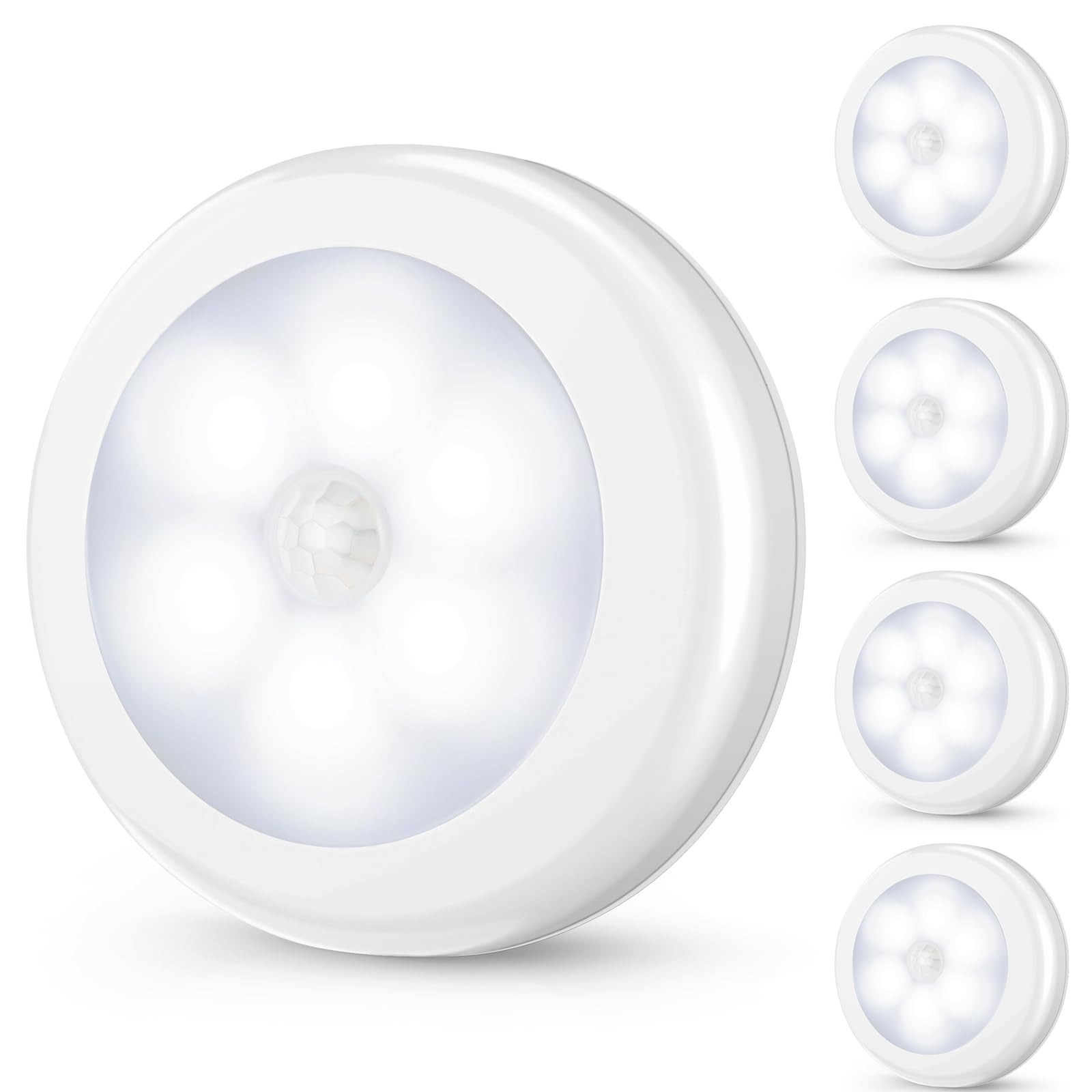
We recommend these lights for caregivers who need simple, cordless lighting near stairs, hallways, bathrooms, or beds.
Pros
- Quick motion response in dark rooms
- Magnetic and adhesive mounting options
- Soft light helps with nighttime movement
Cons
- AAA batteries are not included
- The light stays off in bright rooms
- Adhesive may loosen in heat or dusty areas
We found the motion sensor responsive during nighttime walks through a hallway. The lights came on quickly and provided enough cool-white light to help us see the floor without turning on a larger fixture.
Installation was straightforward. We used the magnets in places where we wanted to remove the lights easily, while the included adhesive and screws offered more secure options. This flexibility can help caregivers place lights at a useful height for someone using a walker or recovering from an injury.
The four-pack works well for covering several problem areas. However, the lights need three AAA batteries each, so we would keep spare batteries available. They also activate only in darkness, which saves power but may require another light source during the day.
The 20-second shutoff helps conserve battery life, though someone moving slowly may need to trigger the sensor again. The adhesive also needs a clean, dry surface and may not hold well in warm or dusty locations.
FLITI Battery Motion Sensor Lights
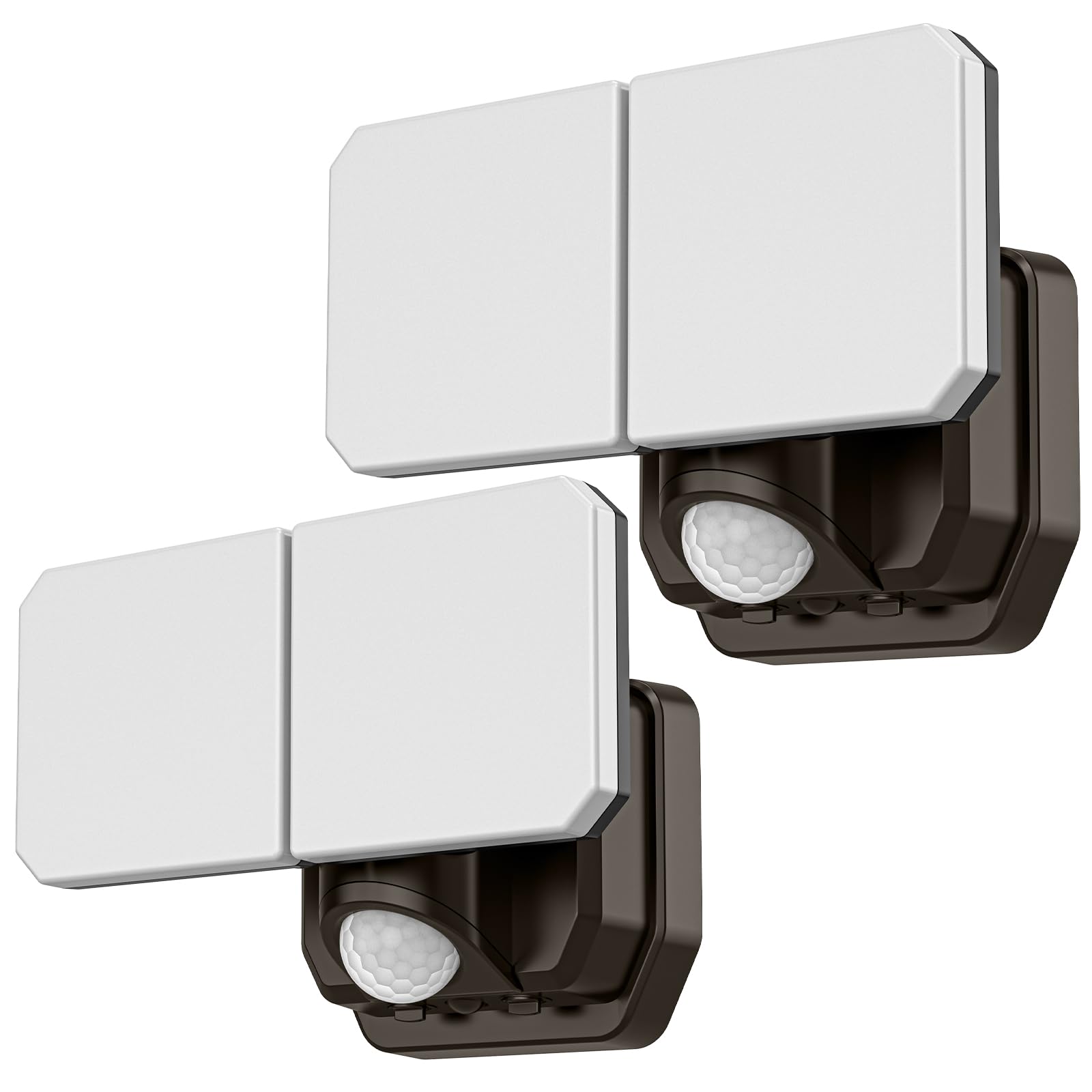
We recommend these lights for caregivers who need quick, bright lighting near steps, walkways, garages, or entrances without installing wiring.
Pros
- Simple wall installation without an outlet
- Adjustable motion range and lighting time
- Bright light for indoor or outdoor use
Cons
- Requires three D-cell batteries per light
- Sensor performance may vary between units
- Cool-white light may feel harsh indoors
We found the installation straightforward because the lights mount without wiring or a nearby power source. The adjustable light heads helped us aim illumination toward a walkway instead of shining it directly into someone’s eyes.
The motion sensor offers several distance and timer settings. This gave us useful control near doors and steps, where caregivers may want the light to stay on long enough to guide someone safely.
The light provides strong illumination for a battery model, and the weather-resistant housing suits outdoor use. We would still check the sensor after installation, since some users report uneven detection between units.
These lights use three D-cell batteries each, so we recommend keeping spares available. Battery life should last several months with regular nighttime use, but frequent activity may require replacements sooner.
STAR-SPANGLED Motion Sensor Lights

We recommend this three-pack for caregivers who need simple, automatic lighting in dark indoor areas such as stairs, closets, and hallways.
Pros
- Motion detection works well in dark spaces
- Swivel bars help direct light where needed
- Removable stick-on design makes battery changes easier
Cons
- Requires three AAA batteries per light
- Adhesive may not hold securely on every surface
- Lights may not activate in bright rooms
We found these lights easy to place near stairs, cabinets, and bedroom paths. They turned on when we walked through dark areas and shut off after a short period without movement, which helps limit battery use.
The light is bright enough for safe movement without feeling harsh. We also liked the rotating bar because we could aim the beam toward the floor, steps, or a cabinet interior.
Each unit slides off its mounting piece for battery replacement, so we did not need to remove the adhesive pad. However, the pads may work better on clean, smooth surfaces than on textured walls.
Caregivers should note that the lights only activate in low light. They also use disposable AAA batteries, so this set may require more upkeep than rechargeable models.
GOODEA Magnetic Motion Sensor Night Light
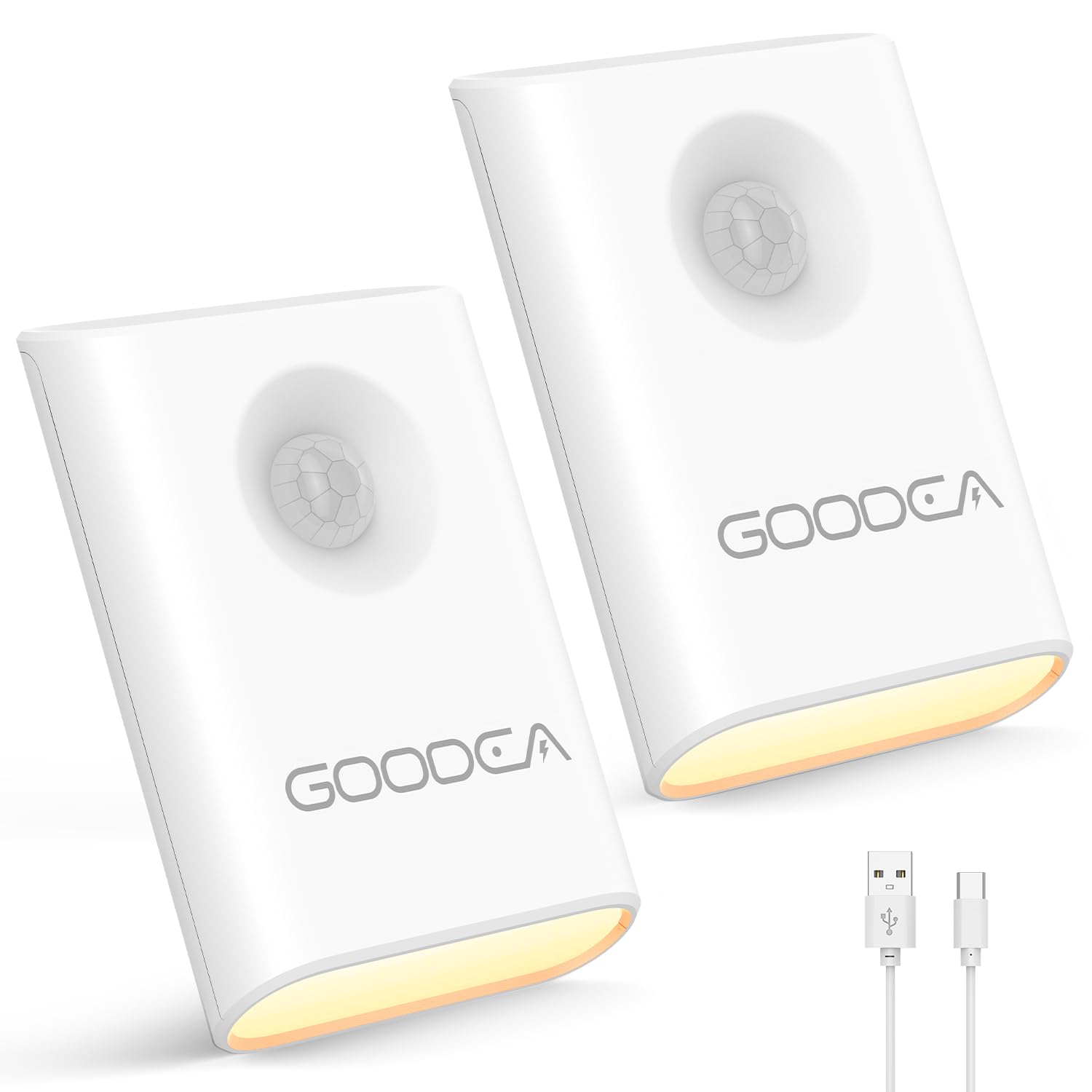
We recommend this two-pack for caregivers who need soft, automatic lighting near bathrooms, hallways, stairs, or beds without adding another outlet.
Pros
- Rechargeable design reduces battery changes
- Soft, dimmable light helps avoid glare
- Magnetic mounting makes placement simple
Cons
- No steady-on lighting mode
- Not water resistant
- The adhesive mount may hold less securely than expected
We found these lights easy to place near common nighttime paths. The motion sensor activates quickly in dark areas, so caregivers can guide someone to the bathroom without turning on a bright overhead light.
The warm light feels comfortable at night, and three brightness levels make it easier to adjust the amount of light. We liked the smaller size for tight spaces, such as beside a bed, inside a cabinet, or along a hallway.
Charging through USB-C is convenient, and the motion-only setting helps conserve power. The lights turn off after movement stops, which limits glare and avoids leaving a light on all night.
The built-in magnet works well on metal surfaces. For walls or wood, we used the included adhesive plates, but placement requires care because the mount may not support the light as securely as a direct magnetic connection.
These lights work best indoors. We would avoid placing them in bathrooms where they could get splashed, and caregivers who need continuous lighting should choose a model with an always-on setting.
Buying Guide
We should start by identifying where the light will go and what the caregiver needs to see. For hallways, stairs, bathrooms, and entryways, we should check the sensor’s detection range, viewing angle, and light coverage.
| Feature | What to look for |
|---|---|
| Motion range | Coverage that fits the room or walkway |
| Activation time | Adjustable shutoff timing to prevent frequent resets |
| Brightness | Enough light for safe movement without glare |
| Power source | Batteries, rechargeable power, or wired installation |
| Installation | Tool-free mounting or secure hardware, as needed |
| Night settings | A light sensor that prevents daytime activation |
We should choose a brightness level that supports safe walking without disturbing sleep. Adjustable brightness and color temperature can help us create softer lighting in bedrooms while using brighter light near steps or entrances.
Power needs also matter. Battery-powered models offer flexible placement but require regular checks. Rechargeable models reduce battery waste, while wired models may provide steady power but require a suitable outlet or installation point.
We should look for simple controls, clear status indicators, and a sensor that responds quickly. If the light will support someone with limited mobility, secure mounting and reliable activation should take priority over extra features.
For outdoor use, we should check the product’s weather-resistance rating and temperature limits. Indoor models may not withstand rain, moisture, or temperature changes.
Editor’s Choice
We chose the Eufy Lumi Plug-In Night Light for caregivers who need simple, low-level lighting near bedrooms, hallways, or bathrooms. Its motion sensor activates the light when someone passes by, helping reduce the need to search for a switch at night.
The compact design plugs into a standard outlet and leaves limited space for other plugs. Its soft light works well for nighttime movement without creating the glare of a bright overhead fixture.
| Feature | Why it matters |
|---|---|
| Motion activation | Turns on when movement is detected |
| Plug-in design | Avoids batteries and installation work |
| Soft illumination | Supports safer nighttime walking |
| Compact size | Fits well in bedrooms and hallways |
We recommend placing one near the floor along common walking paths. Test the sensor from different angles, and keep furniture or curtains from blocking its view.
This light works best for indoor spaces that already have an outlet nearby. For stairs, outdoor paths, or areas that need stronger lighting, we would choose a brighter model with adjustable settings and weather protection.
Conclusion
We should choose motion sensor lights based on the caregiver’s routine, the person’s mobility, and the home’s layout. A reliable light should activate quickly, provide enough brightness for safe movement, and avoid glare that could cause confusion.
For bedrooms, hallways, and bathrooms, we can prioritize adjustable sensors, soft lighting, and simple controls. Battery-powered models suit areas without nearby outlets, while plug-in or hardwired lights can reduce maintenance.
Before buying, we should check:
- Detection range: Covers the path or room entrance.
- Activation speed: Turns on as soon as movement begins.
- Brightness control: Supports clear visibility without harsh light.
- Power needs: Matches our ability to replace batteries or access outlets.
- Installation: Fits securely and does not create trip hazards.
- Manual control: Allows us to keep the light on when needed.
We should test each light at night and adjust its position, timer, and sensitivity. Proper placement matters as much as the product’s features, especially near stairs, beds, and bathroom entrances.
FAQS
Are motion sensor lights useful for caregivers?
Yes. We can use them to light hallways, stairs, bathrooms, and entryways when someone gets up at night. They reduce the need to search for switches in the dark.
Where should we place them?
We should place lights where movement is easy to detect, such as near bedroom doors, stair landings, and bathroom entrances. We should avoid pointing sensors at busy areas if frequent activation could disturb sleep.
Are plug-in or battery lights better?
Plug-in models work well in fixed locations with nearby outlets. Battery-powered lights offer more placement options, but we must check battery levels regularly.
What features should we look for?
- Adjustable brightness and sensor range
- A short or adjustable shutoff timer
- Warm light for nighttime use
- Easy installation and cleaning
- Manual on/off controls
- A reliable battery indicator, if needed
Can motion sensor lights replace night-lights?
They can provide light only when movement occurs, which may help preserve darkness during sleep. For people who need constant guidance, we may prefer a low-brightness night-light or a model with both steady and motion-activated settings.
What safety concerns should we consider?
We should secure cords, avoid blocking walkways, and test the light from the user’s normal walking path. We should also choose weather-resistant models for outdoor areas and keep batteries away from children and pets.