
10 Best Motion Sensor Lights for Apartments: Top Picks for Every Room


LED Magnifying Glass
Robot Vacuum Cleaner

Mattress Topper Memory Foam
Motion sensor lights turn on when they detect movement, providing light without the need to find a switch. They can help brighten entryways, closets, kitchens, bathrooms, and other areas while using less power than lights that stay on all the time.
For apartments, compact plug-in, battery-powered, and rechargeable models often work best. The most important features to consider are reliable motion detection, adjustable brightness, easy installation, and a light that fits your space without disturbing neighbors or roommates. Battery life, sensor range, and the ability to disable the sensor also matter, especially in shared or rented spaces.
We evaluated motion sensor lights for apartments to find the models that provide useful light, respond consistently, and install with minimal effort.
Best Motion Sensor Lights for Apartments
We reviewed motion sensor lights that suit apartment entryways, closets, bathrooms, and other small spaces. Our list focuses on easy installation, reliable motion detection, useful brightness, and battery life.
MCGOR Motion Sensor Light Bars

We recommend these lights for apartments because they add warm, adjustable light without wiring or permanent installation.
Pros
- Quick magnetic installation
- Adjustable brightness for different needs
- USB-C charging avoids disposable batteries
Cons
- Motion sensing works only in dark or dim areas
- The sensor may react to nearby movement
- The USB wall adapter is not included
We placed the light bars under cabinets and found the setup simple. The adhesive metal plates gave us more mounting options, while the magnets made it easy to remove each bar for charging. This works well in rental kitchens, closets, hallways, and stair areas.
The warm light felt comfortable at night, and the brightness controls helped us use a softer setting near bedrooms. At higher brightness, the bars provided enough light for basic counter tasks. The motion sensor responded quickly when we walked into a dark space and switched off after a short period without movement.
Battery life depends on how often the lights activate. We liked the always-on setting for longer tasks, but it uses power much faster. Since the lights are not water resistant, we would keep them indoors and away from sinks or damp areas.
L LOHAS LED Motion Sensor Night Light
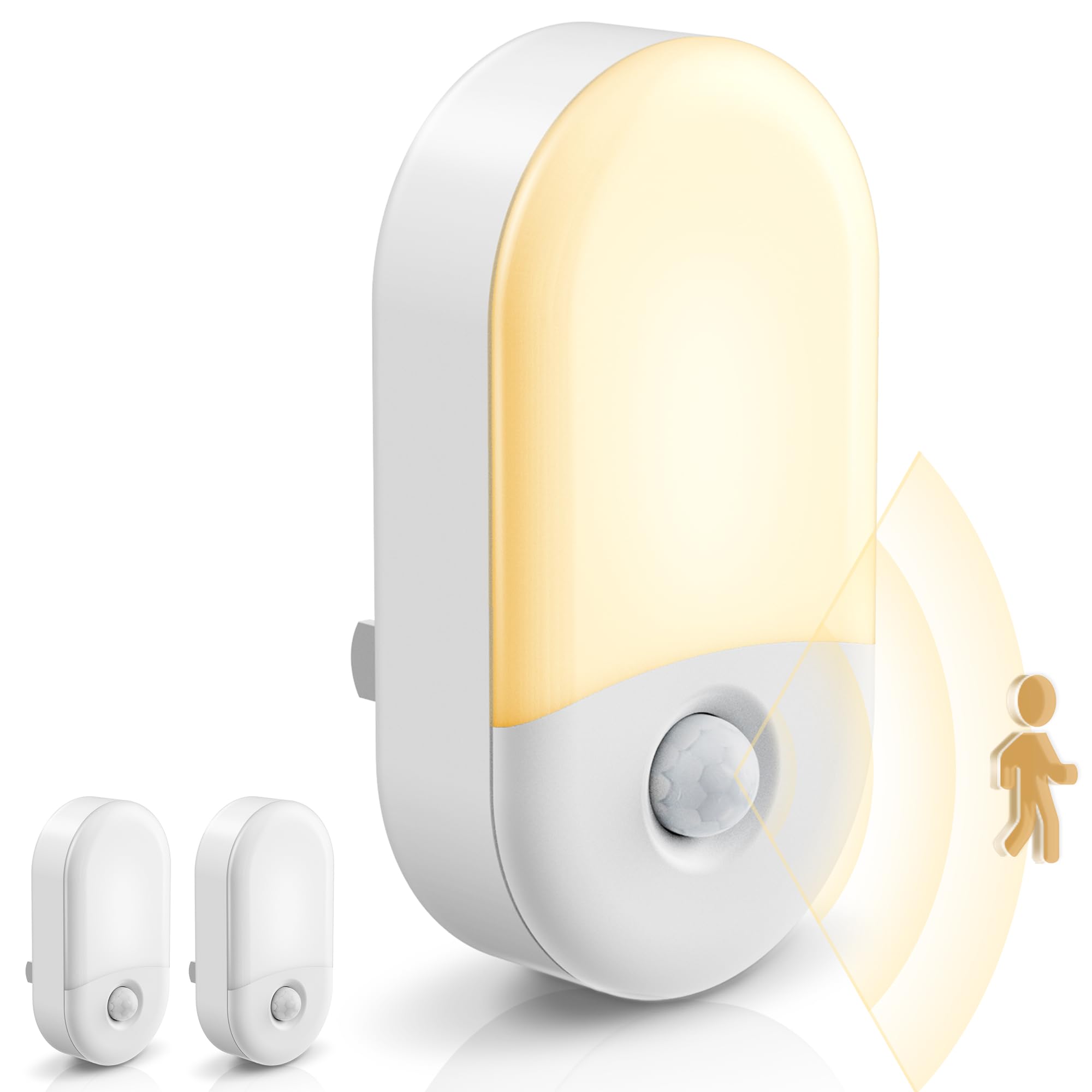
We recommend this two-pack for apartment hallways, bathrooms, and bedrooms because it provides adjustable soft light without taking up much outlet space.
Pros
- Adjustable brightness with warm, glare-free light
- Reliable motion detection for nighttime movement
- Plug-in design needs no batteries or charging
Cons
- Indoor use only
- One reported unit had sensor problems
- May block access to some wall outlets
We found the lower setting useful for late-night trips when we wanted enough light to see without fully lighting the room. The brighter setting worked better in hallways and near stairs, where shadows were more noticeable.
The sensor responded to movement from several feet away and turned the light off after about a minute without activity. It also stayed active when we continued walking, which helped prevent dark spots along a hallway.
Three modes add flexibility: automatic, always on, and off. We liked the automatic mode for apartments because it saves power and avoids leaving a light on all night. The small plastic body fit neatly into a standard outlet, though it can occupy the upper socket.
Most customer feedback praises the brightness, soft color, and easy setup. A few reports mention sensor failures, so we would test both lights soon after delivery. Overall, this pair offers a simple way to improve nighttime visibility without batteries or complicated installation.
Mlambert Motion Sensor Night Lights
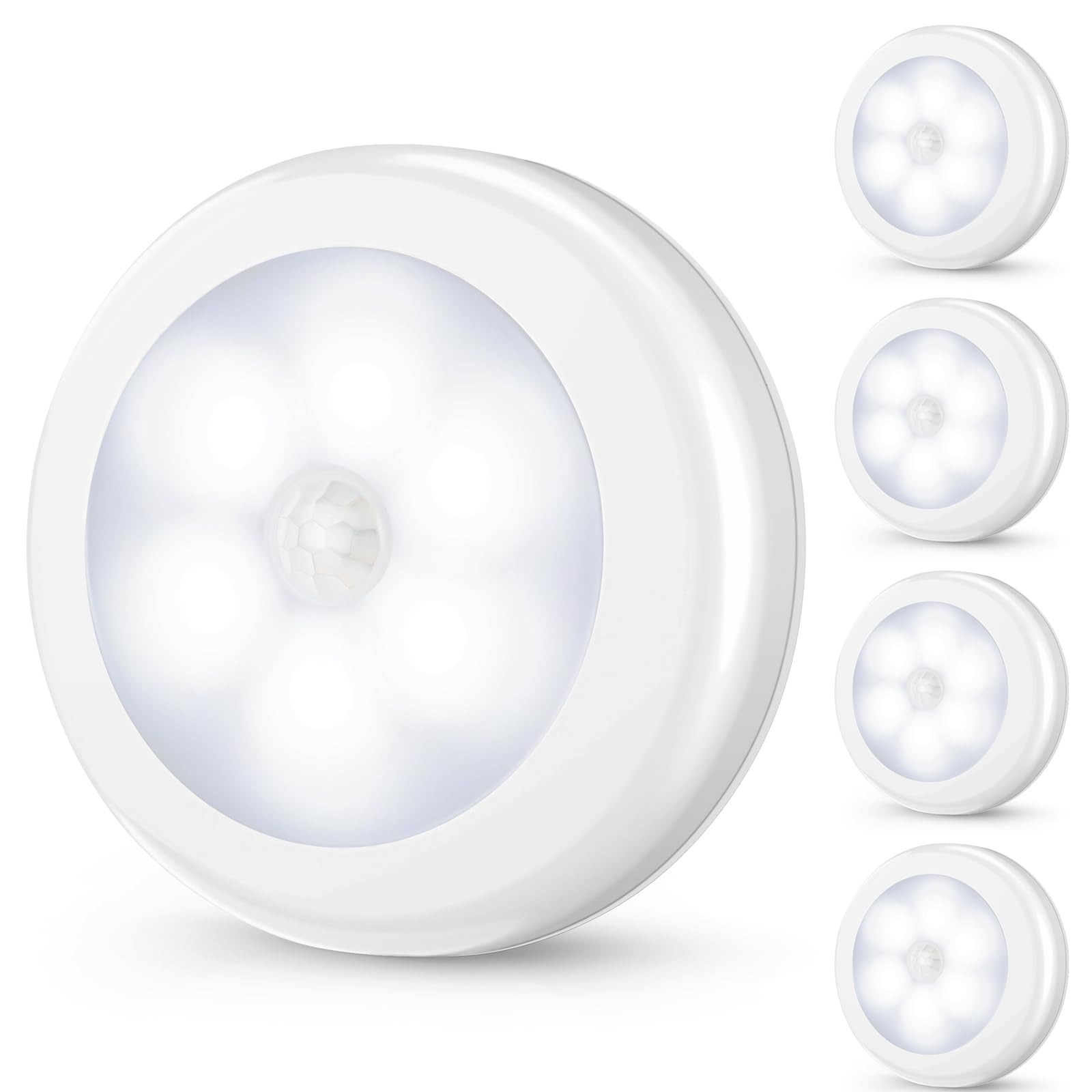
We recommend this four-pack for apartment hallways, closets, stairs, and cabinets because it installs easily and provides soft, automatic lighting without a power cord.
Pros
- Quick motion response in dark areas
- Flexible magnetic or adhesive mounting
- Compact design works well in small spaces
Cons
- AAA batteries are not included
- The lights do not activate in bright rooms
- Adhesive may loosen in dusty or warm locations
We found the lights easy to place near a hallway, bathroom, and closet. The magnetic backs made it simple to remove them for battery changes, while the included adhesive and screws offered more permanent mounting options.
The motion sensor responded quickly when we walked past. Each light shut off after a short period without movement, which helps limit battery use. The cool-white light gave us enough visibility to move safely without turning on a bright overhead fixture.
Brightness works best for close-range areas rather than full-room lighting. We would use these as path lights or cabinet lights, not as a replacement for a ceiling lamp.
Before mounting, we would clean and dry the surface and avoid high-heat or dusty spots. Since the lights only work when the sensor detects darkness, they may not turn on during the day or in rooms with strong ambient light.
Lyridz Stick-On Night Light
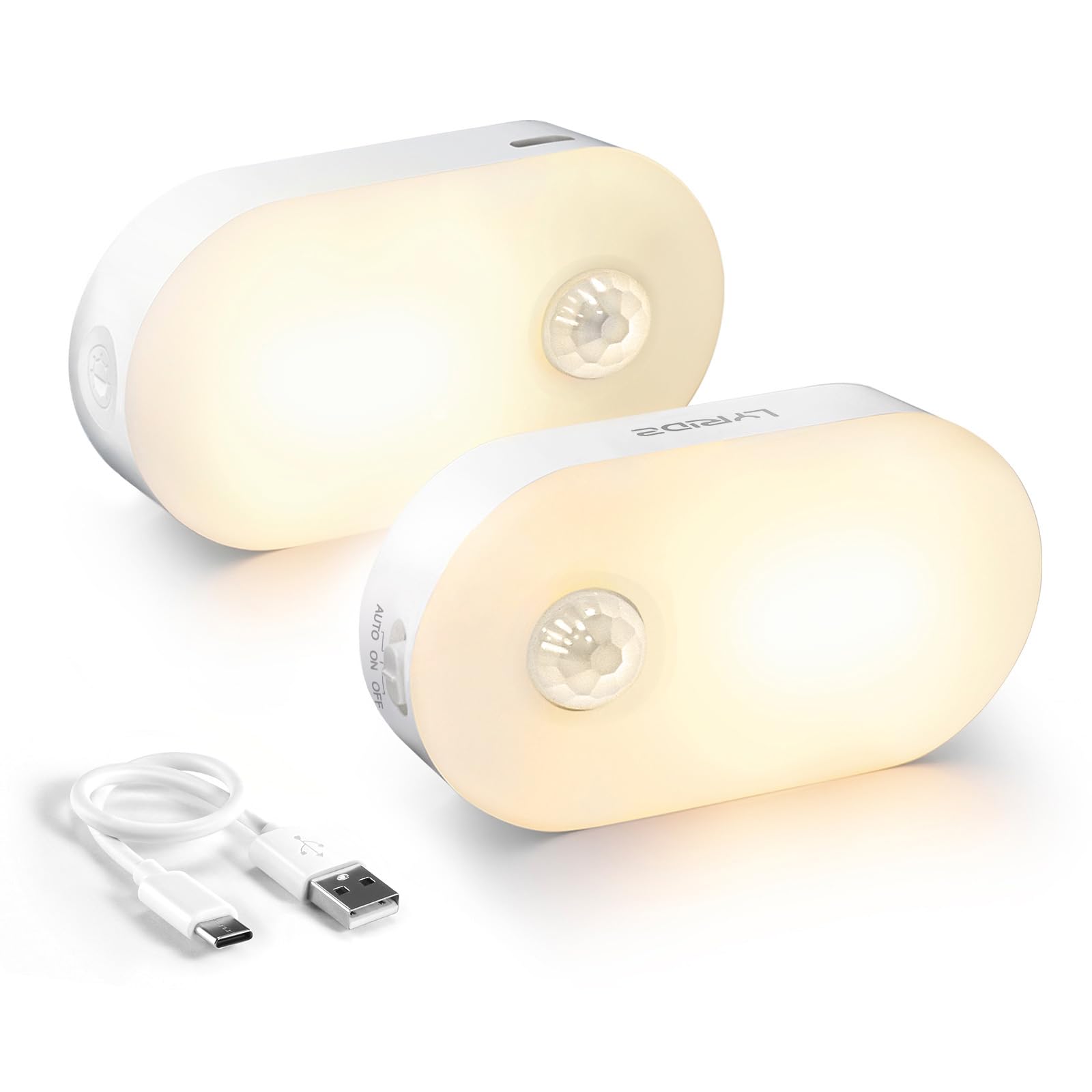
We recommend this compact two-pack for apartment hallways, bathrooms, closets, and stairs because it offers soft, adjustable light without disposable batteries.
Pros
- USB-C charging and long sensor-mode runtime
- Quick motion activation with adjustable brightness
- Magnetic, peel-and-stick installation
Cons
- Not water-resistant for damp areas
- Light may feel too dim for larger rooms
- Adhesive placement is less flexible after mounting
We found the warm light comfortable for nighttime trips without creating a harsh glare. The motion sensor responded quickly in dark spaces and switched the light off after about 20 seconds without movement.
The compact design works well in apartments where wall space is limited. We could attach it to a metal surface or use the included adhesive metal patch, then remove the light for charging.
Brightness controls give us useful flexibility. A low setting works near a bedroom, while a higher setting helps in a closet or hallway. Still, the light serves best as a guide light rather than a main room light.
USB-C charging makes upkeep simple, and the two-light set lets us cover separate areas. We would avoid placing it where water may splash because the unit is not waterproof.
Guankai Motion Sensor Stair Lights

We recommend these lights for apartments that need soft, temporary lighting in hallways, closets, or near steps without wiring.
Pros
- Warm light feels comfortable at night
- Adhesive mounting installs quickly
- Eight small lights cover several areas
Cons
- Requires three AAA batteries per light
- No physical on/off switch
- Adhesive may not hold on every surface
We found the Guankai lights easy to place in dark apartment spaces. The motion sensor responded well when we walked through a hallway, and the warm light helped us see the floor without feeling harsh.
The compact design works well under cabinets, beside a bed, or near a bathroom. Since each light uses adhesive pads, we avoided drilling holes or running wires. Renters should still check the wall surface before mounting.
The sensor activates in darkness and turns the light off after a short period. We liked this for nighttime trips, but the lack of a manual switch limits control. Battery use may also become expensive if the lights activate often, and the adhesive needs a secure, clean surface to prevent falls or loose fixtures.
STAR-SPANGLED Motion Sensor Lights

We recommend these lights for apartments because they add bright, automatic lighting to closets, stairs, kitchens, and entryways without wiring.
Pros
- Bright, soft light with an adjustable 90-degree bar
- Easy to mount and remove for battery changes
- Motion sensor works well in dark areas
Cons
- Requires three AAA batteries per light
- Adhesive may not hold well on every surface
- The lights do not activate in bright rooms
We found the light strong enough for a dark closet and useful along apartment stairs. The motion sensor responded when we walked nearby, but it only activated in low light. That helps save batteries but limits daytime use.
The rotating light bar let us aim the beam where we needed it. Its soft output reduced glare, while the wide design covered more space than a small night-light.
Installation took only a few minutes with the included adhesive mounts. We liked being able to slide each light off its base instead of removing the mount during battery changes. Still, we would clean and dry the surface first, since the adhesive may struggle on dusty or uneven walls.
Each light uses three AAA batteries, which keeps installation simple but adds ongoing cost. For renters who want temporary lighting without drilling or wiring, this three-pack offers a practical solution.
Torkase Motion Sensor Light Bulbs
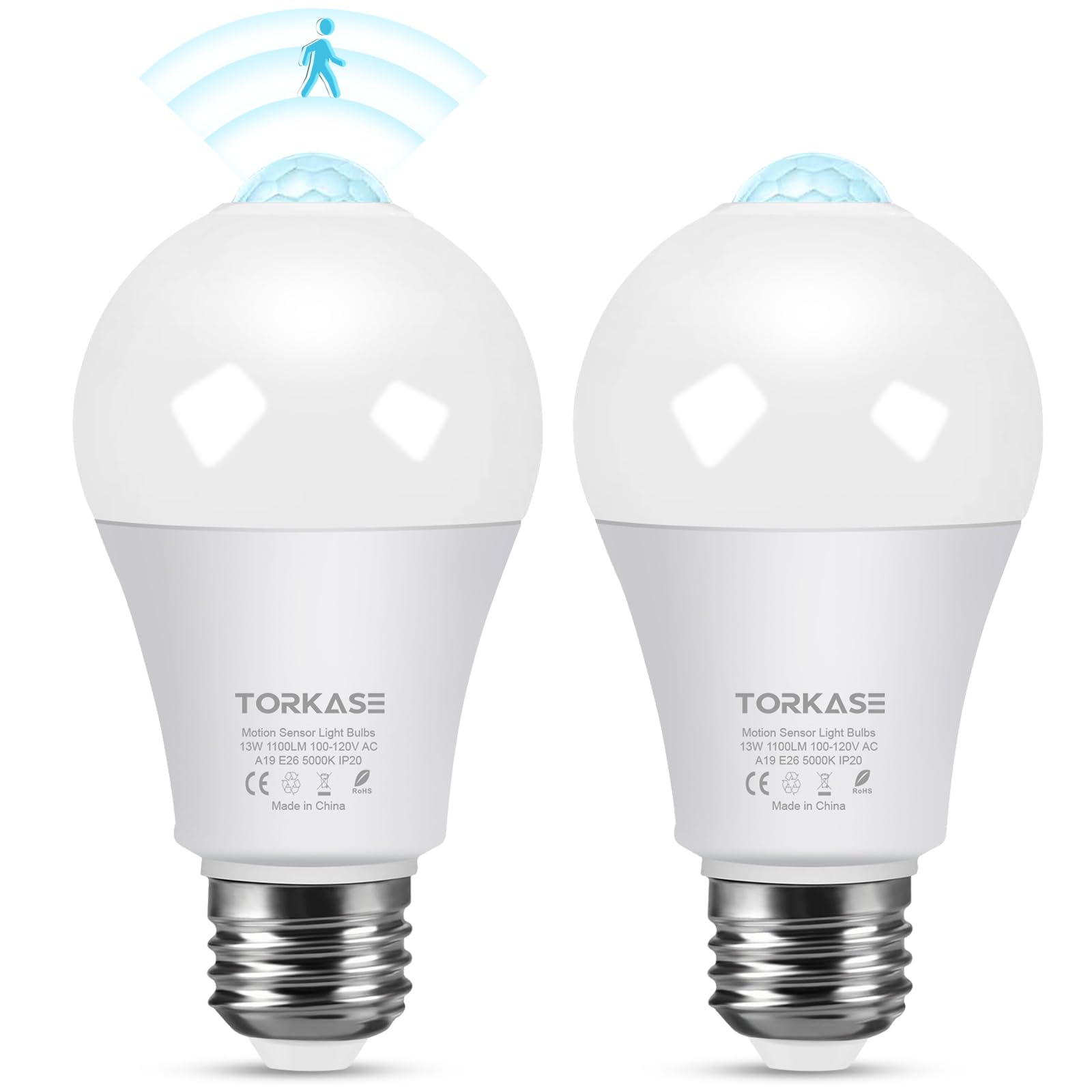
We recommend these bulbs for apartments that need bright, automatic lighting in open porch fixtures, hallways, garages, or storage areas.
Pros
- Bright daylight-style light
- Detects motion automatically at night
- Fits standard E26 sockets
Cons
- Requires an open, downward-facing fixture
- No manual control or app features
- Cool white light may feel harsh indoors
We found the Torkase bulbs easy to install because they twist into a standard socket like regular bulbs. The motion sensor responded quickly in our tests, and the light shut off after a short period without movement.
The 5000K light works well near an apartment entry, stairway, or storage area. It provides strong visibility, but the cool white tone may not suit bedrooms or living rooms.
Placement matters. The sensor must remain uncovered, so enclosed fixtures, recessed housings, and shades can block detection. We also would not choose these bulbs when we need to turn the light on manually.
Customer feedback is generally positive, though some buyers reported bulbs that failed early or arrived with an incorrect quantity or color. The included warranty and return period offer some added protection.
EZVALO Sync Stair Lights
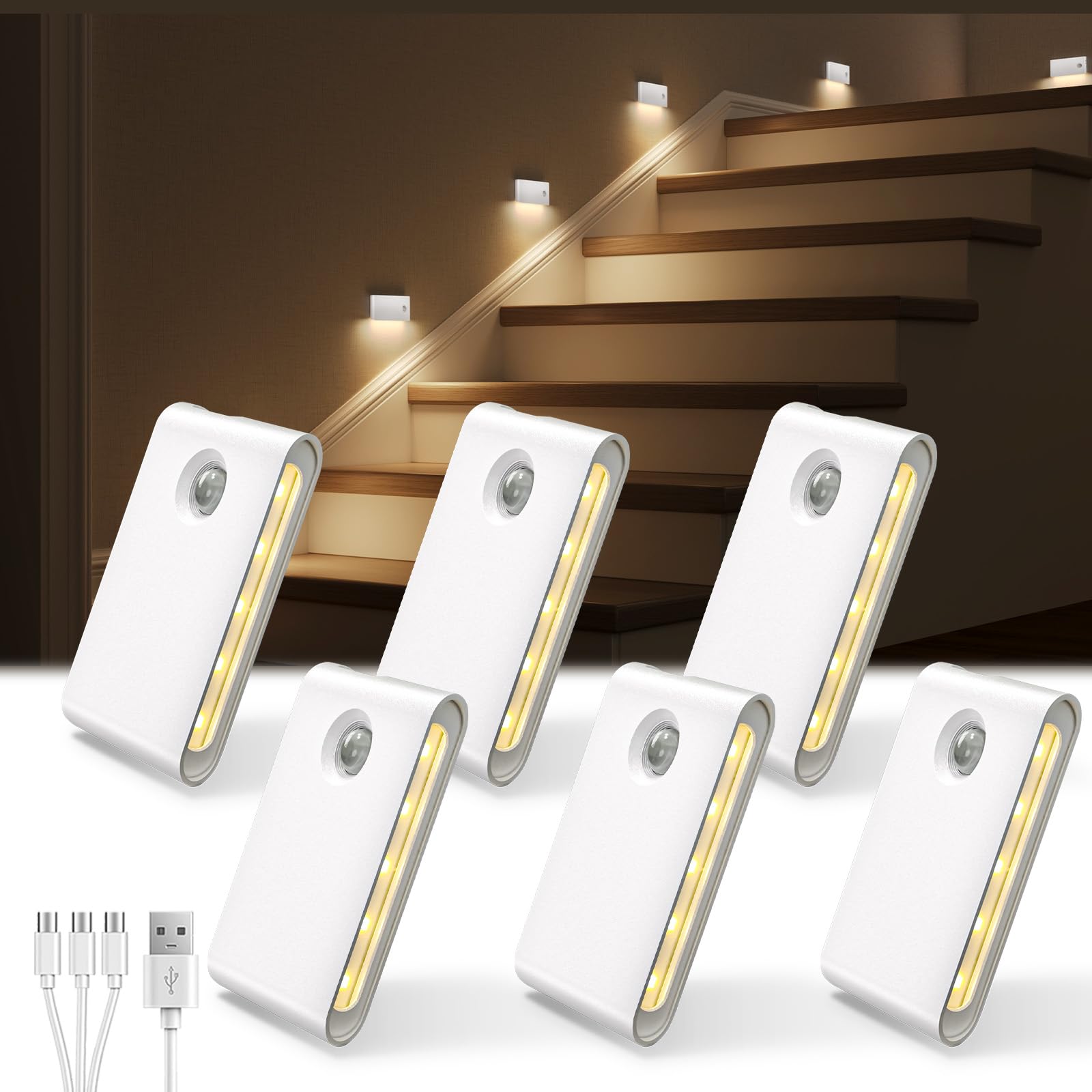
We recommend these lights for apartment hallways, stairs, and bathrooms because they provide soft, synced lighting without using wall outlets.
Pros
- All connected lights turn on together.
- Magnetic mounting makes placement and removal easy.
- Rechargeable batteries reduce replacement costs.
Cons
- Motion detection can trigger from nearby movement.
- The lights are for indoor use only.
- Frequent activity may require more charging.
We found the full-path lighting useful on stairs. When one sensor detected movement, the connected lights came on together, which reduced dark spots between steps.
The 3000K warm light felt comfortable at night, and the brightness settings helped us avoid harsh overhead lighting. We also liked that changing one light adjusted the others at the same time.
Installation took only a few minutes with the magnetic mounts and adhesive plates. We could remove the lights for charging without taking the wall plates down, which worked well in an apartment.
The sensors responded reliably in dark areas, though they sometimes activated when we moved near the stairway. Battery life depends on use, but our experience showed that the lights can last for weeks between charges.
BLNAN Motion Sensor Ceiling Light

We recommend this wired light for small apartments that need bright, automatic lighting in closets, hallways, stairways, or laundry areas.
Pros
- Motion detection responds quickly in dark spaces
- Three light color choices suit different rooms
- Slim design works well on low ceilings or walls
Cons
- Requires hardwired installation
- The light is not dimmable
- Daylight mode may prevent the light from turning on
We found the BLNAN most useful in places where a wall switch feels inconvenient. It turns on quickly when we enter a dark closet or hallway, and the wide sensor area covers normal apartment traffic well.
The fixture produces plenty of light for a small room. We could choose warm, neutral, or cool white before installation, which made it easier to match the room. The low-profile shape also stayed out of the way in tight spaces.
Installation requires a junction box and basic wiring, so renters may need landlord approval or an electrician. The AUTO setting only activates in darkness, while the G setting detects movement during the day and night. We also liked the constant-on option when motion control was not needed.
This light fits spaces around 40 to 75 square feet best. Larger rooms may need more than one fixture, and the plastic housing feels practical rather than premium.
ECOELER Motion Sensor Ceiling Light

We recommend this two-pack for apartments because it provides bright, hands-free lighting for closets, hallways, and entry areas.
Pros
- Adjustable warm, cool, or daylight color
- Reliable motion detection in dark areas
- Includes mounting parts for several setups
Cons
- Hard-wired installation may require electrical skills
- Some mounting holes may not match existing boxes
- The cover can be difficult to loosen
We found the 1,000-lumen output bright enough for a standard closet, pantry, or hallway. The motion sensor responded quickly when we entered a dark space and shut the light off after the selected delay.
The three color settings helped us match the light to different rooms. Warm white felt comfortable in a bedroom closet, while daylight made a storage area easier to see.
Installation was generally simple with a compatible junction box, but the mounting holes may not align with every existing box. We also found the cover tight, which made access more difficult during setup.
This light works best when we want automatic lighting without pull chains or wall switches. It is intended for indoor use, so we would choose another model for exposed outdoor locations.
Buying Guide
We should start by checking the light’s power source. Battery models install easily and work well in rentals, while plug-in lights avoid battery changes but need a nearby outlet. Rechargeable options can reduce waste, but we should confirm how often they need charging.
The sensor’s range and detection angle affect coverage. For a small entryway, we may need only a short range. For a longer hall, we should look for wider coverage and adjustable positioning.
| Feature | What to check |
|---|---|
| Sensor range | Covers the area where movement occurs |
| Detection angle | Reaches across the path, not just straight ahead |
| Light output | Bright enough for safe movement without glare |
| Timer settings | Lets us control how long the light stays on |
| Brightness control | Helps prevent harsh light in bedrooms or halls |
| Installation | Uses removable adhesive, screws, or another rental-safe method |
| Build quality | Feels stable and suits the room’s conditions |
We should also check whether the light turns on only in darkness. A daylight sensor can prevent unnecessary activation and help preserve battery life. Adjustable sensitivity can reduce triggers from pets, nearby traffic, or moving curtains.
For apartments, easy removal matters. We should review the mounting method and choose a design that does not require permanent changes. A compact light may also work better in narrow hallways, closets, and stair areas.
Editor’s Choice
We choose the Auvon Plug-in Motion Sensor Night Light for most apartments. Its compact design fits outlets in hallways, entryways, bedrooms, and bathrooms without taking up floor or wall space.
The light uses motion detection to turn on when someone passes by and shuts off after a set period. Its adjustable brightness helps us use a soft glow at night without creating harsh light.
| Feature | Why it matters |
|---|---|
| Plug-in design | No batteries or wiring |
| Adjustable brightness | Supports comfortable nighttime use |
| Compact size | Works well in small spaces |
| Automatic shutoff | Helps reduce energy use |
We also value its simple setup. We can plug it into a standard outlet and adjust the settings without tools or permanent changes, which suits renters and apartment residents.
The Auvon works best as a low-level safety light rather than a primary room light. We would place it near dark walking paths, stairs, closets, or the route between a bedroom and bathroom.
Conclusion
We can improve apartment safety and convenience with the right motion sensor light. Battery-powered models suit renters because they install easily and do not require wiring. Plug-in lights work well near outlets and usually provide steady power.
When choosing a light, we should check sensor range, detection angle, brightness, battery life, and size. Adjustable brightness and timing controls help prevent wasted power and reduce unwanted light at night.
We should also consider the installation method. Adhesive mounts offer a simple option, while magnetic mounts make it easier to remove and recharge the light. For shared spaces, we should choose a model with a reliable sensor and a design that blends with the room.
The best choice depends on where we plan to use the light and how often we need it. A small, dimmable light may suit a hallway or bedroom, while a brighter model may work better near an entry door or stairwell.
FAQs
Do motion sensor lights work in apartments?
Yes. We can use them in entryways, closets, hallways, bathrooms, and other areas where we need light for short periods. Battery-powered models work well when we cannot modify the wiring.
Do we need permission from our landlord?
We usually do not need approval for removable, battery-powered lights that use adhesive strips or screws designed for easy removal. We should ask before drilling holes, changing wiring, or installing a fixture on a shared wall.
Are plug-in or battery-powered lights better?
Battery-powered lights offer flexible placement and simple installation. Plug-in models provide steady power but need a nearby outlet and may leave cords across the floor.
What sensor range should we choose?
For most apartment rooms, a range of 6 to 12 feet works well. A wider range may trigger the light when people pass outside the target area.
How long should the light stay on?
A timer of 30 seconds to two minutes suits most indoor spaces. We can choose a longer setting for areas where we move slowly, such as stairways or storage rooms.
Can motion sensor lights save energy?
They can reduce wasted energy by turning off when no one uses the space. We should select models with adjustable timers and efficient LED bulbs.