
10 Best Medical Alert Systems for Apartments: Top Picks and Buying Guide


Toilet Seat Bidet Attachment

Adjustable Walker with Wheels

Folding Walking Stick with Seat
Medical alert systems give older adults and people with health concerns a way to call for help after a fall, medical emergency, or other urgent event. Most systems include a wearable help button, a base station, and access to trained emergency operators. Some also offer fall detection, medication reminders, and caregiver alerts.
Apartments create a few special concerns. Walls, elevators, and shared buildings can affect signal range, while a system that relies on a landline may not work for every resident. For apartment living, we recommend focusing on reliable coverage, a comfortable wearable device, clear two-way communication, and a setup that works inside and just outside the home.
We compared leading medical alert systems for their response times, range, fall-detection options, monthly costs, and ease of use to identify the best choices for apartment residents.
Best Medical Alert Systems for Apartments
We reviewed medical alert systems for features that suit apartment living, including reliable indoor coverage, easy setup, and emergency response options. Our list highlights the best products for different needs, budgets, and levels of mobility.
CallToU Wireless Caregiver Pager
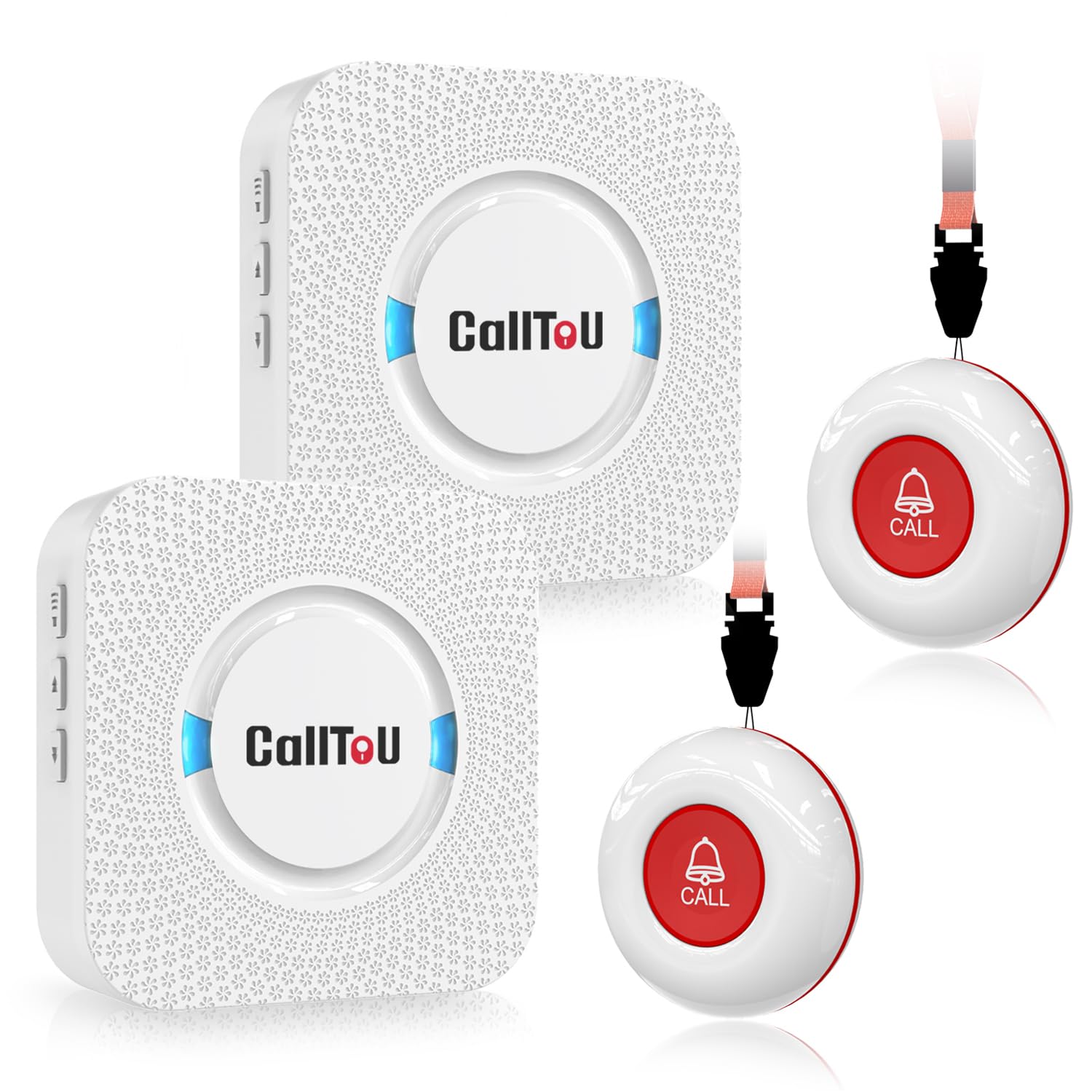
We recommend this system for apartment caregivers who want simple, loud alerts without Wi-Fi or a monthly fee.
Pros
- Two buttons and two plug-in receivers
- Strong range for most apartments
- Waterproof buttons with adjustable volume
Cons
- It does not detect falls automatically
- Receivers need nearby outlets
- Small instructions may be hard to read
We found the CallToU easy to set up and use. The buttons can hang around the user’s neck or stay near a bed, chair, or bathroom. The two receivers let us place alerts in separate rooms, such as the caregiver’s bedroom and living area.
The signal worked well across rooms and through walls in a typical home. Apartments usually need less coverage than larger houses, so the stated range should provide useful flexibility. Still, thick walls, metal doors, and building materials may reduce performance.
The receiver offers 55 ringtone choices and five volume levels. At its loudest setting, it was easy to hear from another room, though that level may feel too loud in a small apartment. The waterproof design also makes the call buttons suitable for use near a bathroom.
This is a basic alert pager, not a monitored medical alert service. It cannot contact emergency services or sense a fall on its own, so users still need someone nearby who can respond.
Nomo Smart Care Essential Kit
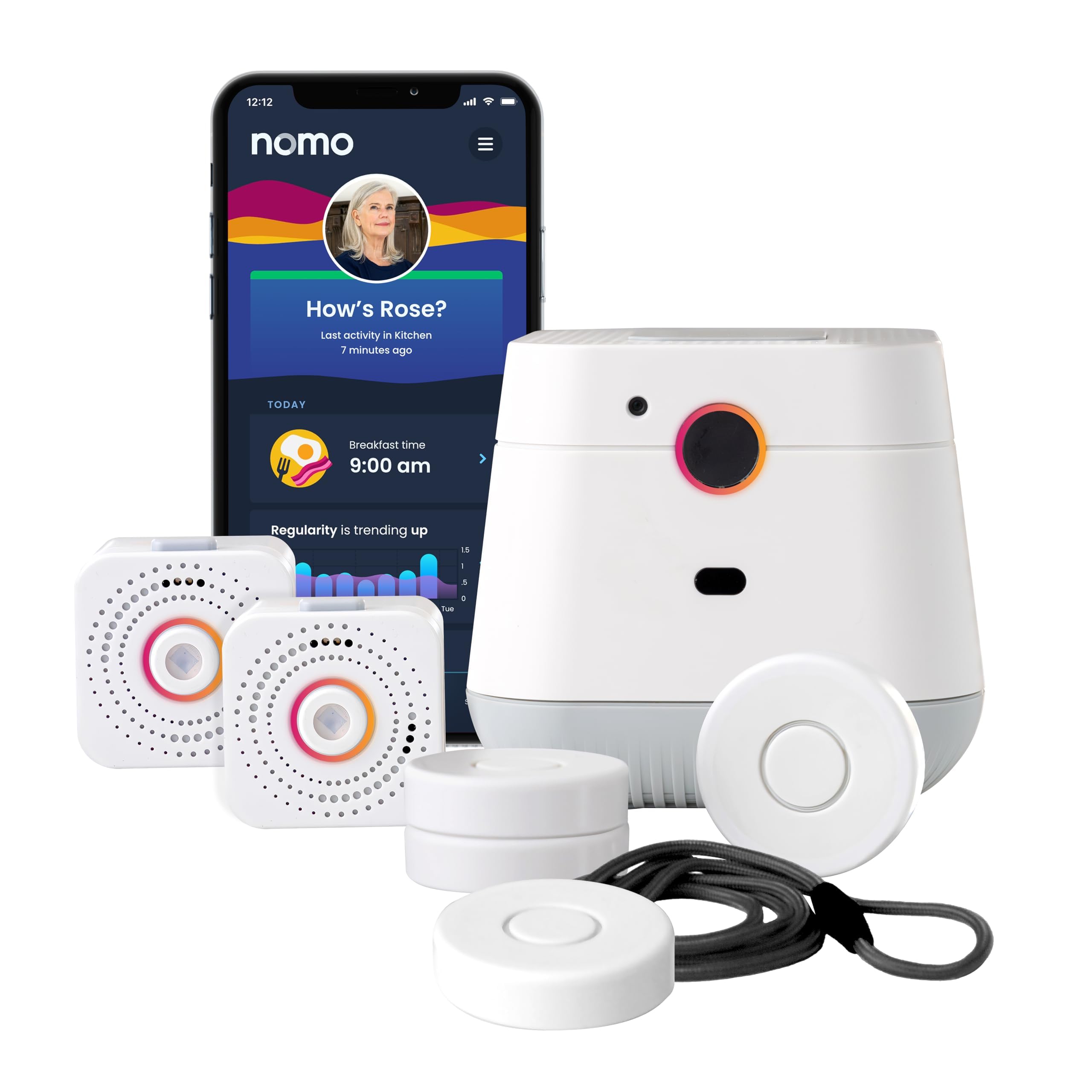
We recommend this system for apartment residents who want private, camera-free monitoring and caregiver alerts through home Wi-Fi.
Pros
- Camera-free fall and activity monitoring
- Two-way voice communication through the hub
- Simple wireless setup with a 60-day service trial
Cons
- Requires a 2.4 GHz Wi-Fi connection
- Fall detection may not catch every fall
- Ongoing service costs $19.99 per month after the trial
We found the setup straightforward: plug in the hub and two satellites, connect them to Wi-Fi, and place the Smart Tags where needed. This suits apartments because it requires no wiring, landline, or professional installation.
The system monitors movement, sounds, doors, cabinets, and other activity without using cameras. We could also use the app to share alerts with trusted caregivers and adjust tag sensitivity.
The hub supports two-way voice communication during an alert. That gives residents a way to speak with caregivers or emergency support without reaching for a phone.
The main limitation is its reliance on Wi-Fi and a paid monitoring plan. We also recommend treating automatic fall detection as a helpful backup rather than a guarantee, since user reviews report mixed results.
CallToU Wireless Caregiver Pager
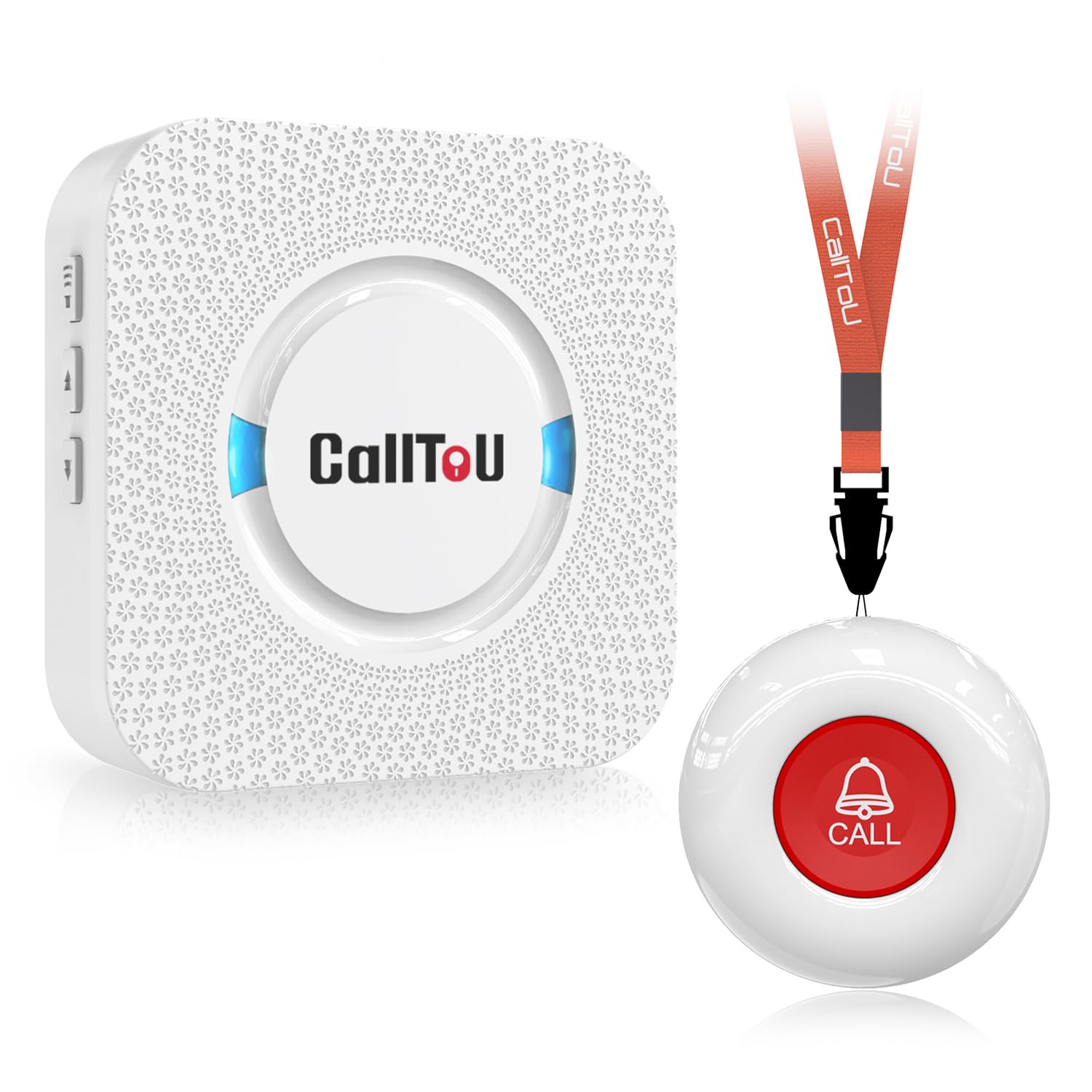
We recommend this simple alert system for apartment caregivers who need a loud, easy way to receive help requests from another room.
Pros
- Simple setup with a pre-paired button and receiver
- Adjustable volume and 55 ringtone choices
- Waterproof button with flexible placement options
Cons
- The receiver needs a nearby power outlet
- It does not contact emergency services
- The mounting hardware may feel less useful than the pendant strap
We found the CallToU easy to use right away. The person needing help can wear the button as a pendant, place it near the bed, or attach it beside a chair. That flexibility works well in apartments where rooms sit close together.
The receiver offers five volume levels, including a very loud setting. We could also change the ringtone to make this alert easier to recognize among other household sounds. Its stated range reaches more than 500 feet in open areas, though walls and building layouts can reduce that distance.
Both pieces resist water and dust, which makes the button suitable for use near a bathroom or kitchen. Still, this is an in-home caregiver pager, not a monitored medical alert service. It cannot call emergency responders or provide help when nobody is nearby.
Bay Alarm Medical SOS Mobile GPS

We recommend this system for apartment residents who want a portable emergency button with cellular service, GPS, and caregiver app support.
Pros
- Simple setup with clear instructions
- Works without a smartphone or home base
- Compact design with several wearing options
Cons
- Requires an ongoing subscription
- Optional fall detection costs extra
- Cellular coverage may vary by location
We found the device easy to carry around an apartment. Its small size and lanyard or belt clip options make it less intrusive than a larger home unit. The water-resistant design also suits daily use near kitchens and bathrooms.
Pressing the button connects us with a trained operator through two-way communication. Because the device uses 4G LTE, we can use it outside the apartment as well, although signal strength depends on local coverage.
The companion app lets caregivers check the device status, battery level, and location. Battery life can last several days, and the system can send low-battery reminders, but some users may prefer text alerts instead of email notifications.
We also like that the device works on its own, without pairing it to a phone. However, buyers must activate a service plan, and fall detection is an optional feature rather than a standard part of the package.
TurboSense No-Fee Caregiver Pager
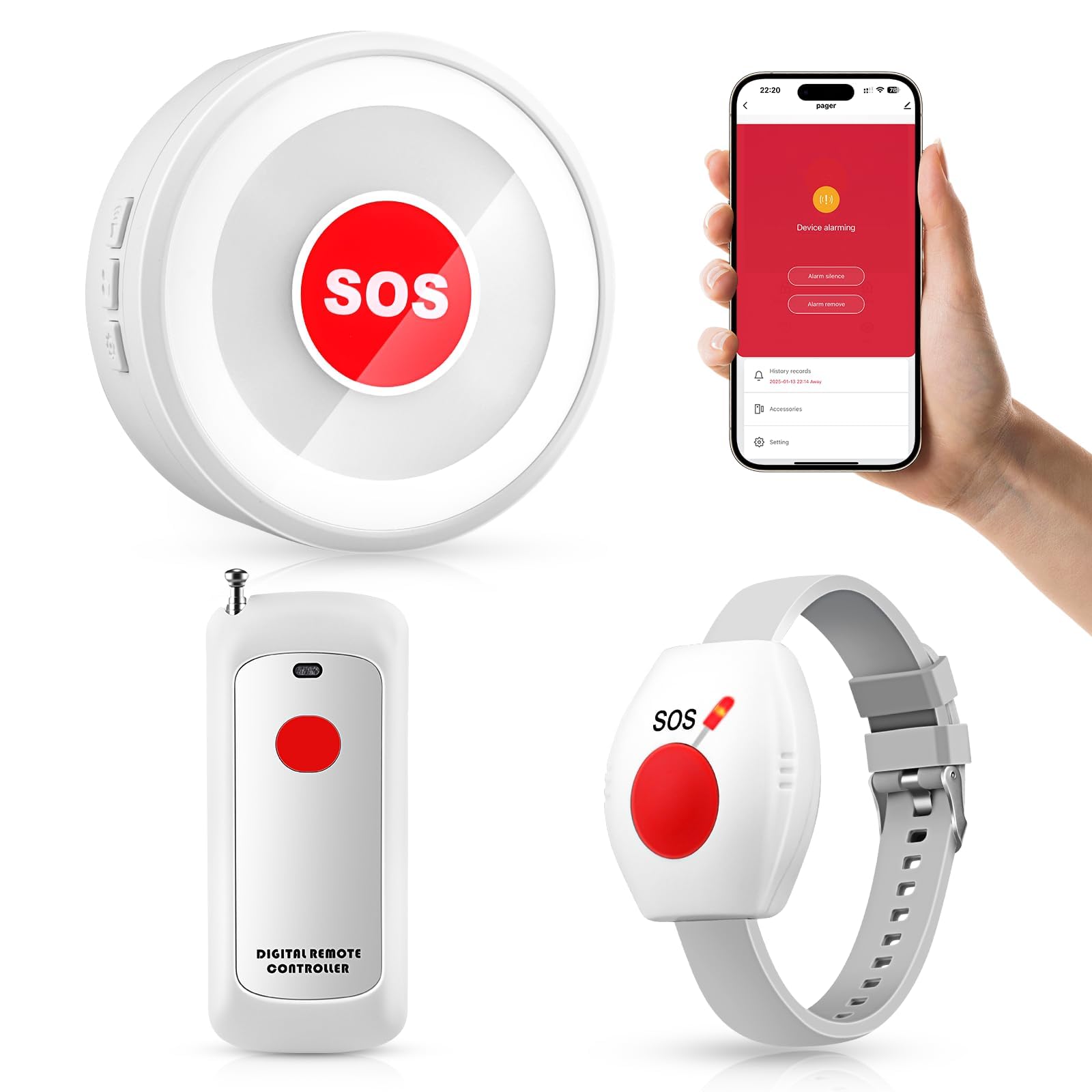
We recommend this system for apartment caregivers who want a simple in-home alert without a monthly subscription.
Pros
- No monthly fee or required subscription
- Loud receiver with pendant and wrist-button options
- App alerts can notify connected family members
Cons
- App features require a 2.4GHz Wi-Fi network
- Reports include occasional false alarms
- It works best for alerts inside the home, not emergency monitoring
The plug-in receiver gave us a clear alert from another room, which makes it useful when a family member stays in a separate bedroom or bathroom. Its volume and choice of tones help us notice calls without carrying a phone.
We also liked the flexible button placement. We could wear the waterproof button as a pendant or use the wrist button, while keeping the receiver in a central room. The system can still sound its local alarm without Wi-Fi, but app notifications need a compatible 2.4GHz network.
Setup was mostly simple, though choosing a ringtone took some trial and error. We would use this for caregiver-to-senior communication within an apartment, rather than as a replacement for a monitored medical alert service that contacts emergency responders.
Seculife Medical Alert Pendant
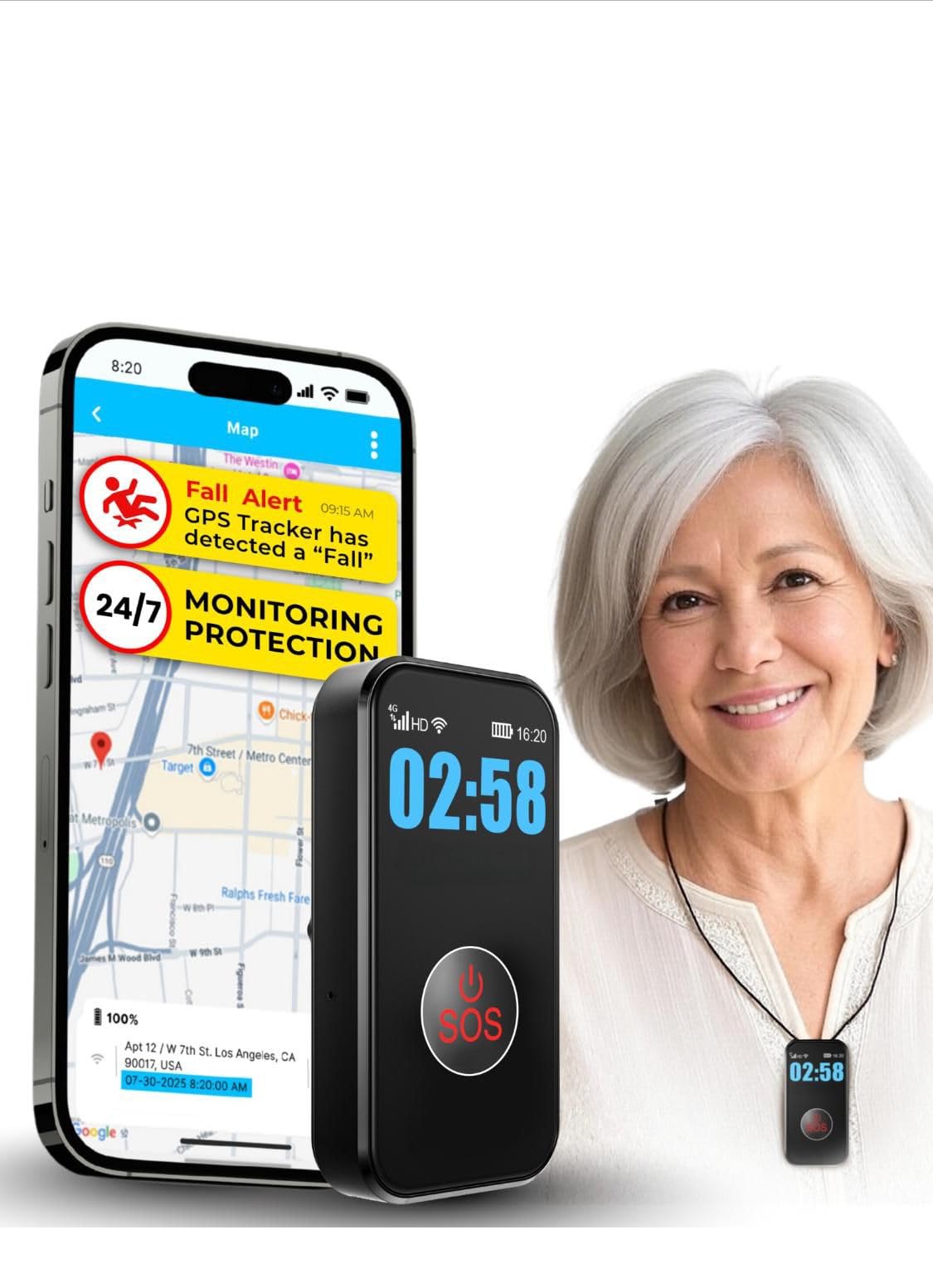
We recommend this pendant for apartment residents who want direct contact with family instead of a monitoring call center.
Pros
- Simple SOS button with two-way calling
- GPS tracking and geofence alerts
- Waterproof design with fall detection
Cons
- Requires a $20 monthly subscription
- Fall detection may not detect every fall
- Needs regular charging
We found the pendant easy to set up and simple to use. The large button worked well for quick test alerts, and the built-in speakerphone let us talk with a contact without reaching for a phone.
GPS tracking adds value for residents who may leave the apartment alone. Caregivers can check the device’s location, review location history, and set alerts for entering or leaving chosen areas.
The waterproof design supports use in the shower, where many falls happen. Battery life can last several days, but we still recommend charging it on a regular schedule so it remains ready.
Unlike some systems, this model sends alerts to selected contacts rather than a staffed emergency center. The $20 monthly plan covers cellular service, fall alerts, tracking, and voice calls, so buyers should include that cost in their budget.
LogicMark Freedom Alert

We recommend this system for apartment residents who have a working landline and want two-way emergency calls without a monthly service fee.
Pros
- Two-way voice communication through the pendant
- No monthly monitoring fee
- Works with family, 911, police, and fire contacts
Cons
- Requires a landline phone
- Pendant may feel bulky to some users
- Designed for use inside the home
During setup, we found the system fairly simple to connect to a landline and program with contact numbers. Pressing the pendant button starts a call, and the two-way voice feature lets us speak without reaching the base unit.
The 600-foot range should cover most apartments, though walls, floors, and building materials can affect performance. We would test the pendant from bedrooms, hallways, and shared areas before relying on it.
The rechargeable pendant includes a backup battery, which helps during short power interruptions. However, we would keep the unit charged and test it regularly. Since the system does not include professional monitoring, users or family members must decide who receives the calls and how to respond.
This model fits people who spend most of their time at home and already maintain a landline. We would choose a cellular or professionally monitored system for apartments without landline service or for anyone who needs help coordinating emergency response.
PRNBRH App-Controlled Medical Alert System
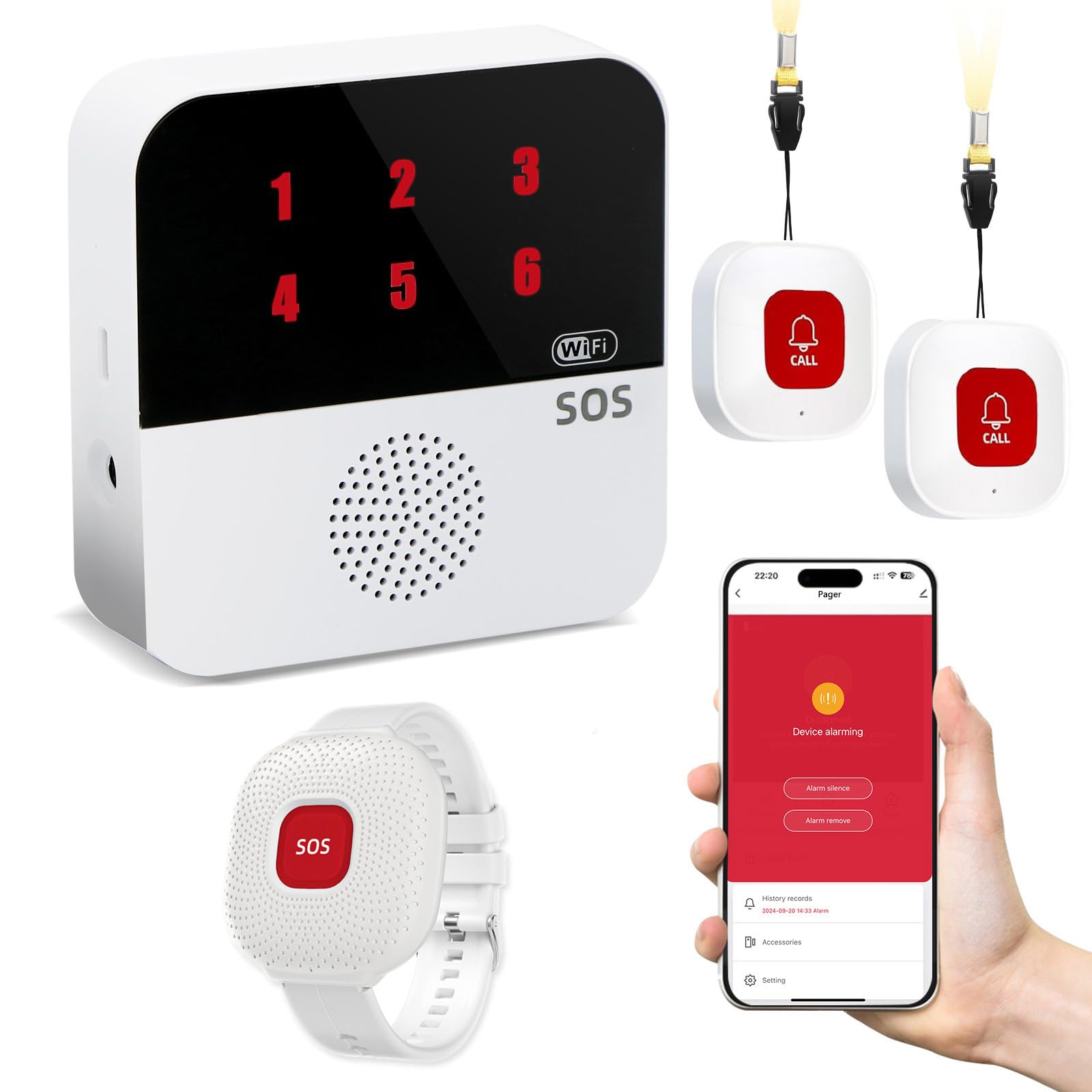
We recommend this system for apartment residents who want local alerts and app notifications without a required monthly monitoring plan.
Pros
- Includes two call buttons and a waterproof wrist remote
- Sends alerts through the receiver and smartphone app
- Wireless range reaches up to 300 feet
Cons
- Requires a 2.4GHz Wi-Fi network
- SMS alerts require a paid subscription
- It does not provide professional emergency monitoring
During setup, we connected the system to Wi-Fi and paired it with the Tuya Smart or Smart Life app. The receiver responded to button presses with a loud alarm, while the numbered display helped identify which button sent the alert.
The wrist remote worked well for bathroom use because it is waterproof. The necklace buttons are not listed as waterproof, so we would keep them away from showers and sinks.
We also liked the dual connection design. The wireless signal can continue reaching the receiver during an internet outage, while the app handles remote notifications when Wi-Fi works. In an apartment, the stated 300-foot range should cover most rooms, though walls and building materials can affect performance.
This system fits families who will respond to alerts themselves. It includes batteries and avoids a required monthly fee, but users who want emergency operators, automatic dispatch, or full fall detection should consider a professionally monitored system instead.
JoneR AI Medical Alert System
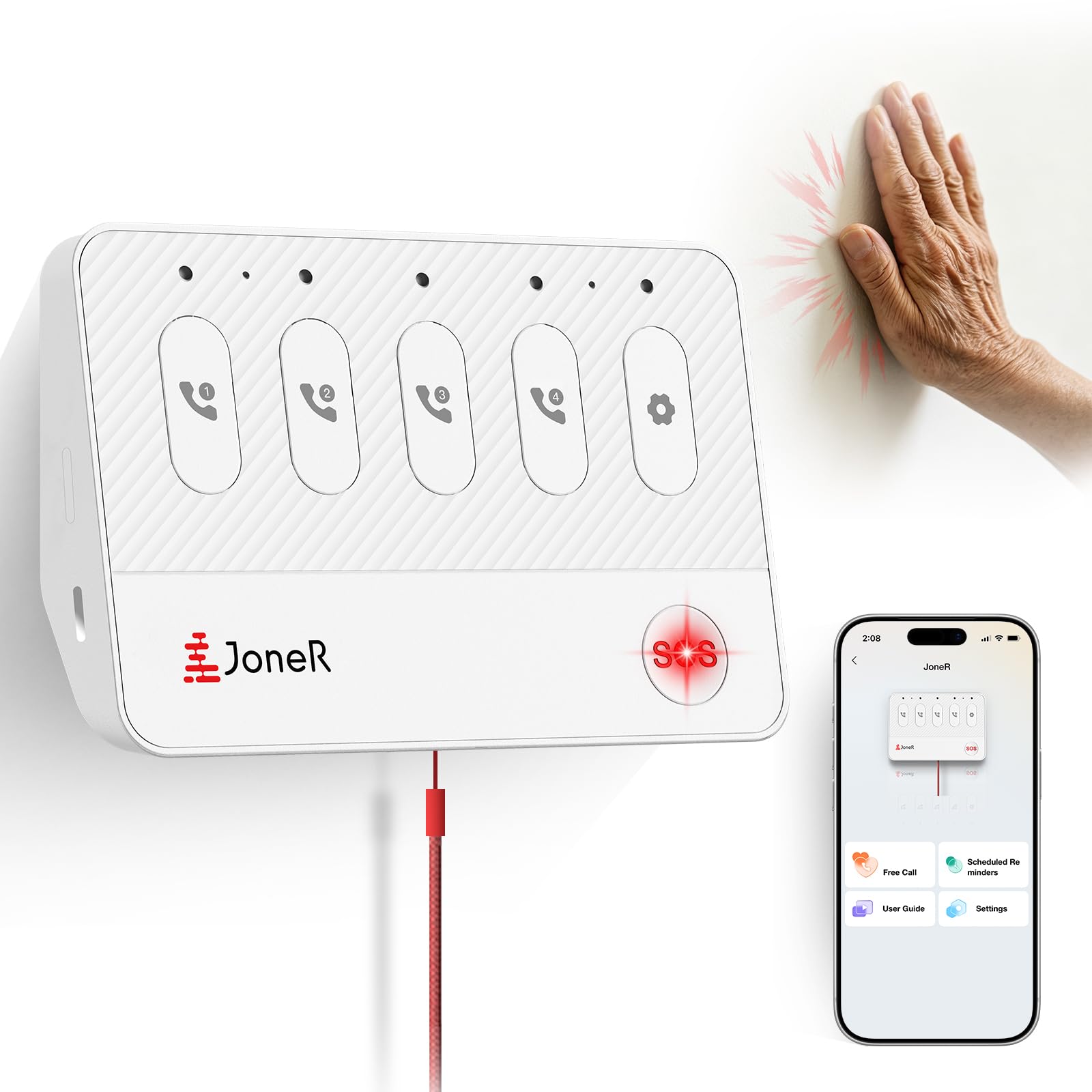
We recommend the JoneR for apartment residents who want flexible alerts, family app notifications, and no monthly monitoring fee.
Pros
- Voice, tapping, button, and pull-cord alerts
- Two-way calling through the app
- No monthly subscription
Cons
- Requires a reliable Wi-Fi connection
- Family members must respond to alerts
- Limited review history
We found the tabletop design useful because it does not depend on someone remembering to wear a pendant. We could place it on a nightstand, bathroom counter, or living room table. Its small size also suits most apartments.
The alert options add flexibility. A user can speak, tap, knock, press the device, or pull the included cord. This gives us more choices if someone cannot reach the main button during an emergency.
The companion app sends alerts to up to four family members and supports two-way communication. That setup can work well for relatives who want to check on someone without paying for a monitoring plan. However, it depends on Wi-Fi and requires family members to notice and handle each alert.
We also liked the camera-free design for private areas. Setup should be simple for most households, but users who need professional emergency dispatch may prefer a system with a staffed monitoring center.
MT EXESPR Apartment Caregiver Pager
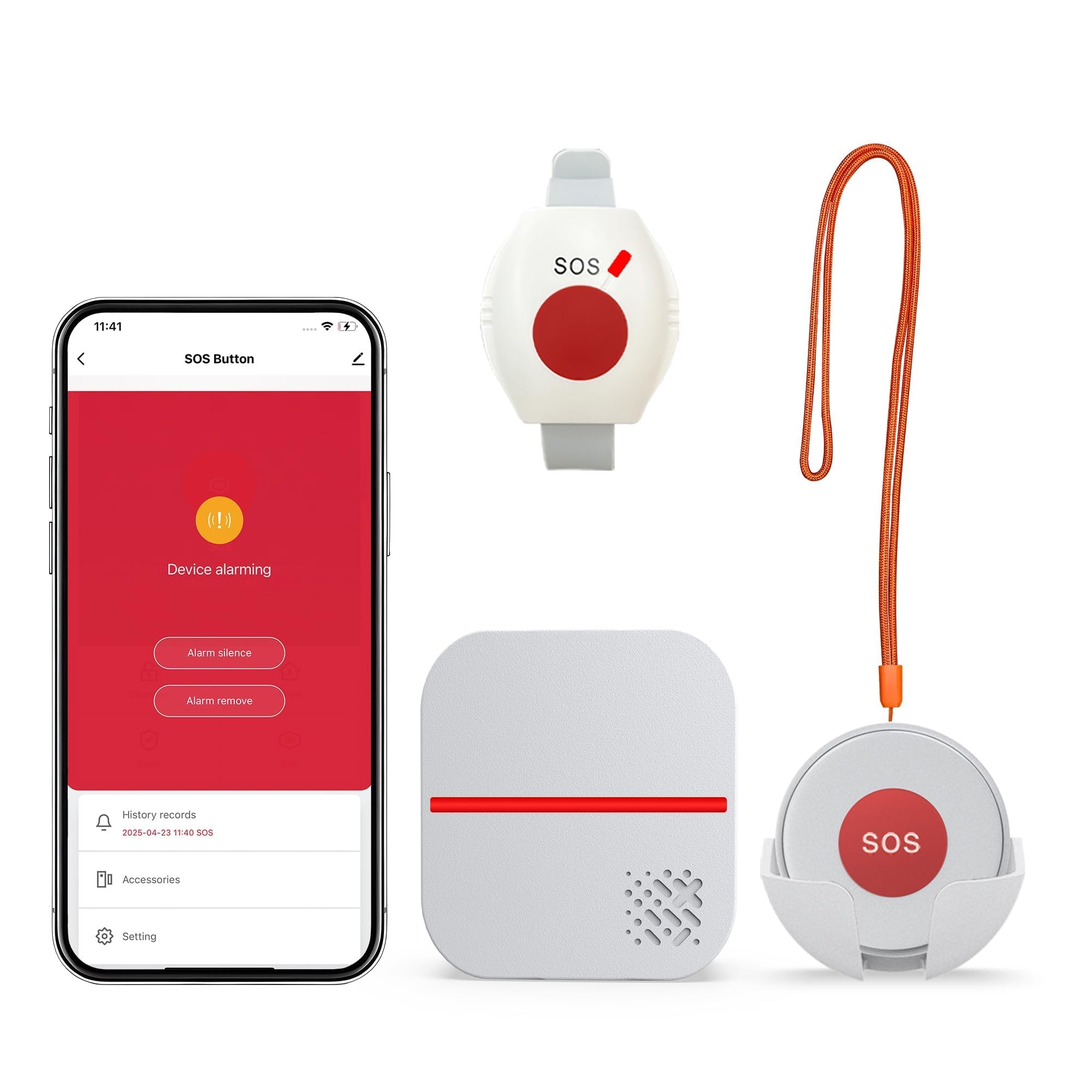
We recommend this system for apartments where a caregiver or family member stays nearby and wants a simple call button without a required monthly alert fee.
Pros
- No monthly fee for local pager alerts
- Waterproof wearable button for bathroom use
- Loud, adjustable receiver with several sounds
Cons
- SMS and phone alerts require a subscription
- App notifications need 2.4GHz Wi-Fi
- It does not automatically detect falls
We found the setup straightforward: plug in the receiver, pair the buttons, and choose the volume and ringtone. The receiver can work well across an apartment, including between floors or rooms, though walls and building layout may reduce its stated open-area range.
The pendant and watch-style button give us flexible placement. We could keep one near a bed or chair and wear the other while moving around. The IPX6 water resistance also makes the wearable button more suitable for bathroom use than a device that must stay dry.
When someone presses the button, the receiver sounds and flashes. That works best when a caregiver is inside the apartment or close enough to hear the pager. App notifications can reach connected caregivers over Wi-Fi, but users should remember that text messages and phone calls need a separate subscription.
This system offers a practical local alert option, but it is not a monitored medical alert service. We would choose it for apartments with nearby help, not for someone who needs emergency center response or automatic fall detection.
Buying Guide
We should start by matching the system to the apartment’s layout, the user’s mobility, and the level of help needed. A simple wearable button may suit someone who spends most time at home, while mobile coverage can help people who leave the building.
| Feature | What we should check |
|---|---|
| Connection type | Confirm whether it uses a landline, cellular network, Wi-Fi, or a combination. |
| Range | Test coverage from bedrooms, bathrooms, balconies, and shared areas. |
| Water resistance | Choose a device rated for use in the shower or bath. |
| Battery | Check battery life, charging time, and low-battery alerts. |
| Call response | Review response times, available support, and emergency procedures. |
| Fall detection | Treat it as an added feature, not a replacement for pressing the help button. |
| Fees | Compare equipment costs, monthly charges, activation fees, and cancellation terms. |
We should also check whether the base unit works during a power outage. A backup battery can keep the system active for a limited period, but we should confirm its stated runtime.
Apartment buildings may have thick walls, elevators, locked entrances, or weak cellular signals. We should test the system in the actual apartment and ask how responders enter the building.
We should choose a comfortable device that the user will wear consistently. Clear setup instructions, adjustable bands, and accessible customer support can make daily use easier.
Editor’s Choice
We chose Medical Guardian MGMove as our editor’s choice for apartment living. Its wearable design supports two-way communication and includes GPS location tracking, which can help users who move between rooms, shared spaces, and nearby areas.
The system works through a cellular connection, so it does not require a traditional landline. We also value its optional fall detection, but users should know that no fall detection device identifies every fall.
| Feature | Why it matters in an apartment |
|---|---|
| Wearable device | Keeps help within reach throughout the home |
| Two-way talk | Lets users speak with a response team |
| GPS tracking | Supports location sharing outside the apartment |
| Optional fall detection | Can contact help after some detected falls |
We recommend checking cellular coverage inside the building before ordering. Thick walls, lower floors, and crowded urban areas can affect signal strength. Users should also review monthly fees, equipment charges, contract terms, and add-on costs.
Conclusion
We should choose a medical alert system that fits the apartment’s layout, our daily routine, and our budget. Strong cellular coverage, a reliable help button, and clear two-way communication matter most.
For apartments with weak indoor signals, we should check coverage before ordering. A landline option or a system with a mobile connection may provide better reliability, depending on the building and service area.
We should also review:
- Button range: Test it from the bedroom, bathroom, balcony, and shared areas.
- Fall detection: Confirm whether it costs extra and understand its limits.
- Battery life: Check how often we need to charge or replace batteries.
- Fees: Look for equipment, activation, shipping, and cancellation charges.
- Support: Choose a provider with clear setup help and responsive customer service.
Before buying, we can ask about the return policy and test the system throughout the apartment. This helps us find problems with signal strength, speaker volume, or button access while we can still make changes.
FAQs
Do medical alert systems work in apartments?
Yes. Most systems use cellular networks, Wi-Fi, or a landline. We should check signal strength inside the apartment and in shared areas such as hallways, parking lots, and laundry rooms.
Do we need a landline?
No. Many current systems use cellular connections, so we do not need a home phone line. We should confirm that the provider supports our location and building.
Can we use a system outside the apartment?
Some systems include GPS or mobile access. These features can help us call for assistance while walking, shopping, or visiting nearby places.
Will the system work during a power outage?
Most systems have battery backup. We should review the backup time and keep the base unit connected to power. A wall-mounted help button may still work if the main unit loses power, depending on the model.
Can emergency calls reach the right location?
We should provide our apartment number, building name, floor, entry instructions, and access codes. Updating this information helps the response team or emergency services find us faster.
What features matter most for apartment living?
| Feature | Why it matters |
|---|---|
| Strong cellular range | Supports calls throughout the building |
| Waterproof help button | Works in bathrooms and kitchens |
| Fall detection | Can call for help after some falls |
| GPS | Supports use outside the apartment |
| Long battery life | Reduces charging needs |
Can we cancel the service?
Policies differ. We should review contract terms, equipment fees, activation charges, and cancellation rules before enrolling.
