
10 Best Handrails for Disabled Adults in 2026


Reading Light for Bed

Long Handle Shoe Horn

Automatic Can Opener
Handrails serve a specific and practical purpose: they give a hand and body something solid to hold when balance, strength, or mobility can’t be counted on. For someone managing a disability, a wall-mounted bar by the tub or a rail beside the toilet is not an accessory. It’s the difference between a task done independently and one that requires assistance or carries real risk.
Different situations call for different types of support. A grab bar bolted into a wall stud provides fixed weight-bearing assistance for transfers in and out of a shower. A tub clamp offers portable support without drilling. A floor-to-ceiling pole helps with standing from a chair or bed. Toilet rails, stair handrails, and bed-assist bars each address a distinct transfer point in daily life, and mixing them up can mean choosing a product that looks similar but doesn’t hold weight the way a person actually needs.
The most important factor in any handrail is knowing whether it’s rated for balance support or full weight-bearing transfer, since the two are not interchangeable and using the wrong type can lead to a fall instead of preventing one. Mounting surface, weight capacity, grip texture, and installation method also matter, particularly for renters or anyone without wall studs in the right location. The picks below cover bathroom, toilet, bedroom, and stair applications, organized by how and where each one is meant to be used.
Best for permanent shower support: Moen Home Care Stainless Steel Grab Bar
Best for renters without drilling: Vaunn Medical Bathtub Safety Rail
Best for standing and bed transfers: Stander Floor to Ceiling Grab Bar
Best freestanding toilet support: Vive Toilet Safety Rail with Arms
Best for adjustable, portable toilet use: Medline Foldable Toilet Safety Rail
Best for entryways and outdoor steps: Mrupoo Outdoor Step Handrail
Best for doorway thresholds: QWORK Folding Grab Bars
Best budget shower grab bars: Gotega Anti-Slip Grab Bars
Best compact shower bars for small spaces: Rockgoya Stainless Steel Grab Bars
Best for getting in and out of bed: NobrNyanT Adjustable Bed Rail
Moen Home Care Stainless Steel Grab Bar

This is the bar to buy when you need a permanent, weight-bearing anchor point in a shower or tub.
Pros
- Supports up to 500 lbs when mounted into studs or with SecureMounts
- ADA-compliant sizing and stainless finish that matches other bathroom hardware
- Backed by a limited lifetime warranty
Cons
- Requires stud mounting or separately sold SecureMounts for full weight capacity
- Included screws have small heads that can strip during installation
- Not portable once installed
Stud-mounted grab bars remain the gold standard for genuine transfer support, and this Moen bar holds up under real pressure when installed correctly. The 1.25-inch diameter fits comfortably in the hand, and the concealed screw design keeps the finish clean. Installation demands care: several buyers found the included screws strip easily, so a manual screwdriver or better-quality hardware may be worth having on hand. When studs don’t line up with typical spacing, the bar can still be angled across a wider span, which is a practical detail for older homes.
Vaunn Medical Bathtub Safety Rail

This clamp-style rail is the right choice for anyone who needs tub support without drilling into tile or walls.
Pros
- Tool-free clamp installs in minutes on flat-walled tubs 3 to 7 inches thick
- Steel frame holds up to 300 lbs
- Portable enough to bring along when traveling
Cons
- Not rated for fiberglass, curved, or textured tub surfaces
- Some users notice slight horizontal movement parallel to the tub wall
- Provides balance support rather than full weight-bearing leverage
For a standard flat-walled tub, this rail clamps down firmly and gives a stable point of contact for stepping in or out. It’s a strong option for renters or anyone unwilling to drill holes. The rubber pads protect the tub finish, and at under six pounds, it’s light enough to pack for a trip to a family member’s house. Buyers should check the tub wall thickness and surface type before ordering, since it won’t clamp securely on rounded or fiberglass tubs.
Stander Floor to Ceiling Grab Bar
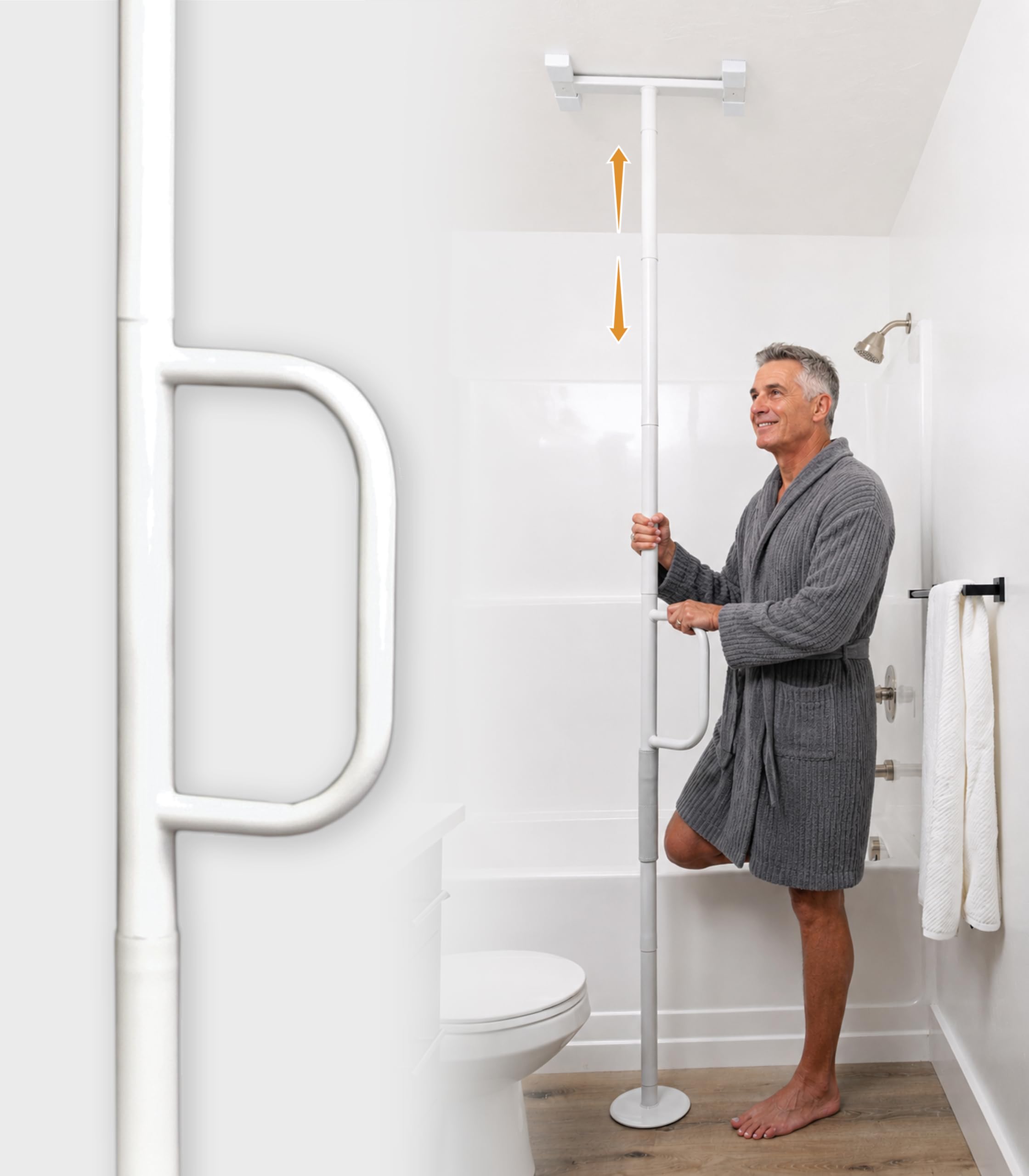
This tension pole works well for standing assistance beside a bed, recliner, or tub, in any room with the right ceiling height.
Pros
- No drilling required; tension-mounts between floor and ceiling from 7 to 9.5 feet
- Two-level handle design supports different grip heights
- Supports up to 300 lbs for standing and sitting transitions
Cons
- Not intended for use inside a bathtub or shower
- Assembly involves lifting and stacking heavier parts overhead
- Won’t work with vaulted ceilings
Unlike a wall bar, this pole can move between rooms as needs change, which makes it useful near a bed, a favorite chair, or a stair landing. The handle grip can feel slippery when wet, so some buyers added grip tape for shower-adjacent use even though the manufacturer doesn’t recommend placing it inside a tub or shower stall. Setup takes two people in most households, since positioning the pole under tension while it’s fully extended takes some effort.
Vive Toilet Safety Rail with Arms

This freestanding frame is a solid pick for anyone who wants toilet support without altering the toilet itself.
Pros
- Wide 26.5-inch base adds tip-resistant stability
- No tools needed for assembly, with removable padded handles
- Fits standard and elongated toilets
Cons
- Takes up floor space around the toilet
- Base bars can be a trip hazard for other household members
- Not bolted down, so it can shift if bumped hard
Because it stands independently rather than attaching to the toilet bowl, this frame works well in shared bathrooms where a permanent modification isn’t practical. The foam-padded arms give a comfortable, non-slip grip for pushing up or lowering down. Some buyers with narrower toilets or smaller bathrooms found the footprint too wide and exchanged it for a slimmer model, so measuring the space beforehand is worth the extra minute.
Medline Foldable Toilet Safety Rail

This adjustable rail attaches directly to the toilet bowl and folds flat, making it a practical option for smaller bathrooms or travel.
Pros
- Height and arm width both adjust for a custom fit
- Folds down for storage or transport
- Handles rotate back for additional clearance
Cons
- Requires removing the existing toilet seat to install
- Rated for 250 lbs, lower than several other options here
- May not align with non-standard bowl bolt spacing
The adjustable width (8 to 24 inches) and foldable frame make this rail versatile for households with more than one bathroom in use. Installation involves removing the seat temporarily, which adds a few extra minutes compared to freestanding frames. A handful of buyers with unusual bolt spacing needed to drill new holes, so checking bowl compatibility ahead of time avoids surprises.
Mrupoo Outdoor Step Handrail

This wall-mounted rail is built for short outdoor or indoor step runs, such as a garage entry or porch landing.
Pros
- Stainless steel construction rated for up to 550 lbs
- Frosted grip surface improves traction in wet or icy conditions
- Works for one to three steps, indoors or out
Cons
- Best suited to short step runs rather than full staircases
- Mounting plate can loosen over time if not anchored into solid material
- Curved shape may not suit every entryway layout
For short entry steps, this rail gives a firm handhold exactly where a stumble is most likely, at the transition point. The U-shaped curve is a deliberate design choice that gives a natural hand position at both the top and bottom of a short run. It mounts into brick, wood, or drywall with the included anchors, though drywall alone won’t hold up to repeated heavy weight-bearing use over time.
QWORK Folding Grab Bars
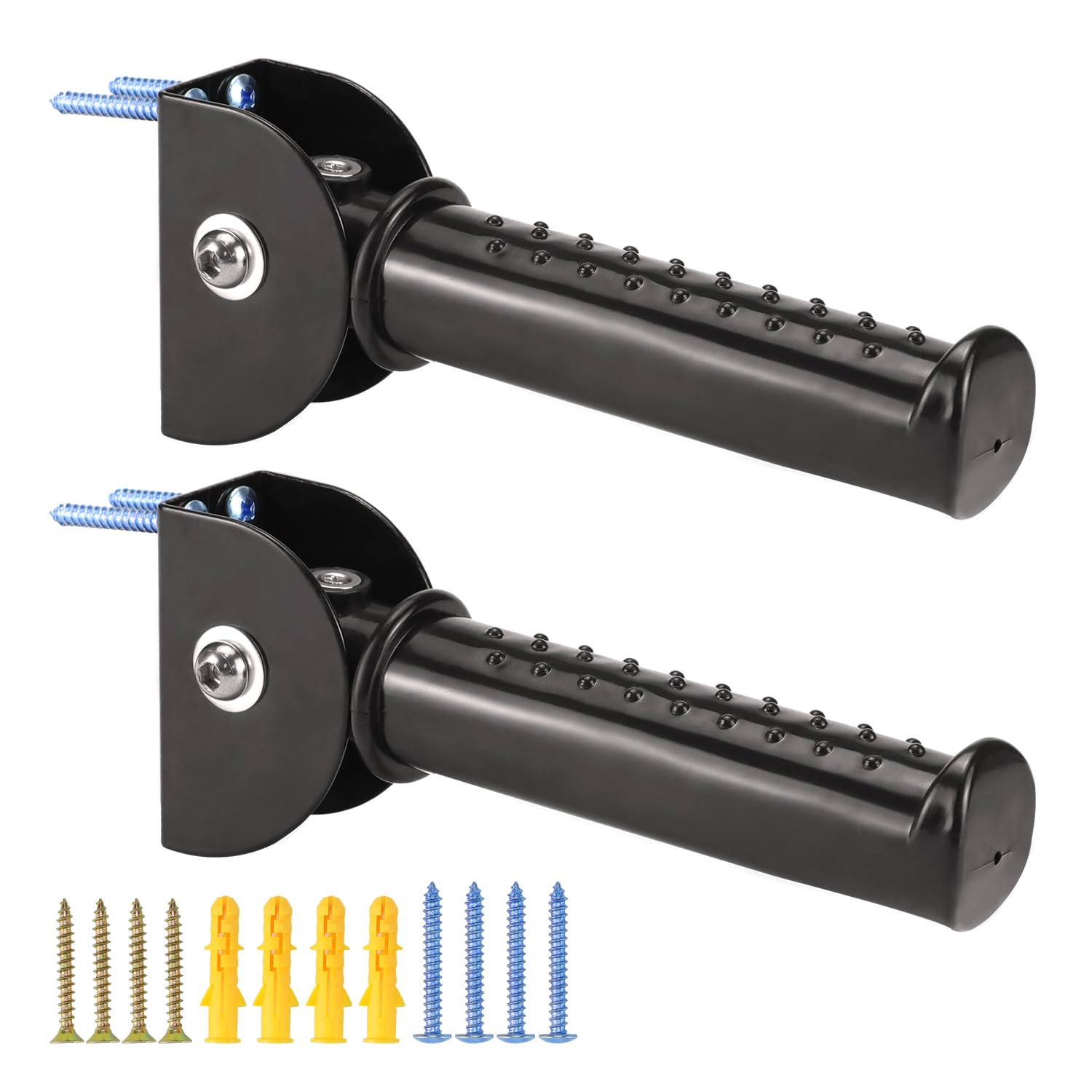
These flip-up bars solve a specific problem: doorways and narrow stair landings where a fixed bar would get in the way.
Pros
- Flip-up design keeps the bar out of the way when not needed
- Anti-slip dot texture plus an underside groove for a firmer hold
- Sold as a two-pack, useful for multiple doorways or step points
Cons
- Must be anchored into a stud for reliable support
- Included screws have drawn complaints about quality
- Limited long-term reviews compared to more established brands
Mounted into a door jamb or stud, these bars fold flat against the wall when not in use, which matters in tight hallways or doorframes where a fixed handle would be a constant obstacle. Several buyers installed them at both interior and exterior doorway thresholds with good results. Because the mounting hardware has drawn some criticism, upgrading to sturdier screws before installing is a reasonable precaution.
Gotega Anti-Slip Grab Bars
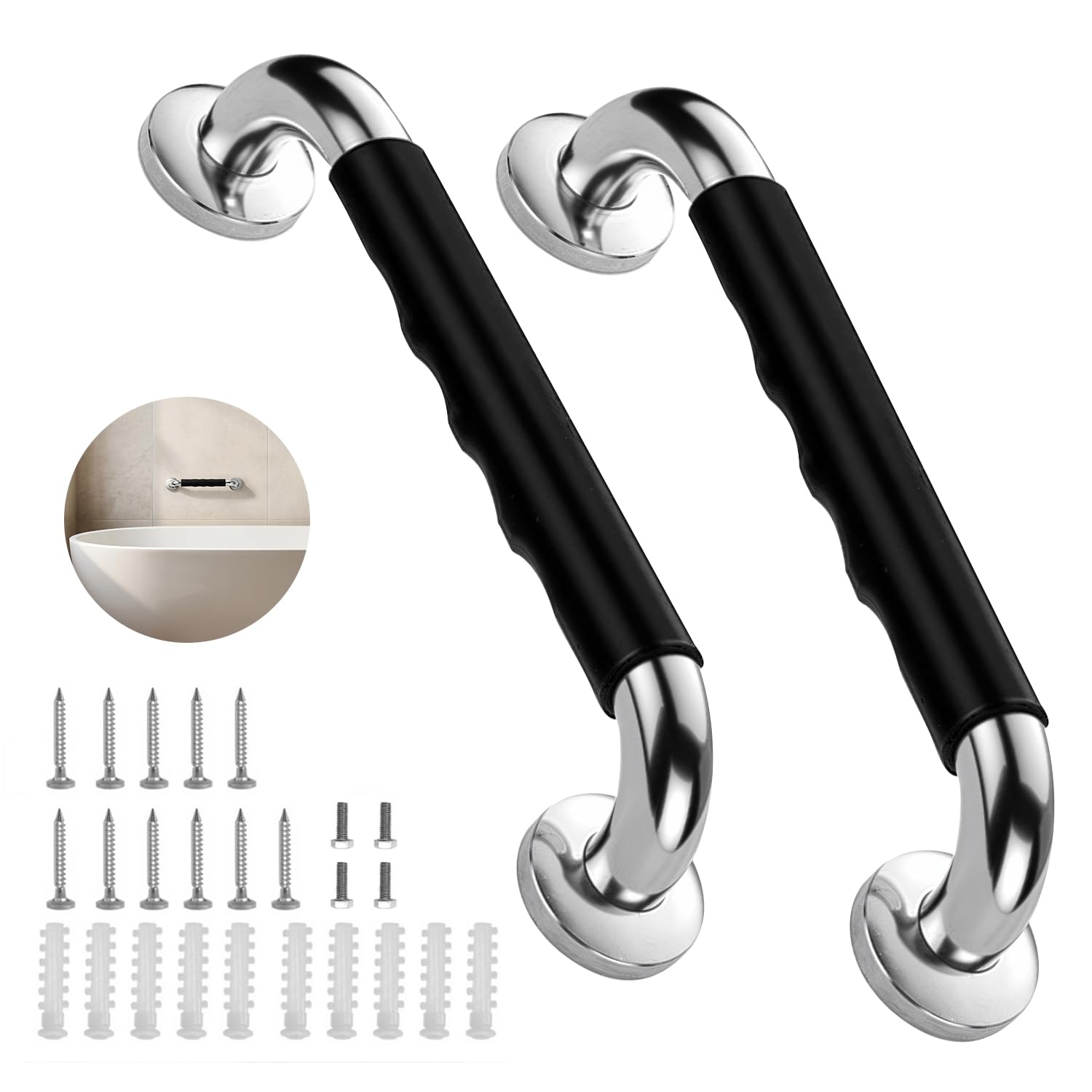
This two-pack offers a budget-friendly way to add grab bars in more than one spot in the bathroom.
Pros
- Sold as a pair, useful for tub and shower entry points together
- Silicone grip strip adds traction beyond bare stainless steel
- Rated to 500 lbs with concealed screw mounting
Cons
- 16-inch length is shorter than some other bars on this list
- Some buyers note the mounting spacing isn’t exactly on 16-inch centers
- Silicone grip may wear before the metal frame does
Getting two bars in one purchase makes it easier to cover both a tub entry and a nearby wall without buying separate listings. The silicone insert gives a noticeably softer grip than plain stainless steel, which matters for anyone with arthritis or reduced hand strength. Buyers planning to mount directly onto wall studs should double check on-center spacing before drilling, since it varies slightly from standard 16-inch framing.
Rockgoya Stainless Steel Grab Bars

These compact 12-inch bars suit tight shower stalls or spots where a longer bar won’t fit.
Pros
- 304 stainless steel construction with a textured anti-slip center section
- Compact 12-inch size fits in smaller shower enclosures
- Includes multiple screw types for different wall materials
Cons
- Shorter length offers less reach than 16- or 24-inch bars
- Plastic wall anchors lack a lip, which can let them slip in during installation
- Requires basic assembly of chrome end caps before mounting
At 12 inches, these bars fit into corners and narrow stall walls where longer bars would look and feel oversized. The textured center section gives a different tactile grip point than smooth stainless, which some buyers with wet or soapy hands prefer. Because installation involves assembling chrome caps and screw plates rather than mounting a single solid unit, it takes a bit longer than a one-piece bar.
NobrNyanT Adjustable Bed Rail
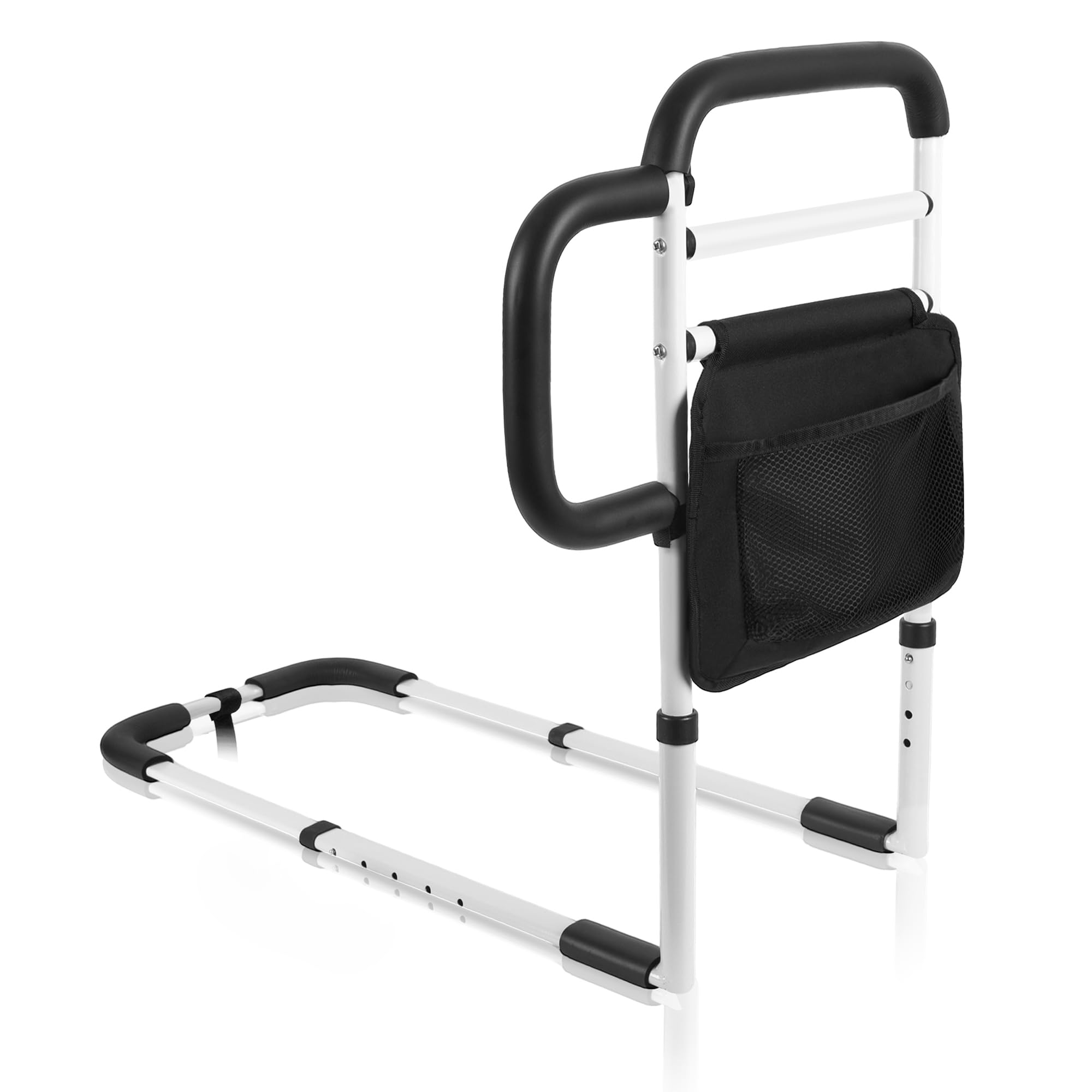
This bed-assist rail gives a stable handhold for getting in and out of bed without a permanent bed-frame modification.
Pros
- ASTM-approved with 350 lbs weight capacity
- Adjustable height and length fit twin through king mattresses
- Storage pockets on both sides for personal items
Cons
- Some buyers report the frame flexes slightly under weight
- Assembly involves spring-loaded buttons that can be fiddly
- Not a substitute for a bed rail bolted to a frame for higher-support needs
Fitting under the mattress rather than attaching to the bed frame, this rail gives a side handle for pushing up or lowering down without hardware changes to the bed itself. The adjustable length (23.6 to 29.5 inches) and four height settings mean it can be moved to a new bed later. A few buyers noted the frame has some give under weight, so it suits general standing support more than heavy-duty weight-bearing transfer.
Buying Guide
Choosing the right handrail starts with identifying the transfer point that needs support, not just picking a product with good reviews. A bar rated for one type of use can be the wrong choice in a different location, even if it looks similar to the correct product.
Weight Capacity and Mounting Type
Weight capacity numbers only apply when a rail is installed the way the manufacturer specifies. A grab bar rated for 500 lbs when anchored into a wall stud may hold far less if mounted into drywall alone with plastic anchors.
| Mounting Type | Typical Use | Installation |
|---|---|---|
| Stud-mounted wall bar | Shower, tub, permanent bathroom support | Drilling into studs or blocking |
| Tension pole (floor to ceiling) | Standing assist near bed, chair | No drilling, requires correct ceiling height |
| Clamp-style tub rail | Temporary or rental bathtub support | Tool-free clamp on flat tub walls |
| Freestanding toilet frame | Toilet transfers | No attachment to toilet, wide base for stability |
| Bed-assist rail | Getting in/out of bed | Slides under mattress, no frame modification |
Balance Support vs. Weight-Bearing Transfer
Some products are designed to steady a person who is already stable, while others are built to bear a significant portion of body weight during a transfer. Confirm which category a product falls into before relying on it for a full sit-to-stand movement. A rail that flexes or shifts under load is a balance aid, not a transfer device, regardless of its marketed weight rating.
Grip, Material, and Surface
Stainless steel and powder-coated steel resist corrosion in humid bathrooms better than lower-grade metals. Textured or silicone-wrapped grips help hands that are wet, weak, or affected by arthritis maintain a secure hold. Bar diameter matters too: a 1.25-inch diameter suits most adult hands, while thicker or thinner bars may be harder to grip for people with limited hand strength.
Mounting Surface Compatibility
Check whether a tub or shower wall is fiberglass, tile, or acrylic before choosing a clamp-style rail, since curved or textured surfaces don’t allow a secure clamp fit. For drilled installations, locate wall studs first. When studs don’t align with the ideal bar placement, some bars can be installed at an angle across a wider span for a secure hold.
When to Get Professional Guidance
A physical therapist or occupational therapist can assess transfer needs and recommend specific placement heights and rail types. For anyone recovering from surgery, managing a progressive condition, or supporting a household member with significant mobility limitations, professional installation and placement guidance reduces the chance of choosing the wrong product for the situation.
Editor’s Choice
The Moen Home Care Stainless Steel Grab Bar stands out as the strongest overall pick for households that can commit to a permanent, stud-mounted installation. Its 500-lb capacity when properly anchored, ADA-compliant sizing, and lifetime warranty make it a dependable choice for genuine weight-bearing support in a shower or tub.
For anyone who can’t drill into walls, the Vaunn Medical Bathtub Safety Rail is the practical alternative. Its tool-free clamp system delivers solid support on standard flat-walled tubs without any permanent changes, which makes it especially useful for renters and for older adults who split time between homes.
Conclusion
Matching the right handrail to the right transfer point makes the biggest difference in day-to-day safety. A stud-mounted bar belongs in the shower, a freestanding or toilet-mounted frame belongs by the toilet, and a tension pole or bed rail belongs where standing or repositioning happens most.
Before buying, confirm the mounting surface, check wall stud locations, and read the weight capacity conditions closely, since many ratings only apply under specific installation methods. When a transfer need is significant or changing, a conversation with a physical or occupational therapist adds guidance that a product listing alone can’t provide.
FAQs
What is the difference between a grab bar and a handrail? A grab bar is typically a short, fixed bar used for a specific task like showering or toileting. A handrail more often refers to a longer rail used along a hallway, stairway, or ramp for continuous support while walking.
Can I install a grab bar without hitting a wall stud? Some products, like clamp-style tub rails and certain wall anchors rated for heavier loads, can work without a stud. For full weight-bearing support, mounting into a stud or using manufacturer-approved anchors rated for the bar’s full weight capacity is the safer approach.
How do I know if a product supports weight-bearing transfers or just balance? Check the manufacturer’s stated use case and weight capacity conditions. Products marketed for standing assistance, transfer poles, or stud-mounted bars with high weight ratings are generally built for weight-bearing use, while lighter clamp or suction products are intended for balance support only.
Are suction-cup grab bars safe for daily transfers? Suction-cup bars are not included in this roundup because they are not reliable for weight-bearing transfers. They can lose their seal over time or with moisture exposure, and most manufacturers recommend them for balance support only, not for a person’s full body weight.
Should a caregiver or family member install these products? Basic wall-mounted bars and clamp rails can often be installed by a capable family member following the manufacturer’s instructions. For complex bathroom layouts, unclear stud locations, or higher-support needs, hiring a contractor or consulting an occupational therapist helps confirm safe placement.