
10 Best Handrails for Caregivers in 2026


Toilet Safety Rails

Smart Digital Photo Frame

Voice Assistant Smart Speaker
Handrails do a specific job: they give a hand and a body something solid to press against during the exact moment balance is most at risk. That moment might be stepping over a tub wall, rising from a toilet, climbing a single porch step, or shifting weight to sit up in bed. Not every handrail suits every task, and matching the mount type and grip style to the actual movement matters more than picking the biggest or best-reviewed bar on the shelf.
Caregivers shopping for handrails are really shopping for four different categories at once: permanently anchored wall bars, tension-mounted poles that need no drilling, clamp-on tub rails, and portable or fold-away supports for steps and doorways. Choosing the right category for the task at hand does more for stability than choosing a premium brand within the wrong category. A tub clamp will not help someone rising from a chair, and a floor-to-ceiling pole will not solve a slick tub wall.
Weight capacity, mounting method, and surface compatibility deserve close attention before checkout. A bar rated for 500 pounds when screwed into a stud offers far less support if it lands on drywall alone. Tub clamps only grip flat, smooth walls. Tension poles need accurate ceiling height measurements. We look at all of this below, task by task, starting with the bathroom.
Best for permanent tub and shower support: Moen Home Care 24-Inch Grab Bar
Best for room-to-room transfers without drilling: Stander Wonder Pole
Best for a quick, no-drill tub rail: Vaunn Medical Bathtub Safety Rail
Best for outdoor entry steps: SELEWARE Wall Mount Handrail
Best for a full porch or deck staircase: CR Fence & Rail Handrail Kit
Best for toilet sit-to-stand support: Lianjindun Toilet Safety Rails
Best for bedside standing assistance: Stander Single Handle Floor to Ceiling Grab Bar
Best for getting in and out of bed: Easymake Bed Rails
Best for a narrow or adjustable tub rim: Songsoso Adjustable Bathtub Safety Rail
Best for tight doorways and single steps: QWORK Folding Grab Bars
Moen Home Care 24-Inch Stainless Steel Grab Bar

This is the bar to buy when a permanent, stud-anchored grab point in the tub or shower is the goal.
Pros
- Supports up to 500 pounds when anchored into a stud
- ADA-compliant sizing and stainless finish that matches other bath hardware
- Backed by a limited lifetime warranty
Cons
- Requires drilling and stud location for full strength
- Included screws have small heads that some buyers found prone to stripping
- Not adjustable once mounted
Caregivers who install this bar into wall studs report a rock-solid feel, and several mention using it at an angle to span joists that weren’t spaced normally. The brushed stainless finish holds up well against soap scum and humidity. Locating studs is the main hurdle, and a few reviewers recommend upgrading the mounting screws before installing. Once anchored, it becomes a permanent, dependable grab point for tub and shower transitions.
Stander Wonder Pole
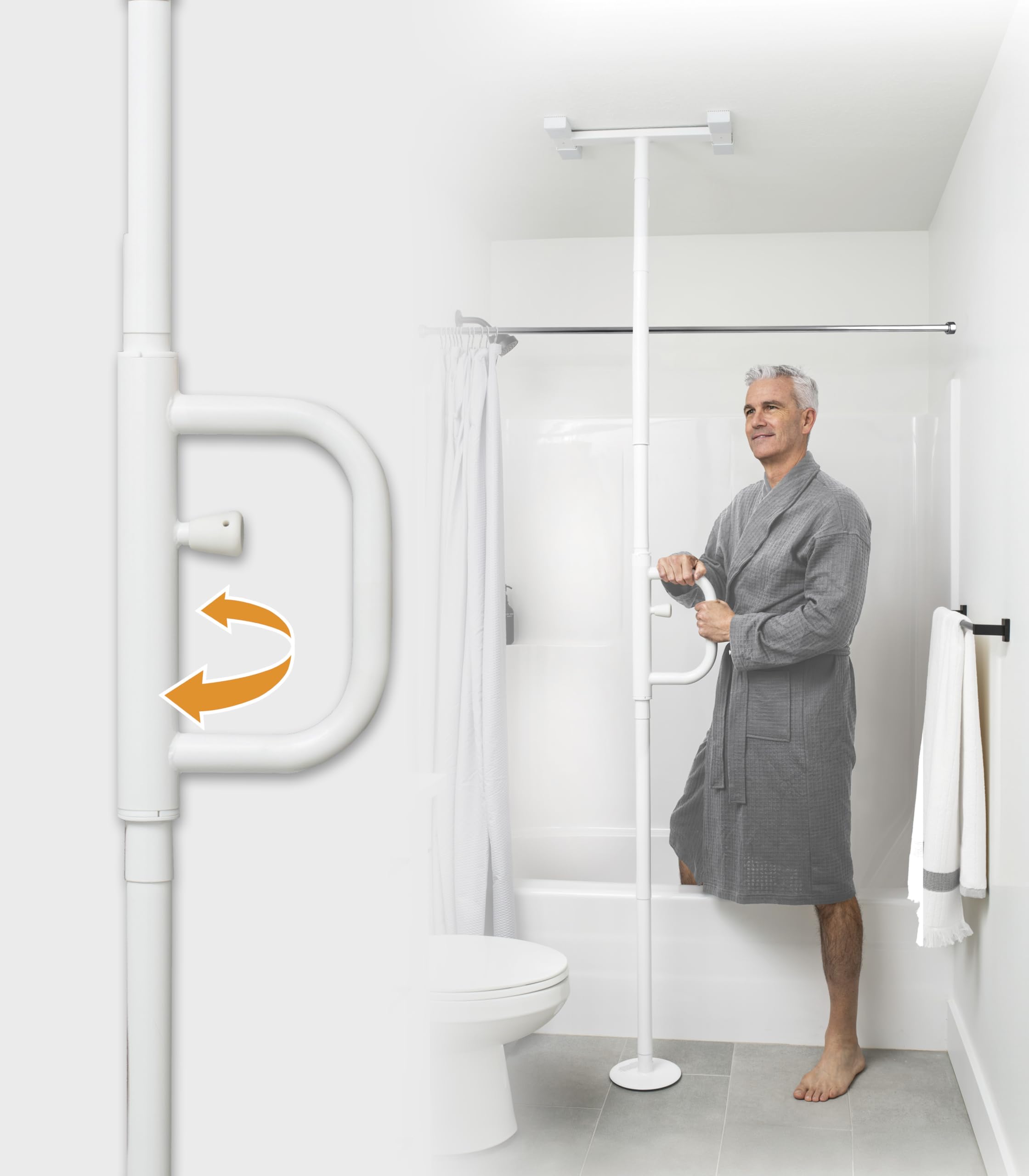
This floor-to-ceiling tension pole works well for caregivers who need a sturdy handhold near a bed, chair, or toilet without drilling into walls.
Pros
- Tension-mounted with no drilling required
- Rotating handle locks at 45-degree intervals for flexible grip angles
- Supports up to 300 pounds
Cons
- Requires accurate ceiling height measurement before ordering
- Not designed for use inside a tub or shower
- Heavier and bulkier than wall-mounted bars
Families managing stroke recovery or advancing mobility loss often buy a second one after the first proves useful. The rotating handle lets one pole serve a chair, a bed, and a nearby doorway. Because it relies on tension against floor and ceiling, a level, stable surface at both ends is worth checking before setup. It is not built for wet, slippery tub environments.
Vaunn Medical Bathtub Safety Rail

This clamp-on rail suits caregivers who need a stable tub handhold today, without tools or wall damage.
Pros
- Tool-free clamp installs in minutes on flat tub walls
- Rubber pads protect tub finish and improve grip
- Portable enough to take when traveling
Cons
- Only works on flat-walled tubs between 3 and 7 inches thick
- Not compatible with fiberglass, curved, or textured surfaces
- Some flex noted along the horizontal axis after installation
Reviewers recovering from surgery describe this rail as reassuring for solo bathing. It clamps down firmly on the vertical grip but can shift slightly side to side, so a check of tightness before each use is a sensible habit. Its portability makes it a strong option for caregivers assisting someone who splits time between two homes.
SELEWARE Wall Mount Handrail

This welded steel handrail is built for one to three exterior steps, such as a porch, garage entry, or garden path.
Pros
- Double full-weld construction feels notably sturdy
- Two-level grip design suits users of different heights
- Works indoors or outdoors
Cons
- Limited to short runs of one to three steps
- Only available in a painted finish, not stainless
- Requires wall studs or masonry anchors for full strength
Caregivers installing this near a garage or back door describe it as a fast fix for a step that had become a fall risk. The 45-degree angled design mirrors how a hand naturally reaches for support while descending. It is a compact, single-point rail rather than a running staircase system, which keeps installation simple.
CR Fence & Rail Handrail Kit
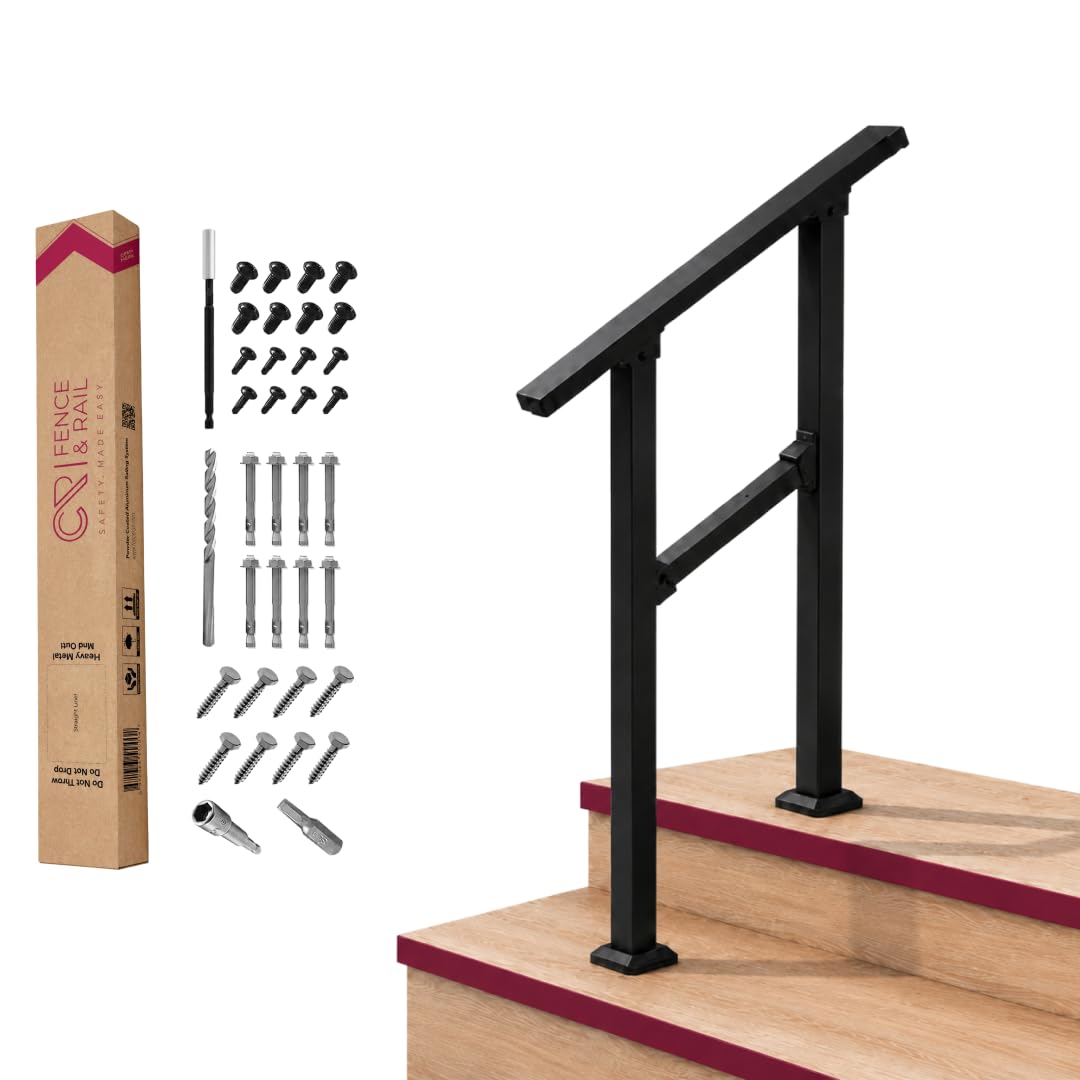
This kit fits one to two steps and works well when a full-length, code-referenced handrail is needed for a porch or deck.
Pros
- Meets several IBC structural code references
- Four-side welded joints for long-term durability
- Kits can be chained together for longer staircases
Cons
- Rated to a lower 238-pound minimum weight capacity than some competitors
- Installation involves more hardware and steps than a single wall bar
- Matte black finish may not suit every exterior
Several reviewers installed this for aging parents navigating a single step into a garage, and note that the enclosed bracket design keeps water from pooling at the base. It comes with drill bits and anchors, which speeds up a DIY afternoon project. For longer runs, connectors let multiple kits link into one continuous rail.
Lianjindun Toilet Safety Rails

This frame fits around most toilets and gives a caregiver-free way to push up from a seated position.
Pros
- Height and width both adjust to fit the user and toilet
- Foldable for storage or travel
- No drilling into walls or tile
Cons
- Relies partly on rubber feet and suction rather than fixed anchoring
- Seat lid can shift during use on some toilet shapes
- Foam grips may compress over years of heavy use
Caregivers supporting someone after hip or knee surgery frequently mention how quickly this sets up next to an existing toilet. The adjustable width accommodates tight bathroom layouts where a wall bar isn’t feasible. It won’t match the rigidity of a stud-mounted bar, but for renters or temporary recovery needs, it fills a real gap.
Stander Single Handle Floor to Ceiling Grab Bar
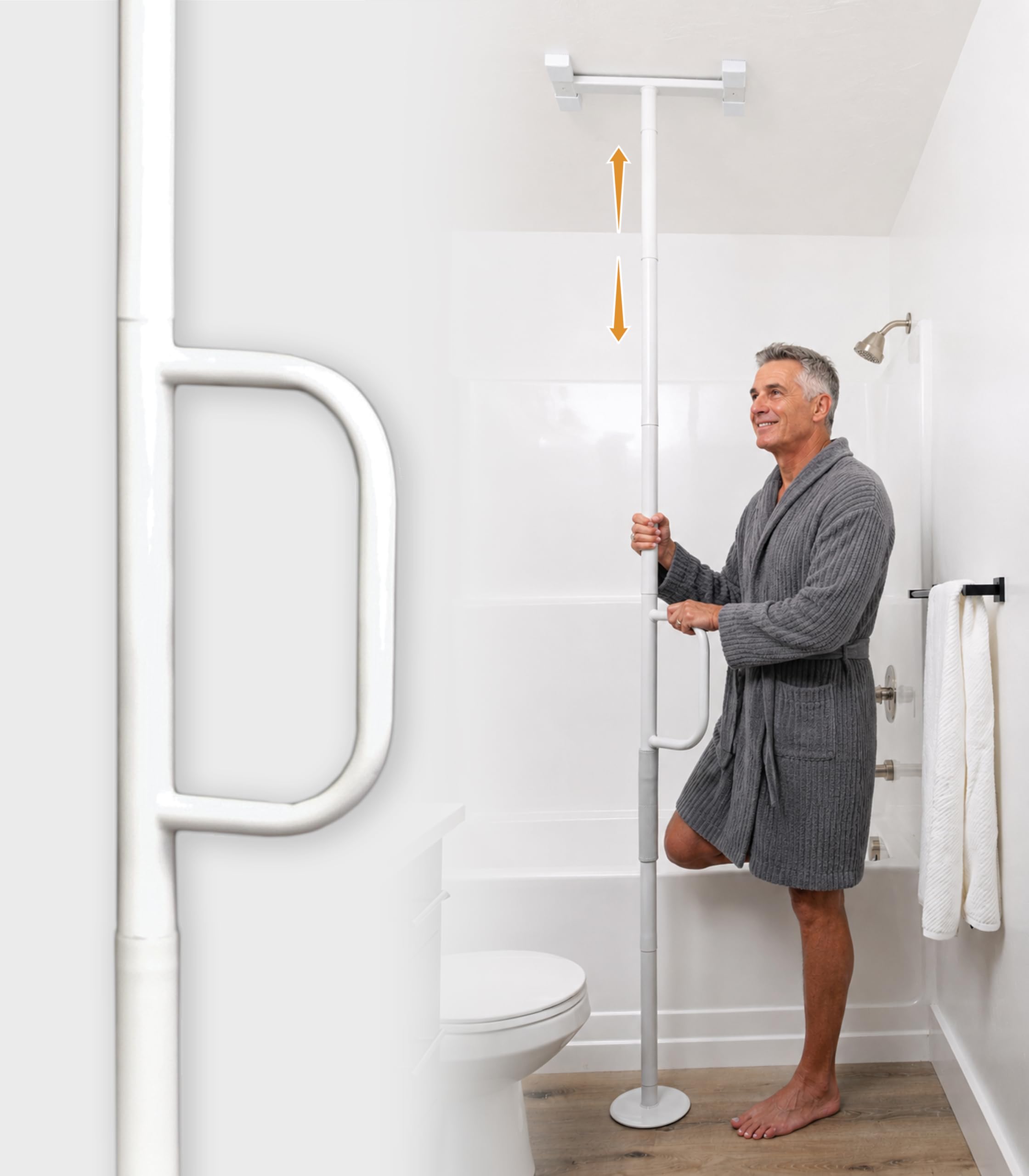
This tension pole gives a fixed, two-level handle for standing up from a bed, chair, or recliner without a rotating grip.
Pros
- No-drill tension mount fits ceilings from 7 to 9.5 feet
- Two-level handle improves grip options for different heights
- Works in bedrooms, living rooms, and other non-wet areas
Cons
- Handle can feel slippery with wet or lotioned hands
- Not intended for use inside a tub or shower
- Bulkier footprint than a wall-mounted bar
A caregiver assisting a parent after a stroke described this pole as central to daily physical therapy routines at home. The non-rotating handle offers a fixed reference point, which some users prefer over a swiveling grip. Placement near a bed needs a few inches of clearance to avoid feeling boxed in.
Easymake Bed Rails
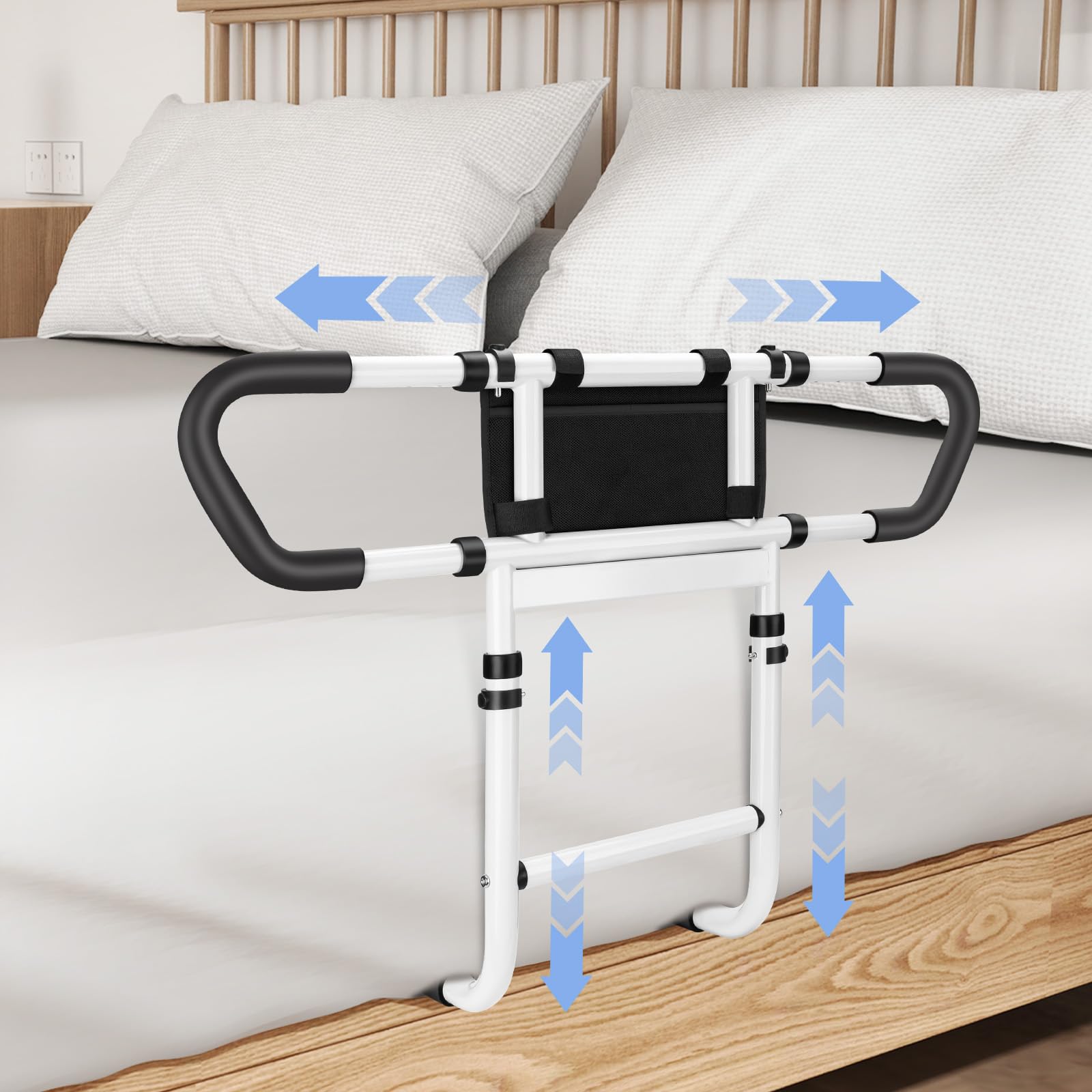
This bed rail gives a stable handhold for sitting up or swinging legs out of bed, with a storage pouch built into the frame.
Pros
- Adjustable handle, height, and base width fit most mattress sizes
- Reinforced steel frame rated to 400 pounds
- Tool-free setup on either side of the bed
Cons
- Relies on mattress weight rather than a fixed anchor for stability
- Included light feature is small and hard to use, per reviewer feedback
- Assembly holes reported as slightly uneven on some units
A caregiver whose spouse had a stroke described this rail as part of their nightly routine for getting in and out of bed safely. Because it sits under the mattress rather than bolting to a bed frame, checking that it stays seated after each use is a good habit. For frequent nighttime transfers, some buyers add a mattress-side safety strap for extra peace of mind.
Songsoso Adjustable Bathtub Safety Rail
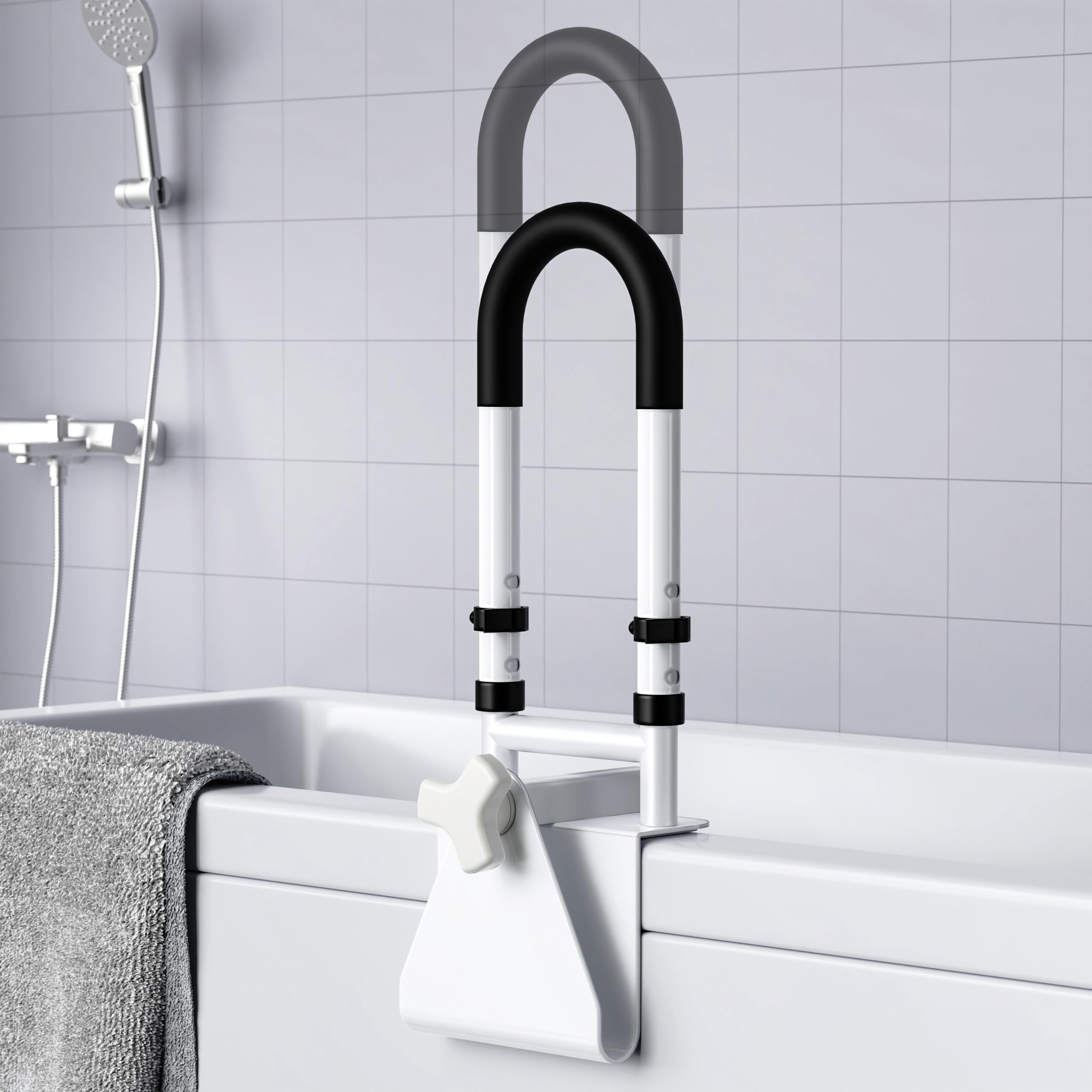
This clamp-on rail adjusts in height, which helps when tub depth or user height varies between household members.
Pros
- Height adjusts from 15 to 18 inches
- Triple rubber pads protect the tub finish and boost grip
- Fits tub walls from 3.1 to 6.7 inches thick
Cons
- Only suited to smooth, flat tub edges
- Clamp can loosen slightly over repeated use
- Not intended for curved or textured tubs
Reviewers recovering from hip replacement surgery mention using this rail daily for both the tub and a nearby toilet. Its narrow footprint suits small bathrooms where a floor-to-ceiling pole would feel cramped. Rechecking the clamp tightness before each use keeps it performing as intended.
QWORK Folding Grab Bars
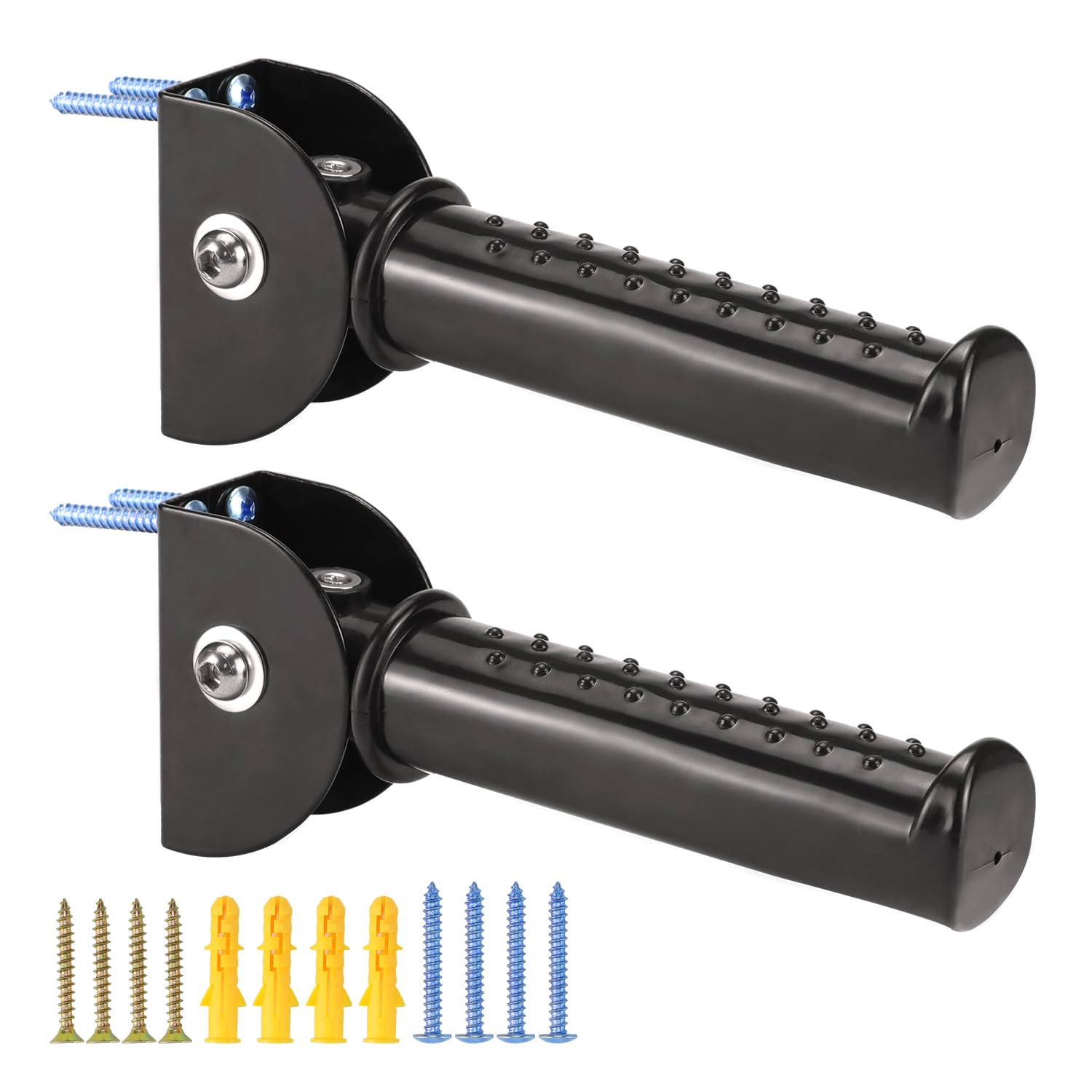
These flip-up bars solve the awkward moment of stepping through a doorway or over a single stair without a permanent-looking rail in the way.
Pros
- Flip-up design folds flat when not needed
- Sold as a two-pack for doorway pairs or multiple entry points
- Anti-slip dotted texture on the grip surface
Cons
- Best mounted into a stud, which limits placement options
- Some buyers reported low-quality screws that stripped on installation
- Smaller grip size than full-length wall bars
Families managing a parent’s mobility around a back door or basement stairwell often install these in pairs, one on each side of the frame. The fold-away feature keeps the doorway clear for others in the household. Swapping in sturdier screws before mounting avoids the stripped-screw issue some reviewers ran into.
Buying Guide
Match the Mount to the Task
Permanent wall bars anchor into studs or wall reinforcement and stay in one fixed spot. They suit tubs, showers, and stairwells where the same grab point gets used daily.
Tension-mounted poles wedge between floor and ceiling without drilling, which makes them reversible and good for renters. Clamp-on tub rails grip the tub wall directly and skip tools entirely, but only work on flat, smooth surfaces.
Weight Capacity Isn’t One Number
A bar’s maximum weight rating often depends on how it’s installed. A bar rated for 500 pounds into a stud may hold far less if mounted into drywall alone with anchors.
| Mount Type | Typical Capacity | Installation Note |
|---|---|---|
| Stud-anchored wall bar | 300 to 500 lbs | Requires stud location or wall reinforcement |
| Tension pole (floor-to-ceiling) | 300 lbs | Needs accurate ceiling height and flat floor |
| Tub clamp rail | 300 lbs | Only fits flat, smooth tub walls |
| Foldable/portable rail | 300 to 400 lbs | Often relies on mattress or floor friction |
Check Surface Compatibility Before Buying
Clamp-on rails specify a wall thickness range, usually between 3 and 7 inches. Fiberglass, curved, or textured tubs generally aren’t compatible with clamp designs and need a wall-mounted bar instead.
Grip Design and Comfort
Textured or dotted grips help with wet hands, while smooth stainless finishes can turn slippery with soap or lotion. A two-level or rotating handle gives more angle options for people who need to grab at different heights during a transfer.
When to Call a Professional
Wall studs aren’t always where expected, especially in older homes or bathrooms with tile backer board. If a stud can’t be located safely, a licensed contractor can install proper blocking or use heavy-duty anchors rated for the wall material. Permanent stair and porch railings anchored into concrete or masonry also benefit from professional installation to meet local building code.
Editor’s Choice
For a permanent bathroom grab point, the Moen Home Care 24-Inch Grab Bar stands out for its stud-anchored strength and lifetime warranty. Caregivers needing flexible support across multiple rooms without drilling get the most mileage from the Stander Wonder Pole, thanks to its rotating handle and tension mount.
For toilet transfers, the Lianjindun Toilet Safety Rails offer adjustable, no-drill support that fits most bathroom layouts. Each of these earns its spot by solving a distinct mobility task rather than trying to do everything at once.
Conclusion
Choosing a handrail starts with naming the exact moment it needs to support: stepping into a tub, rising from a toilet, climbing a porch step, or shifting weight in bed. Permanent bars offer the strongest anchor point once installed correctly into a stud or masonry. Tension poles and clamp-on rails trade some rigidity for flexibility and easier installation.
Checking wall or tub surface compatibility before ordering avoids a returned product and a delayed fix. Matching the mount type to the task, and confirming weight capacity under real installation conditions, gives a caregiver the most reliable support for daily transfers. Measure twice, especially ceiling height and tub wall thickness, before any of these arrive at the door.
FAQs
Do tension-mounted poles damage floors or ceilings? Most tension poles use rubber or padded end caps that grip without penetrating the surface. Checking the manufacturer’s floor and ceiling material guidance before installation avoids marks on hardwood or drop ceilings.
Can a clamp-on tub rail replace a wall-mounted grab bar? It can for tub entry and exit, but not for general bathroom support like toilet transfers or shower standing. Clamp rails only grip the tub edge itself and only on flat, smooth surfaces.
How do I know if a wall has a stud where I need to mount a bar? A stud finder is the most reliable tool, though tapping the wall to listen for a solid versus hollow sound can help in a pinch. If no stud lines up with the ideal bar placement, heavy-duty drywall anchors rated for the bar’s weight capacity are the next option, or a professional can add blocking behind the wall.
Are folding grab bars as strong as fixed ones? Folding bars can match fixed bars in weight capacity when mounted into a stud, but their smaller grip surface and moving hinge mean more attention to installation quality. Reviewers of several folding models note that upgrading the included screws improves long-term reliability.
What is the difference between ADA-compliant and standard grab bars? ADA-compliant bars meet specific diameter, length, and clearance standards set for accessibility in public spaces. Home use doesn’t require ADA compliance, but choosing a compliant bar often means proven, well-tested dimensions for grip and support.