
10 Best Handrails for Arthritis in 2026


Automatic Can Opener

Medical Alert System

Kitchen Timer with Large Display
Grip strength and joint pain change what makes a handrail useful. A rail that feels sturdy to someone with full hand mobility can be genuinely hard to use for a person with swollen knuckles, limited wrist rotation, or arthritis in the thumbs. Diameter, texture, and the angle of approach matter as much as how much weight the bar can hold.
Handrails for stairs, tubs, and toilets solve different problems. A wall-mounted stair rail needs to anchor into a stud or masonry and give a firm pull point at the right height. A tub rail has to clamp or mount without damaging tile, while a toilet frame needs to support a sit-to-stand motion without wobbling. The best choice depends less on weight capacity alone and more on how easily a stiff or painful hand can close around the grip and hold it through the full motion of standing, stepping, or turning.
Installation surface, grip diameter, and mounting security deserve attention before buying. A rail rated for 500 pounds is only as safe as the wall or clamp holding it in place, and a smooth metal tube can be harder to grip in a damp bathroom than a textured or foam-wrapped one. The reviews below weigh those details specifically for readers managing joint pain or reduced hand strength.
Best for garage and porch steps: SELEWARE Heavy Duty Wall Mount Handrail
Best for shower and tub walls: Moen 24-Inch Stainless Steel Grab Bar
Best for RV and camper doorways: Stromberg Carlson Lend-A-Hand Foam Grip
Best for tubs without drilling: Vaunn Medical Locking Tub Clamp Rail
Best for cold hands and short steps: SELEWARE 16-Inch Wood Handrail
Best for double-side entry steps: Frossvt 2-Pack Bent Handrail
Best for a single low step: Sahans 16-Inch U-Shape Handrail
Best for a warm, natural grip: Purife 18-Inch Wood Grab Bar
Best for tight doorway clearance: QWORK Folding Grab Bars, 2-Pack
Best for toilet sit-to-stand support: Vaunn Medical Adjustable Toilet Safety Rail
SELEWARE Heavy Duty Wall Mount Handrail

Buy this if stiff hands need a wide, angled grip for a few outdoor or garage steps.
Pros
- Two height levels suit different grip positions and arm lengths
- 1.3-inch tube diameter is easy to close a hand around
- Double full-weld construction feels rock solid once mounted
Cons
- Requires anchoring into a stud, pillar, or masonry for full strength
- Smooth metal surface gets cold and can feel slick when wet
The 45-degree downward bend gives a natural pulling angle instead of forcing a wrist into an awkward twist. Reviewers with grip limitations note the two-level design lets shorter or taller users find the height that puts the least strain on the wrist. Installation needs a solid wall or post behind it, so drywall alone will not hold the load safely.
Moen 24-Inch Stainless Steel Grab Bar

Buy this for a permanent, ADA-compliant bar beside a shower or tub that a caregiver or contractor can install into studs.
Pros
- 1.25-inch diameter fits comfortably in most hand sizes
- SecureMount option keeps screws concealed for a cleaner look
- Backed by a limited lifetime warranty
Cons
- Full weight rating depends on hitting a stud or using SecureMounts separately
- Included screws are reported as small-headed and prone to stripping
Stainless steel resists corrosion in a humid bathroom, and the brushed finish stays cool without turning icy the way some polished metal bars do. The straight, angle-flexible mount lets an installer match the bar’s position to where a hand naturally reaches, which matters when shoulder or wrist rotation is limited. Locating a stud is the trickiest part of installation; SecureMount anchors solve that but are sold separately.
Stromberg Carlson Lend-A-Hand Foam Grip

Buy this for a foam-padded, folding rail beside an RV, camper, or garage entry step.
Pros
- Foam grip is easier on sore joints than bare metal or wood
- Folds flat against the wall when not needed
- Aluminum construction resists rust in outdoor settings
Cons
- Designed for left-hand mounting; right-side use may need extra backing
- Foam surface can degrade faster than solid metal over years of sun exposure
The padded grip is the standout feature for anyone whose fingers ache against hard, unyielding tubing. It offers a softer contact point that still holds up under a firm pull. Folding it flat keeps a doorway clear when the rail isn’t in use, useful for households where mobility needs change day to day.
Vaunn Medical Locking Tub Clamp Rail

Buy this for a tool-free rail that clamps onto a flat-walled tub without drilling.
Pros
- Installs and removes in minutes, good for renters or travel
- Rubber pads protect tub finish and add clamping grip
- Steel frame feels stable once tightened
Cons
- Not intended for fiberglass, curved, angled, or textured tub walls
- Some horizontal wobble reported along the tub wall axis
Turning the clamp handle takes some hand strength, so a caregiver may need to tighten it initially for someone with severe grip limitations. Once locked in place, the rail gives solid vertical support for stepping over a tub wall. It works only on flat-sided tubs between roughly 3 and 7 inches thick, so measuring first avoids a wasted purchase.
SELEWARE 16-Inch Wood Handrail
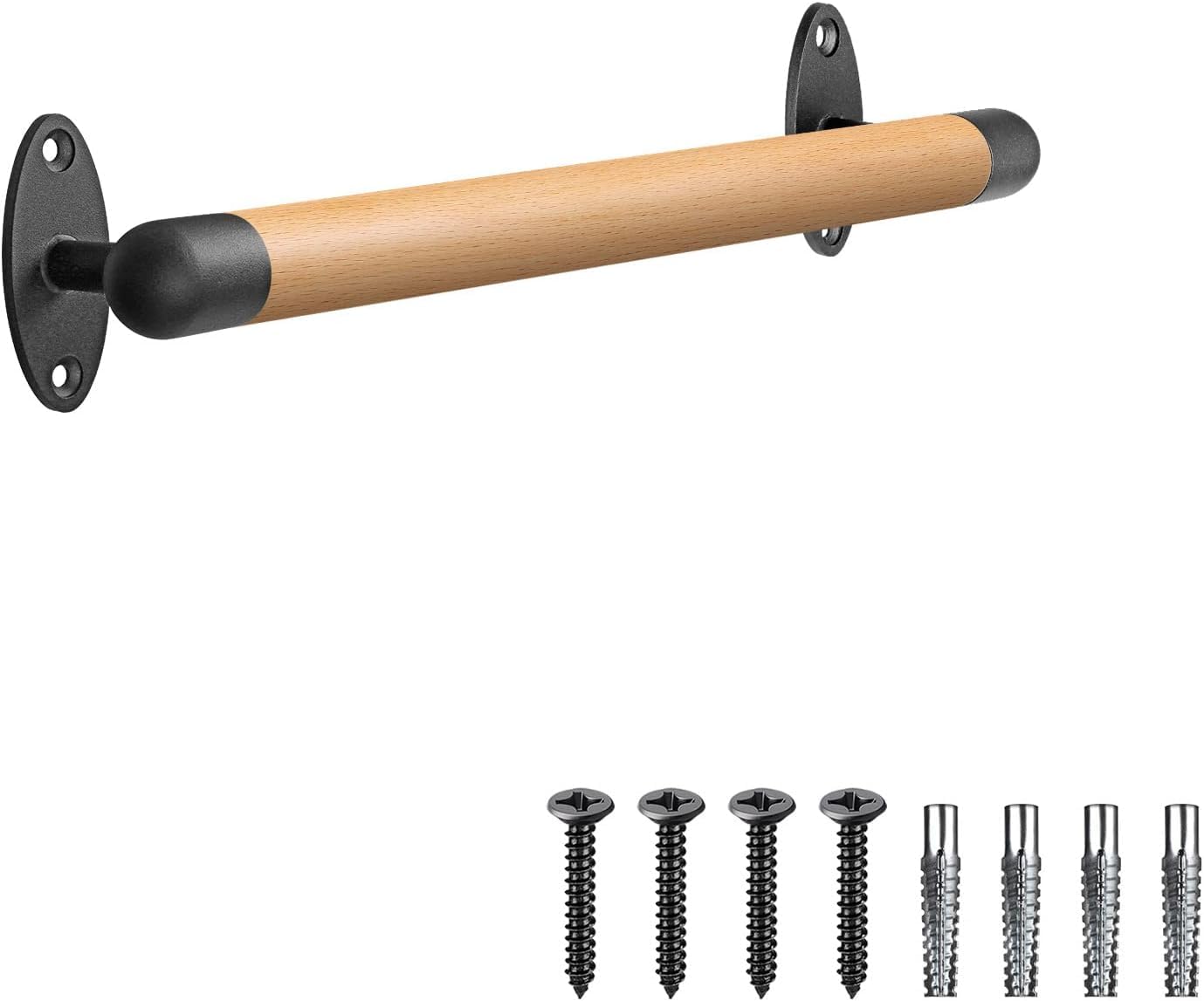
Buy this for a short indoor rail with a warm, comfortable wood grip on a single step or narrow hallway.
Pros
- Beech wood stays warm to the touch, unlike metal in cold weather
- Rounded ends reduce snag and impact risk
- Each bracket is rated to support 300 pounds
Cons
- Short 16-inch length suits only one step or a brief stretch of wall
- Wood finish may need occasional care to stay smooth
Wood has a natural give that some arthritic hands prefer over hard metal, and the smooth polish means no seams or rough transitions to catch a ring or bandage. It mounts with two brackets, so the wall behind it needs enough backing to hold real weight. This size fits best near a single interior step, not a full staircase run.
Frossvt 2-Pack Bent Handrail
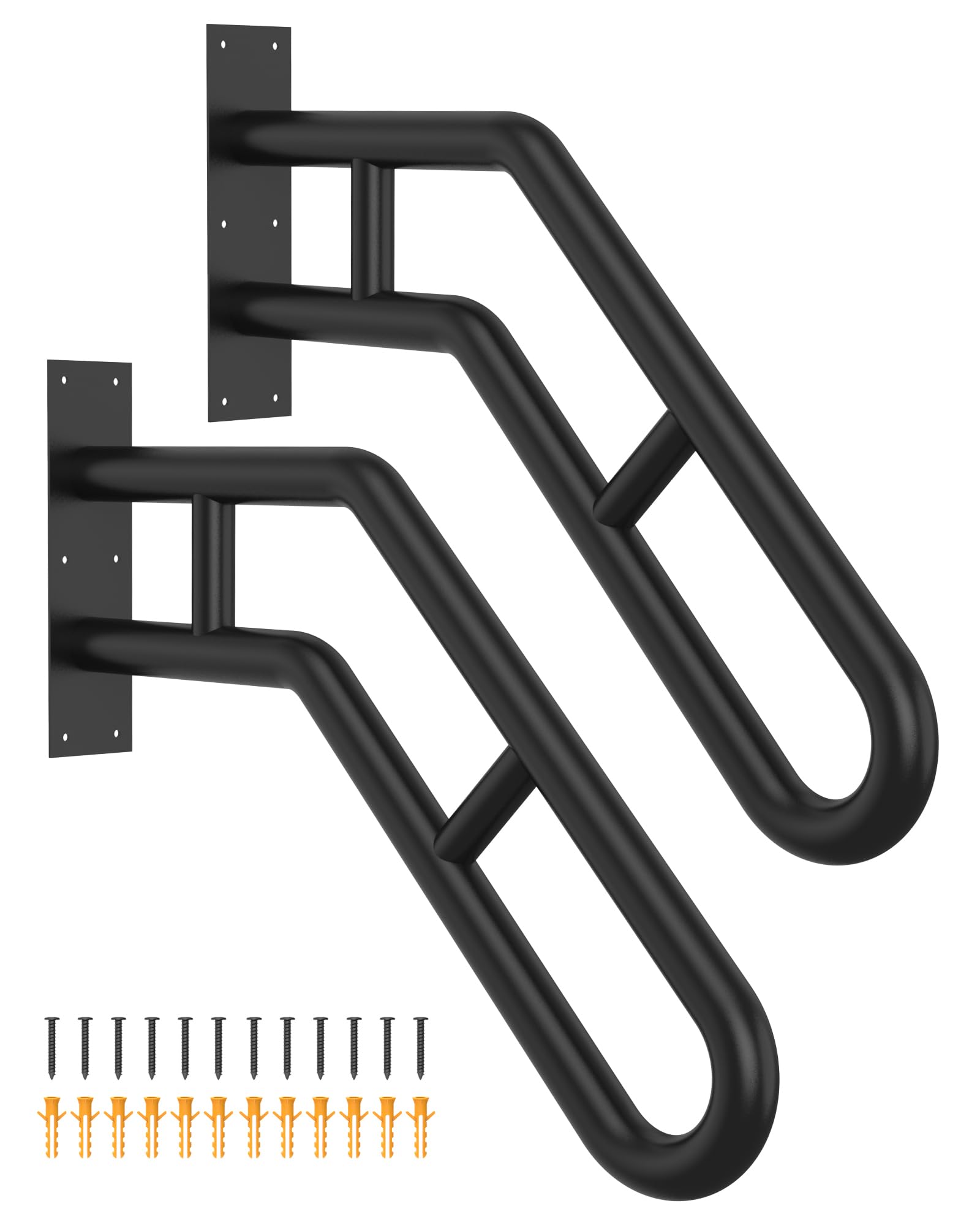
Buy this for matching rails on both sides of a step or two separate entry points.
Pros
- Two-pack covers both sides of a doorway or two different steps
- 45-degree bend gives a natural downward pull angle
- Welded wall plate adds strength over bolted alternatives
Cons
- Anchors included work best in solid wood framing, less so in bare drywall
- 1.2-inch diameter runs slightly slimmer than some other rails here
Having two rails means a person can steady themselves with either hand, which helps when arthritis affects one side more than the other. The welded base plate, rather than a bolted-on one, removes a common weak point. Mounting into a door frame or stud gives the most secure hold; hollow drywall alone will not support real weight.
Sahans 16-Inch U-Shape Handrail
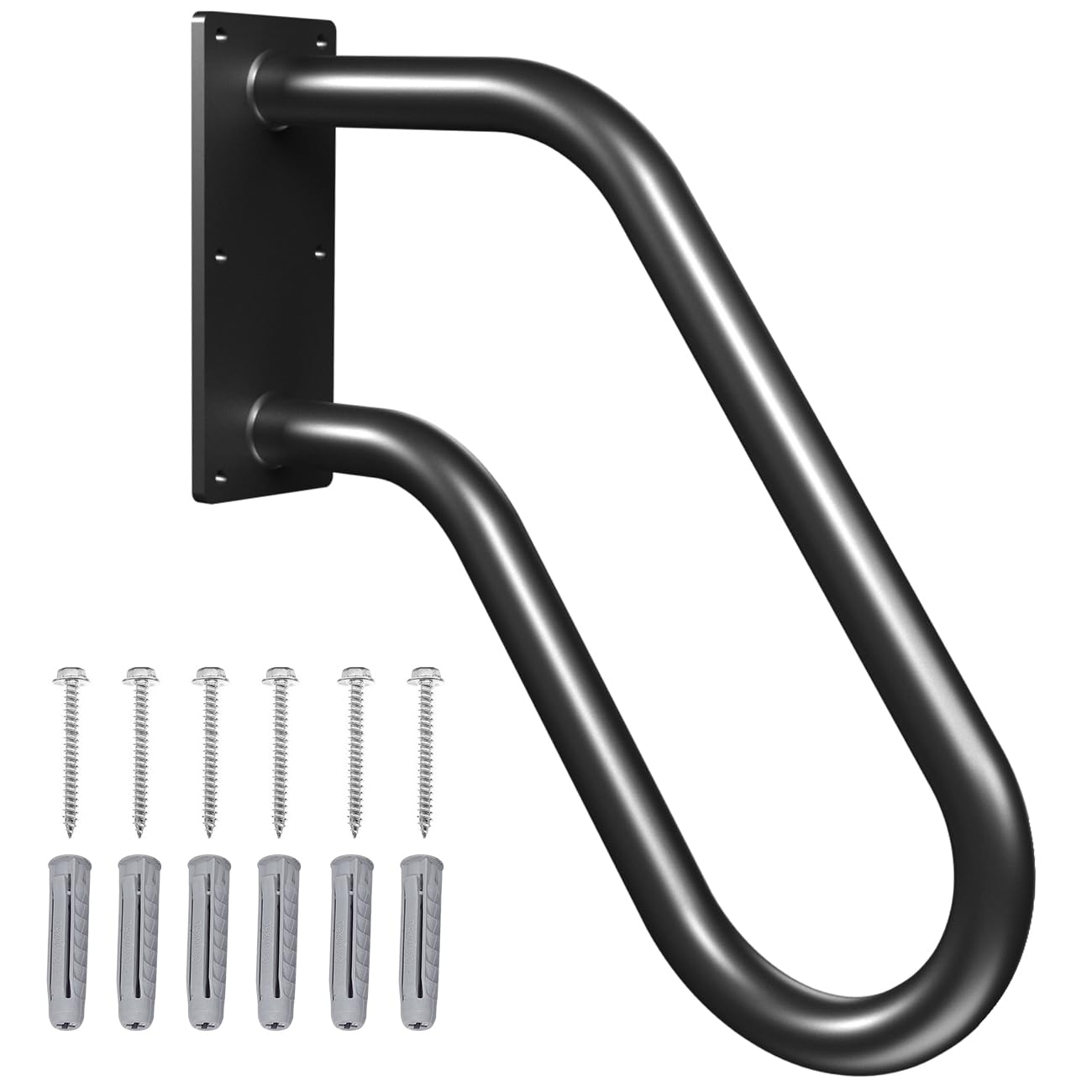
Buy this for a compact, low-profile rail suited to one or two garage or entry steps.
Pros
- Compact size fits tight entryways without extending too far
- Powder-coated finish resists rust outdoors
- Comes with six screws and expansion anchors for masonry
Cons
- Included anchors have been reported to break during installation into brick or concrete
- Solid black finish can be hard to see against a dark wall
The U-shape gives a full hand-around grip rather than a flat surface to press against, which many arthritic hands find easier to close around securely. Its shorter length keeps it from crowding a narrow garage doorway. Anchoring into masonry may call for sturdier hardware than what ships in the box, particularly for older or crumbling concrete.
Purife 18-Inch Wood Grab Bar
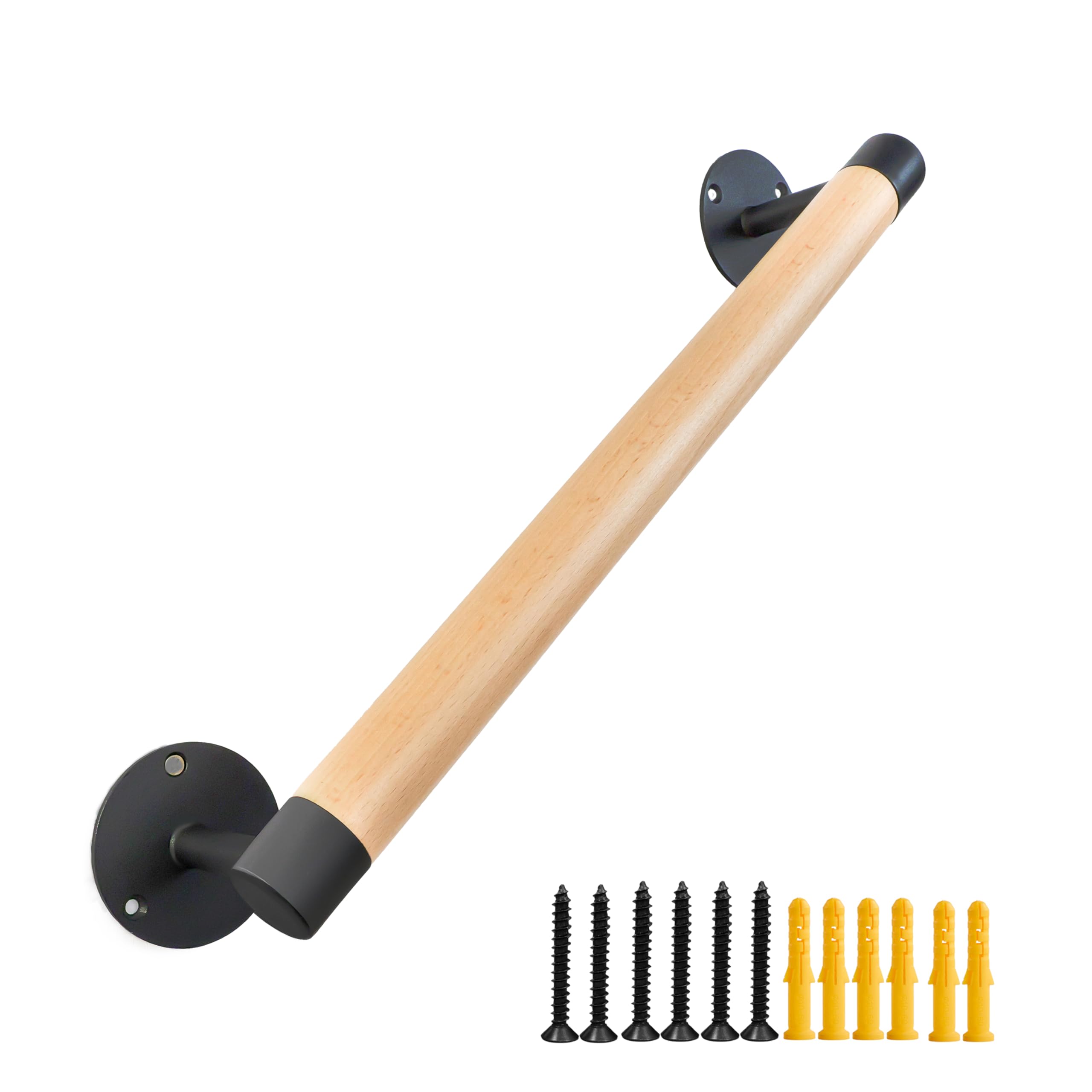
Buy this for a smooth wood bar rated to 400 pounds for stairs, hallways, or bathroom walls.
Pros
- High weight rating relative to its compact size
- Polished finish feels comfortable against sensitive skin
- Metal brackets are pre-attached for simpler mounting
Cons
- Very smooth surface can feel slippery for some users, especially with damp hands
- No textured grip zones for extra traction
The polished beech surface glides easily under the palm, which is comfortable for some but can reduce traction for hands prone to sweating or for users needing extra bite for a firm hold. Pairing it with a textured glove or drying the hands before use helps offset that. The pre-welded bracket setup makes installation straightforward once wall studs are located.
QWORK Folding Grab Bars, 2-Pack
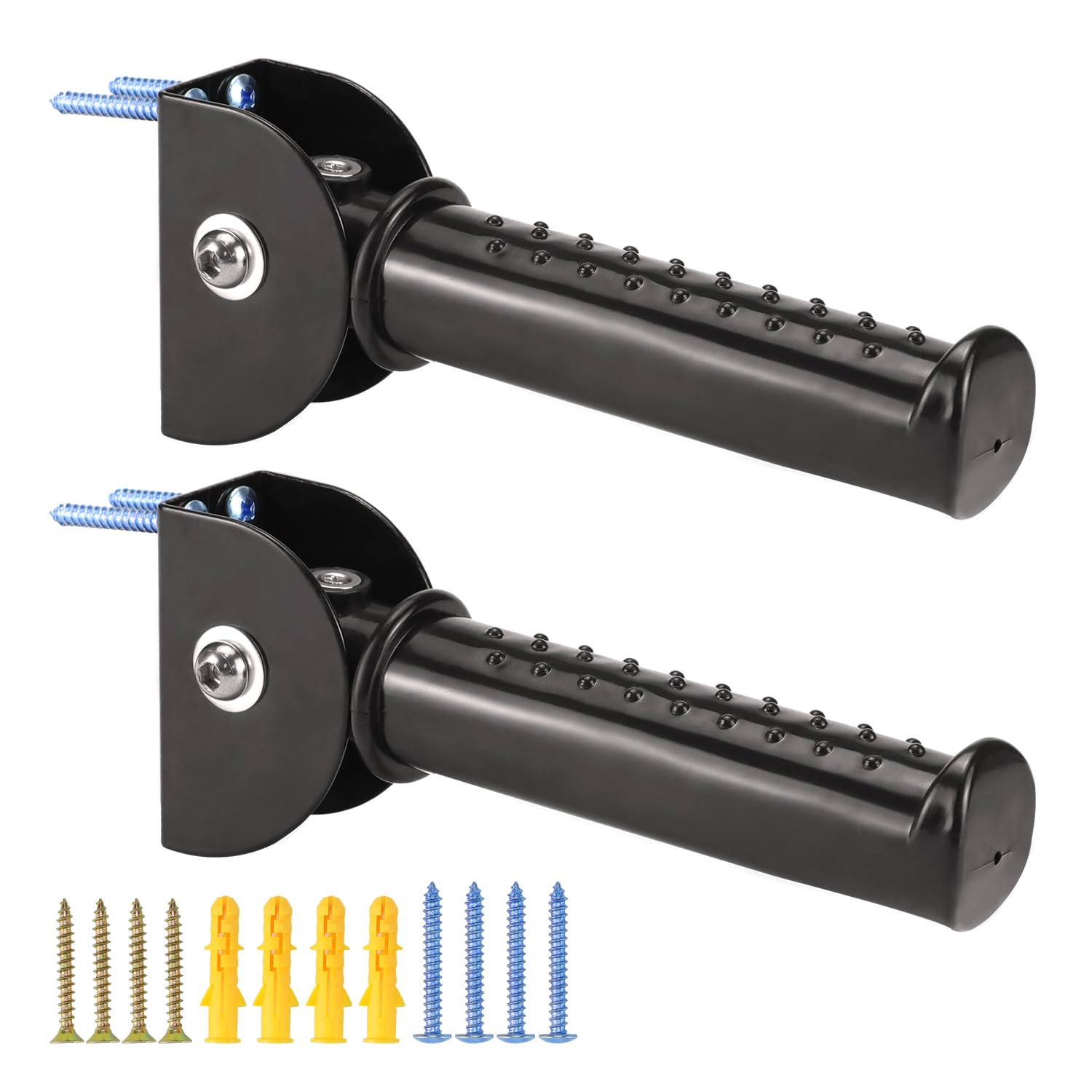
Buy this for a flip-up rail that stays out of the way in narrow doorways or shared spaces.
Pros
- Flip-up design clears the doorway when not needed
- Dot texture and underside groove add grip in damp conditions
- Two-pack allows placement at both a stair and a doorway
Cons
- Must be anchored into a stud for reliable strength, not drywall alone
- Screw quality has been flagged as a weak point by some buyers
The folding action suits households where several people share a doorway and not everyone needs the rail extended at all times. The textured surface and underside groove give a firmer hold for hands that struggle with smooth round tubing. Replacing the included screws with sturdier ones is worth doing before relying on it daily.
Vaunn Medical Adjustable Toilet Safety Rail
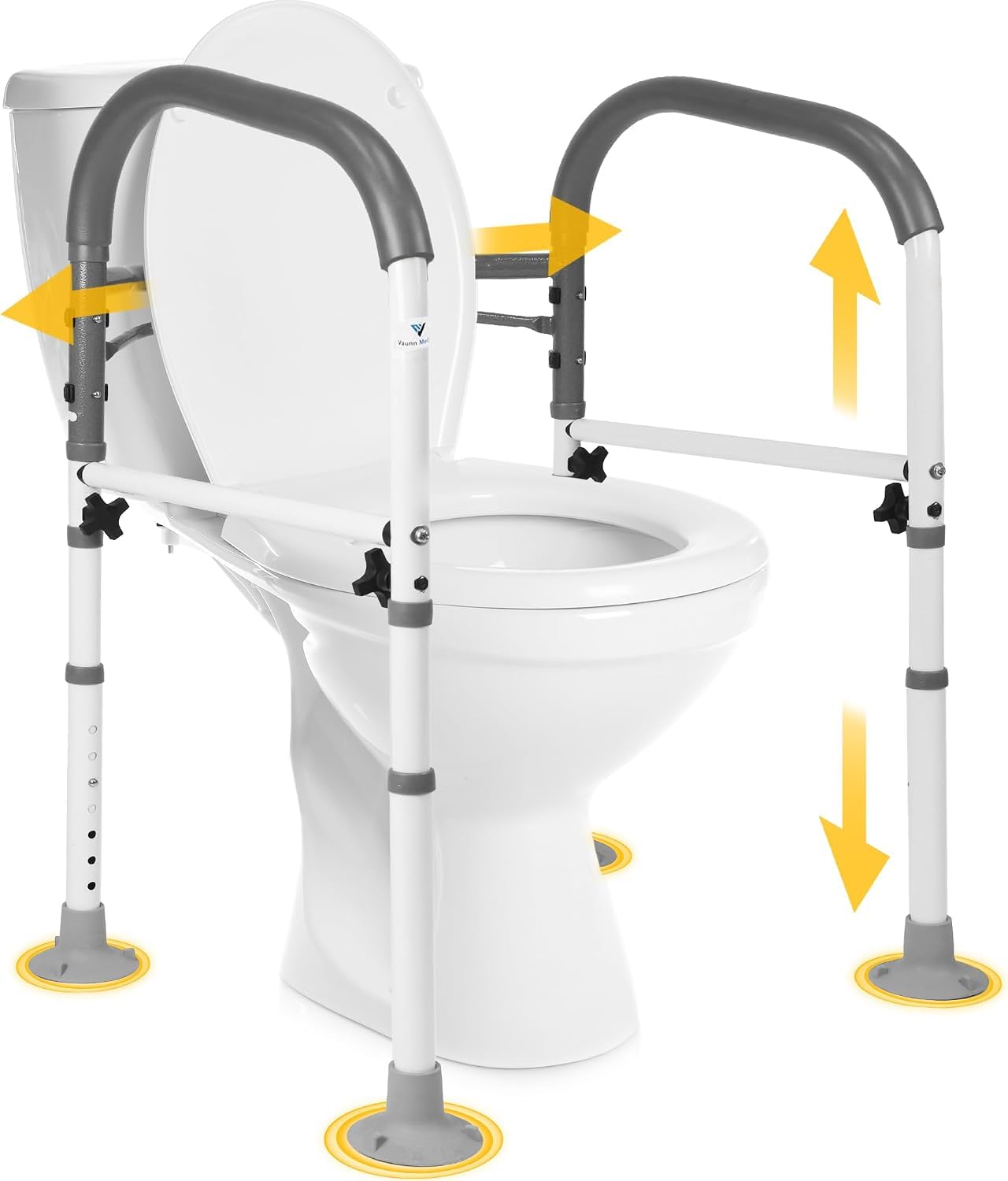
Buy this for a free-standing frame around the toilet that needs no drilling or wall mounting.
Pros
- Height and width adjust to fit different toilets and body sizes
- Padded armrests are softer on wrists than bare metal bars
- Folds flat for travel or storage
Cons
- Suction feet perform best on hard, flat flooring, not thick carpet
- Frame width can feel bulky in a small bathroom
Sitting down and rising from the toilet is one of the harder movements for stiff hips and knees, and this frame gives symmetrical support on both sides rather than a single bar. The padded grip reduces pressure on the palms during a push-up motion. Because it relies on suction feet rather than anchoring, checking floor compatibility before buying avoids disappointment.
Buying Guide
Grip Diameter and Shape
A grip between 1.25 and 1.5 inches in diameter suits most arthritic hands better than a thicker or thinner bar. Oval or slightly flattened profiles can reduce the finger-curl strain that a fully round tube demands. Test how the grip feels in a closed fist, not just a light touch, since the pulling motion is where strain shows up.
Surface Material
| Material | Feel | Best For |
|---|---|---|
| Powder-coated metal | Textured, weather-resistant | Outdoor steps, garages |
| Bare stainless steel | Smooth, cool | Bathrooms, high-moisture areas |
| Wood | Warm, softer on skin | Indoor stairs, hallways |
| Foam-wrapped | Cushioned | Frequent daily grip, sensitive joints |
Metal turns cold in unheated spaces, which can stiffen joints further before a hand even grips it. Wood and foam stay closer to room temperature, an advantage for early-morning or winter use.
Mounting Security
A rail’s weight rating means little if the wall behind it cannot support it. Locate a stud or masonry backing before drilling, and confirm whether the manufacturer recommends professional installation for heavier-duty use. Clamp-style tub rails avoid drilling entirely but only fit specific tub wall shapes and thicknesses, so measuring first matters.
Fixed vs. Adjustable vs. Folding
Fixed wall rails give the most consistent stability but commit to one location. Folding rails clear a doorway when not in use, useful in shared households. Adjustable, free-standing frames (like toilet safety rails) suit renters or situations where drilling isn’t an option, though they typically rely on floor contact or suction rather than a structural anchor.
Leverage and Placement
A rail mounted too high or too low forces an awkward wrist angle that adds strain instead of reducing it. Angled or two-level designs accommodate a wider range of heights and reaching positions. Placement near the point of greatest instability, such as the bottom step or beside the tub entry, gives the most practical support.
Editor’s Choice
The SELEWARE Heavy Duty Wall Mount Handrail stands out as the strongest overall pick for readers managing arthritis. Its two-level grip design and 45-degree angled approach let users find a hand position that avoids twisting a sore wrist, and the 1.3-inch tube diameter is wide enough to grip without straining stiff fingers closed. The double full-weld construction gives confidence that the rail will not loosen or flex over years of daily pulling.
For bathroom use specifically, the Moen 24-Inch Stainless Steel Grab Bar earns a strong secondary recommendation thanks to its ADA-compliant sizing and comfortable grip diameter, provided it goes into a stud or uses the SecureMount anchoring system. Between the two, most households managing joint pain across multiple areas of the home will benefit from pairing an angled stair rail with a dedicated bathroom bar rather than expecting one product to cover both needs.
Conclusion
Choosing a handrail for arthritis comes down to matching grip shape, surface material, and mounting method to the specific space and the specific hands that will use it. A rail that feels secure to a caregiver installing it may still be difficult for someone with limited finger closure or wrist rotation, so testing the actual grip motion matters more than reading a weight rating alone.
None of these rails replace a fall risk assessment from a physical therapist or occupational therapist, especially for readers with progressive joint conditions. Checking tub shape, wall structure, and toilet dimensions before ordering saves a return and gets the right support in place faster. A rail installed at the right height, with the right grip diameter, on a wall that can actually hold it, does more for daily confidence than any single feature on a spec sheet.
FAQs
What grip diameter is easiest for arthritic hands? Most people with reduced grip strength find 1.25 to 1.5 inches comfortable. Thicker bars can be harder to close a hand around fully, while thinner ones concentrate pressure on fewer points of the palm.
Do suction or clamp-mounted rails work as well as drilled ones? Clamp-style tub rails can offer solid support on compatible flat-walled tubs, but they depend on proper tightening and are not suited to curved, fiberglass, or textured surfaces. A drilled, stud-anchored rail generally offers more consistent stability for full body weight.
Can a handrail go into drywall alone? Drywall without a stud or backing behind it will not reliably support a rail meant to bear body weight. Locating a stud, adding blocking, or mounting into masonry with proper anchors is necessary for safe use.
Are wood or foam grips better than metal for painful joints? Wood and foam stay warmer than bare metal and can feel gentler against sensitive skin, though metal bars, especially powder-coated ones, often hold up better outdoors over time. The right choice depends on the location and how much temperature and texture affect a person’s comfort.
Should a professional install a wall-mounted handrail? Professional installation is worth considering when the wall material is uncertain, when working with masonry or brick, or when a rail needs to support significant body weight during daily use. Many manufacturers note that full weight ratings depend on correct anchoring into a stud or solid backing.