
10 Best Handrails 2026 for Indoor and Outdoor Steps


Foot Massager Machine

Memory Foam Seat Cushion

Digital Blood Pressure Monitor
A single missed step or a wobbly porch rail sends more people to the emergency room than most homeowners realize. Handrails give hands something solid to grip on the way up or down, and that small margin of support matters most on wet concrete, uneven brick steps, or a dim garage entry. For anyone dealing with 1 to 3 steps, a long indoor staircase, or a deck that needs code-compliant railing, the right handrail closes a real safety gap without requiring a full contractor build.
Handrail designs split into a few practical categories. Short wall-mounted grab rails bolt directly into a doorframe or wall next to a small set of steps, while freestanding post-and-rail kits work where there is no adjacent wall to anchor into, such as a deck edge or a run of concrete steps. Material choice affects both grip feel and weather resistance, with powder-coated iron, anodized aluminum, and stainless steel each handling moisture and temperature swings differently.
Picking among them means checking rail length against actual step rise, confirming the mounting surface (stud wall, masonry, or post footing) matches the included hardware, and looking at diameter and shape for comfortable grip. Weight capacity, weld quality, and rust protection separate a rail that holds up outdoors for years from one that loosens or corrodes within a season. The best handrail is the one sized correctly for the number of steps and the mounting surface it will actually attach to, not simply the sturdiest-looking option in a listing photo.
Best for short garage or porch steps: SELEWARE Heavy Duty Wall Mount Handrail
Best for code-conscious deck installs: CR Fence & Rail Handrail Kit
Best for high weight capacity on a budget: YEOOE U-Shaped Wall Mount Handrail
Best for long indoor stairways: ARESSCORP Aluminum Handrail Kit
Best for a polished stainless finish: ZALNVEY 2 Step Stainless Steel Railing
Best for longer 4-step exterior runs: Metty Metal 4 Step Railing Kit
Best for farmhouse-style porches: VZNEK 5ft Industrial Pipe Handrail
Best for ADA-style wall returns: Meranti Aluminum Handrail Kit
Best for freestanding deck or pool steps: VIVOHOME 6 Step Adjustable Handrail
Best for a sleek modern indoor look: VZNEK 6FT Wall Mounted Handrail
SELEWARE Heavy Duty Wall Mount Handrail

Buy this for a compact 1-3 step entry where a single wall-mounted grab bar is all the space allows.
Pros
- Double full-weld construction feels reassuringly solid
- Two-level grip design suits different heights, including kids
- Simple four-screw wall installation
Cons
- Fixed 25-inch length limits use on longer runs
- Only available in one finish color
- Needs solid wall or masonry backing to perform as designed
The 45-degree angled design mimics a natural stair slope, so the grip lands where a hand naturally reaches while stepping down. Reviewers consistently mention the weld quality and the confidence it gives on three-step porch entries. It mounts to a wall or pillar next to the steps, not as a standalone post, so it needs a nearby vertical surface with solid backing. For a garage doorway or backyard step with a wall right there, this is a straightforward, tank-like option.
CR Fence & Rail Handrail Kit
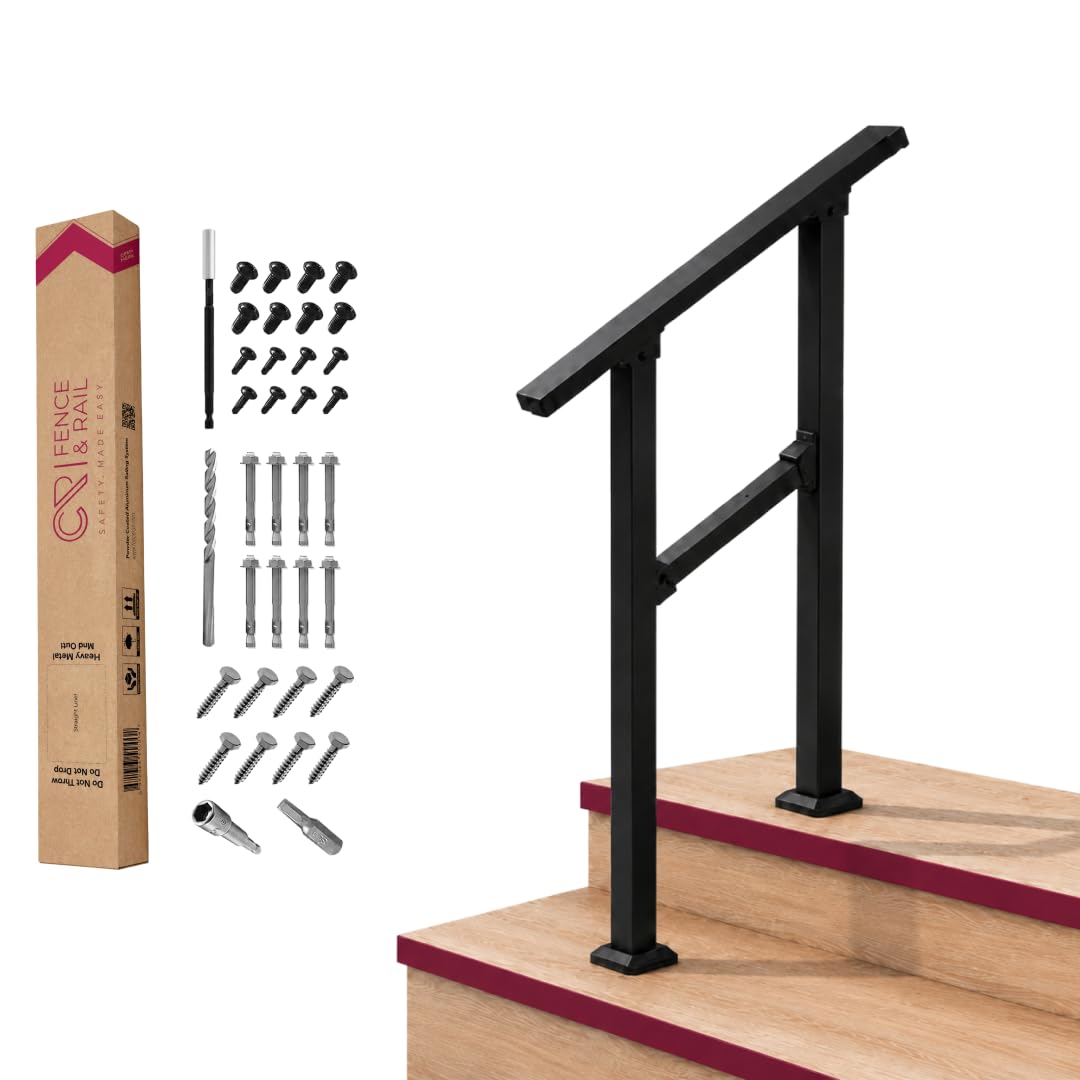
Choose this kit when local code compliance and freestanding post mounting matter as much as the rail itself.
Pros
- Built to reference IBC code sections for load and rail height
- Four-side welded joints and enclosed brackets resist water intrusion
- Backed by a 10-year warranty with US-based support
Cons
- Stated minimum weight capacity is lower than several rivals
- Requires post footing space, not just a wall
- Extending across longer staircases needs separately sold connectors
Two 36-inch posts anchor a 26-inch top rail and 12-inch mid rail, forming a complete post-and-rail unit rather than a single wall bar. That makes it a fit for open deck edges or concrete steps where there is no adjacent wall to bolt into. The five-layer matte black powder coat holds up against rain and UV exposure, and the enclosed bracket design keeps water from pooling inside the joints. Anyone chaining multiple runs together on a long staircase should budget for the extra connector hardware.
YEOOE U-Shaped Wall Mount Handrail

This one suits buyers who want a high stated weight rating on a short wall-mounted rail without paying for a full post kit.
Pros
- Rated for 500 pounds of pulling force
- Adjustable height for different step configurations
- Matte black carbon steel finish looks clean indoors or out
Cons
- Some buyers report mismatched screw heads in the hardware kit
- Carbon steel needs the powder coat to stay intact to resist rust
- 26-inch length still limited to short step runs
The U-shaped grip matches the SELEWARE design in concept but stretches slightly longer at 26 inches, giving a bit more hand travel on three-step entries. Multiple reviewers mounted it for aging parents navigating garage or kitchen steps, calling out the sturdy feel once anchored. The included drill bit and Allen wrench cover most installs, though double-checking screw type before drilling saves a return trip to the hardware aisle.
ARESSCORP Aluminum Handrail Kit
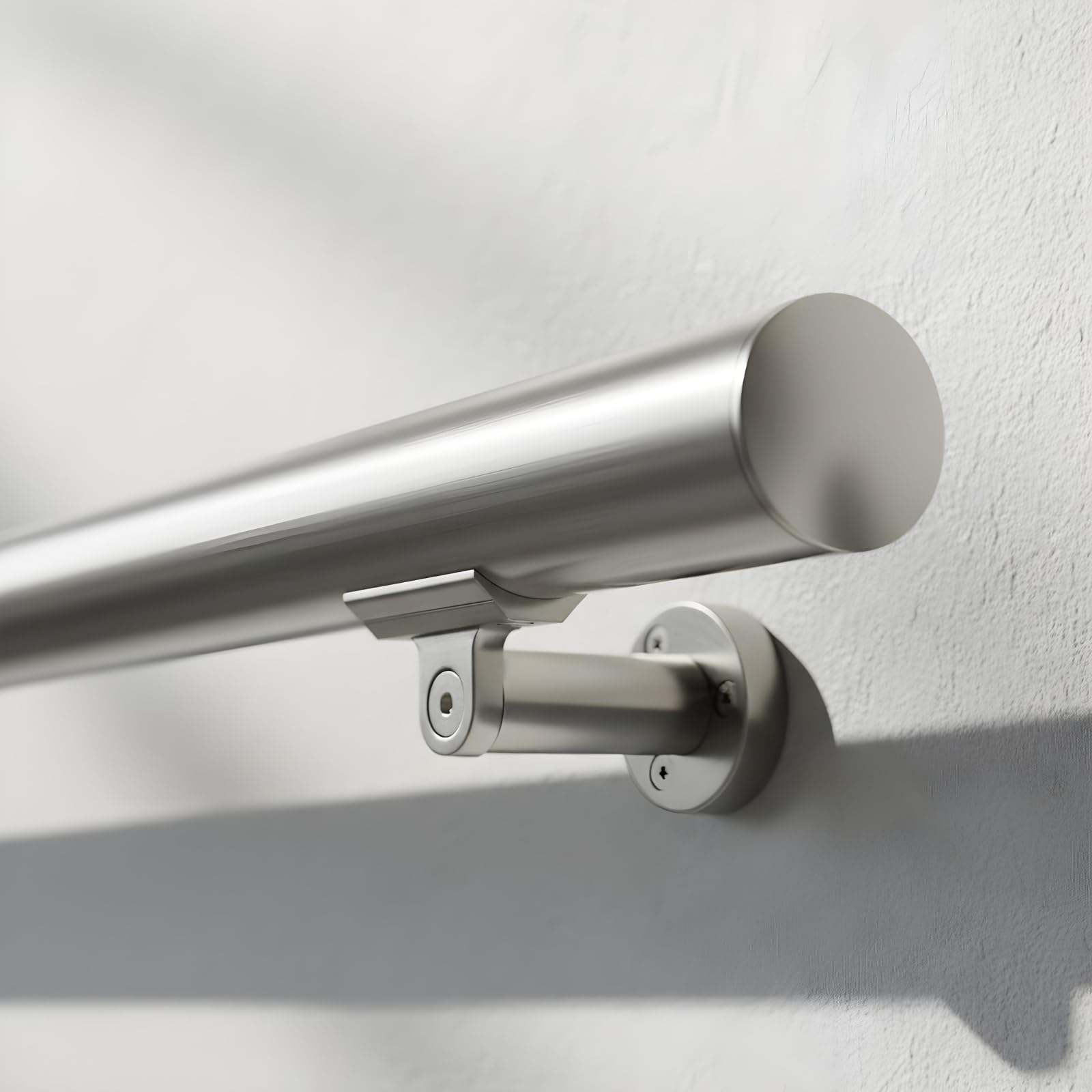
Pick this kit for a longer indoor or outdoor stairway that needs a continuous rail rather than a short grab bar.
Pros
- Available from 2 to 18 feet, so length matches the actual staircase
- Adjustable brackets accommodate different wall angles
- Anodized aluminum resists rust better than uncoated steel
Cons
- Some buyers had to source their own mounting screws for drywall
- Instructions get mixed reviews for clarity
- Lightweight feel compared to heavier iron rails
This is a true continuous handrail system, sold by the foot, built for basement stairs, floating staircases, or long exterior runs. The brushed stainless-look finish reads as modern rather than industrial, and multiple reviewers used it on contemporary builds where a bulky iron rail would clash. Anchoring into drywall alone is not enough; the adjustable brackets need studs or wall anchors rated for the span.
ZALNVEY 2 Step Stainless Steel Railing
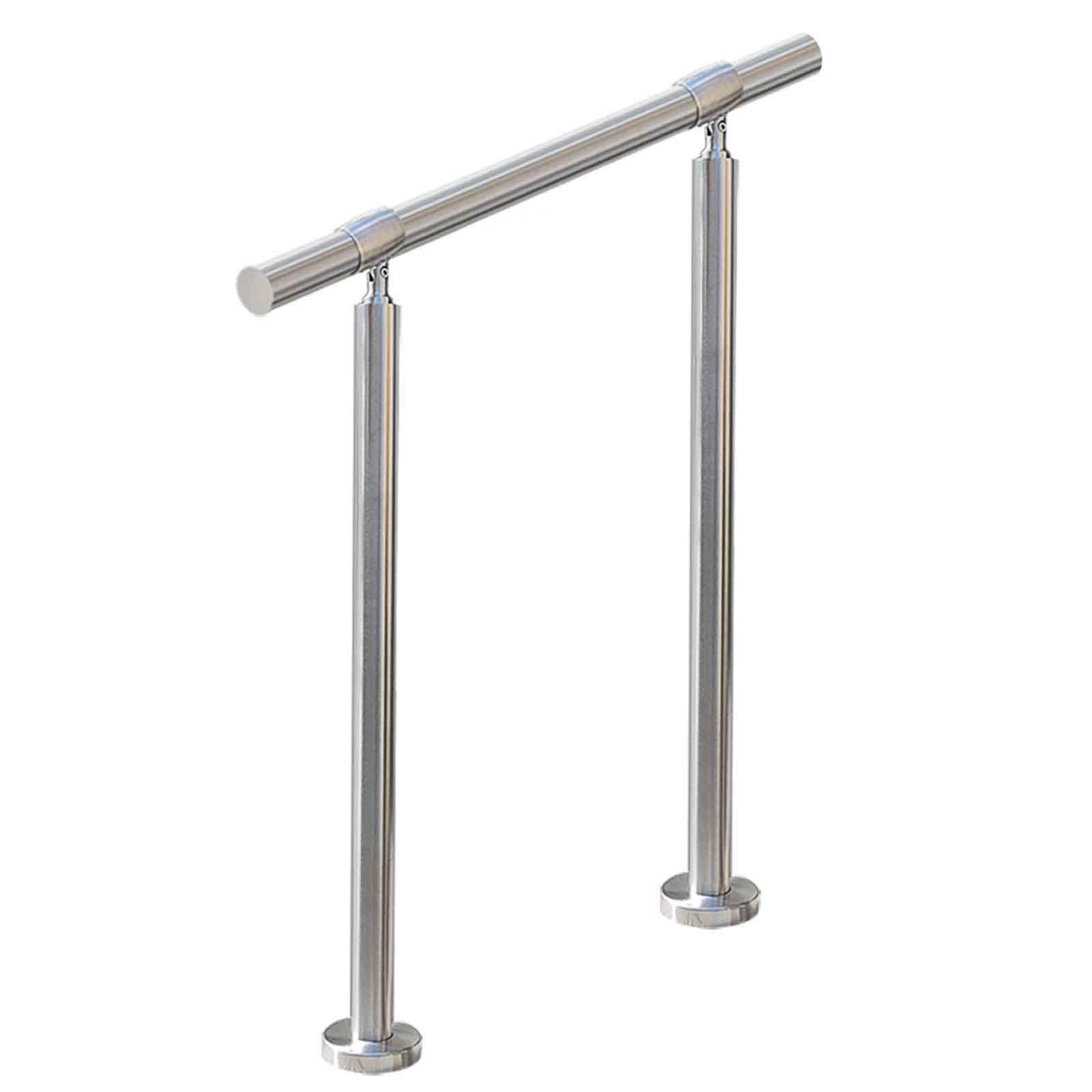
Go with this railing for a two-step porch or deck where a clean stainless finish and a genuinely complete hardware kit matter.
Pros
- 304 stainless steel resists rust better than painted iron
- Ships with concrete drill bit, socket wrench, and driver bit included
- No welding or cutting needed for the top rail insertion
Cons
- Not recommended within 10 miles of saltwater coastline
- Limited to a 2-step configuration
- Smaller company with a shorter track record than bigger brands
Reviewers, including a retired contractor, single out how complete the included toolkit is, down to the socket wrench and both wood and concrete drill bits. The top rail simply inserts into the posts rather than requiring drilled connections, which speeds up assembly. Stainless steel handles humidity well, though the manufacturer is direct about avoiding coastal salt air, a detail worth respecting rather than testing.
Metty Metal 4 Step Railing Kit

This kit fits a longer exterior staircase, up to four steps, where an adjustable rail angle needs to match a specific slope.
Pros
- Adjustable 0 to 45-degree bracket angle fits varied stair slopes
- Wide oval grip feels comfortable for extended hand contact
- Pre-drilled mounting plates simplify layout
Cons
- A few buyers report thin-gauge metal and chipping paint during assembly
- Some kits arrive missing bolts, so check contents on delivery
- Feels less overbuilt than heavier welded options
The oval top rail with an integrated bracket avoids the open gap some U-shaped rails leave at the wall connection, which reduces flex once tightened. Reviewers used it successfully on both wood and concrete steps, appreciating the angle adjustment for non-standard slopes. Quality feedback is mixed at the margins, with a handful of buyers noting thinner metal than expected, so a careful inspection on arrival is worth the few minutes it takes.
VZNEK 5ft Industrial Pipe Handrail
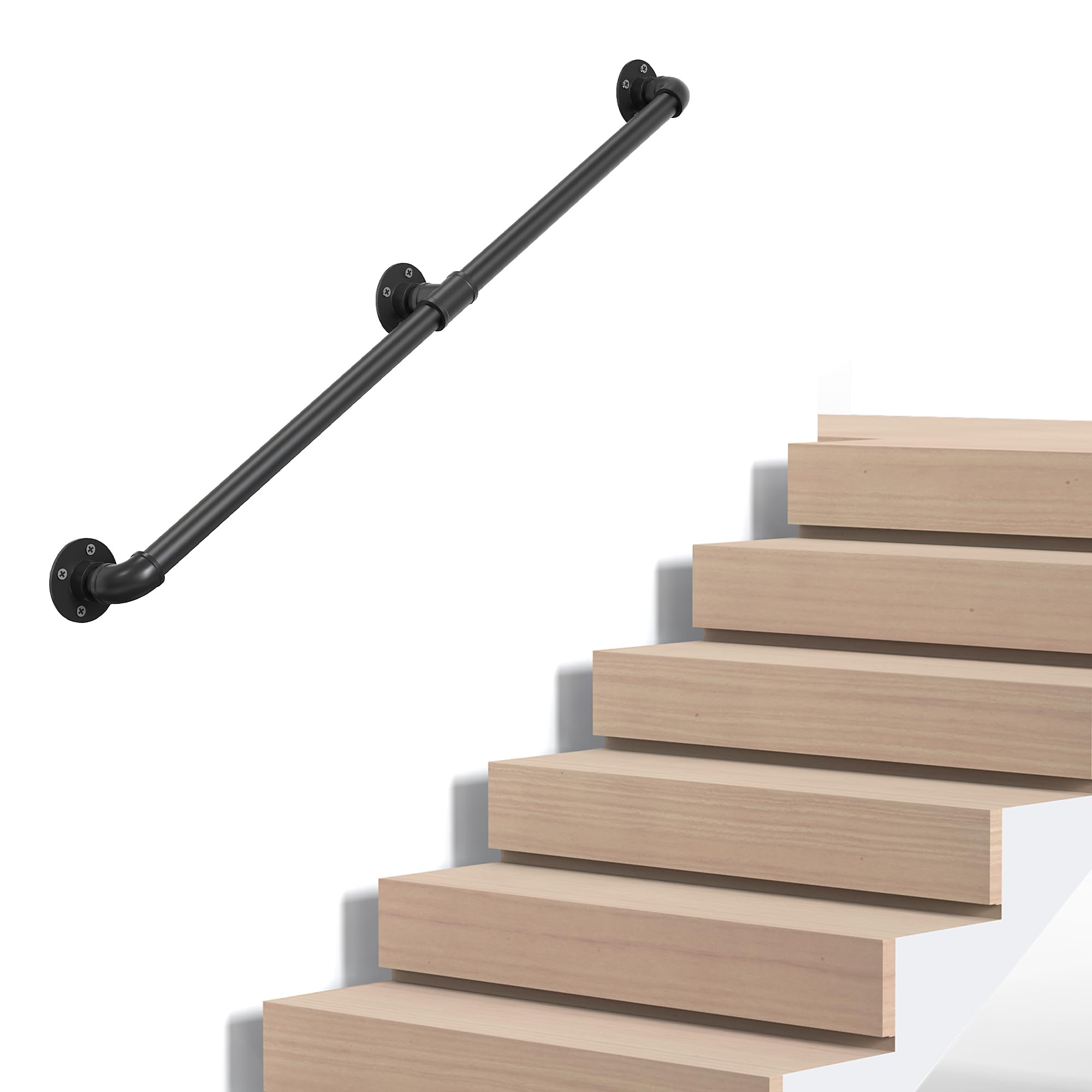
Choose this rail for a farmhouse or industrial-style entryway where the black pipe look is part of the appeal.
Pros
- Black galvanized iron pairs rust resistance with a vintage aesthetic
- 440-pound minimum weight rating covers most household needs
- Elbow connectors allow flexible angle adjustment at installation
Cons
- 35-inch length suits short-to-moderate runs, not long staircases
- Powder coat quality on exposed pipe ends needs periodic checking
- Industrial look will not suit every home exterior
Multiple reviewers installed this as an extension atop existing stair rails or as a standalone basement and cellar aid, praising the farmhouse charm alongside the practical grip. The galvanized iron holds up outdoors, and the flanges and elbow connectors give some flexibility in matching entryway angles. It reads more decorative than the plain U-shaped rails, which matters for anyone trying to match existing porch hardware.
Meranti Aluminum Handrail Kit
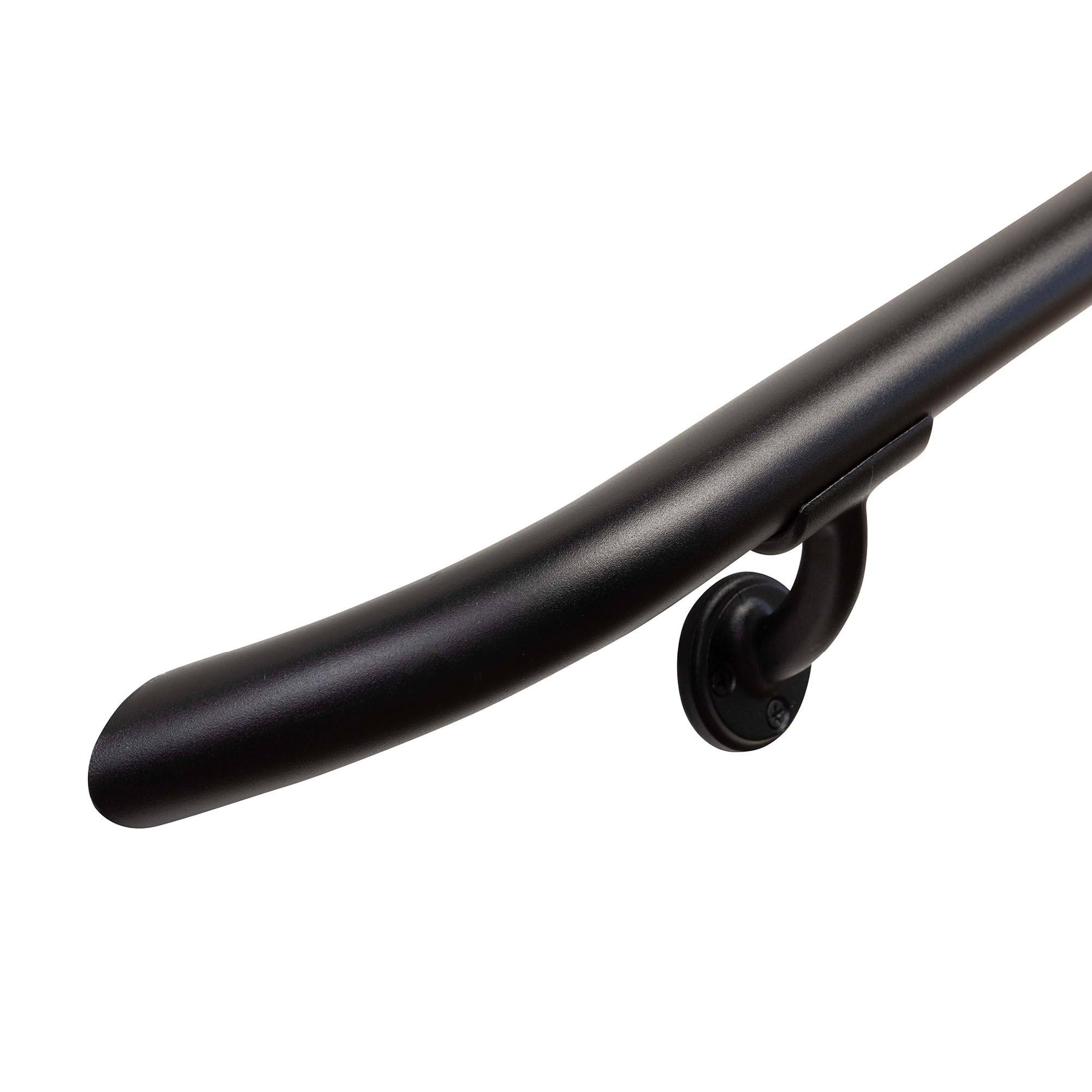
This kit works well where ADA-style wall-return ends are a priority alongside a comfortable ergonomic grip.
Pros
- Curved ends return flush to the wall for ADA-style compliance
- No pre-drilled holes means flexible bracket placement
- Textured 1-3/8-inch diameter improves grip security
Cons
- At least one buyer reported missing hardware on delivery
- Masonry installs need separately purchased drill bits and anchors
- Smaller seller with fewer total reviews than larger competitors
The lack of pre-drilled holes on the rail itself is a genuine advantage for uneven stud spacing, letting installers place brackets exactly where the wall structure allows. Longer rails over 7 feet ship with an extra mounting bracket for added support along the span. One reviewer’s kit arrived without hardware, a reminder to inventory the box against the included parts list before starting the install.
VIVOHOME 6 Step Adjustable Handrail
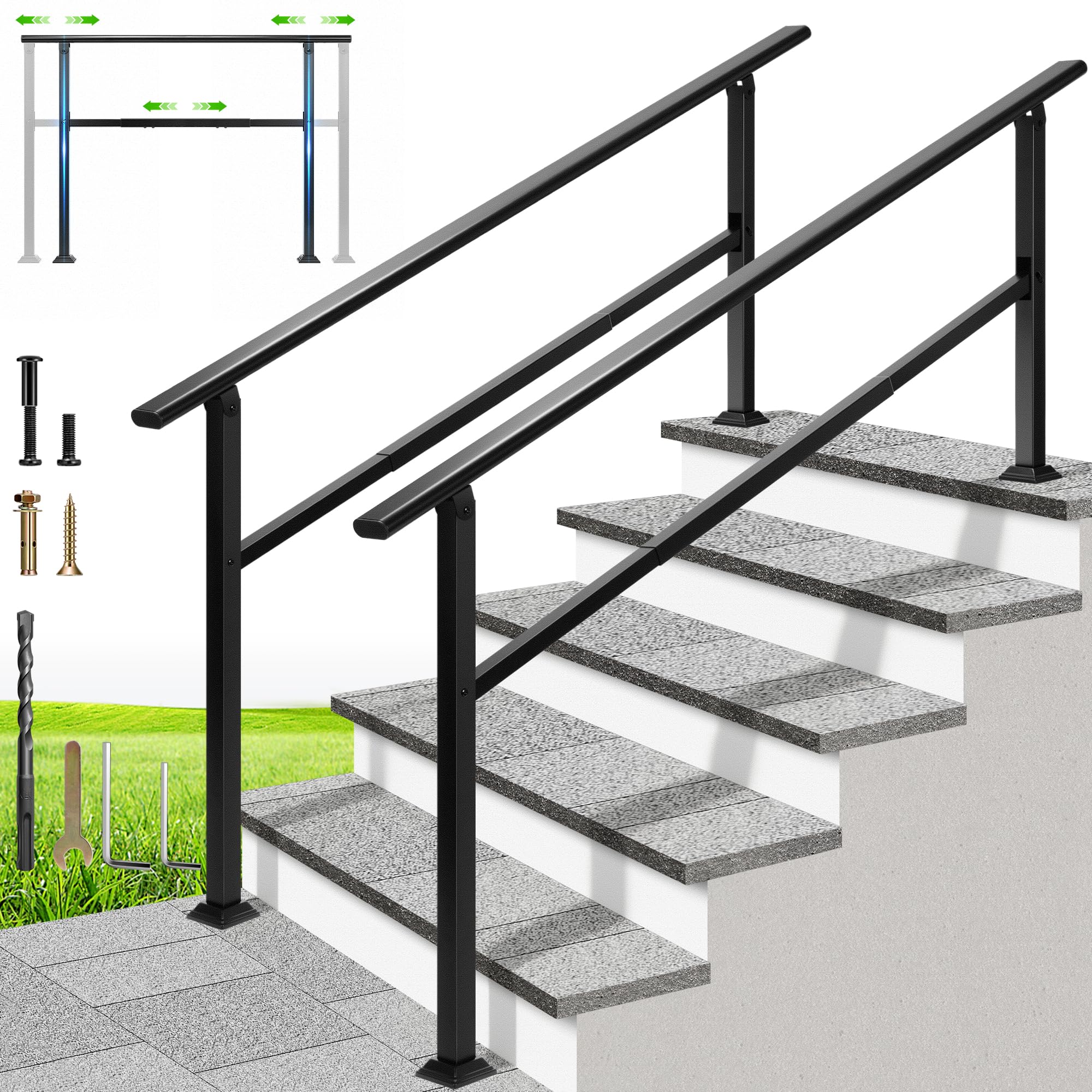
This is the pick for a deck, pool staircase, or long exterior flight where a freestanding, angle-adjustable rail beats a wall-mounted bar.
Pros
- Adjustable leg spacing fits stairs up to a 50-degree slope
- Pre-drilled holes cover various tread depths without cutting
- Galvanized steel construction resists outdoor corrosion
Cons
- Sold as a 2-step-per-unit design, needing two units for 6 steps
- Not intended for children under 12
- A second person helps during mounting for alignment
Multiple reviewers used this on pool deck steps and non-standard stair slopes where off-the-shelf rails did not fit. The pre-drilled hole pattern along the leg avoids custom cutting, a genuine time-saver on uneven tread depths. Buyers consistently mention needing patience during the fitting stage, since aligning two freestanding legs takes more care than a single wall-mounted bracket.
VZNEK 6FT Wall Mounted Handrail
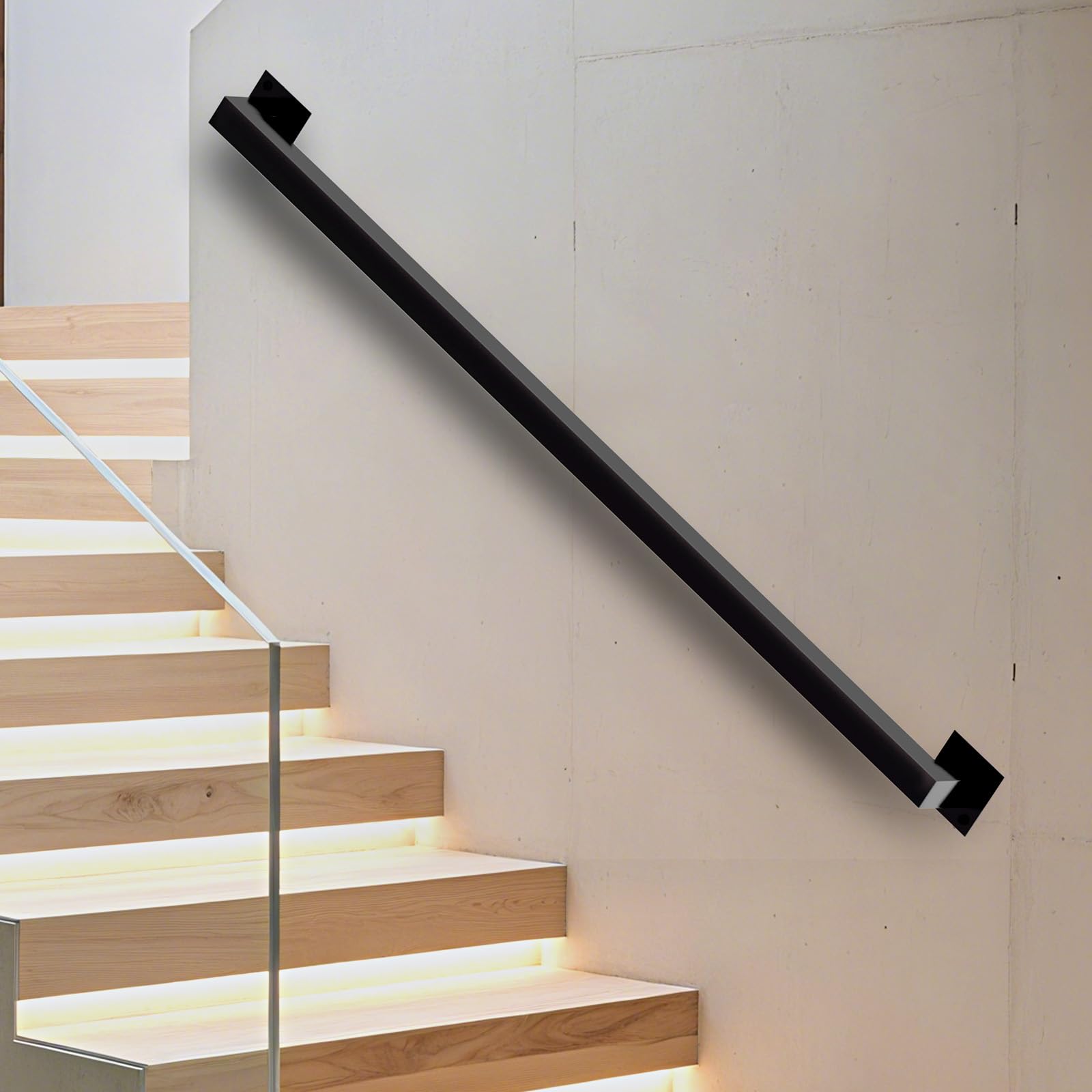
This rail suits an indoor stairway or loft where a slim square-tube profile needs to blend into a modern interior.
Pros
- 500-pound load capacity on a wall-mounted design
- Slim square tube profile saves visual space on narrow stairwells
- Multiple length options from 2 to 12 feet
Cons
- Iron construction depends on the powder coat staying intact to resist rust
- A few buyers found installation more involved than expected
- Indoor-leaning aesthetic may look out of place on rustic exteriors
The square tube shape distinguishes this from the round and oval rails elsewhere in this roundup, giving it a cleaner, more architectural look for lofts and modern staircases. Reviewers confirm it works equally well on porches and decks despite the indoor-leaning design language. Installation takes a bit more attention to bracket alignment across a 6-foot span, so a level and a helper make the job go faster.
Buying Guide
Match Rail Length to Step Count
A rail sized for one step will not safely span three. Measure the total horizontal run of the stairway, including the last step onto flat ground, before choosing between a short grab bar and a multi-post kit.
| Step Count | Typical Rail Type | Length Range |
|---|---|---|
| 1-2 steps | Wall-mounted U-shaped grab rail | 18-26 inches |
| 2-3 steps | Wall-mounted angled handrail | 25-36 inches |
| 4-6 steps | Post-and-rail kit or continuous run | 4-8 feet |
| 6+ steps | Continuous aluminum or connected rail sections | Sold by the foot |
Mounting Surface Determines Hardware
Wall-mounted rails need solid backing, either wood studs, masonry, or brick, to hold the included screws and anchors securely. Freestanding post kits need footing space in concrete or soil and do not depend on an adjacent wall at all. Check which mounting hardware ships with the rail; masonry installs sometimes need a separately purchased drill bit if one is not included.
Material and Weather Resistance
Powder-coated iron and steel offer strength but rely on the coating staying intact to prevent rust. Anodized aluminum and stainless steel resist corrosion more consistently, which matters for coastal or high-humidity climates. Stainless steel manufacturers sometimes warn against use within several miles of saltwater, a detail worth checking against a home’s location.
Grip Shape and Diameter
A grip between 1.25 and 2 inches in diameter suits most adult hands comfortably. U-shaped and angled designs guide the hand naturally along a stair’s slope, while straight round or square tubes work better for continuous runs along flat wall sections.
Weight Capacity and Weld Quality
Stated weight capacities range from roughly 238 pounds up to 600 pounds across handrail listings. Four-sided welded joints and enclosed brackets generally outperform spot-welded connections for long-term outdoor durability, though a listing that omits weld detail should prompt a closer look at customer photos before buying.
Editor’s Choice
The SELEWARE Heavy Duty Wall Mount Handrail earns the top recommendation for the most common scenario homeowners face: a short run of 1 to 3 steps next to a wall that needs a dependable grip. Its double full-weld construction and angled design match the natural motion of stepping up or down, and the straightforward four-screw installation keeps the project manageable for a solo DIYer with a drill.
For anyone dealing with a longer staircase or a deck edge without an adjacent wall, the CR Fence & Rail Handrail Kit is the stronger match, thanks to its code-referenced design and freestanding post mounting. Choosing between the two comes down to one question: is there a wall to bolt into, or does the installation need its own posts and footing?
Conclusion
Selecting a handrail comes down to matching three details to the actual installation site: rail length against step count, mounting hardware against wall or post surface, and material against local weather exposure. A short wall-mounted grab bar handles a single garage step fine, but a six-step deck needs a freestanding, adjustable kit built for that load. Verifying stated weight capacity and checking for masonry-rated hardware before ordering saves a second trip to the hardware store, and confirming stud or post placement ahead of drilling avoids a rail that loosens within months. The right pick from this list holds up to daily use for years, not just the first season.
FAQs
Do I need a permit to install a handrail? Local codes vary, and some jurisdictions require permits for exterior railing changes, particularly on rental or commercial properties. Checking with a local building department before installation avoids issues later, especially for kits marketed as code-compliant.
Can these handrails be installed on brick or concrete? Several kits, including the SELEWARE and ZALNVEY rails, include masonry anchors or drill bits for concrete and brick mounting. Confirm the included hardware matches the wall type before buying, since some kits ship with wood screws only.
How do I know if a handrail is rated for outdoor use? Look for powder-coated iron, galvanized steel, anodized aluminum, or stainless steel in the material description. Manufacturers that specify rust resistance or weatherproofing explicitly, rather than simply listing “metal,” tend to hold up better outdoors.
What weight capacity is enough for a residential handrail? Most household use is well served by a stated capacity of 300 pounds or higher. Rails intended for elderly users, rehabilitation support, or heavier household members should lean toward kits rated 440 pounds or above.
Should I choose a wall-mounted rail or a freestanding post kit? A wall-mounted rail works when solid wall backing sits directly next to the steps. A freestanding post kit is the better choice for open deck edges, pool steps, or any staircase without an adjacent wall to anchor into.