
10 Best Fire Extinguishers for Home: Top Safety Picks for Every Room


Reacher Grabber Tool

Fall Detection Smart Watch

Leg Massager for Circulation
A home fire extinguisher can help control a small fire before it spreads, giving you time to evacuate and call emergency services. Different extinguishers work on different types of fires, including those caused by wood, grease, or electrical equipment.
For most homes, we recommend a multipurpose ABC extinguisher that is easy to handle, clearly labeled, and sized for the space where you plan to keep it. Check its pressure gauge, expiration date, and safety seal regularly, and keep it within reach but away from possible fire sources. We evaluated the most important features to help identify the best fire extinguishers for home use.
Best Fire Extinguishers for Home
We reviewed the best fire extinguishers for home use based on fire class, size, ease of use, and storage needs. Our list includes reliable options for kitchens, garages, vehicles, and other common areas.
Kidde Basic 110 Fire Extinguisher

We recommend this two-pack for homes that need simple protection against common small fires in several locations.
Pros
- Covers wood, paper, trash, liquid, gas, and electrical fires
- Compact design with a clear pressure gauge
- Includes two extinguishers and mounting brackets
Cons
- Brackets do not include mounting screws
- Dry chemical residue can irritate skin and create cleanup work
- Designed for single use
We found the Kidde easy to handle and store. Its bright red body stood out in a kitchen and other areas, while the small size made it practical for a home, office, camper, or vehicle.
The pull pin and handle felt straightforward to use. The pressure gauge also made it easy to check whether the unit remained charged. The included bracket helped keep it accessible, although we needed to provide our own screws for installation.
This model covers several common household fire types, but it is not a replacement for safe evacuation or professional help. The dry chemical agent can leave a noticeable mess, so we would use it only when the fire remains small and we have a clear exit.
The two-pack lets us place one extinguisher near the kitchen and another on a different floor or near a garage. We also recommend checking local guidance for placement, inspecting the gauge regularly, and replacing the unit after use or when it reaches the end of its service life.
Kidde Kitchen + Home Fire Extinguisher Set

We recommend this two-pack for homes that want separate protection for kitchen grease fires and common household fires.
Pros
- Includes one multipurpose extinguisher and one kitchen-focused model
- Compact aluminum bodies feel sturdy but remain easy to handle
- Wall brackets and clear pressure gauges simplify storage and checks
Cons
- Each extinguisher works only once
- The discharge lasts about 8–12 seconds
- Dry chemical residue can irritate skin and create cleanup work
We like the different colors because they make the two extinguishers easy to identify quickly. The red model covers common combustibles, flammable liquids, gases, and electrical equipment, while the white model uses a flared nozzle to help limit oil splashing during a small grease fire.
Both units have metal valves, impact-resistant handles, pull pins, and readable instructions. We found the size practical for mounting inside a cabinet, near the kitchen, or in a garage without taking up much room.
The included brackets support a neat setup, but we would mount the extinguishers where everyone can reach them quickly. Each unit is single-use, so we would replace one after any discharge or when it reaches the replacement age listed by the manufacturer.
First Alert HOME1 Fire Extinguisher

We recommend this compact, rechargeable extinguisher for common household fires because it feels sturdy, mounts easily, and has a clear pressure gauge.
Pros
- Solid metal valve and trigger
- Handles several common fire types
- Includes a secure wall bracket
Cons
- Works best for small, early-stage fires
- Requires professional recharging after use
- Its short size may limit reach
We found the HOME1 easy to hold and simple to check before mounting. The color-coded gauge is readable at a glance, while the safety pin and seal help prevent accidental discharge.
Its multipurpose rating covers wood, paper, trash, plastics, gasoline, oil, and electrical equipment. That range makes it a practical choice for kitchens, garages, workshops, and utility areas.
The included bracket keeps the extinguisher in a known location instead of leaving it in a cabinet or on the floor. We also liked the waterproof label, which provides clear operating steps during a stressful moment.
This model weighs about 4.5 pounds, so most adults should be able to handle it. We would place it near an exit and away from the stove, since reaching an extinguisher should not require moving toward a fire.
Amerex B500 5 lb ABC Fire Extinguisher 2-Pack
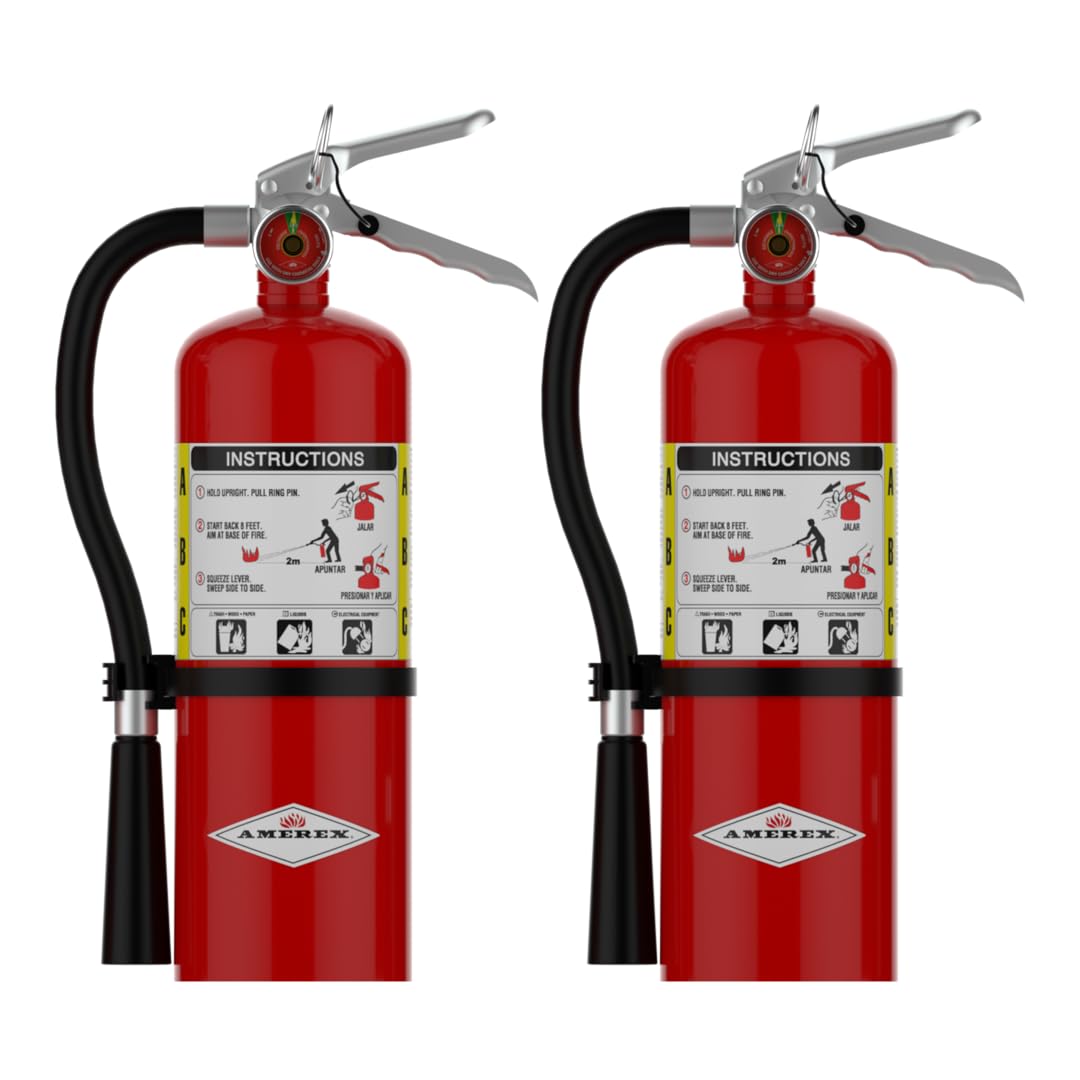
We recommend this two-pack for homes that need dependable coverage in more than one area.
Pros
- Covers wood, grease, and electrical fires
- Solid, refillable metal construction
- Two units make placement easier
Cons
- Brackets are sold separately
- Dry chemical powder creates cleanup
- Larger than compact disposable models
The 5-pound size gives us a useful balance between capacity and control. We could carry and aim it without much trouble, while the 12- to 18-foot range helped us keep a safer distance from flames.
With one extinguisher near the kitchen and another in the garage, we could place protection where fires are more likely to start. The wall-mounting option also keeps each unit visible and within reach instead of buried in a cabinet.
The metal cylinder, valve, and pressure gauge feel more durable than those on basic disposable models. Since a certified technician can recharge the B500 after use, we see it as a better long-term choice for homes, workshops, vehicles, and other spaces.
This extinguisher releases dry chemical powder, so cleanup can take time after use. We also recommend checking the gauge monthly and learning the PASS method before an emergency. The included units do not come with mounting brackets.
Ougist ABC Dry Chemical Fire Extinguisher
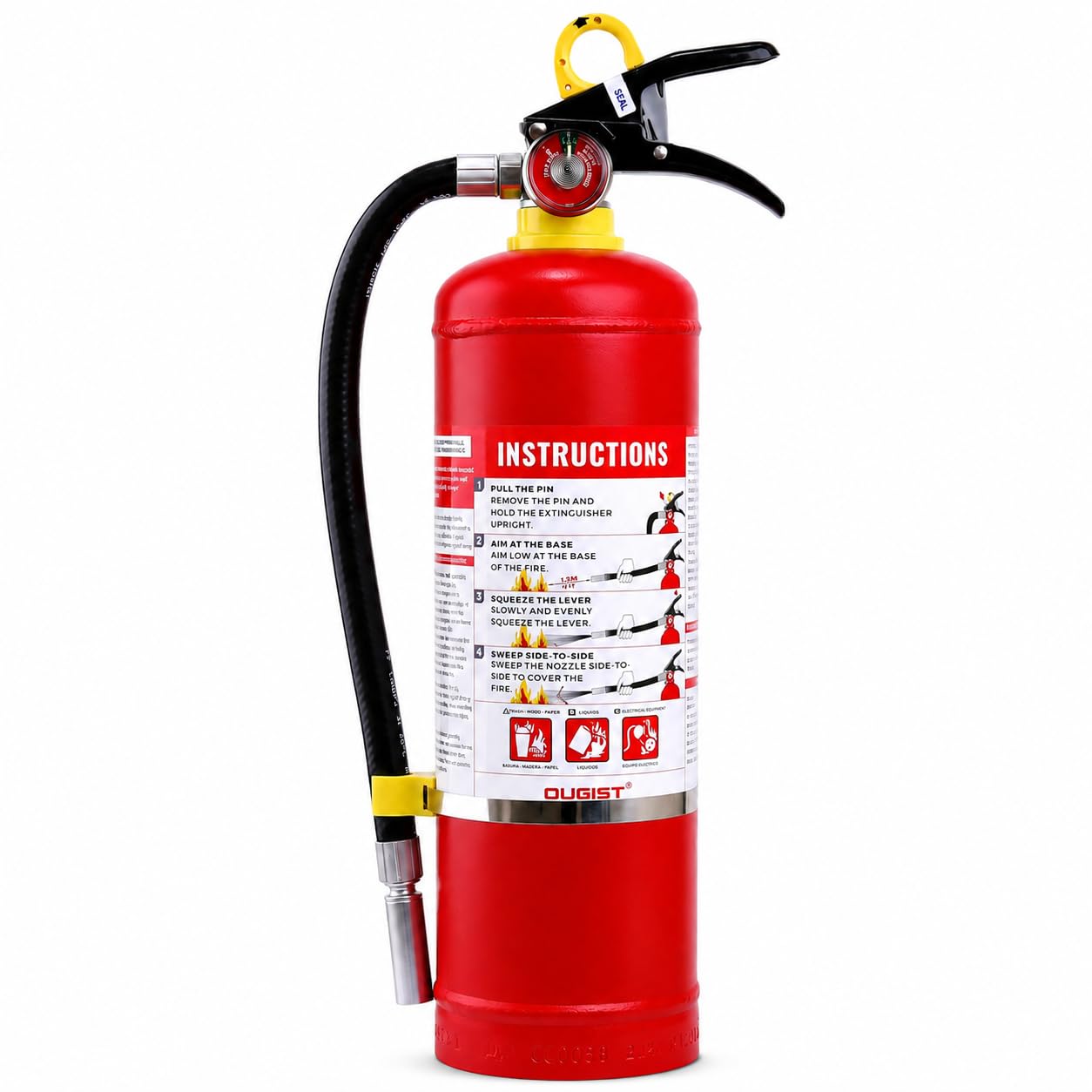
We recommend this extinguisher for homes, vehicles, and small offices because its ABC rating covers common fires and its handle feels easy to operate.
Pros
- Covers wood, fabric, grease, electrical, and gas fires
- Compact design with a wall bracket
- Easy-to-read operating guide and strong customer ratings
Cons
- Dry powder cleanup can be messy
- Some buyers reported missing wall stickers
- The product labeling caused confusion about its actual weight
The Ougist feels manageable to carry and store. We like the included bracket because it keeps the extinguisher visible instead of buried in a cabinet. The operating guide also helps us review the steps before an emergency.
Its ABC dry chemical agent gives it broad household coverage. We would place it near a kitchen exit, garage, or vehicle, while keeping it away from the stove or other spots where a fire could block access.
The handle is designed for quick release and simple operation. Still, we would not rely on any extinguisher without reading the instructions first. We also recommend checking the pressure, seal, and inspection date regularly.
Some buyers noted that the wall sticker was missing, and one review raised a weight-label concern that the seller addressed as a printing error. The powder may also leave a difficult cleanup after use, but that tradeoff is common with dry chemical extinguishers.
Ougist Signature ABC Fire Extinguisher
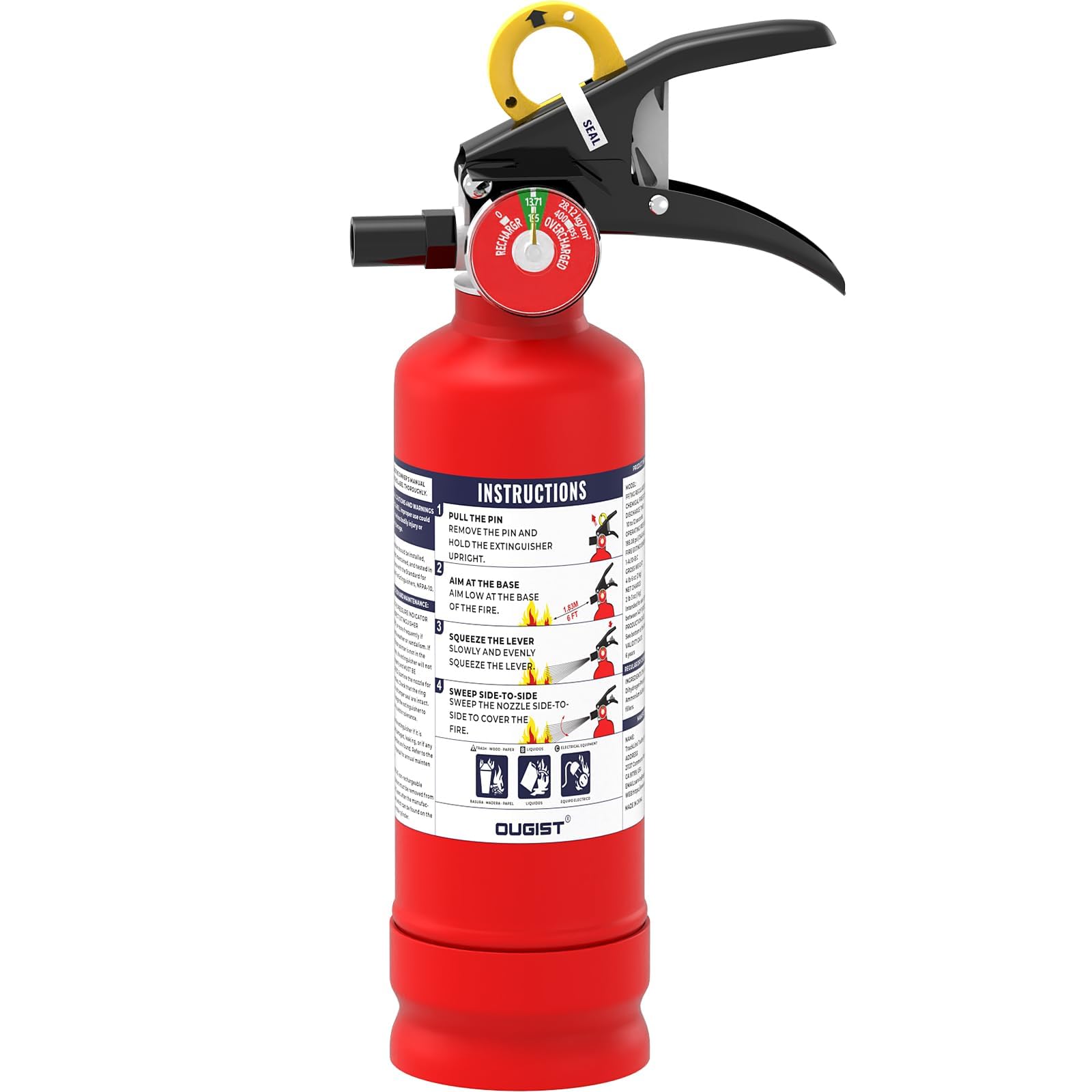
We recommend this compact extinguisher for basic home, garage, or vehicle fire protection because its ABC rating covers common household fire types.
Pros
- Simple handle design makes it quick to operate
- Compact size fits kitchens, garages, and cars
- ABC rating covers wood, grease, and electrical fires
Cons
- Dry chemical powder creates a cleanup mess
- Small capacity may not handle a growing fire
- Wall hook may need secure mounting
We found the Ougist easy to store without taking much space. Its narrow shape fits well near a kitchen exit, in a garage, or inside a vehicle. The included wall hook and location arrow can help keep it visible and easy to find.
The handle design removes some of the usual steps, which may help people act faster during a stressful moment. We still recommend reading the manual and checking the extinguisher each month.
This model uses dry chemical powder for Class A, B, and C fires. That makes it useful for small fires involving ordinary materials, cooking grease, fuel, or electrical equipment. The powder can spread across nearby surfaces, so cleanup may take time.
We would use this as an early-response tool, not as a replacement for calling emergency services or leaving when a fire grows. Mount it where adults can reach it quickly, and avoid placing it behind clutter or inside a closed cabinet.
AmzBoom 2-Pack Fire Extinguishers

We recommend this compact two-pack for homes, cars, kitchens, and other small spaces where quick access matters.
Pros
- Lightweight and easy to store
- Simple press-and-spray operation
- Water-based formula leaves little cleanup
Cons
- Mounting brackets may feel thin
- Small cans offer limited spray time
- We cannot confirm performance without testing on a fire
We found the extinguishers easy to handle and small enough for a cabinet, garage, or vehicle. The bright design also makes them easier to spot during an emergency.
The included brackets help keep each can within reach. They work well for placing one near the kitchen and another in a car or garage, though we would use stronger hardware if mounting them on a busy wall.
The spray is designed for several common fire types, including cooking oil and some lithium-ion battery fires. We would still follow local safety guidance and leave immediately if a fire grows beyond a small, early-stage flame.
At one pound each, these are convenient for people who may struggle with a larger extinguisher. Their compact size also means they may run out faster, so we would treat them as a first-response tool rather than a replacement for a full-size extinguisher.
Kidde 2A:10B Home Fire Extinguisher

We recommend this Kidde extinguisher for homes that need one compact option for common trash, wood, liquid, gas, and electrical fires.
Pros
- Covers several common household fire types
- Metal construction feels sturdy and durable
- Includes a wall hanger and clear pressure gauge
Cons
- Designed for single use
- Dry chemical residue can irritate skin and create cleanup
- The included hanger may need separate screws
We found the 4-pound cylinder easy to carry and simple to store. Its metal handle and valve gave us a solid grip, while the safety pin pulled out without much effort. The pressure gauge also makes routine checks quick: the arrow should remain in the green zone.
The multi-directional hose helps with aiming from different angles. Its short discharge time means we would use it only after calling emergency services and only if the fire remains small and escape stays clear.
The wall hanger supports convenient placement near a kitchen, garage, or other risk area. We would mount it where everyone can reach it, rather than hiding it inside a cabinet.
Kidde rates this model for residential, single-use situations. After discharge, we would replace it instead of trying to refill it, and we would follow the manufacturer’s replacement guidance for older units.
Amerex B500 5 lb. ABC Fire Extinguisher

We recommend this rechargeable extinguisher for homes because its metal construction, clear gauge, and ABC coverage make it a dependable choice for common household fires.
Pros
- Covers wood, paper, grease, gasoline, and electrical fires
- Durable metal valve and cylinder
- Includes a wall bracket and six-year warranty
Cons
- Wall-mounting screws are not included
- Larger and heavier than compact kitchen models
- Dry chemical residue requires cleanup after use
The Amerex B500 feels sturdy in hand, with a solid metal valve and trigger that inspire more confidence than plastic parts. We found the pressure gauge easy to read, and the retained pull pin helps keep the extinguisher ready while reducing the chance of losing the pin.
Its ABC rating suits many home locations, including kitchens, garages, workshops, and laundry rooms. The five-pound size offers useful capacity without becoming too difficult for most adults to handle. We would place it where we could reach it quickly, rather than storing it inside a cabinet.
The included bracket makes wall storage simple, but we would buy suitable screws or drywall anchors separately. After discharge, the dry chemical powder will spread across the area and require cleanup. A certified service shop can recharge the unit, which gives it a longer useful life than disposable models.
Kidde Pro 210 Commercial Fire Extinguisher
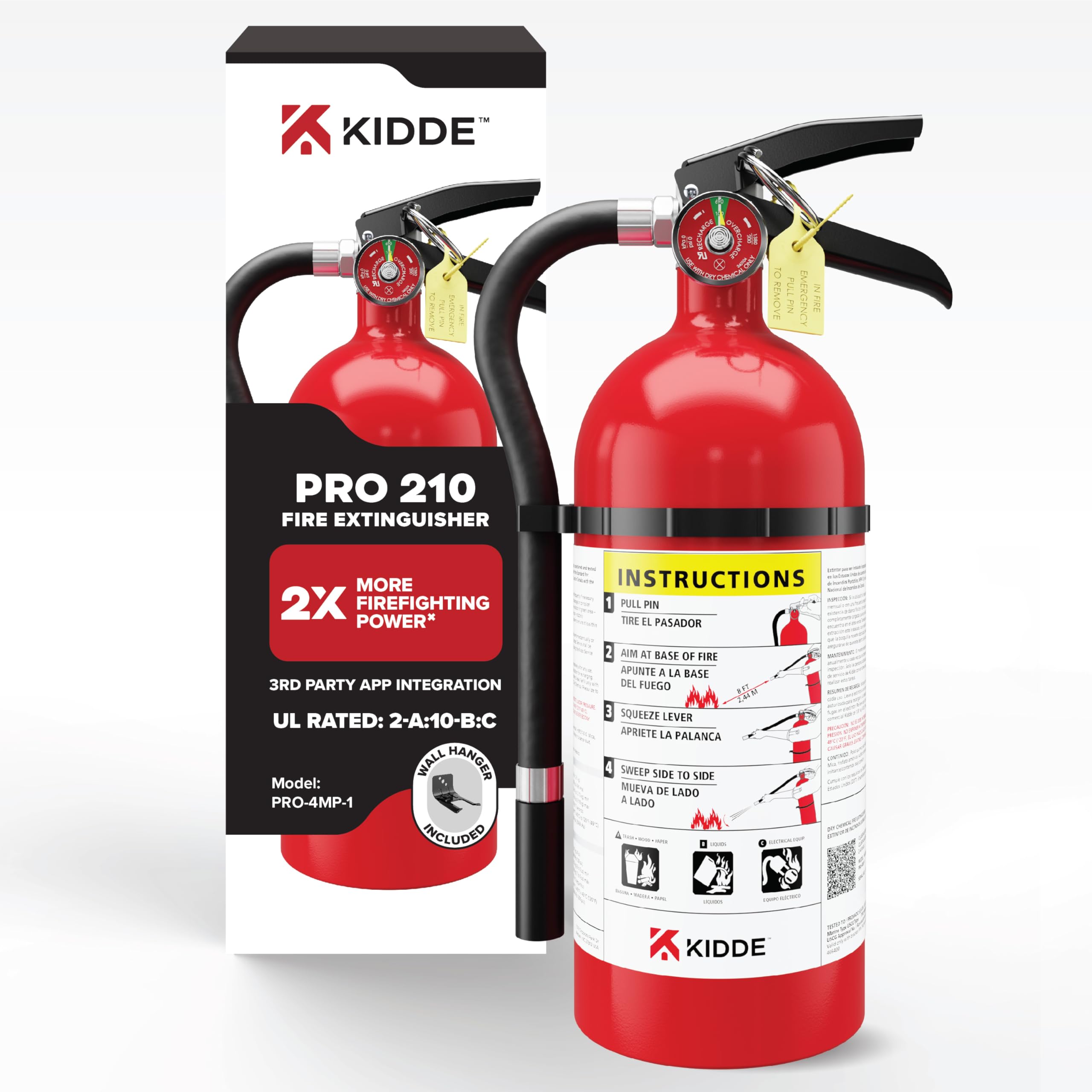
We recommend this rechargeable extinguisher for homes that need broad fire coverage and a sturdy, commercial-grade design.
Pros
- Handles Class A, B, and C fires
- Durable metal construction
- Includes a wall hanger and flexible hose
Cons
- Dry chemical residue can irritate skin
- Larger and heavier than basic home models
- Requires professional recharging after use
We found the Kidde Pro 210 easy to handle and built for regular inspection. Its metal valve, impact-resistant handle, and simple pull pin gave us confidence that it could withstand storage in a garage, utility room, or rental property.
The hose supports aiming from different angles, while the wall hanger helps keep the unit visible and accessible. Its discharge range should work well for small to medium fires, but we would still keep a clear escape route and leave immediately if the fire grows.
This model uses dry chemical powder, which can make a mess and may irritate skin. We also noticed its size and weight, so some users may prefer a smaller extinguisher for a kitchen cabinet or apartment. Its rechargeable design makes it a practical long-term choice when serviced properly.
Buying Guide
We should choose a fire extinguisher based on the types of fires it can put out, its size, and where we plan to store it. Check the label for a clear rating and approval from a recognized safety testing organization.
| Feature | What we should look for |
|---|---|
| Fire class | A for wood, paper, and cloth; B for flammable liquids; C for electrical equipment |
| Size | A compact model suits small areas, while larger models provide more agent but weigh more |
| Agent | Dry chemical models cover common household risks; other agents may suit kitchens or sensitive electronics |
| Pressure gauge | A readable gauge helps us check whether the extinguisher remains pressurized |
| Handle and pin | Choose sturdy parts that operate easily during stress |
| Mounting bracket | A secure bracket keeps the extinguisher visible and accessible |
For general home use, we should consider a multipurpose extinguisher rated for common fire classes. Kitchens may need a model designed for cooking oils and fats, while garages may need coverage for fuel, solvents, and other flammable liquids.
We should place extinguishers near exits and likely fire hazards, but not directly beside a stove or other fire source. Check the weight, read the operating instructions, and make sure everyone in the household knows where each unit is stored.
Inspect the gauge, pin, seal, hose, and cylinder regularly. Replace any extinguisher that shows damage, corrosion, leakage, or loss of pressure, and follow the manufacturer’s service and replacement instructions.
Editor’s Choice
We recommend a 2-A:10-B multipurpose dry chemical extinguisher for most homes. It can handle common fires involving wood, paper, cloth, flammable liquids, and energized electrical equipment.
Choose a model with a pressure gauge, a metal pull pin, and a sturdy handle. A 5-pound unit offers a useful balance of reach, weight, and storage space for many households.
| Feature | What we look for |
|---|---|
| Rating | At least 2-A:10-B |
| Agent | Dry chemical |
| Gauge | Easy to read |
| Certification | UL-listed or equivalent |
| Placement | Near an exit, away from the stove |
We suggest keeping one extinguisher in the kitchen area and another near the garage or workshop if those spaces contain extra fire risks. Mount each unit where adults can reach it quickly, but keep it away from heat sources and possible fire paths.
For cooking-oil fires, we recommend a Class K extinguisher in addition to a standard unit, especially in homes with deep fryers. Never use water on a grease or electrical fire.
Conclusion
We should choose a fire extinguisher based on the risks in our homes. A multipurpose ABC extinguisher works for many common fires, including those involving wood, paper, cloth, flammable liquids, and electrical equipment.
We should keep at least one extinguisher in an easy-to-reach place, such as near the kitchen or garage entrance. We must not place it beside a stove or other likely fire source, where flames could block access.
Before buying, we should check the extinguisher’s UL rating, size, pressure gauge, and expiration or service date. A model that feels too heavy may be difficult to use during an emergency, so we should choose a size we can lift and operate safely.
We also need to test smoke alarms, plan escape routes, and learn when to leave. We should use an extinguisher only when the fire is small, everyone has escaped, and emergency services are on the way.
FAQs
What type of fire extinguisher should we keep at home?
We recommend a multipurpose ABC extinguisher for most homes. It can handle fires involving wood and paper, flammable liquids, and electrical equipment.
How many extinguishers do we need?
We should keep at least one on each floor, with one near the kitchen and one in or near the garage. Place them where we can reach them quickly, but away from likely fire sources.
What size works best for home use?
A 2- to 5-pound extinguisher offers a useful balance between capacity and ease of handling. Larger models last longer but may be difficult for some people to lift or operate.
Can we use an extinguisher on a grease fire?
We should never use water on burning grease. Turn off the heat if we can do so safely, cover the pan with a metal lid, and use an extinguisher labeled for the fire type if the flames remain small.
How do we use a fire extinguisher?
We can remember PASS: Pull the pin, Aim at the base of the flames, Squeeze the handle, and Sweep from side to side. We should keep an exit behind us and leave immediately if the fire grows or smoke blocks our path.
When should we replace one?
We should inspect each extinguisher monthly for damage, low pressure, or a missing pin. We should replace it after use, when damaged, or when it reaches the manufacturer’s expiration date.
