
10 Best Door Alarms for Elderly: Top Safety Picks for Home Security

Door alarms can help older adults stay safer at home by alerting them when someone opens an outside door, bedroom door, or medicine cabinet. These small devices may support independent living, help caregivers monitor movement, and add protection against wandering or unwanted entry.
The best door alarms for elderly users should be simple to install and easy to hear or use. We recommend focusing on a clear alert, simple controls, reliable power, and features such as remote notifications or adjustable volume when needed. We also considered whether each alarm works well for people with hearing or vision limits, and whether caregivers can test and maintain it without difficulty.
We compared common door alarm types and key features to identify options that offer dependable alerts without adding unnecessary complexity.
Best Door Alarms for Elderly
We selected the best door alarms for elderly users based on sound level, ease of setup, reliability, and useful safety features. Our list includes options for homes, apartments, and caregivers who need timely alerts when a door opens.
YisTech Wireless Door Alarm

We recommend this set for households that need several door alerts, adjustable volume, and visual notifications.
Pros
- Covers doors and windows across a large home
- Offers many sounds and five volume levels
- Includes flashing lights for added notice
Cons
- Adhesive may not hold well on every surface
- Changing sounds and volume takes some practice
- Loud settings may feel harsh in quiet rooms
We found the plug-in receivers simple to set up. After we attached the sensors, the system began chiming when a door opened. The two receivers helped us monitor different parts of the home without carrying a separate pager.
The sound reached well across rooms, and we could choose from 58 melodies. We liked the volume control because lower settings worked better at night, while louder settings helped us hear alerts from another floor.
The flashing indicator added useful support for people who have trouble hearing. We also appreciated that the set can support more sensors later. However, the included tape did not grip every surface securely, so we would use stronger mounting strips when needed.
TECKNET Door Alarm 3-Pack

We recommend this set for older adults who need a simple door or window alert with adjustable sound levels.
Pros
- Clear chime and alarm modes
- Three volume settings
- Simple adhesive installation
Cons
- Needs a flat mounting surface
- Requires periodic battery checks
- The sensor must align closely with the alarm
We found the TECKNET alarms easy to place on doors, windows, cabinets, and drawers. The adhesive backing made setup quick, though one of our doors would need a spacer because its molding prevented a flat fit.
The chime mode works well when we want a gentle alert, while the continuous alarm provides a stronger warning. We could adjust the volume to avoid an overly loud sound in smaller rooms, yet the highest setting remained easy to hear from nearby areas.
This model suits bedrooms, entry doors, garages, and similar spaces. We would remind users to test each unit after installation and check the batteries if the alarm stops working. Its compact white design also blends into many door frames.
SECRUI Wireless Door Chime

We recommend this door alarm for caregivers who want a simple alert when an elderly person opens a door.
Pros
- Easy setup with the sensor already paired
- Adjustable volume, mute mode, and visual light
- Long wireless range with room to add sensors
Cons
- Chime choices may feel less simple than a basic ding
- One sensor covers only one door
- Some users report reliability problems after extended use
We mounted the sensor with the included adhesive and had the system working quickly. The receiver plugs into a wall outlet, so we did not need to manage another rechargeable device.
The sound options give us useful control. We could lower the volume for a bedroom or choose a louder setting for another area. The receiver also flashes when muted, which helps when we need a quiet alert.
This model works well for monitoring a front door, bedroom door, or patio entrance. Its expandable design lets us add sensors later, although the package includes only one.
We found the alert gentler than a loud siren, which may suit an older adult with dementia or those who startle easily. However, shoppers who want one short, clear tone may need time to find their preferred chime.
METAK Door and Window Alarm 5-Pack
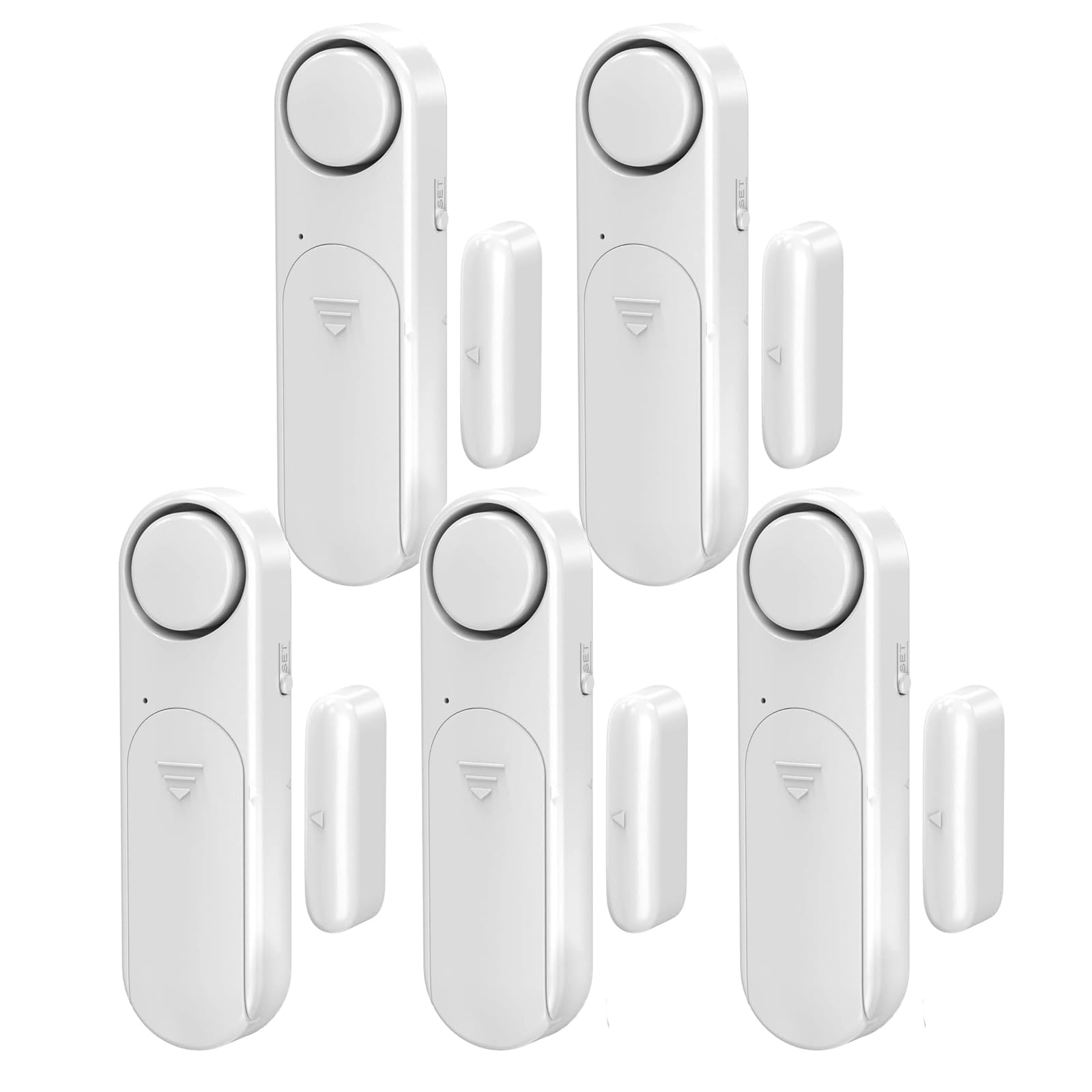
We recommend this five-pack for households that need simple, loud alerts at doors and windows, including homes caring for an elderly person who may wander.
Pros
- Very loud alarm with two volume choices
- Quick adhesive installation without wiring
- Five compact alarms cover several entry points
Cons
- Requires two AAA batteries per alarm, which are not included
- Does not offer remote control
- The loud alert may disturb some households
We found the alarms easy to place on doors and windows because the adhesive backing needs no tools. Their slim shape fits well along most frames, so they do not feel bulky during daily use.
When we opened a protected door, the alarm produced a strong alert that was difficult to miss from nearby rooms. We could also choose between 90 and 120 decibels using the Set button, which helped us adjust the sound for different areas.
The simple controls suit users who prefer a basic system. We could arm or disarm each unit and check the flashing red light when the alarm triggered or the battery ran low.
These alarms work well for bedrooms, exterior doors, garages, and areas where an elderly person may need monitoring. They use separate batteries in each unit, so we would keep spare AAA batteries available and test the alarms regularly.
SanJie Wireless Door Chime
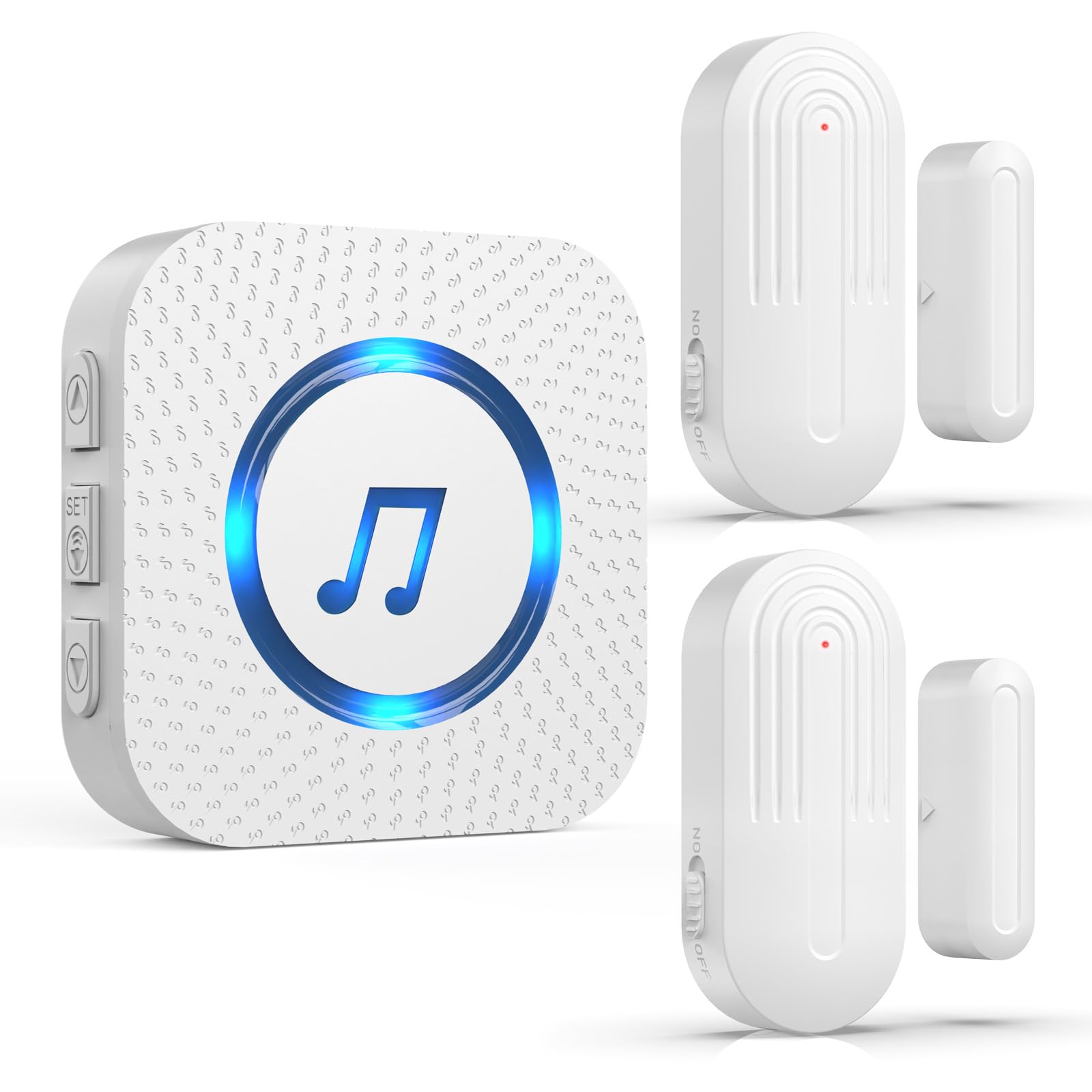
We recommend this door alarm for caregivers who want an easy way to hear when an elderly person opens a monitored door.
Pros
- Simple setup with pre-paired sensors
- Adjustable volume and 26 alert sounds
- Supports multiple sensors for different doors
Cons
- Some users may find the alert too quiet from another room
- Adhesive mounting may not suit every surface
- It provides an alert, not a monitored emergency response
We plugged in the receiver, attached the magnetic sensors, and had the system working quickly. The included adhesive makes setup simple, while screws offer a more secure option for long-term use.
The chime offers several volume levels and alert sounds, including a mute setting with visual indicators. We found this useful when we wanted a gentle reminder instead of a harsh alarm. However, room layout and hearing ability can affect how well we heard it.
The wireless range worked well across a typical home. We could also assign different sounds to separate sensors, which helped us identify which door opened. This makes the SanJie a practical choice for tracking exits without adding a complicated alarm system.
The two included sensors cover basic needs, and the system can expand with additional compatible sensors. We would still place the receiver where caregivers spend time and test the alert before relying on it for safety.
Satisure Wireless Door Chime
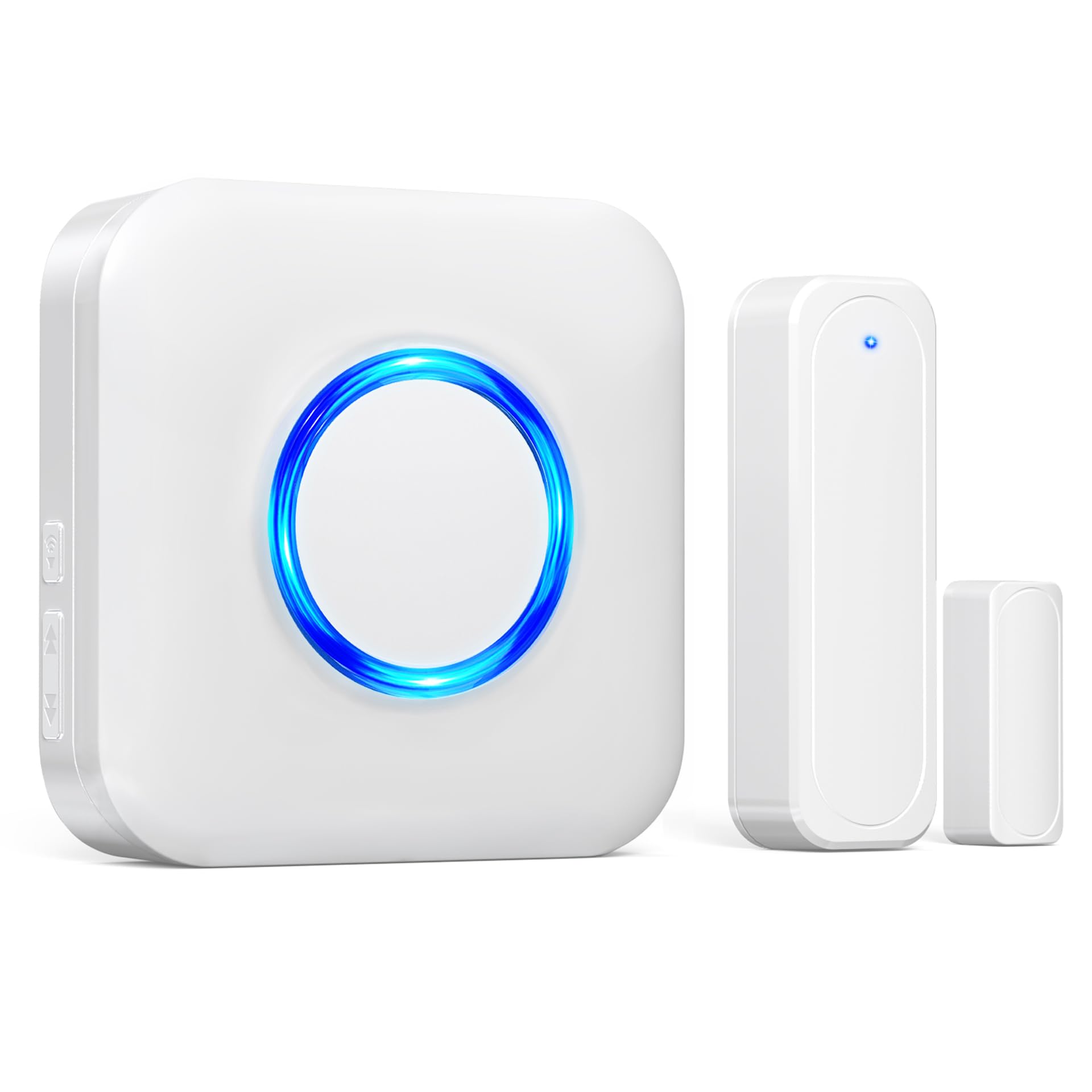
We recommend this Satisure alarm for caregivers who want a simple, wireless alert when an elderly person opens a door.
Pros
- Quick setup with a pre-paired sensor and receiver
- Strong range for larger homes
- Adjustable sound, melodies, and flashing light
Cons
- The plastic housing feels basic
- The loudest settings may be too strong for some homes
- One sensor may not cover every entry point
We plugged in the receiver, attached the sensor with the included adhesive, and had it working within minutes. The chime sounded promptly when the door opened, making it useful for monitoring wandering without adding complicated wiring.
The receiver offers several volume levels, including a quiet setting and a flashing light mode. We found these options helpful for different rooms and for people with hearing loss. The memory feature also keeps the selected tone after unplugging the unit.
Its wireless signal worked well across rooms and through walls during our testing. Families with several doors can add more sensors, although each sensor still needs careful placement so the two pieces line up when the door closes.
The alarm does not replace direct supervision or a medical alert system. Still, its simple controls, long stated range, and clear notification make it a practical choice for home entry monitoring.
SanJie 5-Pack Door and Window Alarms

We recommend these alarms for older adults who want a simple, loud alert when a door or window opens.
Pros
- Strong sound with two alarm levels and a chime setting
- Quick setup using the included adhesive strips
- Five sensors cover several doors, windows, drawers, or cabinets
Cons
- The loudest setting may startle some users
- Adhesive placement can be difficult around thick door trim
- Users must switch the alarm off before opening a protected door
We found the SanJie alarms easy to place and use without tools. The magnetic sensor sounded when we separated the two pieces, making it useful for an entry door, bedroom door, or low window.
The alarm offers two volume levels and a chime mode. We would choose the lower alarm setting for regular alerts, while the louder option fits situations where we need to hear the warning from another room.
The five-pack gives us enough units to cover several access points. However, we would test the alarm’s volume before placing it near someone who may be sensitive to sudden noise.
Battery life should reduce maintenance, and a flashing indicator warns us when power runs low. We would install the sensors indoors on a clean, flat surface and check that door trim does not prevent the magnetic pieces from lining up.
YisTech Caregiver Door Alarm

We recommend this alarm for caregivers who want a simple way to monitor doors without using a phone app.
Pros
- Two sensors cover separate doors or windows.
- Adjustable volume and 58 chime choices.
- Flashing receiver light helps people with hearing loss.
Cons
- The alarm sounds for only a short time.
- The receiver needs a wall outlet.
- Adhesive may need extra support on some surfaces.
We found the setup quick: plug in the receiver, then align and stick each sensor to a door or window. The system worked well on both swinging and sliding doors, making it useful for bedrooms, entry doors, and other areas where an older adult might wander.
The receiver offers five volume levels, including a very loud setting. We liked having the option to choose a softer chime during the day and a stronger alert when resting or working in another room. The flashing light adds another helpful signal for people who may not hear the sound clearly.
With a range of about 260 feet, the alarm covered separate rooms without trouble in typical home use. We also liked that one receiver can support multiple sensors, which makes it easier to monitor more than one exit.
The short alarm tone may not provide enough warning for every caregiver. The receiver also stays in one outlet, so placement matters. Still, this YisTech system offers a practical, low-cost way to receive an alert when someone opens a monitored door or window.
YisTech WiFi Door Alarm

We recommend this alarm for families who want both an in-home alert and phone notifications when an elderly person opens a monitored door.
Pros
- Phone alerts can reach caregivers away from home
- Multiple sounds, volume levels, and a visual light
- Supports two sensors and added receivers
Cons
- App alerts may become unreliable over time
- Setup can require Wi-Fi reconnects
- Adhesive may loosen in humid areas
We found the plug-in receiver easy to place in a central room, where its adjustable sound made door openings hard to miss. The flashing light adds a useful visual cue for people with limited hearing.
The two contact sensors work well for tracking doors or windows. We also liked the option to share alerts with other caregivers, which can help families divide monitoring duties.
The phone app adds useful range, but customer experiences suggest mixed reliability. Some users reported that notifications stopped after a period of use or required reinstalling the app. The included adhesive may also need extra support on damp surfaces.
This model works best as a backup alert system rather than a complete security device. It signals when a door opens, but it does not report when the door closes.
SECURITYMAN Door Handle Alarm

We recommend this two-pack for older adults who need a simple, loud alert when someone moves a door handle.
Pros
- Quick setup with no wiring
- Adjustable sensitivity and alarm modes
- Useful at home or while traveling
Cons
- High sensitivity can cause false alarms
- The sound may feel too loud indoors
- Some users report inconsistent units
We found the alarms easy to place on standard, metal, plastic, and French door handles. The included batteries let us test them right away, and the controls made arming and disarming simple.
The vibration sensor reacted quickly when we moved the handle. We also liked the choice between a short alarm and continuous sound, which helps us match the setting to the situation.
Sensitivity needs careful adjustment. At the highest level, normal movement or nearby vibration may trigger the alarm. The 130 dB siren can alert people throughout the home, but it may startle an older adult.
Because the alarms run on batteries and use a compact design, we can move them between rooms or pack them for travel. We would test both units before relying on them, since some customer reports mention alarms that did not work even after battery replacement.
Buying Guide
We should choose a door alarm that matches the user’s needs, home layout, and hearing ability. Start by checking whether the alarm will monitor one door or several entry points.
| Feature | What we should check |
|---|---|
| Sound | A loud, adjustable alarm with a clear tone |
| Visual alerts | Flashing lights can help users with hearing loss |
| Remote notification | Phone alerts may help caregivers respond quickly |
| Controls | Large buttons and simple settings are easier to use |
| Power | Battery life, low-battery warnings, and backup power |
| Installation | Adhesive or screw mounting should fit the door and frame |
| Alarm modes | Chime, alarm, and delay settings should match daily routines |
We should measure the space between the door and frame before buying. The sensor must align correctly when the door closes, and the mounting surface should support the chosen installation method.
Consider the user’s hearing, vision, mobility, and memory. A model with a bright indicator, simple controls, and a remote alert may offer more practical support than one with sound alone.
We should also check how the alarm resets after activation. Automatic reset may suit routine monitoring, while manual reset can help caregivers confirm that someone noticed the alert.
For homes with pets, we should review whether the alarm monitors only doors or also detects movement. We should select a system with privacy controls and secure account settings when it connects to the internet.
Editor’s Choice
We recommend the GE Personal Security Window and Door Alarm for many older adults. It uses a simple magnetic sensor, a loud alarm, and a basic on/off switch. The setup does not require professional installation.
| Feature | Details |
|---|---|
| Alarm volume | 120 decibels |
| Installation | Peel-and-stick adhesive |
| Power | Batteries |
| Best for | Doors and windows |
We like this alarm because it has few controls and clear operation. Our choice suits seniors who want a basic alert when someone opens a door or window.
The adhesive backing supports quick installation on most clean, flat surfaces. We recommend testing the alarm after installation and checking the batteries on a regular schedule.
The high volume may help alert someone in another room, but it could sound harsh to people with hearing sensitivity. We should also note that this device does not contact family members, caregivers, or emergency services.
Conclusion
We should choose a door alarm based on the person’s needs, the home’s layout, and the caregiver’s response plan. A simple magnetic alarm may suit basic alerts, while a connected model can send notifications to a phone.
We should also check the alarm’s volume, battery life, installation method, and reset controls. Large buttons, clear sounds, and simple settings can make daily use easier for older adults.
Before buying, we can compare these features:
- Alert type: chime, siren, or phone notification
- Power source: batteries or wall power
- Setup: adhesive mounting or screws
- Range: distance between sensors and receivers
- Extra features: remote control, keypad, or low-battery alerts
A door alarm supports home safety, but it should not replace regular check-ins or other care measures. We should test the system after installation and replace batteries when needed.
FAQS
What type of door alarm works best for an older adult?
We recommend a simple alarm with a loud chime, large controls, and clear battery alerts. A model with a remote receiver can help us hear the alert from another room.
Can door alarms help prevent wandering?
Door alarms can alert us when someone opens an outside door, but they do not stop the person from leaving. We should use them with supervision, secure locks, and a care plan.
Are wireless door alarms reliable?
Wireless alarms usually work well when we install them within the stated range. We should test the signal after setup and replace batteries when needed.
Should we choose a chime or a siren?
A chime may suit daily monitoring because it sounds less harsh. We may prefer a siren when we need a stronger warning, such as during nighttime wandering.
Do door alarms work during a power outage?
Battery-powered alarms can continue working during an outage. For plug-in models, we should check whether they include battery backup.
What features should we look for?
- Large, easy-to-use buttons
- Adjustable volume
- Low-battery warning
- Simple installation
- Tamper-resistant design
- A test button
- A receiver with enough range
Where should we install the alarm?
We should place the sensor on the door and frame so both parts line up when the door closes. We should test the alarm from nearby rooms and check it regularly.
