
10 Best Carbon Monoxide Detectors for Apartments: Top Reliable Picks


Digital Thermometer

Quad Cane for Seniors

Toilet Safety Rails
Carbon monoxide (CO) is a colorless, odorless gas that can build up when fuel-burning appliances do not vent properly. Apartments can face added risks from shared walls, nearby garages, and heating systems, so a working detector provides an important layer of protection.
For most apartments, we recommend a detector with a loud alarm, a clear digital display, battery backup, and a long-lasting sensor. We also look for models that are easy to install, simple to test, and listed by a recognized safety organization. We tested and researched the leading carbon monoxide detectors to find the best options for apartment living, followed by practical advice for choosing one.
Best Carbon Monoxide Detectors for Apartments
We evaluated carbon monoxide detectors for apartments based on accuracy, ease of installation, power options, and alarm features. Our list highlights dependable models that suit different apartment layouts, budgets, and safety needs.
Kidde Plug-In Carbon Monoxide Detector
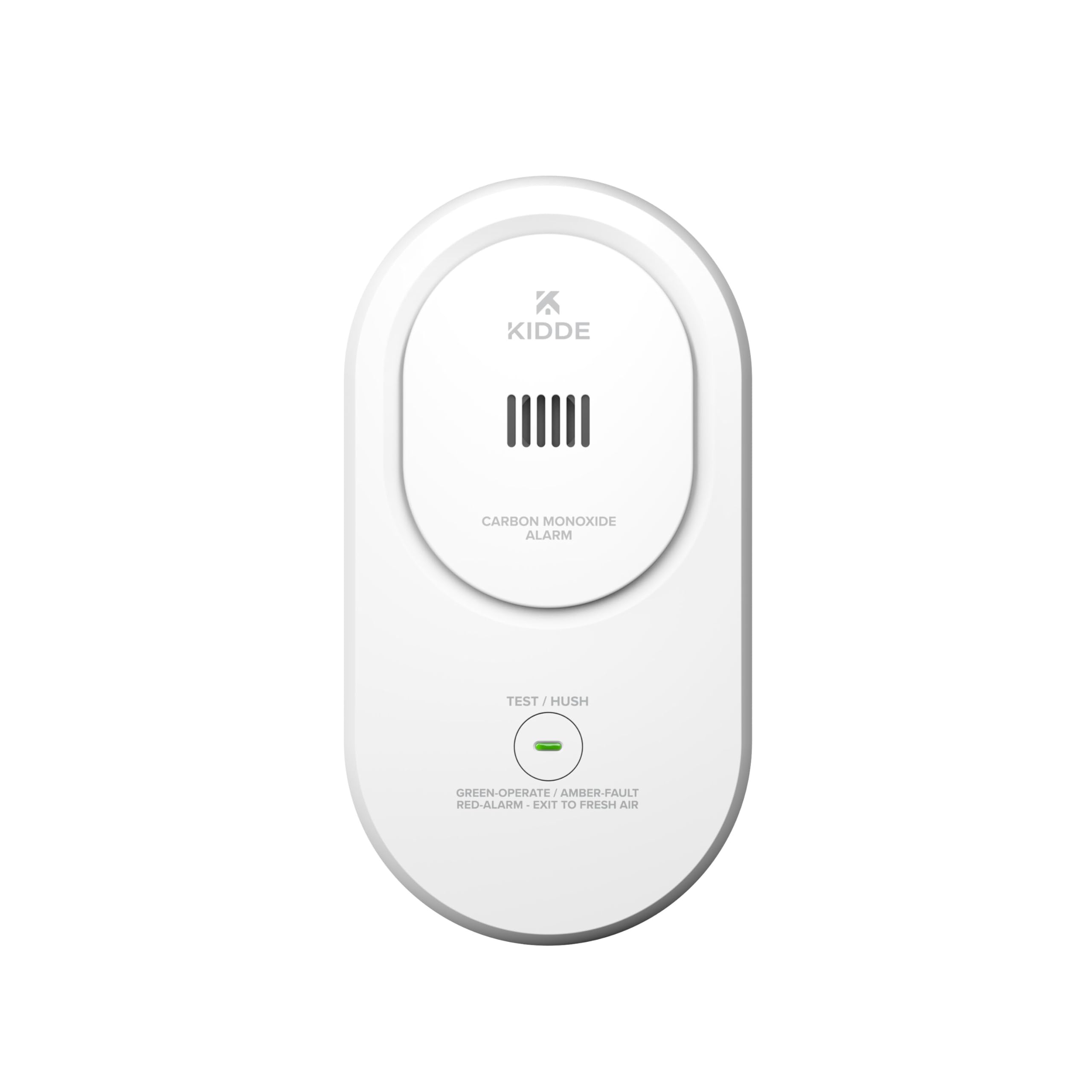
We recommend this detector for apartments because it offers simple plug-in setup, battery backup, and clear alerts in a compact design.
Pros
- Rotating plug fits horizontal or vertical outlets
- Battery backup supports operation during outages
- LED status lights and a loud alarm are easy to notice
Cons
- Works with 120V outlets only
- Its size may cover part of a nearby outlet
- Not approved for RV or boat use
We plugged the Kidde COP into an apartment outlet and found the setup quick and straightforward. The rotating plug helped us position it without blocking the adjacent socket, which matters in rooms with limited outlets.
The LED lights provide a quick visual check of the detector’s status. We also liked having the Test/Hush button nearby for routine checks or temporary silencing when appropriate.
Two AA batteries provide backup power during an outage. That adds useful coverage for apartments, where residents may not have another detector nearby. The 85-decibel alarm should provide a clear warning, though some users may prefer a longer or louder alert.
This model suits apartments with gas stoves, fireplaces, water heaters, or nearby garages. We would confirm the outlet voltage before buying and place the detector according to the manufacturer’s instructions.
Kidde Portable CO Detector

We recommend this Kidde detector for apartments because it installs easily, runs during power outages, and works well for travel.
Pros
- Battery operation needs no wiring or outlet
- Clear LED status signals and a loud alarm
- Compact design suits walls, tables, and luggage
Cons
- Requires regular AA battery checks
- Basic model lacks a digital CO display
- A separate unit may be needed for each level
We found the setup simple because the detector uses two AA batteries and does not need an outlet. That makes it useful in apartments where wall placement may be limited. It can also sit on a tabletop or travel in a bag for hotel stays and road trips.
The green LED shows that the unit has power, while the red light and loud alarm signal detected carbon monoxide. We liked the test-reset button for checking operation and quieting a low-battery chirp for a short time.
Its compact size works well near a bedroom or living area without taking up much space. Event memory also helps us check whether the alarm detected CO or was tested while we were away.
This model does not include a digital reading, so it only alerts us when CO reaches its alarm level. We would place one near sleeping areas and follow local safety guidance for coverage on additional floors.
First Alert Plug-In CO Detector

We recommend this detector for apartments because it plugs into a wall outlet, includes battery backup, and offers simple controls.
Pros
- Battery backup keeps monitoring during power outages
- Electrochemical sensor supports accurate detection
- Simple test and silence button
Cons
- Uses one outlet
- Battery requires periodic replacement
- Plug-in design limits placement options
We found the plug-in setup convenient for an apartment, especially near a bedroom or hallway outlet. The backup battery adds useful protection when the power goes out.
The single button makes testing and silencing the alarm straightforward. Its 85-decibel alert is loud enough to hear from nearby rooms, though people with larger apartments may need additional units.
The end-of-life warning helps us remember when to replace the detector. For full coverage, we would place one on each level and inside or near every bedroom, following the manufacturer’s guidance.
HEIMAN C1-S Carbon Monoxide Detector
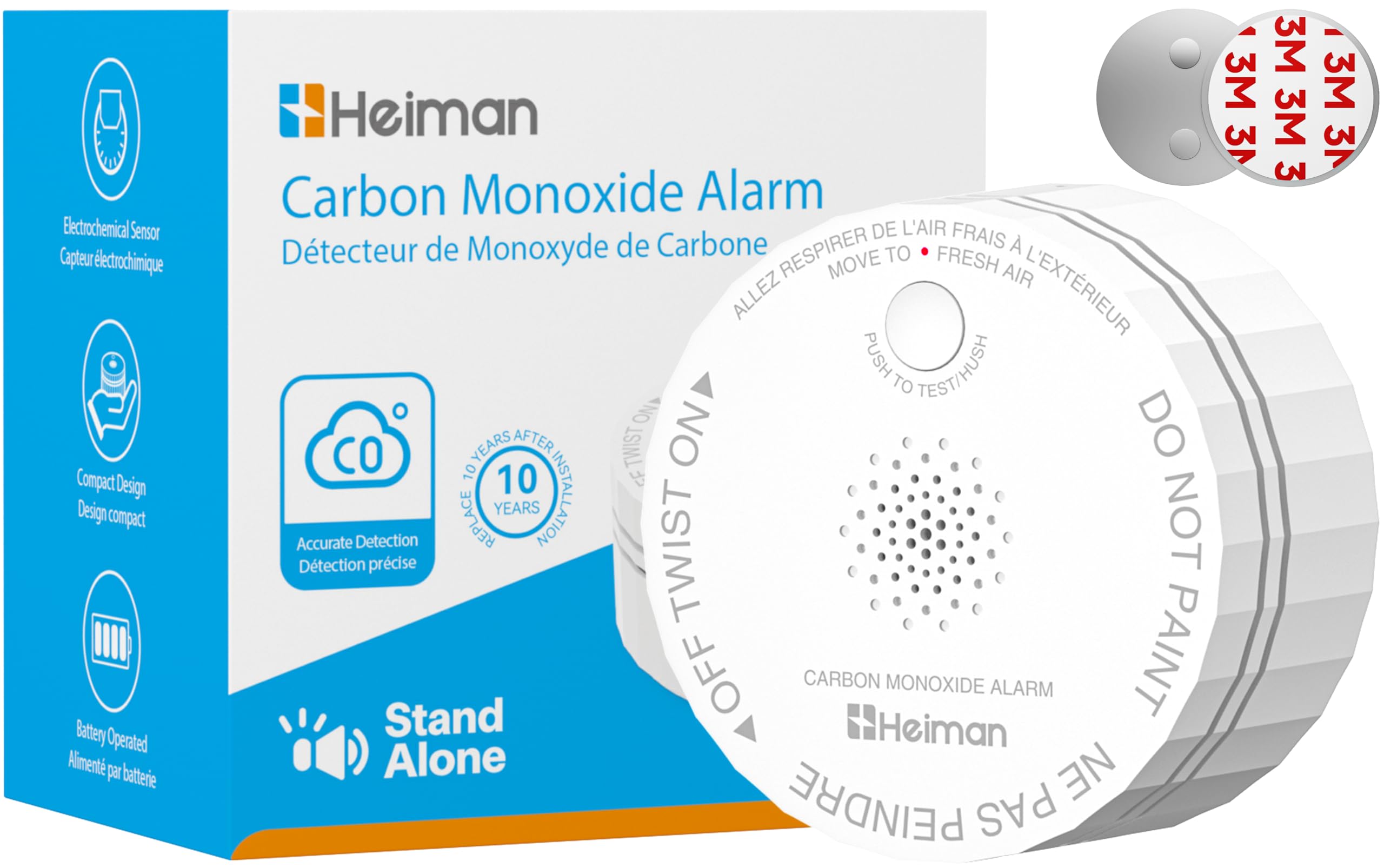
We recommend the HEIMAN C1-S for apartments because its compact design, long-life battery, and simple installation suit small living spaces.
Pros
- Compact body fits neatly on a wall or ceiling
- Long-life lithium battery reduces maintenance
- Clear audible and visual alerts
Cons
- Sold as a single detector
- Standalone model lacks interconnected alarms
- Test button is needed to check the alarm sound
We found the C1-S easy to place in an apartment bedroom, hallway, or living room. Its small size keeps it from taking over the wall, and the included mounting hardware supports a quick setup. It can also sit on a flat surface when drilling is not practical.
The electrochemical FIGARO sensor and UL 2034 5th Edition certification add useful reassurance. Its 85-decibel alarm and warning light provide two alert methods, while the Test/Silence button makes routine checks simple.
A built-in lithium battery rated for up to 10 years helps avoid frequent battery changes. However, this one-pack model does not connect with other alarms, so larger apartments may need several units placed near sleeping areas and fuel-burning appliances. The product listing also shows different warranty periods, so we recommend confirming the current terms before buying.
Kidde Battery CO Detector

We recommend this Kidde detector for apartments because it installs easily, runs during power outages, and offers clear alerts.
Pros
- Battery power avoids wiring and works during outages
- Portable wall or tabletop design
- Test-hush button and peak-level memory
Cons
- No smart alerts or phone connection
- Requires regular battery checks
- The alarm does not replace required smoke detectors
We found the setup simple because the unit uses AA batteries instead of a wall outlet or hardwiring. Its compact shape fits well on an apartment wall or tabletop, and we could move it when needed.
The green LED shows normal power, while the red LED flashes during an alarm. An 85-decibel siren provides a strong warning, and the test-hush button lets us check operation or silence a low-battery chirp temporarily.
Peak-level memory adds useful information after an event. We could review whether the detector had recorded carbon monoxide since its last reset, though this model lacks a digital display and smart-home features.
For apartment use, we would place it near sleeping areas and follow local placement rules. We would also test it regularly, replace its batteries as needed, and follow the manufacturer’s replacement guidance.
HEIMAN C1-R Carbon Monoxide Detector
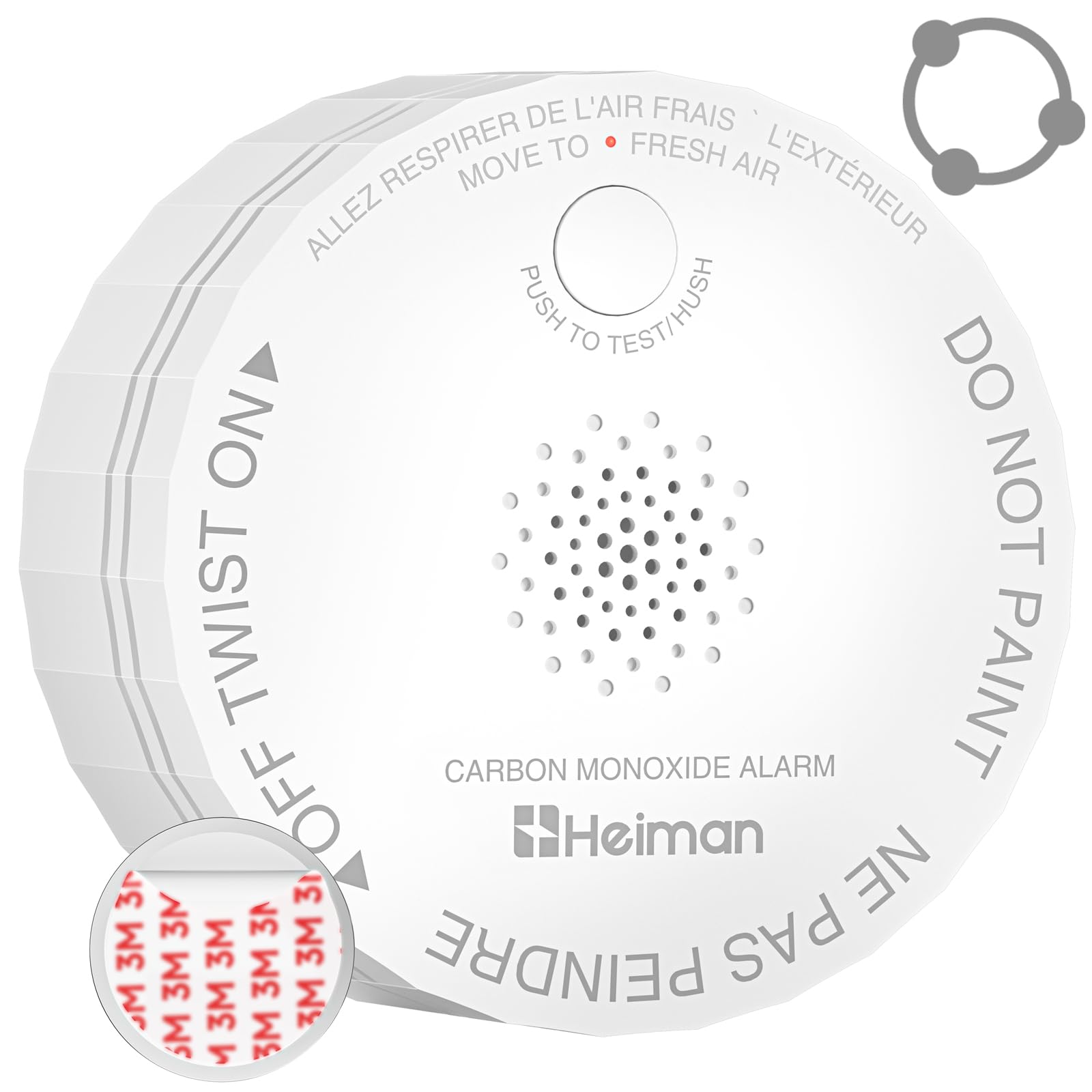
We recommend this compact detector for apartments because it installs easily, runs on batteries, and supports wireless linking with compatible HEIMAN alarms.
Pros
- Compact design suits bedrooms, hallways, dorms, and rental units.
- Battery power works during outages.
- Clear alarm and simple test button.
Cons
- Setup instructions may take close attention.
- Wireless linking works within the HEIMAN system.
- Some building inspections may require a different approved setup.
We found the C1-R easy to place in a small apartment. Its compact body takes up little wall space, while the included mounting hardware and adhesive pads give renters flexible installation choices.
The electrochemical FIGARO sensor is a strong feature for everyday use. The test and silence button is easy to reach, and the alarm is loud enough for normal apartment rooms without taking up much space.
Wireless interconnection can help in larger homes, but we would confirm compatibility before buying several units. Setup may also require more care than the simple design suggests, so we recommend following the manual closely and checking local building rules.
Kidde Plug-In CO Detector

We recommend this detector for apartments because it offers simple plug-in setup, battery backup, and a clear carbon monoxide reading.
Pros
- Easy plug-in installation with three placement options
- Digital display shows detected CO levels
- Battery backup helps during power outages
Cons
- The display may be hard to read from across a room
- Its plug-in design can cover a nearby outlet
- The unit needs replacement at the end of its service life
We found the setup quick: insert the included 9-volt battery, plug the alarm into an outlet, and test it. The included cord also lets us place it on a shelf or table when a wall outlet is not in a useful spot.
The digital display gives us more information than a basic alarm. It normally shows a low reading, while the peak memory records the highest detected level since the last reset. This feature helps us check whether CO reached the apartment while we were away.
Its 85-decibel alarm sounds loud enough for most small apartments. The Smart-Hush button can silence an alert for about eight minutes, but we should never ignore a real alarm or treat cooking and steam as harmless without checking the cause.
The main drawback is that the unit takes up outlet space, and its display is not ideal for viewing from far away. We also need to replace the alarm after its service life ends, even if it still appears to work.
First Alert CO400 2-Pack

We recommend this battery-powered pair for apartment renters who want simple placement and protection during power outages.
Pros
- Easy setup without an outlet or electrician
- Loud alarm and clear test button
- Two units help cover bedrooms and living areas
Cons
- Batteries need regular replacement
- No digital carbon monoxide reading
- The sensor requires replacement after its service life
We found the CO400 easy to place in an apartment because it runs on a 9-volt battery. Its wall-mount option also helps renters position one near sleeping areas and another near a fuel-burning appliance, without adding another plugged-in device.
The single button keeps testing and silencing simple. We also liked the low-battery warning and end-of-life signal, which reduce guesswork about maintenance. The included action guide offers quick steps if the alarm sounds.
When tested, the 85-decibel alarm provides a strong warning that should be easy to hear from nearby rooms. The electrochemical sensor is designed to detect carbon monoxide from sources such as faulty appliances, blocked chimneys, and nearby generators.
This model does not show current CO levels, and each unit needs a fresh battery over time. Still, the two-pack gives apartment residents a practical way to place alarms near bedrooms and on another level when needed.
SITERWELL Plug-In CO Detector
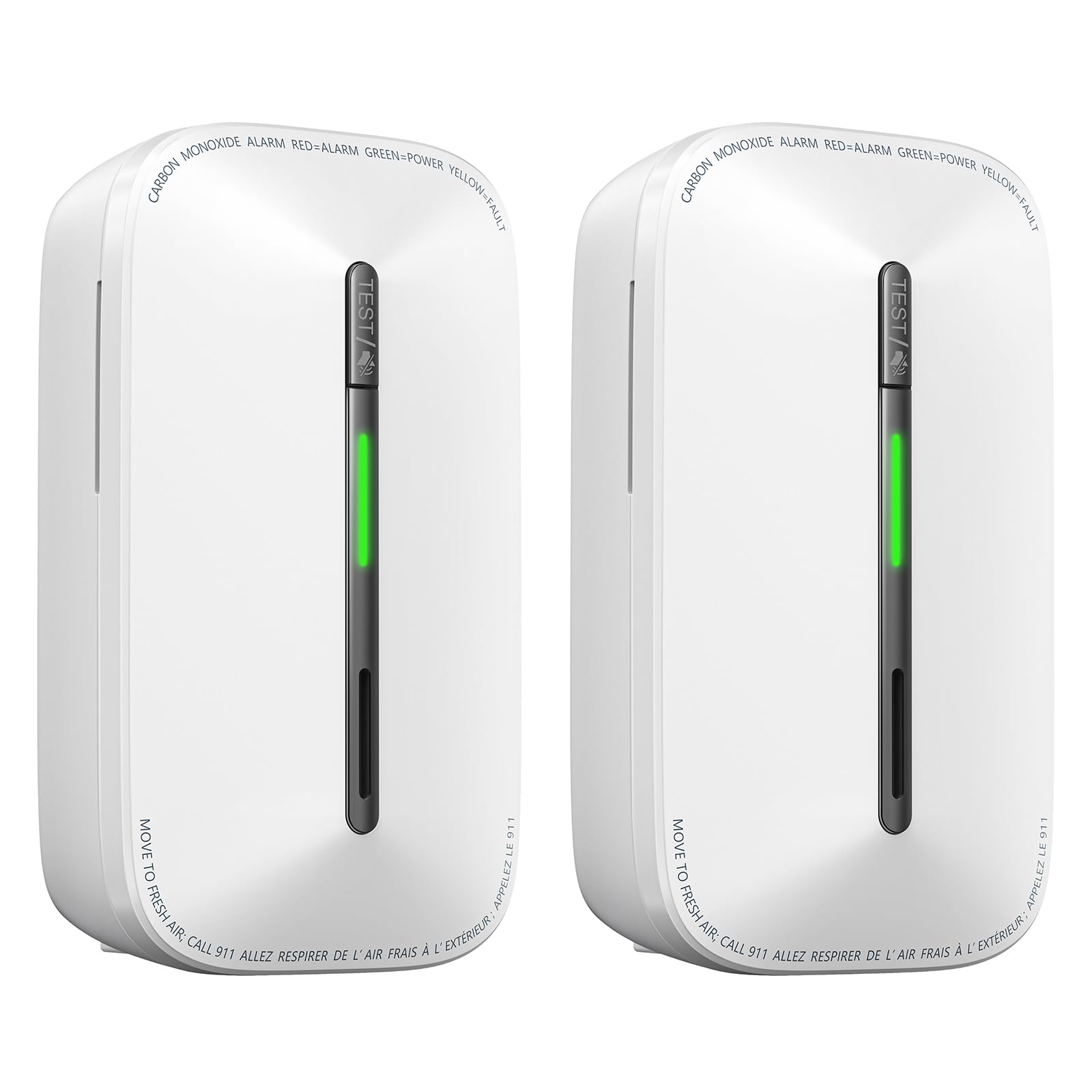
We recommend this detector for apartment renters who want simple plug-in protection with a long-life backup battery.
Pros
- Easy setup and portable design
- Loud alarm and clear status light
- Ten-year battery backup
Cons
- Battery installation may take some effort
- Plug-in placement limits mounting options
- The alarm does not replace a smoke detector
We found the SITERWELL easy to place near an outlet, making it practical for bedrooms, hallways, or rooms with fuel-burning appliances. Its compact white body blends into most apartment walls and does not take up much space.
The status light gives us a quick check of its condition. Green indicates normal operation, while yellow signals a fault and red indicates an alarm. We also liked the one-touch silence feature, which helps reduce unwanted noise during testing.
Its loud warning sound should get our attention quickly if carbon monoxide levels become dangerous. The electrochemical sensor is designed to detect CO from sources such as heaters, boilers, fireplaces, and vehicle exhaust.
The built-in battery backup keeps the unit working during a power outage. We would still check the battery and test the alarm regularly, since no detector removes the need for routine safety checks.
First Alert CO710 Detector

We recommend this detector for apartments because its long-life battery, clear display, and compact design make routine monitoring simple.
Pros
- Built-in battery lasts up to 10 years
- Displays temperature and peak CO levels
- Compact design works on a dresser or wall
Cons
- The temperature reading may need time to settle
- The display does not show CO levels continuously
- It lacks smart alerts and phone notifications
We found the CO710 easy to set up and place in an apartment. Its battery-powered design lets us use it without relying on an outlet, which also keeps it working during a power outage.
The backlit display shows room temperature and lets us check the highest carbon monoxide level the unit has detected. We found the temperature feature useful, though the reading may seem off right after unpacking and improve after the detector sits in the room.
Its 85-decibel alarm sounds clearly, and the test button makes routine checks simple. The unit can sit on a tabletop or mount to a wall, giving us more placement options in a smaller home.
The CO710 does not connect to a phone or provide remote alerts. Still, its electrochemical sensor, 10-year battery, end-of-life warning, and limited warranty make it a practical choice for apartment safety.
Buying Guide
We should choose a carbon monoxide detector based on sensor type, placement options, alert style, and maintenance needs. Select a model tested to recognized safety standards and check that its instructions clearly explain installation and testing.
Look for these features:
- Electrochemical sensor: Often used for accurate carbon monoxide detection.
- Digital display: Shows carbon monoxide levels and may help us track changing readings.
- Loud alarm: Choose an alarm that we can hear from bedrooms and other occupied rooms.
- Battery options: Battery-powered models suit apartments without nearby outlets. Replaceable batteries can simplify maintenance, while sealed batteries may reduce routine checks.
- Test and silence buttons: These controls let us check the alarm and temporarily quiet nuisance alerts.
- End-of-life warning: The detector should notify us when it needs replacement.
- Plug-in or portable design: These options can work well for renters, but we should follow placement instructions and avoid blocking vents.
We should check the detector’s recommended coverage area and install enough units for bedrooms, sleeping areas, and each floor when required by local rules. Avoid placing a detector near windows, doors, vents, kitchens, bathrooms, or sources of heat unless the instructions allow it.
Before buying, we should review the product’s replacement schedule, battery requirements, warranty, and testing instructions. We also need to confirm that the alarm suits our apartment’s size and layout.
Editor’s Choice
We chose the First Alert SCO7CN as our editor’s choice for many apartments. It combines carbon monoxide and smoke detection in one unit, helping save wall or ceiling space.
The detector uses a loud 85-decibel alarm and includes a digital display that shows carbon monoxide levels when detected. Its voice alerts identify the type of danger, which can help us respond quickly.
| Feature | Details |
|---|---|
| Detection | Carbon monoxide and smoke |
| Display | Digital CO level readout |
| Power | Replaceable batteries |
| Alerts | Voice and 85-decibel alarm |
| Placement | Wall or ceiling |
We like the battery-powered design because it works in apartments without nearby outlets. We should test the alarm each month and replace its batteries as the manufacturer recommends.
This model may suit renters who want two types of protection in one device. We still need to check local safety rules, follow the installation guide, and place detectors near sleeping areas.
Conclusion
We should choose a carbon monoxide detector that fits our apartment, meets current safety standards, and has a clear alarm. A digital display can help us track low CO levels, while a voice alarm or phone alert may offer added convenience.
We should place detectors near sleeping areas and follow the manufacturer’s instructions for mounting and testing. Apartments with fuel-burning appliances may need more than one detector, especially when bedrooms sit far from the main living area.
Before buying, we can compare sensor type, battery life, display features, warranty, and smart alerts. Regular testing and timely battery replacement help keep the detector ready when we need it.
FAQs
Where should we place a carbon monoxide detector in an apartment?
We should place one near each sleeping area and on every level of the apartment. Keep detectors away from windows, doors, vents, and cooking appliances to reduce false alarms.
How many detectors do we need?
We should follow local rules and the manufacturer’s instructions. In most apartments, one detector near the bedrooms provides basic coverage, while additional units improve coverage in larger or multi-level homes.
How often should we test a detector?
We should press the test button at least once a month. We also need to replace the batteries as directed, even if the alarm has not sounded.
When should we replace a carbon monoxide detector?
We should check the expiration date or service life listed by the manufacturer. Many models require replacement after five to 10 years.
What should we do if the alarm sounds?
We should leave the apartment immediately, move to fresh air, and call emergency services from outside. We should not reenter until qualified responders confirm that it is safe.
Can we use a combination smoke and carbon monoxide alarm?
Yes. Combination alarms can save space, but we should confirm that the unit meets current safety standards and includes the features our apartment needs.