
Best Bed Alarm for Elderly: 5 Safer Picks for 2026


Smart Health Watch for Seniors

Long Handle Shoe Horn

Adaptive Eating Utensils
Finding the best bed alarm for elderly care is less about choosing the loudest alarm and more about getting a useful warning when someone starts leaving the bed. A good system should alert the caregiver quickly without making the bedroom noisy or uncomfortable.
We compared bed pads, early-alert systems, under-mattress sensors, and floor mats. The five picks below focus on different needs, including quiet monitoring, early warning, comfort, and simple setup.
Best Overall: Smart Caregiver Bed Alarm
The Smart Caregiver Bed Alarm with Caregiver Pager is the best choice for most homes. It uses a pressure-sensitive bed pad and sends the alert to a portable caregiver pager.
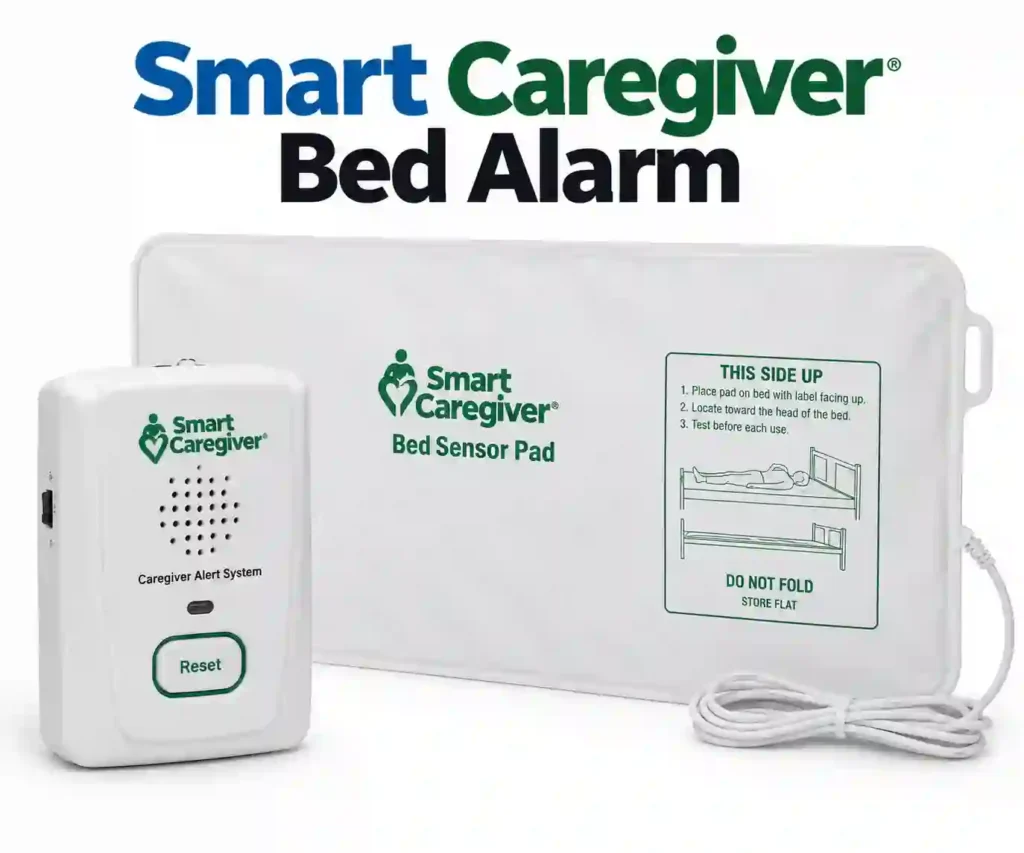
The wireless pager can use sound or vibration. That means the caregiver can receive an alert without waking or startling the senior. Smart Caregiver also offers a broad range of compatible sensors, so the system can grow if needs change.
Key Features
This system is a good fit when you want a simple bed-exit alert without Wi-Fi or a complicated app.
| Specification | Details | Why It Matters |
|---|---|---|
| Alert | Wireless pager | Caregiver can stay nearby |
| Pad | Pressure-sensitive | Detects weight leaving the pad |
| Alert mode | Sound or vibration | Better for quiet nighttime use |
| Expansion | Multiple compatible sensors | Can add chair or other monitoring |
| Current listed price | About $99.95 | Mid-range option |
Pros And Cons
Here are the main trade-offs to consider before buying this system.
| Feature | Pro | Con |
|---|---|---|
| Wireless pager | Caregiver can move around | Requires the pager to be carried |
| Vibration mode | Quiet at night | Easy to overlook if caregiver is asleep |
| Expandable design | Supports broader monitoring | Extra sensors cost more |
| Bed pad | Simple detection | Placement affects performance |
Who Should Consider This Product
This is a strong choice for families who want a traditional bed-exit alarm with a portable caregiver alert.
It may not be the best option for someone who dislikes having a sensor pad under the sheet. In that case, an under-mattress design may be more comfortable.
Best For: Most caregivers who want a simple, expandable bed alarm.
Not Ideal For: Seniors who remove or dislike visible bed sensor pads.
Best Early Alert: Lunderg Wireless Early Alert
The Lunderg Wireless Early Alert Bed Alarm is a better choice when getting an earlier warning matters most. Its early-alert design is intended to detect movement as the person begins to rise rather than waiting until they are completely off the bed.

The system uses a wireless pager, so the caregiver can receive the alert away from the bedroom. It also avoids putting a loud alarm beside the senior.
Key Features
The early-warning approach can give a caregiver more time to respond, but correct pad placement is important.
| Specification | Details | Why It Matters |
|---|---|---|
| Alert | Wireless pager | Remote caregiver notification |
| Detection | Early-alert design | Can warn during rising movement |
| Pad | Hip-level placement | Designed for earlier detection |
| Range | Up to about 400 ft | Useful in larger homes |
| Alert style | Sound or vibration | Allows quieter monitoring |
Pros And Cons
The main advantage is earlier notification, while the main drawback is a higher price than basic bed alarms.
| Feature | Pro | Con |
|---|---|---|
| Early detection | Gives more warning | Placement must be correct |
| Wireless pager | Quiet bedroom | Caregiver must carry it |
| Wipeable pad | Easier to clean | Pad has a limited service life |
| Vibration mode | Discreet at night | May be missed by some caregivers |
Who Should Consider This Product
This model makes sense for caregivers who are especially concerned about nighttime bed exits and want an earlier warning.
It may be excessive for a senior who simply needs a basic alert and does not regularly attempt to leave the bed without help.
Best For: Caregivers who want earlier warning before a full bed exit.
Not Ideal For: Buyers looking for the lowest-cost basic alarm.
Best Under-Mattress: Lunderg Under-Mattress Bed Alarm
The Lunderg Under-Mattress Bed Alarm is a smart option for seniors who dislike a sensor pad placed directly under the sheet. The sensor sits beneath the mattress, keeping the monitoring system out of sight.

The manufacturer says the system works with mattresses up to 13 inches thick and uses an early-alert design. It also supports vibration and adjustable volume on the portable pager.
Key Features
Its biggest benefit is comfort. There is less for the senior to see, feel, or remove during the night.
| Specification | Details | Why It Matters |
|---|---|---|
| Sensor position | Under mattress | Keeps the sensor hidden |
| Mattress limit | Up to 13 inches | Must check mattress thickness |
| Alert | Portable pager | Caregiver can move around |
| Alert modes | Sound and vibration | Supports quieter monitoring |
| Expansion | Up to 3 compatible devices | Can cover more than one location |
Pros And Cons
The hidden design is useful, but mattress compatibility should be checked before ordering.
| Feature | Pro | Con |
|---|---|---|
| Hidden sensor | More comfortable | Not suitable for every mattress |
| Early alert | Earlier caregiver warning | Setup position matters |
| Wireless pager | No bedside alarm needed | Pager must stay with caregiver |
| Low visibility | Harder for senior to remove | Costs more than basic alarms |
Who Should Consider This Product
Choose this model if the senior repeatedly removes an ordinary bed pad or finds one uncomfortable.
Check the mattress thickness first. The manufacturer also notes that the under-mattress system is not compatible with Sleep Number air-adjustable mattresses.
Best For: Seniors who prefer a hidden, comfortable sensor.
Not Ideal For: Mattresses outside the supported thickness range.
Best Floor Mat: Smart Caregiver Bedside Floor Mat
A floor mat takes a different approach. Instead of detecting movement on the bed, it alerts the caregiver when the senior steps onto the mat beside the bed.
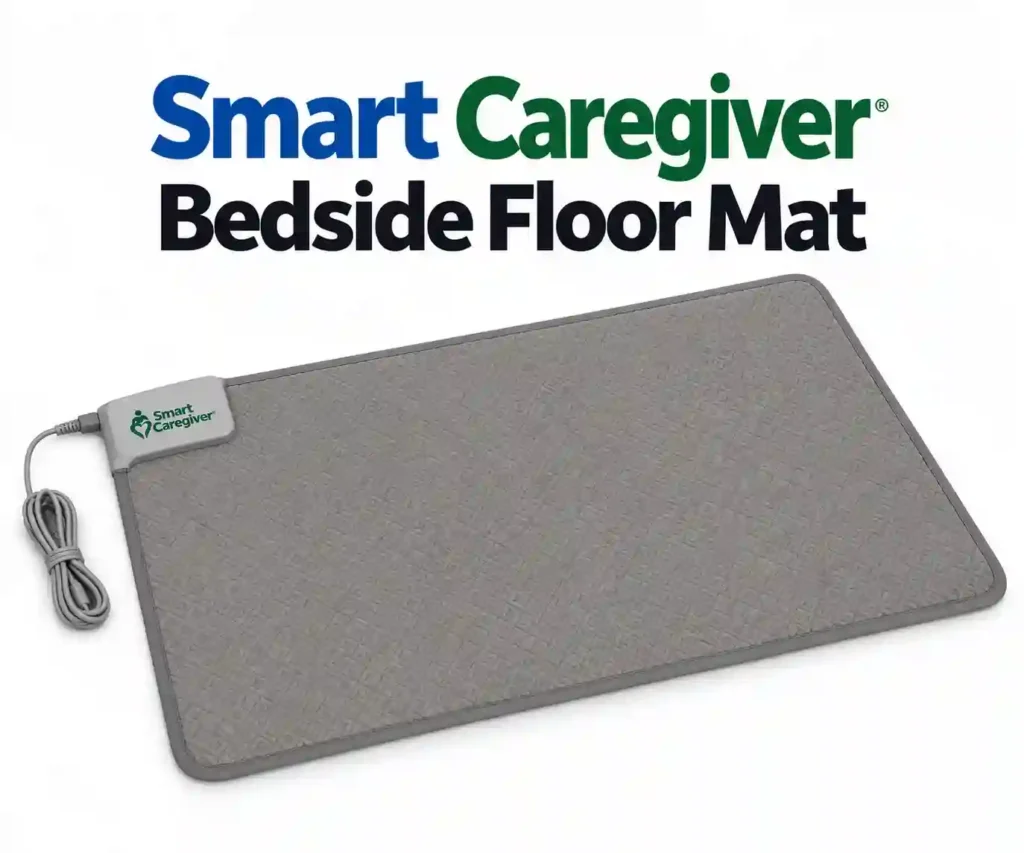
The Smart Caregiver Bedside Floor Mat with Caregiver Pager uses a pressure-sensitive mat and wireless pager. The manufacturer lists a 24-by-48-inch mat, a 300-foot wireless range, and both sound and vibration alerts.
Key Features
This can work well for seniors who do not tolerate bed pads or for caregivers who also want to monitor a doorway or room entrance.
| Specification | Details | Why It Matters |
|---|---|---|
| Mat size | 24 × 48 inches | Covers a larger bedside area |
| Alert | Wireless pager | Remote notification |
| Range | Up to 300 ft | Allows caregiver movement |
| Surface | Non-slip rubber | Helps keep the mat in place |
| Placement | Bedside or doorway | Flexible monitoring |
Pros And Cons
The floor mat is flexible, but it does not provide the same early warning as a sensor designed to detect movement while the senior is still in bed.
| Feature | Pro | Con |
|---|---|---|
| Large mat | Covers more floor area | Requires floor space |
| Wireless pager | Quiet remote alert | Caregiver needs the pager |
| Multiple uses | Can monitor doorways | Detects after stepping onto mat |
| Non-slip surface | Designed to lie flat | Placement still needs checking |
Who Should Consider This Product
This is useful when a caregiver wants floor-based monitoring or needs to watch both bedside and doorway activity.
It may not be the best choice when the caregiver needs the earliest possible warning before the senior reaches the edge of the bed.
Best For: Floor-based monitoring and seniors who dislike bed pads.
Not Ideal For: Caregivers who need an alert before the senior reaches the floor.
Best Budget Bed Pad: Briidea 20 × 28-Inch Bed Alarm
The Briidea 20 × 28-inch Weight Sensing Bed Pad is a practical option for buyers who want a larger sensing surface without moving into a premium system.

The manufacturer lists a waterproof, latex-free pad, plug-in power, a wireless alarm, adjustable volume, and a range of up to 300 feet. The company also states that the pad is designed to be placed under the shoulder blades or buttocks beneath a fitted sheet.
Key Features
The larger pad can be useful for seniors who move around during sleep, although no sensor can eliminate false alerts completely.
| Specification | Details | Why It Matters |
|---|---|---|
| Pad size | 20 × 28 inches | Provides broad sensing coverage |
| Power | 5V adapter | No pad battery to replace |
| Range | Up to 300 ft | Allows remote alerts |
| Material | Waterproof nylon | Easier to clean |
| Pad life | About 1 year with daily use | Replacement should be planned |
Pros And Cons
This model offers a useful balance between coverage and price, but it is less discreet than an under-mattress system.
| Feature | Pro | Con |
|---|---|---|
| Large pad | Broad sensing area | More noticeable under bedding |
| Plug-in power | No pad battery changes | Requires nearby power |
| Waterproof design | Easier cleanup | Still needs regular inspection |
| Wireless alarm | Remote alerting | Alarm placement matters |
Who Should Consider This Product
Consider it if you want a straightforward pressure-sensing bed alarm and prefer a larger pad.
It is less suitable when hiding the sensor is a major priority or when there is no convenient power outlet nearby.
Best For: Buyers wanting a large, simple bed pad at a moderate price.
Not Ideal For: Seniors who strongly dislike pads under their bedding.
Comparison At A Glance
Each option solves a slightly different problem, so the best choice depends on how the senior sleeps and how the caregiver responds to alerts.
| Product | Best For | Key Trade-Off |
|---|---|---|
| Smart Caregiver Bed Alarm | Most homes | Traditional bed-pad design |
| Lunderg Early Alert | Earlier warning | Higher cost |
| Lunderg Under-Mattress | Comfort | Mattress compatibility |
| Smart Caregiver Floor Mat | Floor monitoring | Detects after stepping down |
| Briidea 20 × 28 Pad | Larger budget pad | Needs plug-in power |
How We Chose These Products
We focused on features that matter in real senior-care situations rather than simply choosing products with the most reviews.
The comparison considered manufacturer specifications, alert methods, sensor placement, caregiver usability, comfort, setup, expansion options, and known limitations. Current manufacturer information was checked for the products where official specifications were available.
| Evaluation Factor | Why It Matters |
|---|---|
| Ease Of Use | Caregivers need quick, simple setup |
| Alert Method | Quiet alerts can reduce nighttime disturbance |
| Detection | Earlier warning can give caregivers more response time |
| Comfort | Sensors should not unnecessarily disturb sleep |
| Reliability | Missed alerts can reduce the value of the system |
| Value | Features should match the actual care need |
What To Look For When Buying
A bed alarm should match the senior’s habits, sleeping position, and care needs. More features do not always mean a better choice.
Choose The Right Sensor Type
Pressure pads are common and simple. Under-mattress sensors are more discreet. Floor mats detect movement after the person reaches the floor.
Think about what usually happens before the senior needs help. If they sit up and begin moving toward the edge, an early-alert system may make more sense than a floor mat.
Check The Alert Method
A loud alarm in the bedroom may not be ideal for every senior. CMS guidance notes that position-change alarms can sometimes cause fear, agitation, sleep disturbance, or reduced freedom of movement, and says they should not be the primary or sole fall-prevention intervention.
A wireless pager with vibration or a quiet alert can be a better fit when the caregiver is nearby.
Check The Sensor Placement
Placement is important. A pressure pad that shifts too far from the correct position may not perform as intended.
Follow the manufacturer’s instructions and test the system before relying on it overnight.
Think About The Caregiver’s Range
A caregiver who spends the night in another room needs a system that can reach that area.
Do not assume the advertised wireless range will be identical in every house. Walls, floors, and other obstacles can affect real-world performance.
Consider Cleaning And Replacement
For seniors with incontinence, a waterproof or wipeable sensor can make daily care easier.
Also check the expected pad lifespan. Some pressure pads are consumable items and need replacement after regular use.
Common Buying Mistakes
The wrong bed alarm can create extra work without providing useful warning. Avoid these common mistakes.
| Mistake | Better Approach |
|---|---|
| Choosing the loudest alarm | Consider a caregiver pager instead |
| Ignoring sensor placement | Follow the manufacturer’s setup instructions |
| Buying without checking mattress size | Confirm compatibility first |
| Assuming an alarm prevents falls | Treat it as an alert tool, not a complete solution |
| Ignoring false alarms | Test placement and monitor performance |
Safety Considerations
A bed alarm should support a broader safety plan. It should not be treated as a guarantee against falls.
CMS states that the effectiveness of position-change alarms for preventing falls has not been proven and that alarms should not be the primary or sole intervention. Adequate supervision and an individualized care plan remain important.
Keep the path from the bed clear. Use suitable lighting at night. Make sure the caregiver can respond promptly when an alarm sounds.
If the senior has significant balance, mobility, or medical concerns, ask a qualified healthcare professional about the safest setup. The right alarm depends on the person’s abilities and daily routine.
Frequently Asked Questions
These answers cover the most common questions about choosing and using a bed alarm for an older adult.
What Is The Best Bed Alarm For Elderly People?
For most households, the Smart Caregiver Bed Alarm with Caregiver Pager is a strong overall choice. It combines a pressure-sensitive bed pad with a portable wireless pager and supports sound or vibration alerts.
Are Bed Alarms Effective At Preventing Falls?
A bed alarm can alert a caregiver when movement is detected, but it does not physically prevent a fall. CMS guidance says alarms should not be used as the primary or sole fall-prevention measure.
Is A Wireless Bed Alarm Better?
A wireless system can be more convenient because the caregiver can carry the pager instead of staying close enough to hear an alarm in the bedroom. Vibration mode can also provide a quieter alert.
Are Under-Mattress Bed Alarms Comfortable?
They can be more comfortable for seniors who dislike a sensor pad beneath the sheet. The Lunderg under-mattress system is designed to stay hidden beneath the mattress, but mattress thickness and compatibility must be checked.
Can A Bed Alarm Be Used For Dementia Care?
Yes, a bed-exit alarm may be useful as part of a broader care plan. A quiet wireless pager and early-alert design may be preferable for someone who becomes confused or agitated by loud alarms.
Conclusion
The Smart Caregiver Bed Alarm with Caregiver Pager is the best overall choice for most caregivers because it offers simple bed-exit monitoring, wireless alerts, and useful expansion options.
For earlier warning, the Lunderg Wireless Early Alert is the better pick. The Lunderg Under-Mattress Bed Alarm stands out for comfort, while the Smart Caregiver Floor Mat makes sense for floor-based monitoring. The Briidea 20 × 28-Inch Bed Alarm is a practical choice for buyers who want a larger pressure pad at a moderate price.
The most important point is that a bed alarm is an alert tool, not a guarantee against falls. Choose the sensor type that fits the senior’s routine, use quiet alerts when appropriate, test the system regularly, and combine it with good lighting, a clear walking path, supervision, and other suitable safety measures.