
10 Best Bath Transfer Benches for Arthritis: Top-Rated, Safe and Comfortable Options for Seniors and Caregivers


Air Fryer for Easy Cooking

Page Magnifier Sheet

Digital Blood Pressure Monitor
Bath transfers benches help people with arthritis get into and out of the tub more safely and with less pain. These benches give a stable seat that spans the tub edge, so users can sit down outside the tub, pivot or slide, and then lower into the water without stepping over the high tub wall. For many of us with limited grip strength or stiff joints, a transfer bench can reduce the risk of slips and make bathing more comfortable.
Choosing the right bench means checking a few key things: seat height and depth, weight capacity and stability, material and rust resistance, and how easy it is to move or clean. A bench that fits your tub, supports your weight, and has a secure, non-slip surface will make bathing safer and less painful. We tested and compared benches across those factors to find models that work well for different needs and tubs.
Best Bath Transfer Benches for Arthritis
We chose these bath transfer benches to help people with arthritis get in and out of the tub safely and with less pain. Our picks focus on sturdy support, easy transfer, and simple adjustments to match different needs.
Drive Tub Transfer Bench

We recommend this bench for most people with arthritis because it makes getting in and out of the tub safer and easier without a lot of setup.
Pros
- Very stable feel during transfers
- Adjustable height to fit different tubs and users
- Lightweight yet strong aluminum frame
Cons
- Suction feet can lose grip on uneven surfaces
- Seat can feel narrow for larger users
- Backrest is basic and not highly padded
We used this bench at home and noticed how much simpler it made a sit-and-slide transfer. The seat felt secure and the backrest gave enough support to relax while washing.
Adjusting the legs took only a few minutes and the half-inch steps let us fine-tune the height. Once set, the A-frame felt solid under weight and movement.
On the downside, the suction-style feet need a very flat tub surface to hold well. We also found the seat width a bit tight if someone needed more room or cloth coverings.
Medline Transfer Bench

We recommend this bench if you want a sturdy, no-fuss transfer seat that makes getting in and out of the tub easier.
Pros
- Very solid feel and holds up to heavier users.
- Backrest and arm give real help when sitting and standing.
- Tool-free setup; easy to move and adjust.
Cons
- Frame is a bit heavy to carry alone.
- Suction feet can take time to seat properly.
- Seat is wide but not very padded.
We pushed this bench across the tub and used it for several baths. The aluminum frame felt robust and steady. Sitting down felt secure, and we liked the extra support from the arm and switchable backrest.
Adjusting the height was quick with the push buttons, and the half-inch steps helped us fine-tune the fit for different users. The drain holes kept water from pooling on the seat, which made rinsing off easier.
The suction feet gripped the tub once set, though they needed a firm press and a clean surface to stick right. Carrying the bench solo felt a little awkward because it’s built tough, but assembly and switch of the backrest were genuinely tool-free.
Overall, this bench gave us confidence for safe transfers without fuss. It won’t feel plush, but it does its job: sturdy support for people with limited mobility.
Moen Transfer Bench (33″)

We recommend this bench for arthritis if you want a roomy, sturdy seat that makes stepping in and out of the tub feel safer.
Pros
- Wide, stable seat that lets you shift and find a comfy position.
- Solid feel at 400 lb capacity; it didn’t wobble for us.
- Reversible design and organizer basket make setup and use simple.
Cons
- The bench is fairly large and can crowd small tubs.
- Plastic parts feel basic compared with the metal frame.
- Adjusting the legs takes both hands and some effort.
We used the Moen bench over several showers and liked the roomy 33″ seat. Getting on and off felt easier because we could sit and scoot instead of lifting our legs over the tub wall. The non-slip surface and drainage kept the seat from feeling slick.
Assembly went smoothly and the ability to switch it left- or right-facing helped fit our bathroom layout. The support handle gives confidence during transfers, though the plastic basket and clips showed normal wear after frequent use.
Overall the bench felt reliable and practical for people with arthritis who need a safer way to bathe without help. It’s a solid choice when you want a durable, ADA-friendly transfer bench that feels stable in daily use.
HOMLAND Tub Transfer Bench
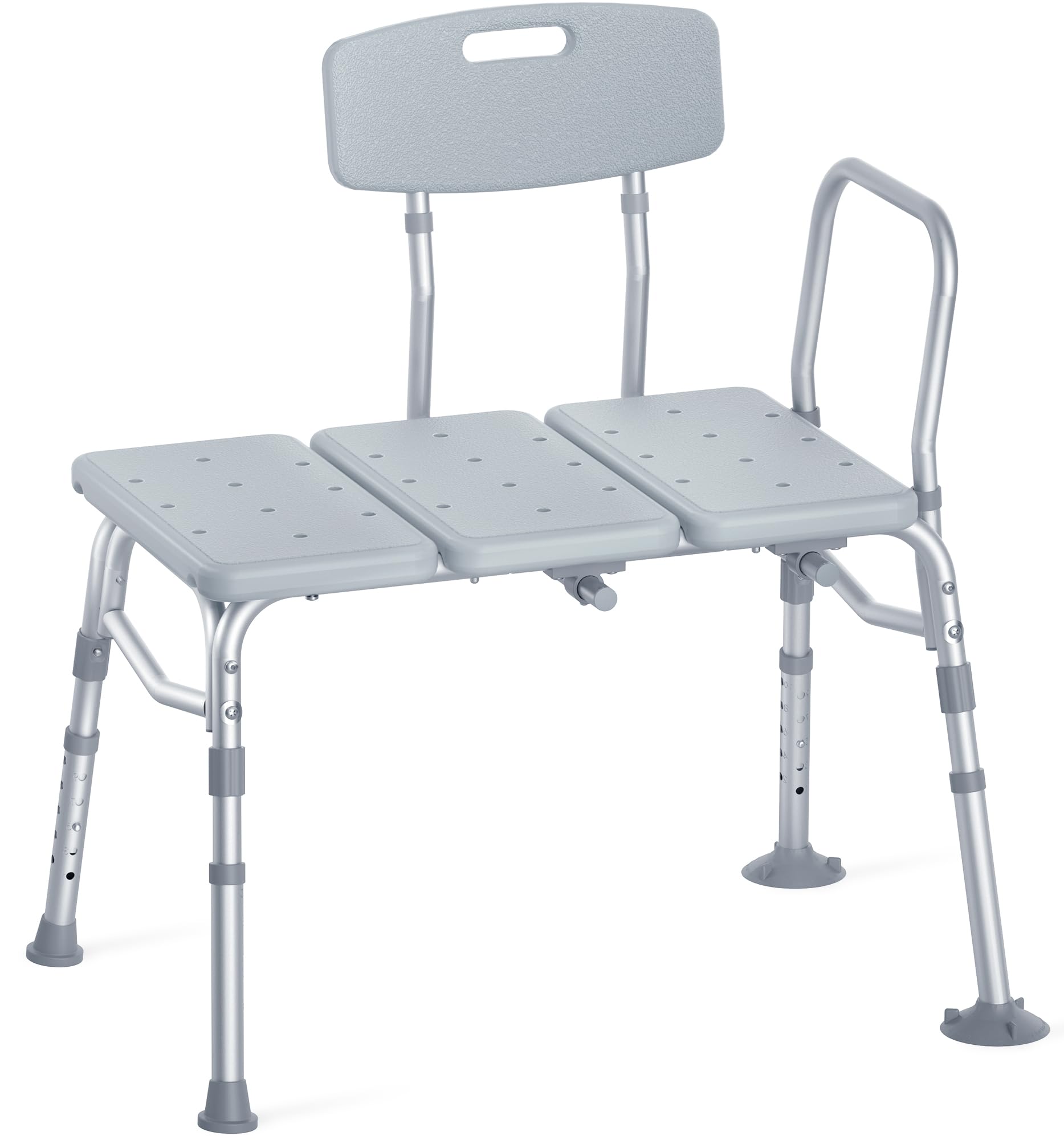
We recommend this bench for arthritis sufferers who need a stable, lightweight seat to enter and exit the tub with less pain.
Pros
- Very stable A-frame and non-slip feet feel secure on wet surfaces.
- Lightweight aluminum makes moving and adjusting it simple.
- Reversible backrest and height settings suit different tubs and comfort needs.
Cons
- Seat feels a bit narrow for larger users compared to some models.
- Plastic seat surface can be chilly and slightly rough at first.
- Assembly pins click in quickly; you must double-check locks for peace of mind.
We used this bench for several showers and liked how easy it was to slide into the tub while seated. The low effort to sit and shift reduced strain on knees and hips. The reversible backrest helped when the tub setup changed between bathrooms.
Adjusting the height took seconds with the push-button system. That made finding a comfortable transfer level quick, and the 400 lb capacity felt reassuring. The non-slip rubber feet gripped well on wet tile, so we felt steady when leaning or shifting.
The aluminum frame stayed light yet strong when we carried it to another room. The seat drained water fast and did not puddle. Still, the seat width felt tight for one of us, and the plastic texture took a few uses to stop feeling cold and firm.
Overall, this HOMLAND bench gave us a safer, less painful way to bathe. If you need a sturdy, adjustable transfer bench that’s easy to handle, this is worth trying.
DMI Tub Transfer Bench (Sliding)

We recommend this bench for buyers who want a sturdy, easy-to-use transfer aid that reduces strain and increases safety during showers.
Pros
- Stable, heavy-duty feel that supports larger users.
- Sliding seat makes transfers smoother and easier on joints.
- Tool-free setup and reversible backrest for flexible use.
Cons
- Takes up a lot of space—measure your tub first.
- Plastic seat can feel hard during longer showers.
- Suction feet work best on very clean, flat surfaces.
We used this bench for several weeks and found it made transfers much less stressful. Sliding across the seat felt natural and cut down on the twisting and lifting that hurts arthritic knees and hips.
The frame felt solid under weight and never wobbled when we adjusted the legs. The adjustable height helped us match the tub edge, and the backrest added needed support when sitting.
Getting the bench in and out was simple because it’s lightweight for its capacity. The cut-out in the seat and the safety belt are small features that really improved comfort and confidence during bathing.
If your bathroom is tight, the 39-inch width could be a problem. We recommend measuring the tub lip and door clearance before buying. For those with limited mobility who need a reliable transfer option, this bench performed well overall.
Platinum Carousel Sliding Shower Chair
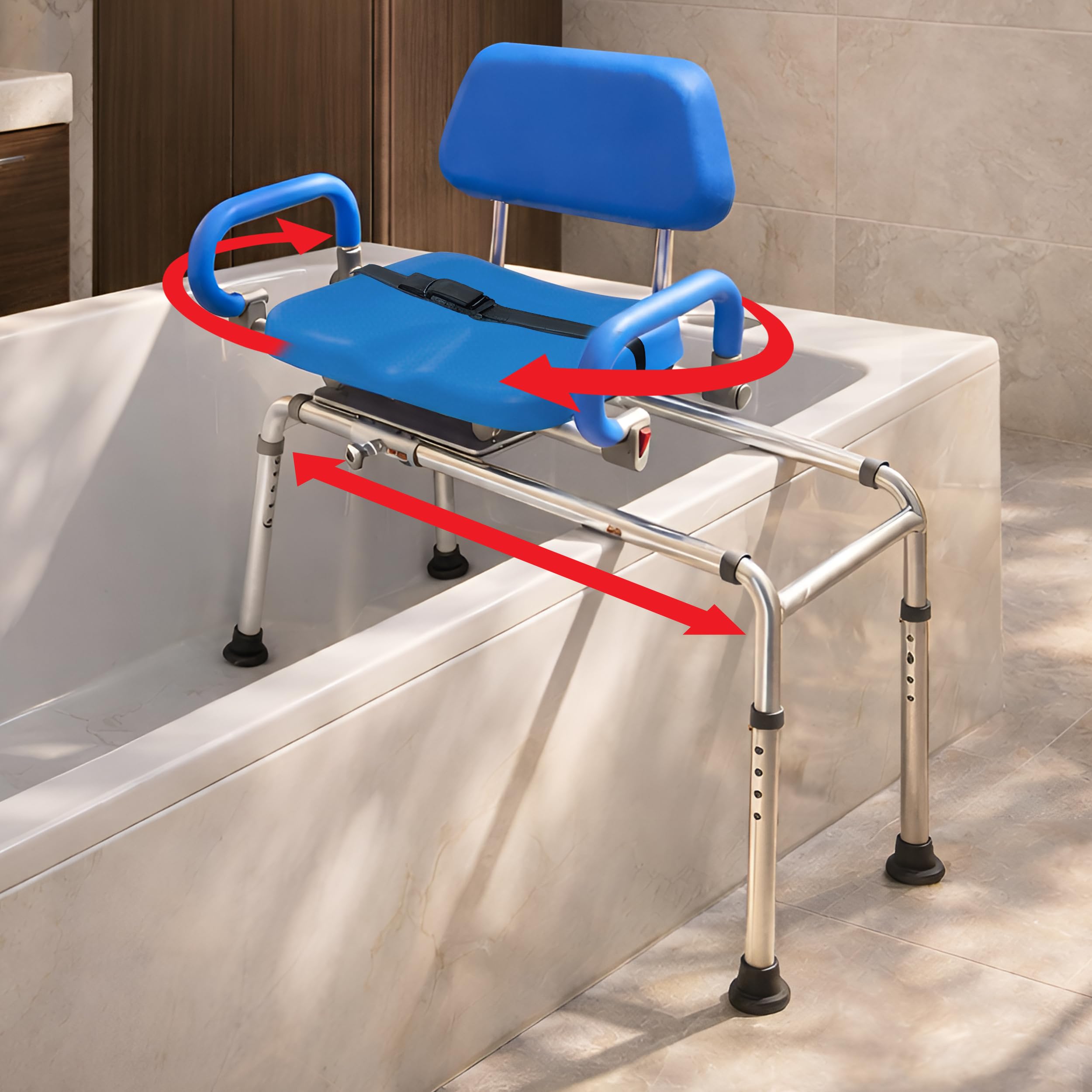
We recommend this if you need a sturdy, padded transfer bench that makes tub entries easier and safer.
Pros
- Very comfortable padding that stays warm and dries fast.
- Swivel seat and pivoting arms cut down on strain when moving in and out.
- Feels solid and built like a medical-grade product.
Cons
- Takes a little time to set up and adjust just right.
- Bulky for very small bathrooms when installed.
- Higher price than basic plastic benches.
We used the Platinum Carousel for several weeks and found the padding calmed joint pain during transfers. The seat and back felt soft but firm, so sitting didn’t stress sore hips or shoulders. The padding stayed dry and wiped clean without absorbing water.
Sliding the seat across the tub edge felt smoother than expected. The swivel action let us turn without twisting our knees. The armrests gave real leverage when standing, which lowered fear of slipping.
Installation required careful measuring and a bit of fiddling with leg positions. Once adjusted the bench felt very stable and supported up to heavy users. If your bathroom is tiny, the bench can take up noticeable space when installed.
Lamorland Sliding Tub Transfer Bench
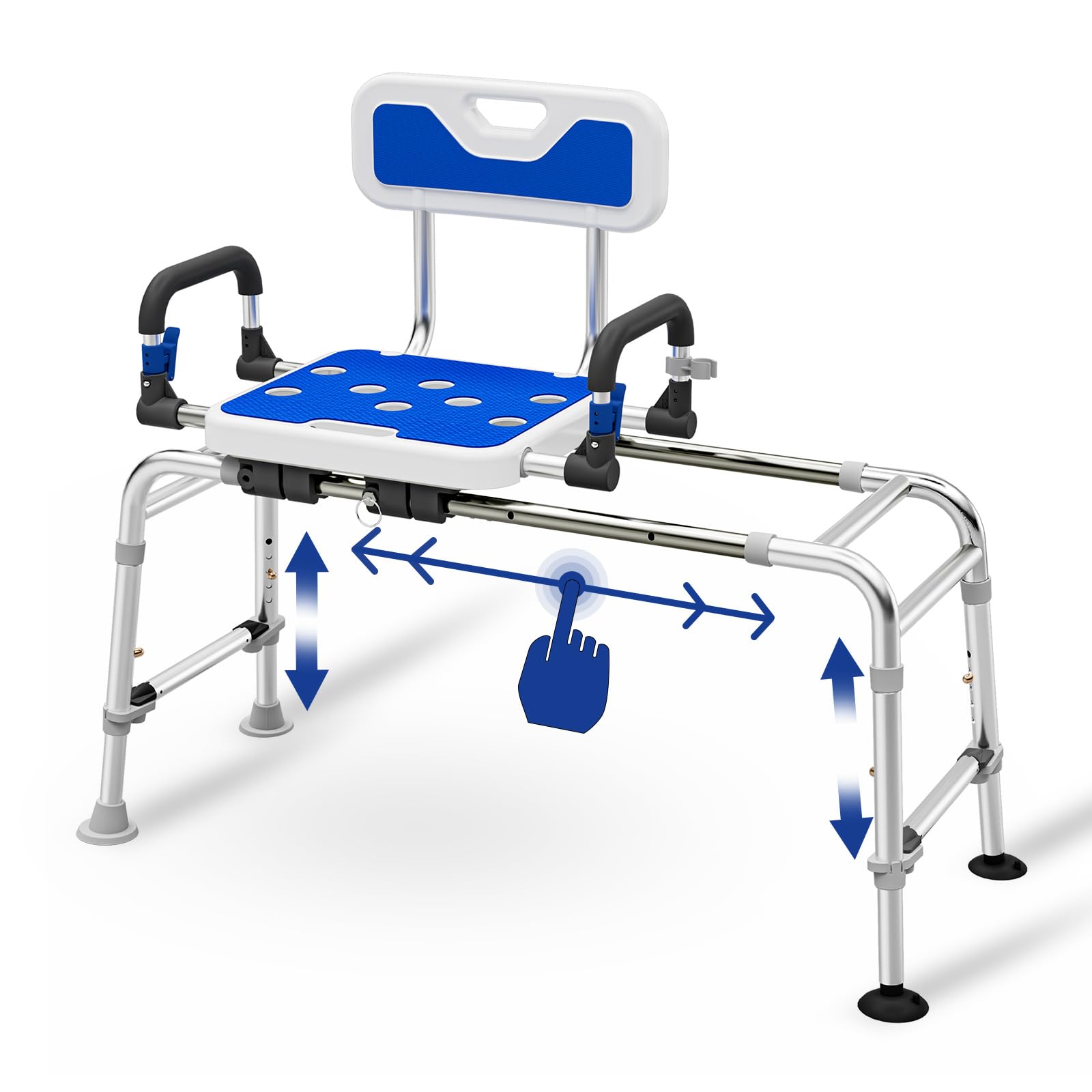
We recommend this bench if you need a sturdy, easy-transfer seat that cuts the risk of slips during showers.
Pros
- Smooth sliding seat makes transfers simple and safe.
- Very strong frame holds larger users without wobble.
- Tool-free setup and adjustable legs fit many tubs quickly.
Cons
- Sliding mechanism needs space; smaller tubs feel tight.
- Armrests detach, which can be awkward to reattach for some users.
- Suction feet work best on very clean surfaces.
We used this bench for several showers and liked how the seat glided. Moving from standing to seated felt controlled and lowered the strain on hips and knees.
The bench felt solid under weight and didn’t shift when we moved. The aluminum frame stayed cool to the touch and the cutout seat drained water fast, so it did not feel slippery.
Adjusting height took seconds and no tools, which mattered when different family members used it. The armrests gave extra support, though taking them off for narrow tubs slowed us down.
Overall, this transfer bench balances safety and comfort for people with arthritis who need easier, safer transfers into a tub.
Pelegon Slide & Swivel Bench
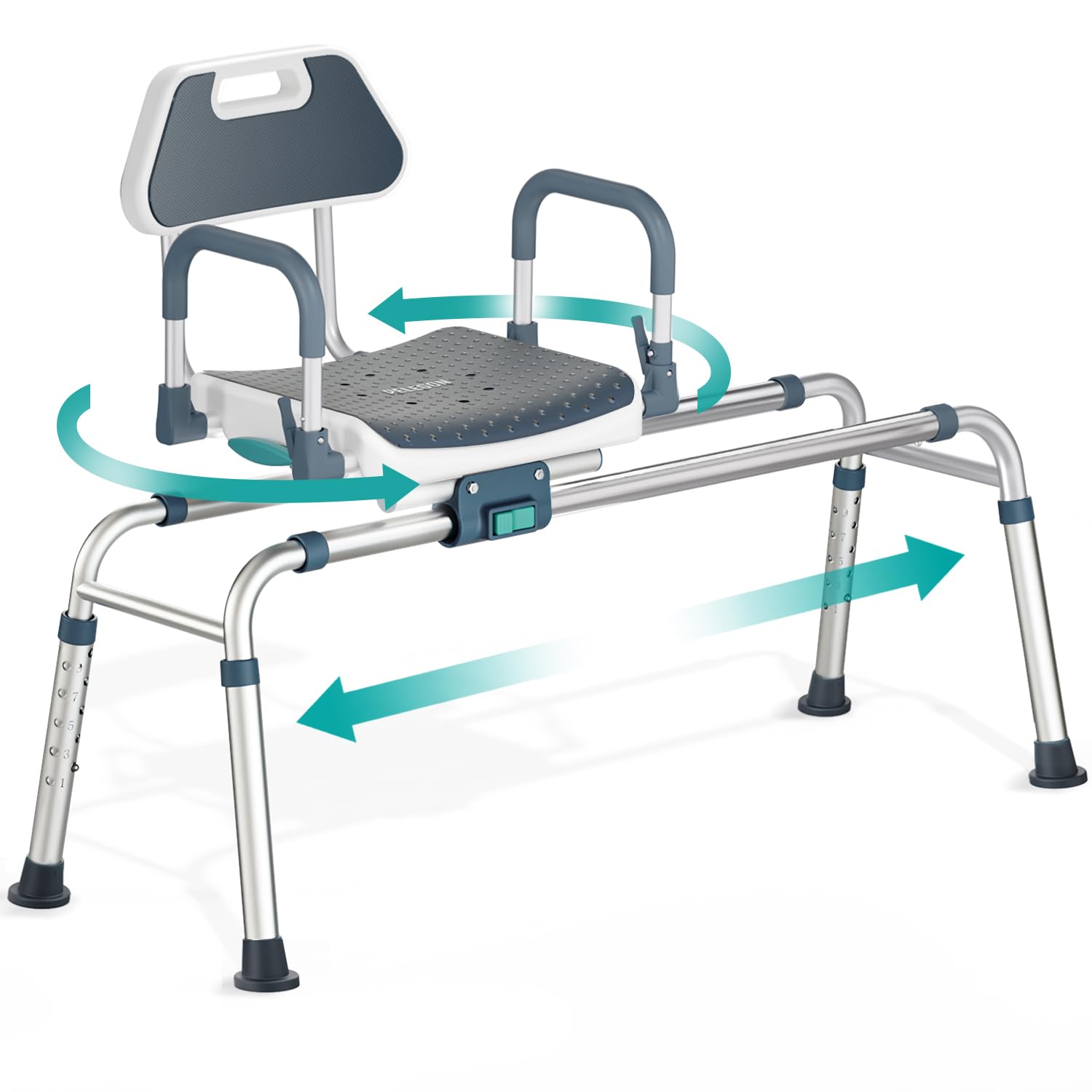
We recommend this bench if you need a sturdy, padded transfer seat that makes moving in and out of the tub easier for someone with arthritis.
Pros
- Smooth slide and 360° swivel for controlled transfers
- Padded seat and armrests that reduce strain during use
- Tool-free assembly and easy height adjustments
Cons
- Seat feels a bit narrow for larger users
- Plastic parts show wear sooner than metal ones
- Sliding button can be stiff at first
We used this bench helping someone with stiff knees and weak hips. The swivel and slide cut the effort needed to get across the tub, and we felt safer guiding transfers. The padded armrests gave our loved one a place to hold without hurting their hands.
Setting it up took only minutes without tools, and adjusting the legs to the right height was simple. The sliding action required a firm press at first, but after a few uses it moved smoothly. Weight support felt solid for everyday baths up to its limit.
Cleaning the bench was easy since it’s mostly plastic, though that same plastic showed scuffs after a few months. The seat is comfortable for shorter showers, but wider users might want to check fit before buying. Overall, this bench made bathing easier and less stressful for both caregiver and user.
Loyoda Sliding Swivel Transfer Bench
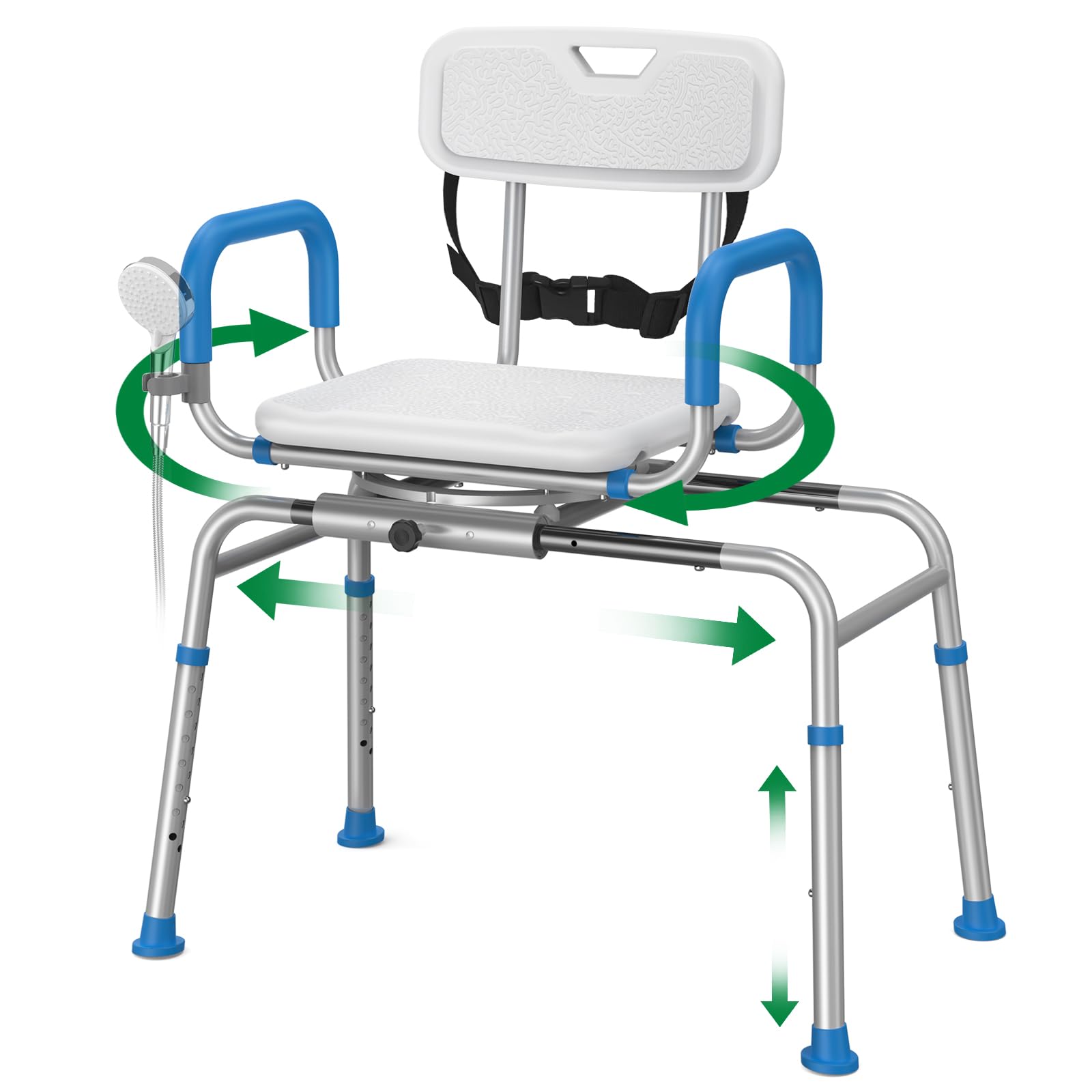
We recommend this bench when you need a sturdy, space-saving transfer solution that eases sliding into and out of the tub.
Pros
- Solid aluminum frame resists rust and feels durable.
- Swivel seat and sliding action cut the effort of transfers.
- Adjustable height fits different users and bathroom setups.
Cons
- Swivel takes a little practice to use smoothly.
- Pivoting arms can feel narrow for larger users.
- Assembly requires patience and some tools.
We used this bench over several weeks and it made getting in and out of the tub noticeably easier. The sliding seat moves cleanly and the swivel lets us rotate the user without awkward lifting. It feels stable under weight and the aluminum frame stayed dry without any corrosion.
The seat height adjustments worked well for different caregivers and users. Changing the legs was quick and the bench fit tight against the tub so it didn’t shift while sliding someone across. We liked that it doesn’t need extra turning space, which helped in our small bathroom.
A few things we noticed: the swivel takes practice to line up at first, and the arms are a bit narrow for broader shoulders. Assembly instructions are clear but the hardware is small, so take your time. Overall, this bench gave us safer, less stressful transfers and held up to daily use.
TABEKE Tub Transfer Bench
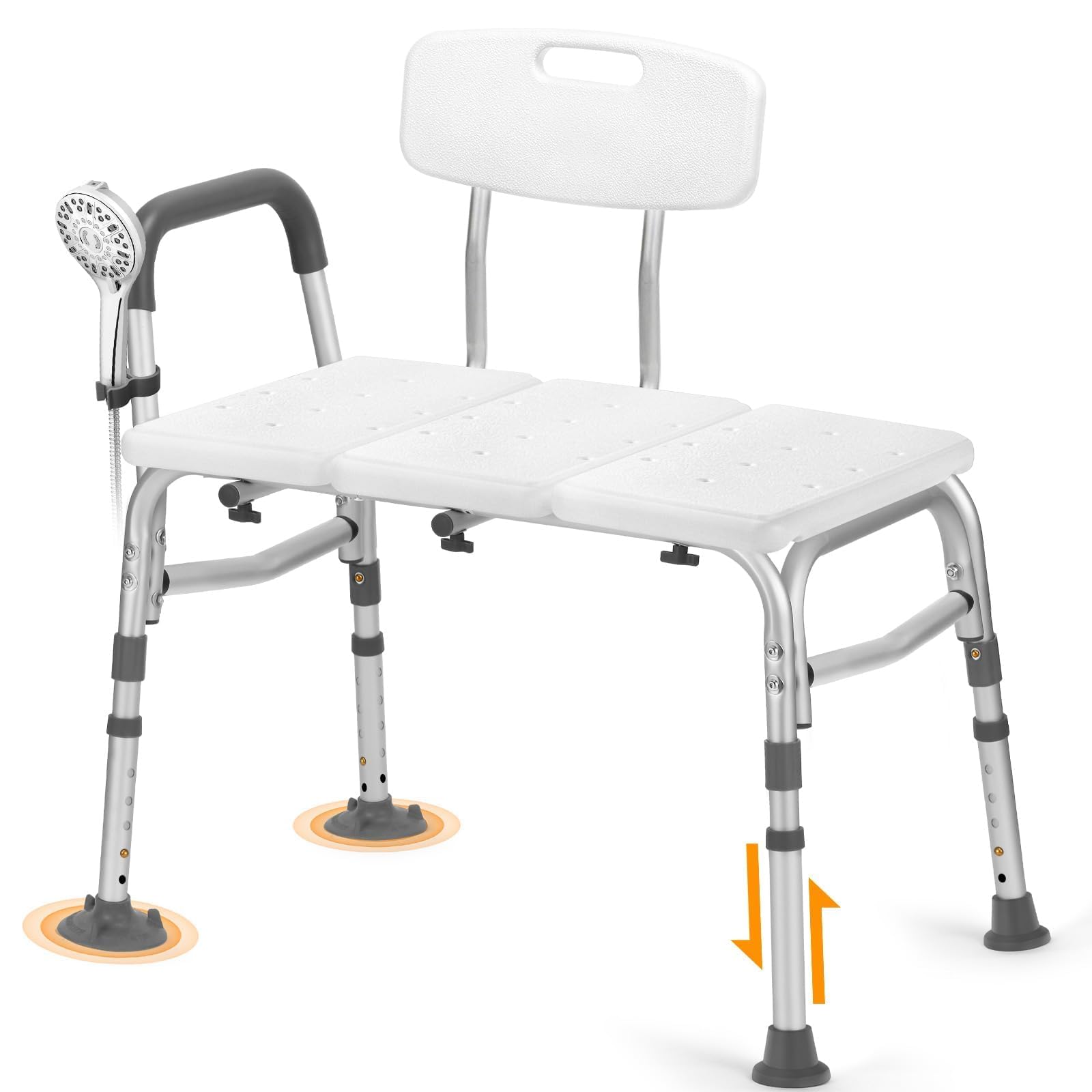
We recommend this bench if you need a stable, adjustable transfer seat that feels sturdy during real use.
Pros
- Very stable thanks to quad-bolt cross tubes and extra suction cups.
- Easy to move and set up because it’s lightweight and tool-free.
- Comfortable grips and adjustable height for different users.
Cons
- Needs a full 32-inch clearance beside the tub, so measure first.
- Foam arm grips wear faster than the plastic seat.
- Backrest can be awkward to flip for left- or right-side entry.
We used this bench for several weeks to help with transfer in and out of a standard tub. Getting in felt secure—those suction cups and quad-bolt cross tubes actually hold the bench steady, and the bench didn’t wobble when we shifted weight. The 400-pound capacity gave us extra confidence without feeling bulky.
Assembly truly took only minutes and no tools. Adjusting the height was simple and the ten settings let us fine-tune the seat level. The bench’s light frame made it easy for one person to move and position, which matters when mobility is limited.
The foam grips are comfortable at first, but we noticed some flattening after repeated use. Also check your bathroom layout: this model requires about 32 inches of clear space beside the tub, so it won’t work in tighter setups. The flip of the backrest to switch sides takes a little practice to do smoothly.
Overall, the bench balances stability and convenience well for arthritis users who can meet the clearance requirement. Consider this option if you want a sturdy, adjustable seat that you can install quickly and use with confidence.
Buying Guide
We look for stability first. A wide base and non-slip feet keep the bench steady while we move in and out of the tub.
We check seat height and adjustability. The seat should match the tub edge and our comfort; adjustable legs let us fine-tune the fit.
We want a sturdy frame. Aluminum or steel frames are common; heavier frames often feel more secure but must resist rust.
We consider seat type and padding. Slatted or perforated seats drain water quickly. Padded seats add comfort but may need more drying and cleaning.
We inspect armrests and backrests. Armrests help with pushing or lowering; a flip-up arm or removable back adds flexibility.
We review weight capacity and size. Match the bench’s rated capacity and seat width to the user. Measure the tub opening to ensure a proper fit.
We look at ease of transfer. A long transfer surface, swiveling seat, or sliding features reduce twisting and strain. Check how much reach or pivoting we must do.
We verify tools and assembly. Some benches snap together; others need simple tools. Clear instructions and included hardware make setup easier.
We think about maintenance and safety features. Non-slip coatings, rounded edges, and easy-clean surfaces matter. Spare parts and warranty give added reassurance.
We compare price to features and needs. Choose the simplest bench that meets safety, fit, and comfort for our daily routine.
Editor’s Choice
We picked the model that best balances safety, comfort, and ease of use for people with arthritis. It has a wide seat and textured surface that help prevent slipping. The armrests lock in place to give steady support when transferring.
We like the lightweight aluminum frame because it resists rust and is simple to move. Suction-cup feet hold the bench steady on wet surfaces. The backrest is removable, which makes cleaning and storage easier.
The seat height adjusts in small steps so users can find a comfortable level. Installation takes minutes and needs no tools. The bench supports a high weight capacity, which adds confidence during transfers.
We tested for comfort and found the seat padding reduces pressure on sore hips and knees. The slight angle helps with natural movement without forcing awkward twists. Overall, it meets common needs of users with limited hand strength or joint pain.
Conclusion
We picked benches that balance safety, comfort, and ease of use for people with arthritis. Our choices focus on stable frames, slip-resistant seats, and simple arm and back support to reduce strain.
When selecting a bench, measure your tub and consider transfer direction. Adjustable legs, lightweight materials, and removable backs make daily use easier.
We recommend testing a bench in person when possible. Small differences in seat height or arm shape can make a big difference in comfort and confidence during transfers.
To help decide quickly, use this checklist:
- Seat height fits hip level or slightly above.
- Arms and back provide needed support.
- Legs have non-slip tips and adjust easily.
- Material resists water and cleans easily.
We aim to help you choose a bench that keeps bath time safe and more comfortable. If you need, we can compare specific models side by side to match your needs.
FAQS
What is a bath transfer bench and who needs one?
A transfer bench is a seat that spans the tub edge so you can sit outside the tub and slide in safely. We recommend it for people with arthritis, limited mobility, or balance problems.
How do we choose the right bench?
Look for a wide seat, non-slip surface, and adjustable legs. Consider weight capacity and armrests if grip strength is weak.
Are transfer benches hard to install?
Most models require no tools and simply rest on the tub rim. Some snap together in minutes. We advise checking the manual for proper setup.
Can a bench prevent falls?
A bench lowers fall risk by reducing stepping and improving stability. It does not eliminate risk, so pairing it with grab bars is wise.
How do we clean and maintain a bench?
Wipe the seat and frame with mild soap and water after use. Inspect suction feet or rubber tips regularly and replace parts if they wear out.
Are there benches for small or deep tubs?
Yes. Some benches have longer legs and angled frames for deep tubs; others have narrower seats for small spaces. Measure your tub before buying.
What should we look for in materials?
Aluminum frames resist rust and stay light. Plastic seats dry fast and resist mold. Weigh durability against comfort and cost.
Is a transfer bench covered by insurance?
Some insurance plans and Medicare may cover benches if medically necessary. We suggest checking with your provider and getting a doctor’s note if needed.