
TENS Unit vs Massage Gun for Seniors Compared


Toilet Seat Bidet Attachment

Anti-Slip Shower Stickers

Spill-Proof Travel Mug
TENS Unit vs Massage Gun is a useful comparison when a senior wants a home device for muscle comfort or pain management. The two devices work in very different ways, so the better choice depends on the intended use.
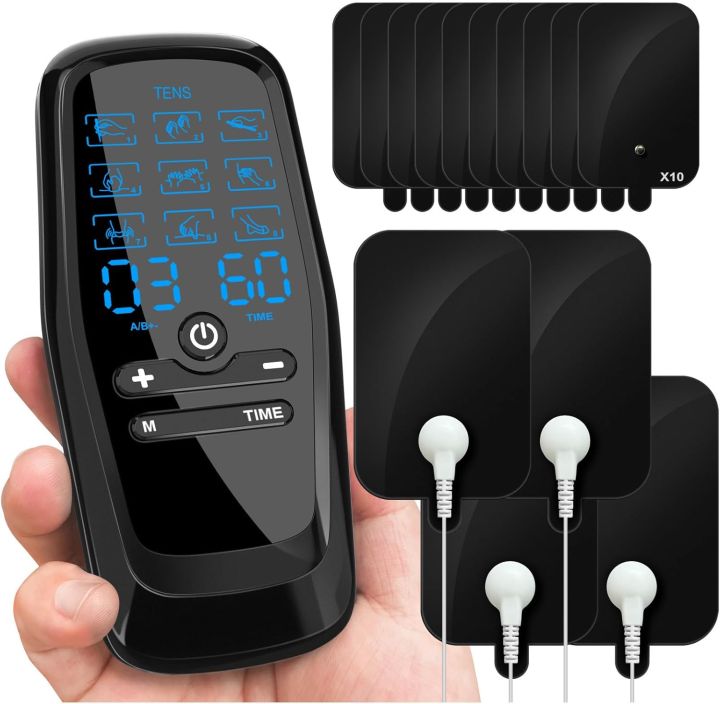
A TENS unit uses small electrical impulses through adhesive pads. A massage gun uses mechanical percussion through a handheld attachment. That difference affects setup, handling, comfort, and safety.
Quick Comparison
A TENS unit may be the better choice for someone who wants a portable device that can provide temporary pain relief without repeatedly holding a heavy tool against the body.
A massage gun may suit someone who prefers direct, hands-on muscle massage and can comfortably hold and position the device. Neither is automatically better for every senior.
The biggest difference is simple: TENS uses electrical stimulation, while a massage gun uses physical percussion.
TENS Unit vs Massage Gun At a Glance
The table below focuses on practical differences that can affect everyday senior use.
| Feature | TENS Unit | Massage Gun |
|---|---|---|
| Main action | Electrical stimulation | Percussive massage |
| Setup | Attach electrode pads | Choose attachment and position device |
| Hands-free use | Often possible | No |
| Physical effort | Low during use | Requires holding and positioning |
| Portability | Usually very portable | Portable, but often heavier |
| Controls | Buttons or dials | Buttons, speed controls |
| Best suited to | Temporary pain relief | Targeted muscle massage |
| Maintenance | Electrode pads need care/replacement | Clean attachments and device |
| Safety considerations | Electrical and skin-related precautions | Pressure, vibration, and body-area precautions |
TENS Unit Review for Senior-Friendly Use
A TENS unit can be appealing when low physical effort matters. The device is usually small, and electrode pads allow the user to receive stimulation without continuously pressing the device against the body.
Ease of Use
A typical TENS setup involves connecting the pads, placing them on appropriate skin, turning the device on, and adjusting the intensity. NHS guidance recommends starting with a low setting and increasing it until a tingling sensation is felt without pain.
The main challenge is pad placement. Someone with limited dexterity may find it difficult to position pads on hard-to-reach areas without help.
Key Strengths
- Lightweight and portable
- Little physical effort during use
- Can be used while sitting or lying down
- Intensity can usually be adjusted
- Does not require repeated rubbing or pressing
Potential Drawbacks
- Adhesive pads require correct placement
- Pads can cause skin irritation in some users
- Wires may feel inconvenient
- Controls may be small on some models
- Safe use requires attention to placement and medical precautions
Massage Gun Review for Senior-Friendly Use
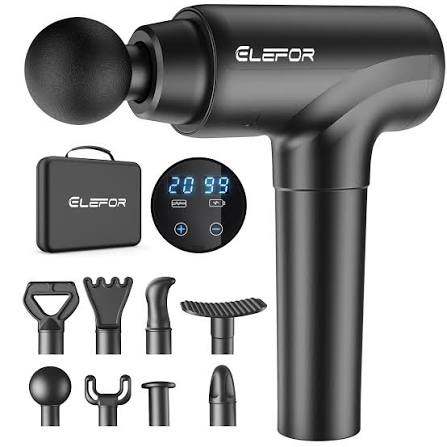
A massage gun takes a more physical approach. It uses a motor to move an attachment rapidly against the body, producing a percussive massage effect.
Ease of Use
The basic idea is easy to understand. Select an attachment, turn the device on, choose a suitable speed, and gently position it over the intended muscle area.
The bigger issue is physical handling. A massage gun must be held throughout use, and some models can feel substantial after several minutes. Reaching the back or other difficult areas can also be awkward without assistance.
Key Strengths
- Simple operating concept
- Direct, targeted massage
- Multiple attachments may provide different sensations
- No electrode pads or adhesive
- Useful for people who prefer hands-on massage
Potential Drawbacks
- Requires continuous gripping
- Can be tiring for hands or arms
- Higher settings may feel too intense
- Hard-to-reach areas can be difficult to treat
- Some conditions require extra caution with percussion devices
Which Is Easier for Seniors to Use?
For many seniors, a TENS unit has the advantage during actual treatment because the user does not need to keep pressing a device against the body.
That does not mean TENS is always easier. Applying small electrode pads correctly can require fine motor control. A caregiver may be helpful when pads need to be placed on the back or another difficult location.
A massage gun is easier to understand physically, but it requires more active handling. A senior with good grip strength and comfortable shoulder movement may find this perfectly manageable.
For lower physical effort: TENS unit
For simple hands-on operation: Massage gun
For difficult-to-reach areas: TENS may have an advantage if the pads can be positioned safely
Performance Comparison
The two devices should not be judged by exactly the same performance standard.
TENS is designed to provide temporary pain relief through electrical stimulation. It does not work for everyone, and NHS guidance recommends professional advice when the cause of pain is uncertain.
A massage gun provides mechanical percussion. Its main appeal is the ability to apply physical pressure and vibration directly to selected muscle areas.
That makes the choice more about the desired experience than a simple power contest.
| Performance Area | TENS Unit | Massage Gun |
|---|---|---|
| Electrical stimulation | Yes | No |
| Percussive massage | No | Yes |
| Direct pressure | Minimal | Yes |
| Hands-free potential | Better | Poor |
| Intensity adjustment | Electrical intensity | Speed/pressure |
| Targeted muscle contact | Through pads | Direct attachment |
Comfort, Accessibility, and Senior-Friendly Design
Comfort can vary greatly from one person to another. Some people may prefer the gentle tingling sensation of TENS, while others may dislike adhesive pads and prefer the physical sensation of a massage gun.
Grip is another important factor. A massage gun may be less suitable for someone who has difficulty holding objects for extended periods.
TENS can reduce the amount of physical effort during use, but electrode placement can create an accessibility issue.
The easiest device is not necessarily the one with the fewest buttons. It is the one the user can set up and operate safely without excessive physical effort.
Features Comparison
The useful features depend heavily on the specific model. Avoid choosing based only on the number of settings.
| Feature | TENS Unit | Massage Gun |
|---|---|---|
| Intensity control | Common | Common |
| Multiple treatment options | May include programs or modes | Often includes speed levels |
| Accessories | Electrode pads and leads | Massage attachments |
| Display | Model dependent | Model dependent |
| Portability | Usually excellent | Generally good |
| Hands-free operation | Possible | Not typical |
Price, Maintenance, and Long-Term Value
Price varies widely by model, so a fixed winner based on cost would be misleading.
With TENS, consider the ongoing cost of replacement electrode pads. Adhesive pads can lose effectiveness over time and may also require careful storage and cleaning of the skin-contact area.
With massage guns, look at battery charging, attachment cleaning, and long-term battery performance. A model with many attachments is not necessarily better if most of them will never be used.
For value, focus on the features the senior will actually use rather than paying extra for complicated controls or accessories.
Who Should Choose a TENS Unit?
A TENS unit may be the better fit for seniors who:
- Want minimal physical effort during use.
- Prefer a small, portable device.
- Want temporary pain relief rather than percussion.
- Are comfortable applying electrode pads.
- May benefit from hands-free use.
- Have a caregiver who can assist with pad placement when needed.
Who Should Choose a Massage Gun?
A massage gun may be a better fit for seniors who:
- Prefer direct physical massage.
- Have enough grip strength to hold the device.
- Want adjustable percussion.
- Prefer attachments rather than adhesive pads.
- Can comfortably reach the areas they want to massage.
- Want a device that does not require electrode placement.
TENS Unit vs Massage Gun — Final Verdict
Best for lower physical effort: TENS unit
Best for direct muscle massage: Massage gun
Best for portability: TENS unit
Best for hands-on control: Massage gun
Best overall: There is no universal winner. The TENS unit has a stronger case when low physical effort and temporary pain relief are the priorities. The massage gun makes more sense for someone who specifically wants direct percussion and can comfortably handle the device.
Scoring Summary
These scores are practical comparisons rather than laboratory test results. They reflect senior-focused usability and the differences between the two device types.
| Category | TENS Unit | Massage Gun |
|---|---|---|
| Ease of Use | 8/10 | 7/10 |
| Senior-Friendly Design | 8/10 | 7/10 |
| Physical Effort | 9/10 | 6/10 |
| Portability | 9/10 | 7/10 |
| Maintenance | 7/10 | 8/10 |
| Value | 8/10 | 8/10 |
How We Evaluate Products
This comparison focuses on practical factors that matter when an older adult uses a wellness device at home.
The main areas include ease of use, physical effort, accessibility, comfort, safety, portability, maintenance, performance, and long-term value. It does not assume that every senior has the same strength, mobility, or dexterity.
No laboratory or hands-on testing is claimed here. Product-specific features can also vary by model.
Senior-Specific Buying Considerations
Before choosing either device, consider these practical points.
Physical Effort
Think about grip strength, arm movement, and how long the device must be held. A TENS unit generally requires less physical effort during treatment.
Controls
Large, simple buttons can be easier to manage than tiny controls. Check whether the settings are easy to understand before buying.
Maintenance
TENS users should consider electrode pad replacement. Massage gun users should consider cleaning attachments and charging the battery.
Setup
TENS requires correct electrode placement. A massage gun requires choosing an attachment and reaching the target area.
Safety
Health-related devices deserve extra care. TENS has specific restrictions involving pacemakers, epilepsy, pregnancy, skin condition, body placement, and other situations. NHS guidance advises against TENS use with a pacemaker and recommends professional advice when there is uncertainty.
Massage guns also have important precautions. Manufacturer guidance for percussive devices advises extra care with issues such as osteoporosis, abnormal sensation, recent injury or surgery, blood-clot conditions, certain cardiovascular conditions, and implanted devices.
If there is a medical condition, implanted device, unexplained pain, recent surgery, or reduced sensation, professional advice is a sensible step before using either device.
Common Buying Mistakes
Avoid these common mistakes when comparing the two:
- Choosing only by price.
- Buying a massage gun that is too heavy to hold comfortably.
- Ignoring the ongoing cost of TENS electrode pads.
- Assuming stronger stimulation or percussion is automatically better.
- Overlooking difficult-to-reach treatment areas.
- Buying complicated features that will rarely be used.
Safety
TENS should not be treated as a universal pain solution. NHS guidance says not to use it on broken, infected, irritated, or numb skin and advises against use while driving, bathing, or showering. It also lists important restrictions involving pacemakers and other circumstances.
Massage guns also require sensible use. Avoid applying them directly to areas where pressure or percussion could be unsafe. Manufacturer safety guidance specifically identifies situations such as open wounds, fractures, blood-clot conditions, severe cardiovascular disease, altered sensation, recent surgery, and pacemakers as reasons for caution or professional guidance.
If pain is new, severe, unexplained, or associated with another medical concern, the device should not replace professional evaluation.
Conclusion
The main difference between a TENS unit and a massage gun is how they work. TENS uses electrical stimulation through pads, while a massage gun uses mechanical percussion. That difference makes TENS more appealing for low-effort use and massage guns more appealing for direct, hands-on muscle massage.
For seniors, the right choice comes down to comfort, physical ability, intended use, and safety. A TENS unit may suit someone who wants a lightweight device with little physical effort, while a massage gun may be better for someone who enjoys direct massage and can comfortably hold it.
