
Ice Pack vs Heating Pad: Which Is Better for Seniors?


LED Clip Reading Light

GPS Tracker for Elderly

Bedside Commode Chair
Ice Pack vs Heating Pad is a useful comparison when you want simple, at-home comfort but are unsure whether cold or heat makes more sense. The two products work in very different ways, so the better choice depends on what you need.
For seniors, the decision is also about more than temperature. Ease of handling, skin safety, setup, storage, and control can all matter. The right option should feel simple to use, not like another chore.
Quick Comparison
An ice pack is generally the better choice for a new bump, sprain, or area that feels swollen, while a heating pad may be more useful for muscle tightness and stiffness. Cold is often used early after minor injuries, while heat can be helpful later for relaxing tight muscles.
For most seniors, neither option is a universal winner. The better choice depends on the situation, comfort level, and ability to use the product safely.
Ice Pack vs Heating Pad At a Glance
Here is the simple side-by-side view.
| Feature | Ice Pack | Heating Pad |
|---|---|---|
| Main use | Cooling an area | Warming an area |
| Best suited for | Recent bumps, swelling, soreness | Muscle tightness and stiffness |
| Power needed | Usually no | Usually electricity |
| Setup | Very simple | Plug in and adjust |
| Portability | Usually excellent | Depends on cord |
| Temperature control | Limited | Usually adjustable |
| Maintenance | Low | Low to moderate |
| Main safety concern | Cold-related skin injury | Burns or overheating |
Ice Pack Review for Senior Use
An ice pack is a simple option with very little setup. Many styles can be stored in a freezer and used when needed.
That simplicity can be useful for seniors who do not want complicated controls or electrical cords.
Ease of Use
There are no buttons or settings on a basic ice pack. You simply prepare it, wrap it with a thin cloth, and place it on the area.
That makes the learning curve almost nonexistent.
The main inconvenience is preparation. A reusable cold pack may need time in the freezer before it is ready. A frozen pack can also feel very cold, so protecting the skin is important.
Key Strengths
- Simple design
- No electrical outlet needed
- Easy to store
- Usually lightweight
- Portable for short-term use
- Few parts to maintain
Potential Drawbacks
- Requires access to a freezer for many reusable types
- Can become uncomfortable if too cold
- Must not be placed directly against the skin
- Less useful when warmth is preferred
Heating Pad Review for Senior Use
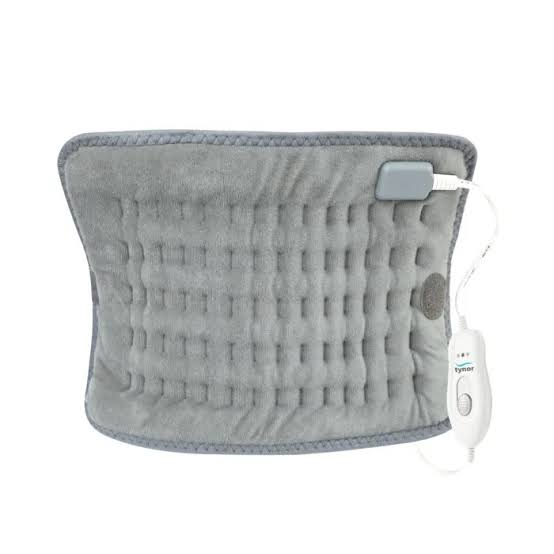
A heating pad offers controlled warmth and can be appealing when stiffness or tight muscles are the main concern.
Many models have adjustable heat settings, although the controls vary by product. A simple control layout is especially useful for anyone who does not want to deal with complicated settings.
Ease of Use
A heating pad usually requires an outlet and some basic control adjustment.
The cord can be a minor nuisance. It may need to be positioned carefully so it does not get in the way.
Heat should also be used carefully. A heating pad should not be used while sleeping, and excessive heat or prolonged use can injure the skin.
Key Strengths
- Provides steady warmth
- Adjustable heat on many models
- Useful for relaxing tight muscles
- Convenient for repeated home use
- No freezer required
Potential Drawbacks
- Requires electricity
- Cord can limit movement
- Too much heat can cause burns
- Requires more attention during use
Which Is Easier for Seniors to Use?
For basic operation, the ice pack has the edge.
There are usually no controls, switches, or electrical connections. That makes it attractive for someone who wants the simplest possible setup.
A heating pad can still be very easy to use, especially when it has large buttons and clear heat settings. But the user has to manage the cord and temperature.
Simple is not always better, but simple can be a big advantage when a product is used often.
The main difference is that an ice pack requires careful cold exposure, while a heating pad requires careful heat exposure. Neither should simply be left against the skin for long periods.
Performance Comparison
The two products are designed for different types of comfort.
Cold therapy is commonly used for newer minor injuries such as bumps, bruises, sprains, and strains. Heat may be more useful for stiffness and tight muscles.
| Performance Area | Ice Pack | Heating Pad |
|---|---|---|
| Cooling | Excellent | None |
| Warming | None | Excellent |
| Recent minor injury | Often preferred | May not be first choice |
| Muscle stiffness | May help | Often useful |
| Swelling | Can help reduce discomfort | Not usually the first choice |
| Consistent temperature | Limited | Usually better controlled |
The important point is that these products are not really competing for the exact same job.
Comfort, Accessibility, and Senior-Friendly Design
Comfort can vary from person to person.
An ice pack may feel too cold for some users. A heating pad may feel more pleasant when warmth is preferred.
For seniors who have difficulty handling small controls, a basic ice pack has an advantage because there is little to operate. On the other hand, a heating pad with large, simple controls may be easier than repeatedly preparing a frozen pack.
Storage also differs. An ice pack needs suitable cold storage, while a heating pad can usually be stored in a drawer or closet after cooling.
Neither choice should be based on assumptions about age alone. Individual comfort, dexterity, skin sensitivity, and daily routine matter more.
Features Comparison
The most useful features depend on how you plan to use the product.
| Feature | Ice Pack | Heating Pad |
|---|---|---|
| Temperature control | Usually limited | Often adjustable |
| Controls | Usually none | Usually switches or buttons |
| Cord | No | Usually yes |
| Freezer needed | Often | No |
| Portability | Usually high | Moderate |
| Storage | Freezer | Drawer or closet |
| Setup | Minimal | Plug in and adjust |
A heating pad can offer more control, but extra controls are only useful when they are easy to understand.
Price, Maintenance, and Long-Term Value
Both products can be inexpensive compared with many electronic comfort products, but the total value depends on the type you choose.
A basic reusable ice pack has very little maintenance. Its main requirement is suitable storage between uses.
Heating pads may have more components, including cords and electronic controls. That creates more potential points of wear over time.
| Cost Factor | Ice Pack | Heating Pad |
|---|---|---|
| Upfront complexity | Low | Low to moderate |
| Electricity | None | Required |
| Storage requirement | Freezer for many types | Normal household storage |
| Maintenance | Minimal | Minimal |
| Replacement concern | Pack damage or leakage | Cord or electronic failure |
For occasional use, an ice pack may offer excellent simplicity. For frequent warmth, a heating pad may provide better everyday value.
Who Should Choose an Ice Pack?
Choose an ice pack if:
- You mainly want cooling rather than warmth.
- You want a product with almost no controls.
- Portability matters.
- You do not want to manage an electrical cord.
- You want something simple to store and use.
- You are dealing with a recent minor bump or injury where cold may be appropriate.
Cold therapy should not be used casually for every type of discomfort. If you are unsure whether cold is appropriate for a health problem, professional guidance is a better choice.
Who Should Choose a Heating Pad?
Choose a heating pad if:
- Warmth feels more comfortable to you.
- Muscle tightness or stiffness is your main concern.
- You want adjustable heat.
- You expect to use the product regularly at home.
- You prefer not to rely on freezer storage.
- You can safely manage the cord and temperature controls.
A heating pad should be used with care. Do not sleep with it, and avoid excessive heat or prolonged contact with the skin.
Ice Pack vs Heating Pad — Final Verdict
Best for most seniors: It depends on the need rather than age alone.
Best for recent minor injuries: Ice pack.
Best for muscle tightness and stiffness: Heating pad.
Best for simplicity: Ice pack.
Best for adjustable temperature: Heating pad.
Best for portability: Ice pack.
The biggest difference is simple: cold is cooling therapy, while heat is warming therapy. Choosing the right one starts with understanding which type of comfort fits the situation.
Scoring Summary
These scores are practical comparison scores rather than laboratory test results.
| Category | Ice Pack | Heating Pad |
|---|---|---|
| Ease of Use | 9/10 | 8/10 |
| Senior-Friendly Design | 9/10 | 8/10 |
| Portability | 9/10 | 6/10 |
| Temperature Control | 6/10 | 9/10 |
| Maintenance | 9/10 | 8/10 |
| Everyday Value | 9/10 | 8/10 |
The ice pack scores higher for simplicity and portability. The heating pad wins when adjustable warmth is the priority.
How We Evaluate Products
This comparison focuses on practical factors that matter when choosing a comfort product for senior use.
The main areas include ease of use, accessibility, comfort, safety, performance, maintenance, portability, and long-term practicality.
The goal is not to make either product sound perfect. It is to explain where each one makes more sense and where extra care may be needed.
Senior-Specific Buying Considerations
Before choosing between an ice pack and heating pad, think about these points.
Physical Effort
An ice pack usually requires little physical effort, but moving a frozen pack from a freezer may be inconvenient for some people.
A heating pad is easy to lift but may require plugging in and positioning the cord.
Controls
If you choose a heating pad, look for controls that are easy to see and understand.
Large buttons and simple temperature settings can make everyday use easier.
Storage
Consider where the product will live between uses.
An ice pack may need freezer space. A heating pad needs a dry storage area and should be allowed to cool before being stored.
Setup
An ice pack usually has less setup.
A heating pad needs access to electricity and a safe place to use it.
Safety
Heat and cold both require attention. Ice should be protected from direct skin contact, while heating pads should not become excessively hot or remain in contact with skin for too long.
Common Buying Mistakes
Avoid these mistakes when choosing between the two.
- Choosing based only on price
- Ignoring how the product will be stored
- Buying a heating pad with confusing controls
- Forgetting that ice packs may need freezer space
- Using extreme temperatures
- Assuming heat and cold are interchangeable
- Leaving either product in place for too long
The cheapest option is not necessarily the easiest option. Think about how the product will actually fit into your daily routine.
Safety
Safety deserves extra attention with both products.
For an ice pack, use a thin cloth or towel between the cold pack and skin. Direct ice contact can injure the skin.
For a heating pad, avoid excessive heat and prolonged use. Do not sleep with a heating pad. Also avoid placing a heating pad over topical pain-relief creams unless a healthcare professional has specifically advised that use; this combination can increase the risk of skin injury.
People with reduced sensation, circulation problems, certain medical conditions, or other health concerns may need specific advice before using heat or cold therapy.
If pain is severe, unusual, persistent, or connected with a significant injury, it is better to seek professional medical advice rather than relying on either product.
Conclusion
Ice Pack vs Heating Pad is not really a battle between two products. They serve different purposes. An ice pack is the simpler choice for cooling and may be more useful after a recent minor injury. A heating pad is better suited to people who prefer warmth and may find it helpful for muscle tightness or stiffness.
For seniors, the best option is the one that fits the situation while remaining easy and safe to use. Keep the controls simple, avoid extreme temperatures, and never treat heat or cold as a substitute for professional care when a health problem needs attention.
