
Air Mattress vs Hospital Mattress: Which Is Better for Seniors?


Automatic Jar Opener

Smart Plug with Alexa

Portable Wheelchair
Air Mattress vs Hospital Mattress is a useful comparison when comfort, support, and easy daily care matter. The two options can look similar at first, but they are designed with different priorities in mind.
For seniors, the better choice depends on how the mattress will be used. A basic air mattress may suit occasional use, while a hospital-style mattress may offer better stability and easier bed transfers. Specialty air systems can be a different category altogether and may need professional guidance.
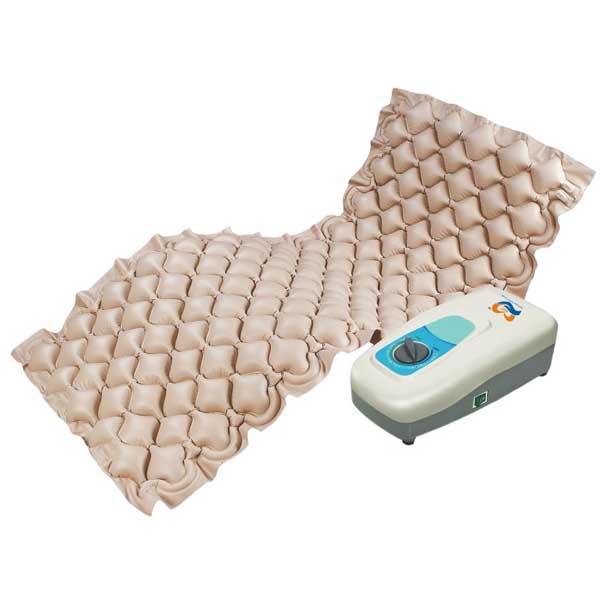
Quick Comparison
For most seniors who need a mattress for regular home use, a quality hospital-style mattress is usually the simpler choice. It tends to provide a stable sleeping surface without requiring a pump or air settings.
A specialized air mattress can be the better option when pressure redistribution is an important consideration. However, the right type should match the person’s needs and the compatible bed system.
The key question is not simply which mattress is softer. It is which mattress provides the right mix of support, comfort, stability, and ease of care.
Air Mattress vs Hospital Mattress At a Glance
The biggest difference is how each mattress supports the body and how much equipment is involved.
| Feature | Air Mattress | Hospital Mattress |
|---|---|---|
| Support | Adjustable on some models | Usually stable and consistent |
| Setup | May require inflation and a pump | Usually simpler |
| Firmness | Often adjustable | Usually fixed |
| Stability | Can vary by design | Generally stable |
| Maintenance | Pump and air system may need care | Usually simpler |
| Portability | Some models are easy to move | Often heavier |
| Pressure management | Some specialty models offer it | Depends on mattress design |
| Everyday use | Depends on model | Often practical |
Air Mattress Review for Senior Use
An air mattress can be appealing because it may allow the firmness to be changed. That flexibility can be useful when different comfort levels are needed.
However, “air mattress” covers many different products. A simple inflatable mattress is very different from a medical-grade alternating-pressure or low-air-loss system.
Ease of Use
A basic air mattress can be easy to inflate when the pump is simple and clearly labeled. The problem is that setup adds another step compared with a conventional mattress.
A powered specialty model may also involve a pump, tubing, settings, and electrical connections. That can be less convenient for someone who wants a simple bed.
Key Strengths
- Adjustable firmness on many models
- Some models are relatively easy to move
- Can provide a softer sleeping feel
- Specialty systems may provide pressure redistribution
- Useful when flexibility is more important than simplicity
Potential Drawbacks
- Some models require a pump
- Power may be needed for powered systems
- Air pressure can require adjustment
- Pump noise may matter to light sleepers
- Compatibility with the bed frame must be checked
Hospital Mattress Review for Senior Use
A hospital mattress is not one specific mattress. It can refer to several types of mattresses designed for use with hospital or medical beds.
For this comparison, the term is best understood as a hospital-style or medical-grade mattress intended to provide stable support on a compatible bed.
Ease of Use
The main advantage is simplicity. There is usually no need to inflate the mattress before use, and there are fewer controls to manage.
That can be useful for seniors who prefer a straightforward sleeping setup. It can also make daily bed-making and cleaning easier.
Key Strengths
- Stable sleeping surface
- Simple everyday operation
- Usually no external pump
- Often designed for compatible medical beds
- Practical for regular use
- Can be easier for caregivers to manage
Potential Drawbacks
- Firmness may not be adjustable
- Quality varies between mattress types
- Some models can be heavy
- A basic mattress may not provide advanced pressure-management features
- Compatibility with the bed system still matters
Which Is Easier for Seniors to Use?
For simple everyday use, the hospital-style mattress usually has the advantage.
There are fewer things to operate, and there is no need to monitor air pressure on a standard model. This may be helpful for seniors who value simplicity.
An air mattress can still be easier in some situations. For example, an adjustable model may provide useful flexibility for someone who wants to change firmness.
The person’s mobility also matters. A mattress that feels comfortable while lying down may not be ideal if it makes sitting at the edge of the bed or transferring more difficult.
Performance Comparison
Performance depends heavily on the exact mattress type.
A basic air mattress mainly offers inflatable cushioning and, in some cases, adjustable firmness. A specialty medical air system can do much more, including programmed changes in air pressure.
Hospital-style mattresses tend to focus on stable support. Some advanced medical mattresses also use specialized foam, pressure-redistribution materials, or other support technologies.
For everyday sleeping, stability may matter more than having many settings.
For people with specific pressure-related concerns, mattress selection becomes more complicated. A healthcare professional may need to assess the person’s needs before choosing a specialty support surface.
Comfort, Accessibility, and Senior-Friendly Design
Comfort is highly personal. A mattress that feels supportive to one person may feel too firm or too soft to another.
An air mattress has an advantage when adjustability is important. Changing the air pressure may allow the user to find a more comfortable feel.
A hospital-style mattress can have an advantage when stability matters. A firm, predictable surface may make sitting, repositioning, and getting in or out of bed feel more controlled.
Consider these practical questions:
- Is the person able to adjust controls independently?
- Is the mattress stable when sitting on the edge?
- Is the surface easy to clean?
- Does the mattress fit the bed correctly?
- Can the caregiver manage the setup easily?
- Is the mattress comfortable for the person’s normal sleeping position?
Features Comparison
The useful features are not the same on every model.
| Feature | Air Mattress | Hospital Mattress |
|---|---|---|
| Firmness adjustment | Common on some models | Usually limited |
| Pump | Often required for powered models | Usually not required |
| Pressure redistribution | Available on specialty models | Depends on design |
| Controls | May include pump controls | Usually simple |
| Cover | Depends on model | Often designed for easier cleaning |
| Power requirement | Some models need electricity | Usually no power |
A specialty air system can offer more technology, but more technology is not automatically better for every senior.
Price, Maintenance, and Long-Term Value
Prices vary greatly because both categories include basic and advanced products.
A simple air mattress may be inexpensive, but a medical air system with a powered pump can cost considerably more. Hospital-style mattresses also range from basic foam designs to advanced therapeutic surfaces.
Look beyond the initial price.
Check whether the air mattress requires:
- A replacement pump
- Tubing or connectors
- Replacement air cells
- Special covers
- Electricity during operation
For a hospital-style mattress, check the cover, cleaning instructions, expected service life, and replacement availability.
Best value is the mattress that provides the needed support without adding features that will not be used.
Who Should Choose an Air Mattress?
Choose an air mattress if:
- Adjustable firmness is important.
- You want a mattress that can be inflated when needed.
- Portability matters.
- You are considering a specialty pressure-management system.
- The user can comfortably manage the controls or has caregiver support.
- The specific air system is compatible with the bed.
For medical or pressure-management needs, do not choose a specialty air system based only on an online product description.
Who Should Choose a Hospital Mattress?
Choose a hospital-style mattress if:
- Stability is a priority.
- You want a simple setup.
- You do not want to manage a pump.
- The mattress will be used every day.
- Easy routine care matters.
- The mattress is being used with a compatible hospital or adjustable bed.
For many seniors, this is the more straightforward option.
Air Mattress vs Hospital Mattress — Final Verdict
Best for most everyday senior use: Hospital-style mattress
Best for adjustable firmness: Air mattress
Best for simple operation: Hospital-style mattress
Best for advanced pressure-management options: Specialty air mattress
Best value: Depends on the user’s needs and the specific model
There is no universal winner because “air mattress” and “hospital mattress” are broad categories. A simple inflatable mattress should not be compared with a medical alternating-pressure system as if they were the same product.
Scoring Summary
Because both categories contain very different models, these scores should be treated as practical comparison scores rather than laboratory measurements.
| Category | Air Mattress | Hospital Mattress |
|---|---|---|
| Ease of Use | 7.5/10 | 9/10 |
| Senior-Friendly Design | 7.5/10 | 8.5/10 |
| Everyday Stability | 7/10 | 9/10 |
| Flexibility | 9/10 | 7/10 |
| Maintenance | 7/10 | 8.5/10 |
| Overall Value | 8/10 | 8.5/10 |
The scores can change significantly depending on the exact model.
How We Evaluate Products
This comparison focuses on the factors that matter most in real senior use.
We consider:
- Ease of operation
- Stability
- Comfort
- Accessibility
- Setup
- Maintenance
- Cleaning
- Safety
- Flexibility
- Long-term practicality
- Overall value
The comparison does not assume personal hands-on testing. Product categories and features can vary, so the exact model should always be checked before purchase.
Senior-Specific Buying Considerations
Physical Effort
Think about getting into bed, sitting at the edge, changing position, and getting out of bed.
A softer surface is not automatically easier to use.
Controls
If the mattress uses a pump or electronic controls, check whether the buttons and settings are easy to understand.
Large, clear controls can be useful when frequent adjustments are needed.
Maintenance
Consider how often the mattress needs cleaning, adjustment, inspection, or replacement parts.
A simple mattress may be preferable when low maintenance is the goal.
Storage
If the mattress will not stay on the bed permanently, check how easy it is to store.
An inflatable model may have an advantage here, depending on its design.
Setup
Check whether the mattress needs a pump, tubing, special power connection, or other equipment.
The easiest setup is usually the one that requires the fewest extra steps.
Safety
A mattress must fit the bed system correctly. This is especially important when using a hospital bed, side rails, or specialty mattress.
Do not assume that any mattress will safely fit any medical bed. Follow the mattress and bed manufacturer’s compatibility instructions.
Common Buying Mistakes
Avoid these mistakes when comparing an air mattress with a hospital-style mattress:
- Choosing only by softness
- Assuming every air mattress is a medical mattress
- Ignoring mattress-to-bed compatibility
- Forgetting about pump and power requirements
- Overlooking cleaning and maintenance
- Buying advanced features that are not needed
Safety
Safety deserves extra attention with medical beds and specialty mattresses.
A poorly matched mattress and bed system can create unwanted gaps around rails or other parts of the bed. FDA guidance highlights the importance of compatible mattress dimensions and bed-system components when reducing entrapment risks.
Some specialty air mattresses can also change shape or compress differently under body weight. This makes compatibility with the bed frame and rails especially important.
If the mattress is being considered because of pressure injuries, limited mobility, or another medical concern, selection should be discussed with an appropriate healthcare professional. Specialty dynamic mattresses are often selected based on an individual’s needs rather than simply personal comfort.
Conclusion
Air Mattress vs Hospital Mattress comes down to flexibility versus simplicity. An air mattress can be attractive when adjustable firmness or specialized pressure-management features are important. A hospital-style mattress is often easier for everyday use because it provides a stable surface with fewer controls and less equipment.
For most seniors looking for a straightforward daily sleeping surface, a good hospital-style mattress is the practical starting point. If there is a specific medical or pressure-management need, however, the right specialty mattress should be selected based on the individual’s needs and the compatible bed system rather than price or softness alone.
