
Lift Chair vs Power Recliner for Seniors: Which?


Toilet Safety Rails

Handheld Shower Head

Puzzle Book for Seniors
Lift Chair vs Power Recliner can be confusing because both can offer powered reclining at the push of a button. The key difference is what happens when you want to get up.
A power recliner focuses on reclining comfort. A lift chair adds a powered lift mechanism that raises and tilts the seat forward to help with the move from sitting to standing.
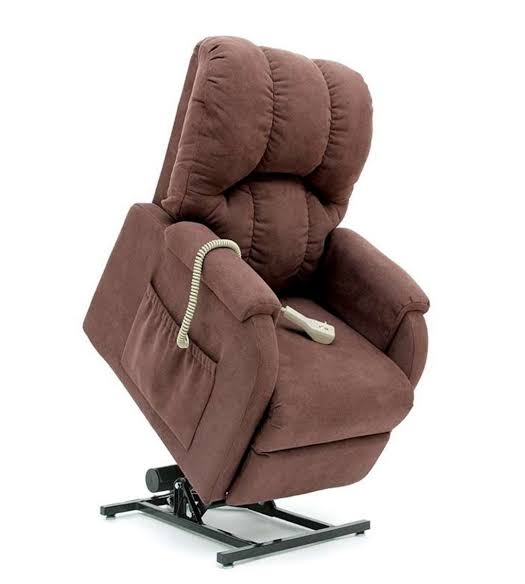
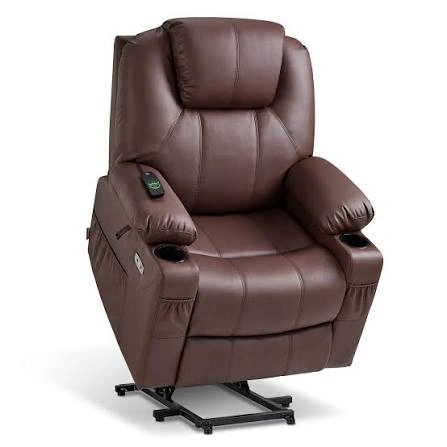
Quick Comparison
For seniors who stand easily, a power recliner may provide all the comfort they need. For someone who finds standing from a chair difficult, the lift function can be the more useful feature.
The main choice is simple: Do you need help getting out of the chair, or mainly help getting comfortable in it?
Lift Chair vs Power Recliner At a Glance
Both chair types can provide powered reclining. The lift mechanism is the feature that creates the biggest practical difference.
| Feature | Lift Chair | Power Recliner |
|---|---|---|
| Powered reclining | Yes | Yes |
| Powered footrest | Usually | Usually |
| Helps with standing | Yes | No |
| Main purpose | Comfort + standing assistance | Comfort and relaxation |
| Controls | Handheld buttons | Handheld buttons or controls |
| Physical effort to stand | May be lower | User stands independently |
| Setup | Usually more involved | Usually simpler |
| Best fit | Users needing transfer help | Users wanting powered comfort |
Lift Chair Review for Senior-Friendly Use
A lift chair combines the basic functions of a power recliner with a motorized lifting mechanism. The seat can rise and tilt forward, helping bring the user closer to a standing position.
Ease of Use
Most lift chairs use a handheld control. Buttons can operate the lift and recline functions without requiring the user to pull a lever or push hard against the chair.
This can be useful for someone who finds repeated physical effort difficult.
The most important thing is still proper fit. Seat height, seat depth, width, and control placement can affect how easy the chair is to use.
Key Strengths
- Helps with the sitting-to-standing transition
- Provides powered reclining
- Can reduce the effort needed to rise
- Simple button-based operation on many models
- Can provide several reclining positions
- Useful for people who spend long periods seated
Potential Drawbacks
- Usually costs more than a basic power recliner
- Has more mechanical components
- Requires electrical power
- Can be heavier and more difficult to move
- Takes up more space in some rooms
Power Recliner Review for Senior Use
A power recliner uses an electric motor to adjust the reclining position. Depending on the model, it may move the backrest and footrest together or provide more independent adjustment.
Ease of Use
A power recliner can be very convenient for someone who wants to change seating positions without using a manual lever.
A remote or side control lets the user recline and return to an upright position with relatively little effort. However, once the user wants to stand, the chair does not provide the powered lift motion found in a lift chair.
Key Strengths
- Excellent for powered reclining comfort
- Usually simpler than a lift chair
- Often suitable for everyday relaxation
- No lift mechanism to maintain
- Many models offer adjustable positions
- Can be a good fit when standing is already easy
Potential Drawbacks
- Does not raise the seat to help with standing
- May still require considerable effort to get up
- Power models need electricity
- Advanced features can increase the price
- Deep or soft seating may make standing harder for some users
Which Is Easier for Seniors to Use?
The answer depends on which part of using a chair is difficult.
A power recliner may be easier for someone who has no trouble standing but wants simple reclining controls. A lift chair has an advantage when the difficult part is moving from sitting to standing.
The biggest difference is not reclining. It is the powered standing assistance.
A lift chair raises and tilts the seat forward. This changes the user’s position before standing and can reduce the amount of effort needed for the transfer.
For seniors with limited strength or balance concerns, chair fit matters just as much as the lift feature. The correct seat height, depth, width, and clear floor space should be checked before purchase.
Performance Comparison
For these two products, performance is less about motor speed and more about how well each chair performs its main job.
| Performance Area | Lift Chair | Power Recliner |
|---|---|---|
| Reclining | Excellent | Excellent |
| Standing assistance | Yes | No |
| Position adjustment | Powered | Powered |
| Transfer support | Stronger | Limited |
| Everyday relaxation | Excellent | Excellent |
| Independence during standing | May help | User must stand independently |
The lift chair has the extra function that matters most when getting out of a chair is challenging.
Comfort, Accessibility, and Senior-Friendly Design
Comfort is important, but a comfortable chair is not automatically an easy chair to use.
Look for a seat that supports an upright position without forcing the user too far forward or backward. Controls should also be easy to see and reach.
A lift chair may offer greater accessibility for users who struggle with transfers. A power recliner may be more practical when mobility is not the main concern.
Neither option should be chosen based only on the number of features. A simple control system can be more useful than a long list of extras.
Features Comparison
Many features overlap between the two chair types. The main difference remains the lift mechanism.
| Feature | Lift Chair | Power Recliner |
|---|---|---|
| Power recline | Yes | Yes |
| Lift-to-stand | Yes | No |
| Footrest adjustment | Usually | Usually |
| Headrest | Model dependent | Model dependent |
| Lumbar adjustment | Model dependent | Model dependent |
| Heat or massage | Some models | Some models |
| Battery backup | Available on some models | Available on some models |
Features vary widely by model, so specifications should be checked before buying. Do not assume that every lift chair or power recliner includes the same controls or accessories.
Price, Maintenance, and Long-Term Value
A lift chair generally costs more because it includes the additional lifting mechanism. A power recliner can be less expensive when the user only needs powered reclining.
The better value depends on whether the extra function will actually be used.
| Cost Factor | Lift Chair | Power Recliner |
|---|---|---|
| Initial cost | Usually higher | Usually lower |
| Motor system | Lift + recline | Recline |
| Maintenance | More components | Fewer components |
| Electricity | Required | Required for powered models |
| Long-term value | Higher when lift is needed | Higher when lift is unnecessary |
Avoid choosing solely by the lowest price. Paying more for a lift mechanism makes little sense if standing is already easy. On the other hand, saving money on a power recliner may not solve the actual problem when standing is difficult.
Who Should Choose a Lift Chair?
A lift chair may make more sense if:
- Getting up from a chair requires significant effort.
- The user relies heavily on the armrests to stand.
- A low seat makes standing uncomfortable.
- A caregiver frequently helps with transfers.
- Powered standing assistance is more important than having the lowest purchase price.
- The user wants powered reclining plus lift assistance.
The lift function is the main reason to choose this type of chair.
Who Should Choose a Power Recliner?
A power recliner may be the better fit if:
- Standing from a chair is already comfortable.
- The main goal is easier reclining.
- The user wants a comfortable chair for reading or watching TV.
- A lift mechanism is not needed.
- A simpler chair design is preferred.
- Keeping the purchase price lower is important.
In this situation, paying extra for a lift mechanism may provide little practical benefit.
Lift Chair vs Power Recliner — Final Verdict
A lift chair is designed to do more than recline. Its powered base raises and tilts the seat to help the user move toward standing. A power recliner focuses on powered positioning for comfort and does not normally provide this standing assistance.
| Need | Better Fit |
|---|---|
| Help getting up | Lift Chair |
| Powered relaxation | Power Recliner |
| Easier transfers | Lift Chair |
| Simple reclining | Power Recliner |
| Extra standing assistance | Lift Chair |
| Lower complexity | Power Recliner |
For someone who can stand comfortably, a power recliner may be all that is needed. When standing is the difficult part, the lift function becomes the main reason to consider a lift chair.
Scoring Summary
These scores are a practical comparison of the chair types, not laboratory test results.
| Category | Lift Chair | Power Recliner |
|---|---|---|
| Ease of Use | 9/10 | 9/10 |
| Senior-Friendly Design | 9/10 | 8/10 |
| Reclining Performance | 9/10 | 9/10 |
| Standing Assistance | 10/10 | 3/10 |
| Maintenance Simplicity | 7/10 | 8/10 |
| Value | 8/10 | 9/10 |
The scores mainly reflect the additional lift function and the extra mechanical complexity that comes with it.
How We Evaluate Products
For this comparison, the most useful factors are not flashy extras. The focus is on everyday usability and the specific difference between the two chair types.
We consider:
- Ease of operation
- Standing assistance
- Comfort
- Accessibility
- Control simplicity
- Maintenance
- Practical value
- Space requirements
- Long-term usefulness
This comparison is based on product functions and published information rather than personal hands-on testing.
Senior-Specific Buying Considerations
A few checks can make the decision much easier.
Physical Effort
Think about the hardest part of using the chair. If getting up is difficult, the lift mechanism may be more important than extra reclining positions.
Controls
Check whether the buttons are easy to identify, reach, and operate. A complicated remote can reduce the benefit of powered features.
Fit
Check the seat width, depth, height, and back support. A chair that is the wrong size may be uncomfortable even if it has excellent features.
Space
Measure the available room before buying. Consider the chair’s movement when reclining and lifting.
Setup
Confirm whether assembly is required and whether the chair can be positioned safely near a suitable electrical outlet.
Safety
Keep the area around the chair clear. Follow the manufacturer’s instructions for operation and weight limits. A lift chair can assist with standing, but it does not eliminate the need for balance and safe movement after standing.
Common Buying Mistakes
Avoid these common mistakes:
- Choosing only by price
- Ignoring seat dimensions
- Assuming every lift chair has the same lift range
- Buying a power recliner when standing assistance is actually needed
- Paying extra for features that will rarely be used
- Forgetting to measure the available floor space
The most useful chair is the one that solves the user’s actual difficulty.
Frequently Asked Questions
Is a lift chair the same as a power recliner?
No. A lift chair includes powered reclining plus a mechanism that raises and tilts the seat to assist standing. A power recliner normally provides powered reclining without that lift motion.
Can a lift chair be used like a normal recliner?
Yes. Lift chairs also provide reclining functions. The lift feature is an additional function used when moving toward a standing position.
Is a power recliner easier to maintain?
It may be simpler because it does not have the additional lift mechanism. However, maintenance depends on the specific model.
Which chair is better for someone who struggles to stand?
A lift chair is specifically designed to assist the transition from sitting toward standing. The correct chair size and setup are still important.
Does a power recliner help you get up?
A power recliner can return you to an upright seated position, but it normally does not raise and tilt the seat to assist standing.
Conclusion
Lift Chair vs Power Recliner comes down to one important difference. A power recliner makes reclining easier, while a lift chair adds powered assistance for the move from sitting to standing.
Choose a lift chair when standing assistance is a meaningful need. Choose a power recliner when reclining comfort is the main goal and standing is already manageable. The right choice is less about having more features and more about choosing the function that solves the user’s everyday challenge.
