
Lift Chair vs Recliner: Which Is Better for Seniors?


Leg Massager for Circulation

Long Handle Shoe Horn

Sudoku Puzzle Book
Lift Chair vs Recliner is an important choice when comfort is not the only concern. Both chairs can provide a comfortable place to read, watch TV, or rest. The key difference is how they help you get in and out of the chair.
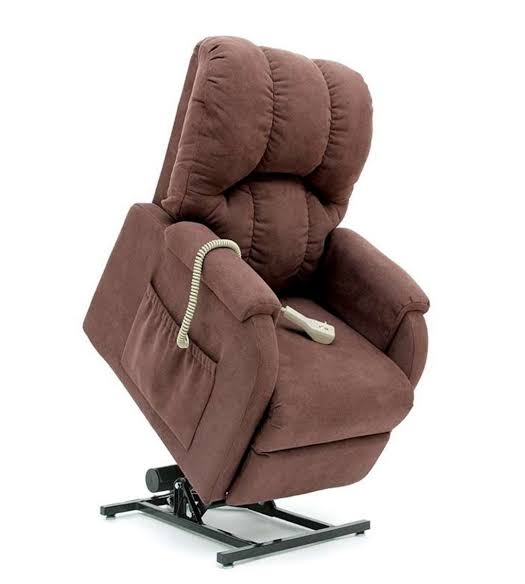
A standard recliner is mainly built for comfort and reclining. A lift chair adds a powered lift function that raises and tilts the chair to help the user move toward a standing position.
Quick Comparison
For seniors who can easily stand from a normal chair, a recliner may be enough. It can offer simple reclining comfort without the extra lift system.
For seniors who find standing up difficult, a lift chair may be more useful. Its main advantage is the powered lift function. It can reduce the effort needed during the sit-to-stand transition.
The right choice depends less on age and more on mobility, comfort needs, available space, and how often the lift function will be used.
Lift Chair vs Recliner At a Glance
The main difference is simple: a lift chair helps with standing, while a regular recliner mainly helps with relaxing.
| Feature | Lift Chair | Recliner |
|---|---|---|
| Stand-assist | Powered lift | Usually no |
| Reclining | Yes | Yes |
| Controls | Usually powered | Manual or powered |
| Ease of standing | Excellent for users who need help | Depends on user strength |
| Comfort | High, model dependent | High, model dependent |
| Setup | More involved | Usually simpler |
| Maintenance | More parts to manage | Usually simpler |
| Best use | Comfort plus mobility support | Everyday relaxing |
Lift Chair: A Practical Choice for Senior Comfort
A lift chair looks much like a regular recliner. Its main difference is the motorized mechanism that raises the chair and moves it forward to assist with standing.
Ease of Use
Most powered lift chairs use a hand control. The user can select the chair position with buttons instead of pulling a manual lever.
This can be useful for someone who has trouble reaching or using a traditional recliner handle. It may also reduce the physical effort needed to get out of the chair.
However, controls differ by model. Some chairs provide simple lift and recline functions, while advanced models allow more independent adjustment of the backrest and footrest.
Key Strengths
- Helps with the transition from sitting to standing
- Powered operation can reduce physical effort
- Offers reclining positions as well as lift assistance
- Some models provide independent backrest and footrest control
- Can support transfers to a walker or wheelchair
- Many models include comfort features such as headrests or lumbar support
Potential Drawbacks
- Usually costs more than a basic recliner
- Requires access to electrical power
- Has more mechanical and electrical parts
- Takes time to find the right size and position
- Advanced features can make the controls more complex
Recliner: Simple Comfort for Everyday Use
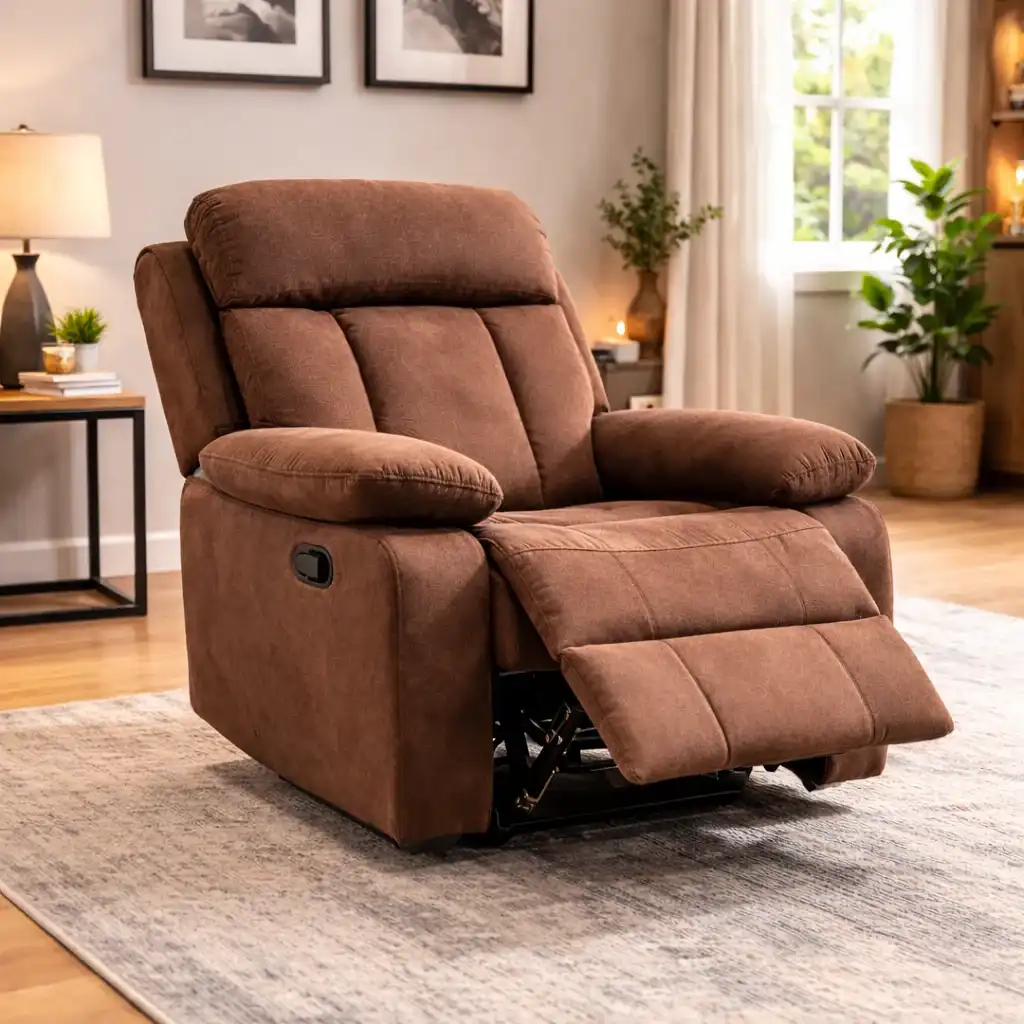
A traditional recliner focuses mainly on sitting comfort and reclining. It may use a manual lever, push-back mechanism, or power controls, depending on the model.
Unlike a lift chair, a standard recliner normally does not raise the user toward a standing position.
Ease of Use
A manual recliner can be very simple. Pull the lever, lean back, and raise the footrest.
That simplicity can be useful for someone who has enough strength and balance to get in and out without assistance.
Power recliners add buttons and motors. Some may offer features such as adjustable headrests, footrests, or charging ports. These features vary widely between models.
Key Strengths
- Simple designs are easy to understand
- Usually fewer mechanical parts than a lift chair
- Good for reading, watching TV, and relaxing
- Many styles and sizes are available
- Can be less expensive than a powered lift chair
- Manual models do not require electricity for basic reclining
Potential Drawbacks
- A standard recliner does not normally provide powered standing assistance
- Manual levers may be harder to use for some people
- Getting out can require more leg, arm, or core strength
- A power recliner can still lack a lift function
Which Is Easier for Seniors to Use?
This depends on the user’s physical ability.
For someone who can stand easily, a recliner may be simpler. There is no need for a lift mechanism, and a basic manual model can have very few controls.
For someone who struggles to rise from a low seat, a lift chair may be easier. The powered mechanism is designed to raise the chair and assist the user toward standing.
The key question is not “Which chair is easier?” but “Does the user need help getting up?”
If the answer is yes, the lift function becomes much more important than extra reclining features.
Performance Comparison
For these two products, performance is mainly about movement and daily comfort.
A lift chair has a clear functional advantage because it can combine reclining with powered lift assistance. Some models offer two-position, three-position, or infinite-position movement. Infinite-position models can allow the backrest and footrest to move independently.
A recliner can still perform very well for its main purpose: comfortable reclining. A power recliner may offer smooth adjustment without needing the lift function.
So the performance difference depends on the task.
| Performance Area | Lift Chair | Recliner |
|---|---|---|
| Reclining | Excellent, model dependent | Excellent, model dependent |
| Standing assistance | Strong advantage | Limited |
| Position adjustment | Often very flexible | Varies |
| Simplicity | Moderate | Usually better |
| Daily relaxation | Excellent | Excellent |
Comfort, Accessibility, and Senior-Friendly Design
Comfort is not automatically better in one category. Both lift chairs and recliners can have padded seats, adjustable positions, supportive backs, and different upholstery options.
The bigger difference is accessibility.
A lift chair may be easier for someone who needs help moving between sitting and standing. Some models also offer different recline positions, including deeper recline and independent footrest and backrest movement.
A recliner may be a better fit for someone who wants a simple chair without a lift system.
Chair size also matters. A good fit depends on the user’s height, body size, seat depth, and the space available in the room. Current lift-chair guidance recommends checking user fit, room fit, weight capacity, and clearance before buying.
Features Comparison
Features vary greatly by model, so avoid assuming every chair offers the same options.
| Feature | Lift Chair | Recliner |
|---|---|---|
| Powered lift | Yes | Usually no |
| Reclining | Yes | Yes |
| Hand control | Common | Power models may have one |
| Independent back/footrest | Available on some models | Available on some power models |
| Heat or massage | Available on some models | Available on some models |
| USB charging | Available on some models | Available on some models |
| Lay-flat positions | Available on some models | Model dependent |
Some current lift chairs offer features such as powered headrests, lumbar support, USB charging, heat, massage, and different reclining positions. These are model-specific rather than universal lift-chair features.
Price, Maintenance, and Long-Term Value
A basic recliner is often the simpler purchase. Manual models have fewer powered components and can be easier to maintain.
Lift chairs generally have more components because they combine reclining with a powered lifting system. That can add cost and make model selection more important.
Long-term value depends on how often the lift function will be used.
If the user does not need stand assistance, paying extra for a lift mechanism may not add much practical value. If standing from a chair is difficult, the lift function may be the feature that matters most.
Do not compare price alone. Check the chair’s dimensions, weight capacity, warranty, controls, available positions, and service support.
Who Should Choose a Lift Chair?
Choose a lift chair if:
- Standing from a normal chair is difficult.
- You want powered help during the sit-to-stand transition.
- You often use a chair for long periods.
- You want both reclining and lift assistance.
- A caregiver needs a chair that supports easier transfers.
- You prefer buttons over a manual recliner lever.
A lift chair can be especially useful when mobility is the main reason for changing chairs.
Who Should Choose a Recliner?
Choose a recliner if:
- You can stand from a normal chair without much difficulty.
- Your main goal is comfortable reclining.
- You prefer a simple chair.
- You want fewer mechanical features.
- You do not need powered standing assistance.
- A manual recliner meets your needs.
A recliner can make more sense when the lift function would rarely be used.
Lift Chair vs Recliner — Final Verdict
There is no single winner for every senior.
Best for mobility support: Lift Chair
Best for simple relaxation: Recliner
Best for easier standing: Lift Chair
Best for simple operation: Basic Recliner
Best for flexible powered positioning: Lift Chair
The biggest difference is the lift mechanism. A recliner helps you relax, while a lift chair adds powered assistance for getting into and out of the chair.
Scoring Summary
Because these are broad product categories, the scores below reflect functional fit rather than laboratory testing.
| Category | Lift Chair | Recliner |
|---|---|---|
| Ease of Standing | 5/5 | 2/5 |
| Senior-Friendly Design | 5/5 | 3/5 |
| Reclining Comfort | 4/5 | 4/5 |
| Simplicity | 3/5 | 5/5 |
| Mobility Support | 5/5 | 2/5 |
| Long-Term Practicality | 4/5 | 4/5 |
These scores should not replace checking the exact chair model. Features, dimensions, controls, and positioning options can vary substantially.
How We Evaluate Products
For this comparison, the main factors are ease of use, accessibility, comfort, safety, performance, maintenance, value, and long-term practicality.
The comparison does not assume hands-on testing. It focuses on the functional differences between the two chair types and on features that can affect everyday senior use.
Senior-Specific Buying Considerations
Physical Effort
Think about how much effort is needed to sit down and stand up. If standing is difficult, the lift function may be more important than reclining style.
Controls
Check whether the buttons are easy to identify and press. A simple remote can be easier to manage than a control with many functions.
Size and Fit
Measure the user’s height and body size. Also measure the room and the space needed when the chair reclines or lifts.
Maintenance
A powered chair has more components than a basic manual recliner. Check the warranty and service options before buying.
Setup
Make sure there is a suitable electrical outlet for a powered lift chair. Keep the movement path around the chair clear.
Safety
Follow the manufacturer’s instructions. Do not use a lift chair as a substitute for professional transfer support when the user cannot operate it safely.
Common Buying Mistakes
- Choosing a chair without checking the user’s height and seat dimensions
- Buying a lift chair without measuring the room
- Assuming every lift chair has the same recline positions
- Choosing advanced controls that the user may not need
- Ignoring warranty and service support
- Focusing only on price instead of the features that will be used every day
Safety
Lift chairs contain powered moving parts. Keep cords and the chair’s movement area clear.
Before use, make sure the user can operate the controls safely. Current caregiver guidance also recommends checking the user’s fit, room clearance, weight capacity, and ability to use the chair safely.
If a chair develops an electrical or mechanical problem, follow the model’s manual and use qualified or authorized service rather than attempting unfamiliar internal repairs.
Conclusion
A lift chair and a recliner can both provide comfortable seating, but they solve different problems. A recliner is mainly about relaxation. A lift chair adds powered assistance for sitting down and standing up.
For seniors who do not need standing assistance, a standard recliner may provide everything they need. For those who find the sit-to-stand movement difficult, the lift function can make the chair much more practical. The best choice is the one that matches the user’s physical needs, comfort preferences, room, and daily routine.
