
Walking Cane Locking Mechanism Explained: How It Works


Robot Vacuum Cleaner

Voice Assistant Smart Speaker

Digital Blood Pressure Monitor
Quick Answer
A walking cane locking mechanism keeps an adjustable or folding cane from changing length or separating while you put weight on it. Most adjustable canes use a spring-loaded push button that enters a height-adjustment hole, often supported by a collar or cam lock that reduces movement between the tubes. Before walking, confirm the button is fully through the hole and follow basic cane safety guidance.
What to check before using the cane
- Button engagement: The metal button should extend completely through the selected adjustment hole.
- Collar tightness: Tighten any secondary collar after setting the height.
- Shaft movement: The inner tube should not unexpectedly slide when downward pressure is applied.
- Folding joints: Every section should be fully seated before you lean on a folding cane.
- Overall condition: Stop using the cane if the lock is cracked, bent, badly worn, or repeatedly releases.
Simple verification
- After adjusting the cane, gently press down on the handle while standing beside a stable support and check for slipping or excessive movement.
A cane may look simple, but the small locking parts in its shaft do important work. They keep the cane at the correct height and help the sections behave like one solid support.
In 2026, adjustable and folding canes use several locking designs. This guide explains what each mechanism does, why canes sometimes rattle or slip, and what to inspect before relying on one.
In This Guide
- What Is a Walking Cane Locking Mechanism?
- How Does a Push-Button Cane Lock Work?
- Why Do Some Canes Have a Locking Collar or Cam Lock?
- How Do Folding Cane Sections Stay Locked Together?
- How Do You Check a Cane Lock Before Walking?
- Why Does a Cane Lock Slip, Rattle, or Stick?
- Push-Button vs Collar vs Cam Locks
- Should You Repair or Replace a Faulty Cane Lock?
- Frequently Asked Questions
- Final Takeaway
What Is a Walking Cane Locking Mechanism?
A walking cane locking mechanism is the part that prevents adjustable shaft sections from moving after the cane has been set to a chosen height. On folding canes, related components also keep the assembled sections aligned during use.
Definition: A cane lock is a mechanical system that holds telescoping or connected shaft sections in their intended position while the cane is being used.
A typical adjustable aluminum cane has an inner tube that slides inside a larger outer tube. Several holes along one tube provide preset height positions.
The mechanism must prevent those tubes from unexpectedly telescoping while weight is applied. That job may be handled by one component or by two locking components working together.
The lock is different from the cane tip
The rubber tip provides traction against the floor. The locking mechanism controls the shaft’s length and structural connection.
Both affect safe use, but they solve different problems. A secure lock cannot compensate for a badly worn rubber tip.
Why correct height still matters
A perfectly functioning lock only holds the height you select. It cannot tell whether that height is appropriate for your body.
Mayo Clinic advises checking that the cane reaches about wrist-crease height while standing naturally, with a comfortable elbow bend of roughly 15 to 30 degrees. See its guidance on choosing and using canes for fitting details.
Health note: A physical therapist or other qualified clinician can help determine whether a cane is the right mobility aid and how it should be fitted.
How Does a Push-Button Cane Lock Work?

The push-button system is one of the most common height-adjustment designs. A small spring-loaded metal button protrudes from the inner shaft and enters a matching hole in the outer shaft.
When the button passes fully through a hole, it physically prevents the tubes from sliding past each other. The system is simple, quick, and usually requires no tools.
What happens when you adjust the height?
- Press the metal button inward until it clears the adjustment hole.
- Slide the telescoping tube upward or downward.
- Align the button with the desired height hole.
- Release the button and let the internal spring push it outward.
- Confirm the button protrudes completely through the new hole.
The important part is full engagement. If the button sits halfway inside the hole, the shaft may appear adjusted without being properly locked.
What is inside the tube?
The button is normally connected to a spring or spring clip hidden inside the shaft. That spring keeps outward pressure on the button.
Technical adjustable-cane designs describe this same basic arrangement: a spring-loaded snap button passes through one of several holes to lock telescoping tubes at a chosen length. A documented example can be seen in this adjustable cane locking design.
When I check this style of cane, the first thing I look for is not the sound of a click. I look to see whether the button itself is visibly centered and fully extended.
Why Do Some Canes Have a Locking Collar or Cam Lock?
A second locking component can reduce looseness between telescoping tubes. Depending on the cane, this may be a threaded collar, compression ring, clamp, or cam lever.
The push button usually determines the height. The secondary lock helps hold the two tubes more tightly against each other.
What does an anti-rattle collar do?
An anti-rattle collar threads around the junction between shaft sections. Tightening it can reduce side-to-side play and the clicking noise produced by slightly loose tubes.
The collar should not replace a missing or damaged height button unless the manufacturer specifically designed the cane that way. On a dual-lock design, both systems should work as intended.
How is a cam lock different?
A cam lock uses a lever and pressure surface to clamp one telescoping tube against another. Closing the lever creates clamping force without requiring repeated twisting.
Some cane designs combine a snap button with a cam mechanism. The button determines the height while the cam reduces movement around the shaft joint.
- Push button: Prevents the tubes from sliding lengthwise.
- Collar: Helps reduce rotational or side-to-side movement.
- Cam lever: Applies clamping pressure quickly.
How Do Folding Cane Sections Stay Locked Together?
Folding canes use connected shaft sections rather than one continuous tube. An elastic tension cord commonly runs through those sections and pulls them into alignment when the cane is unfolded.
The sections usually fit together through male-and-female tube joints. Proper seating of those joints creates the rigid shaft used for walking.
Does the elastic cord carry your body weight?
The cord’s main job is to pull and organize the sections. The fitted metal joints form the structural connection when the cane is assembled.
That distinction matters. A stretched cord can make assembly awkward, but a partially seated tube joint is the bigger concern during use.
How can you tell the sections are seated?
- Each connection should slide together to its normal full depth.
- You should not see an unusual gap between adjoining shaft sections.
- The sections should remain aligned when the cane is held vertically.
- The shaft should not separate when lightly lifted and repositioned.
Many folding canes also include a standard push-button height adjustment near the upper shaft. That means a folding cane can have two separate systems worth checking.
How Do You Check a Cane Lock Before Walking?
Check the lock whenever you change the cane’s height, unfold it, or notice unusual movement. A ten-second inspection can catch an incomplete adjustment before you depend on the cane.
Use this quick pre-walk check
- Look at the button. Confirm it protrudes fully through the selected hole.
- Tighten the secondary lock. Secure the collar or cam lever if your cane includes one.
- Check every folding joint. Make sure each section is completely seated.
- Check the rubber tip. Replace a badly worn, split, or loose tip.
- Test gently. Apply controlled downward pressure before beginning normal walking.
Do not test an unfamiliar or questionable cane by suddenly placing your full weight on it. Keep a stable counter, rail, or another person nearby while checking it.
A study of older cane users identified problems involving incorrect height, maintenance, hand placement, and walking technique. The findings reinforce why equipment condition and correct use both matter; the abstract is available through PubMed.
Health note: If you have significant weakness, repeated falls, or balance problems, ask a healthcare professional whether a cane provides enough support for your needs.
Why Does a Cane Lock Slip, Rattle, or Stick?
A troublesome lock does not always mean the entire cane has failed. The symptom can help identify which part deserves attention.
Why does my cane rattle?
A small amount of sound can come from clearance between telescoping tubes. An anti-rattle collar may reduce that movement when tightened correctly.
Persistent or increasing movement deserves a closer look. Check the button, collar, tube joint, and adjustment holes for visible wear.
Why does the push button stick?
- Dirt may be collecting around the button opening.
- The internal spring may be damaged or losing tension.
- The tube may be dented or bent near the mechanism.
- The button may be misaligned with the adjustment hole.
Do not force a button that repeatedly jams. Forcing the tube can worsen a bent or damaged component.
Why does the cane height change by itself?
Unexpected telescoping is a warning sign. Stop relying on the cane until you determine why the locking system is not holding.
A worn adjustment hole, damaged button, failed spring, loose clamp, or incompatible replacement part can all interfere with proper locking. The exact cause depends on the cane design.
Section Takeaway: A rattle may come from normal tube clearance, but actual slipping is different. If the cane changes length while loaded, stop using it until the locking problem is resolved.
Push-Button vs Collar vs Cam Locks
These mechanisms are often discussed as alternatives, but many canes combine them. Understanding each component makes troubleshooting easier.
| Mechanism | Main Job | How It Engages | What to Check |
|---|---|---|---|
| Push button | Sets and holds cane height | Spring pushes button through a shaft hole | Button fully protrudes through the hole |
| Threaded collar | Reduces looseness between tubes | Twists to apply compression | Collar is snug and threads are undamaged |
| Cam lock | Clamps telescoping sections | Lever closes against the shaft | Lever closes firmly without excessive force |
| Folding joint | Connects folding shaft sections | Tube sections seat together under cord tension | No unusual gap or partial connection |
A dual-lock system can feel more solid because one part controls height while another reduces play. It also gives you more than one component to inspect.
Should You Repair or Replace a Faulty Cane Lock?
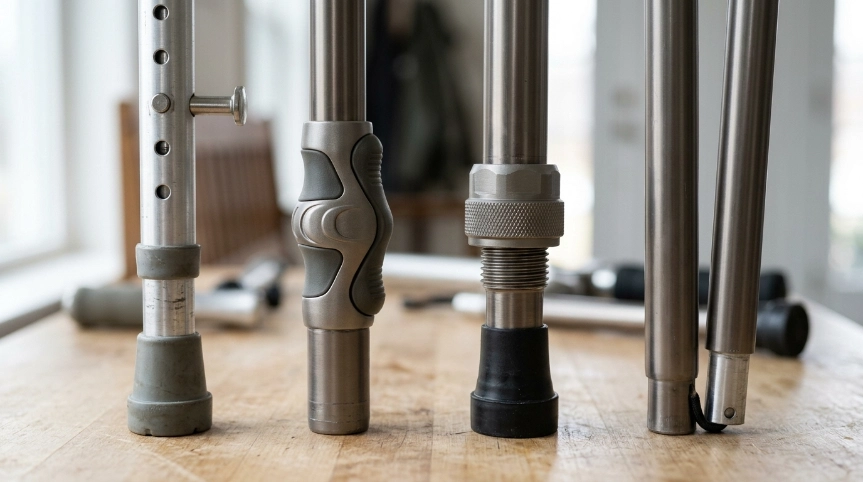
Minor issues such as an untightened collar may be easy to correct. Structural damage or repeated lock failure deserves a much more cautious response.
Stop using the cane if you notice these problems
- The shaft collapses or changes height under pressure.
- The push button no longer springs outward reliably.
- An adjustment hole is visibly stretched, cracked, or badly distorted.
- The tube is bent near the locking area.
- A cam lever, collar, or folding joint is cracked.
- A folding section repeatedly fails to seat completely.
Use manufacturer-approved replacement parts when the manufacturer provides a repair procedure. Avoid improvised screws, tape, wedges, or drilled holes in a weight-bearing cane shaft.
If the lock is an integrated part of an inexpensive cane, replacement may be more practical than attempting a structural repair. A clinician or durable medical equipment supplier can also help check fit and suitability.
Health note: A cane is a mobility aid, not just a household object. If equipment failure could put you at risk of falling, prioritize a safe replacement or professional inspection.
Frequently Asked Questions
How do I know if my cane is fully locked?
The adjustment button should protrude completely through the selected height hole. Tighten any secondary collar or close the cam lever, then gently test the shaft for unwanted sliding before walking.
Is the locking collar supposed to hold the cane height by itself?
That depends on the model. On many adjustable canes, the push button provides the primary height lock while the collar reduces play and rattling, so both should be used as the manufacturer directs.
Why does my adjustable cane click when I walk?
Clicking can come from slight clearance between telescoping tubes, a loose anti-rattle collar, or movement at another joint. Check every lock and connection, especially if the noise is new or accompanied by visible movement.
Can a cane push button wear out?
Yes. Springs, buttons, adjustment holes, and surrounding tubes can wear or become damaged over time. A button that sticks, retracts unexpectedly, or no longer protrudes fully should be inspected before continued use.
Can I drill another hole to make my cane shorter?
Do not modify a weight-bearing cane unless the manufacturer specifically permits that modification. Drilling the shaft can change its structure, damage coatings, or create an adjustment position the cane was never designed to use.
Do folding canes lock automatically when unfolded?
Many folding canes use internal cord tension to pull shaft sections together, but you should still check each joint. Make sure every section has seated completely before putting normal walking pressure on the cane.
What should I do if my cane suddenly slips?
Stop using it as your primary support until the cause is identified. Check the push button, adjustment holes, collar, shaft, and folding joints, and replace or professionally inspect damaged components.
Final Takeaway
A walking cane locking mechanism is small, but it controls one of the cane’s most important functions. It keeps the shaft at the selected height and helps the cane remain structurally connected while you walk.
For most adjustable canes, start by checking the spring-loaded button. Then secure the collar or cam lock and inspect any folding joints before putting weight on the cane.
If the cane ever changes height unexpectedly, stop treating the issue as a harmless rattle. A dependable cane should lock predictably every time you use it.
