
10 Best Door Alarms for Seniors: Top Safety Picks for Home Use


Page Magnifier Sheet

Weekly Pill Organizer

Non-Slip Slippers
Door alarms can add a simple layer of safety at home. These small devices sound an alert when someone opens a door, and some models can also notify a caregiver through a phone app. They can help seniors, family members, and caregivers monitor entrances without installing a full security system.
The best door alarms for seniors are easy to set up, loud enough to hear, and simple to use. Some models include remote controls, adjustable volume, low-battery alerts, or contact sensors that work without wiring. When choosing a door alarm, we pay closest attention to sound level, ease of use, battery life, and whether the senior or caregiver needs alerts from outside the home.
We compared door alarms and considered the features that matter most for daily use, then selected the models that offer dependable alerts with minimal setup.
Best Door Alarms for Seniors
We selected the best door alarms for seniors based on ease of use, sound quality, reliability, and useful safety features. Our list includes options for different needs, homes, and budgets.
YisTech Caregiver Pager Door Alarm

We recommend this set for caregivers who need alerts from several doors or windows and want both sound and visual notifications.
Pros
- Covers multiple entry points with three sensors and two receivers
- Offers many chime choices and adjustable volume
- LED alerts can help people with hearing loss
Cons
- The included adhesive may not hold well on every surface
- Changing sounds and volume may take some trial and error
- Loud settings could be startling in a quiet home
We found the plug-in receivers simple to use. After placing the sensors on doors or windows, the system sent an alert when they opened. The roughly 260-foot range gives us flexibility in larger homes, though walls and other obstacles can reduce coverage.
The 58 chimes and five volume levels make it easier to adjust the system for different rooms. We also liked the receiver’s flashing light, which adds a visual cue when someone may not hear the alarm.
The adhesive strips were the weakest part of the setup. They may need extra support on textured, dusty, or frequently used surfaces. Still, the expandable design makes this a practical choice for monitoring bedrooms, exterior doors, and windows with one system.
PILSAMAS Wi-Fi Door Alarm System
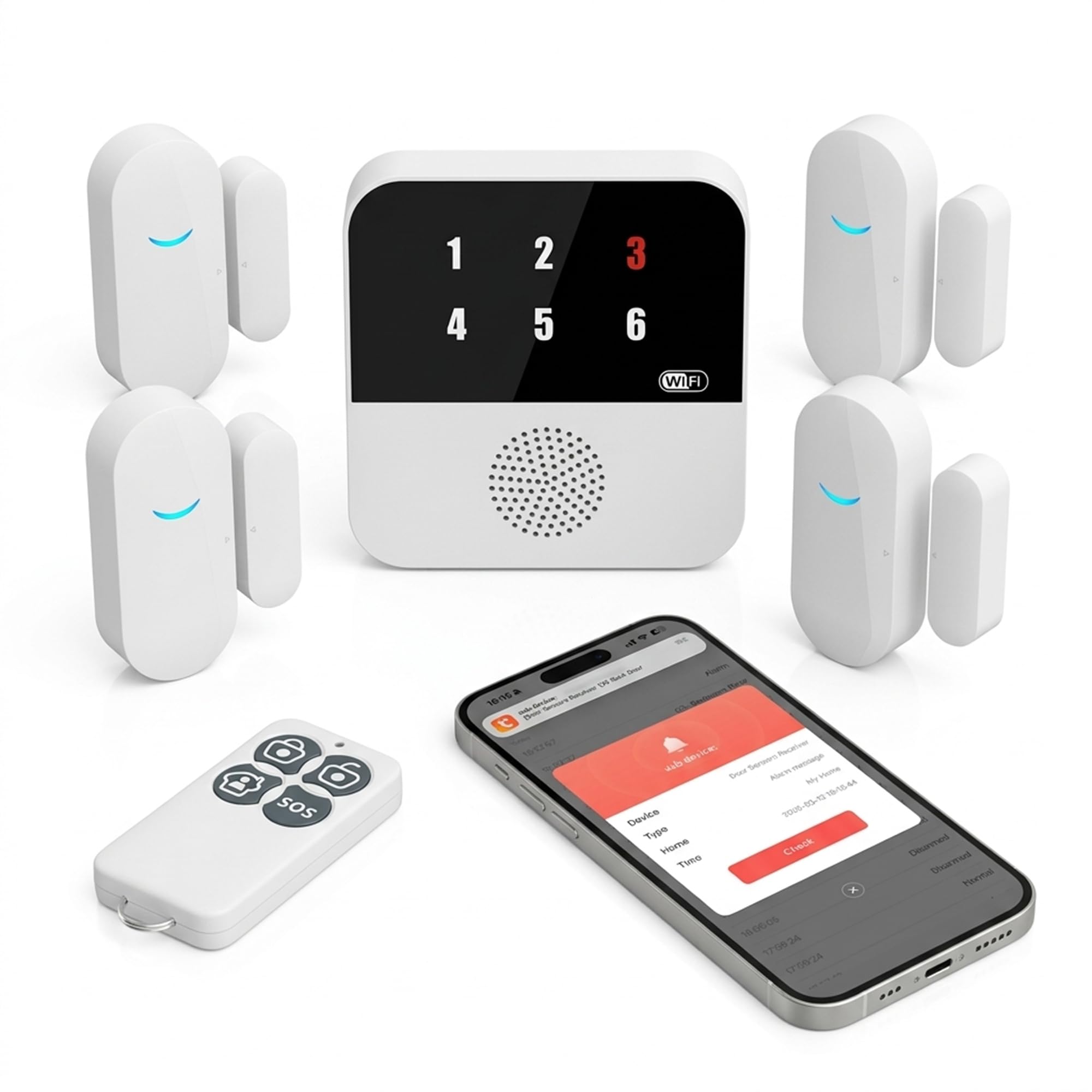
We recommend this system for caregivers who want door alerts at home and through an app without a required monthly fee.
Pros
- Identifies which of four doors opened
- Sends app alerts over 2.4GHz Wi-Fi
- Includes a remote and adjustable chime settings
Cons
- Requires careful sensor alignment
- App setup may be difficult for some users
- It does not support 5GHz Wi-Fi
We found the pre-paired sensors easy to place on doors and windows. The receiver showed a red number when a sensor triggered, which helped us identify the entry point without checking each door.
The system sends alerts to the app and supports family sharing. We could rename sensors, review activity history, set schedules, and choose from 18 chimes. Four volume levels, including mute, made it easier to use at different times of day.
The sensors need a gap of less than 0.4 inches, so installation requires accurate placement. The receiver uses USB power, while the sensors use included AAA batteries. We also noted that some users found the app and instructions confusing, so caregivers may need extra time during setup.
TECKNET Door Alarm 3-Pack

We recommend this set for seniors who want simple door or window alerts without a complicated setup.
Pros
- Easy peel-and-stick installation
- Chime and alarm modes with three volume levels
- Compact design and long warranty
Cons
- Needs a flat mounting surface
- Requires careful sensor alignment
- Adhesive may not suit every door or frame
We found the TECKNET alarms quick to install on standard doors and windows. The white units blend in well, and the magnetic sensor responds when the door moves beyond its small separation limit.
The chime mode gives a single alert, while the alarm mode continues sounding after the door opens. We liked having three volume choices because seniors can select a level that fits their hearing and living space.
The controls remain simple, but installation needs care. We had to keep the alarm and sensor close together and align them correctly. Raised molding or uneven frames may prevent a secure fit.
These alarms work well for front doors, bedrooms, cabinets, and other areas that need monitoring. They run on batteries, so we would check them regularly and keep replacements nearby.
SanJie Door and Window Alarms

We recommend these alarms for seniors who want a simple, low-cost way to know when a door or window opens.
Pros
- Loud alarm with a quieter chime option
- Simple adhesive installation
- Five sensors cover several entry points
Cons
- The alarm may sound too loud for some users
- Door trim can make alignment difficult
- Button batteries need eventual replacement
We found the adhesive setup quick and straightforward. Each sensor sticks to the door or window frame, so we did not need tools or wiring. The magnetic pieces must line up well, especially around uneven trim.
The 125-decibel setting provides a strong alert that should be easy to hear from nearby rooms. We preferred the chime mode for normal entry because it gives notice without the stress of the full alarm.
These sensors work well on doors, windows, drawers, and cabinets. The five-pack suits homes with several areas to monitor, although users should test the placement before relying on it for safety.
The alarms use three LR44 batteries and include a low-battery light. We would still check the batteries regularly, since battery performance can change with frequent use.
SanJie Wireless Door Chime
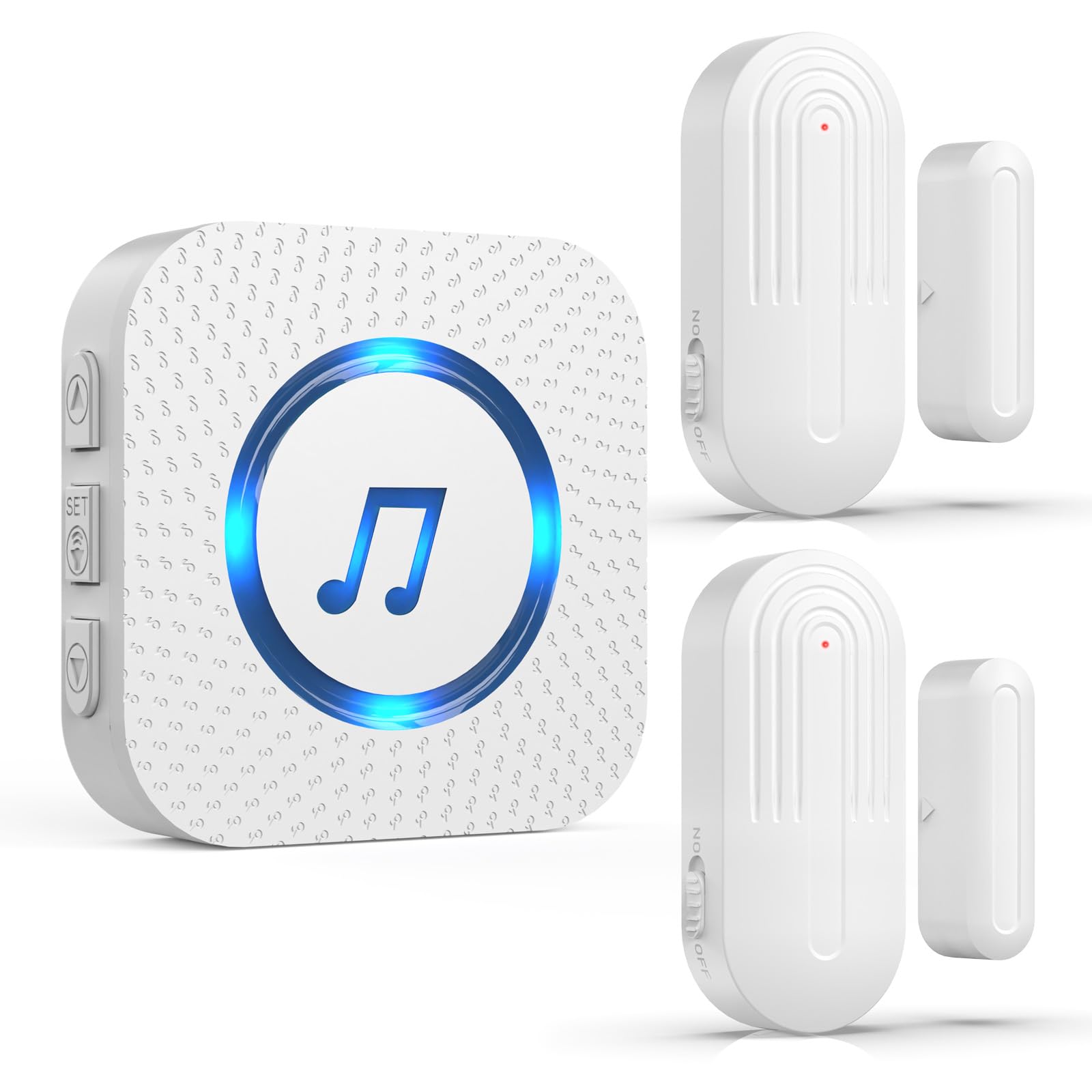
We recommend this door alarm for seniors who need a simple way to notice when someone opens a monitored door.
Pros
- Simple setup with pre-paired sensors
- Multiple chimes and adjustable volume
- Supports two sensors and a long wireless range
Cons
- The loudest setting may still sound quiet in another room
- Adhesive mounting may need extra support over time
- Many tone choices can take time to set up
We found the SanJie easy to install. We plugged in the receiver, attached the sensors to the door and frame, and tested the alert without dealing with complex wiring. The included batteries and adhesive make it useful for renters or families who want a quick setup.
The receiver offers several volume levels and 26 sounds. We could choose a gentle chime for normal use or a more noticeable alert when monitoring an older adult who might leave the home unexpectedly. Some users may find the sound less noticeable from a distant room, especially with background noise.
Its two sensors work well for covering separate doors, such as a front entrance and a bedroom door. We also like that each sensor can use a different tone, which helps us identify which door opened without checking the receiver.
The SanJie works best as an entry alert rather than a full emergency security system. Families should test the range, sound level, and sensor placement in the intended home before relying on it for senior monitoring.
SECRUI Wireless Door Chime

We recommend this door chime for seniors who need a simple alert when someone opens a door, with adjustable sound and visual signals.
Pros
- Simple setup with pre-paired sensor and receiver
- Adjustable volume, mute mode, and flashing light
- Long wireless range with support for added sensors
Cons
- Chime choices may feel less practical than a basic beep
- The sensor alerts when the door opens, not when it closes
- Long-term durability may vary
We mounted the sensor with the included adhesive and had it working quickly. The receiver plugged in without extra wiring, which makes this useful for older adults who may not want a complicated security system.
The sound played as soon as the door opened, and the volume range made it easy for us to choose a level that fit the room. When we muted the audio, the flashing light still provided a visual alert.
This model can cover several entry points if we add more sensors, such as one for a back door or bedroom. However, the single-sensor package may not cover a larger home by itself, and the alert only signals an opening event.
Satisure Wireless Door Chime
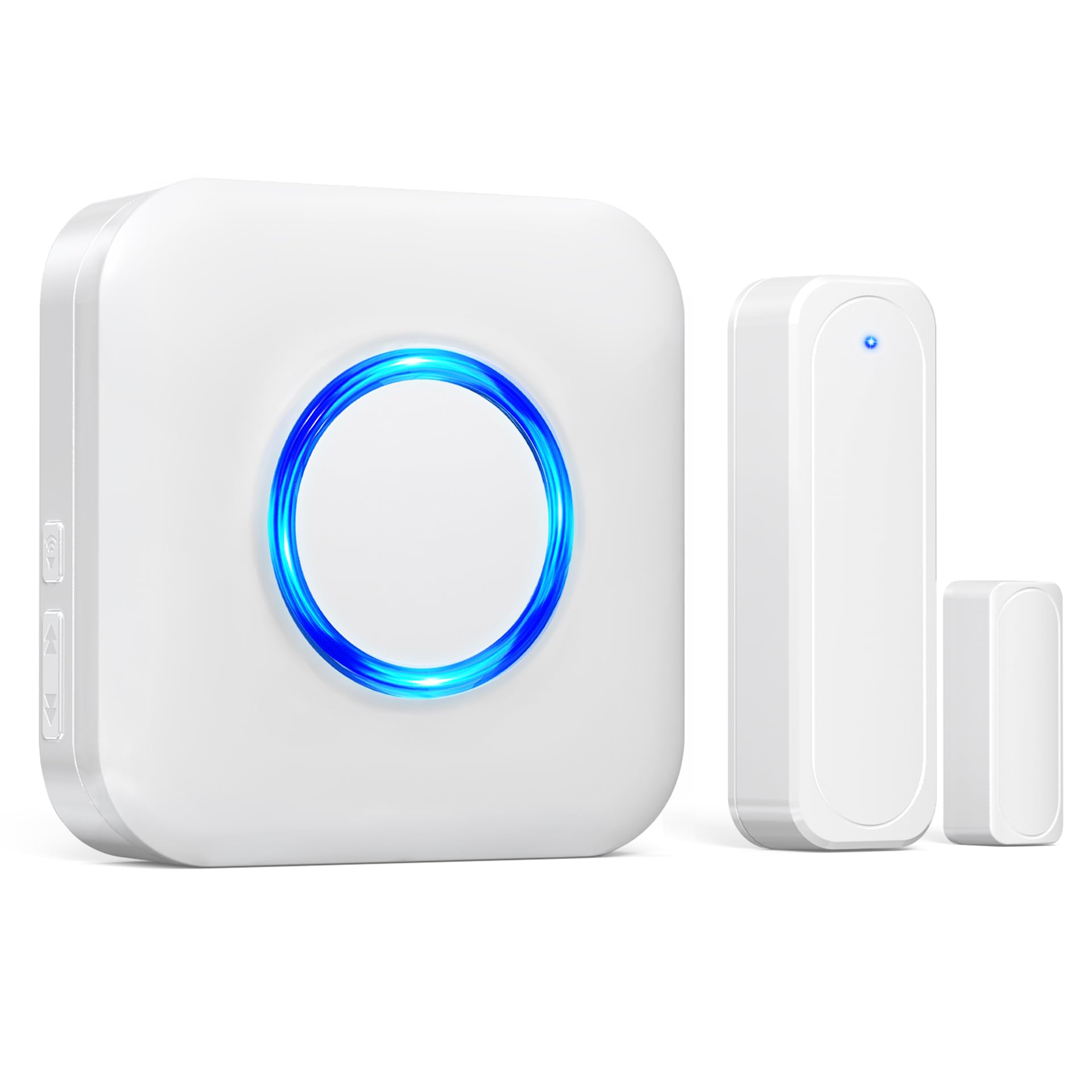
We recommend this door alarm for seniors because it installs quickly, offers clear alerts, and supports long-distance use around the home.
Pros
- Strong wireless range for larger homes
- Adjustable volume, melodies, and flashing alerts
- Simple setup with adhesive backing or screws
Cons
- The receiver lacks a clear power switch
- The basic kit includes only one sensor
- Loud settings may feel too strong for some users
We found the sensor easy to place on a door, window, or patio slider. The receiver and sensor arrived paired, so setup mainly involved plugging in the receiver and attaching the sensor.
The chime reached well across the home, including through several walls. We could choose a softer sound for daily use or raise the volume when we needed an alert from another room. The flashing light also helps people who have hearing loss.
With 58 sounds, we could assign different tones to different entrances when using extra sensors. That option may help caregivers identify which door opened without checking every room.
The main limitation is that the package includes one sensor. We also noticed that the receiver does not have a dedicated power switch, so turning off alerts requires unplugging it. Even so, the Satisure offers useful features and straightforward operation for its price.
SanJie Wireless Door Chime

We recommend this SanJie door chime for seniors who need clear alerts from several doors without installing a full security system.
Pros
- Supports multiple doors and receivers
- Offers adjustable volume and many tones
- Simple wireless setup with included batteries
Cons
- Sensors need close alignment to work reliably
- Some users reported early sensor failures
- The loudest setting may feel too harsh for sensitive hearing
We found the setup fairly quick. The included adhesive and screws gave us flexible mounting options, though each sensor and magnet needed careful placement. Wider door gaps or uneven trim may prevent a sensor from triggering.
The receiver provides several volume levels, including a very loud setting. We liked choosing different tones for different doors because it made each alert easier to identify. Seniors with hearing loss may appreciate the volume, while others may prefer a lower setting or mute mode.
With four sensors included, we could monitor multiple entrances, bedrooms, or other areas. The system also allows expansion, but some reviewers reported that individual sensors stopped working after a short time. We would test each unit soon after installation and keep the warranty information.
Nesthao Bed and Door Motion Alarm

We recommend this alarm for caregivers who need a wireless alert when a senior gets out of bed or leaves a room.
Pros
- Detects movement under a bed or near a doorway
- Sends alerts to a separate caregiver pager
- Offers adjustable volume and light alerts
Cons
- The sensor runs a 20-second self-test after startup
- It may need pairing again after being turned off
- Placement requires testing for reliable detection
We found the motion sensor easy to place under a bed or beside a door. It alerts the caregiver instead of sounding in the senior’s room, which can help avoid startling someone who may already have balance problems.
The pager provides five volume levels, so we could choose a setting that worked for daytime or nighttime use. Its light indicator also helped when we needed a visual alert. The wireless signal covers a long distance in open areas, although walls and other obstructions may reduce that range.
Unlike a floor pad, this sensor does not depend on someone stepping on a specific spot. We still had to test its position and direction carefully before securing it, since placement affects when the alarm activates.
The sensor uses AAA batteries and can also receive power through Micro USB. The pager uses AA batteries. We liked having two power options, but caregivers should remember to check the batteries regularly.
PILSAMAS Rechargeable Door Alarms
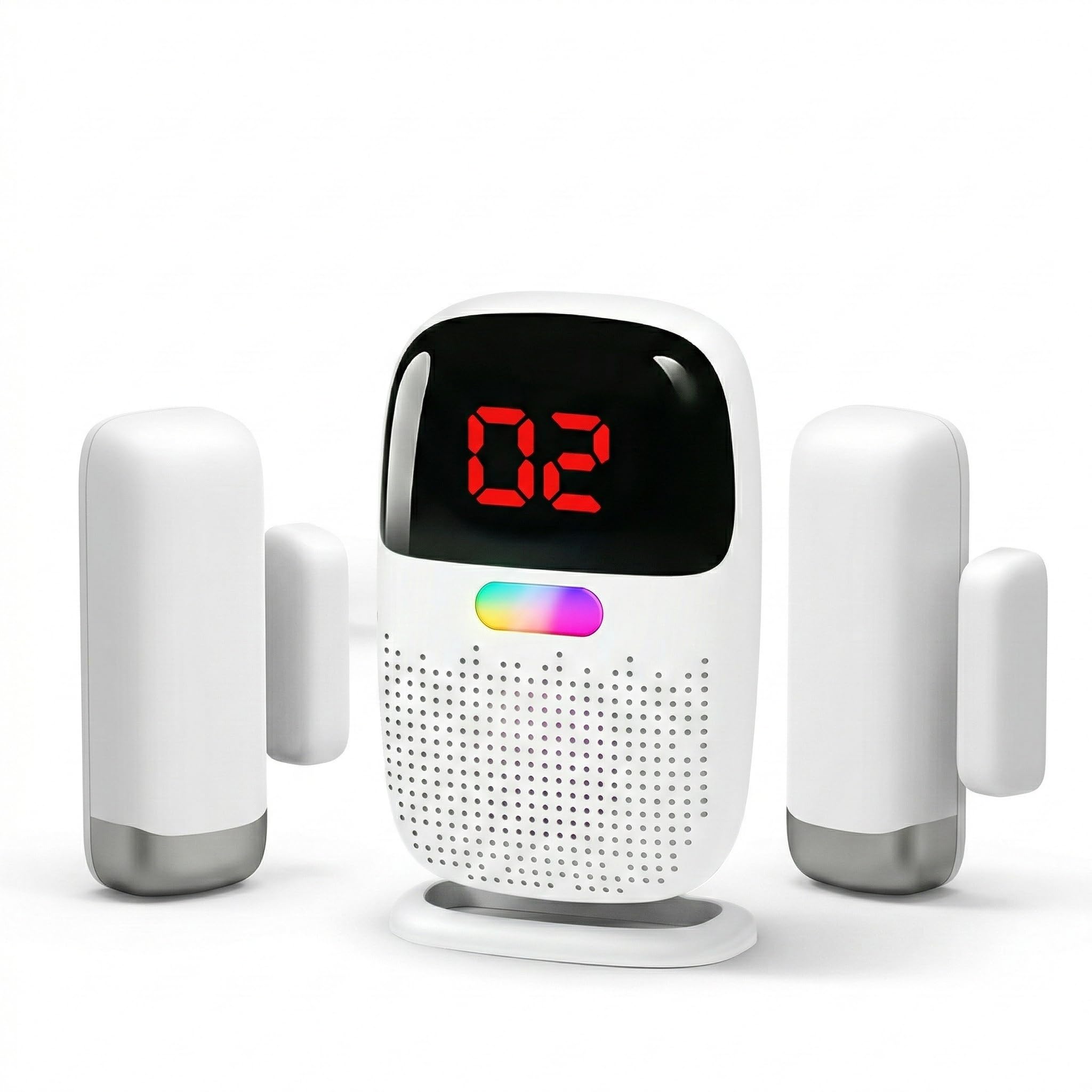
We recommend this system for caregivers who want portable alerts, flexible notification modes, and two sensors without monthly fees.
Pros
- Rechargeable receiver and sensors reduce battery changes.
- Vibration and sound options suit daytime or nighttime use.
- The receiver identifies which sensor triggered the alert.
Cons
- Pairing may fail for some users.
- Thick walls can reduce the stated range.
- Sensor placement may be difficult on unusual door frames.
We found the receiver easy to carry with its belt clip, and the recessed controls helped prevent accidental button presses. The LED sensor number made it easier to tell which door opened without checking each one.
The alert choices worked well for different situations. We could use a loud chime when quick attention mattered or select vibration when we wanted a quieter alert. The system also avoids cameras, microphones, and subscription fees, which supports privacy.
Setup was simple for standard door frames, and the adhesive pads held firmly in testing. However, some door layouts may need extra care during installation. We also recommend walking through the home after setup because walls and building materials can affect the wireless signal.
Most feedback is positive, but a few users reported pairing or chime problems. We would test both sensors and the receiver before relying on this alarm for overnight supervision.
Buying Guide
We should choose a door alarm based on the senior’s needs, home layout, and comfort with technology. A simple design with clear controls can reduce confusion and make daily use easier.
| Feature | What we should look for |
|---|---|
| Alarm volume | A sound level that the user can hear without causing discomfort |
| Ease of use | Large buttons, simple controls, and clear instructions |
| Power source | Long battery life, low-battery alerts, or easy access to a power outlet |
| Alert options | Sound, flashing lights, or phone alerts, based on hearing and mobility needs |
| Installation | Tool-free mounting or strong adhesive for renters and caregivers |
| Range | A signal range that covers the distance between the door and the receiver |
| Safety features | A manual shutoff, tamper alert, or delay setting when appropriate |
We should check whether the alarm fits the door and frame before buying. The sensor and magnet must align correctly when the door closes, and the mounting surface should support the chosen installation method.
We should also consider who will respond to an alert. A local alarm may suit someone who can act independently, while a connected alert may help caregivers monitor a distant room. We should review privacy settings, subscription costs, and return policies before choosing a connected model.
Editor’s Choice
We choose the GE Personal Security Window and Door Alarm as our top pick for most seniors. It has a simple peel-and-stick setup, a loud alarm, and an on/off switch that does not require a phone or app.
The alarm uses a magnetic sensor. When someone opens the door or window, the sensor separates and sounds the alarm. Seniors can test it easily and replace the battery when needed.
| Feature | Details |
|---|---|
| Best for | Simple home entry alerts |
| Setup | Peel-and-stick installation |
| Controls | On/off switch |
| Power | Replaceable battery |
| Main benefit | Easy operation without an app |
We recommend placing the alarm where the senior can reach the switch but cannot turn it off by accident. Users should also test the alarm each month and check that the adhesive remains secure.
This model does not provide remote alerts or emergency response services. We would choose a smart alarm instead when family members need notifications on their phones.
Conclusion
We should choose a door alarm based on the senior’s needs, home layout, and comfort with technology. A simple magnetic alarm may suit someone who wants basic entry alerts, while a smart alarm can offer phone notifications and activity records.
We should also consider volume, ease of use, battery life, and installation. Large buttons, clear controls, and adjustable settings can make daily use easier.
Before buying, we can check whether the alarm supports the needed doors and works during power or internet outages. Testing the alarm regularly helps us confirm that it remains ready when needed.
FAQs
What type of door alarm works best for seniors?
We usually recommend an alarm with a loud chime, simple controls, and large buttons. A model with adjustable volume can help users hear alerts without causing unnecessary noise.
Can door alarms work without Wi-Fi?
Yes. Many basic alarms use batteries and work without Wi-Fi or a phone app. We can choose these models when reliable internet access is not available.
Are door alarms easy to install?
Most attach with adhesive strips or screws. We should place the sensor on the door frame and the magnet on the door, following the product instructions.
What features should we look for?
We should check for:
- Loud or adjustable alerts
- Low-battery warnings
- Simple arming and disarming
- Long battery life
- Emergency contact or phone alerts
- A remote control, if needed
Can a door alarm prevent falls or wandering?
A door alarm cannot prevent these risks by itself. It can alert us when someone opens a door, giving caregivers time to respond.
How can we reduce false alarms?
We should install the sensor securely, keep the door aligned, and test the alarm after installation. We should also replace weak batteries promptly.
Where should we place the alarm?
We should place it on doors that lead outside, into garages, or toward unsafe areas. We should avoid locations where household activity may trigger frequent alerts.
