
10 Best Walkers 2026: Top Rollators for Stability and Comfort


Voice Assistant Smart Speaker

Non-Slip Slippers

Easy Grip Knife Set
A walker can change what a person’s day looks like. For someone recovering from surgery, managing arthritis, or simply feeling less steady on their feet, the right mobility aid restores confidence to do ordinary things: walk to the mailbox, browse a grocery store, or sit through a family gathering without pain. Choosing among rollators, standard walkers, and upright designs means understanding how each style handles different terrain, storage needs, and body types.
Rollators (walkers with wheels) roll continuously and often include a seat, making them well suited to longer outings or anyone who tires easily. Standard folding walkers without wheels or with just two front wheels tend to suit tighter indoor spaces where a compact frame matters more than a resting seat. Upright walkers, a newer category, let users stand fully straight with forearm support instead of hunching over hand grips, which can ease back and shoulder strain.
Weight capacity, wheel size, seat dimensions, and folded profile all deserve attention before buying. A heavier frame usually means better stability but a harder lift into a car trunk. Bigger wheels roll more smoothly over grass, gravel, and curbs, while smaller wheels keep the unit lighter and more nimble indoors. Matching the walker’s width and turning radius to the narrowest doorway or hallway at home prevents a frustrating return. We tested and compared nine models to see how they perform across these everyday demands.
Best for everyday stability: Drive Medical Rollator Walker with Seat
Best for lightweight budget use: Medline Steel Rollator Walker with Seat
Best for all-terrain outings: VOCIC Z21 Rollator Walker
Best for larger seat comfort: HOMLAND Foldable Rollator Walker
Best for tight doorways and hallways: Vive Mobility Lightweight Walker
Best for posture and back support: Helavo Upright Walker with Seat
Best for maximum portability: byACRE Carbon Ultralight Rollator Walker
Best for compact indoor navigation: HOMLAND Foldable 3 Wheel Walker
Best for rugged outdoor terrain: RollisRoll 12″ All Terrain Rollator
Drive Medical Rollator Walker with Seat

This is the walker to buy if steady, no-surprises daily support matters more than fancy features.
Pros
- Steel frame feels solid on carpet, wood floors, and sidewalks
- Padded seat and fold-down backrest add real resting comfort
- Height adjusts to fit a range of users
Cons
- At 20 pounds, it’s heavier to lift into a trunk than newer designs
- 7.5-inch wheels struggle more on gravel or grass than larger-wheeled options
Long-time buyers keep coming back to this model, and it shows in how many households already own one. The under-seat pouch holds a phone or wallet without adding bulk, and the hand brakes lock securely enough to trust when transferring to the seat. Assembly takes only a few minutes according to repeat buyers.
Anyone shopping mainly for outdoor trail use or a featherweight fold should look elsewhere. This one is built for stability first.
Medline Steel Rollator Walker with Seat
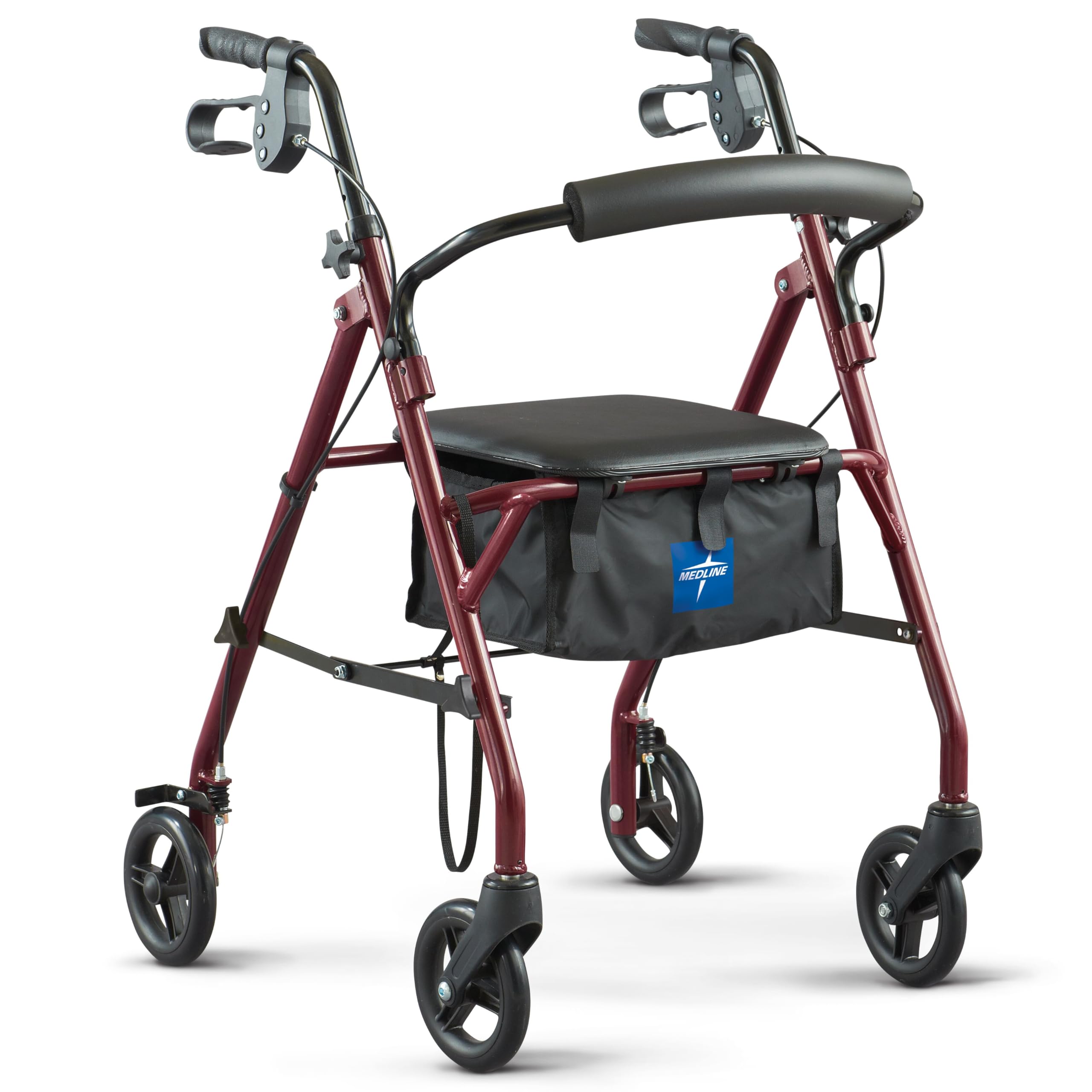
This rollator suits shoppers who want a trusted hospital-grade brand at a lower weight and price point.
Pros
- Lighter frame than many steel rollators, easier to lift and carry
- Simple push-up/push-down brake handles are easy to learn
- Comes from a manufacturer widely used in clinical settings
Cons
- 6-inch wheels handle smooth indoor floors better than rough outdoor paths
- Some buyers report hand grips installed backward out of the box
The seat and backrest padding hold up well over repeated daily use, and the under-seat storage fits more than expected. Folding down for car trips or closet storage takes just a step or two once assembled correctly.
This model fits best as a home and errand-running walker rather than a rugged outdoor companion. Buyers heading over uneven terrain regularly will want bigger wheels.
VOCIC Z21 Rollator Walker

Shoppers who split time between indoor floors and bumpy sidewalks will appreciate this rollator’s larger wheels and three-mode brakes.
Pros
- 8-inch puncture-proof tires roll smoothly over cracks and curbs
- Dual height adjustment covers both handle and seat level
- Reflective strips add visibility for evening walks
Cons
- At roughly 22 pounds, it’s on the heavier side for lifting
- A few buyers reported weld issues after extended use
The bionic seat shape and breathable backrest stand out for anyone who sits frequently during outings, including theme park visits and long errands. The 3-second fold collapses it to a size that fits most car trunks.
Shoppers prioritizing the lightest possible frame for frequent lifting may find better options elsewhere, but for all-terrain stability this rollator performs well.
HOMLAND Foldable Rollator Walker
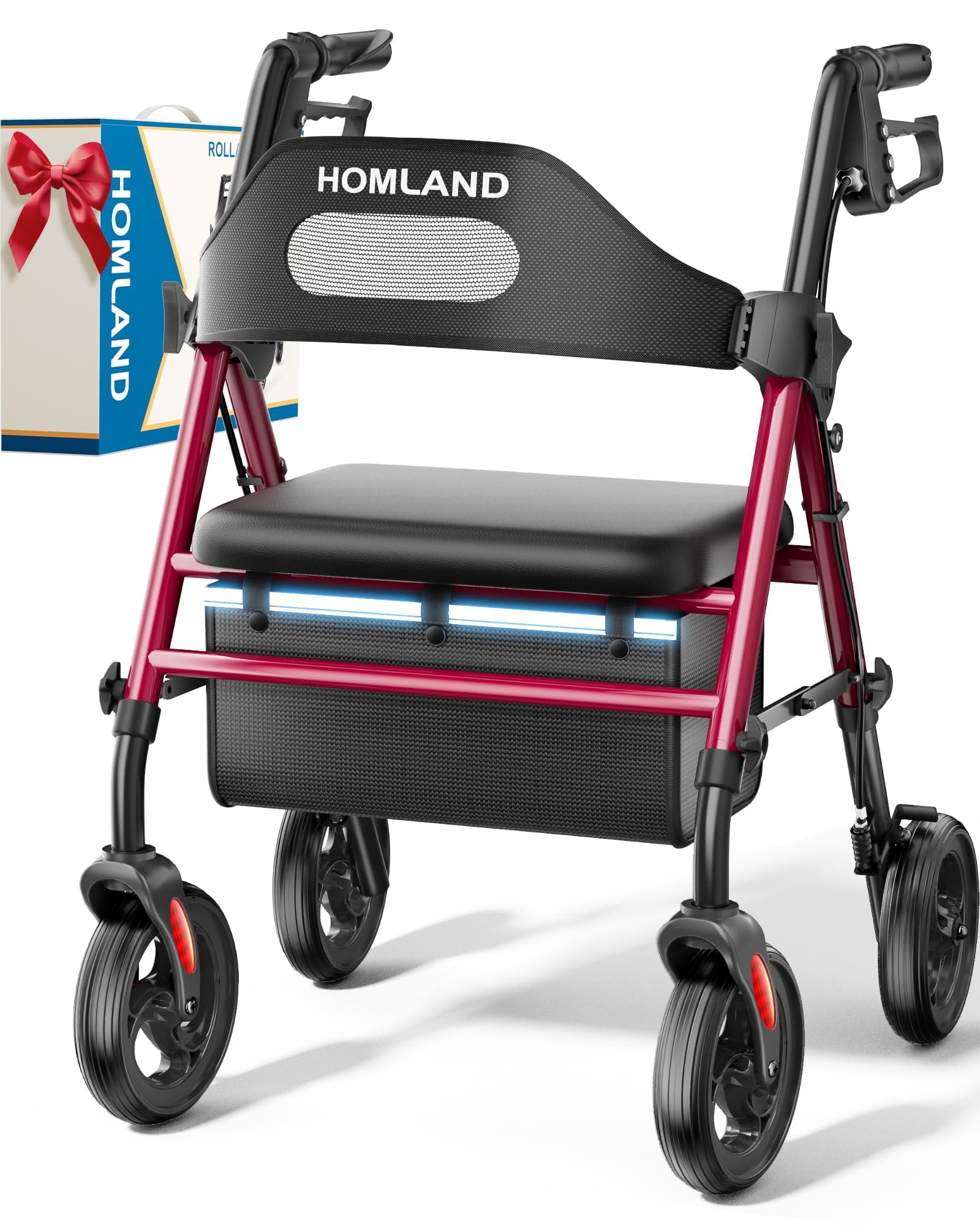
This rollator earns its spot for the extra-large 16×12-inch seat, ideal for anyone who needs frequent, comfortable rest breaks.
Pros
- Seat and cushion are noticeably larger than standard rollator seats
- Handle height adjusts widely, fitting shorter and taller users alike
- Pinch-proof folding mechanism reduces the risk of finger injury
Cons
- 20.4 pounds makes it a bit of a lift for frail users
- A few buyers noted loose handlebar hardware needing adjustment
The breathable backrest and 8-inch wheels combine for a comfortable ride over mixed terrain, and the three-mode brake system (free, deceleration, stop) gives finer control than simple locking brakes. Assembly instructions include color photos, which several buyers called out as genuinely helpful.
Buyers with narrow home layouts should measure doorways first. This wide seat comes with a wider frame overall.
Vive Mobility Lightweight Walker
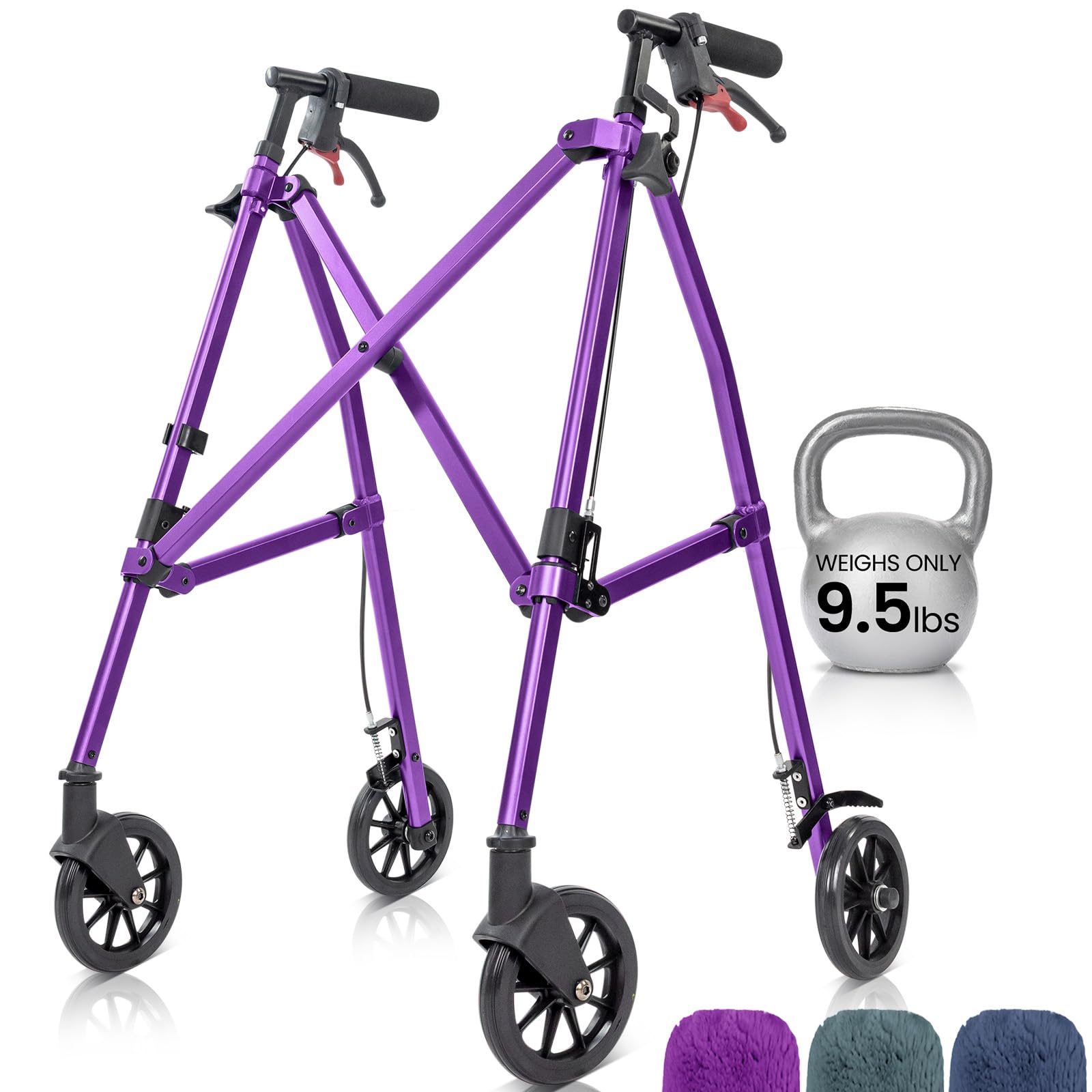
This narrow-frame walker is built for tight hallways, small apartments, and anyone who needs to slip through doorways without a wide turning radius.
Pros
- Weighs under 10 pounds, among the lightest with wheels on this list
- Open-frame design allows a natural walking stride
- One-step fold with a locking mechanism for secure storage
Cons
- No seat, so it isn’t suited to users who need frequent rest stops
- Lower weight capacity than most other rollators on this list
Buyers repeatedly mention how easily it fits into car back seats and tight store aisles, a genuine advantage for anyone doing quick errands rather than long outings. The height-adjustable handles and grip brakes keep it functional despite the minimalist frame.
Anyone who needs a seat for regular rest breaks, or who carries more than 300 pounds, should consider a sturdier rollator instead.
Helavo Upright Walker with Seat

This upright walker is the pick for anyone whose back or shoulder pain worsens when leaning forward over standard hand grips.
Pros
- Padded armrests let users stand fully upright instead of hunching
- 10-inch rubber wheels absorb bumps well outdoors
- Cup holder and cane holder add everyday convenience
Cons
- At nearly 23 pounds, it’s heavier and bulkier to fold and store
- Taller users near the max height range report less adjustment headroom
Reviewers with spinal issues, hip replacements, and shoulder surgeries describe real relief walking upright rather than bent over a standard rollator. The seat and backrest provide a legitimate rest spot for those needing to pause mid-walk.
Shoppers who need the lightest, most portable option or the narrowest frame for tight spaces should look toward a standard rollator instead.
byACRE Carbon Ultralight Rollator Walker

This carbon-fiber rollator is built for travelers and active users who want the lightest possible frame without sacrificing a seat.
Pros
- Weighs about 10.6 pounds, remarkably light for a rollator with a seat
- Arrives fully assembled with no tools required
- Available in several colors and styles for a less clinical look
Cons
- Priced well above the other rollators in this roundup
- No published weight capacity listed by the manufacturer
Owners who travel frequently praise how easily it folds into a slim profile for planes, trains, and car trunks. One reviewer swapped from a competing carbon rollator specifically because this one folds thinner and sits lower.
This model fits budget-conscious buyers poorly. For daily use at home without much travel, a heavier steel rollator delivers similar stability for less money.
HOMLAND Foldable 3 Wheel Walker
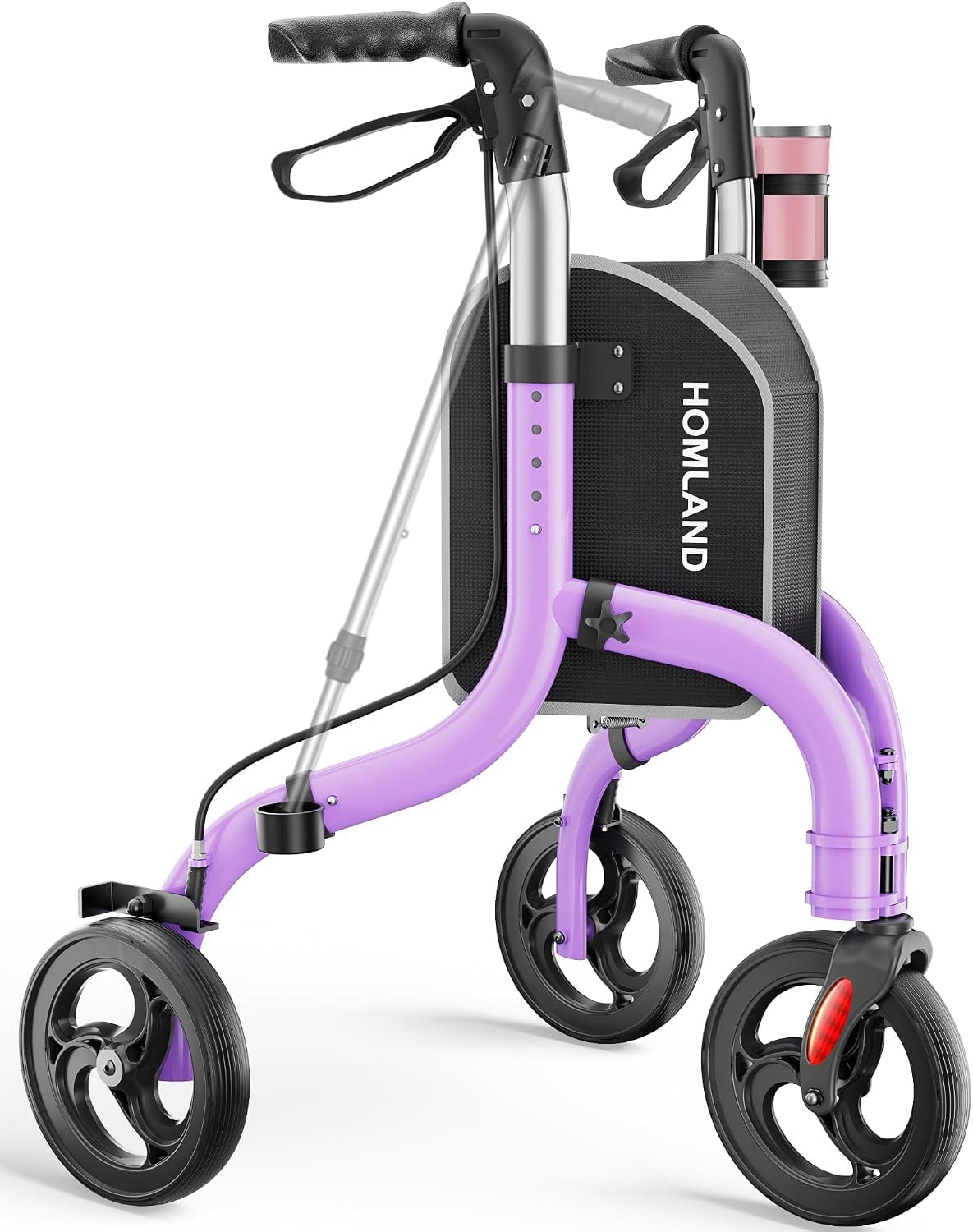
This three-wheel walker threads through narrow apartment layouts and store aisles better than bulkier four-wheel rollators.
Pros
- Compact three-wheel design turns easily in tight spaces
- Weighs just 10.4 pounds, simple to lift into a car
- Cane holder and cup holder add practical daily convenience
Cons
- No seat, so extended outings require a rest elsewhere
- Lower 260-pound weight capacity limits who can safely use it
Buyers keeping one in the car as a backup to a bulkier rollator mention how much easier it is to deploy for quick stops. Several reviewers note it feels less stable on uneven ground than four-wheel designs, so this suits mostly flat, predictable environments.
Anyone needing a seat, higher capacity, or serious outdoor stability should choose a four-wheel rollator instead.
RollisRoll 12″ All Terrain Rollator
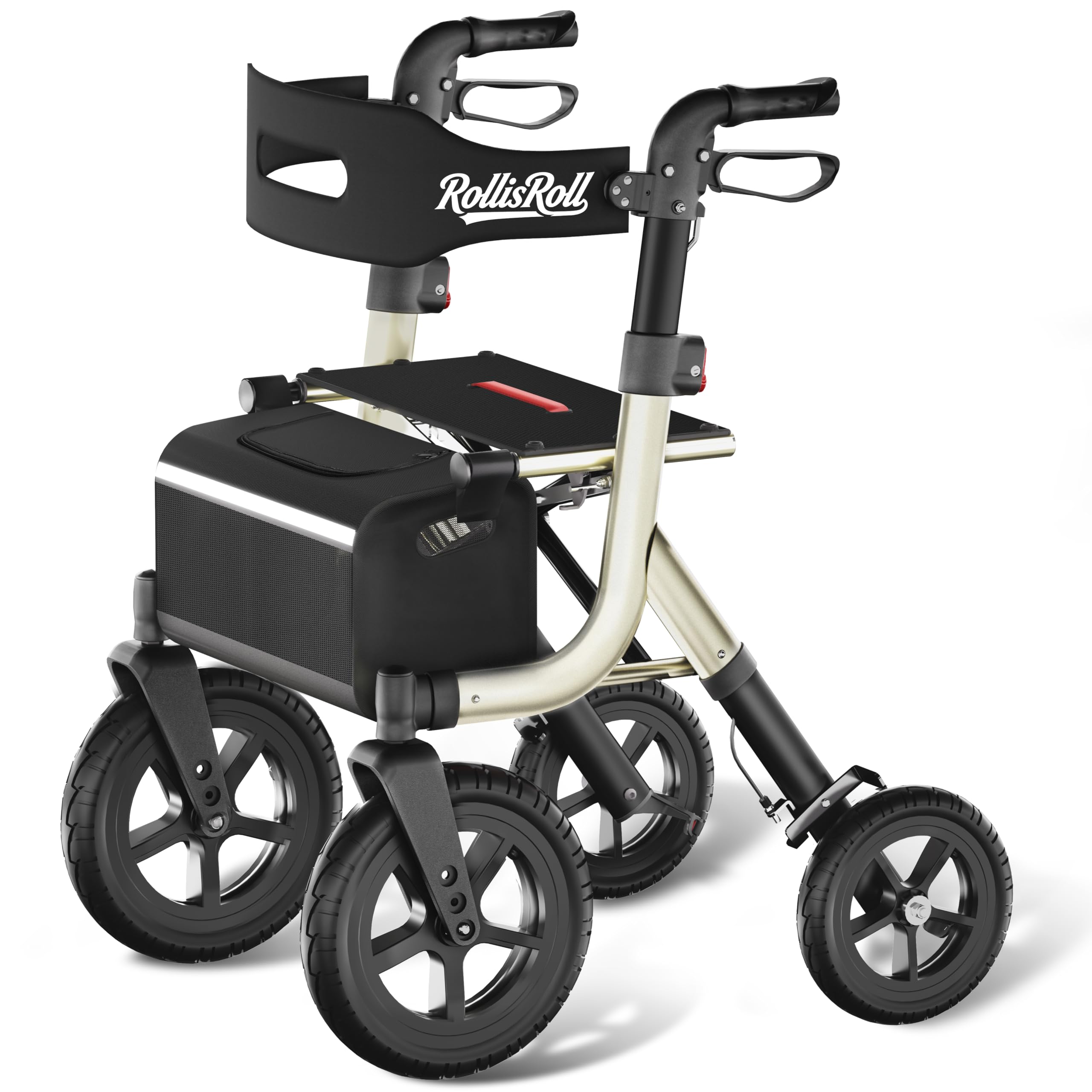
This is the rollator to choose for gravel paths, uneven yards, and anyone who wants the largest wheels on this list.
Pros
- 12-inch front wheels and 10-inch rear wheels handle rough terrain confidently
- Built-in brake cable keeps lines tidy and reduces tripping hazards
- Wide breathable backrest adds real support for longer walks
Cons
- At 19.2 pounds, it’s still a moderate lift for frailer users
- Some buyers found the seat smaller than expected relative to the frame
A caregiver who has spent decades in the home medical equipment field gave this one high marks after months of real use, a notable endorsement in a crowded category. The reinforced aluminum frame and 23.8-inch width also fit through most standard doorways.
Shoppers focused purely on lightweight portability, or who don’t need rugged wheels, may find this model larger than necessary for indoor-only use.
Buying Guide
Frame Type and Stability
Standard rollators with four wheels and a seat suit most users who need a stable, all-purpose walker for home and errands. Three-wheel walkers turn more easily in tight spaces but sacrifice some stability on rough ground. Upright walkers support a straighter posture, which helps users with back or shoulder pain but adds bulk and weight.
Wheel Size
Wheel size determines how well a walker handles different surfaces.
| Wheel Size | Best For | Trade-off |
|---|---|---|
| 6 inches | Smooth indoor floors | Struggles on gravel, grass, curbs |
| 7.5-8 inches | Mixed indoor/outdoor use | Balanced but not ideal for rough trails |
| 10-12 inches | Outdoor, uneven terrain | Adds weight and bulk |
Seat Size and Comfort
A seat matters most for anyone who tires easily or needs to rest mid-outing. Look at seat width and depth, not just presence of a seat, since dimensions vary widely between models. Padding thickness and backrest design affect how comfortable extended sitting feels.
Weight Capacity
Weight capacity ranges from around 260 pounds on lightweight three-wheel models up to 350 pounds on heavier-duty steel rollators. Confirm the stated capacity fits the user’s needs with margin, since a walker rated at the exact limit offers less confidence in daily use.
Folded Size and Portability
A walker’s folded dimensions determine whether it fits easily into a car trunk, closet, or under a bed. Lighter frames, particularly aluminum and carbon fiber, lift more easily but often cost more. Heavier steel frames tend to feel more stable but require more effort to lift and store.
Adjustability
Handle height should match the user’s wrist crease when standing with arms relaxed at the sides. Many rollators adjust across a five- or six-inch range, while some upright walkers and rollators also allow seat height adjustment for a more custom fit.
Brakes and Safety Features
Loop or lever hand brakes should be easy to squeeze for users with arthritis or limited grip strength. Locking brakes that hold the walker stationary during transfers add an important layer of safety when sitting down or standing up.
Editor’s Choice
The Drive Medical Rollator Walker with Seat stands out as the strongest all-around choice for most households. Its steel frame, adjustable height, and padded seat cover the needs of daily indoor and outdoor use without asking the buyer to compromise on stability.
For shoppers who travel often or struggle to lift a heavier frame, the byACRE Carbon Ultralight Rollator Walker earns a clear recommendation despite its higher price. Its featherweight carbon frame and no-assembly setup solve a problem that heavier rollators simply can’t address.
Anyone managing back or shoulder pain should look closely at the Helavo Upright Walker with Seat. Standing fully upright while walking changes the experience entirely for users who find standard rollators uncomfortable to lean over.
Conclusion
The right walker depends on where and how someone plans to use it most. Steel rollators like the Drive Medical and Medline options serve daily indoor and neighborhood use reliably, while models with 8-inch or larger wheels, like the VOCIC, HOMLAND, and RollisRoll rollators, handle uneven outdoor terrain with more confidence.
Buyers dealing with tight hallways or frequent car transport should weigh the Vive Mobility walker or HOMLAND 3-wheel model against their need for a seat. Those managing back pain or wanting the lightest possible frame have strong dedicated options in the Helavo upright walker and the byACRE carbon rollator.
Measuring doorways, checking weight capacity against the user’s needs, and testing brake grip strength before buying prevents most common regrets. A walker that fits daily routines well becomes an extension of independence rather than a burden to manage.
FAQS
What’s the difference between a rollator and a standard walker? A rollator has wheels on all its legs and typically includes a seat, allowing continuous walking without lifting. A standard walker may have no wheels or only front wheels, requiring more lifting but offering more stability for users who need to lean on it directly.
How do I choose the right handle height? Stand up straight with arms relaxed at the sides. The top of the walker’s handles should line up with the crease of the wrist. Most rollators adjust across several inches to accommodate different heights.
Are heavier walkers more stable? Heavier steel frames often feel sturdier underfoot, but stability also depends on wheelbase width and wheel size. A well-designed lightweight aluminum or carbon frame can still offer solid stability for users under the rated weight capacity.
Can I use a rollator on grass or gravel? Rollators with wheels of 8 inches or larger handle grass, gravel, and uneven sidewalks more comfortably than models with 6-inch wheels. Smaller wheels are better suited to smooth indoor flooring.
Do all rollators fold for storage? Most rollators fold, but folded dimensions vary significantly. Checking folded width, height, and depth against a car trunk or closet space before buying avoids storage surprises.
Is an upright walker right for everyone? Upright walkers help users with back, shoulder, or hand strain by allowing a straighter posture, but they tend to weigh more and cost more than standard rollators. Users who don’t have posture-related pain may not need the added bulk.