
10 Best Door Alarms 2026: Top Picks for Home Security


Book Holder Stand

Motion Sensor Night Lights

Arthritis Gloves
A door alarm can add a simple layer of security to a home, apartment, office, or hotel room. These devices use a sensor to detect when a door opens, then sound a siren or send an alert to a phone. Some models also work as entry chimes, which can help you monitor children, pets, or visitors.
The best door alarms are easy to install, reliable, and loud enough for the space. When choosing one, we pay close attention to sensor range, alarm volume, battery life, mounting method, and smart features such as app alerts. We tested and researched door alarms to find the models that provide dependable protection without adding unnecessary setup or expense.
Best Door Alarms 2026
We reviewed door alarms for sound level, ease of setup, sensor range, battery life, and overall value. Our list features the best options for improving home security, monitoring entry points, and alerting us when a door opens.
UltraPro 6-Pack Door and Window Alarms
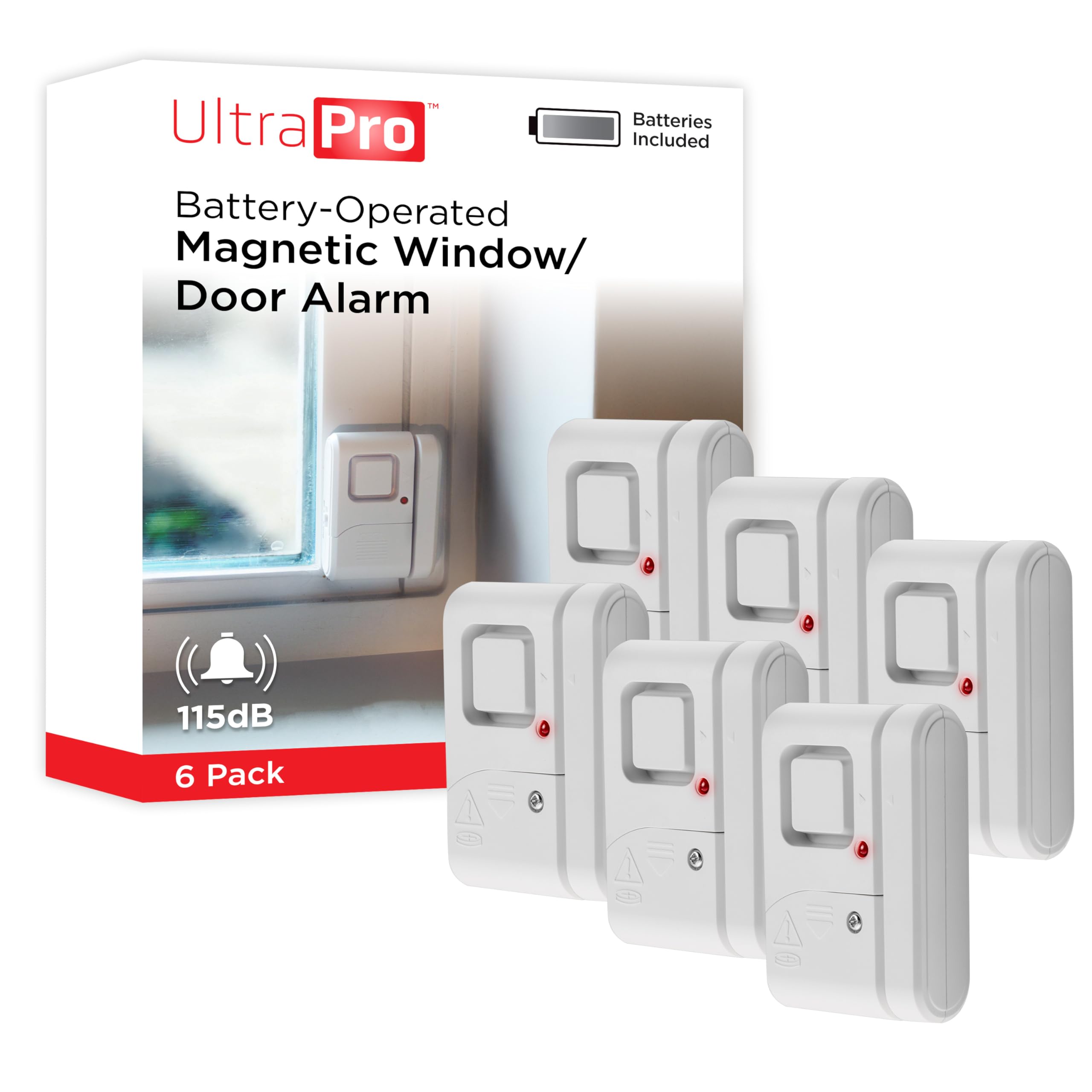
We recommend this pack for simple, low-cost alerts across several doors, windows, cabinets, or drawers.
Pros
- Loud alarm with a selectable chime mode
- Six units cover multiple entry points
- Fast, wireless installation with no monthly fees
Cons
- Double-sided tape may not hold well on every surface
- Indoor use only
- Battery access requires a small Phillips screwdriver
We found the alarms easy to mount with the included adhesive. Each sensor activates when the alarm separates from its magnet, so we could place them on common entry points without wiring or an app.
The chime worked well for daily awareness, while the alarm offered a much louder warning. We could hear it clearly from another room, though the volume may feel excessive in smaller spaces.
Six alarms provide useful coverage for a house, apartment, office, or RV. We would also consider them for cabinets and drawers where children or wandering family members may need extra monitoring.
The battery indicator helps us track power, but replacing the small batteries takes a screwdriver. We would clean and dry the mounting surface first because weak adhesion could cause a sensor to fall.
Tolviviov WiFi Door Alarm Kit

We recommend this kit for households that want several door sensors, app alerts, and voice control without a monthly subscription.
Pros
- Easy, tool-free setup
- App, remote, and voice controls
- Supports extra sensors
Cons
- Requires a 2.4GHz WiFi network
- Base station needs AC power
- Some users report false alarms
We found the sensors simple to install with the included adhesive backing. The five door and window sensors gave us useful coverage for common entry points, while the two remotes made basic arm and disarm controls convenient.
The alarm sounded loud enough for nearby rooms, and the app provided alerts when a sensor triggered. We also liked the option to use Alexa or Google Assistant for home, away, and disarmed modes.
The system works only with 2.4GHz WiFi, so we needed to check our network before setup. The base station must stay connected to power, with its battery serving only as a short emergency backup.
User feedback is generally positive, though several reviews mention false alarms or inconsistent behavior. Support may also feel limited if troubleshooting requires help beyond the setup instructions.
Philips 4-Pack Door and Window Alarms
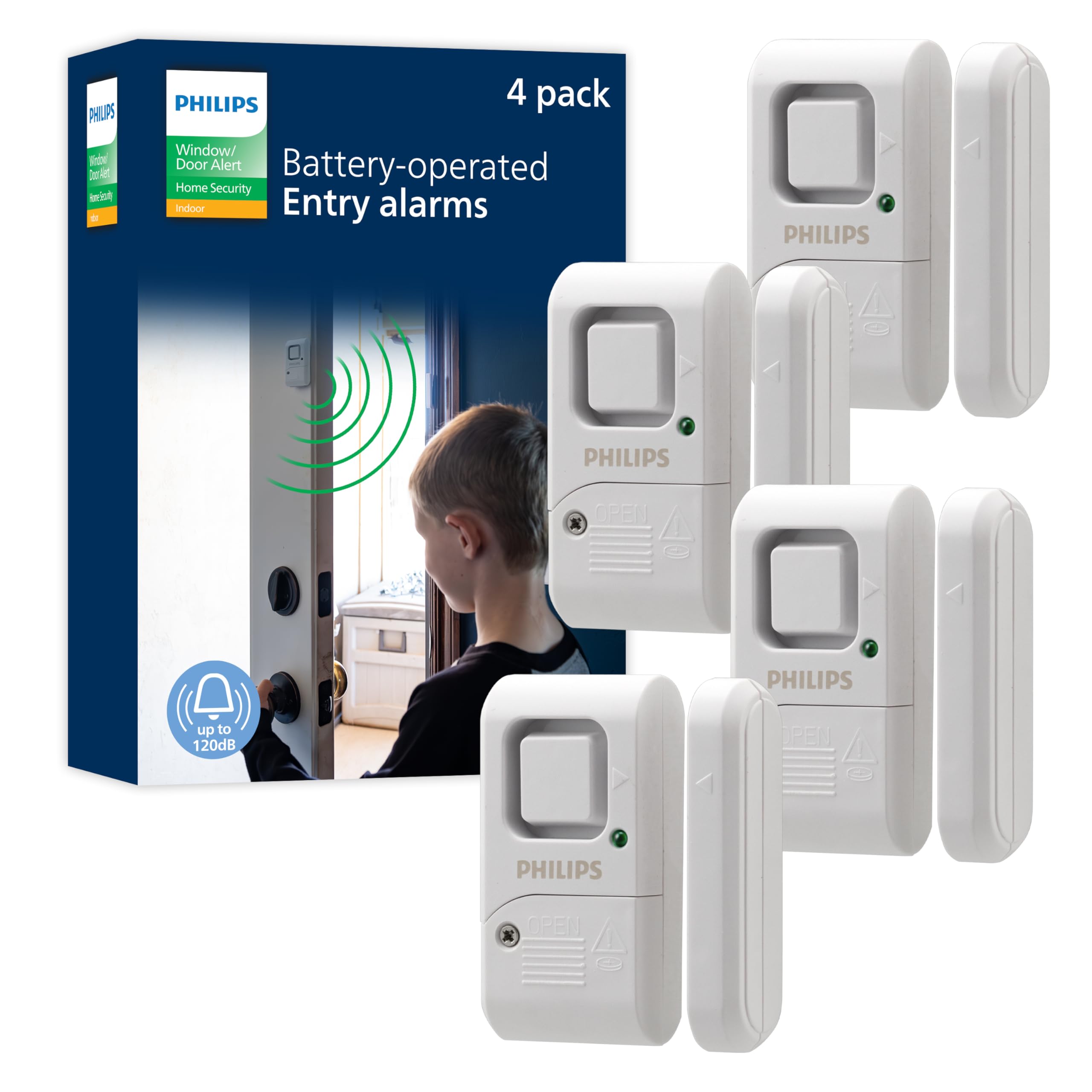
We recommend this affordable four-pack for simple, loud alerts on doors and windows without wiring or a monthly fee.
Pros
- Loud alarm and useful chime mode
- Quick adhesive installation
- Four alarms provide broad coverage
Cons
- Tape may need extra surface preparation
- The alarm can sound harsh in small rooms
- Button batteries require periodic replacement
We installed these compact alarms on several doors and windows using the included mounting tape. The process took only a few minutes, and the magnetic sensors aligned easily when we kept the two pieces close together.
The alarm is very loud, which helps us hear an opened door from another room. We also found the chime mode useful for everyday awareness, while the side switch made it simple to turn the units off when needed.
The adhesive worked best on clean, smooth surfaces. We would prepare the area with rubbing alcohol first and use stronger removable mounting material if the surface felt dusty or uneven.
Each unit includes a test button and a low-battery indicator. These alarms do not replace a full security system, but they offer a practical extra layer of coverage for homes, apartments, garages, dorms, and offices.
TECKNET Six-Pack Door Alarms

We recommend this pack for households that want simple door and window alerts with adjustable volume and easy setup.
Pros
- Simple peel-and-stick installation
- Chime and alarm modes
- Three volume levels
Cons
- Needs a flat mounting surface
- Adhesive placement requires care
- Batteries may need occasional replacement
We found the alarms quick to install on clean, flat surfaces. The compact white units blend well with many doors and windows, while the magnetic sensor triggers when the door opens far enough.
The chime mode works well for knowing when someone enters, without using a constant alarm. When we needed a stronger warning, the alarm mode continued sounding until we turned it off.
Volume control adds useful flexibility. We could keep the sound lower in a bedroom or raise it for a garage, shed, or larger home. The six-pack also makes it practical to cover several entry points at once.
Placement matters. Doors with molding or uneven trim may not provide enough room for the sensor, so we would check the surface before applying the adhesive. We would also keep spare batteries available for reliable use.
SanJie Wireless Door Chime
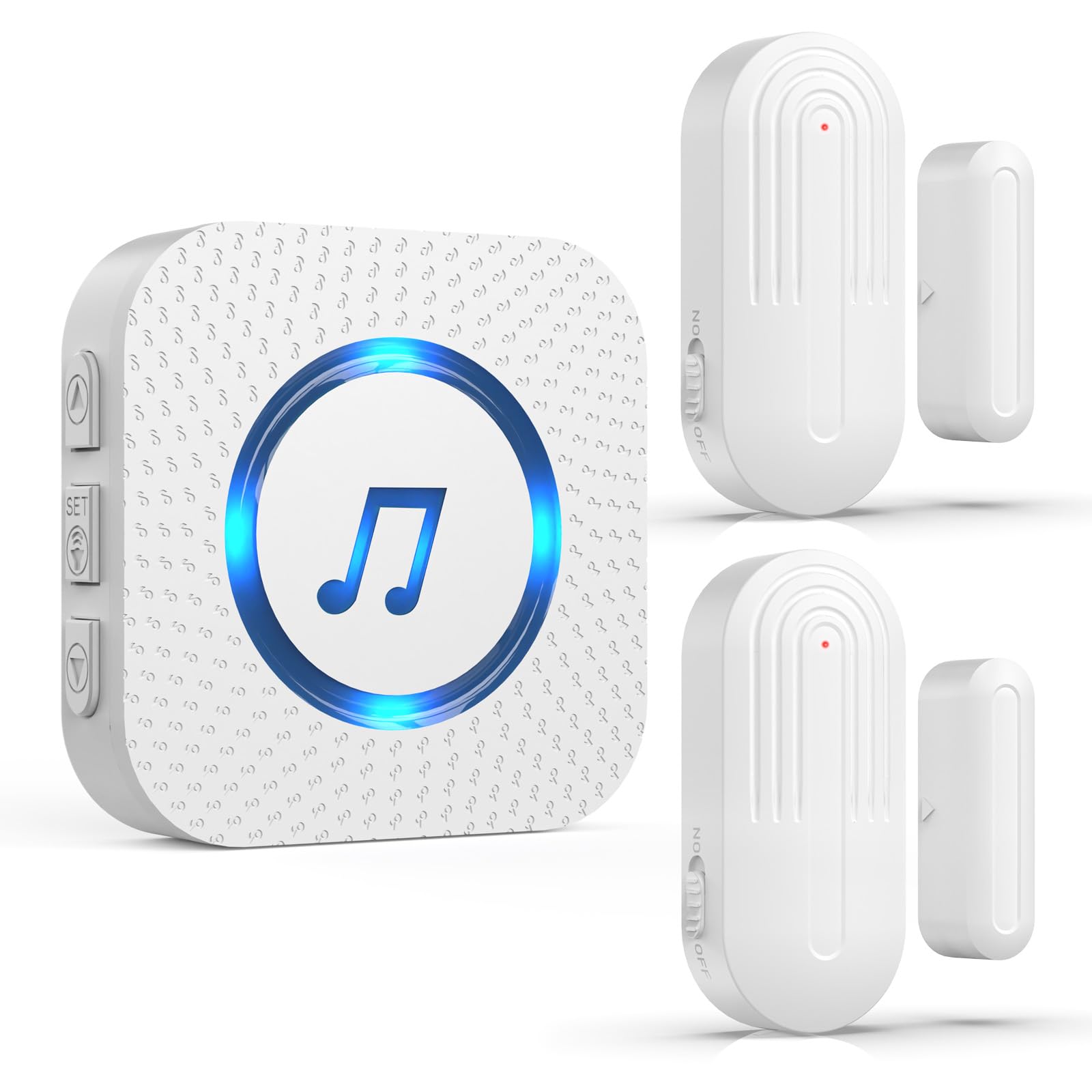
We recommend this door alarm for homes or small businesses that need a simple alert when someone opens a door.
Pros
- Simple setup with pre-paired sensors
- Adjustable volume and 26 chime sounds
- Supports multiple sensors and covers large areas
Cons
- The loudest setting may not carry through several rooms
- Adhesive mounting may not suit every surface
- It alerts with a chime rather than a dedicated security siren
We found the SanJie easy to install. We plugged in the receiver, attached the magnetic sensors with the included tape, and tested each door. The sensors responded quickly during normal use.
The range gives us flexibility for larger homes, shops, or offices. We can also connect extra sensors and use different sounds to identify which door opened.
The chime selection adds useful variety, while the mute option helps when we do not need sound. Some users may find the maximum volume too quiet from another room, so placement matters.
This model works well for monitoring children, older adults, customers entering a store, or frequently used doors. It offers helpful notifications, but buyers seeking a strong security siren may prefer a dedicated alarm system.
STI-6400 Exit Stopper Door Alarm

We recommend this alarm for emergency and rear doors because it installs easily, offers several alarm settings, and gives a clear warning when the door opens.
Pros
- Very loud alarm that quickly draws attention
- Key override allows authorized exits
- Durable, highly visible housing
Cons
- More suitable for commercial spaces than homes
- Requires manual battery checks
- Setup controls take time to understand
We found the STI-6400 compact but surprisingly loud. Its stop-sign design also makes the unit easy to notice, which may discourage people from opening a protected door without permission.
Installation was straightforward with the included contact sensor and battery. We could set the alarm for a short alert, a longer warning, continuous sound, or a series of beeps. That flexibility helps us match the alarm to different doors and security needs.
The key override worked well for authorized users. It silenced the alarm and allowed the door to open without causing a prolonged disturbance. We would still read the instructions carefully before changing the internal settings.
This model fits schools, offices, churches, restaurants, and other buildings with emergency exits. Its loud siren may be excessive for a quiet home, but its durable housing and long warranty make it a practical choice for busy commercial areas.
WimuPath Door and Window Alarms

We recommend this 15-pack for simple, low-cost alerts on doors, windows, and other entry points.
Pros
- Simple adhesive installation
- Loud alarm helps draw attention
- Useful for homes, offices, and care settings
Cons
- Batteries are not included
- Adhesive may not hold on every surface
- Some units can feel difficult to open or close
We found these alarms easy to set up because they use a basic magnetic contact. We placed the two pieces near each other on a door and window, then switched the alarm on. The adhesive made installation quick without tools.
The alarm is loud enough to hear from nearby rooms. It also reminded us to switch it off before opening a protected door or window. That makes it useful for entry alerts and for helping monitor children, older adults, or rooms that should stay closed.
The main weakness is the adhesive. We found that placement and surface condition mattered, and some users reported that units fell off doors. The alarms also need four AAA batteries each, which adds to the setup cost. For a large home or facility, the multi-pack offers useful coverage, but we would test each unit after installation.
EMDMAK Door Stop Alarm

We recommend this two-pack for travelers and home users who want a simple door wedge with a very loud alarm.
Pros
- Loud siren that quickly grabs attention
- No installation required
- Adjustable sensitivity and dual use as a door stop
Cons
- Battery is not included
- May slide on smooth floors
- High sensitivity can cause false alarms
We placed the EMDMAK behind an inward-opening door and found setup quick. The rubber base held well on carpet, but smooth floors may need a mat or extra grip. The wedge fits doors with different floor gaps through its adjustable settings.
The alarm produces a sharp, attention-getting sound. We preferred the medium setting because the high setting sometimes triggered too easily. The low setting may suit users who want fewer false alerts.
Its compact shape makes it practical for hotel rooms, bedrooms, and travel bags. It also works as a regular door stop when the alarm is switched off. Keep a spare 9V battery available because the package does not include one.
METAK D130 5-Pack Door Alarms
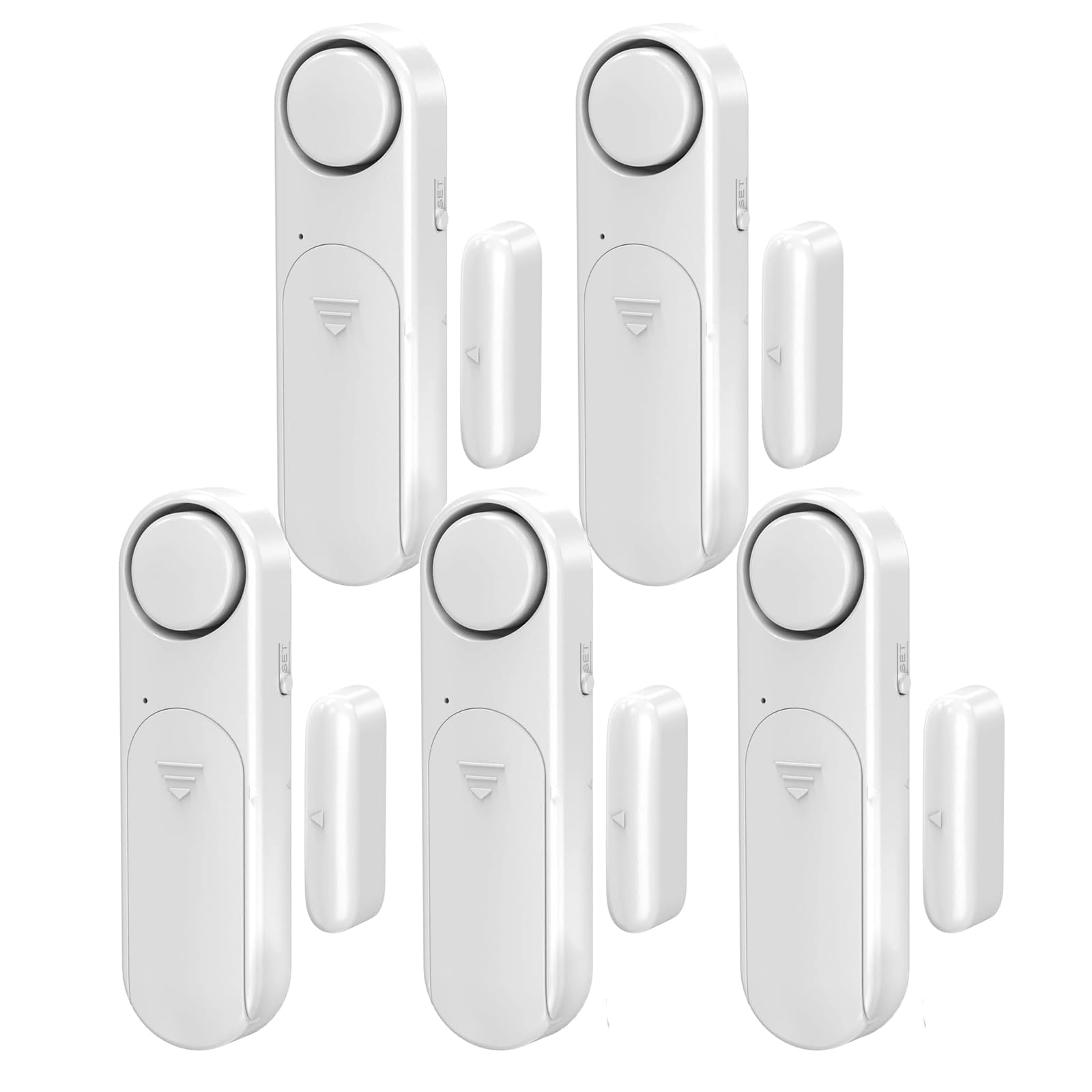
We recommend this five-pack for covering several doors or windows with a loud, simple alarm and easy adhesive installation.
Pros
- Loud 90 or 120dB alarm
- Quick, tool-free setup
- Useful for doors, windows, and child safety
Cons
- Batteries are not included
- No remote control support
- The alarm may be too loud for some rooms
We found the METAK D130 easy to place because the adhesive backing avoids drilling and wiring. Its slim design sits neatly on doors and windows, while the white finish blends into many frames.
After opening a protected door, the alarm produces a sharp sound that quickly draws attention. We could also choose between 90dB and 120dB, which helped us use a lower setting in quieter areas.
The five sensors work well for covering several entry points, a garage, or rooms that need extra monitoring. We also liked the flashing red light, which shows when the alarm triggers or when the batteries need replacement.
The main limitation is control. This model does not work with a remote, so we had to use the button on each alarm. Since it uses two AAA batteries per unit and the pack does not include them, we needed to have batteries ready before installation.
SECRUI Door Open Alarm

We recommend this alarm for homes, care settings, and small businesses that need a simple door-opening alert without complicated setup.
Pros
- Quick installation with included tape and screws
- Many chime choices with adjustable volume
- Strong wireless coverage for larger spaces
Cons
- The chime selection lacks a basic “ding” sound
- The receiver needs a nearby power outlet
- Some users report reliability issues after extended use
We found the sensor easy to install because it arrived paired with the plug-in receiver. The adhesive worked well on a clean surface, while the included screws offered a more secure option for a busy entryway.
The receiver gives us several ways to notice an opening. We could choose from 58 sounds, adjust the volume, or mute the audio while keeping the LED light active. The lower settings worked better in bedrooms and care areas, while louder settings helped in shops and larger homes.
Its wireless range gives us flexibility when placing the sensor and receiver in separate rooms. We could also add sensors for more entry points, although this starter package includes only one sensor.
The main drawback involves the sound choices. Many options are melodies rather than short alerts, so finding a simple tone may take time. We also noted that the system does not send phone notifications, making it better suited to local alerts than remote monitoring.
Buying Guide
We should start by choosing the alarm type that fits our door and daily routine. Contact alarms detect when a door opens, while vibration alarms can react to force or tampering. Some models combine both functions.
Look for these key features:
- Sound level: Choose an alarm that is loud enough for the space without creating a nuisance.
- Arming controls: A simple keypad, remote, or app can make daily use easier.
- Power source: Check battery type, battery life, and any low-battery warning.
- Installation: Adhesive mounting offers a tool-free setup, while screws may provide a firmer fit.
- Smart features: Notifications, activity logs, and connections to other devices can add useful control.
- Access controls: Some alarms include entry or exit delays, temporary codes, or a mute option.
We should check whether the alarm works with the door’s material, frame, and opening direction. The sensor and magnet usually need close alignment, so uneven surfaces or wide gaps may affect performance.
| Need | Feature to prioritize |
|---|---|
| Basic entry alert | Contact sensor and loud siren |
| Remote monitoring | App alerts and internet connection |
| Temporary protection | Easy installation and removal |
| Shared access | Multiple codes or user controls |
| Low maintenance | Long battery life and low-battery alerts |
We should also review privacy settings, app requirements, return terms, and warranty coverage before buying. A product with only the features we will use can reduce setup time and ongoing maintenance.
Editor’s Choice
We chose the SimpliSafe Entry Sensor as our editor’s pick for 2026. It offers quick installation, reliable alerts, and broad compatibility with SimpliSafe home security systems. The compact design fits most doors and windows without adding much visual clutter.
We like its simple setup. Users attach the sensor and magnet to the door and connect it through the SimpliSafe app. The system can send alerts when the door opens, while optional monitoring plans add professional security support.
| Feature | Details |
|---|---|
| Installation | Wireless, peel-and-stick setup |
| Alerts | App notifications and system alarms |
| Best for | Homeowners and renters |
| Smart home support | Works within the SimpliSafe system |
The sensor works best for people who want more than a standalone siren. It requires a SimpliSafe base station, so buyers should include that cost when comparing options.
For a basic alarm without subscriptions or a full security system, we would consider the GE Personal Security Window and Door Alarm. It uses a loud local siren and needs no app, hub, or monthly plan.
Conclusion
We can choose a door alarm based on our security needs, home layout, and budget. Simple contact alarms suit renters and small spaces, while smart alarms offer app alerts, automation, and integration with other devices.
We should check each alarm’s sound level, battery life, installation method, and alert options before buying. A model with strong adhesive, reliable sensors, and easy controls can provide useful protection without adding daily hassle.
For homes with children, pets, or several entry points, we may need alarms with adjustable settings or multiple sensors. We should also test the alarm after installation and replace batteries when needed.
The best door alarm for us will fit our routine and cover the doors we need to protect. A practical choice can add another layer of awareness to our home security system.
FAQs
What is the best door alarm for most homes?
We recommend a wireless contact alarm with a loud siren, tamper alerts, and a reliable mobile app. Battery status notifications also help us avoid unexpected gaps in protection.
Do door alarms work without Wi-Fi?
Yes. Basic alarms use a local siren and do not need Wi-Fi. Smart models may require Wi-Fi for phone alerts, remote control, and activity logs, while some use cellular backup.
Can we install a door alarm without tools?
Many alarms attach with adhesive strips, so we can install them without drilling. We should clean and dry the surface first, then test the alarm after mounting it.
How loud should a door alarm be?
A siren rated at about 100 decibels or more can alert people nearby. We should check the product’s tested rating because volume claims can vary between brands.
Will a door alarm work on sliding doors?
Some models work with sliding doors, but we need to confirm that the sensor and magnet align when the door closes. Specialized vibration or motion sensors may suit certain sliding-door designs better.
How do we prevent false alarms?
We should place the sensor on a stable surface, align its parts correctly, and keep the alarm away from strong heat or moisture. Regular battery checks also support reliable operation.
| Feature | Why it matters |
|---|---|
| Loud siren | Alerts people nearby |
| App notifications | Sends remote warnings |
| Tamper alert | Reports sensor removal |
| Low-battery warning | Helps prevent downtime |