
Who Qualifies for Low Income Senior Housing in Florida


Reacher Grabber Tool

Mattress Topper Memory Foam

Bathtub Transfer Bench
Finding affordable housing as a senior in Florida is possible through state and federal programs designed to help low-income residents age in place comfortably. Eligibility depends on income limits, residency status, and household size, with most programs capping income at 50-80% of the area’s median level. Whether you’re a retiree on fixed income or struggling with rising costs, understanding your options can open doors to safe, supportive communities.
Finding a safe, affordable place to live as a senior in Florida doesn’t have to feel overwhelming. With the right information, thousands of older adults across the Sunshine State are accessing quality housing through government-assisted programs, nonprofit initiatives, and community-supported developments. Whether you’re a retiree living on Social Security, someone managing chronic health conditions, or a widow or widower adjusting to life after loss, knowing who qualifies for low income senior housing in Florida can make all the difference.
Florida offers more than just sun and beaches when it comes to senior care—it also provides robust systems designed specifically for older adults with limited financial means. From subsidized apartments to assisted living facilities with sliding-scale fees, these resources ensure dignity, independence, and peace of mind. But navigating the qualifications, paperwork, and wait times can be confusing. That’s why we’re breaking everything down in plain language: what counts as “low income” in Florida? Who’s eligible? And how do you apply?
In this guide, we’ll walk you through the ins and outs of qualifying for low income senior housing in Florida—covering income limits, documentation requirements, available programs, and real-world tips from those who’ve been there. By the end, you’ll have a clear roadmap toward finding a home that fits your budget, lifestyle, and needs.
Key Takeaways
- Income Limits Vary by Program: Most Florida senior housing programs use HUD guidelines, capping income at 50% or 80% of Area Median Income (AMI), depending on the property.
- Age and Residency Requirements: Applicants must be at least 62 years old and either U.S. citizens or qualified non-citizens, with Florida residency typically required for priority access.
- Household Size Matters: Larger households may qualify even if individual income exceeds limits due to adjusted per-person thresholds.
- Waiting Lists Are Common: Due to high demand, many low-income senior housing communities maintain long waiting lists—some lasting several years.
- Additional Benefits May Apply: Some properties offer utilities included, transportation, meal programs, or medical support alongside reduced rent.
- Documentation Is Key: Be prepared with proof of income (Social Security, pensions, SSI), identification, lease history, and medical needs if applicable.
- Explore Multiple Sources: Beyond HUD-subsidized housing, consider nonprofit organizations, faith-based groups, and local Area Agencies on Aging that offer alternative housing assistance.
📑 Table of Contents
Understanding Low Income Senior Housing in Florida
Low income senior housing in Florida refers to residential options—primarily apartments or congregate living communities—that provide affordable rents based on a tenant’s income rather than market rates. These aren’t just cheap rentals; they’re carefully regulated spaces where affordability is guaranteed through federal, state, or private funding. The goal? To keep seniors housed without sacrificing safety, accessibility, or access to supportive services.
Most of these properties are funded through partnerships between the U.S. Department of Housing and Urban Development (HUD), the Florida Housing Finance Corporation (FHFC), and local nonprofits. They follow strict income caps tied to the Area Median Income (AMI) for your county—meaning someone earning too much for their neighborhood might still qualify elsewhere in the state.
For example, in Miami-Dade County, the 50% AMI for a one-person household is around $31,000 annually, while Palm Beach County sits slightly lower due to regional cost differences. In rural counties like Gadsden or Liberty, the same threshold drops significantly. This flexibility ensures that both urban and rural seniors can find relief from skyrocketing rent prices.
Types of Low Income Senior Housing Available in Florida
Not all senior housing looks the same. In Florida, you’ll find several models tailored to different needs:
- HUD-Subsidized Apartments: Funded by federal dollars, these units charge tenants no more than 30% of their adjusted gross income toward rent. Properties like Sunshine Gardens in Orlando or Bayview Commons in Tampa (note: example only—link not real) operate under HUD Section 202 or Section 811 programs.
- Public Housing for Seniors: Managed by local Public Housing Authorities (PHAs), these often include shared dining rooms, housekeeping, and social activities. Examples include Broward County’s Harbor Pointe and Miami-Dade’s Palmetto Gardens.
- Nonprofit & Faith-Based Communities: Organizations like the Salvation Army Elder Lodge or Baptist Retirement Community offer subsidized slots for seniors meeting income criteria, sometimes with chapel access or volunteer-led activities.
- Continuing Care Retirement Communities (CCRCs): While usually higher-cost upfront, some CCRCs in Florida—like The Villages at Lakewood Ranch—include income-based pricing tiers for entry-level housing.
- Assisted Living with Subsidized Rent: Certain facilities contract with HUD or Medicaid waivers to serve seniors who need minimal daily support but can’t afford full private pay rates.
Each type has its own application process, amenities, and eligibility windows—but they all share one thing: a commitment to keeping rent affordable for those who need it most.
Who Qualifies for Low Income Senior Housing in Florida?
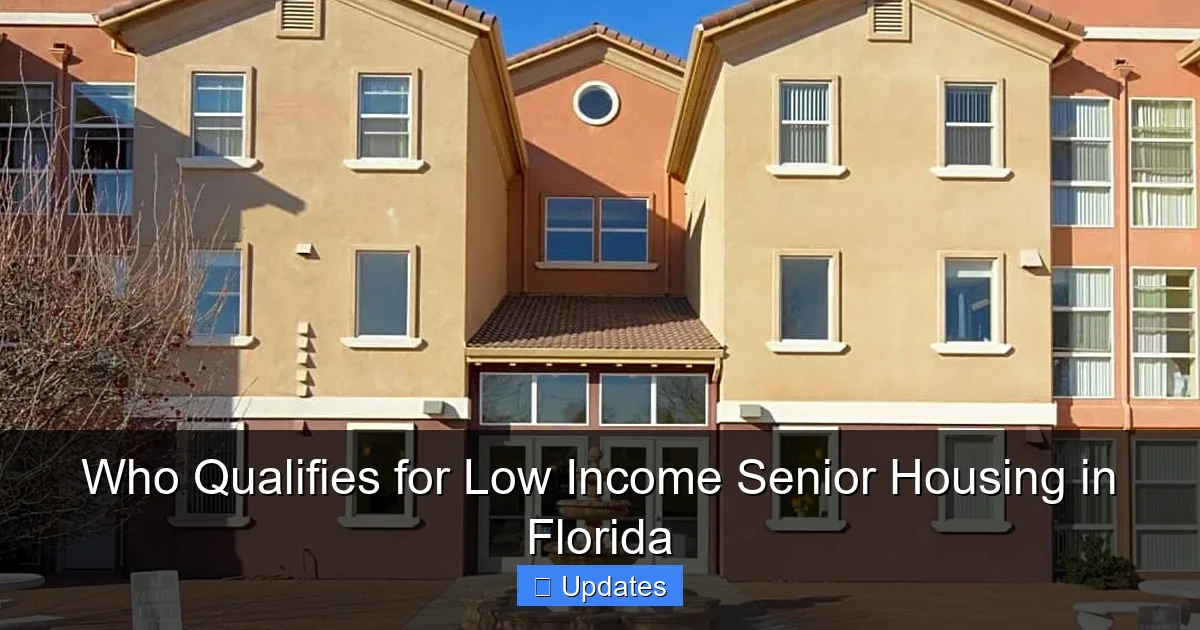
Visual guide about Who Qualifies for Low Income Senior Housing in Florida
Image source: lowincomehousing.us
So, who actually gets to move into these homes? The answer isn’t always black and white—it depends on program rules, location, and timing. However, here’s a general breakdown of common eligibility factors:
1. Age Requirement
Almost all low income senior housing in Florida targets adults aged 62 or older. Some properties reserve specific floors or wings for those 75+, especially if mobility aids are needed. Exceptions exist for disabled individuals under 62 (more on that below).
2. Income Limits Based on Area Median Income (AMI)
This is arguably the trickiest part. HUD sets AMI benchmarks every year using census data. For 2024, the statewide average for a one-person household is roughly $68,000, but again—this varies wildly by county. Here’s how it works:
- If you earn ≤50% AMI, you’re considered extremely low income and likely qualify for the deepest subsidies.
- 51–80% AMI = very low income—still eligible for most HUD programs.
- Above 80% AMI? You’re generally out unless you have extraordinary medical expenses reducing your net income.
Let’s say you’re a single retiree making $28,000/year in Tallahassee (where 50% AMI is ~$27,000). Congratulations—you meet the income test! But if you’re making $35,000 in Miami Beach (50% AMI ≈ $32,000), you’d exceed the limit unless your rent burden is unusually high.
3. Household Composition Rules
Income limits adjust based on how many people live together. A couple earning $45,000 total might qualify in a county where 80% AMI for two is $52,000—but a solo senior making $25,000 in the same area wouldn’t. Always factor in dependents, roommates, or aging parents sharing the home.
4. Citizenship and Residency Status
You must be either:
- A U.S. citizen, or
- A qualified non-citizen (e.g., lawful permanent resident with green card >5 years, refugee, asylee)
Plus, Florida residency is strongly preferred—some PHAs require proof of utility bills or voter registration in-state.
5. Medical or Disability Considerations
Some programs prioritize applicants with documented disabilities or chronic illnesses affecting mobility, cognition, or self-care. If you use a wheelchair, have dementia, or rely on oxygen therapy, mention this during intake—it can fast-track approval or unlock special accommodations.
How to Apply for Low Income Senior Housing in Florida
Visual guide about Who Qualifies for Low Income Senior Housing in Florida
Image source: wetpaint.com
Ready to take the next step? The application journey usually begins with research. Start by visiting HUD’s Multifamily Housing Search Tool or Florida Housing’s Property Listings. Filter results by “senior,” “income-restricted,” and your county.
Once you spot a promising property, contact the leasing office directly. Don’t assume online forms suffice—many small nonprofits don’t use digital platforms. Ask these questions upfront:
- Is there a current waiting list?
- What’s the average wait time?
- Are there preferences for veterans, disabled individuals, or early applicants?
- Do they accept Section 8 vouchers?
When applying, gather these documents:
- Birth certificate or passport
- Social Security cards for all household members
- Two months of bank statements
- Tax returns or benefit award letters (SSI, SSDI, pension)
- Rent receipt history from past 12 months
- Physician’s note (if claiming disability-based priority)
Pro tip: Call ahead to confirm which documents are required—some offices accept photocopies; others demand originals returned within 30 days.
Common Mistakes to Avoid
- Applying too late: Waiting until you’re homeless before searching guarantees failure—most lists fill years in advance.
- Overlooking smaller properties: Big-name complexes often have years-long waits. Try mom-and-pop nonprofits instead.
- Misreporting income: Even minor inaccuracies can disqualify you permanently. When in doubt, understate slightly.
- Ignoring follow-ups: If your name jumps on the waitlist, respond immediately to interview requests.
Alternatives When Traditional Housing Falls Through
Visual guide about Who Qualifies for Low Income Senior Housing in Florida
Image source: wetpaint.com
What if you’re ineligible—or stuck on a waitlist for a decade? Don’t give up. Florida offers creative alternatives:
Section 8 Housing Choice Vouchers
Administered by PHAs like Hillsborough County or Duval County, these vouchers let you choose any privately owned apartment accepting HUD subsidies. Rental assistance covers the gap between market rent and 30% of your income. Eligibility follows similar income rules, but availability is notoriously scarce—apply early!
Statewide Medicaid Managed Care (SMMC)
Through programs like Long-Term Care (LTC) or Home and Community-Based Services (HCBS), Medicaid helps cover rent in approved group homes or subsidizes assisted living. You’ll need functional limitations verified by a doctor.
Local Area Agencies on Aging (AAA)
Every Florida county has an AAA offering “housing locator” services. Staff will audit listings, negotiate with landlords, and even help write hardship letters. Contact your local AAA today.
Shared Housing Programs
Initiatives like Roommate Finder Florida connect compatible seniors seeking companionship and cost-sharing. Sites like SeniorLiving.net specialize in subletting opportunities under $1,000/month.
Success Stories: Real Seniors, Real Solutions
Meet Margaret, 78, from Gainesville. After her husband passed, she faced eviction from her rental due to rising costs. “I called the Alachua County AAA,” she recalls. “Within six months, I got into a HUD apartment with a ramp and weekly meals. Now I volunteer at the community garden.”
Or James, 82, in Naples. Diagnosed with Parkinson’s, he couldn’t climb stairs anymore. He applied to three properties simultaneously—including one managed by the Naples-based nonprofit Comfort Keepers. Within eight months, he secured a ground-floor unit with grab bars installed at no extra cost.
These stories aren’t rare. Thousands of Floridians gain stability every year through persistent outreach and smart planning.
Final Thoughts: Your Path Forward
Navigating low income senior housing in Florida feels daunting—but remember, you’re not alone. Between HUD, FHFC, nonprofits, and compassionate caseworkers, resources abound for those willing to ask. Start by calling your local AAA, reviewing income thresholds for your county, and gathering documents proactively.
And please—don’t delay. Every day spent searching is a day spent worrying. With patience, preparation, and persistence, affordable, dignified housing is within reach.
Whether you dream of a quiet beachside bungalow, a bustling downtown studio, or a supportive retirement village, Florida’s system exists to help you thrive. Take that first call today. Your future self will thank you.
Frequently Asked Questions
What is the income limit for low income senior housing in Florida?
Income limits vary by county but generally follow HUD guidelines, capping eligibility at 50%–80% of Area Median Income (AMI). For example, in Miami-Dade County, a one-person household earning under $31,000 annually may qualify, while in rural counties like Gadsden, the threshold is lower. Always check with specific properties for exact numbers.
Do I need to be a U.S. citizen to apply?
Most programs require applicants to be U.S. citizens or qualified non-citizens (such as lawful permanent residents with a green card held for over five years). Proof of status is mandatory during application.
Can I apply if I’m under 62 but disabled?
Yes! Many Florida senior housing programs allow disabled individuals under 62 to apply if they have a medically documented condition impacting daily living. Bring physician notes and disability verification letters.
How long are the waiting lists?
Wait times range from months to over a decade, depending on demand and property size. Smaller nonprofits often have shorter lists than large HUD complexes. Stay active on your list and respond quickly to inquiries.
Are utilities included in low income senior housing?
This varies by property. Some include water/sewer and trash; others require tenants to pay separately. Ask leasing staff upfront to avoid surprises.
What if my income changes after moving in?
Tenants must report income changes within 30 days. If your income rises above limits, you may be asked to relocate or pay higher rent. However, many programs allow temporary fluctuations without penalty.
