
Low Income Senior Apartments Near Me Under $1000


Digital Blood Pressure Monitor

Slow Cooker Crock Pot

Adaptive Eating Utensils
Finding low-income senior apartments under $1000 per month is a critical need for many older adults on fixed incomes. This guide provides a step-by-step roadmap to locate, qualify for, and secure these affordable homes using government programs, local resources, and strategic searching. While the process can be complex and waiting lists long, understanding the system dramatically increases your chances of finding safe, comfortable, and budget-friendly senior housing.
Let’s be honest. The search for “low income senior apartments near me under $1000” can feel overwhelming. You’re on a fixed income, likely from Social Security or a modest pension. The average rent for a one-bedroom apartment in many areas far exceeds that $1,000 mark. The thought of finding a safe, comfortable, and truly affordable place to live can cause a lot of stress. But here’s the important truth: these apartments do exist. They are built specifically for seniors with limited incomes, and they are subsidized by the government to keep rents low. Your job is to learn how the system works so you can find them. This guide will walk you through every step, from understanding the programs to finally getting the keys to your new home.
Key Takeaways
- Subsidized Housing is Key: The most common way to find rent under $1000 is through federal programs like Section 202 or Section 8, where your rent is a percentage of your income.
- “Near Me” Requires Proactive Searching: You must use specific tools like the HUD apartment locator, contact local housing authorities, and search for income-restricted properties, not just standard rental sites.
- Documentation is Non-Negotiable: Be prepared to verify your age (typically 62+), income, assets, and citizenship with tax returns, bank statements, and ID for every application.
- Waiting Lists are the Norm: Apply to multiple properties and multiple locations immediately. Getting on a waiting list can take years, so patience and persistence are essential.
- Budget Includes More Than Rent: Factor in utilities (often not included), internet, phone, and groceries. A $1000 rent may require a total monthly budget of $1,500-$2,000.
- Local Agencies are Your Best Allies: Area Agencies on Aging (AAA) and non-profit developers offer free counseling, application assistance, and knowledge of local openings.
- Explore All Alternatives: Consider shared housing, manufactured home communities, or religious-affiliated housing if traditional apartments have multi-year wait times.
📑 Table of Contents
- Understanding the Landscape: What “Low Income” and “Under $1000” Really Mean
- The Strategic Search: How to Find “Low Income Senior Apartments Near Me Under $1000”
- The Application Gauntlet: Documentation and Process
- Maximizing Your Budget: Beyond the Rent Quote
- Alternative Paths and Special Considerations
- Resources, Support, and Next Steps
Understanding the Landscape: What “Low Income” and “Under $1000” Really Mean
Before you start clicking on listings, you need to understand the terminology. “Low-income senior apartments” aren’t just regular apartments that happen to be cheap. They are housing units with specific restrictions and funding sources. The rent isn’t set by the landlord based on the market; it’s calculated based on your income. This is the single most important concept to grasp.
How Rent is Calculated
For federally subsidized senior housing, your monthly rent is typically 30% of your adjusted gross monthly income. If your total monthly income is $1,200, your rent would be approximately $360. This is how apartments can offer rents well under $1,000. The “under $1000” part is a result of your income level and the program’s guidelines, not an arbitrary price tag. The government bridges the gap between that affordable rent and the actual cost of operating the building by providing subsidies to the owner.
Key Federal Programs to Know
Two primary federal programs create these affordable units:
- Section 202 Supportive Housing for the Elderly: This program provides grants to non-profit organizations to develop housing specifically for very low-income seniors (typically those with incomes at or below 50% of the Area Median Income). These properties are often integrated with supportive services like transportation, housekeeping, or meal programs.
- Section 8 Project-Based Rental Assistance: In these properties, which can be senior-focused or general multifamily buildings, the rental assistance is attached to the apartment itself. If you qualify and are offered a unit, you pay 30% of your income, and the Housing Choice Voucher program pays the landlord the rest.
Understanding which program a building uses affects its application process and waiting list, but the financial outcome for you is similar: rent based on income.
The Strategic Search: How to Find “Low Income Senior Apartments Near Me Under $1000”
Typical rental websites like Zillow or Apartments.com are not the right tools for this search. You will rarely find subsidized units listed there because they have their own application processes and long wait lists. You must use targeted resources.
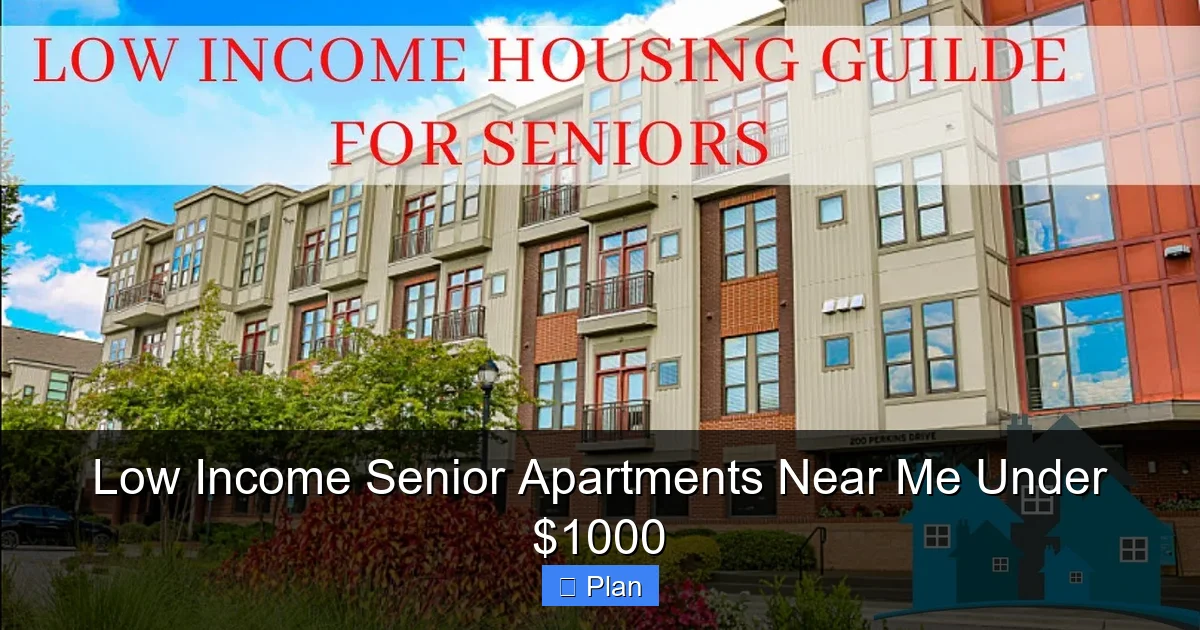
Visual guide about Low Income Senior Apartments Near Me Under $1000
Image source: i.ytimg.com
Your #1 Tool: The HUD Apartment Locator
The U.S. Department of Housing and Urban Development (HUD) operates the most authoritative online tool. Go to HUD’s User Portal for Assisted Housing. You can search by state, county, city, and zip code. Critically, you can filter by “Elderly” or “Senior” housing and by “Income Limits.” This tool will show you every subsidized property in your target area. Bookmark it. Use it religiously.
Contact Your Local Public Housing Authority (PHA)
Every state, and often major cities, has a PHA. They administer the Section 8 program locally. Even if you are looking for a Section 202 property, the PHA is a vital resource. Call them and ask:
- Do you have a list of subsidized senior buildings in [Your City/County]?
- Are you accepting new applications for the Section 8 wait list? (This list is often closed for years, but it’s crucial to get on it if possible).
- Can you refer me to the local Area Agency on Aging?
They are a phone call away and have the most current, local information.
Search for “Income-Restricted” or “Affordable Housing”
Use search terms like “income restricted senior apartments [Your City]” or “affordable housing for seniors [Your County].” This will lead you to websites of non-profit developers (like Volunteers of America, Mercy Housing, or local community development corporations) who own and manage these properties. These sites will have their own applications and wait list information.
Leverage Local Area Agencies on Aging (AAA)
Every region has an AAA. They are a goldmine of free, impartial information. Their housing specialists know every program, every building, and the unspoken rules of the local market. They can help you complete applications, understand eligibility, and find emergency resources if you’re in a crisis. Finding your local AAA is a must-do step.
The Application Gauntlet: Documentation and Process
Finding the apartment is only half the battle. Applying for it is a detailed, document-heavy process. Being prepared will make you stand out as a serious applicant and prevent delays.
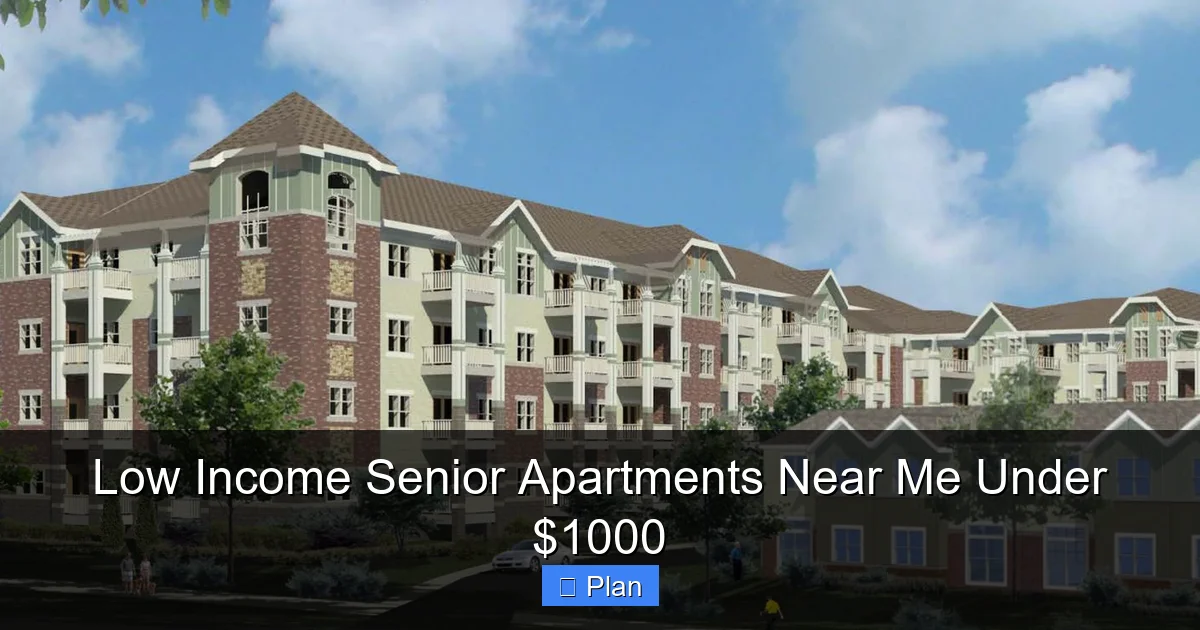
Visual guide about Low Income Senior Apartments Near Me Under $1000
Image source: i.pinimg.com
Essential Documentation Checklist
Gather these documents for every adult who will live in the apartment. Start collecting them now.
- Proof of Age: Driver’s license, state ID, or birth certificate.
- Proof of Income: For all sources: Social Security award letter (most recent), pension statements, bank statements showing direct deposits, or pay stubs if you work part-time.
- Proof of Assets: Bank statements (checking and savings), statements for CDs, stocks, bonds, or retirement accounts (like IRA/401k). Even small savings count.
- Tax Returns: Typically, the last two years of filed tax returns.
- Proof of Citizenship/Immigration Status: Birth certificate, passport, or permanent resident card.
- Rental History: Names and addresses of previous landlords for the last 5-7 years.
- Personal References: Names and contact info for people who can vouch for you (not family members).
Understanding the Wait List Reality
You must accept this fact: waiting lists for subsidized senior housing are often years long. A two to five-year wait is common in many metropolitan areas. When you apply, ask:
- Is the wait list open? (If not, ask when it might reopen).
- What is the approximate wait time?
- Do they have a separate list for studio vs. one-bedroom units?
- How will they contact you? (Make sure your address and phone number are always up to date).
Strategy: Apply to every eligible property you find. Apply in multiple cities or counties if you have transportation options. Getting on five wait lists dramatically increases your chances of getting an offer sooner than getting on just one.
Maximizing Your Budget: Beyond the Rent Quote
A rent of $900/month sounds great, but you must understand what’s included. This is where your true cost of living is determined.
Utilities: The Hidden Cost
Ask explicitly: “What utilities are included in the rent?” Common scenarios include:
- All utilities included: Ideal, but less common. Rent covers heat, electric, water, sewer, and trash.
- Some utilities included: Often, heat and water are included, but you pay electric. This can mean a $50-$100 monthly bill.
- Tenant pays all: You are responsible for every utility. In a cold climate, winter heating costs can blow your budget.
Always ask for the average monthly utility cost for a similar unit. This information is critical for your real budget.
Other Mandatory Expenses
Your monthly outflow must account for:
- Renter’s Insurance: Usually $15-$30/month. Some properties require it.
- Phone/Internet: A basic landline and internet plan might be $80/month. Many seniors qualify for the Affordable Connectivity Program for discounted internet.
- Groceries & Personal Items: Use the USDA “Thrifty” food plan for a single person to estimate ($250-$300/month minimum).
- Transportation: Even if you don’t drive, budget for buses, paratransit, or rideshares.
A $900 rent with all utilities included might be manageable. A $750 rent where you pay $150 in utilities and $80 for internet leaves you with the same net cost but less flexibility.
Alternative Paths and Special Considerations
If the traditional wait lists are too long, or you have specific needs, explore these other avenues.
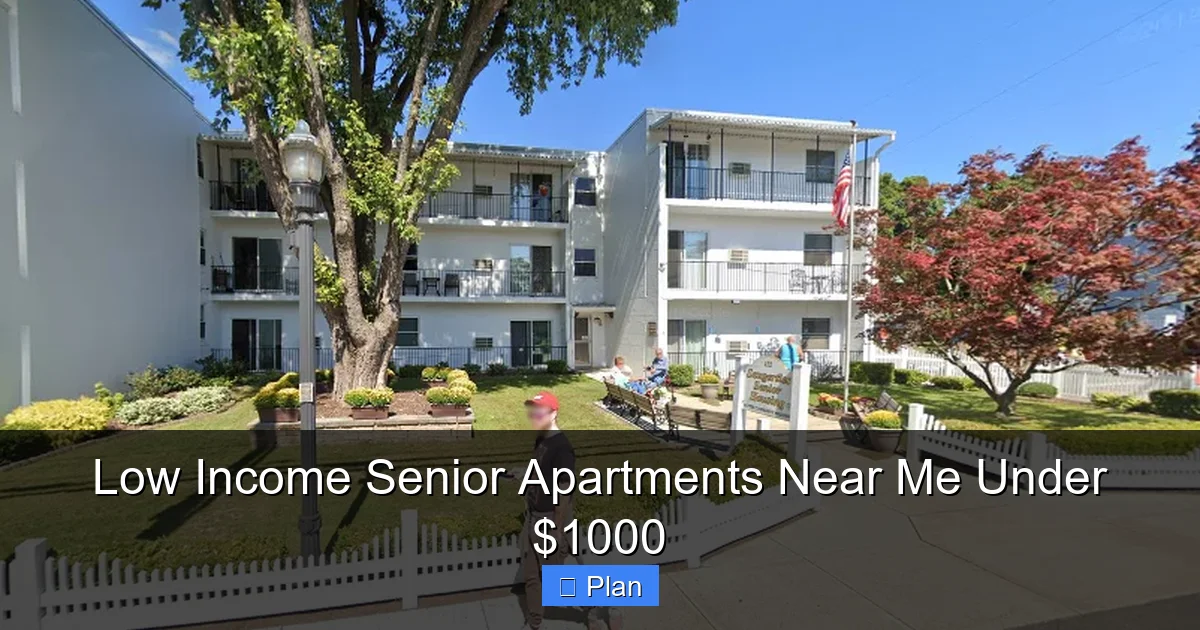
Visual guide about Low Income Senior Apartments Near Me Under $1000
Image source: lowincomehousing.us
Shared Housing and “Home Sharing”
Programs exist that match seniors who have extra space with those seeking affordable housing. You might rent a room in a private home, often with some companionship and shared chores. Costs are typically well under $1000. Search for “home sharing programs” in your state or city. This can be a great interim solution while you wait for an apartment.
Manufactured Home Communities
Some mobile home parks are income-restricted for seniors. You own the home (which can be purchased for very little) but pay a monthly lot rent, which is often much lower than apartment rent. Investigate the park’s rules, the age and condition of the homes, and the lot rent fees.
Religious and Non-Profit Housing
Many churches, synagogues, and non-profit organizations own and operate small senior housing buildings. These are not always widely advertised. Network within your community and religious organizations to ask about such opportunities. The rent is typically very low, based on income.
Elderly Waiver and Supportive Services
If you need help with activities of daily living (bathing, dressing, medication), look into Medicaid waiver programs (like Elderly Waiver or HCBS waivers). These can provide in-home care services, which might allow you to stay in an affordable apartment longer than you could otherwise. Contact your local AAA to inquire about eligibility.
Resources, Support, and Next Steps
You don’t have to do this alone. A network of free resources exists to help you.
Your Support Team
Build a list of contacts:
- Local Area Agency on Aging (AAA): Your primary hub for information and counseling.
- Local Public Housing Authority (PHA): For Section 8 information and lists.
- State Housing Finance Agency: Many states have agencies that fund and list affordable housing. Search “[Your State] Housing Finance Agency.”
- Legal Aid Society: If you face discrimination or have issues with an application, they can provide free legal advice.
Creating Your Action Plan
Here is your 30-day starter plan:
- Week 1: Use the HUD apartment locator to identify 15-20 potential properties in your desired area. Research each one online.
- Week 2: Call your local AAA and PHA. Schedule a phone or in-person consultation. Ask for their lists.
- Week 3: Gather all your documentation. Make copies. Create a master application with all your info typed out to save time.
- Week 4: Start applying. Fill out every application completely. Follow up with a polite phone call a week after submitting. Get on those wait lists.
This is a marathon, not a sprint. But every application you submit is a step closer to securing your affordable, secure home.
Frequently Asked Questions
What is the maximum income to qualify for low-income senior housing?
Income limits are set annually by HUD and vary by county and household size. Generally, you must have an income at or below 50% or 60% of the Area Median Income (AMI). For a single senior in many areas, this can be around $25,000-$40,000 annually. The specific property will state its exact limit.
How long are the waiting lists for these apartments?
It varies dramatically by location. In high-demand urban areas, waiting lists can be 3-7 years long. In rural areas, it might be 6 months to 2 years. The only way to know is to ask each property directly when you apply. Getting on multiple lists is your best strategy.
Do I need to be on Section 8 to get an apartment under $1000?
No. Section 8 is one program, but many affordable senior apartments are funded through the Section 202 program or other state/local subsidies. You apply directly to the building’s management. However, having a Section 8 voucher can make you a more attractive candidate because it guarantees a portion of the rent is paid by the government.
Are utilities always included in the rent?
No. It varies by property. Some include all utilities, some include only heat/water, and some include none. You must ask this question for each apartment you consider, as utility costs can add $100-$200+ to your monthly budget.
Can I have a pet in low-income senior housing?
Policies vary. Many properties have “no pet” rules, while others allow small dogs or cats with a pet deposit (often capped at a low, affordable amount) and possibly a small monthly pet rent. Some make exceptions for service animals. Always ask about the pet policy before applying.
What if I have a roommate or a live-in caregiver?
Most programs allow a live-in aide if you have a documented disability that requires care. The aide’s income is not counted toward your household income. Adding a non-relative roommate is more complicated and may affect your eligibility and unit size. You must disclose and get approval from management before anyone else moves in.