
Water Flosser vs Dental Floss for Seniors


Voice Assistant Smart Speaker
Spill-Proof Adult Cup

Puzzle Book for Seniors
Water Flosser vs Dental Floss is a useful comparison if you want to clean between your teeth but find traditional floss awkward or inconvenient. Both can help clean areas that a toothbrush cannot reach, but they work in very different ways.
For many older adults, the choice is less about which tool is universally better and more about which one is easier to use correctly every day. A water flosser may suit someone who dislikes handling thin floss, while traditional dental floss can be a simple and inexpensive choice for people who are comfortable with the technique.
Quick Comparison
A water flosser is often the easier choice for seniors who have trouble handling string floss, especially when fine finger movements are uncomfortable. It also requires less direct contact between the fingers and teeth.
Dental floss is better for simplicity, portability, and low cost. It does not need electricity, batteries, a water reservoir, or cleaning after use.
The best choice is the one that can be used consistently and correctly.
Water Flosser vs Dental Floss At a Glance
Here is the basic difference between the two options.
| Feature | Water Flosser | Dental Floss |
|---|---|---|
| Ease of use | Often easier to handle | Requires more finger control |
| Physical effort | Low hand effort | More finger movement |
| Setup | Requires filling and setup | Almost none |
| Cleaning | Device needs regular cleaning | Discard after use |
| Portability | Depends on model | Excellent |
| Power needed | Yes for powered models | No |
| Cost | Higher upfront cost | Very low |
| Fine motor demands | Generally lower | Generally higher |
| Best for | Users wanting easier handling | Users wanting simple, low-cost care |
Water Flosser Review for Seniors
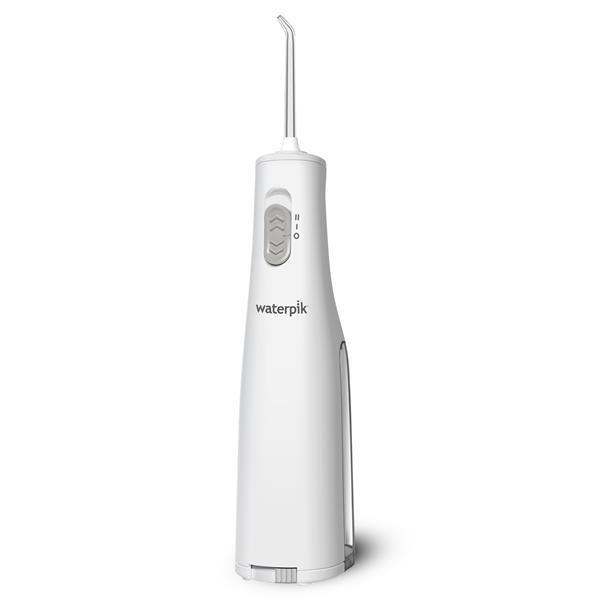
A water flosser uses a controlled stream of water to clean between teeth and around the gumline. For seniors, its biggest appeal is that it can reduce the need to manipulate a thin strand of floss with both hands.
Ease of Use
A water flosser can be easier for someone who finds traditional floss difficult to grip, position, or move between teeth.
The main learning curve is different. Instead of learning how to wrap and guide floss, the user needs to learn how to aim the water stream and control the device.
A countertop model may require more setup, while a cordless model can reduce some of that hassle.
Key Strengths
- Less finger manipulation than traditional floss
- May be easier for users with limited dexterity
- Water can reach between teeth and around the gumline
- No need to wrap floss around fingers
- Useful for people who prefer powered oral-care devices
- Can be easier to incorporate into a regular routine
Potential Drawbacks
- Higher initial cost
- Requires water and device maintenance
- Can be messy until the user learns the technique
- Powered models need charging or an electrical outlet
- Takes more storage space than a small floss container
Dental Floss Review for Seniors
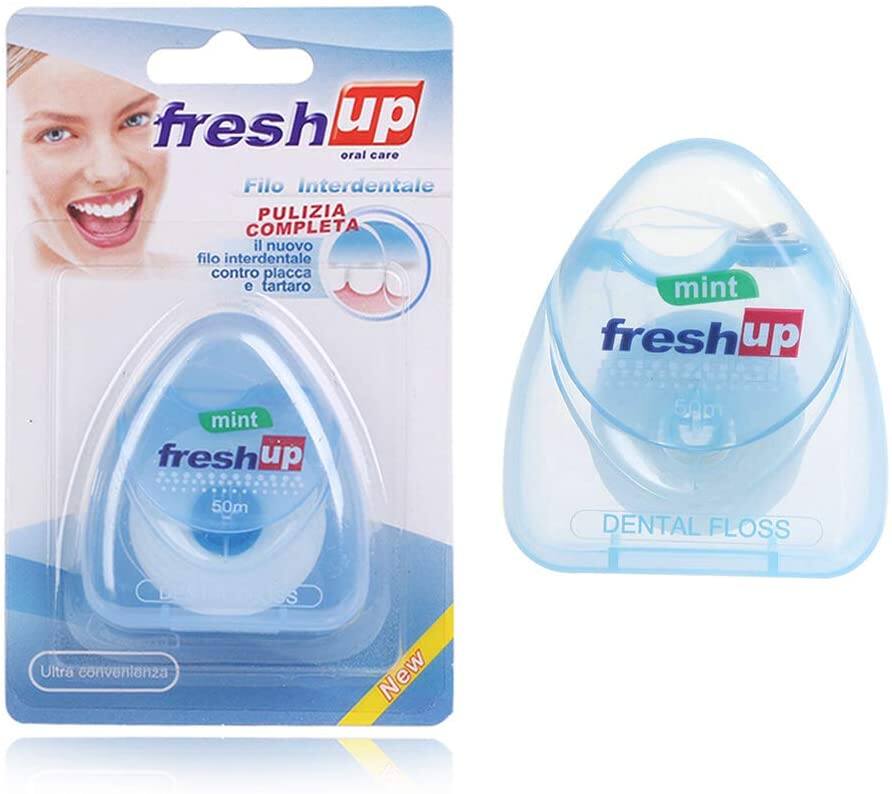
Traditional dental floss remains one of the simplest ways to clean between teeth. It is inexpensive, easy to carry, and requires no device or power source.
For someone who already has good flossing technique and comfortable hand control, there may be little reason to switch.
Ease of Use
Dental floss looks simple, but technique matters. The user needs enough finger control to guide the floss between teeth and clean around the tooth surfaces.
That can be perfectly manageable for many seniors.
For others, especially those who struggle with small objects or repetitive finger movements, this can make flossing less convenient.
Key Strengths
- Very inexpensive
- No electricity or batteries
- Extremely portable
- Easy to store
- No device to clean
- Simple to replace
- Familiar to many users
Potential Drawbacks
- Requires more finger dexterity
- Technique can take practice
- Can be awkward around some dental work
- May be harder for people who cannot comfortably manipulate floss
- Requires a fresh piece for each cleaning session
Which Is Easier for Seniors to Use?
For pure handling, the water flosser usually has an advantage for seniors who find string floss difficult.
You hold the device and guide the tip rather than wrapping and moving floss with your fingers. This may make a noticeable difference for someone who has difficulty with small, precise movements.
However, ease of use depends on the person.
Someone with good dexterity may find dental floss much faster. There is no reservoir to fill and no device to put away.
The easier option is not necessarily the one with more features. It is the one you can use properly every day.
Performance Comparison
Both products are designed to clean between teeth, but their cleaning methods are different.
Dental floss physically moves against tooth surfaces. A water flosser uses a stream of water to disturb and remove debris and plaque from interdental areas.
Research comparing the two has produced mixed results, although a systematic review found that most of the included studies favored water flossers for plaque reduction. That does not mean every person will get better results from a water flosser.
Technique and consistency still matter.
For a senior who struggles to use traditional floss correctly, a water flosser may offer a practical advantage because it changes the physical demands of interdental cleaning.
Comfort, Accessibility, and Senior-Friendly Design
Comfort can be an important factor when choosing an interdental cleaner.
A water flosser may be easier for someone who dislikes pulling floss between teeth or has difficulty controlling a thin strand. A model with simple controls and a comfortable handle can make daily use easier.
Dental floss has almost no setup burden. There is nothing to charge, fill, assemble, or store beyond the floss itself.
The trade-off is hand control.
For seniors with comfortable hand movement, floss can remain an excellent low-effort option. For those who find fine motor tasks frustrating, a water flosser may be more accessible.
Features Comparison
The important differences are practical rather than flashy.
| Feature | Water Flosser | Dental Floss |
|---|---|---|
| Main action | Pulsating water stream | Physical floss movement |
| Hand control | Moderate | Higher |
| Setup | Fill and position device | Cut floss |
| Cleanup | Device requires cleaning | Throw away used floss |
| Storage | Needs dedicated space | Fits almost anywhere |
| Portability | Varies by model | Excellent |
A senior-friendly water flosser does not necessarily need many settings. Simple controls, a comfortable grip, and straightforward operation may matter more than a long list of modes.
Price, Maintenance, and Long-Term Value
Dental floss wins easily on upfront cost. A small container can last for many uses and does not require electricity, charging, replacement tips, or device maintenance.
A water flosser costs more because you are buying an electronic device. Depending on the model, you may also need replacement tips and occasional cleaning.
Still, price alone does not determine value.
If someone repeatedly avoids flossing because traditional floss is difficult to handle, a water flosser may provide better practical value despite the higher purchase cost.
For someone who already flosses comfortably, the extra expense may not provide enough benefit to justify switching.
Who Should Choose a Water Flosser?
Choose a water flosser if:
- Fine finger movements make flossing uncomfortable.
- You prefer holding a larger handle instead of thin floss.
- You want a powered cleaning option.
- You find traditional floss difficult to position.
- You are willing to clean and maintain a device.
- You want an option that may be easier to use consistently.
Who Should Choose Dental Floss?
Choose dental floss if:
- You already floss comfortably.
- Low cost is important.
- You want something highly portable.
- You do not want another electronic device.
- You prefer simple oral-care products.
- You have enough dexterity to use proper flossing technique.
Water Flosser vs Dental Floss — Final Verdict
Best for most seniors: It depends on dexterity and preference.
Best for limited hand dexterity: Water flosser.
Best value: Dental floss.
Best for portability: Dental floss.
Best for easier handling: Water flosser.
There is no need to declare one product the winner for everyone. A senior who handles floss easily may have no reason to change. Someone who struggles with traditional floss may find a water flosser much easier to use regularly.
Scoring Summary
The scores below are practical usability scores, not clinical ratings.
| Category | Water Flosser | Dental Floss |
|---|---|---|
| Ease of Use | 9/10 | 7/10 |
| Senior-Friendly Design | 9/10 | 7/10 |
| Performance | 9/10 | 8/10 |
| Maintenance | 6/10 | 10/10 |
| Value | 7/10 | 10/10 |
The water flosser scores higher for handling and accessibility, while dental floss wins on simplicity, maintenance, portability, and cost.
How We Evaluate Products
This comparison focuses on practical factors that can affect everyday senior use.
We consider:
- Ease of use
- Hand and finger effort
- Accessibility
- Comfort
- Cleaning
- Maintenance
- Setup
- Portability
- Performance
- Long-term value
The comparison does not claim hands-on testing or laboratory testing.
Senior-Specific Buying Considerations
Before choosing either option, think about the way the product will fit into your daily routine.
Physical Effort
Consider whether squeezing, wrapping, holding, or guiding floss feels comfortable.
Controls
A water flosser should have controls that are easy to understand and operate.
Maintenance
Remember that water flossers require cleaning and care. Dental floss does not require device maintenance.
Storage
A water flosser needs a suitable place near the sink. Dental floss can fit in a drawer, cabinet, or travel bag.
Setup
Think about whether filling a reservoir and preparing a device will feel easy enough to do every day.
Safety
Use either product as directed. If you have dental implants, braces, gum problems, recent dental work, or another specific oral-health concern, ask your dentist which interdental-cleaning method is appropriate for you.
Common Buying Mistakes
- Choosing a water flosser only because it has more settings.
- Buying a complicated model when simple controls would be easier.
- Ignoring the cleaning and storage requirements of a water flosser.
- Assuming traditional floss is unsuitable simply because it requires more hand control.
- Choosing based only on price instead of daily usability.
- Forgetting that consistency matters more than owning the most advanced tool.
Frequently Asked Questions
Is a water flosser better than dental floss?
Not for everyone. A water flosser may be easier for some people to use, while dental floss remains simple and effective when used correctly.
Is a water flosser easier for seniors?
It can be, especially for seniors who find handling traditional floss difficult. The larger handle may require less fine finger movement.
Is dental floss cheaper than a water flosser?
Yes. Dental floss has a much lower upfront cost and does not require batteries, electricity, or replacement device parts.
Does a water flosser replace brushing?
No. Interdental cleaning is part of oral care, but it does not replace regular toothbrushing.
Which is better for limited dexterity?
A water flosser may be the easier option because it reduces the need to manipulate a thin strand of floss with the fingers.
Conclusion
Water Flosser vs Dental Floss comes down to usability, not simply technology. A water flosser can be a strong choice for seniors who want easier handling and less fine finger work. Dental floss remains hard to beat for simplicity, portability, low cost, and minimal maintenance.
The most sensible choice is the option that fits comfortably into the user’s routine and can be used correctly and consistently. For a specific dental condition or recent dental treatment, it is best to follow advice from a dental professional.
