
Handheld Magnifier vs Stand Magnifier for Seniors


Bedside Commode Chair

Digital Blood Pressure Monitor

Digital Thermometer
Choosing between a handheld magnifier vs stand magnifier is a common step for anyone who wants to read small print with less eye strain. Both tools make daily tasks much easier, but they serve very different purposes for older adults.
Finding the right reading aid depends on how you plan to use it and your physical comfort. Let us explore how these two classic magnifying tools compare so you can pick the best option for your home or travel needs.
Handheld magnifiers are best for quick, everyday tasks like reading medicine bottles, price tags, or restaurant menus on the go. Stand magnifiers are better for prolonged reading, crafts, or anyone with hand tremors. This is because stand models rest flat on the page and keep the text in perfect focus without needing to be held. If you want a small tool for your pocket, pick a handheld model. If you want comfort for reading long books, pick a stand magnifier.
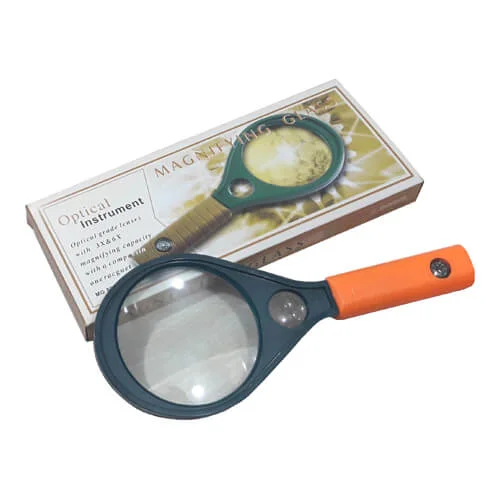
Handheld vs Stand Magnifier At A Glance
Here is a quick breakdown of how these two reading aids compare in daily use. Review these key differences to see which style matches your habits.
| Feature | Handheld Magnifier | Stand Magnifier |
| Best Daily Use | Quick reading, travel | Books, long reading |
| Physical Effort | Requires holding up | Hands-free resting |
| Portability | High (fits in a bag) | Low (stays on a desk) |
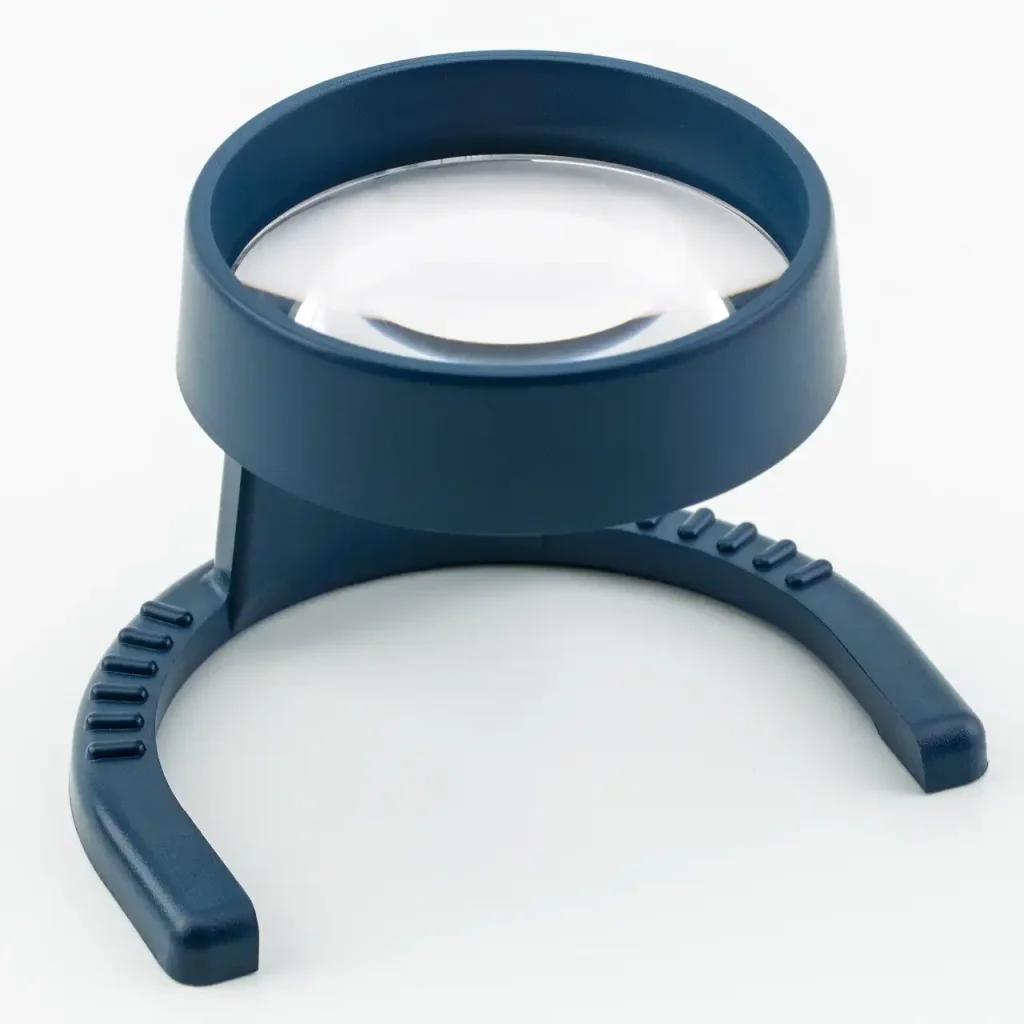
Handheld Magnifiers: Daily Use Guide
Handheld magnifiers are the classic glass lenses with a simple handle. They give you the freedom to move the glass exactly where you need it.
Ease of Use
You simply pick the tool up and point it at the text. However, holding it at the perfect distance takes some effort. You must move the lens in and out until the letters look sharp. This requires a steady hand.
Key Strengths
- Highly portable for trips to the store.
- Easy to store in a pocket or small purse.
- Great for reading curved surfaces like soup cans or pill bottles.
- Very affordable and easy to replace.
Potential Drawbacks
- Causes arm fatigue during long reading sessions.
- Hard to use if you have shaky hands or tremors.
- Finding the exact focus point can frustrate some users.
Stand Magnifiers for Senior Readers
Stand magnifiers sit directly on the page or rest on a sturdy desktop base. They do the heavy lifting for you by staying at a fixed height.
Ease of Use
You just slide the unit straight across the page. You never have to guess the right focus distance. The legs or base hold the lens at the perfect spot. This makes reading very relaxing.
Key Strengths
- Perfect focus every single time.
- No hand or wrist strength is needed.
- Great for long reading sessions like morning newspapers.
- Ideal for users with arthritis or hand tremors.
Potential Drawbacks
- Bulky shape makes them hard to travel with.
- Only works well on flat surfaces like tables or flat books.
- Cannot# Handheld Magnifier vs Stand Magnifier for Seniors
Meta Description: Comparing a handheld magnifier vs stand magnifier reveals key differences. Learn which vision aid offers the best comfort for seniors.
Choosing between a handheld magnifier vs stand magnifier is a common step when reading small print becomes difficult. Both tools help make text clear, but they support daily routines in entirely different ways.
Finding the right vision aid can bring back the joy of reading books, sorting mail, or enjoying quiet hobbies. A simple choice between holding a lens in the air or resting it directly on a page often changes the entire reading experience.
A handheld magnifier works best for quick, everyday tasks like checking price tags, reading medicine bottles, or scanning a restaurant menu. They are light, highly portable, and easy to slip into a pocket or purse for trips to the store.
A stand magnifier is a much better choice for long reading sessions, solving crossword puzzles, or viewing photographs. Because it rests flat on the table or page, it completely eliminates arm fatigue and keeps the text perfectly in focus, making it ideal for anyone with hand tremors or limited grip strength.
At A Glance Comparison
Here is a quick look at how these two vision aids compare across the most important everyday features.
| Feature | Handheld Magnifier | Stand Magnifier |
| Best Used For | Quick tasks, shopping, menus | Books, newspapers, long reading |
| Physical Effort | Requires arm and grip strength | Pushed across the page |
| Focusing | User must adjust the distance | Pre-focused by the stand |
Handheld Magnifiers for Daily Tasks
Handheld models are the classic magnifying glasses most people picture when they think of vision aids. They feature a simple handle attached to a lens, often with a built-in LED light to brighten the text.
Ease of Use
You simply pick the tool up and hold it over your text or object. You must physically move the lens closer or further away from the page to find the sharpest focus. This provides flexibility but requires steady hands and good arm endurance for longer tasks.
Key Strengths
- Very easy to carry in a pocket, purse, or glovebox.
- Highly flexible for looking at objects of different shapes and sizes.
- Usually very affordable and easy to replace.
- Intuitive to use without any setup or instructions.
Potential Drawbacks
- Requires a steady hand to keep the text clear.
- Can cause arm, wrist, or hand fatigue during long reading sessions.
- Finding the exact focal distance can be frustrating for some users.
Stand Magnifiers for Simple Reading
Stand magnifiers feature a solid housing that holds the magnifying lens at an exact, permanent distance from the surface. You simply place the unit flat on your book, newspaper, or desk.
Ease of Use
You never need to hold a stand magnifier in the air. You just rest it on the page and gently slide it across the paper as you read. The housing keeps the lens perfectly focused, removing all the guesswork from the process.
Key Strengths
- Eliminates arm fatigue and wrist strain entirely.
- Keeps the text perfectly in focus without manual adjustments.
- Excellent for users with hand tremors, arthritis, or weak grips.
- Often includes strong lighting that illuminates the page evenly.
Potential Drawbacks
- Too bulky to carry in a standard pocket.
- Difficult to use on curved surfaces like round medicine bottles.
- Requires reading at a desk or using a lap board for support.
Which Is Easier for Seniors to Use?
Stand magnifiers are generally easier for seniors to use during extended tasks. When reading a book or newspaper, holding a lens steady in the air takes a surprising amount of effort. For older adults managing arthritis, Parkinson’s disease, or natural muscle fatigue, a stand magnifier does all the heavy lifting. The user simply pushes it gently along the text.
Handheld magnifiers are easier for seniors who need a tool on the go. Trying to use a stand magnifier at a grocery store to read a nutrition label is awkward and impractical. A handheld tool pulls out quickly, does the job, and goes right back into a pocket. The easiest option entirely depends on where and how the senior plans to read.
Performance Comparison
When evaluating performance, the most important factor is the focal distance. A handheld unit gives the user total control over the focus. You can move it until the image looks right to your specific eyes. However, higher magnification lenses require you to hold the glass very close to the page, which can block room light and make reading difficult without a built-in LED.
Stand magnifiers offer superior reading performance for flat documents. The manufacturer designs the stand to hold the lens at the exact mathematical focal point. This creates a crisp, clear image from edge to edge. Because the housing rests on the paper, built-in LED lights trap the brightness exactly where you need it, creating a brilliant, high-contrast viewing area.
“A tool is only helpful if it feels natural to use. Choosing a magnifier that matches your physical comfort is just as important as the strength of the lens.”
Comfort, Accessibility, and Senior-Friendly Design
Comfort varies wildly between these two designs. Handheld models can strain the wrist and require the user to sit upright with unsupported arms. Over time, this posture causes neck and shoulder tension. Seniors with a weak grip may drop handheld models, risking cracked lenses.
Stand magnifiers score much higher for physical accessibility. They require almost zero grip strength. A senior can rest their hand loosely on the housing and guide it across the page. However, they do require the user to lean slightly forward to look down into the lens. Proper posture at a table, or using a tilted reading stand, helps prevent neck aches when using a stand model.
Features Comparison
Modern magnifiers offer helpful features to make daily reading easier for older adults.
| Feature | Handheld Magnifier | Stand Magnifier |
| Lighting | Often features 1-3 LED bulbs | Usually features an enclosed light ring |
| Lens Options | Available in glass or lightweight acrylic | Mostly lightweight acrylic to reduce bulk |
| Portability | Folding handles or small frames | Rigid, permanent frames |
Price, Maintenance, and Long-Term Value
Both tools are generally highly affordable. Basic handheld models cost very little, making it easy to buy several and leave them in different rooms around the house. High-quality optical handhelds with strong LEDs cost slightly more but remain budget-friendly. Maintenance simply involves wiping the lens with a microfiber cloth and changing small batteries.
Stand magnifiers usually cost more than handheld versions because they use larger lenses and more robust housings. However, they offer tremendous long-term value for avid readers. The enclosed design protects the lens from scratches when resting on a table. Both styles usually take standard AA or AAA batteries, though some modern stand magnifiers now feature convenient USB rechargeable batteries, saving money over time.
Who Should Choose a Handheld Magnifier?
- Seniors who need a portable tool for shopping, travel, or restaurants.
- People who only need to read short bursts of text, like mail or pill bottles.
- Those looking for an inexpensive, versatile tool to keep in multiple rooms.
- Users viewing awkwardly shaped objects that cannot sit flat on a table.
Who Should Choose a Stand Magnifier?
- Seniors who love reading books, long letters, or daily newspapers.
- Individuals with hand tremors, arthritis, or limited arm strength.
- Users who want a perfectly focused image without needing to adjust the lens.
- People who spend time on detailed hobbies like stamp collecting or crosswords.
Final Verdict
The best choice for most seniors who want to enjoy reading again is the stand magnifier. It removes physical strain, maintains a perfect focus, and brightens the page beautifully.
For quick, on-the-go tasks, the handheld magnifier remains the absolute best for portability and everyday convenience.
For the best overall value and quality of life, many seniors benefit from owning one of each: a stand model permanently kept by their favorite reading chair, and a small handheld model tucked safely into their bag for errands.
Scoring Summary
Here is how these two styles compare across key categories out of 10.
| Category | Handheld Magnifier | Stand Magnifier |
| Ease of Use (Quick Tasks) | 9/10 | 4/10 |
| Ease of Use (Long Reading) | 4/10 | 9/10 |
| Senior-Friendly Comfort | 6/10 | 9/10 |
| Portability | 10/10 | 3/10 |
| Overall Value | 9/10 | 8/10 |
How We Evaluate Products
We evaluate vision aids by focusing strictly on practical senior needs. We look at physical weight, grip comfort, and the effort required to use the product over time. We consider lighting quality, lens clarity, and how easily batteries can be changed by someone with limited dexterity. Our goal is to highlight tools that support independence and daily comfort without causing added frustration.
Senior-Specific Buying Considerations
- Physical Effort: Consider how long the user usually reads. If they read for more than five minutes at a time, holding a lens will become tiring.
- Lighting: Always choose a model with built-in LED lighting. As vision ages, eyes require significantly more light to see the same level of detail.
- Battery Compartment: Check how the batteries are replaced. Tiny screws or stiff plastic tabs can be nearly impossible for arthritic fingers to manage.
- Magnification Strength: Higher magnification is not always better. Higher strength means a much smaller lens and a shorter viewing area. Start with a lower strength (like 2x or 3x) for general reading.
Common Buying Mistakes
- Buying the highest magnification possible, which shrinks the field of view and makes reading whole sentences difficult.
- Ignoring the weight of a glass handheld lens, which can quickly tire out older wrists.
- Forgetting to consider the reading environment; buying a stand magnifier for someone who only reads while lying back in bed will not work well.
- Choosing models without built-in lights, missing out on crucial contrast enhancement.
- Overlooking the battery type, leading to a dead magnifier if the required batteries are rare or expensive.
Safety
Safety considerations for magnifiers are simple but very important. Never leave any magnifying glass sitting in direct sunlight. A lens left on a windowsill or outdoor table can focus the sun’s rays and start a fire very quickly. Always store magnifiers in a dark drawer or a protective pouch. Additionally, when choosing a model with batteries, ensure the battery compartment closes securely so small button batteries do not fall out, especially if young grandchildren visit the home.
Making the right choice comes down to knowing exactly how you want to spend your time. If you want to dive back into thick novels, solve daily puzzles, or read the morning paper over coffee, a stand model will save your hands and eyes a tremendous amount of strain. If you just need a reliable way to check a price tag or read the cooking instructions on a box of pasta, a simple, illuminated handheld tool is all you need. Matching the tool to the task ensures daily reading remains a simple, independent pleasure.
