
Smart Glucose Meter vs Glucose Meter


Compression Socks

Fall Detection Smart Watch

Adaptive Eating Utensils
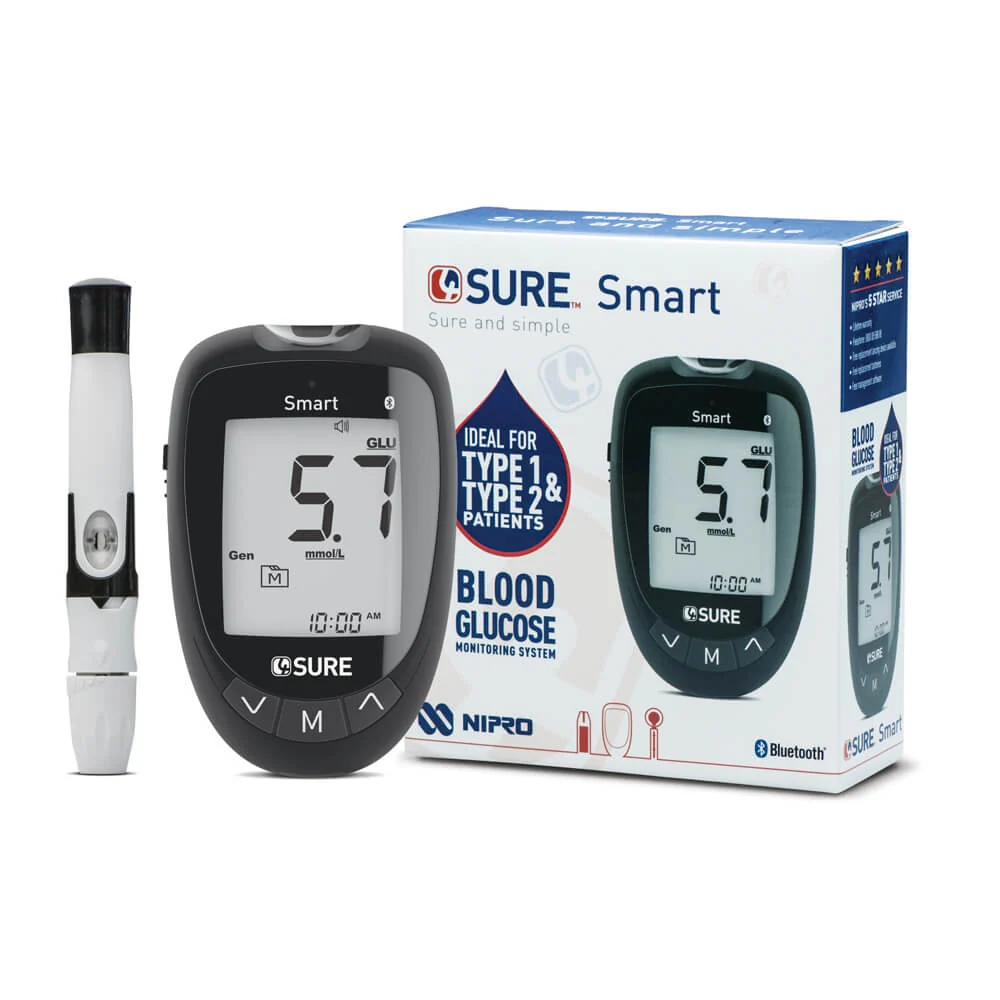
For many older adults, choosing between a Smart Glucose Meter vs Glucose Meter comes down to more than the size of the screen. Both can measure blood glucose from a small blood sample, but a smart meter may add Bluetooth, phone apps, automatic data syncing, and digital records.
A standard meter may be a better fit for someone who wants simple testing without depending on a smartphone. A smart meter may suit seniors or caregivers who want easier record keeping and access to past readings. The right choice depends on how the meter will be used each day.
Quick Comparison
A standard glucose meter focuses on the core job: testing blood glucose and showing the result. A smart glucose meter adds connected features around that basic process.
For seniors who prefer simple operation, a traditional meter may feel easier. For someone who wants automatic records or caregiver data sharing, a smart model may offer more practical value.

Smart Glucose Meter vs Glucose Meter At a Glance
Both types generally use a meter, lancet, and disposable test strips. The main difference is what happens to the result after the test.
| Feature | Smart Glucose Meter | Standard Glucose Meter |
|---|---|---|
| Blood glucose testing | Yes | Yes |
| Phone connectivity | Often available | Usually not |
| App tracking | Often available | Limited or unavailable |
| Automatic data transfer | Often available | Usually manual |
| Simple operation | Depends on model | Usually simple |
| Record keeping | Digital | Meter memory or written log |
| Smartphone needed | Sometimes | No |
Smart Glucose Meter Review
A smart glucose meter can be useful for seniors who want their readings stored and organized digitally. Many connected meters can send results to a compatible phone app, reducing the need to write down every reading manually.
Ease of Use
The basic glucose test is still similar to a regular meter. The user usually prepares the meter, uses a lancet to obtain a blood sample, and applies the sample to a test strip.
The extra step is the digital connection. Pairing a meter with a phone can be useful, but it also adds setup and troubleshooting. A senior who is comfortable with a smartphone may find this easy. Someone who rarely uses apps may prefer a simpler meter.
Key Strengths
- Automatic or easier digital record keeping
- Useful for reviewing glucose history
- Can make sharing data with caregivers easier on supported models
- May reduce manual note-taking
- Helpful for people who already use health apps
Potential Drawbacks
- App setup can add complexity
- Phone compatibility may matter
- Bluetooth or app problems can interrupt syncing
- Some connected features may require more learning
- Ongoing costs still include test strips and lancets
Standard Glucose Meter Review
A standard glucose meter keeps the focus on testing. It does not need to provide a large ecosystem of connected features to perform its main function.
Many meters store test results internally, so a smartphone is not always necessary. The FDA notes that glucose meters can differ in areas such as ease of use, testing speed, size, result storage, data transmission, cost, and accessibility features.
Ease of Use
For someone who wants fewer digital steps, a standard meter can be easier to understand. There is no need to pair the meter with a phone or learn an additional app.
Still, simplicity depends on the specific model. Large displays, clear buttons, easy-to-insert strips, and straightforward instructions can matter more than whether a meter is labeled “smart.”
Key Strengths
- Simple testing process
- No smartphone required
- Fewer connected features to manage
- Often easier for users who prefer basic devices
- Can still store readings on many models
Potential Drawbacks
- Less automatic data management
- Records may need to be reviewed manually
- Caregiver sharing may be less convenient
- Fewer app-based tracking features
Which Is Easier for Seniors to Use?
The answer depends on the user’s comfort with technology.
A standard meter may be easier for a senior who wants to test, read the number, and finish. There are fewer digital steps between the test and the result.
A smart meter may be easier for someone who already uses a smartphone and wants automatic records. Instead of writing down every result, compatible systems can transfer data to an app.
The simplest meter is not always the one with the fewest features. It is the one whose important features the user can operate confidently.
The physical design also matters. Large numbers, clear screens, simple buttons, and easy strip handling can be especially useful for people with limited vision or dexterity.
Performance Comparison
Both types can perform the same basic blood glucose measurement when properly designed and used. The word “smart” does not automatically mean a meter is more accurate.
The FDA recommends considering accuracy, sample size, ease of use, testing speed, result storage, data transmission, cost, and accessibility when choosing a glucose monitoring device.
| Performance Area | Smart Glucose Meter | Standard Glucose Meter |
|---|---|---|
| Basic glucose test | Core function | Core function |
| Result display | Meter display | Meter display |
| Digital tracking | Stronger | More limited |
| Manual record keeping | Often reduced | May be needed |
| Testing speed | Model-dependent | Model-dependent |
| Accuracy | Model-dependent | Model-dependent |
The actual meter and test strips matter more than the “smart” label.
Comfort, Accessibility, and Senior-Friendly Design
For seniors, accessibility can be just as important as connectivity.
A large, readable display can make a result easier to see. Simple controls can reduce confusion. Easy-to-handle strips and a comfortable lancet device can also make regular testing less frustrating.
Smart features can help caregivers and family members when data sharing is supported. But these benefits only matter if the user can operate the connected system without unnecessary difficulty.
For a senior who dislikes smartphone apps, the extra technology may become a burden rather than a benefit.
Features Comparison
Smart meters mainly differentiate themselves through connected features. Standard meters focus more on direct testing and basic record storage.
| Feature | Smart Glucose Meter | Standard Glucose Meter |
|---|---|---|
| Bluetooth | Often available | Usually absent |
| Mobile app | Often available | Usually absent |
| Automatic syncing | Often available | Usually manual |
| On-device memory | Often available | Common on many models |
| Caregiver data access | May be available | Less convenient |
| Phone dependence | May be needed | Not needed |
Always check the exact model before buying. Smart features vary widely between meters.
Price, Maintenance, and Long-Term Value
The purchase price is only one part of glucose meter ownership. Test strips and lancets are recurring supplies, so ongoing costs can matter more than the initial device price.
Smart models can provide extra digital convenience, but that convenience does not necessarily make them more accurate or medically appropriate.
Standard meters may offer good value for people who do not need phone connectivity. Smart models may provide better practical value for users who will actually use their apps and data features.
Test strips also need proper storage. The FDA warns that factors such as moisture, temperature, damaged packaging, expiration, and improper handling can affect results.
Who Should Choose a Smart Glucose Meter?
- Choose a smart meter if you already use a smartphone regularly.
- Choose one if automatic record keeping is important.
- Consider one if you want easier access to historical readings.
- It may help when a caregiver needs to review shared data.
- Consider a connected model if digital health tracking fits naturally into your routine.
Who Should Choose a Standard Glucose Meter?
- Choose a standard meter if you want a straightforward testing process.
- It may suit someone who does not use smartphones.
- Consider one if app connectivity is unnecessary.
- It can be a practical choice when simple operation matters most.
- It may suit users who prefer checking results directly on the meter.
Smart Glucose Meter vs Glucose Meter — Final Verdict
Best for connected tracking: Smart glucose meter
Best for simple operation: Standard glucose meter
Best for smartphone users: Smart glucose meter
Best for users who want fewer digital steps: Standard glucose meter
There is no universal winner. A smart meter adds useful digital tools, while a standard meter keeps the experience more focused on the actual test. The better choice depends on whether those extra features will make glucose tracking easier or more complicated.
Scoring Summary
Because glucose meters differ significantly by model, broad numerical scores can be misleading. A useful comparison is to focus on the type of experience each category provides.
| Category | Smart Glucose Meter | Standard Glucose Meter |
|---|---|---|
| Digital tracking | Strong | Basic |
| Simple operation | Model-dependent | Often strong |
| Data sharing | Often strong | Limited |
| Smartphone independence | Lower | Strong |
| Everyday practicality | Depends on user | Depends on user |
These are category-level comparisons, not laboratory performance scores.
How We Evaluate Products
We focus on the factors that matter during regular senior use:
- Ease of operation
- Display and controls
- Accessibility
- Testing process
- Data storage
- Connectivity
- Maintenance
- Recurring supply costs
- Practicality
- Safety
We do not treat a connected feature as an automatic advantage. A feature is useful only when it solves a real problem for the person using the meter.
Senior-Specific Buying Considerations
Before choosing a meter, check the details that will affect everyday testing.
Physical Effort
Fingerstick testing requires handling a lancet and test strip. Look for a system that feels manageable for the user’s hand strength and dexterity.
Controls
Large buttons and clear displays may help users who have difficulty seeing small text or operating tiny controls.
Record Keeping
Think about whether the user prefers paper records, meter memory, or an app. Smart tracking is useful only if the digital system is comfortable to use.
Maintenance
Test strips must be stored correctly. Keep them protected from conditions that may damage them, and follow the manufacturer’s instructions.
Setup
For smart meters, check phone compatibility and app requirements before buying.
Safety
Do not share lancets or blood glucose monitoring equipment with another person. Follow the manufacturer’s instructions for testing and disposal.
Common Buying Mistakes
- Choosing a smart meter without checking phone compatibility
- Focusing only on the meter’s purchase price
- Ignoring the ongoing cost of test strips
- Choosing a tiny display that is hard to read
- Assuming “smart” means more accurate
- Buying a meter without considering how comfortable the user is with technology
Safety
Correct technique matters with either type of meter. Wash and dry your hands before testing, use the correct test strips, and follow the instructions supplied with the device.
Results can be affected by factors such as improper storage, testing technique, certain health conditions, and some medications or supplements. The FDA recommends discussing potential factors that may affect results with a healthcare professional.
If glucose readings do not match how you feel or seem unexpectedly unusual, do not simply assume the device is correct. Follow your healthcare professional’s guidance.
Frequently Asked Questions
Is a smart glucose meter more accurate?
Not necessarily. “Smart” generally describes connectivity and digital features. Accuracy depends on the specific meter, test strips, and correct testing technique.
Does a smart glucose meter need a smartphone?
Not always. Requirements vary by model. Some connected meters can operate independently while offering optional app features.
Is a regular glucose meter easier for seniors?
It may be, especially for someone who prefers simple devices and does not want to manage an app or Bluetooth connection.
Can a glucose meter store readings?
Many meters can store results internally. The amount of stored information and available record features vary by model.
Are smart glucose meters worth the extra cost?
They can be worthwhile when automatic tracking or data sharing is genuinely useful. If those features will not be used, a simpler meter may provide better practical value.
Can caregivers use smart glucose meter data?
Some connected systems support data sharing, but the exact features depend on the device and its app. Check the manufacturer’s current specifications before buying.
Conclusion
The main difference between a smart glucose meter and a standard glucose meter is usually connectivity rather than the basic testing process. A smart model can make digital tracking and data sharing easier, while a standard meter can keep testing simple and phone-free.
For seniors who enjoy using smartphones, a smart meter may make record keeping more convenient. For those who prefer a straightforward device, a standard meter may be easier to manage. In either case, focus on the actual meter, test strips, display, controls, recurring costs, and proper testing procedure rather than choosing based only on the word “smart.”